REVIEW · NEW DELHI
Delhi: Explore Old Delhi on Tuk Tuk with Shopping and Street Food
Book on Viator →Operated by Shadow Trips · Bookable on Viator
That first ride sets the tone. You’ll zip through Old Delhi by tuk-tuk and get help navigating the lanes fast. The plan mixes big landmarks like the Red Fort and Jama Masjid with everyday street energy at places such as Chandni Chowk and Khari Baoli.
What I like most is the way the guide turns confusing streets into clear stories. You’ll hear the historical significance behind major sites and get practical context for what you’re seeing, often helped by a friendly, detail-focused guide (names that show up in past groups include Faizan, Harsh, and Isha).
My one watch-out: you’ll be moving through busy markets, so if you hate crowds or need a super slow pace, you’ll want to plan for stops, photos, and occasional waiting time.
In This Review
- Key Stops and Why They Matter
- A 4-Hour Tuk-Tuk Loop Through Old Delhi’s Power Spots
- Meeting at Sunehri Masjid: Start Close to the Action
- Chandni Chowk and Khari Baoli: Spices, Stories, and Shopping Time
- Jama Masjid: A Real Landmark Visit, Not Just a Drive-By
- Gurudwara Bangla Sahib (Plus Sikh Temple Context): A Calm Pause in the Noise
- Red Fort and the Mughal-Style Big Picture
- Khari Baoli Returns and Ugrasen ki Baoli: From Spices to a 14th-Century Stepwell
- India Gate, Rashtrapati Bhavan, and Parliament Pass-By Views
- Price and Value at About $5: What You’re Really Buying
- What the Guide Adds: Fast Clarity, Better Photos, Less Guessing
- Timing and Pacing: How to Avoid Feeling Rushed
- Where This Tour Fits Best (And Who Might Want Something Else)
- Should You Book This Old Delhi Tuk-Tuk Tour?
- FAQ
- How long is the Delhi Old Delhi tuk-tuk tour?
- Where is the meeting point?
- Is pickup available?
- Is this tour private?
- Is the tuk-tuk ride included?
- Are snacks included?
- Are entrance fees included?
- What’s included besides the guide and transport?
- Is bottled water provided?
- What is the cancellation policy?
Key Stops and Why They Matter
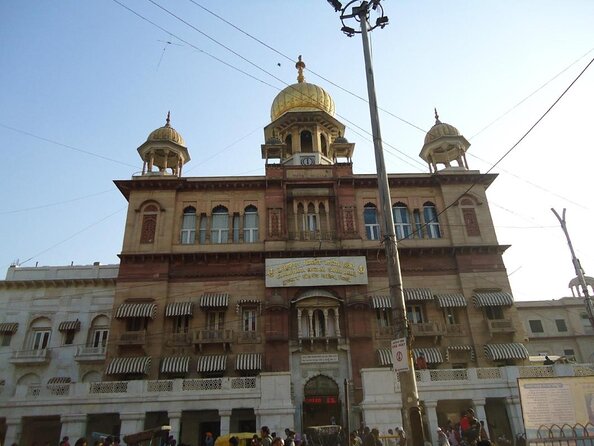
- Tuk-tuk for narrow lanes: You’re not stuck fighting traffic on foot the whole time.
- Chandni Chowk + Khari Baoli: Quick access to Asia’s large spice market history and the medicinal-style spice explanations.
- Jama Masjid visit time: You get a full stretch to take in the scale, not just a roadside peek.
- Sikh temple stop: A respectful cultural pause at Gurudwara Bangla Sahib.
- Stepwell curiosity at Ugrasen ki Baoli: A 14th-century structure with impressive scale (and a great break from the street noise).
- Photo stops with meaning: India Gate’s World War I memorial vibe plus passes by Rashtrapati Bhavan and Parliament House.
A 4-Hour Tuk-Tuk Loop Through Old Delhi’s Power Spots
This is the kind of tour that helps you get your bearings fast. In about four hours, you’ll cover multiple layers of Delhi: Mughal-era grandeur, living market culture, and modern landmarks that frame the city’s political story.
The route makes sense for first-timers because it pairs “wow” sights with “what does this place smell like?” moments. You’ll also have the flexibility of a private group, so you’re not trapped behind a faster crowd or forced to sprint between stops.
You can also read our reviews of more tours and experiences in New Delhi.



Meeting at Sunehri Masjid: Start Close to the Action

Your tour starts at Sunehri Masjid near the Red Fort parking area. That’s helpful because it puts you at the edge of the action rather than dragging you across town first.
If you’re coming by public transport, this area is close enough to stay practical. And since pickup is offered, you can ask for help if you’re not sure how to reach the meeting point that morning or afternoon.
Chandni Chowk and Khari Baoli: Spices, Stories, and Shopping Time
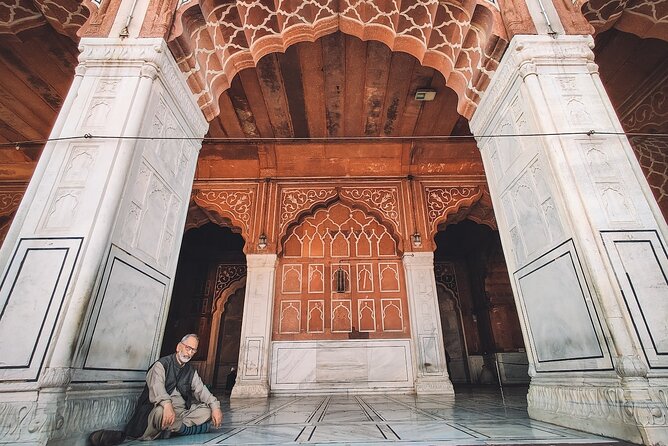
The tour begins with Chandni Chowk, and you’ll ride through Khari Baoli—the old spice-market lanes that date back to the 17th century. This is one of those places where the smells hit first, and the explanations make it stick.
You’ll get hands-on information about spices and their uses, including the kind of medicinal and health-related benefits people talk about in this context. Even if you’re not buying anything, the guide’s breakdown turns a chaotic market into a map in your head: what’s sold here, how it’s used, and why it became famous.
This is also your natural shopping zone. The tour description includes buying souvenirs along the way, and Chandni Chowk is where that feels easiest. If you want sweet snacks, or you want time to browse before the bigger sights, this stop is where you can slow down without ruining the day.
Practical thought: Markets mean strong aromas, lots of movement, and frequent offers. It’s a normal part of Old Delhi. If you want smoother pacing, tell your guide early and they can steer your time allocation.
Jama Masjid: A Real Landmark Visit, Not Just a Drive-By

Next up is Jama Masjid, with about an hour scheduled here. This is the spot that usually earns the biggest “whoa” reaction because of the mosque’s scale and the way the area pulls people in from multiple directions.
A key value of a guided stop is that you’re not guessing what you’re looking at. The guide connects the landmark to its wider historical and cultural significance, and you’ll have time to take photos without feeling rushed.
Jama Masjid’s admission is listed as included. That means you can plan around the visit without hunting down tickets last minute. Still, if your day is tight, confirm which option you chose when booking, since entrance-fee coverage can vary by ticket type.
One consideration: This is a working, active religious site. Dress codes and respectful behavior matter. If you’re unsure, the guide can point you toward what’s appropriate.
Gurudwara Bangla Sahib (Plus Sikh Temple Context): A Calm Pause in the Noise
Then you’ll visit Gurudwara Bangla Sahib, described as one of Delhi’s prominent Sikh shrines. This stop changes the tone of the day, shifting from market intensity to a more grounded, spiritual pace.
The tour guide also shares background about Sikh places of worship, including context about Gurudwara Sis Ganj as another important Sikh house of worship in old Delhi. You’ll walk away understanding that Old Delhi isn’t only one story; it’s multiple faiths and histories layered close together.
This is a good break if your feet are tired from the street textures of Chandni Chowk. It’s also a solid time to slow down, sit, look, and remember you’re in a living city—not a museum corridor.
Tip: If you want photos, wait for quieter moments. You’ll get better shots and you’ll feel less rushed.





Red Fort and the Mughal-Style Big Picture
You’ll have time tied to Red Fort (Lal Qila), which is highlighted as a UNESCO World Heritage Site and an iconic symbol of India’s history. Even when it’s partly a pass-by or short window, the guide’s explanation helps you understand why this place is such a magnet.
Red Fort is not just a backdrop. It’s a statement about power, architecture, and the kind of empire-era planning that shaped this part of Delhi. If you’ve seen photos before, this is where the real scale makes sense.
The tour schedule includes admission details marked as free for Red Fort on this version, but entrance fees can depend on the option selected. So, if you care about certainty, check what your booking includes.
Khari Baoli Returns and Ugrasen ki Baoli: From Spices to a 14th-Century Stepwell
After the main landmark stops, the plan circles back into the spice-zone atmosphere with another visit linked to Khari Baoli. That makes sense because Khari Baoli is both a place to learn and a place to keep browsing. If you missed something earlier, this is your second chance.
Then comes one of my favorite “wait, what is that?” moments: Ugrasen ki Baoli. It’s described as a stepwell made in the 14th century by King Agarsen, and the details are the kind that instantly make you pay attention: about 60 meters deep and roughly 15 meters wide.
Stepwells can feel like a side-quest until you’re standing near one. Then you realize it’s smart engineering and water culture, built into the city fabric. This stop gives you a break from street-level crowds and a chance to notice architecture.
One practical consideration: If you’re sensitive to uneven terrain or stairs, watch your footing here. Stepwells can be slippery depending on conditions.
India Gate, Rashtrapati Bhavan, and Parliament Pass-By Views

To finish, you’ll move into wider city landmarks and sightlines.
India Gate is described as a World War I memorial. Even in a short visit, it changes how you read the city because it frames Delhi as a modern capital with global-era history layered into it.
You’ll also pass by Rashtrapati Bhavan (President’s House) and Parliament House, presented as symbols of India’s democracy. Passing by is useful here: you get orientation and photo potential without spending the whole tour stuck in traffic or waiting at checkpoints.
This closing rhythm is smart. You start in Old Delhi’s intimate lanes and end with city-scale landmarks that help your map feel complete.
Price and Value at About $5: What You’re Really Buying
At around $5 per person for an approx four-hour guided experience, the value here comes from logistics and time-saving more than from expensive admissions.
Included pieces that matter:
- Local tuk-tuk ride is included in the tickets option
- Local bites/snacks in the market are included in the tickets option
- Bottled water is provided
- Parking, tolls, fuel, and taxes are covered
Not included:
- Tips and gratuities
- Meals (beyond the market snacks, if you selected that option)
So the best use of this deal is clear: choose the ticket option if you want the tuk-tuk ride and market snacks bundled in. That’s where the price feels most “all-in,” especially for a short first-day tour.
Also, it’s private for your group. For a destination like Delhi, private isn’t just comfort. It’s pacing. You can linger at Chandni Chowk, take a slower look at Ugrasen ki Baoli, or spend extra time near Jama Masjid without having to match someone else’s schedule.
What the Guide Adds: Fast Clarity, Better Photos, Less Guessing
One theme that stands out from past groups is that the guides explain things in a way that actually helps. Names like Faizan, Harsh, and Isha come up, and the common thread is practical context: what you’re looking at, why it matters, and how the parts connect.
That’s the difference between walking through Old Delhi and understanding Old Delhi.
You’ll also benefit from the way the tour blends religion and everyday city life. Markets aren’t treated like random stops. Temples aren’t treated like a checklist. The guide connects them, so you stop seeing everything as separate.
Timing and Pacing: How to Avoid Feeling Rushed
This tour is set up so you’re not sprinting nonstop. There’s time for meaningful stops, like about an hour at Jama Masjid, and shorter windows at multiple Old Delhi highlights.
But you should still plan for the real-world stuff that comes with Delhi: crowds, street traffic, and the occasional slower moment. The tuk-tuk helps, but it won’t make the city feel quiet.
For the smoothest experience, do this:
- Start with comfortable shoes
- Keep water handy (bottled water is included)
- If you want to shop, decide early whether you’ll buy small snacks first or souvenirs first
If your group prefers an easy stroll pace over quick stops, tell your guide. The tour is private, and the plan explicitly allows going at your own pace.
Where This Tour Fits Best (And Who Might Want Something Else)
This is ideal for:
- First-timers who want Old Delhi landmarks plus street-market culture
- Anyone who wants help navigating without spending hours planning
- Groups who want private pacing rather than a big tour pack schedule
- People who like photos but also want meaning behind them
You might want a different style of tour if:
- You hate busy markets or have a very low tolerance for crowds
- You want long, slow, deep monument time at fewer stops
- You expect a full Red Fort entrance experience rather than short or pass-by-style coverage, since the schedule here is built for multiple highlights
Should You Book This Old Delhi Tuk-Tuk Tour?
Yes, if you want a smart first pass through Delhi’s layers without wasting half a day figuring out routes. The combination of tuk-tuk transport, Chandni Chowk/Khari Baoli spice culture, and landmark context at Jama Masjid and Red Fort is a strong use of time.
The decision gets even easier if you book the tickets option, because that’s when the market snacks and tuk-tuk ride are included, plus bottled water and the covered on-the-ground costs make it feel low-stress.
If you’re unsure, choose your biggest goal. If your top priority is Old Delhi streets with guide context and quick landmark hits, this is a good match.
FAQ
How long is the Delhi Old Delhi tuk-tuk tour?
It runs for about 4 hours (approx.).
Where is the meeting point?
The tour starts at Sunehri Masjid (Nishad Raj Marg, near Lal Qila/Old Delhi, New Delhi, Delhi 110006, India).
Is pickup available?
Pickup is offered.
Is this tour private?
Yes. It’s private, and only your group participates.
Is the tuk-tuk ride included?
A local tuk-tuk ride is included only in the tickets option.
Are snacks included?
Local bites/snacks in the market are included only in the tickets option.
Are entrance fees included?
Entrance fees are not included unless you select the option that includes them. Some stops are listed as admission free or admission included within the scheduled plan.
What’s included besides the guide and transport?
Included items can include bottled water and all parking fees, tolls, fuel, and taxes.
Is bottled water provided?
Yes, bottled water is included.
What is the cancellation policy?
Free cancellation is allowed up to 24 hours in advance for a full refund.
If you tell me your travel dates and whether you’re choosing the tickets option, I can help you plan what to prioritize in the 4 hours so it feels effortless.