REVIEW · NEW DELHI
3-hour Old Delhi Heritage Walking tour with Rickshaw Ride
Book on Viator →Operated by Go City Adventures · Bookable on Viator
Old Delhi feels like controlled chaos. This 3-4 hour walk is a practical way to see major sights without getting lost, and you get to taste street food and ride the rickshaw through the loud, narrow lanes. I also like how the route connects different parts of religious and commercial life, so you end up understanding more than just monuments.
I’ve seen guides named Deepak, Neha, and Nikhil called out for clear explanations and keeping things moving. One possible drawback: portions of the experience can veer toward shopping stops, so if you’re not into that, you’ll want to set expectations early and keep your boundaries.
In This Review
- Key highlights to know before you go
- Why this walk beats “trying on your own” in Old Delhi
- Getting started at Connaught Place and meeting your guide
- Jama Masjid: grand courtyard views and a Mughal story
- Dariba Kalan and Kinari Bazaar: shopping streets as culture, not just stores
- The Row of Nine Houses (Naughara) photo stop
- Jain Temple: carvings, calm, and what to do if it’s closed
- Gurudwara Sis Ganj Sahib and the langar experience
- Khari Baoli: the spice market by cycle rickshaw
- Price, what’s included, and what to budget for
- Guides, pacing, and the “shopping” question
- Packing and rules that make the day smoother
- Who this tour fits best
- Should you book it?
- FAQ
- How long is the Old Delhi Heritage Walking tour?
- What does the tour cost, and is the Jama Masjid ticket included?
- Does the tour include pickup and drop-off?
- Are street food and snacks included?
- Do I need tickets for the metro?
- What are the clothing and shoe rules at places of worship?
- Where does the tour start and end?
Key highlights to know before you go
- Jama Masjid first view: Mughal domes and courtyards with a guide to place the stories in context
- Old Delhi lanes with purpose: jewelry lane, wedding market, and nine-house havelis along the way
- Multi-religion sites in one route: a Jain temple visit plus a Sikh shrine and langar kitchen experience
- Khari Baoli by cycle rickshaw: the spice market hits all senses, and the route keeps you moving
- Comfort rules at worship: knees/shoulders covered and shoes off where required, with storage handled for you
- Short time window: tight schedule means you’ll want a little patience and a clear meetup plan
Why this walk beats “trying on your own” in Old Delhi

Old Delhi is fast, loud, and crowded in a way that can throw off first-timers. In a few hours, you can learn the street rhythm—when to step aside, how crowds flow, and where the key places sit—without turning your day into a navigation struggle.
What I like here is the mix of walking + short rides, which helps you actually cover ground. You’re not stuck for hours in one mode of transport, and the rickshaw ride gives you a memorable “Old Delhi in motion” feeling.
The tour is also designed for people with a moderate fitness level, not marathon walkers. You will be on your feet, and it’s not “sit-down sightseeing,” but the time is managed around major stops.
You can also read our reviews of more tours and experiences in New Delhi.



Getting started at Connaught Place and meeting your guide
You start at United Coffee House, Inner Circle, E-15, Block E, Connaught Place. It’s a sensible anchor point because Connaught Place is easier to reach than jumping straight into the older maze of streets.
The experience offers English-speaking guides, and the group size has a cap of 50 travelers. That’s big enough to feel like a group, but small enough that you’re not totally lost in a crowd—especially because you’ll usually move together between stops.
If you choose the upgraded option, you can also get hotel pickup and drop-off from anywhere in Delhi. For many people, this is what makes the tour fit neatly into a busy itinerary.
Jama Masjid: grand courtyard views and a Mughal story

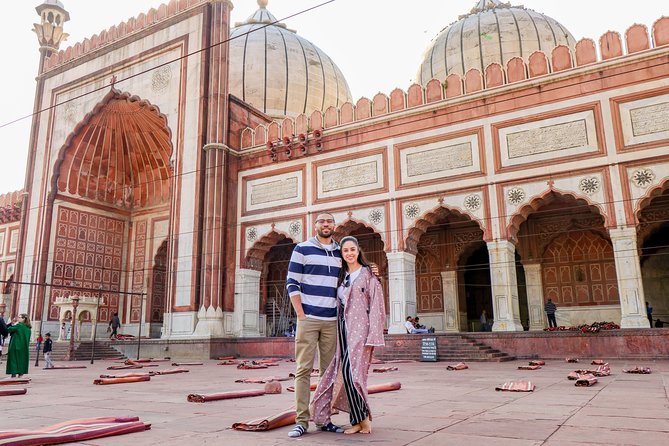
Jama Masjid is the kind of landmark that looks impressive from the outside, then hits differently once you’re inside the courtyards. Expect about 45 minutes here, with the guide sharing stories tied to Shah Jahan and Old Delhi’s Islamic heritage.
A key practical note: the Jama Masjid entrance ticket is not included and is listed as ₹450 per person. Plan for that cost up front so you’re not scrambling at the gate.
You’ll also be facing some very real crowd energy. The tour includes the clothing rules you’ll need at places of worship: knees and shoulders covered, and you’ll remove shoes. The good part is that shoes are safely stored for you, so you aren’t juggling a bag all day.
Dariba Kalan and Kinari Bazaar: shopping streets as culture, not just stores
After Jama Masjid, the route shifts into smaller lanes and trade areas—two of the best ways to understand Old Delhi as a living city. Dariba Kalan, known historically as a “jewellers’ lane,” gives you a quick look at old façades and the trading legacy behind the storefront rhythm.
Then comes Kinari Bazaar, a wedding and trousseau market where borders, sequins, laces, and decorations appear stacked for the next event. This stop is only around 15 minutes, but it’s built for context: you’re not just seeing goods, you’re seeing what North Indian weddings look like from the ground up.
My advice: treat these bazaar segments like short field lessons. If you wait for them to feel like a museum, you’ll rush past what makes them meaningful. Focus instead on how people move, how merchants display products, and how the lane layouts shape daily commerce.
The Row of Nine Houses (Naughara) photo stop
Next you’ll pause at Naughara – the Row of Nine Houses, a quieter cul-de-sac of painted havelis. Even with limited time (about 20 minutes), this is one of the nicer “slow down” moments because it’s less about the push and shove of main lanes.
Your guide explains Jain merchant history and architectural details. If you like photos, this is also a good place to capture the contrast between grand religious sites and everyday residential-style heritage.
This stop is primarily about observation, not ticketed entry. So you’ll want to keep your camera ready, but also keep your eyes up—architecture details here are the point.




Jain Temple: carvings, calm, and what to do if it’s closed
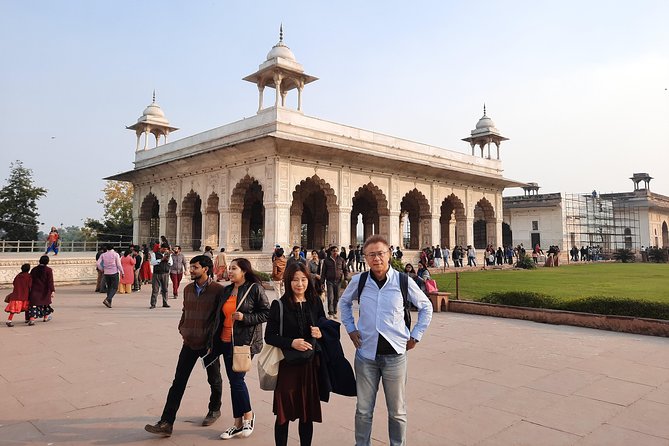
The plan includes a Jain temple visit (about 15 minutes). Expect a serene contrast to the street noise: intricate carvings, painted ceilings, and a look at peaceful rituals that connect to Jain principles of non-violence and simplicity.
Admission at this site is listed as free. That said, you should be aware that temple hours and access can change, and you might find it closed on the day you go. If that happens, don’t take it as a failure—Old Delhi timing isn’t always museum-timetable perfect.
Practical tip: if you’re sensitive to crowds, keep your face and breathing comfortable. One specific suggestion that comes up: bring a face mask because the spice areas can smell strong and feel intense when you’re packed in close.
Gurudwara Sis Ganj Sahib and the langar experience
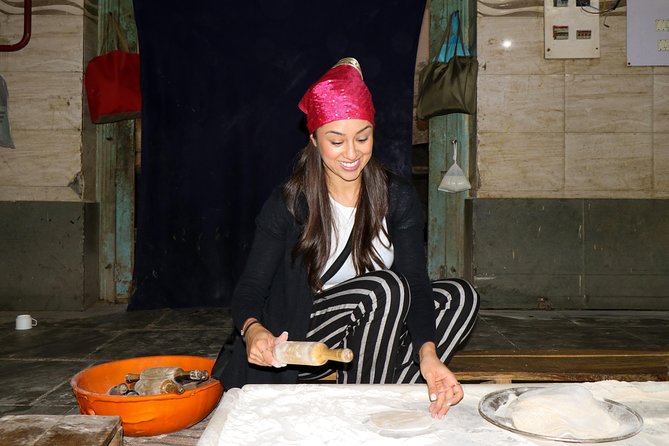
One of the best “human scale” stops is Gurudwara Sis Ganj Sahib. This is about 30 minutes, and it’s not just a viewing stop—the tour helps you understand the role of the langar, the community kitchen, and the idea of seva (service).
You’ll explore the shrine and see volunteers cooking and serving. It’s also a good moment to slow down, stand back from the flow, and watch how people participate in daily faith.
Admission is listed as free here. You’ll still need the worship clothing rule: covered shoulders and knees, and shoes off. The guide team typically helps you manage this without turning it into a hassle.
For many first-timers, this stop is where Old Delhi feels most grounded. You see a working community—real food, real routines, real people.
Khari Baoli: the spice market by cycle rickshaw

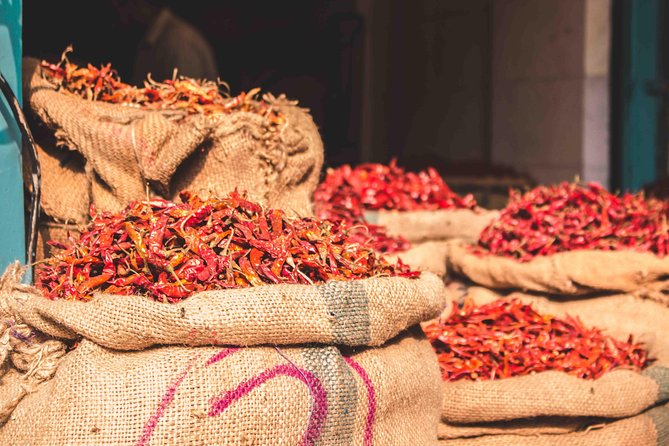
Then it’s time for the senses. You’ll ride a cycle rickshaw into Khari Baoli, described as Asia’s largest spice market, and walk through fragrant lanes for about 30 minutes.
This is the part of the tour that teaches you through experience. You’ll learn how spices are used in Indian cooking and how spices connect to Ayurveda, and you’ll get a chance to interact with local traders.
Admission is listed as free. But don’t treat it like a quick photo stop—this is a place where the crowd flow and smell intensity are part of the story. If you’re sensitive, prepare with a mask and maybe keep water handy (water isn’t listed as included, so bring your own if you can).
The cycle rickshaw ride is also one of the moments that people remember later. It keeps things moving through tight streets without requiring you to “fight” the congestion on foot.
Price, what’s included, and what to budget for

The tour is listed at $7.92 per person, and it’s commonly booked about 11 days in advance. At this price point, the value comes from access to a guide plus time-saving transport—especially in Old Delhi, where getting lost can waste precious hours.
What you get included:
- English-speaking tour guide
- Metro/subway ticket
- Pickup and drop-off (the tour data also mentions hotel/accommodation/airport/railway pickup and drop-off as included, and there’s an upgrade option for transfers from anywhere in Delhi)
- Rickshaw ride
- Snacks (the overview says snacks are included)
What’s not included:
- Jama Masjid entrance fee: ₹450 per person
- Gratuities, which are recommended
A quick budgeting reality check: if you’re coming with a tight afternoon window, also factor in how long each stop takes. Some elements are fixed in the plan, but crowds and small delays can happen. The tour may feel packed because it is designed to fit a lot into a short time window.
If you’re the type who hates uncertainty, ask your guide early about your return timing. Setting expectations at the start is smart.
Guides, pacing, and the “shopping” question
I’ll be honest about this: Old Delhi tours can drift into sales territory if the guide isn’t careful. Some people have described shopping-heavy moments, including being steered toward specific shops.
Your best move: decide before you start what you will and won’t do. If you want zero shopping pressure, say it calmly at the beginning. A good guide can still show you markets and explain local commerce without turning it into a sales pitch marathon.
Pacing is another factor. The tour is short, which is great if you only have a few hours, but it means you’ll feel every minute. If you’re traveling with a very strict schedule, build in extra buffer time to account for crowds, shoe removal, and the time it takes to regroup after rickshaw segments.
On the flip side, the highest praise points focus on guides who keep you moving and explain things clearly, with rickshaws, street snacks, and key religious sites working together into a satisfying arc.
Packing and rules that make the day smoother
This tour is hands-on, so your comfort matters. The tour data is clear about key requirements:
- Moderate physical fitness needed
- Knees and shoulders covered at places of worship
- Shoes removed at worship sites, and shoes/slippers are stored for you
- Comfortable walking shoes recommended
I also recommend practical extras that match what people experience in the market areas:
- A face mask if spice smell and crowd density bother you
- A small tote or crossbody bag for anything you remove during mosque/shrine stops
- Keep your phone accessible for photos, but expect to put it away during crowd flows
One more small mindset tip: treat this as a guided walk through real city life. That means you may not get “perfect postcard silence.” The noise and movement are part of the lesson.
Who this tour fits best
This is an excellent fit if:
- You’re short on time and want a guided path through major Old Delhi highlights
- You want more than monuments—markets, food culture, and daily religious life matter to you
- You prefer a mix of walking and quick transport (especially for getting through dense streets)
It may be less ideal if:
- You strongly dislike any shopping stop or sales-focused stops
- You need rigid timing with zero flexibility
- You’re very sensitive to crowded, spicy environments
The tour also works well as a first Old Delhi experience. It helps you learn the street logic fast, so later you can explore on your own with fewer wrong turns.
Should you book it?
Yes—if you want a fast, guided introduction to Old Delhi that mixes Jama Masjid, a Sikh shrine and langar, and the Khari Baoli spice market with a fun rickshaw ride. The price is unusually low for the amount of guidance and transport you get, and the structure is designed to help first-timers feel oriented instead of overwhelmed.
Before you go, do two things: plan for the ₹450 Jama Masjid entrance fee, and tell your guide early that you’re not looking for shopping pressure if that’s your preference. If you do that, you’ll likely walk away feeling like you understood Old Delhi’s textures—sounds, smells, and community life—without wasting your precious hours getting lost.
FAQ
How long is the Old Delhi Heritage Walking tour?
The tour runs about 3 to 4 hours.
What does the tour cost, and is the Jama Masjid ticket included?
The price is $7.92 per person. The Jama Masjid entrance fee (₹450 per person) is not included.
Does the tour include pickup and drop-off?
The tour offers pickup, and the included details mention hotel/accommodation/airport/railway station pick-up & drop-off. There is also an upgrade option for hotel transfers from anywhere in Delhi.
Are street food and snacks included?
Yes. The overview states that snacks are included, and the experience is built around tasting street food dishes.
Do I need tickets for the metro?
A metro/subway ticket is included.
What are the clothing and shoe rules at places of worship?
You should wear clothing that covers knees and shoulders at places of worship. You will need to remove shoes and slippers, and they will be safely stored for you.
Where does the tour start and end?
The tour starts at United Coffee House, Inner Cir, E-15, Block E, Connaught Place, New Delhi and ends back at the same meeting point.