REVIEW · PARIS
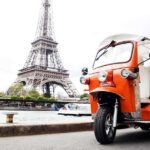
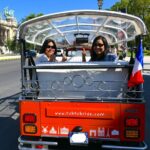
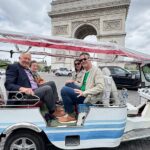
Best of Paris Private Rickshaw bike Tour with guide
Book on GetYourGuide →Operated by GoTurtle · Bookable on GetYourGuide
Paris in a couple of hours works best when you do it smart. This private rickshaw bike tour lines up major monuments with onboard audio so you get context fast, without getting stuck in gridlock.
I especially like how the route covers both the classic skyline (Eiffel Tower, Notre-Dame area, Pantheon) and the “modern postcard” spread (Trocadéro, Arc de Triomphe, Champs-Élysées). I also like that you can expect photo stops at the big hitters, which makes a short visit feel complete.
One consideration: city streets can be unpredictable, and on at least one run road closures limited which landmarks were reachable, so your guide may reroute to still show great views and smaller backstreets.
In This Review
- Key points to know before you ride
- A Private Rickshaw Bike Snapshot of Le Tout Paris
- Meeting at Rue de Rivoli and Choosing Your Starting Point
- How the Route Feels: Photo Stops, Easy Sight Lines, and Traffic Avoidance
- Louvre Area to Hôtel de Ville: A Power-Start for First-Time Paris
- Notre-Dame to Pantheon: Gothic Drama and Intellectual Paris
- Luxembourg Gardens to Saint-Germain: Classic Squares and Left Bank Atmosphere
- Seine River and Pont Stops to Eiffel Tower: Views Without the Hassle
- Trocadéro to Champs-Élysées: Triumphal Arcs and Big-Avenue Energy
- Assembly, Place Vendôme, Palais Garnier, and the Louvre Return
- Sacré-Cœur to Finish: The Hype, the View, the Reality
- Audio Guide and Guide Quality: What You’ll Notice Fast
- Who This Tour Suits Best (and Who Might Prefer Something Else)
- Should You Book This Best of Paris Rickshaw Tour?
- FAQ
- How long is the Best of Paris private rickshaw bike tour?
- Where do I meet the guide, and where do I get dropped off?
- Is this a private tour?
- Is an audio guide included?
- What languages are the host or greeter available in?
- Can I cancel for a refund?
- Are alcohol or drugs allowed?
Key points to know before you ride
- Private group ride: You’re not sharing the rickshaws with a large crowd, which keeps the pacing calmer.
- Onboard audio guide: Multiple languages are available, so you can follow along even during photo stops.
- Photo-stop design: The itinerary is built around quick stops, so you cover more in less time.
- Traffic avoidance focus: The whole point is to move through central Paris without sitting in long traffic jams.
- Route can flex: If streets close, guides often substitute smaller streets and scenic spots rather than cancel the experience.
- Guide quality matters: Multiple guides were praised for patience and helpfulness, and one booking noted hearing the guide can be an issue.
A Private Rickshaw Bike Snapshot of Le Tout Paris
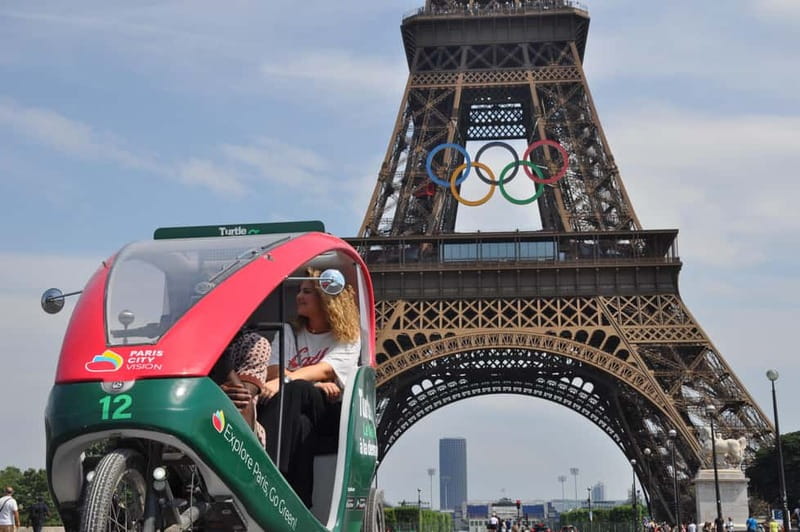
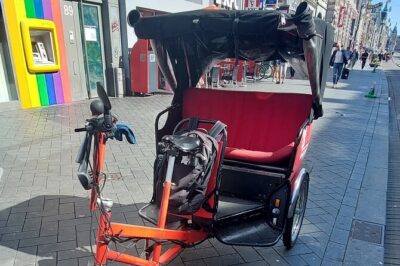
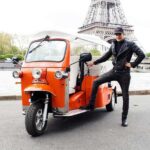
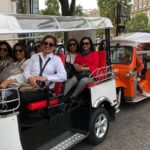
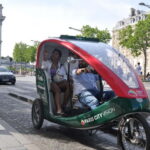
If you want Paris highlights without turning your day into a logistics puzzle, this tour fits the bill. You ride a private rickshaw bike through the center of the city and stop for photos at famous landmarks, with an audio guide running in your chosen language. That combination matters: monuments are easier to enjoy when you’re not constantly checking maps and rerouting on the fly.
What makes this experience feel “worth it” is the scale. In a short window, you can go from landmark-to-landmark while still seeing street life: bridges, major avenues, and the Seine’s visual pull. Reviews back that up too, with guides like Ibrahim, Ama, and Ahmid praised for making the time feel productive and photo-friendly.
You can also read our reviews of more tours and experiences in Paris.
Meeting at Rue de Rivoli and Choosing Your Starting Point
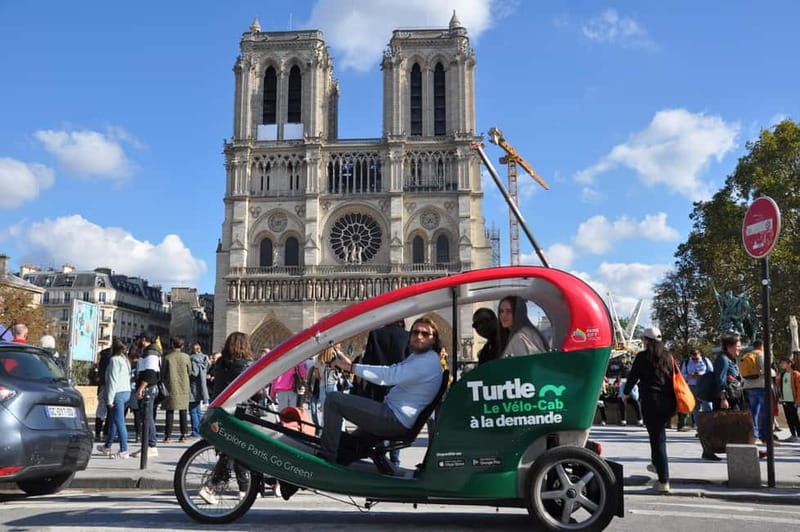
You’ll meet back at 99 Rue de Rivoli, 75001 Paris, and the tour offers two starting options depending on what you book: 99 Rue de Rivoli or Carrousel du Louvre. Both are central, which is a big deal in Paris. Starting near the Louvre area helps you hit the “core” sights early and then spiral outward.
The ride loops back to one of the same two drop-off locations: 99 Rue de Rivoli or Carrousel du Louvre. That return matters because it reduces the chance you’ll spend your last hour commuting across town.
If you’re timing your tour around another activity, this is also a good feature. One review praised a guide for dropping the group exactly where they wanted. I’d still plan a little buffer, since street conditions can shift.
How the Route Feels: Photo Stops, Easy Sight Lines, and Traffic Avoidance
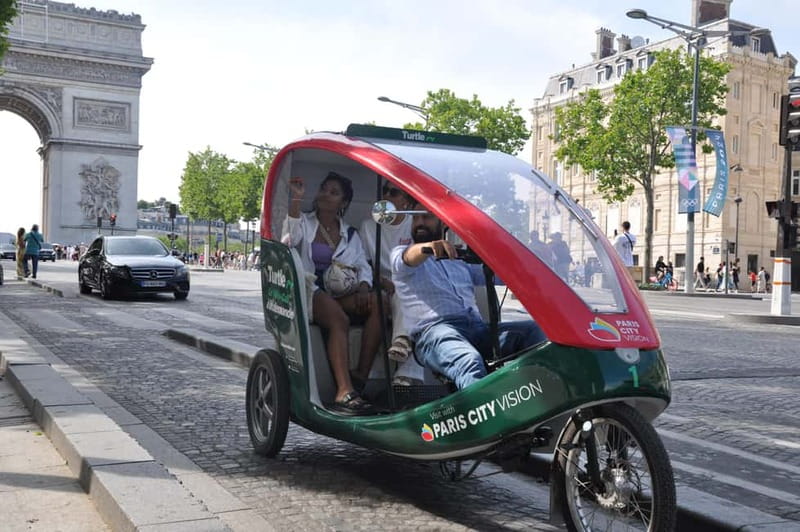
This isn’t a slow walking tour where you linger at every corner. Instead, it’s built for photo stops and quick orientation moments—perfect when you have limited time or jet lag and you just want the “Paris greatest hits” feeling.
The tour design also takes traffic pressure off your day. Paris traffic can be chaotic, and even short delays can ruin momentum. By using the rickshaw bike setup, you’re meant to avoid those long traffic jams while still getting out to see the sights.
There’s one practical drawback to keep in mind: if a specific street is blocked (events, marches, or other disruptions), your exact sequence may change. One run that ran into serious street closures around the Louvre start area and near the Seine side was still handled well, with the guide rerouting through smaller lanes and showing alternate scenic spots. Plan for flexibility, not a perfectly scripted route.
Louvre Area to Hôtel de Ville: A Power-Start for First-Time Paris
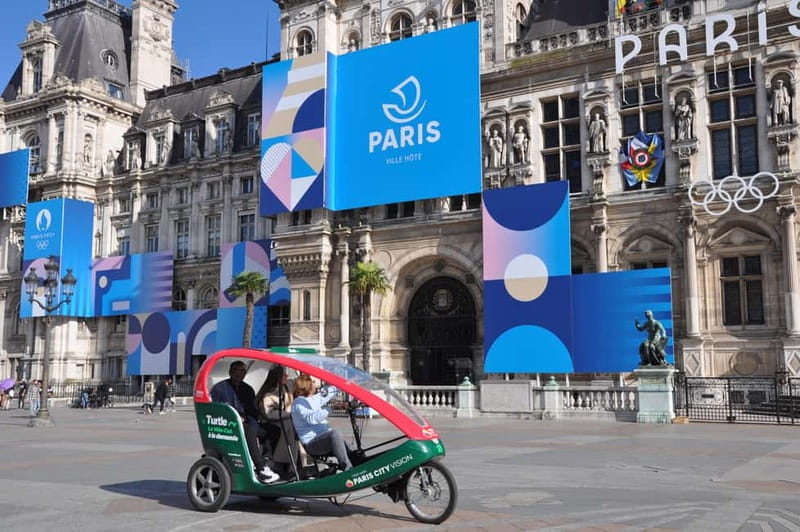
The tour’s early stretch begins in central Paris and quickly sets the tone: you’ll see the kinds of buildings that define the city’s skyline and civic identity.
You start either at 99 Rue de Rivoli or near the Carrousel du Louvre area, then head toward Hôtel de Ville for a photo stop. From there, you move into major Cathedral and university territory: this is where Paris looks like Paris—big stone landmarks, formal squares, and views that feel designed for pictures.
Why this early part works: it helps you build a mental map. Even if you’ve never been to Paris, you begin to connect neighborhoods and monuments to real streets and bridges. That makes the rest of your trip easier, especially if you plan to return later under your own steam.
If you care about getting good photos, arrive camera-ready. The tour stops are short by design, so having your phone already set (brightness up, photo mode ready) will save time.
Notre-Dame to Pantheon: Gothic Drama and Intellectual Paris
Next come some of the most recognizable names on the Paris list: Notre-Dame Cathedral and the Pantheon, plus a stop by La Sorbonne.
You’ll have a photo stop at Notre-Dame. Even if you’ve seen pictures, standing near the area gives you a sense of scale and how the city’s streets frame the cathedral’s presence. It’s one of the best examples of why Paris is so photographable: the buildings feel like they belong to the street layout, not pasted on afterward.
Then you pass La Sorbonne for another photo stop. That’s a quick hit of academic Paris—stone facades and a slightly different rhythm than the tourist-heavy main boulevards.
Finally, you reach the Pantheon for a photo stop. The Pantheon’s look is part civic monument, part grand landmark, and it adds a “serious Paris” contrast to the romantic Seine later in the day. It’s a nice pivot from the cathedral mood to a more civic, monumental feel.
A small consideration: because these are major zones, crowding can happen. Photo stops are quick, so you’ll likely be moving while others set up shots too.
Luxembourg Gardens to Saint-Germain: Classic Squares and Left Bank Atmosphere
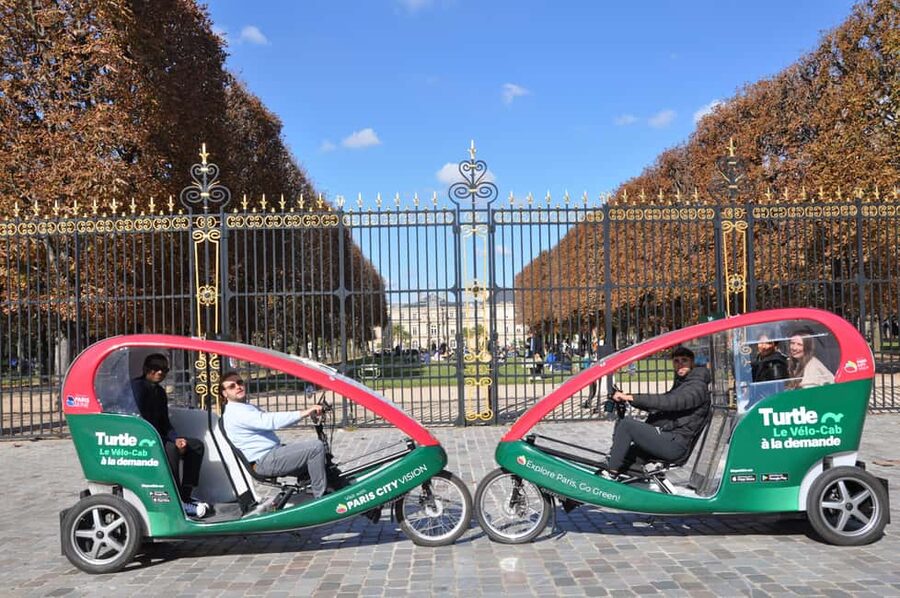
This section is where the tour shifts from “most famous monument” mode to “Paris everyday romance” mode.
You’ll hit Luxembourg Gardens for a photo stop. Even if you don’t spend long inside, this stop gives you a sense of how much Paris lives beyond the biggest landmarks. It’s a hint of the Left Bank’s slower cadence.
Then you continue with stops including Church of Saint-Sulpice and Saint-Germain-des-Prés. Saint-Sulpice brings a calmer, less purely tourist feel than the big cathedral zone, while Saint-Germain-des-Prés gives you that famous neighborhood identity in a single stop—streets that feel made for café days and late conversations.
Why this is valuable on a short itinerary: it balances your day. If you only chase monuments, Paris can feel like a checklist. These stops add texture, and they help you remember the trip beyond just the photos.
Seine River and Pont Stops to Eiffel Tower: Views Without the Hassle
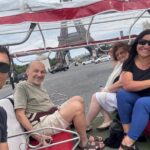
The Seine portion is often the reason people book Paris tours in the first place, and this one leans into it. You’ll ride along the river and stop at bridges for photos, then move toward the Eiffel Tower.
You’ll include stops at:
- Seine River (photo stop)
- Pont de l’Alma (photo stop)
- Pont de Bir-Hakeim (photo stop)
- Eiffel Tower (photo stop)
You’ll also see the Statue of Liberty along the route (a Paris symbol of fraternity, often referenced in the area near the Eiffel-side river views and viewpoints). The key here is that you’re not just passing by the idea of the Eiffel Tower—you’re approaching it with river framing and bridge angles that make it feel cinematic.
Then comes the Place du Trocadéro for a photo stop, which is one of the best viewpoints for Eiffel Tower composition. If you’re only going to take a few Eiffel photos, this is where you want them.
One practical note: guides handle road changes differently. If the Seine side gets rerouted, your guide will likely still aim for strong sight lines. Keep your eyes up—sometimes the best views happen on the way between stops.
Trocadéro to Champs-Élysées: Triumphal Arcs and Big-Avenue Energy
After the Eiffel-side views, the tour swings toward the grand ceremonial heart of Paris.
You’ll ride past Arc de Triomphe with a photo stop, then continue to Champs-Élysées for another photo stop. This is the part of the city where Paris feels most like its own movie set: broad avenue perspectives, heavy symbolism, and the sense that everything is aligned for dramatic arrival.
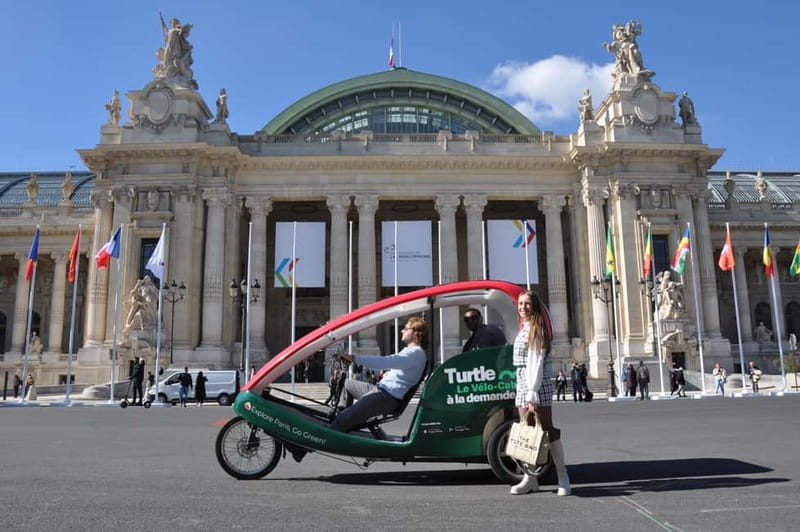
You’ll also include Grand Palais for a photo stop and Pont Alexandre III for another photo stop. Those two add a “luxury Paris” feel—ornate architecture and bridge angles that look good even if you only stop briefly.
This section is ideal if you want your Paris photos to include more than stone churches. It gives you street-level grandeur with minimal extra planning.
Assembly, Place Vendôme, Palais Garnier, and the Louvre Return
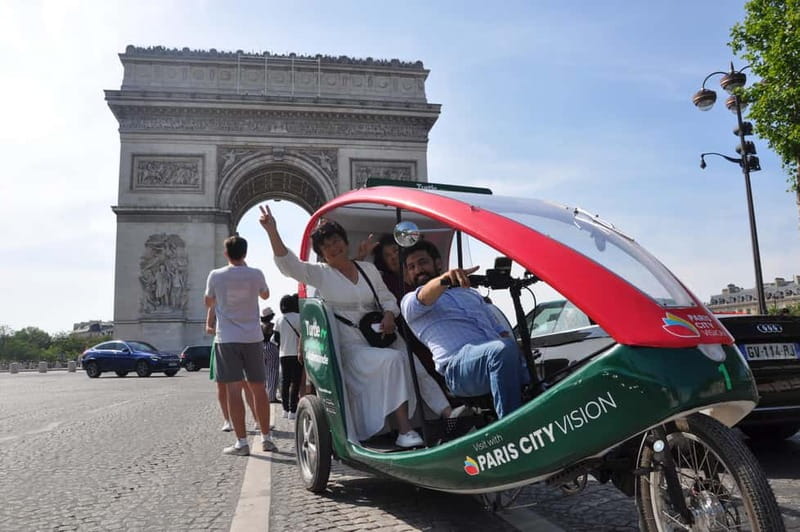
The tour keeps stacking iconic names as you move through central zones: l’Assemblée Nationale, Place Vendôme, and Palais Garnier all appear as photo stops.
- l’Assemblée Nationale gives you the civic-government angle of Paris, the city’s political center feel.
- Place Vendôme is classic, symmetrical, and photo-friendly. Even a quick stop can give you that “old-money” Paris impression.
- Palais Garnier adds a theater-and-opera vibe to your list.
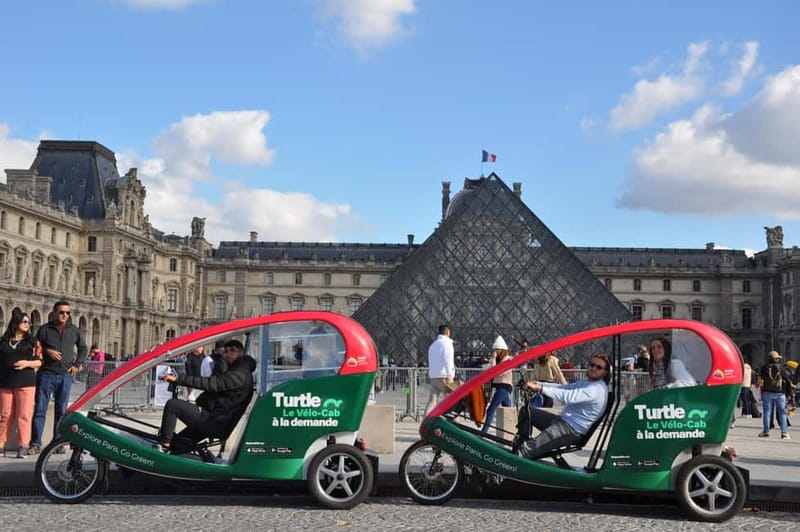
Then you loop into Louvre Museum area with a photo stop. Even if you’re not going inside, this helps you connect the Louvre’s place in the city. The Louvre is so dominant visually that seeing it from the street (even briefly) can help everything else click when you look at maps later.
One booking highlighted how a tour can be a good wrap-up for an earlier 3-day itinerary. If you already saw parts of Paris, this kind of tour helps you compress the landmarks you missed into one ride—without starting from scratch each day.
Sacré-Cœur to Finish: The Hype, the View, the Reality
The tour’s last stretch includes Sacré-Cœur Basilica for a photo stop. That’s the kind of ending that makes people understand why Montmartre stays in everyone’s photos: you get that hilltop Paris identity even if you don’t spend the afternoon climbing every step.
Ending with Sacré-Cœur also gives your day a nice emotional arc. You started with the Louvre and civic center vibe, moved through cathedral and intellectual stops, then finished with the “Paris at its most romantic” style view.
If you’re sensitive to wind and cooler weather, you may want a light layer for the end—bigger viewpoints and higher areas can feel colder even in mild seasons. (This isn’t a rule, just smart trip behavior.)
Audio Guide and Guide Quality: What You’ll Notice Fast
This is a private group tour with an onboard audio guide included. Audio is available in Dutch, German, English, French, Italian, Spanish, Japanese, and Chinese. You’ll get the language support you need for faster comprehension, especially when you’re bouncing between landmark names.
Guide quality seems to be a real strength here. Reviews praised guides such as Vince for patiently showing Eiffel Tower sights, and Ama for being phenomenal and making the stops feel well planned. Ahmid was also highlighted for excellent pacing and impressive panoramic photo spots.
There is one caution. One booking noted difficulty hearing the tour guide. If you rely on spoken commentary, ask to ensure the audio/guide volume works for you. If your language and hearing needs are specific, it’s worth letting your greeter know early so you don’t lose the value of the narration.
Also, some tours allow light customization. One review mentioned you could customize where you want to go and where to spend time. If that’s important to you, you’ll want to set your priorities at the start: Eiffel photos first, or maybe a longer pause near the Seine.
Who This Tour Suits Best (and Who Might Prefer Something Else)
This tour is best for you if:
- You want major Paris monuments in a short time window (the duration can range from 45 minutes to 3 hours, depending on the starting time you pick).
- You dislike sitting in traffic and want a route built for moving.
- You prefer a hybrid approach: guided context with minimal walking.
It may not be your best match if you want long, slow museum-style time. This is photo-stop and orientation format, not a deep-dive into interiors. If you want to spend 2 hours inside a building, you’ll need to pair it with separate tickets and guided museum time.
Also, if you want constant walking with lots of local street wandering, you might find the pacing too fast. But if your goal is getting your bearings and seeing the big symbols, this is a smart use of time.
Should You Book This Best of Paris Rickshaw Tour?
I’d book it if you’re chasing efficiency without sacrificing key landmarks. The private setup, the onboard audio guide, and the “avoid the traffic” intent make it feel like a practical way to get a first-pass Paris overview. The itinerary also mixes the Eiffel-side views, grand boulevards, and classic Left Bank identifiers, so your photos won’t all look like the same angle.
I’d be slightly cautious if you’re picky about hitting every single stop exactly as listed. Paris street closures can force reroutes, and one run involved significant detours near the Louvre and along the Seine side, though the guide still produced scenic alternatives.
If you want a fast way to see Le Tout Paris and you’re okay with photo-stop pacing, this tour is a strong bet.
FAQ
How long is the Best of Paris private rickshaw bike tour?
The duration offered can range from 45 minutes to 3 hours, depending on the starting time you select.
Where do I meet the guide, and where do I get dropped off?
You start and end at 99 Rue de Rivoli, 75001 Paris, with an option to start (and return) at Carrousel du Louvre. The exact meeting point can vary depending on which option you book.
Is this a private tour?
Yes. It’s listed as a private group experience.
Is an audio guide included?
Yes. An onboard audio guide is included, with language options including Dutch, German, English, French, Italian, Spanish, Japanese, and Chinese.
What languages are the host or greeter available in?
The host or greeter is available in English and French.
Can I cancel for a refund?
Yes. The tour offers free cancellation up to 24 hours in advance for a full refund.
Are alcohol or drugs allowed?
No. Alcohol and drugs are not allowed.