REVIEW · PARIS
The Tout Paris Private Rickshaw bike Tour with Audio Guide
Book on GetYourGuide →Operated by GoTurtle · Bookable on GetYourGuide
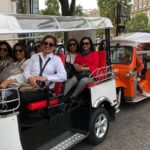
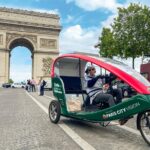
Paris from a rickshaw feels like a shortcut. On this private rickshaw ride, you cover a lot of Paris highlights in two hours, with an onboard audio guide that keeps the story going as you move.
Two things I really like: the pace (you’re not stuck sitting through traffic) and the built-in audio, which helps you understand what you’re seeing without stopping for explanations all the time. One thing to consider: the ride can feel more intense in heavier afternoon traffic, and the rickshaw seating/roof can be a little snug if you’re taller.
In This Review
- Key things you’ll notice on this Tout Paris rickshaw ride
- Why a private rickshaw makes Paris feel doable
- Getting started near the Louvre and ending back at Rivoli
- The audio guide: how you get the stories without slowing down
- The Tout Paris route, step by step (what each stop is for)
- Comfort, timing, and the little realities of riding
- Price and value: is $147 per group up to 2 a smart buy?
- Who should book this Tout Paris rickshaw tour
- Should you book this Tout Paris Private Rickshaw Tour?
- FAQ
- Where does the tour start and end?
- How long is the Tout Paris private rickshaw tour?
- Is the tour private?
- What’s included in the price?
- What languages are available for the audio guide?
- Are there any restrictions on the tour?
Key things you’ll notice on this Tout Paris rickshaw ride
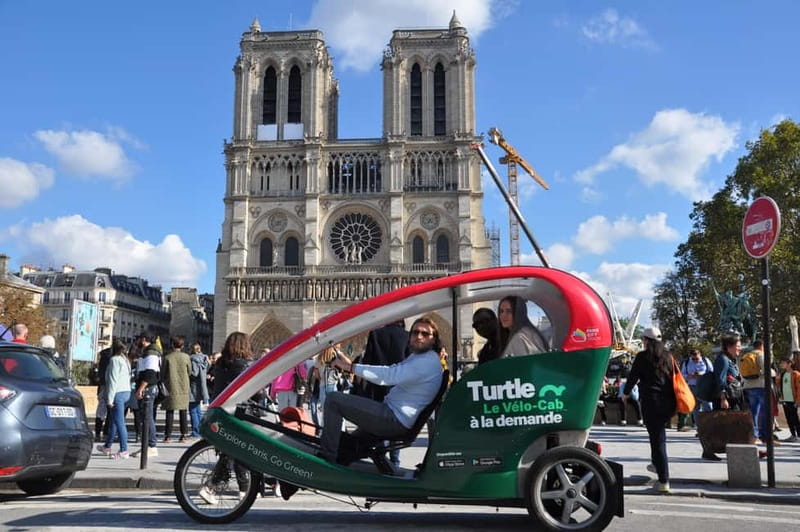
- Private, up to 2 people means a calmer experience than large group tours
- Onboard audio guide in many languages helps you follow the route without guessing
- Photo-stop rhythm at major monuments keeps time efficient
- Seine crossings and bridge views add variety beyond just walking streets
- WiFi on board is handy for quick map checks and posting pics
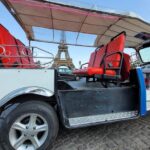
- Comfort note: if you’re tall, watch your head/fit under the rickshaw roof in stop-and-go areas
Why a private rickshaw makes Paris feel doable
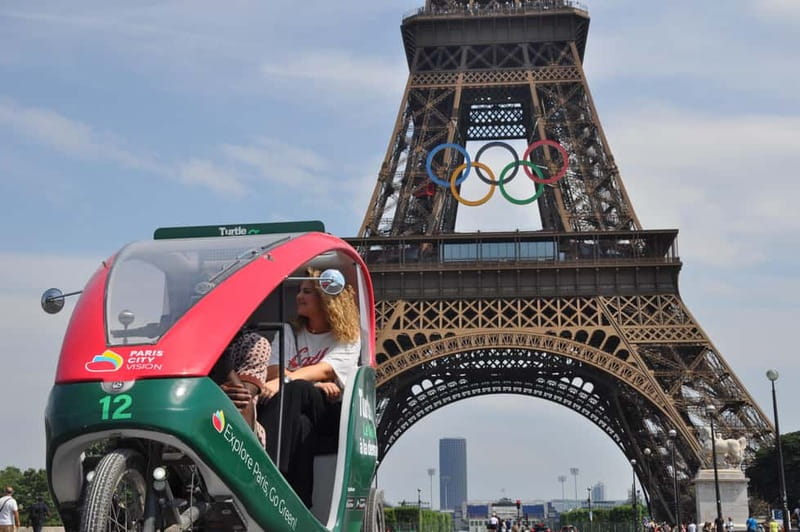
Paris can be overwhelming fast. This tour is designed for the opposite feeling: you get a tight loop of famous places, and you move between them without the usual parking-lot frustration. If you want the big sights in a short window, a rickshaw is a smart way to keep your energy for photos and watching the city.
I also like that this isn’t only about monuments. You’re taken through different kinds of Paris scenes—official buildings, grand squares, classic neighborhoods, and the riverfront—so your day feels like more than just a checklist.
And because it’s private (up to 2), you’re not squeezed into a crowd. That matters when you want to actually see what you’re photographing instead of craning over strangers.
You can also read our reviews of more tours and experiences in Paris.
Getting started near the Louvre and ending back at Rivoli
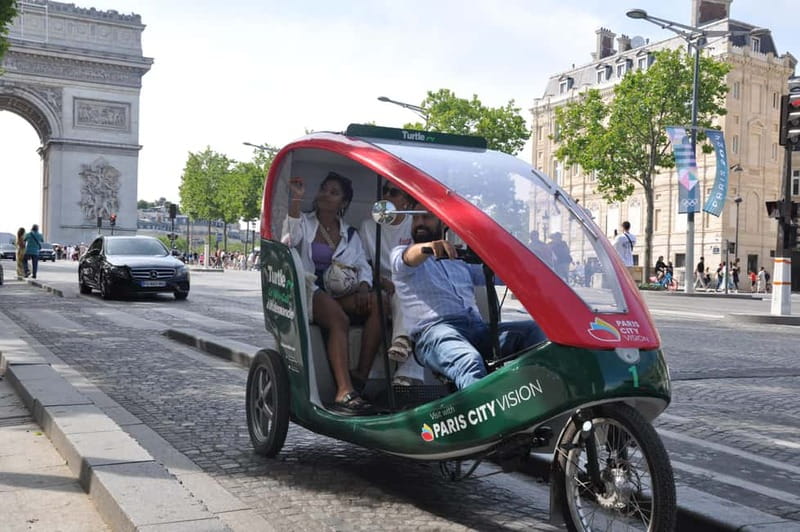
You meet at the exit of the Carrousel du Louvre area, and the tour starts and ends at 99 Rue de Rivoli (75001). That end point is a big deal: after two hours you’re back in the same central pocket, which is great for continuing your day with an easy metro hop or a planned dinner nearby.
The only practical thing I’d flag is visibility. In areas with multiple rickshaw operators, it can be tricky to spot the exact one you booked if the rider isn’t wearing something distinctive. I’d recommend you double-check the exact meeting address (99 Rue de Rivoli) and be ready to quickly confirm the correct rickshaw when you arrive.
The audio guide: how you get the stories without slowing down
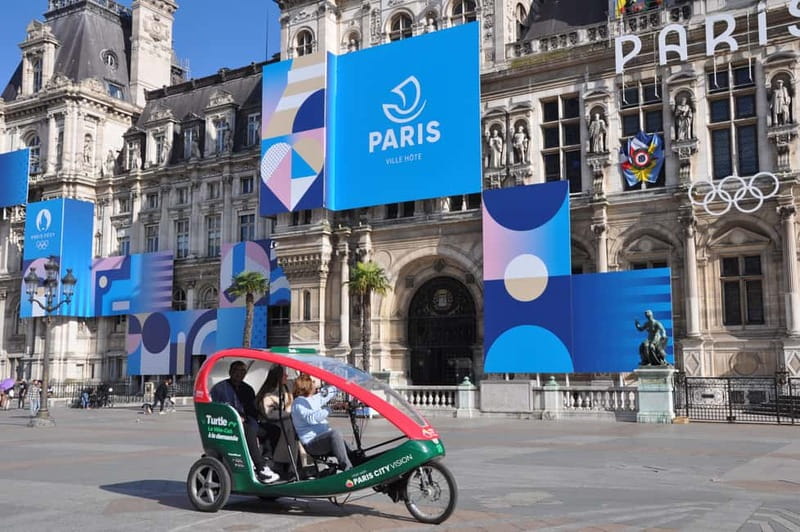
The ride includes an onboard audio guide, and it’s available in Dutch, German, English, French, Italian, Spanish, Japanese, and Chinese. That’s useful if you’re traveling with someone who prefers a different language than yours. You don’t have to rely on an app you forget to download, and you don’t lose time waiting for a live guide to catch up with everyone’s questions.
In practice, the audio guide also changes the vibe of sightseeing. Instead of just staring at facades, you get context while you’re already moving through the route. It’s especially helpful for landmarks like the Pantheon or government buildings where a quick explanation can turn a photo into something more meaningful.
The Tout Paris route, step by step (what each stop is for)
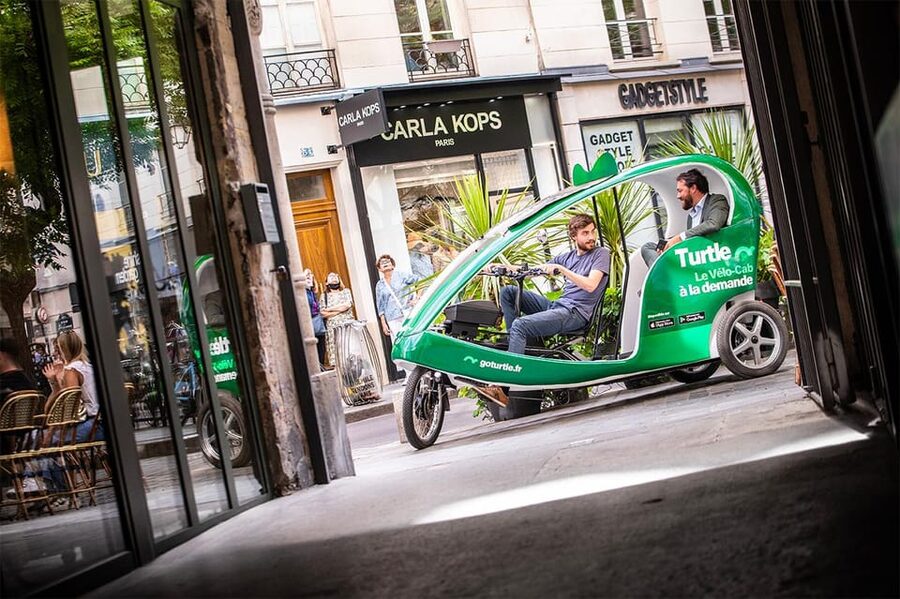
Hôtel de Ville (photo stop)
This is a strong start because it’s a civic landmark—an obvious marker that you’re in the heart of the city. The photo stop is quick, but it sets the tone: formal Paris, right away.
Notre-Dame Cathedral (photo stop)
From the first big building, you shift into one of the world’s most recognizable names. This is the kind of stop where even if you’ve seen pictures before, seeing the scale in person makes a difference.
La Sorbonne (photo stop)
La Sorbonne adds an academic feel to the tour. It’s a nice counterpoint to the cathedral: less postcard-famous, but very Parisian in its own way. It also helps the route feel less like a straight line of only the “top five” monuments.
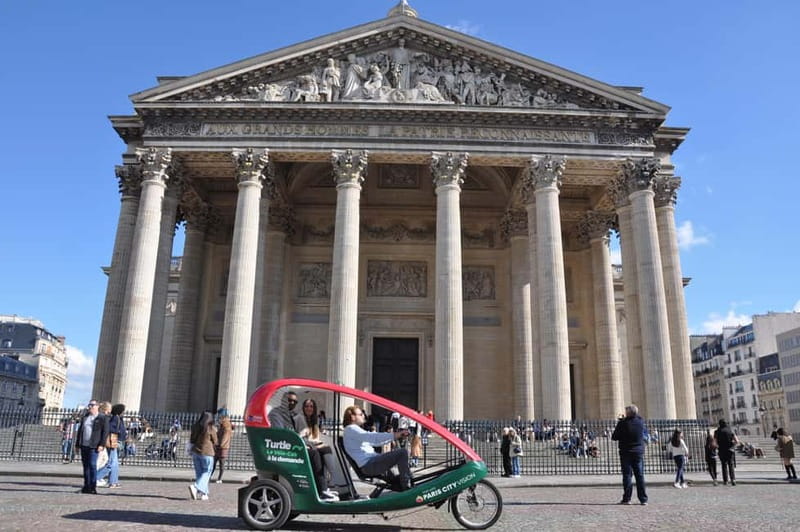
Pantheon, Paris (photo stop)
The Pantheon is another major “big monument” moment, and it helps you see how different Paris landmarks can look solemn and imposing without needing to be on a river view. This stop is also a good pause point to reset your camera settings and frame a clean shot.
Luxembourg Gardens (photo stop)
This is where the tour gives you a break in mood. Even without a long walk, you get the sense of a calmer pocket in the city. It’s a smart inclusion because it stops the route from becoming purely street-and-building heavy.
Church of Saint-Sulpice, Paris (photo stop)
After Luxembourg, the route continues with another major church stop. I like this because it builds contrast: you see a famous cathedral, then another iconic church, and the city starts to feel like a whole collection instead of a single highlight parade.
Saint-Germain-des-Pres (photo stop)
This is more about neighborhood energy than monument photos. You’re not just collecting sights—you’re moving through a part of Paris that many visitors want to feel. The photo stop is brief, but it’s useful for orientation if you plan to explore the Left Bank later.
Seine River (photo stop)
The Seine stop is a turning point. The river view makes the route feel more scenic and less boxed-in by streets. If you’ve been moving quickly from monument to monument, this is the moment that slows your attention in a good way.
Pont de l’Alma (photo stop)
Bridges are one of the best ways to see Paris because they give you angles you don’t get from the sidewalks. Here, the photo stop adds variety while keeping everything efficient.
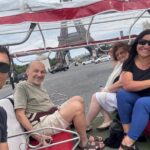
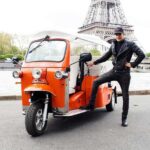
Eiffel Tower (photo stop)
Yes, it’s Eiffel Tower. But it lands differently on a rickshaw tour because you’re not trapped in a long walking circuit or stuck in observation-line frustration. You get a classic photo moment and then you keep going.
Pont de Bir-Hakeim (photo stop)
This bridge stop helps the route feel like it continues, not like it jumps from one postcard to the next. It also keeps the river-crossing theme going, which is a big part of why this tour feels like more than just photos on random streets.
Statue of Liberty, Paris (photo stop)
This is a fun detour within a landmark-focused route. It’s not just another building to photograph—it’s a recognizable symbol that surprises people who expect only French icons. You get the payoff of a distinctive sight without having to build a separate trip.
Place du Trocadéro (photo stop)
Place du Trocadéro is a top viewing area for people who want the famous Eiffel Tower view. Even during a quick stop, it’s the kind of spot that makes you pause and reframe your pictures.
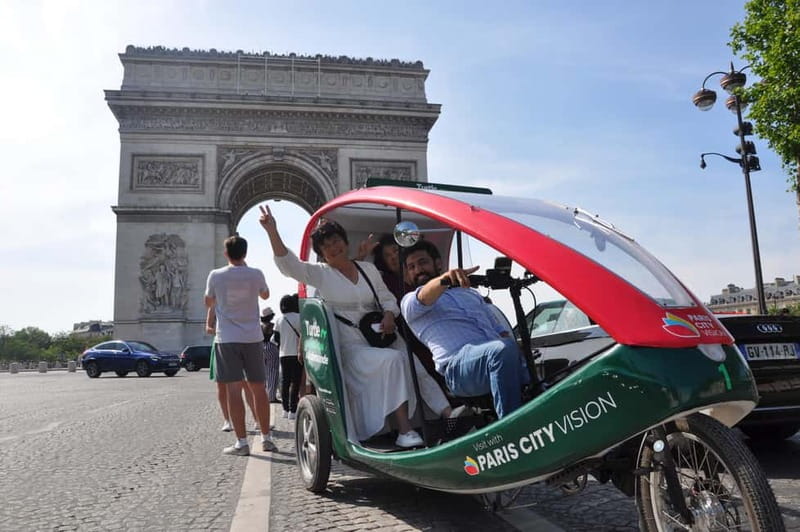
Arc de Triomphe (photo stop)
Arc de Triomphe is grand and obvious, and the photo stop gives you a chance to capture that scale. It also helps you understand the route’s geography—you’re heading into the “grand avenue” Paris style after the river and viewpoint stops.
Champs-Élysées (photo stop)
This stop is about the famous avenue presence. The tour doesn’t try to turn it into a long shopping walk, so you get a feel for the street without spending your limited time buying things you didn’t plan to buy.
Grand Palais (photo stop)
Grand Palais adds architectural weight. It’s one of those stops where the building itself feels like a scene, not just a background. It helps balance the route because you’ve already seen many civic and religious landmarks.
Pont Alexandre III (photo stop)
Another bridge stop, which is exactly what you want after Champs-Élysées. Bridges keep the Seine-in-the-picture feeling going and give you a different perspective as you move toward major institutional sites.
l’Assemblée Nationale (photo stop)
This is one of the route’s “watch the city’s function” moments. Government buildings shift the story from monuments to real institutions. Even if you’re not there for politics, it gives the tour a sense of Paris as a working capital, not just a museum city.
Place Vendôme (photo stop)
Place Vendôme brings a more formal square feel. It’s a good contrast to the wide avenues, and it’s helpful for getting photos with a clear, open frame—especially if you’ve been shooting in busier street angles.
Palais Garnier (photo stop)
Palais Garnier is where the tour starts to lean into performance and elegance. It’s a very recognizable Paris icon, and the stop works well as a “grand finale” style moment before you head back toward the Louvre area.
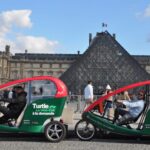
Louvre Museum (photo stop)
Ending near the Louvre is a smart move. Even if you’re not going inside, seeing the museum from the route gives you a bookend to the day, since the tour starts near the Louvre area too.
Arrive back at 99 Rue de Rivoli
You’re back where you started, which keeps the rest of your day flexible. If you want to grab a meal, do a quick metro ride, or continue walking nearby, you’re not forced into a complicated second transfer.
Comfort, timing, and the little realities of riding
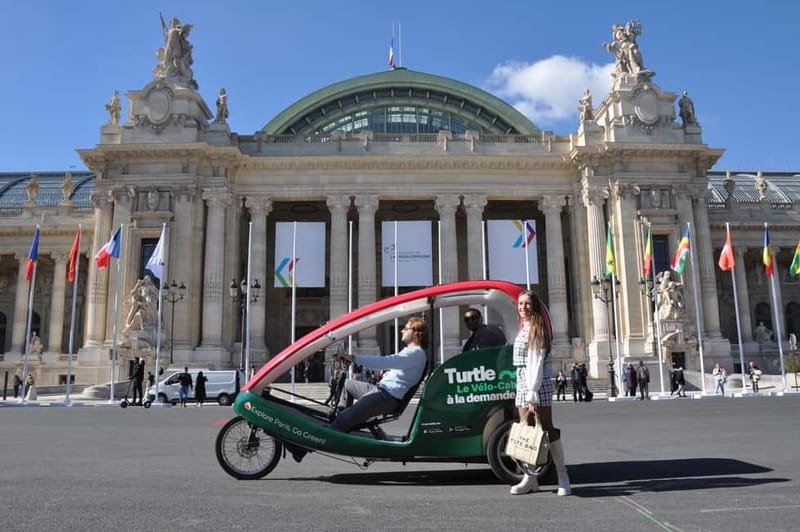
I like that this tour is designed to reduce the “two hours of walking fatigue” problem. But you are riding in a vehicle, so comfort matters.
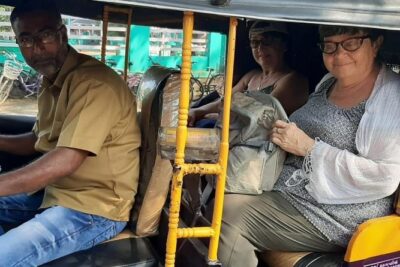
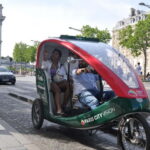
The biggest practical consideration is ride smoothness and head fit. One experience I’d keep in mind for your planning: in stop-and-go conditions, bumps can happen, and the rickshaw roof area may feel low for taller riders. If you’re on the taller side, sit thoughtfully from the start and keep an eye on your posture so you don’t find out the hard way.
Timing also matters. If you book an afternoon slot, expect heavier car energy around major areas. The upside is you’re still avoiding long traffic jams by using the rickshaw route concept. The downside is that you might feel more stress than in a calmer time window because the streets can be more intense.
Finally, note the rules: alcohol and drugs are not allowed. If you’re planning a special drink-focused day, this isn’t the format for it.

Price and value: is $147 per group up to 2 a smart buy?
At $147 per group for up to 2 people, the value depends on what you’re trying to solve.
You’re paying for three things:
- A private rickshaw ride instead of mixing with a big group
- Onboard audio guide included, in multiple languages
- Photo stops at a long list of major highlights, with WiFi on board for quick practical needs
If you and your travel partner want to see the Eiffel Tower, Notre-Dame area, Seine river views, Arc de Triomphe, and a long run of central Paris landmarks in just two hours, this price can be very reasonable. You’re also paying for convenience: getting between distant points without having to coordinate buses or manage lots of transfers.
If you’re the type who likes slow strolling and extended museum time, you might find this tour only scratches the surface. But as a first-day orientation or a “must-see in limited time” move, it’s priced in a way that makes sense.
Who should book this Tout Paris rickshaw tour
Book it if:
- You want a high-signal highlights route in 2 hours
- You’re traveling with one other person and prefer a private up-to-2 format
- You like learning in the background via an audio guide in your preferred language
- You want to see the Seine and major monuments without spending your day walking between them
Skip it if:
- You’re very sensitive to road bumps or tight seating space
- You want long stops at each landmark (this tour is built around photo stops and keeping momentum)
- You hate being in vehicles and would rather walk the city at your own pace
Should you book this Tout Paris Private Rickshaw Tour?
If you want a smooth, efficient Paris overview with famous landmarks and a strong river component, I think this is a solid choice. The private format helps it feel personal, the onboard audio guide helps you connect the dots, and the return to Rivoli makes it easy to keep your day going afterward.
Just do one thing to set yourself up for a great start: confirm your meeting spot and be ready to quickly identify the correct rickshaw when you arrive in the Louvre area. If you’re tall, pay attention to seating and roof clearance early in the ride. Get those basics right, and you’ll spend two hours seeing Paris the way most first-timers wish they had time for.
FAQ
Where does the tour start and end?
You meet near the exit of the Carrousel du Louvre area, and the tour starts and finishes at 99 Rue de Rivoli, 75001 Paris.
How long is the Tout Paris private rickshaw tour?
The duration is 2 hours.
Is the tour private?
Yes. It’s listed as a private group, for up to 2 people per group.
What’s included in the price?
Included: private rickshaw tour, audio guide, WiFi on board, and photo stops.
What languages are available for the audio guide?
The audio guide is available in Dutch, German, English, French, Italian, Spanish, Japanese, and Chinese.
Are there any restrictions on the tour?
Alcohol and drugs are not allowed.