REVIEW · PHNOM PENH
Phnom Penh: Private Tuk-Tuk Tour with English-Speaking
Book on GetYourGuide →Operated by Phnom Penh Local Tuk-Tuk and Taxi · Bookable on GetYourGuide
Phnom Penh shrinks into one smooth day. With a private traditional tuk-tuk and an English-speaking driver, you get a tight route through the city’s biggest sights without feeling herded. I like the built-in pacing here: you can stop, look, and move on, with time to walk at your comfort level.
Two things I really like: the hotel pickup and drop-off make the day simple, and the driver keeps the flow moving while still letting you choose what you want to enter. One consideration: it’s a long day with a lot of walking in hot weather, and it’s not suitable for people with back problems or wheelchair users.
In This Review
- Key moments that make this tour work
- Price and value for a full-day private route
- Getting started: Wat Phnom and the easy rhythm of tuk-tuk time
- Wat Onnaloam: a second temple stop without the rush
- National Museum: when Khmer art becomes your guide
- Royal Palace and the King Statues: Phnom Penh’s power in stone
- Independence Monument and the shift toward modern memory
- Toul Sleng S21: walking through a hard chapter at your pace
- Killing Fields: quiet time, honest scale
- Central Market and street art: a necessary contrast
- What the English-speaking driver actually adds (and what it doesn’t)
- Tuk-tuk comfort and practical tips for a 9-hour day
- Who should book this private tuk-tuk day
- Should you book this Phnom Penh tuk-tuk tour?
- FAQ
- FAQ
- How long is the Phnom Penh private tuk-tuk tour?
- Is pickup from my hotel included?
- Is this tour private or shared?
- What’s included in the price?
- Are entrance fees included?
- Can I choose to enter buildings or just view from outside?
- What should I bring for the day?
- What’s the cancellation policy?
Key moments that make this tour work
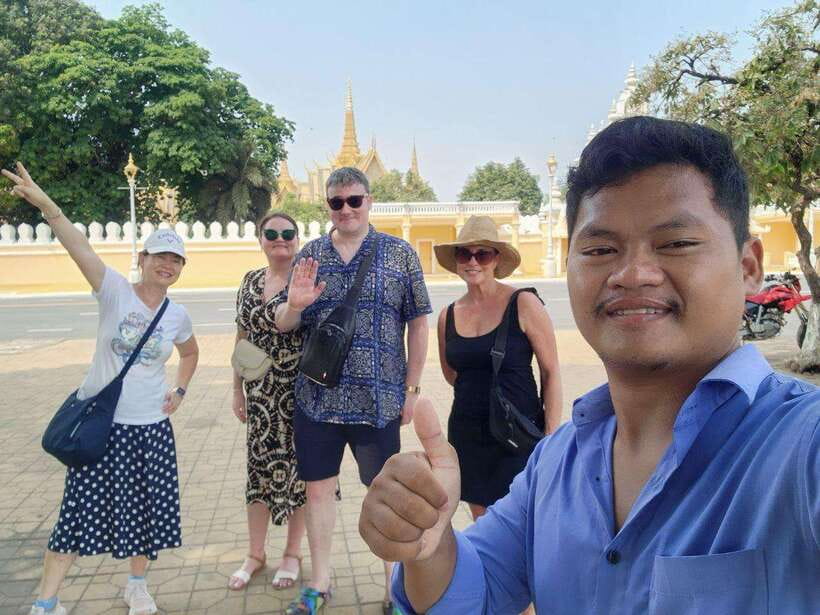
- Private tuk-tuk for a full-day route across Phnom Penh’s key landmarks
- English-speaking driver who explains what you’re seeing, without overload
- Flexible entry choices: go inside or view from outside depending on energy
- Memorial pacing at S21 and the Killing Fields with no rush through your walk
- Cold water and Coke to keep you comfortable while you’re out all day
- Street life time at the Central Market and nearby street art stops
Price and value for a full-day private route

At $50 per group (up to 1 person in your group), this is priced like a practical “see-the-city” day rather than a bargain-basement deal. The value is in the format: you’re not sharing a vehicle with strangers, you’re covering a lot of ground in one go, and you get an English-speaking guide who can explain key stops as you move between them.
Entrance fees, audio guides, and food are not included. That matters because some of the most important stops in Phnom Penh often come with entry costs. The upside is that you’ll usually be able to buy tickets on-site without complicated pre-planning. If you want a truly smooth day, carry cash for entrance fees and don’t plan on skipping meals entirely—this tour doesn’t include food.
If you’re traveling solo or as a small group and you want structure without tight schedules, this private tuk-tuk style can make more sense than joining a group bus tour. You get control over how long you linger at places like Wat Phnom Temple or the National Museum.
You can also read our reviews of more tours and experiences in Phnom Penh.


Getting started: Wat Phnom and the easy rhythm of tuk-tuk time
The tour begins at Wat Phnom Temple, a fitting first stop because it gives you a feel for Phnom Penh’s layout and spiritual atmosphere right away. You’ll start with a straightforward plan: get dropped near the site, walk at your own pace, and decide whether you want to go inside or just view what’s around you.
What makes this opening work is the tone it sets. You’re not jumping straight into the heavy memorial sites. Instead, you ease into the day with a temple where your eyes can adjust to the colors, movement, and sounds of the city. The tuk-tuk also helps you transition fast between very different areas—temple calm, museum formality, palace grandeur, and then the memorials.
Your English-speaking driver will explain each stop as you go, but not in a way that feels like a lecture. If you like having context without being bombarded with details, this is a good match.
Wat Onnaloam: a second temple stop without the rush
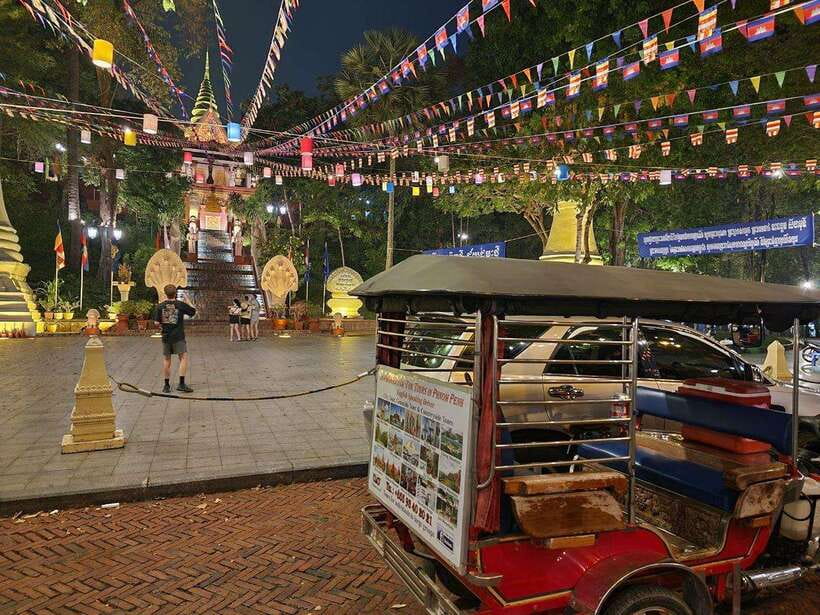
After Wat Phnom, you head to Wat Onnaloam. The point of adding another temple stop isn’t to repeat the same experience—it’s to widen your view of how religious sites function in Phnom Penh. Even when you’re not going inside, the temple grounds and surrounding areas help you understand how these places fit into daily life.
Again, you get a choice. If you’re tired, you can focus on exterior viewing and keep your legs fresher for later. If you’re feeling good, you can go inside and spend more time. That flexibility is a big deal on a day that also includes long, emotionally heavy stops.
National Museum: when Khmer art becomes your guide
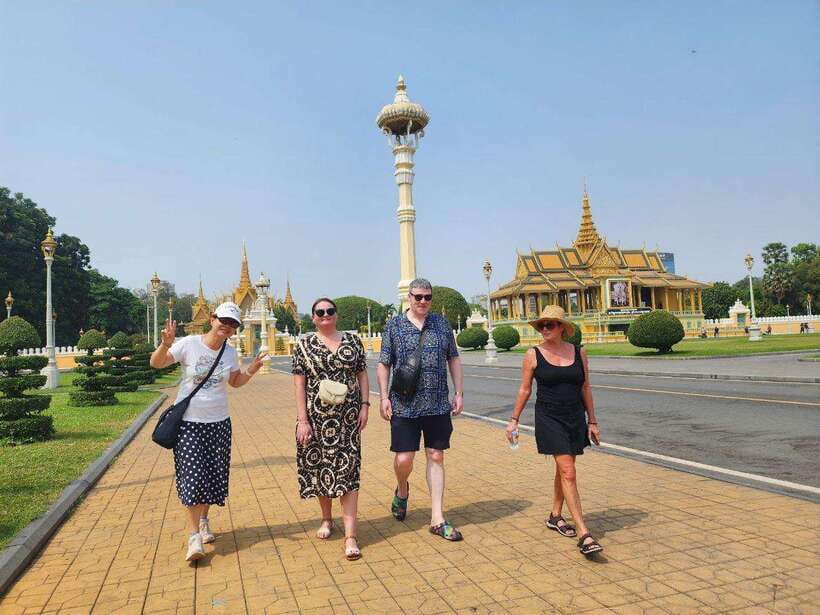
Next up is the National Museum. This is where the day often starts to feel more grounded and “learnable,” because museums give you a chance to slow down and look closely. Even if you’re not the type who reads every label, you’ll likely appreciate the broader storyline your driver builds as you move from site to site.
The practical advantage: with a tuk-tuk day, you’re not stuck waiting around for the next bus. You can spend enough time at the museum to see the main highlights without losing the whole day. If you want to go deeper, you can—if you don’t, you can still get the big picture.
One thing to keep in mind is timing and heat. Museums and memorials can be visually intense, so it helps to pace yourself. If you’re the type who gets overwhelmed quickly, choose shorter museum time and plan to refill with breaks later.
Royal Palace and the King Statues: Phnom Penh’s power in stone
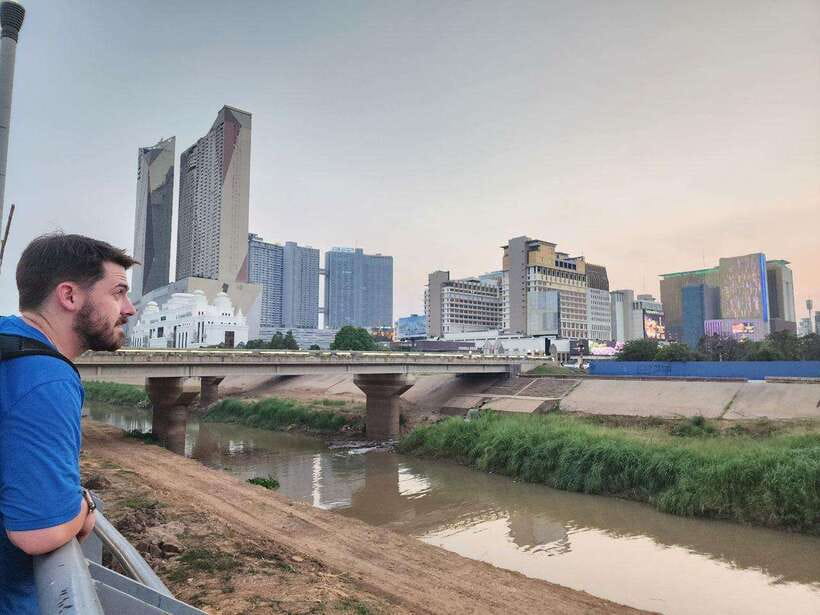
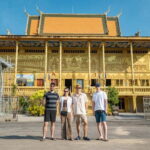
Then comes the Royal Palace and the King Statues. These stops are about more than photography. They show how Cambodia’s royal identity and architectural presence made an impact on the city’s public face.
You’ll likely notice the difference between this kind of grandeur and the temple feel earlier in the day. The palace area has a more formal, ceremonial tone, and it rewards patient looking—whether you enter or keep it exterior.
Also on this stretch is Diamond Island, which gives you a different perspective on Phnom Penh. Instead of only seeing buildings and structures, you get a sense of how geography and rivers connect to the city’s identity.
If you’re the kind of person who likes a “signature sight” in every major area of a city, the Royal Palace stop is a strong anchor.



Independence Monument and the shift toward modern memory
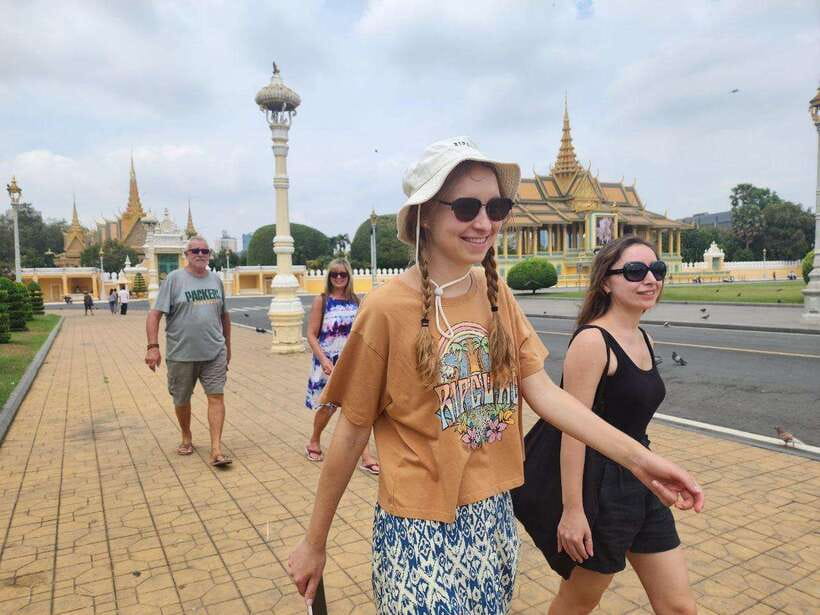
After the palace area, you’ll see the Independence Monument. This is a useful transition stop because it shifts you from the earlier themes of spirituality and monarchy into a story connected to nationhood and identity.
This part of the day can feel like a breath between major experiences. You’ve seen temples, museum context, and royal symbolism. Now a monument helps connect those visual themes to political history—especially when your driver is explaining what you’re seeing as you go.
If you’re pacing yourself, use this segment as a photo break and a chance to drink water before the day turns heavier.
Toul Sleng S21: walking through a hard chapter at your pace
Toul Sleng S21 is one of the most important, and most difficult, stops on the route. This tour includes it, and it also gives you time to walk through at your own pace rather than pushing you through in a rush.
That pacing matters. Sites like S21 aren’t just “checklists.” They’re places where the meaning comes from taking time, reading what’s presented, and absorbing the atmosphere slowly. Having your own control over walking speed helps you avoid the feeling of being swept along.
Your driver can provide context, but the tour data makes it clear the explanation is not meant to be deeply academic. In other words: you’ll get direction, but you may not get a full historical lecture. If you want extra background, it helps to arrive mentally prepared. Bring extra water, because concentration takes energy.
Killing Fields: quiet time, honest scale
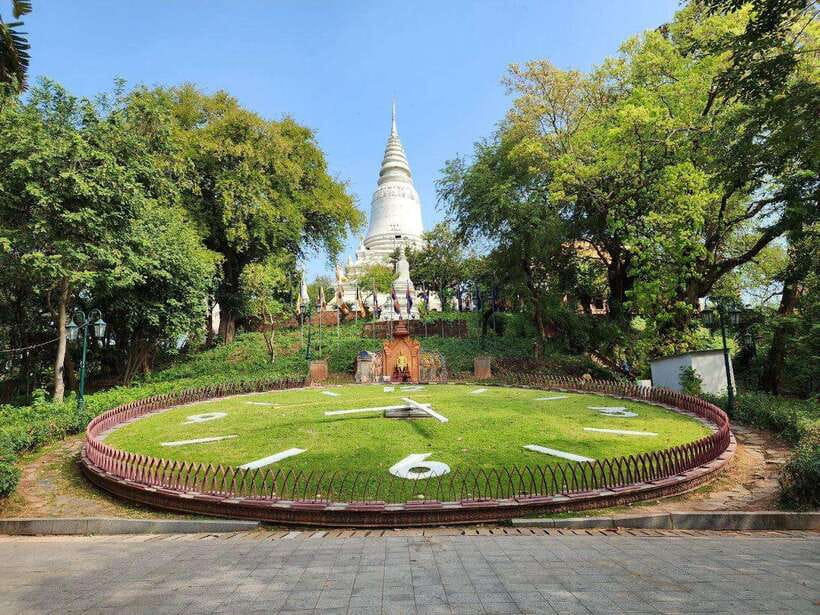
After S21, you’ll visit the Killing Fields. This is another stop where pacing is everything. Even if you’ve visited memorials before, the scale and tone here are intense, and a “rushed” route can feel disrespectful.
This tour’s format supports a slower walk. You can keep moving, or you can pause and process. That matters for your own emotional pacing and for how you remember what you saw later.
One practical note: this is the point in the day where comfort items matter most. Wear comfortable shoes. Bring a hat and sunscreen if the weather is bright. And don’t underestimate how tiring it is to stay focused through grief-heavy content.
Central Market and street art: a necessary contrast
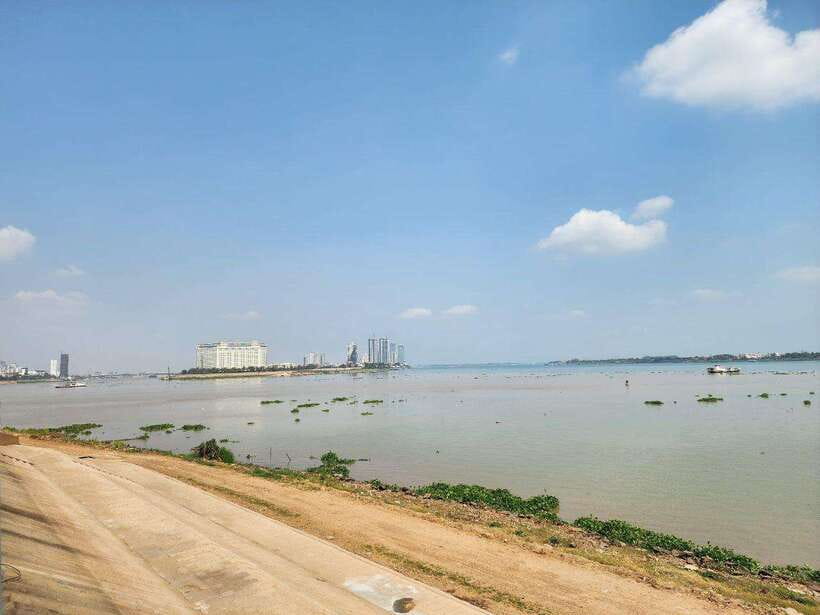
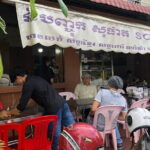
Near the end of the day, you’ll hit the Central Market and see some street art. This contrast is important. After S21 and the Killing Fields, you need a way to return to daily Phnom Penh—colors, movement, commerce, and creativity.
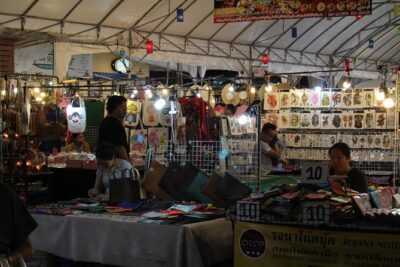
The Central Market stop can be a good reset. It’s also useful for picking up small souvenirs or simply watching how locals navigate the city. Street art adds another layer: it shows how modern expression exists alongside historical memory.
If you’re low on energy, you don’t have to force long shopping. You can use this segment for a short wander, photos, and a final chance to drink water and regroup before the drop-off.
What the English-speaking driver actually adds (and what it doesn’t)
Your driver is the glue that makes a tuk-tuk day feel coherent. You’ll get explanations at each stop, and that’s especially helpful for transitions like:
- from temples to museum context
- from palace symbolism to national identity
- from monuments to memorial sites
The trade-off is also clearly stated: the driver provides information, but not in-depth history. So think of the guide as a strong orientation tool, not as your only source for deep background.
On top of that, the experience seems to attract guides with a friendly, attentive style. In particular, I’ve seen names like Lee, Vanna, Sonny, Pum, and Sunny tied to great days—each described as helpful, communicative, and flexible. The pattern you should look for is the same: a driver who checks in on your needs and keeps the day comfortable while still hitting the big sights.
Tuk-tuk comfort and practical tips for a 9-hour day
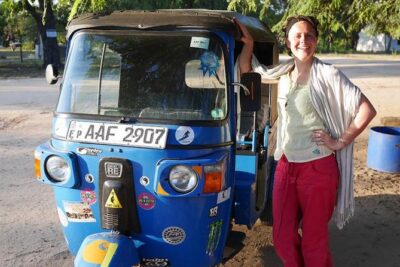
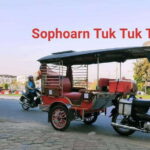
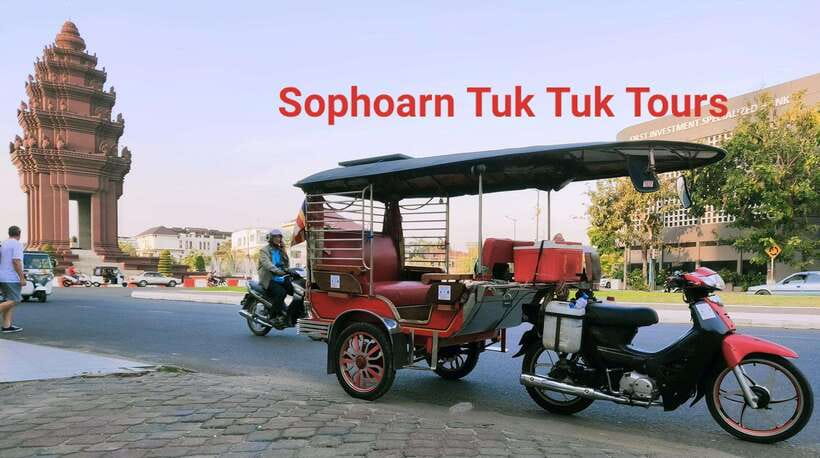
This is a traditional Khmer tuk-tuk day. That usually means you’ll feel the open-air experience more than in a car, which can be great for seeing the city flow—but it also means you’ll feel heat and sun.
Here’s what I’d prioritize based on the tour’s own guidance:
- Comfortable shoes (you’ll walk)
- Hat and sunscreen (sun can be relentless)
- Camera (because you’ll want photos across temples, palace areas, and markets)
- Water and a little cash (you’ll need entrance fees)
The tour includes cold water and Coke, which is helpful on a long day, but I’d still bring your own water too. And plan for entrance fees. Since they’re not included, you’ll want to budget for them separately rather than expecting a single all-in total.
Also, keep the day mentally flexible. Even with a solid route, you’ll be making choices: enter or observe outside, linger or move along, take breaks or keep the pace.
Who should book this private tuk-tuk day
This tour fits best if you:
- want to see major Phnom Penh highlights in one day
- like private, flexible pacing over rigid schedules
- value an English-speaking guide for practical context
- are comfortable walking through both lighter sites (temples, museums, market) and heavier ones (S21 and the Killing Fields)
It may not fit if you:
- have back problems or mobility limits, since it’s not suited for wheelchair users
- want a fully in-depth historical lecture (the driver’s explanations aren’t positioned as deep academic history)
- don’t want to manage entrance fees and cash on-site
If you’re the kind of traveler who likes structure but still wants freedom to decide how much to do inside each place, you’ll likely appreciate how this day is built.
Should you book this Phnom Penh tuk-tuk tour?
Book it if you want an efficient, human-paced way to hit Phnom Penh’s biggest sights—especially the combination of Royal Palace, National Museum, and the memorial stops at S21 and the Killing Fields—without rushing your walking time. The private tuk-tuk format and hotel pickup/drop-off make the day feel easier than piecing the city together on your own.
Skip it if you’re looking for a guided, all-inclusive historical deep dive with audio devices and included entrance tickets, or if your body can’t handle a full day of walking and sun.
If you can walk comfortably and you want a well-connected route with an English-speaking driver who keeps things calm and adjustable, this is a solid way to spend 9 hours in Phnom Penh.
FAQ
FAQ
How long is the Phnom Penh private tuk-tuk tour?
It lasts 9 hours.
Is pickup from my hotel included?
Yes. You’ll be picked up from your hotel lobby, and the driver will have a sign.
Is this tour private or shared?
It’s a private group experience.
What’s included in the price?
The tour includes a private traditional Khmer tuk-tuk, an English-speaking driver, and cold water plus Coke.
Are entrance fees included?
No. Entrance fees are not included and can be purchased at the sites.
Can I choose to enter buildings or just view from outside?
Yes. You can decide at each stop whether to enter or simply view from the outside.
What should I bring for the day?
Bring comfortable shoes, a hat, a camera, sunscreen, water, and cash.
What’s the cancellation policy?
You can cancel up to 24 hours in advance for a full refund.