REVIEW · LISBON
Lisbon’s 7 Hills on Tuk-Tuk
Book on Viator →Operated by Everyday Is Sunday™ · Bookable on Viator
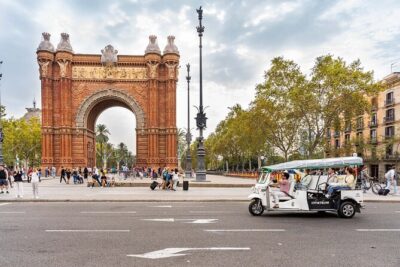
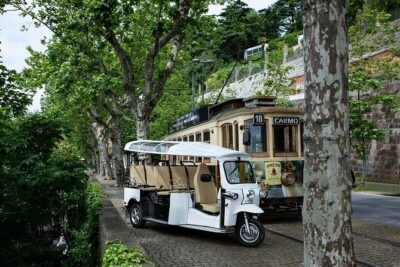
Lisbon’s hills feel easier on wheels. This private tuk-tuk tour is a smart way to get your bearings fast, with door-to-door pickup and a driver who handles the navigation while you enjoy the views. I especially like how the stops are focused on classic Lisbon viewpoints and landmarks, so your 1.5 to 2 hours feel packed but not exhausting. One thing to consider: the sightseeing pauses are short, so if you want long photo sessions or slow museum time, you’ll likely wish you had more minutes at your favorite spot.
What makes it work well is the pacing and the guide talk. You get live explanations along the route, plus a guide who can keep the whole loop moving—without you worrying about buses, trams, or steep detours. It also helps that many key sights here list free admission for the stop moments, while only one specific big-ticket option (Lisbon Cathedral) has an extra paid entrance you can choose to add.
In This Review
- Key highlights to expect on this 7 Hills tuk-tuk ride
- Why Lisbon’s 7 Hills tour makes sense in a short day
- Price and what you really get for $216.27 per person
- Meeting at Praça da Figueira and how the loop usually starts
- Stop-by-stop: the sightseeing route that ties Lisbon together
- Church of St. Anthony: a saint’s origin point
- Romanesque monument from 1150: an outdoor history beat
- Miradouro das Portas do Sol: Lisbon’s oldest district, from above
- Miradouro da Senhora do Monte: the view stop that trains can’t reach
- Graça convent area and the industrial-era story
- Alfama-adjacent vibe: Largo do Carmo and the Carnation Revolution link
- Feira da Ladra, Santa Engrácia, and Chiado’s book culture
- Feira da Ladra (Ladra Market): an old market story
- Santa Engrácia church: the long construction and the national pantheon
- Chiado: theatres, bookshops, and 19th-century shops
- Livraria Bertrand: the oldest bookshop claim from 1732
- São Pedro de Alcântara, Estrela Basilica, and the park that slows time
- Miradouro São Pedro de Alcântara: a 19th-century viewpoint over medieval streets
- Assembleia da República: Lisbon’s parliament story
- Basilica da Estrela: Baroque Lisbon and the Sacred Heart
- Jardim da Estrela Park: a romantic-walk finish
- What the guide experience feels like (and why it matters)
- Getting the best value from the stops (without rushing yourself)
- Should you book this Lisbon 7 Hills tuk-tuk tour?
- FAQ
- How long is the Lisbon 7 Hills tuk-tuk tour?
- Is hotel pickup and drop-off included?
- Are the main stops free to enter during the tour?
- Is the tour private or shared?
- What language is the tour offered in?
- Where does the tour start and end?
- Can I cancel and get a full refund?
Key highlights to expect on this 7 Hills tuk-tuk ride
- Private, just-your-group tour with live guiding and group insurance
- Hotel/apartment reception and drop-off, so you start sightseeing quickly
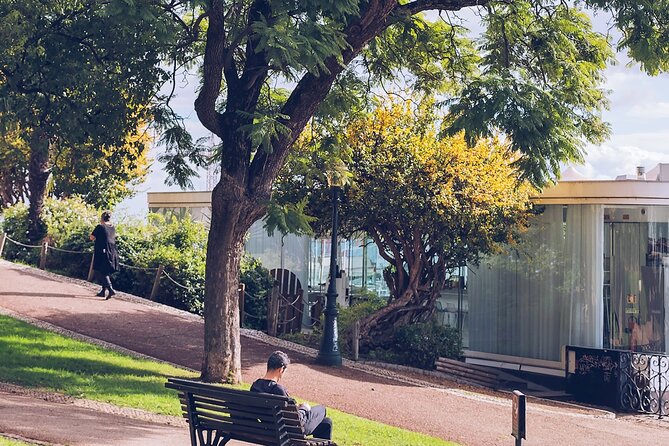
- Miradouro focus: Portas do Sol, Senhora do Monte, São Pedro de Alcântara
- Historic stops that connect to Lisbon turning points, like the Carnation Revolution
- Chiado book and market area including Lisbon’s old-school shopping streets
- Comfort extras when needed, like blankets mentioned by guests when the weather turns cool
Why Lisbon’s 7 Hills tour makes sense in a short day
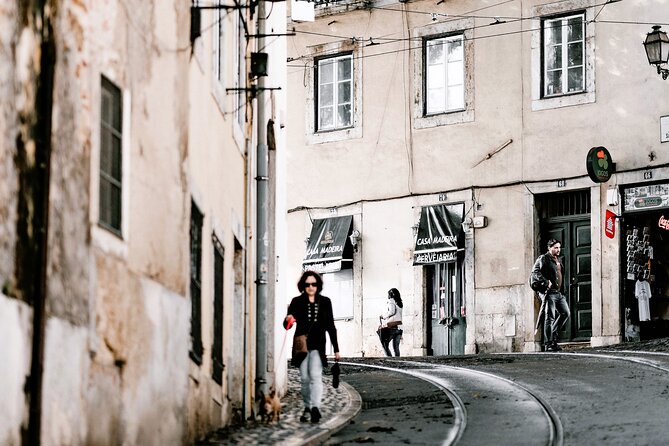
Lisbon is gorgeous, but those hills are no joke. This tour tackles that problem directly. Instead of fighting steep stairs or waiting for the next tram, you hop into a tuk-tuk and let the route do the heavy lifting. You still get the classic neighborhoods and viewpoints, but with far less strain.
The other reason I like this style of tour: it’s built for orientation. In a couple hours, you learn where Lisbon’s main layers sit—old districts, viewpoint spines, and the civic and religious landmarks that anchor the city. Even if you plan to return later on your own, this kind of first pass helps you map your day.
You can also read our reviews of more tours and experiences in Lisbon.



Price and what you really get for $216.27 per person
At $216.27 per person, this isn’t the cheapest way to “just ride around Lisbon.” But it can be good value because it’s private, includes hotel pickup and drop-off, and has a guide doing live commentary while you move between key spots. You’re paying for time saved and for someone else handling traffic decisions and hill logic.
Two pricing details matter:
- The tour supports group discounts, and the more people per booking, the lower the price per passenger.
- Many stops you’ll see during the tour list free admission for the time you’re there, so your paid add-ons stay limited.
Where you might spend extra: Lisbon Cathedral entrance is specifically listed as not included (adults 5€, children 5–12 y.o. 3€). If you’re the type who likes going inside major churches, budget for that one decision.
Meeting at Praça da Figueira and how the loop usually starts
The tour meets at Praça da Figueira, right by the Dom João I statue. The starting point is easy to find, and it also means you’re already near a central part of town for getting there by taxi or public transport.
From there, you should expect the guide to contact you before the meeting so you can confirm details. The promise of reception and drop-off at your hotel/apartment is a big deal in Lisbon, because getting from “where you’re staying” to the viewpoints can eat time. With pickup handled, you arrive ready to look up and take in the city.
The tour ends back in Praça da Figueira, which is convenient if you want to continue on foot, grab a meal nearby, or connect to other transport.
Stop-by-stop: the sightseeing route that ties Lisbon together
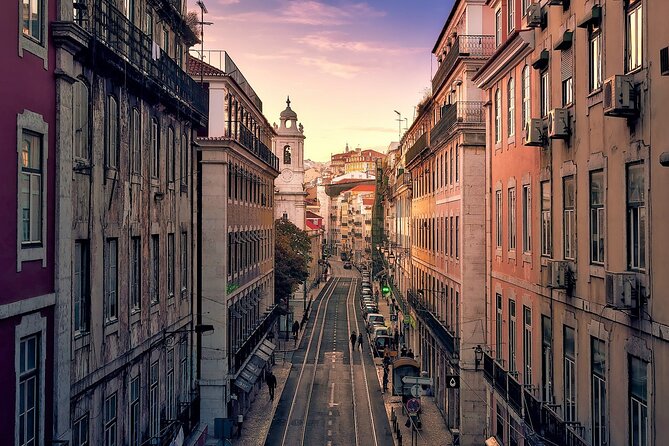
This tour is designed like a guided walk-through of Lisbon’s big themes: saints and old churches, hillside viewpoints, markets and book culture, revolutionary history, then parliament and major basilicas. The timing is tight, so each stop is more “taste and orientation” than “stay all day.”
Church of St. Anthony: a saint’s origin point
You start near the Church of St. Anthony, described as the place of birth of one of the most famous Catholic church saints. Even if you’re not a religious-history specialist, this stop gives you a quick anchor for why Lisbon’s old streets and churches matter to people who live here.
The time here is short (around 10 minutes), and admission is listed as free for that stop moment. I’d treat it as a photo-and-facts break: look, listen to the guide’s context, then move on—because the miradouros come next and you’ll want your energy.






Romanesque monument from 1150: an outdoor history beat
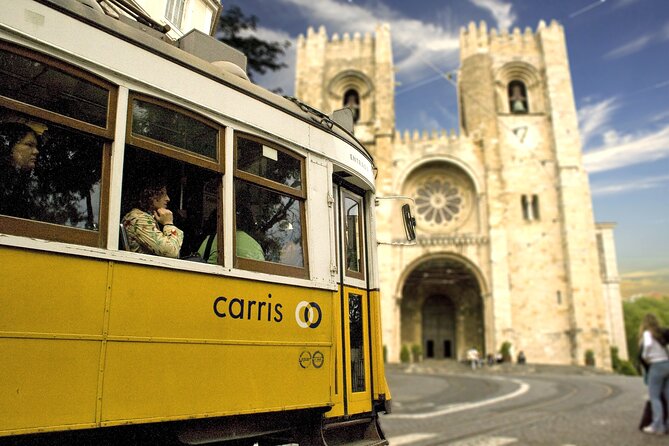
Right after, there’s a pause connected to an impressive Romanesque monument dating from around 1150. This is the kind of stop that works even if you don’t go inside, because the exterior tells you the age and the style immediately.
Entrance for Lisbon Cathedral is listed as not included, so consider this your decision moment:
- If you’re happy with the view from outside, you can keep it included-free.
- If you want the interior, plan for the listed entrance fee.
Miradouro das Portas do Sol: Lisbon’s oldest district, from above
Next is Miradouro das Portas do Sol, a viewpoint over the oldest Lisbon district. This is one of those places where the guide’s job really helps. The “just look around” moment is nice, but the explanation turns it into a map: you start seeing the city’s layers and how neighborhoods connect downhill toward the water.
You get about 10 minutes here with free admission for the stop. It’s long enough to capture key angles and orient yourself, short enough that the tour keeps moving.
Miradouro da Senhora do Monte: the view stop that trains can’t reach
Then comes the highlight for many visitors: Miradouro Da Senhora Do Monte. The big point is practical—buses and trams can’t arrive here, so you get a viewpoint that feels more intentional, more “you’ve earned it” without a strenuous hike.
This is the stop where you’ll probably want your phone charged and your jacket ready, because the wind can matter. The tour gives about 10 minutes and free admission for the stop moment, so come prepared to make the most of that single window. Once you get the panorama, you start understanding Lisbon’s geography in a way that photos alone can’t do.
Graça convent area and the industrial-era story
Between viewpoints, you pass through historical layers tied to Graça. You’ll hear about an area that goes back to around the 13th century with the Graça Convent, and later an industrial district story in the 19th century. This part of the tour helps you see that Lisbon isn’t just postcard hills. It has work districts, shifts in time, and neighborhood identity.
Your time here is still brief, but it’s a useful bridge. The guide’s job is turning those quick pauses into connections, so you don’t leave with a handful of disconnected stops.
Alfama-adjacent vibe: Largo do Carmo and the Carnation Revolution link
You later reach Largo do Carmo. This is tied to a major turning point: the Carnation Revolution ending on April 25, 1974. It’s not a museum-hour stop; it’s more of a place-based lesson. Standing where history happened gives the talk a different weight than reading it.
Time is about 5 minutes, with free admission for the stop. Even in that short window, it’s the kind of moment that makes Lisbon feel like a living place, not just a collection of sights.
Feira da Ladra, Santa Engrácia, and Chiado’s book culture
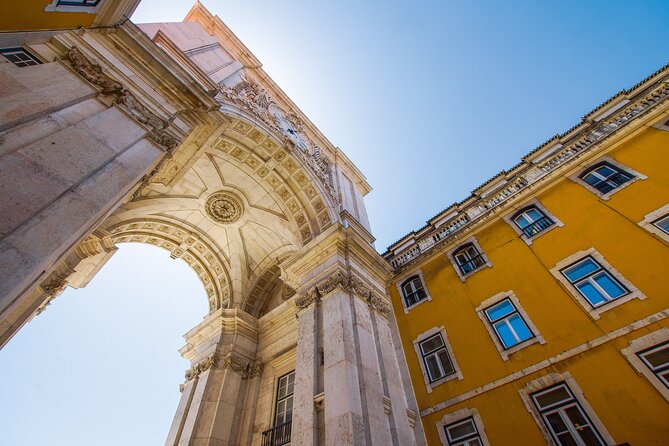
This stretch is where the tour gets extra Lisbon-y. You start mixing architecture with neighborhood texture and old-school commerce.
Feira da Ladra (Ladra Market): an old market story
You’ll pause for a glimpse tied to one of the oldest flea markets in Europe, originally called aleadhra by the Moors, later becoming Ladra Market. Even if you’re not shopping for antiques, the market talk is fun because it shows how languages shift while the same street energy continues.
This stop works best for people who enjoy everyday atmosphere—people watching, alley energy, and the sense that Lisbon has been doing this for a long time.
Santa Engrácia church: the long construction and the national pantheon
Another big moment is Santa Engrácia church, described as taking almost 300 years to build and becoming one of Portugal’s National Pantheons, receiving prominent national heroes. That’s a major contrast to “quick viewpoint Lisbon.” This is Lisbon at a slower, civic scale.
It’s a short stop, but the guide’s explanation helps you understand what you’re looking at without needing a full interior visit plan.
Chiado: theatres, bookshops, and 19th-century shops
Then you move into a chic district feel, with theatres, bookshops, and beautiful 19th-century storefronts. This is where Lisbon shifts from hillside grit to elegant street life. It’s also a good moment for a quick stroll step—just enough to feel the change without losing tour momentum.
Livraria Bertrand: the oldest bookshop claim from 1732
You also stop near the famous claim of the oldest bookshop in the world, founded in 1732. Even if you don’t go in (and you might be limited by how the stops are timed), you’ll appreciate how Lisbon protects its cultural habits.
If you do love books, this is a nice “I’m in the city that keeps its stories” feeling. If you don’t, the street atmosphere still gives your eyes something to latch onto between viewpoints.
São Pedro de Alcântara, Estrela Basilica, and the park that slows time
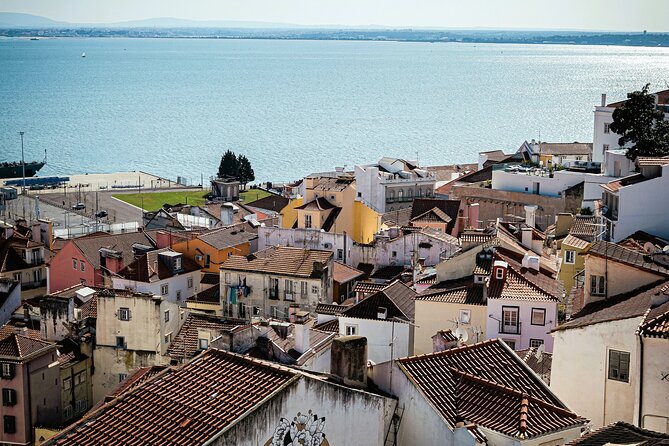
The last third of the tour turns toward calmer, more formal Lisbon: gardens, basilicas, and civic grandeur.
Miradouro São Pedro de Alcântara: a 19th-century viewpoint over medieval streets
You’ll reach Miradouro São Pedro de Alcântara, a marvelous 19th-century viewpoint where you can contemplate Lisbon’s medieval area. The viewpoint here feels classic: you look out and your brain starts categorizing the city into old cores and newer structures.
Time is about 10 minutes with free admission for the stop moment. This is a good place to ask the guide for a quick “where is everything” recap, because the earlier viewpoints help your understanding.
Assembleia da República: Lisbon’s parliament story
Next up is Assembleia da República, the Portuguese parliament. You’ll hear that by the 16th century it was Lisbon’s biggest monastery, and in the early 20th century it became the house of democracy.
This is a “stand still and listen” stop. The scenery is important, but what you’re really absorbing is the reuse of space—how institutions evolve without being erased.
Time is about 5 minutes. It’s short, but it lands because the story is so clear.
Basilica da Estrela: Baroque Lisbon and the Sacred Heart
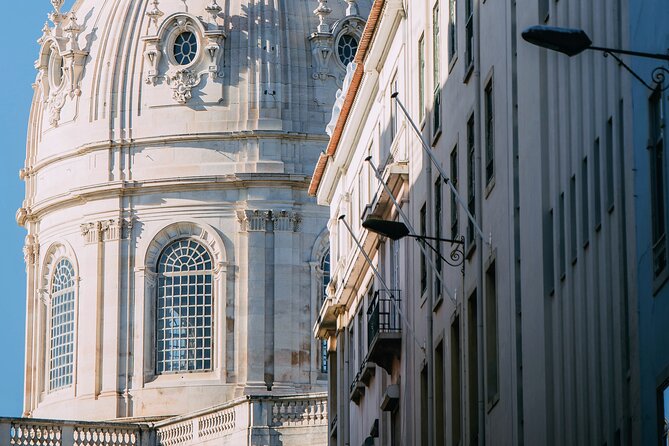
Then you visit Basilica da Estrela. It’s described as a Baroque Lisbon highlight from the late 18th century, and specifically as the first Catholic temple in the world dedicated to the Sacred Heart of Jesus.
You’ll get about 10 minutes, free admission for the stop moment. If you’re the kind of traveler who likes big church interiors, you may wish for more time than the tour allows. Still, this is a strong ending to the “sacred to civic” arc the tour creates.
Jardim da Estrela Park: a romantic-walk finish
Finally, there’s Jardim da Estrela Park. You’re meant to slow down for about 10 minutes and imagine a 19th-century romantic walk. It’s a gentle landing after the viewpoints and monuments.
This park moment is also practical: it gives you a chance to regroup before you head back to Praça da Figueira and keep exploring on your own.
What the guide experience feels like (and why it matters)
The biggest praise centers on the guide. The name Dominique shows up again and again in feedback, and the pattern is consistent: strong local knowledge, good storytelling, and a friendly, fun attitude. People also like the guide’s flexibility—done at your pace, with explanations that don’t feel rushed.
One practical touch: guests mention receiving blankets when it got chilly. That’s not a tour feature you can count on every day, but it’s a sign of how prepared the guide tries to be.
Also worth noting: at least one guide is described as taking nice pictures for you. That’s a small service, but it helps a lot on viewpoint days when you’re trying to frame the hills and you don’t want to keep trading phones with your group.
And if you want a food detour afterward, there’s a tavern recommendation that comes up: Tasquinha Da Linha. I’d take it as a suggestion to ask your guide for something local along your route, not a guaranteed reservation plan.
Getting the best value from the stops (without rushing yourself)
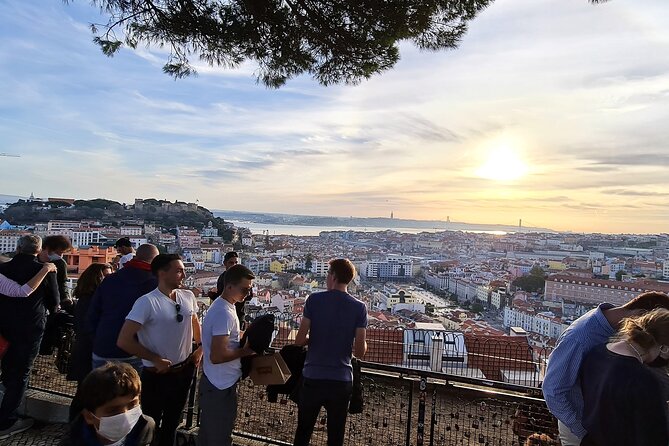
Because the pauses are brief, your strategy matters. Here’s what works:
- Pick one “must-photos” viewpoint and be ready at arrival. For most people, that’s Senhora do Monte.
- Treat early stops like St. Anthony and Portas do Sol as orientation. You don’t need to memorize every detail to benefit.
- If you’re deciding on Lisbon Cathedral entrance, do it based on your interest level for interiors vs. exteriors. The tour itself focuses heavily on exterior viewing and viewpoint time.
The good part: you’re on a route where you can see a lot without walking long distances up and down hills. The tuk-tuk ride is what makes the whole plan click.
Should you book this Lisbon 7 Hills tuk-tuk tour?
Book it if:
- You want a time-efficient introduction to Lisbon with a guide doing the hard work of navigation.
- You care about viewpoints and want a structured way to hit the best miradouros in one loop.
- You’d rather spend 90 minutes to 2 hours sightseeing than stitch together a whole day of transport and walking.
Skip it (or consider a different format) if:
- You hate short stop times and want long museum visits or lots of free time at each location.
- Your ideal day is slow wandering with no schedule. This tour is guided and paced.
In my view, this is a smart “first Lisbon day” choice, especially if hills make you less enthusiastic about self-guided exploring. If you go with a clear priority (views first, then culture), you’ll leave with a much better sense of where to return later.
FAQ
How long is the Lisbon 7 Hills tuk-tuk tour?
The tour lasts about 1 hour 30 minutes to 2 hours.
Is hotel pickup and drop-off included?
Yes. The tour includes reception and drop-off at your hotel or apartment, plus a private tour setup.
Are the main stops free to enter during the tour?
Many of the listed stop moments have free admission. Lisbon Cathedral entrance is specifically not included, with prices listed separately.
Is the tour private or shared?
It’s private. Only your group participates.
What language is the tour offered in?
The tour is offered in English, with live explanations on board.
Where does the tour start and end?
It starts at Praça da Figueira, next to the Dom João I statue, and ends back at Praça da Figueira.
Can I cancel and get a full refund?
Yes, you can cancel up to 24 hours in advance for a full refund. If you cancel less than 24 hours before the start time, it won’t be refunded.