REVIEW · LISBON
LISBON : Explore Old Town Alfama by Electric Tuk Tuk .
Book on GetYourGuide →Operated by Johnny's Tuk Tuk Delight · Bookable on GetYourGuide
Lisbon has a way of making hills feel like a workout. This electric tuk tuk tour turns the steep bits into quick, guided hops and keeps you seeing highlights without getting wiped out. I especially liked how frequent stops let you step out for photos and short walks, and how the guide pairs each viewpoint with clear local context. I also liked that the route sets you up for both the formal landmarks and the lived-in streets of Alfama without rushing you too hard.
One thing to consider: this is still Lisbon on foot in places. You’ll do a handful of short stops and some walking in narrow areas, and it’s not suitable for pregnant women. Also, entrance fees aren’t included, so plan to skip or pay separately if something catches your eye.
In This Review
- Key points to know before you go
- Why an electric tuk tuk fits Lisbon’s hills so well
- Time Out Market to Praça do Comércio: the central Lisbon warm-up
- Sé de Lisboa and Santa Luzia: the start of the postcard views
- Miradouro da Senhora do Monte: the 180-degree payoff
- São Vicente and the National Pantheon: church dates to Portuguese heroes
- Markets, flea traditions, and the fado next door to Alfama
- Walking into Alfama: narrow streets, live fado vibes, and easy orientation
- Price and value: does $40 buy enough Lisbon?
- Who this tour suits best (and who should skip it)
- Quick planning tips for getting the best day
- Should you book the Electric Tuk Tuk Old Town Alfama tour?
- FAQ
- How long is the Lisbon Old Town Alfama electric tuk tuk tour?
- Where does the tour start and end?
- What’s included in the $40 per person price?
- Are entrance fees included?
- Is the tour guided in English?
- Is the tour suitable for pregnant women or people traveling with pets?
- What sights are included on the route?
Key points to know before you go

- Electric tuk tuk convenience for Lisbon’s hills, with stop-and-go sightseeing built in
- Guided history at each halt, so you’re not just looking at pretty views
- Miradouro-focused route including Santa Luzia, Portas do Sol, and Senhora do Monte
- Old Lisbon to Alfama transition with fado landmarks and local market areas along the way
- Short, practical Alfama walking time, ideal for getting oriented in the maze of streets
- Time Out Market start point makes it easy to plug into your day
Why an electric tuk tuk fits Lisbon’s hills so well
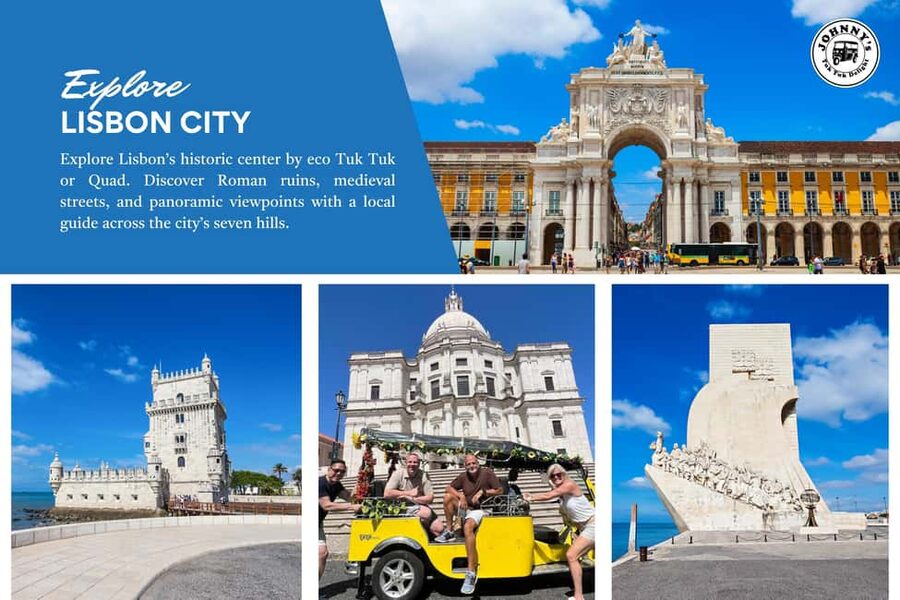
Lisbon is famously hilly. Even if you love walking, your legs can get tired faster than your enthusiasm. An electric tuk tuk helps you keep the best part of the city—those viewpoints and old streets—without spending your whole trip climbing.
The smartest thing about this tour style is the stop strategy. You’re not locked in for long stretches where you only see the sights through a window. The tuk tuk pauses often, so you can hop out, take in the view, and rejoin when you’re ready. That makes it feel less like a bus ride and more like a guided loop of “go see this” moments.
The guide’s role matters too. The route isn’t only sightseeing; it’s sightseeing with context. You’ll get history as you go, which helps the city make sense once you’re back on the ground.
And yes, it’s fun. Even when you’re not a “tuk tuk person,” it’s a friendly way to get your bearings fast.
You can also read our reviews of more tours and experiences in Lisbon.



Time Out Market to Praça do Comércio: the central Lisbon warm-up
Most departures start from the area around Time Out Market Lisbon (in front of Restaurant Sophia). This is a good launching pad. It keeps things simple and puts you near one of Lisbon’s best-known hubs for food and people-watching, so you can grab a snack or coffee before you start.
From there, you pass by Praça do Comércio, Lisbon’s biggest square. It’s a major stage for national events and concerts, which gives the space a bigger personality than just “nice architecture.” Even if your time on the square is mostly passing-by, it helps you understand where Lisbon’s more formal, open spaces sit compared to the tight old neighborhoods that come next.
This early segment is a smart warm-up. It gets you oriented: broad streets and grand spaces first, then the more dramatic, step-down old-town vibe.
Sé de Lisboa and Santa Luzia: the start of the postcard views
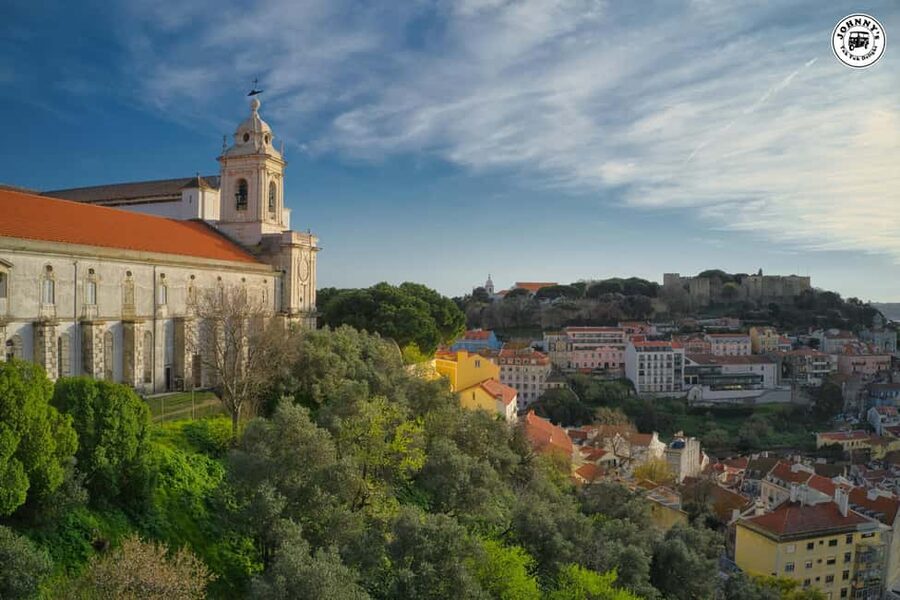
Next up is the Lisbon Cathedral stop: Sé de Lisboa. The visit is short—about five minutes—but it’s timed well. You see one of the city’s oldest cathedral sites while your energy is still fresh. What I like about a quick stop like this is that it gives you something solid to anchor the rest of the tour. Once you’ve seen the cathedral area, the surrounding old-town streets feel less random.
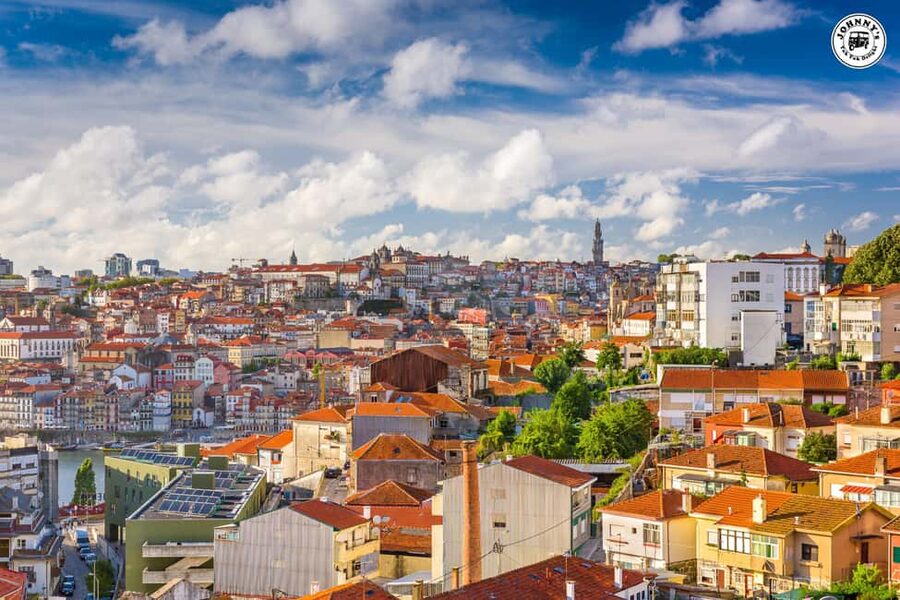
Then you move into the miradouro zone. First is Santa Luzia, where you get a photo stop plus guided tour and sightseeing time (around ten minutes). Santa Luzia is one of those places you’ll see in photos for a reason. The viewing angle makes Lisbon look instantly layered—terraces, rooftops, and the sense of the city climbing uphill.
After that, the route continues to Portas do Sol for a short terrace stop (about five minutes). You’ll have just enough time to soak it in, snap photos, and keep going. The benefit of that quick pace is you don’t lose your whole morning to one viewpoint, which is helpful when you’ve got multiple stops planned.
If you’re the type who likes to linger, you can usually stay ready to ask for extra time at the most important viewpoint for you—just be mindful of the overall tour flow.
Miradouro da Senhora do Monte: the 180-degree payoff
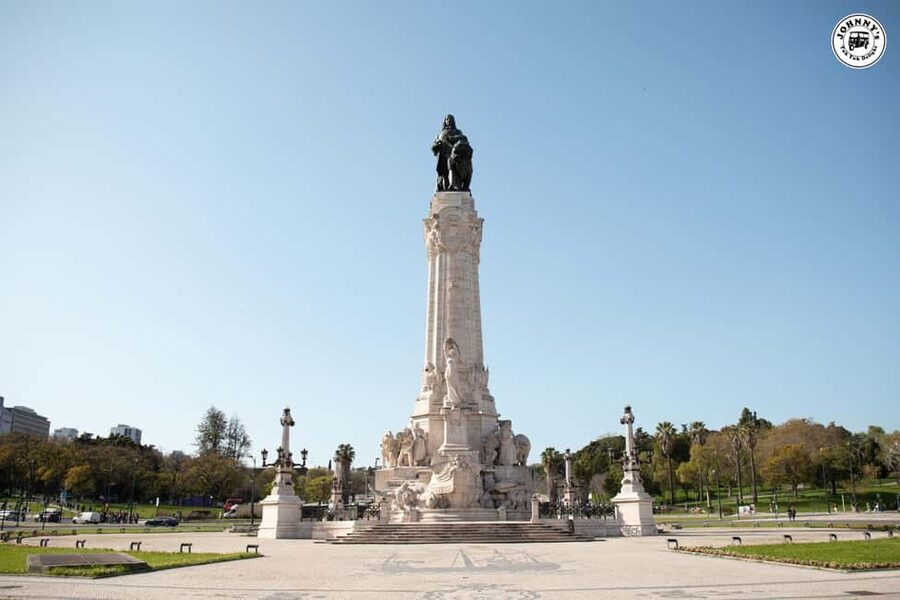
After Santa Luzia and Portas do Sol, the tour takes you higher to Miradouro da Senhora do Monte, which the itinerary describes as the highest point stop. You get around ten minutes here, including photo time, guided sightseeing, and a bit of walking for the best angles.
The highlight is the 180-degree view. This is the moment when Lisbon goes from “pretty hills” to “I get the whole layout.” From up here, you can see a mix of old town and newer areas, so you understand the scale of the city beyond the narrow lanes below.
It’s also a useful mental reset. After several historic stops, this viewpoint helps you see how they relate spatially. You’ll likely start spotting the logic of where things sit as you move toward Alfama.
Practical tip: if you want your best photos, spend the first couple of minutes picking your angle before you take a full burst of pictures. The viewing spots can shift with other people and light.
São Vicente and the National Pantheon: church dates to Portuguese heroes
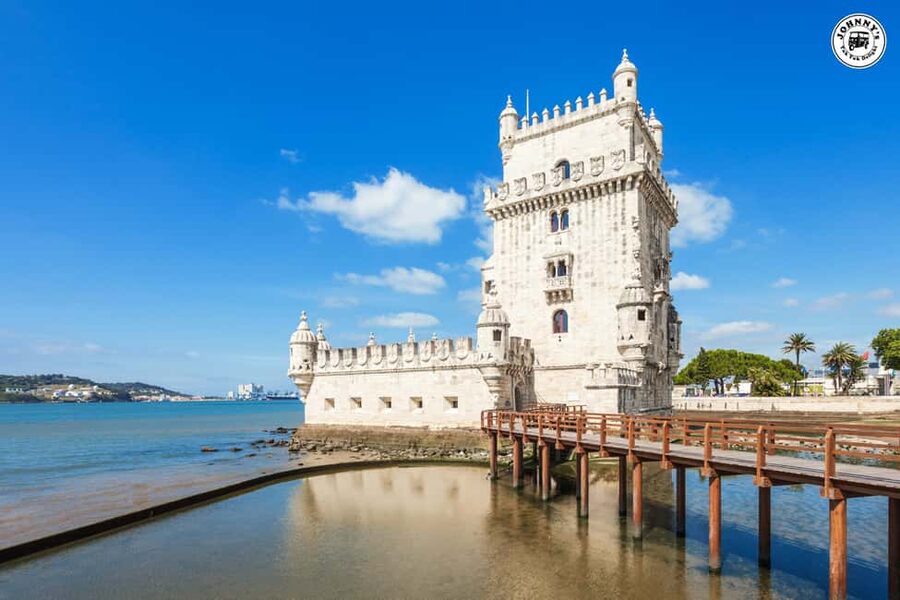
Next comes São Vicente. You’ll stop for photos and a short guided visit (about five minutes). The tour frames São Vicente as one of the city’s oldest churches, and it also notes that members of the royal family got married there. Even in a short stop, that detail helps you look past the walls and start imagining the events that played out around them.
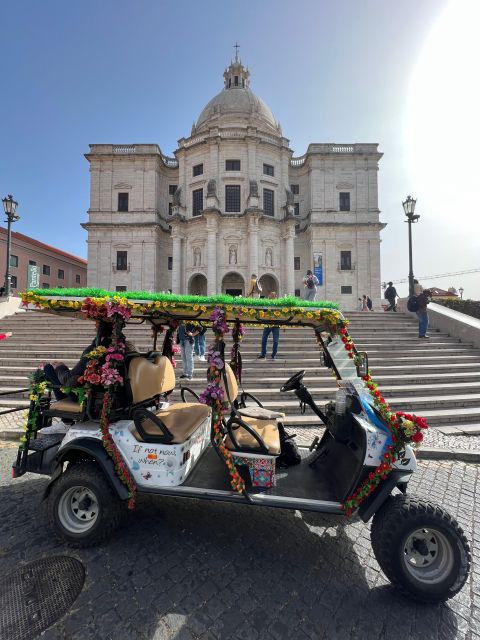
Then the route moves toward the National Pantheon of Santa Engracia. The time here is brief too—about five minutes for photo stop, visit, guided tour, and a bit of walking. The key context is what it’s for: Portugal’s national heroes are buried there.
I like mixing viewpoints with “meaning” stops like this because it keeps the tour from feeling like a photo montage. You’re not only chasing angles. You’re also learning why certain buildings matter.
The pacing is tight, but it works. You come away with names you can later look up, and the city feels more intentional.






Markets, flea traditions, and the fado next door to Alfama
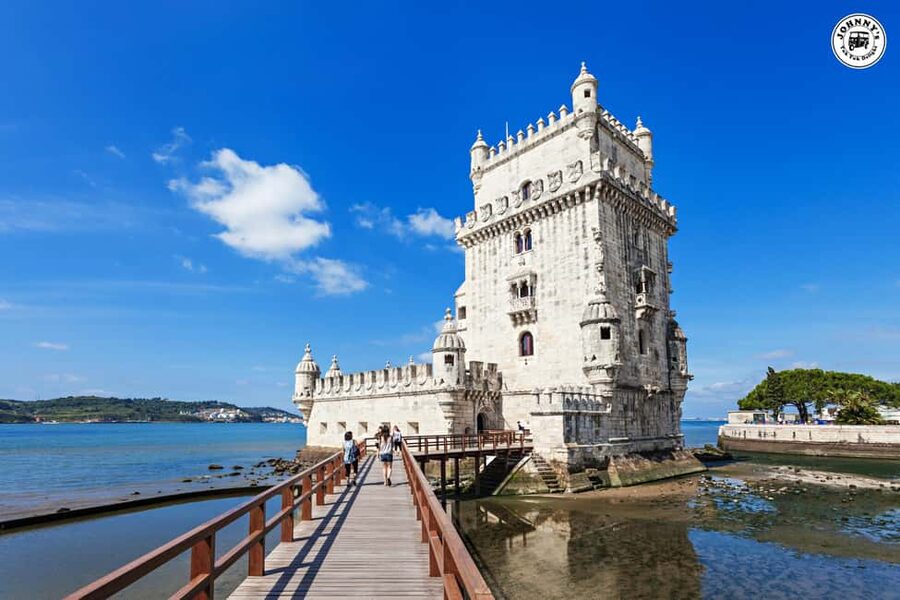
You’ll also pass by Feira da Ladra, known as a flea market. The tour adds an extra twist: it was previously known as a stolen market. That kind of detail turns a passing-by street scene into something you can file away as part of Lisbon’s older street culture.
From there, you head toward the Alfama neighborhood area, but you don’t go straight into it without context. The itinerary includes a stop and pass-by segments around local markets and fado references, including Mercado de Santa Clara (guided tour and scenic views on the way) and then the Fado Museum (guided pass-by and scenic views).
One thing I found helpful about this approach: fado isn’t treated as a random show. It’s placed next to the streets where it actually belongs. And the tour notes that the Fado Museum is located just next to Alfama, which makes the connection easy to remember.
So if you’re curious about Lisbon nightlife and music culture, this segment gives you a foothold. You’re not just hearing the term fado; you’re understanding how it’s tied to the neighborhood atmosphere.
Walking into Alfama: narrow streets, live fado vibes, and easy orientation
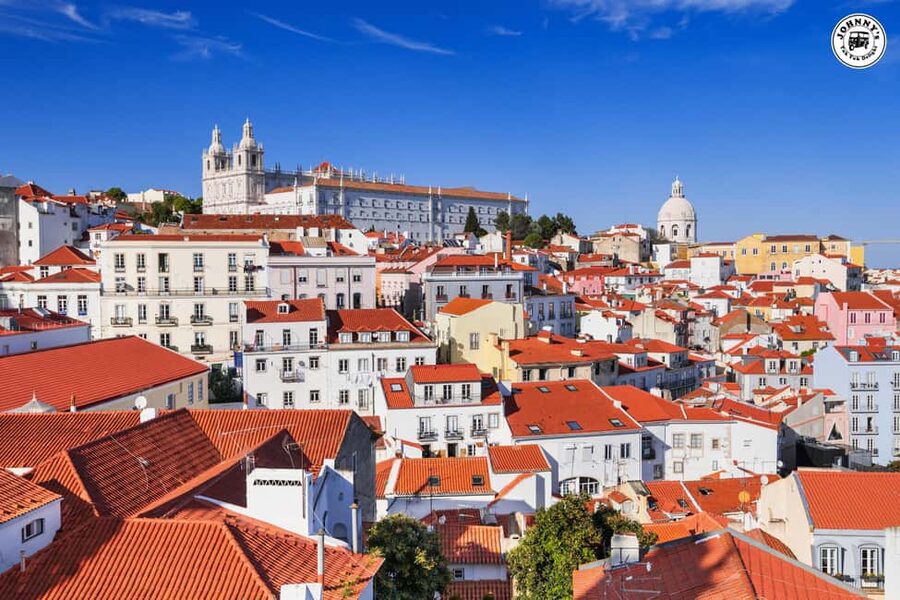
Now for the star. Alfama is where the tour turns from “views from above” into “life at street level.” The tour describes Alfama as the second oldest part of Europe, which is a big claim, but the feel matches the reputation: old stone, tight lanes, and plenty of corners that look like they’ve been there forever.
You get a photo stop, a guided tour, and a short walk (around five minutes). That’s not enough time to fully explore every lane, but it’s perfect for orientation. You’ll likely understand right away how people can get turned around here. The tour notes that the streets are small and narrow, and that you may get lost if you wander too far alone.
If you enjoy small-scale wandering, use this short guided walk to learn a couple of landmark directions. Then you can go back later under your own steam with a better sense of what’s where.
Another detail I like: you may see restaurants around Alfama that play live fado music. Even if you’re not stopping for a show, the presence of live music in the area gives Alfama its unmistakable vibe. And yes, the tour also mentions a huge gift shop in Alfama, which means it’s an easy place to pick up a practical souvenir without trekking across town.
Price and value: does $40 buy enough Lisbon?
At about $40 per person for roughly 1.5 hours, this tour is priced for people who want guided time plus transportation without planning every step.
Here’s what you’re paying for that adds value:
- A driver/guide included in the price
- Electric tuk tuk transport that helps you handle Lisbon’s hills
- Multiple viewpoint stops (not just one)
- Guided history during key stops across the old center
- A structured intro to Alfama so you don’t arrive and immediately feel overwhelmed
What you’re not paying for:
- Entrance fees
- Food and drinks
- Hotel pickup
That last point is important for value thinking. If you’re already near central Lisbon or can easily reach the Time Out Market area, the lack of hotel pickup is less of a hassle. If you’re staying far out, you’ll need to factor in getting to the start point.
Also, the tour is short enough that it doesn’t pretend to replace a full day of museums. If your goal is deep, slow exploration of major interiors, you’ll still want additional time elsewhere. But if your goal is to see the key layers of Lisbon in a tight window, this is a solid deal.
Who this tour suits best (and who should skip it)
This is a great fit if you:
- Want an easy introduction to Lisbon’s old center
- Like viewpoints and photo stops, not long museum marathons
- Appreciate history explained while you’re actually seeing the places
- Prefer some walking over none, but don’t want to tackle the hills all on foot
It may be the wrong choice if you:
- Are pregnant (the tour is noted as not suitable for pregnant women)
- Are traveling with pets (pets aren’t allowed)
- Want long, unhurried time inside churches, museums, or paid attractions (entrance fees aren’t included, and the stops are time-limited)
If you fall into the “first time in Lisbon” category, this tour is a smart way to build a mental map. Then you can return later to the places you liked most.
Quick planning tips for getting the best day
- Choose what you care about most. The route hits many places, so decide which viewpoint you’d re-visit if you had extra time.
- Wear comfortable shoes for the short walking bits, especially around Alfama’s narrow lanes.
- Bring your camera or phone charger cord mindset. You’ll have several photo stops: Santa Luzia, Portas do Sol, Senhora do Monte, and more.
- Plan on paying separately if you want any entrances. The tour’s focus is guided stops plus sightseeing, not ticketed museum time.
If you want the maximum payoff, treat the tour as your Lisbon orientation session. Then schedule your self-guided exploring afterward.
Should you book the Electric Tuk Tuk Old Town Alfama tour?
Book it if you want a guided Lisbon highlights loop that mixes viewpoints, landmarks, and a practical first taste of Alfama and nearby fado culture. It’s especially good for short-on-time trips, first-time visitors, or anyone who wants to avoid turning Lisbon into a full-time leg day.
Skip or consider something else if you need long museum hours, lots of indoor time, or you have travel constraints like pregnancy. Also, if your hotel is far from central Lisbon, factor in how you’ll reach the Time Out Market start area.
Overall, the price-to-time ratio feels fair for what you get: transport up and down Lisbon’s hills, a live English guide, and a route that helps you understand the city instead of just collecting photos.
FAQ
How long is the Lisbon Old Town Alfama electric tuk tuk tour?
The tour lasts about 1.5 hours.
Where does the tour start and end?
It starts in front of Restaurant Sophia near Time Out Market Lisboa and ends back at the same meeting point area.
What’s included in the $40 per person price?
The price includes a driver/guide.
Are entrance fees included?
No. Entrance fees are not included.
Is the tour guided in English?
Yes, the live tour guide is English.
Is the tour suitable for pregnant women or people traveling with pets?
No for pregnant women, and pets are not allowed.
What sights are included on the route?
The route includes stops and photo stops at places like Lisbon Cathedral (Sé), Santa Luzia, Portas do Sol, Miradouro da Senhora do Monte, São Vicente, the National Pantheon of Santa Engracia, Mercado de Santa Clara, the Fado Museum area, Alfama, and it passes by Praça do Comércio.