REVIEW · ALICANTE
Alicante: Tuk Tuk Tour
Book on GetYourGuide →Operated by Tuk Tuk Baloo-go · Bookable on GetYourGuide
Electric tuk-tuks make Alicante feel easy. I love the small-group size and the local guide storytelling that connects art, history, and culture at each stop. The one catch: in 65 minutes, the pace is quick, so you’ll want to be ready to hop out for photos and move on.
You start near Puerta del Mar by Casa Carbonell, then ride up toward Santa Bárbara Castle for major viewpoints and photo moments like the Monkey Face in the rock. And if the weather turns, the open-top tuk-tuk can still run with transparent waterproof covers and blankets.
In This Review
- Key Things I’d Lock In Before You Go
- Why This Electric Tuk-Tuk Works in Alicante
- Finding the Tuk-Tuk: Casa Carbonell Meets Puerta del Mar
- From Plaza del Ayuntamiento to City Pulse Moments
- Dark Past and Quiet Poetry: Plaza de los Árboles Viejos and Gabriel Miró
- Calle de las Setas and Teatro Principal: Street Color With Context
- Barrio de Santa Cruz: Cobblestones, Flowers, and Sea Views
- Santa Bárbara Castle: The Pre-Top Secrets and the Panoramas
- Luceros and Postiguet: Finishing With the City’s Energy
- Price Check: Is $37 Worth It for 65 Minutes?
- Small-Group Tips That Make the Tour Better
- Should You Book This Alicante Tuk-Tuk Tour?
- FAQ
- How long is the Alicante Tuk Tuk Tour?
- What does the tour cost?
- Where does the tour start and end?
- Is there a local guide?
- What languages are offered?
- Is the tuk-tuk open-top, and what if it rains?
- Is the tour wheelchair accessible?
- What ages is it suitable for?
- Are tickets to monuments included?
- Final Call
Key Things I’d Lock In Before You Go
- One-hour highlights run: you cover a lot of key areas without tiring your feet.
- Up to 4 people: fewer distractions means you actually hear the guide.
- Guides who explain more than monuments: art, history, and culture are tied to what you’re seeing.
- Santa Bárbara Castle build-up: the ride includes cool stops before you even reach the top.
- Family-friendly energy: designed for kids and grown-ups who want fun, not a long slog.
Why This Electric Tuk-Tuk Works in Alicante
Alicante is a city built for both walking and viewpoints. The problem is that the viewpoints come with hills, stairs, and that lovely but tiring Mediterranean pace. This tuk-tuk format solves that without turning the trip into a boring bus ride.
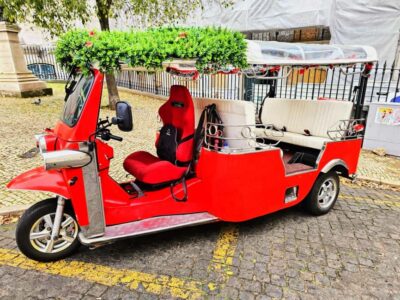
You’re in a modern electric tuk-tuk that keeps you moving between neighborhoods. It’s also open-top, so you get sky and sea views as you roll through the old and central parts of town. For families, it’s one of those rare activities where kids are engaged because the ride itself feels like part of the sightseeing.
The other win is the guide. The tour is led by a local guide who explains art, history, and culture in your language (English, Hungarian, Russian, or Spanish). One recent review specifically called out Dori as top-notch, and another mentioned Mario positively. That kind of consistency matters, because it’s not just a driver taking you to stops—it’s someone helping you connect the dots.
Finding the Tuk-Tuk: Casa Carbonell Meets Puerta del Mar
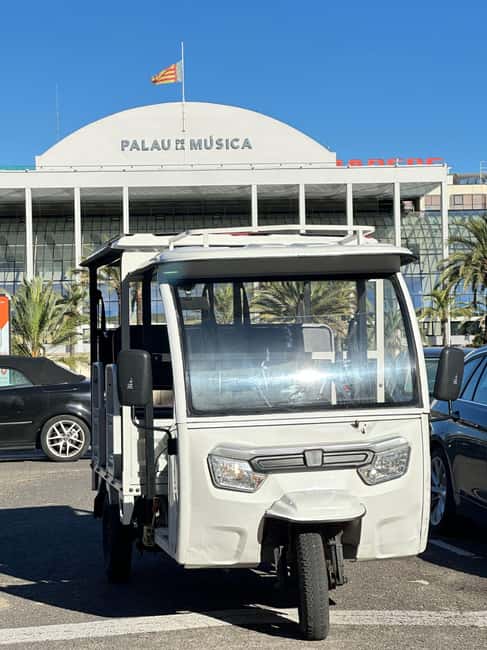
Your starting point is the Puerta del Mar area, with the guide meeting you near Casa Carbonell. The pickup is at the roundabout by Casa Carbonell, next to the kiosk and palm trees. If you’re arriving from the cruise port, it’s close enough that getting there on foot is often a simple option.
Getting there by bus is also easy because there are multiple nearby lines (including night options). If you’re driving, parking is available in the Puerta del Mar area, and a taxi is the fastest low-effort choice.
If you arrive early, do yourself a favor and take a quick look around the Casa Carbonell area first. It helps you understand why this neighborhood is such a natural gateway into the historic center.
From Plaza del Ayuntamiento to City Pulse Moments
After meeting up, the tour heads into the city’s core, starting with the feeling of Alicante’s day-to-day rhythm. One stop is Plaza del Ayuntamiento, where you’ll see the old cannons and the famous clock that marks the city’s pulse and celebrations.
This kind of plaza stop sounds simple, but it’s actually useful. Plazas are where cities show off their identity—what they celebrate, what they preserve, and what they use as a meeting point. Having that explained while you’re still fresh (and before you climb) makes the rest of the tour click.
The guide also helps you notice details you’d likely miss on your own. Small visual cues around these squares often point to larger stories in the city’s past.
Dark Past and Quiet Poetry: Plaza de los Árboles Viejos and Gabriel Miró
Next, you’ll visit Plaza de los Árboles Viejos, a square tied to a darker chapter of Alicante’s history, including public executions. Even if you’re not into grim history, this stop is valuable because it shows how layers of time coexist in a place people still use today.
Then the tone shifts. Plaza Gabriel Miró is quieter and more poetic, dedicated to the writer born in Alicante. It’s a breather stop—an oasis of calm where the city feels less like a set of monuments and more like a place where art, literature, and daily life overlap.
I like that the tour changes mood. It prevents the whole experience from becoming one long “look at that building” checklist.
Calle de las Setas and Teatro Principal: Street Color With Context
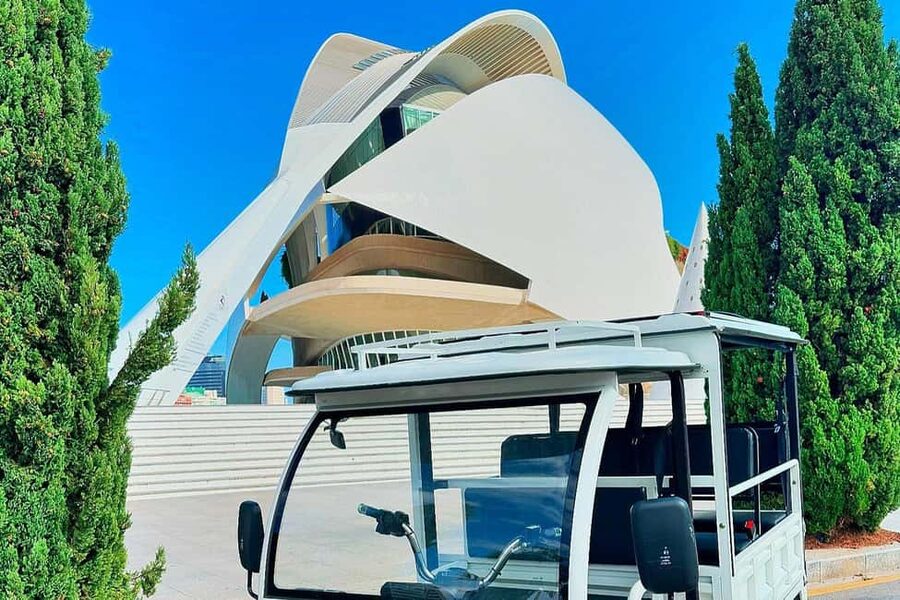
One of the most fun mid-tour sections is a walk along the Calle de las Setas. It’s colorful and full of story cues—urban legends and local history that make it feel like the street is talking back.
From there you head to Teatro Principal, where you learn about the theater’s long background and its role in Alicante’s cultural life. This is where a good guide can turn architecture into something human. Instead of just naming dates or styles, you get a sense of what this space meant to the city over time.
Also, since the group is small, you’re not stuck behind a crowd. That matters on narrow streets and around iconic photo angles.
Barrio de Santa Cruz: Cobblestones, Flowers, and Sea Views
You then climb into the heart of the old town: Barrio de Santa Cruz. This is where you start to feel like you’ve stepped into a postcard—cobbled lanes, flower-decorated houses, and sea views appearing between buildings.
The key here is that the tour doesn’t just toss you into a neighborhood. The timing and the explanation help you understand what you’re looking at as you go: why certain streets feel so photogenic, how the neighborhood’s layout supports lookout points, and how it connects back to the city below.
You’ll also see Basilica of Santa María, one of the major highlights in the old town. Admission to the basilica is free, which is a big practical bonus for anyone watching costs. The Virgin image on the side façade is mentioned as a curious and symbolic detail, and it’s the kind of thing you’ll remember because it’s specific.
Note: tickets for other monuments aren’t included. Still, the basilica’s free entry means you get at least one major religious site without extra fees.
Santa Bárbara Castle: The Pre-Top Secrets and the Panoramas
If you only care about one part of the tour, make it Santa Bárbara Castle. Before you reach the top, you’re given a set of clever “in-between” moments that keep the climb story-driven, not just sweaty.
Along the way, you’ll spot things like:
- the Monkey Face carved or formed in the rock
- street lights with carved faces
- underground history of tunnels that once connected houses
- the charming Little House of the Blue Pots, a photo favorite
These details matter because they’re the exact stuff you’d miss walking up without a guide. Even when you’re curious, you don’t always know what to look for. Here, the guide points it out and explains what you’re seeing.
Once you reach the castle, you get panoramic views that are genuinely the payoff. From the top, you can take in Alicante’s sea, the port area, and the old town below. It’s one of those moments where your brain finally maps the city in one clear picture.
Luceros and Postiguet: Finishing With the City’s Energy
After the castle, you head back down toward Plaza de España and then the center of the action: Plaza de los Luceros. This is described as the heart of the Hogueras festivities and the city’s nerve center, which makes sense once you see how packed and central it feels in the wider city rhythm.
Then the tour ends near Playa del Postiguet, where the blue Mediterranean meets Alicante’s living history. Finishing at the beach is smart. You get a visual reset after looking out over the hills, and it’s a natural place to wander afterward for a snack or a slow cooldown.
Price Check: Is $37 Worth It for 65 Minutes?
At about $37 per person for roughly an hour, you’re paying for three things: a guide, a modern electric tuk-tuk ride, and a tight route that hits major highlights without long walking.
For families, the value is often in energy management. If you’ve got kids in tow, spending less time commuting between neighborhoods can mean the difference between a smooth afternoon and a cranky one.
For solo travelers or couples, it’s also a good deal if you want the big-view and old-town hits in one go, especially if you’re short on time. You’re not paying for admission across multiple paid attractions (tickets to monuments are not included), but you are getting at least one free major stop at the basilica, plus plenty of guided interpretation.
One practical note: it’s a small group limited to 4 participants, so you’re not sharing your guide’s attention with a mass of people. That tends to make the $37 feel more like a guided experience than a transport service.
Small-Group Tips That Make the Tour Better
This tour is built for a quick, guided circuit, so a few prep moves help a lot.
Bring comfortable shoes anyway. You’ll do short walks between photo stops and in plazas. Also, the open-top design means you’re more exposed than you’d be in a closed vehicle, even though rain gear is provided with transparent waterproof covers.
If you’re traveling with kids, keep in mind the minimum age guidance: it’s not suitable for children under 4, and kids under 15 must be accompanied by an adult. If you’re traveling with mobility equipment, the tour is wheelchair accessible, but non-folding wheelchairs aren’t allowed, and non-folding strollers and electric wheelchairs aren’t allowed either. So it’s worth checking what you’re bringing before you show up.
Weight limit matters too: it’s not designed for people over 243 lbs (110 kg).
Finally, don’t plan to hit every stop again afterward. This tour is strongest as a first-pass orientation. Use it to learn the city layout, then return on foot or by taxi to linger where you loved the story most.
Should You Book This Alicante Tuk-Tuk Tour?
Book it if you want a fast, family-friendly way to cover Alicante’s core highlights with real explanations, not just photos. The route is especially good if you want the Santa Bárbara Castle viewpoints but don’t want the full uphill workout.
Skip it or consider another option if you hate time pressure. With so many stops packed into 65 minutes, you won’t have long, slow museum-style pauses. And if you need to avoid outdoor exposure, the open-top setup (even with rain covers) may not be your favorite format.
My take: this is a smart “get your bearings fast” tour—use it to understand what the city is and where the best views live.
FAQ
How long is the Alicante Tuk Tuk Tour?
The tour lasts about 65 minutes.
What does the tour cost?
The price is listed as $37 per person.
Where does the tour start and end?
It starts around the Puerta del Mar area (meeting near Casa Carbonell) and returns to Plaza Puerta del Mar.
Is there a local guide?
Yes. You’ll have a live local guide in your language.
What languages are offered?
English, Hungarian, Russian, and Spanish.
Is the tuk-tuk open-top, and what if it rains?
It’s an open-top electric tuk-tuk, but if it rains they use transparent waterproof covers. Blankets are available for the cold.
Is the tour wheelchair accessible?
It is wheelchair accessible, but non-folding wheelchairs are not allowed.
What ages is it suitable for?
It’s not suitable for children under 4, and children under 15 must be accompanied by an adult.
Are tickets to monuments included?
Tickets to monuments are not included. Admission to the Basilica of Santa María is free.
Final Call
If you want Alicante in one guided hour—plazas, old town lanes, a free basilica moment, and castle views with pre-top surprises—this electric tuk-tuk tour is a strong pick. Just go with the right expectations: short stops, quick photos, and a guide who helps you understand what you’re seeing before you move on.