REVIEW · JAIPUR
Guided Morning E-Rickshaw Ride with Food Tasting at Jaipur
Book on Viator →Operated by Seagull Jaunt · Bookable on Viator
Jaipur wakes up early. This guided morning e-rickshaw ride lets you see the Pink City’s big sights and the everyday street-food rhythm without the usual hassle. You start in the quiet light, cruise at a slow pace, and stack heritage stops with tastings along the way.
I especially like two things: first, the way the ride gives you architecture views with minimal walking, which makes it a smart choice even if you want to go easy on your feet. Second, the food part feels grounded, not touristy, with stops at long-running Jaipur outlets and market snacking paired with temple culture.
One thing to consider: it depends on good weather. If the morning is rough, the plan can shift or pause, and you should be ready for a light outdoor schedule.
In This Review
- Key highlights worth waking up for
- Why Jaipur at Sunrise Works So Well on an E-Rickshaw
- Raj Mandir Cinema: Start Where Jaipur Shows Off
- Ajmeri Gate: Where the Walled City Begins
- Ram Niwas Garden and Albert Hall Views Without Traffic Pressure
- Pink City Streets and Chardiwari: Jaipur’s Protected Heart
- Hawa Mahal Photo-Point: Jharokhas Up Close
- Govind Dev Ji Temple Morning: Aarti + Laughing Yoga
- Thatheron Ka Rasta: Brass Makers and Classic Jaipur Food Joints
- Price and Logistics: What You’re Paying For
- Who This Tour Best Fits (and Who Might Want Something Different)
- Should You Book This Jaipur Morning E-Rickshaw and Food Tasting Tour?
- FAQ
- What is the duration of the Jaipur guided morning e-rickshaw ride?
- How much does the tour cost?
- What is included besides the e-rickshaw ride?
- Where do I meet for the tour?
- Is there a mobile ticket?
- Are admission tickets included for the stops?
- How many people are in the group?
- When will I get confirmation after booking?
- What if the weather is bad?
- What is the cancellation policy?
Key highlights worth waking up for
- Slow e-rickshaw pace that helps you actually look, not just rush
- Pink City photo-points like Hawa Mahal and the classic street views
- Govind Dev Ji temple morning with aarti time plus laughing yoga in the garden
- Flower and vegetable markets with 100+ varieties to browse and smell
- Thatheron ka rasta craft stop where brass utensil makers work old-school
- Food tastings from places running 100+ years, plus market chai snacks
Why Jaipur at Sunrise Works So Well on an E-Rickshaw
Sunrise in Jaipur has a different feel than later in the day. The streets look cleaner, the light is softer, and the crowds haven’t fully arrived. That’s a big deal when your goal is architecture, temple atmosphere, and food stops all in one morning.
On this tour, the e-rickshaw keeps your legs fresher while still letting you experience the city. You get to move through areas you might otherwise skip, especially early when some places are calmer and more enjoyable to photograph. With a maximum of 10 travelers, the vibe stays manageable and the guide can respond to your pace.
You’ll be outside most of the time, so dress for morning cool-to-warm swings. And bring basic patience: this is a street-and-temple route, so the day runs on local rhythm, not museum timelines.
You can also read our reviews of more tours and experiences in Jaipur.


Raj Mandir Cinema: Start Where Jaipur Shows Off
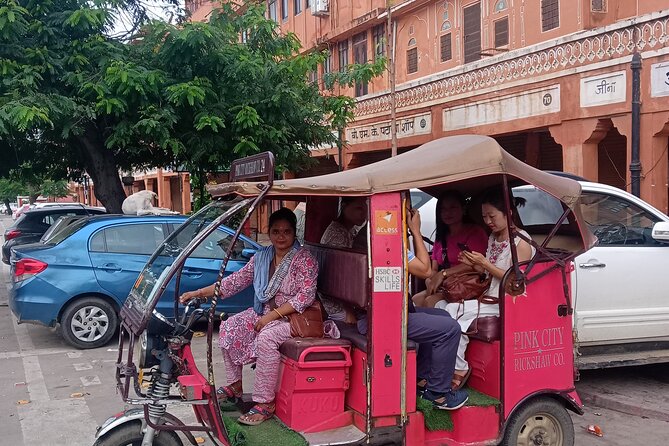
You begin at Raj Mandir Cinema, an old anchor point in Jaipur’s city fabric. It’s known for opulent, meringue-like interior styling, so even the idea of stopping here sets the tone: this city loves showmanship.
Practically, it also helps you get oriented fast. Starting near a major landmark means you’re not stumbling through the first few turns wondering where you are. Expect a short stop—around 10 minutes—so it’s more about setting your bearings and getting the morning going than doing a deep dive.
If you’re the kind of traveler who likes to know what you’re looking at, this is a good early moment. You’ll likely get quick context from your guide before the route moves into the quieter heritage streets.
Ajmeri Gate: Where the Walled City Begins
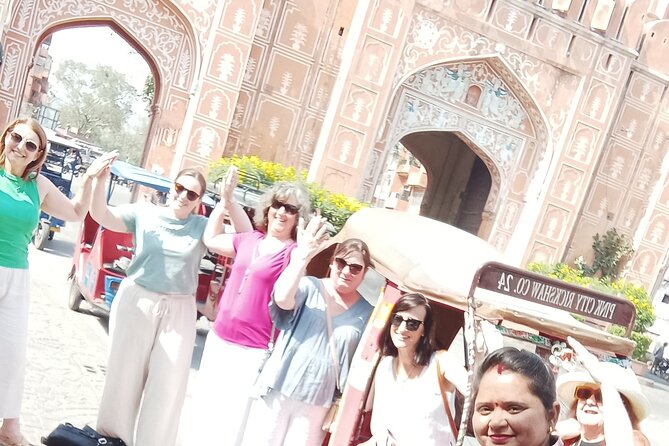
Next comes Ajmeri Gate, a gateway with serious history behind it. You’ll get a good view of Jaipuri art on the walls and the large doorways that once helped protect localities from foreign invaders in the era of the Maharajas.
This stop matters because it’s a boundary marker. Standing here helps you understand why Jaipur’s old city feels different from the newer stretches—more enclosed, more detailed, more made for street life. The stop is brief (about 10 minutes), but it sets up everything after.
The only consideration is timing. Gates and old-city lanes can feel tight, and morning light can be tricky for photos depending on your angle. If you care about pictures, plan to ask your guide to pause briefly for the best shot rather than rushing the walk back.
Ram Niwas Garden and Albert Hall Views Without Traffic Pressure
One of the smartest parts of the morning is the break at Ram Niwas Garden. You’ll enjoy garden views in the early hours with an Anglo-Indian style backdrop, including the European architectural look of Albert Hall Museum in the middle of the garden.
Traffic not being allowed during morning hours is a quiet win. It means you can actually breathe, and you can ride through garden roads without that constant interruption you get later. You’ll spend about 20 minutes here, which is enough to cool down from the first stops and reset your brain.
For many people, this garden segment is where the tour shifts from quick sightseeing to real atmosphere. The pace slows, the colors look better, and you’re not battling the noise of peak traffic.
Pink City Streets and Chardiwari: Jaipur’s Protected Heart
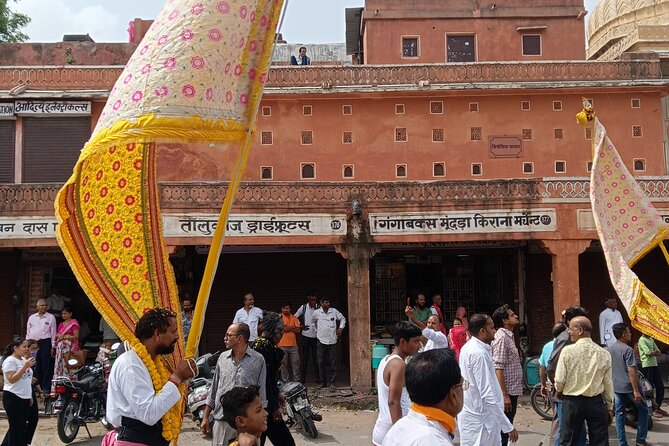
You’ll then move into the Pink City area and stop by Chardiwari, which served as outer walls to protect the palace area of Jaipur’s Maharajas. This is where Jaipur’s planned-city logic starts to feel tangible instead of theoretical.
You’ll pass through or near older market areas as you go, which is exactly what makes this route feel like local life. The morning timing helps too; you’re seeing the city in its earlier mode, before shops fully thrum and people start cranking up the day.
Also, Jaipur’s design isn’t just walls and lanes. The city’s older planning includes a cross-road system with water fountains that dates back about 300 years. When your guide points these kinds of details out, you start to see the practical brains behind the beauty.
This stop cluster lasts about 20 minutes, so it’s not a long walk. Still, expect a few moments of stopping and looking as the route squeezes through classic streets.





Hawa Mahal Photo-Point: Jharokhas Up Close
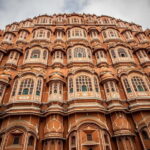
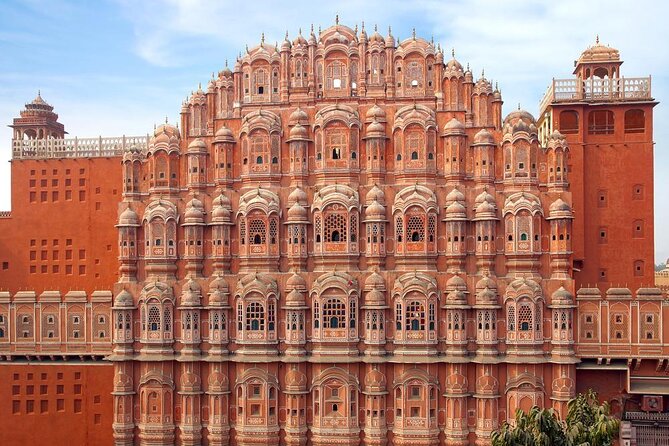
Hawa Mahal—Palace of Wind—is the kind of place you already know from photos, and it’s the kind of place you still need to see in person. The exterior has five floors, and it’s known for the honeycomb-like façade with 953 small windows called jharokhas, decorated with intricate latticework.
Here’s what I find useful as a traveler: you’re not just ticking off a sight. The guide can help you read what those windows were for—how the architecture shaped airflow and protected the palace ladies’ privacy in earlier times. Even if you don’t go deep into the theory, seeing the pattern in real scale makes the whole thing click.
You’ll get about 20 minutes at the Hawa Mahal photo-point. That’s plenty for a clean shot and a few minutes of soaking in the façade details. Admission isn’t included for this stop, so if you want to go inside, you should plan for that separately.
Govind Dev Ji Temple Morning: Aarti + Laughing Yoga
Govind Dev Ji is where the tour becomes more than sightseeing and snacks. This stop includes temple time, with aarti at Govind Dev Ji Temple, plus a lively morning segment in the temple garden. You’ll also get far views of the City Palace from this area, so you’re mixing sacred space with royal panorama.
One of the most fun details in the plan is laughing yoga in the garden. It sounds playful, but it also fits the setting: a morning reset before you head back into markets and streets. I like that the tour builds in a moment where you’re not just looking at objects—you’re participating in the day.
You’ll spend about an hour here, and you’ll likely pass through areas connected to local food markets and special food streets as you move to and from the temple segment. This gives you a sensory link between devotion and daily life, especially because Jaipur food is a major part of how people gather.
Admission is listed as free for this stop. That’s a good cost-control point, but do note the time in this segment is the heart of the morning. If you’re someone who gets impatient waiting your turn for a view or a photo, this is where you’ll want a calmer mindset.
Thatheron Ka Rasta: Brass Makers and Classic Jaipur Food Joints
Now you reach Thatheron ka rasta, a street tied to artisan work—specifically brass utensil makers. This part hits hard if you like craft and process. The makers work without machines, old-style, and you’ll see how much skill sits inside small movements.
There’s also an interactive option: you can try making a brass utensil yourself if you want. That doesn’t mean you’ll leave as a metalworker, of course. But it does give you a real sense of how time-consuming and precise the work is.
Then comes the food section, and this is where the tour earns its price. You’ll visit famous Jaipur food outlets that have been running their business for 100+ years, and you’ll enjoy traditional dishes and snacks. Expect market energy too—especially with the flower and vegetable market angle, where you’re promised more than 100 varieties.
Food-wise, this tour is built around tastings rather than a formal sit-down meal. That’s ideal for a short morning like this because you can sample, compare, and keep moving. It also means your guide can guide your taste rather than leaving you to guess what’s worth trying.
The stop is about 20 minutes, but it’s a packed 20. Wear something comfortable, because standing and noshing can add up faster than you’d think.
Price and Logistics: What You’re Paying For
The price is $30.09 per person, and you should judge it by what you’re getting, not by what you might do alone.
For that amount, you get:
- A guided route through major landmarks (Raj Mandir Cinema, Ajmeri Gate, Ram Niwas Garden, Chardiwari/Pink City areas, Hawa Mahal, Govind Dev Ji Temple)
- A structured morning pace in a group of up to 10 travelers
- Food tastings tied to long-running outlets plus market stops
- An e-rickshaw ride that reduces walking during a heritage-heavy morning
Three hours sounds short, but it’s long enough to hit the big visual moments and still slow down for flavors. Also, the tour uses a mobile ticket, which keeps it easy if you don’t want paper tickets floating around your bag.
One practical note: the tour is near public transportation, but it’s still a morning route with multiple on-foot moments. If you’re traveling with mobility limits, this plan can be a lifesaver because the e-rickshaw does most of the heavy movement. A couple of older travelers on past departures also found this format worked well for back comfort and reduced walking strain.
Who This Tour Best Fits (and Who Might Want Something Different)
This is a great fit if you want a guided sampler of Jaipur: monuments, markets, temple culture, and food. If you’re the type who likes to learn how places function—where people gather, how artisans work, and how morning rituals shape the day—you’ll probably enjoy it.
It’s also a solid match if you’d rather avoid intense walking. The route format helps you see a lot without feeling wrecked after Day One. That matters in Jaipur, where heat, crowds, and distance can make “just one more stop” turn into regret.
If you want a slow, do-everything-at-one-place day—like spending a long time inside Hawa Mahal or doing deep museum time—this won’t replace that. It’s a sampler with smart pacing, not a full-day immersion.
Should You Book This Jaipur Morning E-Rickshaw and Food Tasting Tour?
I’d book it if you want maximum Jaipur per morning hour: Pink City streets, Hawa Mahal views, Govind Dev Ji temple energy, and real food tastings that don’t feel like guesswork. The small group size (up to 10) and the e-rickshaw format make it feel practical, not chaotic.
If you’re sensitive to outdoor weather, check the day’s conditions and keep a flexible schedule. And if you want to go inside any monument that lists admission as not included, you’ll need to plan for those tickets separately.
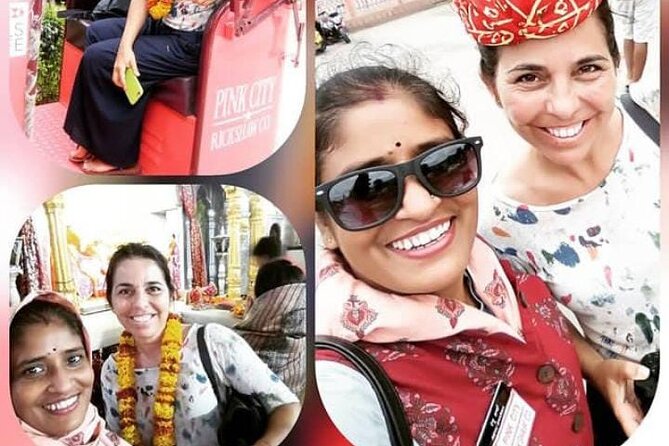
Overall, this tour is a smart value play: for around three hours, you get heritage moments, market sensory time, and long-running Jaipur food stops—guided by people like Umesh and KumKum who know how to keep the morning moving and interesting.
FAQ
What is the duration of the Jaipur guided morning e-rickshaw ride?
It’s approximately 3 hours.
How much does the tour cost?
The price is $30.09 per person.
What is included besides the e-rickshaw ride?
The experience includes morning sightseeing stops and food tastings at well-known Jaipur food outlets, plus market visits such as the flower and vegetable market.
Where do I meet for the tour?
The meeting point is Raj Mandir Cinema, C-16, Bhagwan Das Rd, Panch Batti, C Scheme, Ashok Nagar, Jaipur, Rajasthan 302001, India. The tour ends back at the meeting point.
Is there a mobile ticket?
Yes, the tour provides a mobile ticket.
Are admission tickets included for the stops?
Admission ticket details vary by stop. Raj Mandir Cinema and Hawa Mahal list admission as not included, while Ajmeri Gate is listed as free, Ram Niwas Garden is free, and Govind Devji Temple is free. Thatheron ka rasta is also listed as free.
How many people are in the group?
The tour has a maximum of 10 travelers.
When will I get confirmation after booking?
You’ll receive confirmation at the time of booking unless you book within 2 days of travel. In that case, confirmation is received within 48 hours, subject to availability.
What if the weather is bad?
This experience requires good weather. If it’s canceled due to poor weather, you’ll be offered a different date or a full refund.
What is the cancellation policy?
You can cancel up to 24 hours in advance for a full refund. If you cancel less than 24 hours before the experience starts, you won’t receive a refund.