REVIEW · SIEM REAP
Full Day Angkor Complex by Tuk Tuk – (Optional Sunrise)
Book on Viator →Operated by Hidden Angkor Tour · Bookable on Viator
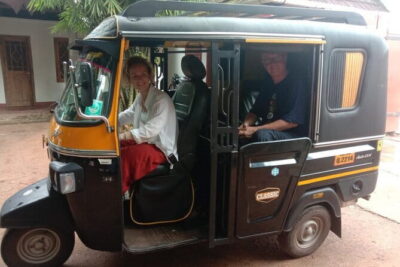
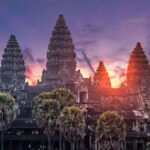
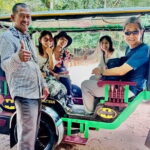
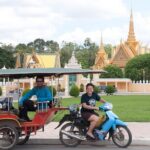
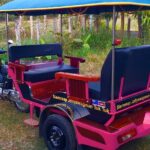
4:30 a.m. sounds crazy until it isn’t. This full-day Angkor Complex tour is built around that early start, letting you reach Angkor Wat before the day crowds so you can enjoy the temples with breathing room and great light. You’ll travel by tuk tuk, with an open-air ride that makes it easy to pause for views and photos as you move between temple zones.
I really like two parts of this setup. First, you get a professional English-speaking guide, and the route is paced to give you time at each major sight instead of a rushed checklist. Second, the comfort touches matter: you’re provided cool water and a cool wet towel, which helps a lot once the morning heat shows up.
One thing to plan for: the Angkor Archaeological site entrance pass is not included. You’ll need to buy it separately at the main gate, and the listed one-day rate starts around $37 per person (charged in USD). That’s the main extra cost that can catch people off guard.
In This Review
- Key things to know before you go
- Why a tuk tuk day feels right for Angkor
- Price math: what the $60 covers (and what you add at the gate)
- Morning rhythm: how the 4:30 a.m. start changes everything
- Stop 1: Angkor Wat at sunrise (the towers, bas-reliefs, and the “why”)
- Stop 2: Ta Prohm and the tree-in-temple photo payoff
- Stop 3: Victory Gate of Angkor Thom (fast, but meaningful)
- Stop 4: Terrace of the Elephants (where the power scene lived)
- Stop 5: Phimeanakas (small stop, strong alignment)
- Stop 6: Baphuon and a view that rewards the climb
- Stop 7: Bayon Temple (the grand finale face)
- Dress code, wet weather reality, and protecting your electronics
- Food breaks: how breakfast and lunch fit the schedule
- Should you book this full-day Angkor Complex tuk tuk tour?
- FAQ
- What time does the tour start?
- How long does the full-day tour take?
- Is pickup from my hotel included?
- Is the Angkor Archaeological site entrance pass included?
- How much is the Angkor entrance pass?
- What does the tour include besides the guide?
- Which temples are included in the route?
- Is there a dress code?
- Are children allowed, and do they pay?
- Can I cancel for a refund?
Key things to know before you go
- 4:30 a.m. sunrise option sets the tone for the whole day, especially at Angkor Wat
- Private by tuk tuk means your group stays together with a driver and an English guide
- No entry tickets included for temple admissions, so budget the Angkor pass on top
- Ta Prohm time is photo-focused with the famous tree-in-temple look
- Angkor Thom sights are concentrated (Victory Gate, Terrace of Elephants, Phimeanakas, Baphuon, Bayon)
- Dress code can matter: shoulders covered and knees below required at some temples
Why a tuk tuk day feels right for Angkor
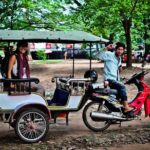
Angkor is spread out. Even when the sites feel close on a map, you’ll spend time bouncing between temple areas, and that’s where transport style matters. A tuk tuk is handy here because it’s small, flexible, and easier to stop for viewpoints and quick photos than bigger vehicles.
It’s also open-air. That means you’ll feel the morning breeze on the early drive and get a more “outside” experience as you head deeper into the Angkor area. If you like seeing the countryside edges, not just sitting in a car, you’ll probably enjoy this format.
The trade-off is simple: open-air also means you’ll feel weather and dust more. Go with a light layer and accept that this isn’t a sealed, air-conditioned ride. The included cool water and wet towel are there for exactly this kind of long, outdoor day.
You can also read our reviews of more tours and experiences in Siem Reap.

Price math: what the $60 covers (and what you add at the gate)
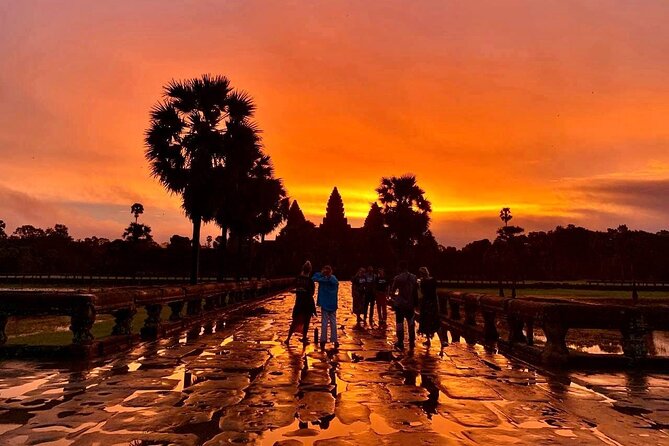
The tour price is $60 per person and it includes a full day with a professional English-speaking guide, tuk tuk transportation, and cool water plus a cool wet towel, along with taxes and service charges.
What’s not included is the most important line item for most people: the Angkor Archaeological site entrance pass (starting around $37 USD/person for a one-day pass). The pass gives access to the sights in and around Angkor, and you should keep it visible.
So a realistic budget check looks like this:
- Tour: $60
- Entry pass: about $37+ depending on how many days you buy
- Meals: not included (breakfast and lunch happen at local restaurants along the way)
- Drinks and personal shopping: not included
If you’re thinking about value, here’s the clean way to view it: the $60 pays for the guide, the vehicle, the comfort extras, and the time structure. The pass is the separate “entry fee” to the temple zone itself, and you can’t dodge it if you want to actually walk the sites.
Morning rhythm: how the 4:30 a.m. start changes everything
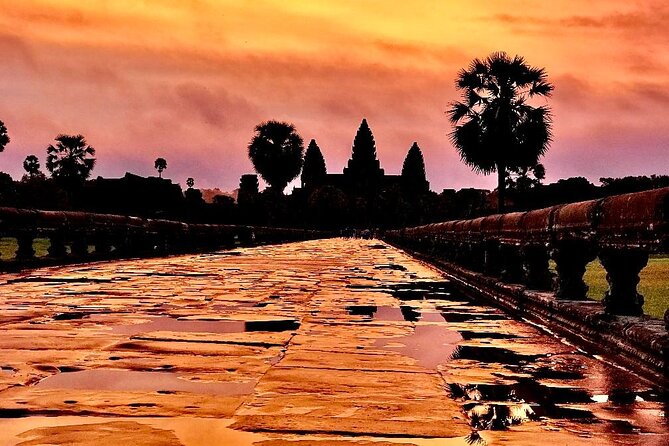
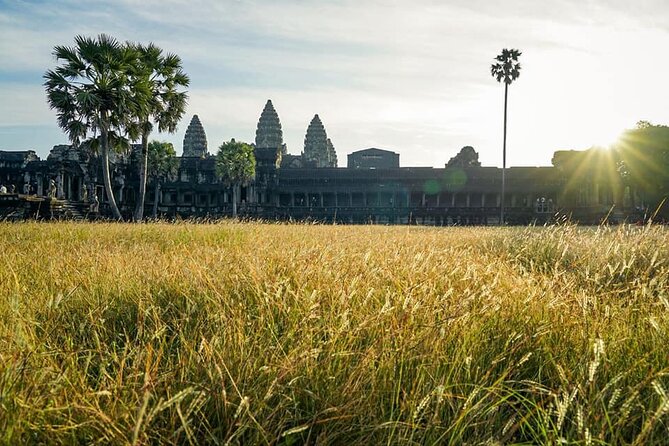
This tour starts early—around 4:30 a.m.—to catch sunrise at Angkor Wat (when you choose the optional sunrise).
That start time is the big reason this experience is so popular. You arrive before the temple day gets fully loud. The light is more flattering. The crowds feel less intense. And you have time to move at a calmer pace instead of rushing from one photospot to the next.
Before sunrise, you’ll also handle the practical step of getting your entry pass. The tour includes a stop for the ticket booth, so you’re not guessing where to go or how to buy quickly. Once you’re set, you roll into the sunrise window with time to appreciate the temple’s scale, not just snap a couple of quick shots.
After sunrise and early temple time, breakfast is included, with the plan calling for a local restaurant in the Angkor area. That’s a smart pairing: you’re up early, you’re walking, and you don’t want to start your day running on caffeine alone.
Stop 1: Angkor Wat at sunrise (the towers, bas-reliefs, and the “why”)
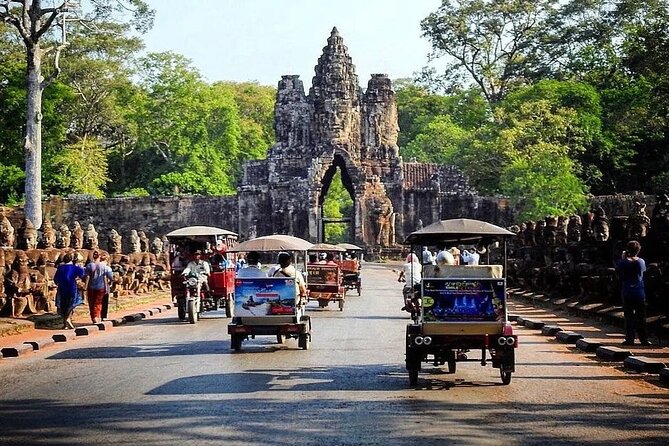
Time on this stop: about 2 hours
Entry: not included; pass required
Angkor Wat isn’t just famous because it’s photogenic. It’s famous because the whole layout is built like a big statement about the universe, using Hindu mythology as its frame. The site is described as a replica of the universe, centered on Mount Meru, surrounded by continents and oceans.
When you’re there early, you can actually take in the design logic. You’ll see:
- The famous five towers and their geometric arrangement
- Galleries and courtyards laid out like an ordered walk-through
- Bas-reliefs that depict Khmer epics and myths
- Stone figures of celestial Apsara dancers around key areas
What I like about this tour’s approach is that it doesn’t treat Angkor Wat like one blur-stop. Two hours is enough time to get a feel for the site without feeling stuck only at the outer viewing points.
One practical consideration: this is a sunrise plan, so your body will be awake before it’s comfortable. Wear something light you can manage at dawn, and keep your plans flexible for how your legs feel after the early start.
Stop 2: Ta Prohm and the tree-in-temple photo payoff
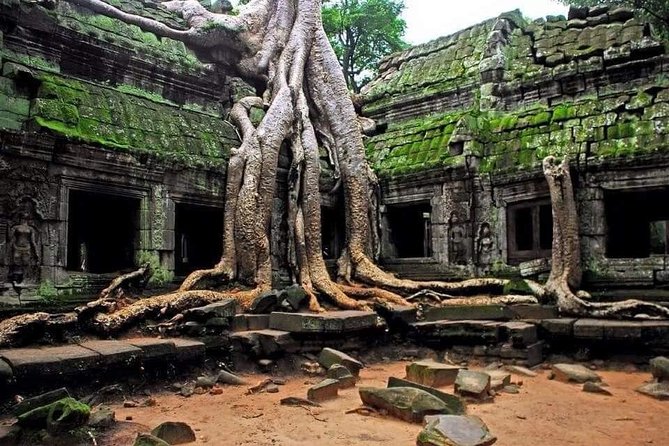
Time on this stop: about 1 hour
Entry: not included; pass required
Ta Prohm is known for one main look: the monastic complex that’s only partially cleared of jungle overgrowth. That mix of stone and roots is exactly why photographers love it, and it’s why you’ll often see people spending extra time here.
This stop is also built around a strong “photo and wander” rhythm. If you want that iconic tree-in-temple effect—where the greenery wraps into the ruins—this is the right spot in the day to slow down a little.
Possible drawback: Ta Prohm’s atmosphere is outdoors and shaded in places, so your comfort will depend on the morning temperature and light. Bring what you’d normally bring for a tropical temple day: water you’ve already been given, plus a plan for keeping your phone/camera dry and protected.

Stop 3: Victory Gate of Angkor Thom (fast, but meaningful)
Time on this stop: about 30 minutes
Entry: not included; pass required
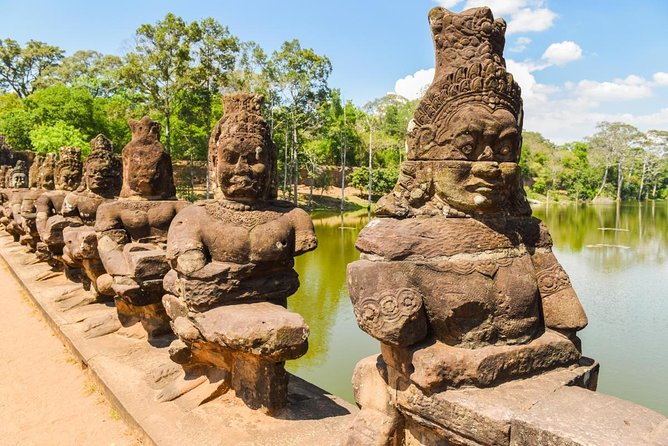
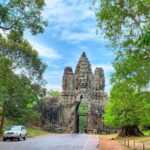
Victory Gate is one of the five gates guarding Angkor Thom, the walled city. Compared with the better-preserved gates, this one is described as slightly less preserved, which can make it feel more raw and real—less like a polished set.
You’ll learn a key historical context: Victory Gate was built by King Jayavarman VII in the late 12th century and served as one of the five holy Buddhist gateways to Angkor Thom.
Thirty minutes is enough here because the point isn’t a long museum-style stop. It’s a moment to understand how the city was structured and how the gates functioned as entry and symbolism.
Stop 4: Terrace of the Elephants (where the power scene lived)
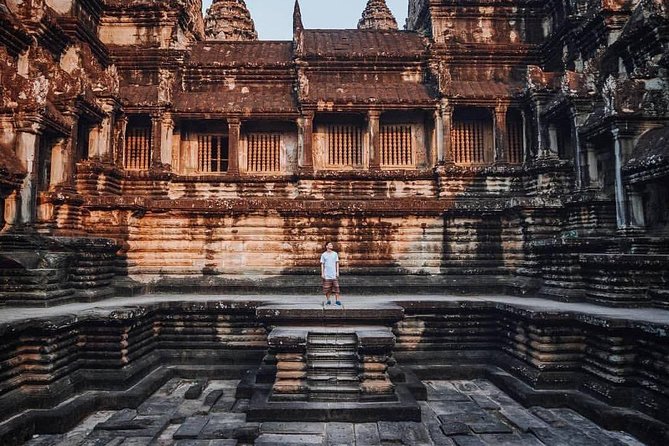
Time on this stop: about 30 minutes
Entry: not included; pass required
This terrace is part of Angkor Thom’s complex. The big storyline is political and ceremonial: it was used by King Jayavarman VII as a platform from which to view his victorious returning army.
Even if you don’t focus on every carved detail, you can still “place yourself” in the scene when you stand there. That’s why this stop works in a tuk tuk day. You’re not losing a whole hour. You’re getting a concentrated sense of what leadership and display looked like in the Khmer world.
Stop 5: Phimeanakas (small stop, strong alignment)
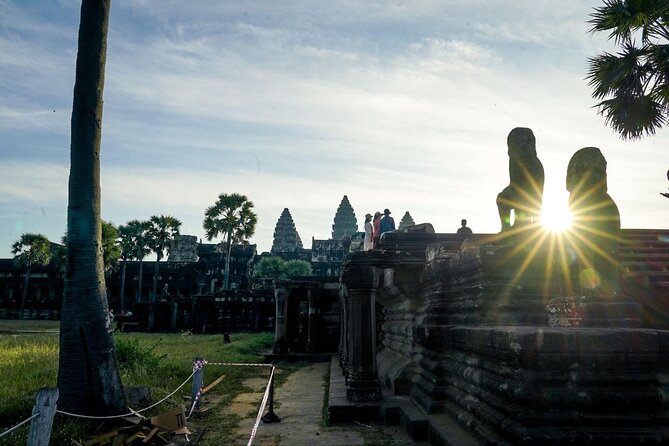
Time on this stop: about 25 minutes
Entry: not included; pass required
Phimeanakas literally means celestial temple. It’s located in the middle of the old royal palace area, aligned with the Victory Gate, and on the west side of the Terrace of Elephants.
That alignment detail is useful because it helps you understand this isn’t random temple placement. It’s a designed layout where key structures point toward each other across the palace space.
If you like architectural “readability” (not just photo angles), you’ll probably appreciate this stop. If you’re less into layouts, don’t worry. The later stops like Baphuon and Bayon often deliver the biggest visual impact.
Stop 6: Baphuon and a view that rewards the climb
Time on this stop: about 30 minutes
Entry: not included; pass required
Baphuon is described as a beautiful 11th-century temple-mountain with steep stairs leading to a terrace view. The terrace is considered one of the best viewpoints in the Angkor Archaeological Park.
That steep-stairs detail matters. This isn’t just a stroll on flat ground. If you’re comfortable with uneven surfaces and stair climbs, you’ll likely love this stop. If stairs are hard for you, plan to go slowly, take breaks, and be ready to accept that this view might take more effort than the other stops.
There’s also an archaeological point worth knowing: archaeologists believe Baphuon was probably among the most impressive temples in its day. That’s the kind of information that makes the site feel bigger than a quick photo moment.
Stop 7: Bayon Temple (the grand finale face)
Time on this stop: about 1 hour
Entry: not included; pass required
Bayon is one of the more famous and popular structures in the Angkor complex. It’s also described as one of the more beautiful parts of the archaeological park, which is exactly why it lands as the ending stop.
In practice, Bayon is where you’ll feel the day shift from “learning” to “soaking it in.” After several gate and temple stops, the final hour gives you time to enjoy what’s visually striking without constantly thinking about the next site.
If you’re the type who likes your photos to end on a strong note, this timing works well.
Dress code, wet weather reality, and protecting your electronics
Some temples in Angkor—including Baphuon—have a strict dress code. The rule given is clear:
- Shoulders must be covered
- Clothes must fall below the knees
You can be refused entrance if you wear shirts with obscene and disrespectful prints and pictures, or if you show up in brightly-coloured clothing.
That means you should plan your outfit for a long day outside and not for dinner later. Bring a light scarf or shawl you can pull up over your shoulders. Also keep your legs covered—thin breathable fabrics can work if you choose carefully.
Now for the tech side: natural elements can damage electronics. The guidance here is to wrap and protect your camera, mobile phone, or other devices against water and dust. This matters in temple areas where the air and conditions can be unpredictable.
Finally, remember you’re outdoors for hours. The tour includes cool water and a cool wet towel, which is helpful, but it doesn’t replace basic sun and hydration sense.
Food breaks: how breakfast and lunch fit the schedule
The day isn’t built around packed restaurants or long sit-down meals. It uses short, practical food stops that match the temple timing.
- Breakfast: after the early Angkor area sunrise plan, breakfast is set at a local restaurant in the Angkor area
- Lunch: after Ta Prohm, lunch is also at a local restaurant in the Angkor area
Because meals aren’t included in the tour price, you’ll pay separately. Still, the benefit is you don’t have to solve logistics mid-day. You get a clear rhythm: temple → food → temple.
If you’re sensitive to early mornings, eat a solid breakfast rather than a quick snack. You’ll be walking and climbing (especially with the Baphuon stairs) and your energy matters.
Should you book this full-day Angkor Complex tuk tuk tour?
Book it if:
- You want a private tuk tuk day with a professional English-speaking guide
- You care about seeing Angkor without rushing every stop
- You want the sunrise option at Angkor Wat (or at least the early timing that sunrise brings)
Think twice (or plan extra carefully) if:
- You don’t want additional costs, because the Angkor Archaeological pass is separate (starting around $37 USD/person)
- You might struggle with steep stairs at Baphuon
- You’re arriving in clothing that doesn’t meet the temple dress code
If you’re flexible and you like structured time with real temple context, this is a strong way to experience the Angkor complex in one day. The tuk tuk format keeps the day feeling personal and manageable—especially when the day begins at 4:30 a.m.
FAQ
What time does the tour start?
The early start is around 4:30 a.m. if you include the optional sunrise at Angkor Wat.
How long does the full-day tour take?
It runs about 8 to 9 hours.
Is pickup from my hotel included?
Yes. Pickup is offered, and you provide your hotel details so the team can find your location.
Is the Angkor Archaeological site entrance pass included?
No. The entrance pass is not included and you must buy it separately at the main gate.
How much is the Angkor entrance pass?
The pass is listed as $37 USD/person starting price for entry, with one-day up to seven-day passes available.
What does the tour include besides the guide?
It includes transportation by an open-air tuk tuk, plus cool water and a cool wet towel, and applicable taxes and service charges.
Which temples are included in the route?
The day includes Angkor Wat, Ta Prohm, Victory Gate, Terrace of the Elephants, Phimeanakas, Baphuon, and Bayon.
Is there a dress code?
Yes. Some sites require clothes that cover shoulders and fall below the knees, and you may be refused entry if clothing doesn’t meet the rules.
Are children allowed, and do they pay?
Children under 12 are free of charge, but a valid passport must be presented at the booth as proof.
Can I cancel for a refund?
Yes. You can cancel up to 24 hours in advance for a full refund.