REVIEW · LISBON
Food & Wine Lisbon Tour with Local Guide in Private Eco Tuk Tuk
Book on Viator →Operated by Eco Tuk Tuk - Portugal · Bookable on Viator
Lisbon on a tuk-tuk keeps you moving. This private, 100% electric eco tuk-tuk tour links classic neighborhoods with tastings and easy photo stops so you get your bearings fast. You’ll roll through narrow streets and major landmarks without wasting time.
I especially like the tuned-in food and wine tastings, including snacks plus multiple pours with cheese options (and the menu can be adapted for vegetarians). The other win for me is the private format: you get a personalized route and a guide who can slow down for the views.
One possible drawback: if you expect a very heavy, food-first lesson with specific items (like a particular sandwich), you may find the tastings lighter than the wording suggests, since the emphasis can tilt toward sights and stories.
In This Review
- Key Things to Know Before You Go
- Electric Eco Tuk-Tuk Lisbon: Comfortable, Scenic, and Really Convenient
- Food and Wine on This Tour: What Tastings Feel Like in Practice
- Cais do Sodré and Ribeira Market: Where the Day Starts Smelling Like Food
- Chiado and Its Classic Stops: Bookstores, Cafés, and Theater Energy
- Bairro Alto at Tuk-Tuk Speed: Old Streets, Late-Night Reputation
- Baixa and the Earthquake Rebuild: Lisbon’s Smart Grid
- The Sé Cathedral Area: A Very Old Church in the Heart
- Largo das Portas do Sol and Alfama Views: The Sunset-Ready Stop
- Miradouro Nossa Senhora do Monte: Panoramas Plus a Chapel Story
- Graça and São Vicente de Fora: Neighborhood Life Meets Religious Landmarks
- National Pantheon (Panteão Nacional): Santa Engrácia’s Big Role Change
- Chafariz de El-Rei and Praça do Comércio: Water, Power, and Big Square Energy
- Price and Value: Getting More Than Just a Few Stops
- Who This Private Food and Wine Tuk-Tuk Tour Fits Best
- Practical Tips to Make the Most of the Route
- Should You Book This Tour?
- FAQ
- Is this a private tour?
- How long is the Food and Wine Lisbon tour?
- Does the tour include pickup?
- What food and wine tastings are included?
- Can the menu be adjusted for vegetarians?
- What if I’m late on the day of the tour?
Key Things to Know Before You Go
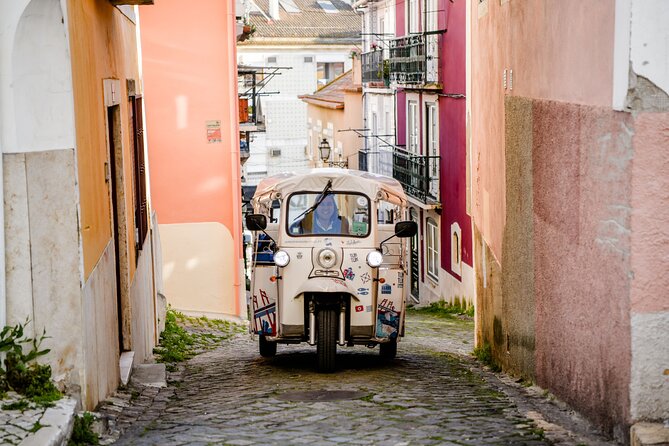
- Private eco tuk-tuk only for your group (no mixing with strangers)
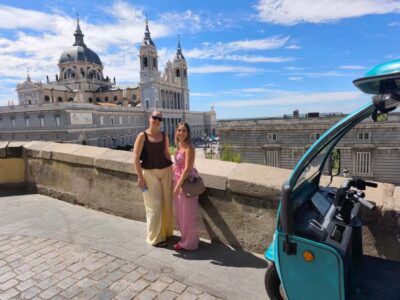
- 100% electric vehicle with rain-and-wind covers plus blankets for comfort
- No-queue start and pre-set photo stops that keep the day on track
- Food and wine tastings plus snack-style bites, with vegetarian adaptation available
- Stops cover Lisbon’s main slices: markets, downtown grid, hills, churches, and river squares
- Guides may run the route slightly differently if street closures happen
Electric Eco Tuk-Tuk Lisbon: Comfortable, Scenic, and Really Convenient
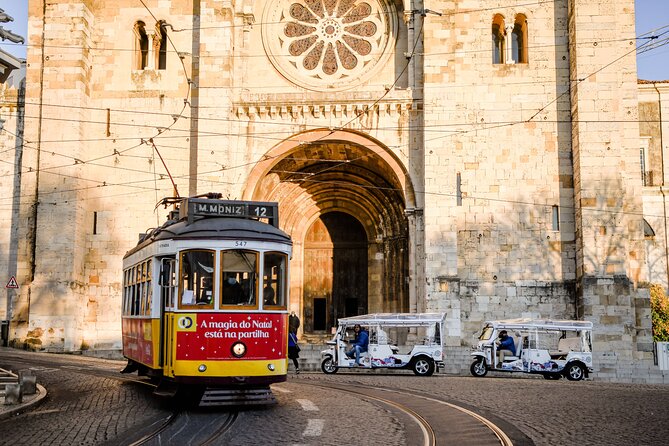
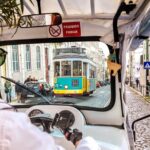
The big idea here is simple: Lisbon is a city of hills, narrow lanes, and sudden turns. A tuk-tuk is one of the easiest ways to see a lot without doing the city’s full “walk up and down like it’s your job” workout.
Because it’s private, you’re not stuck with a tour rhythm that fights your timing. If your group wants a photo at a viewpoint, your guide can work it into the pre-selected photo moments. And because this is 100% electric and built for comfort (including covers and blankets), you’re not as tied to perfect weather as you would be on a long open-air walk.
Practical note: the route uses preset stops, so it’s not the kind of tour you can freestyle. You’ll get a plan that’s been tested for flow, time, and access—good news if you’re the type who likes structure, less good news if you’re hoping to steer the day completely.
You can also read our reviews of more tours and experiences in Lisbon.



Food and Wine on This Tour: What Tastings Feel Like in Practice
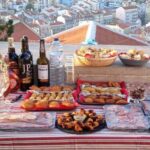
This experience is marketed as food and wine, and you will taste. What you can expect is snack-style servings and different tastings that include wine, cheeses, and other small bites. If you’re vegetarian, the menu can be adapted, which matters in Portugal where meat-and-cheese-first tables are common.
Here’s the practical reality: this tour is split between sights and tastings. In other words, it’s not a food crawl where every stop is a deep technical food lesson. It’s more like a guided sampler day—Lisbon context plus tasting bites—so you leave with flavors in your memory and stories tied to them.
From one specific feedback point, I’d flag this: if you’re counting on a particular named item to appear in the tasting lineup, don’t plan your whole mental menu around it. The tastings you get are tasty, but the emphasis can land more on the overall food-and-culture theme than on one exact dish being front-and-center.
If you love Lisbon’s neighborhoods and you want to eat and sip along the way, this is a strong match. If you want an intensive culinary class with a very detailed breakdown of every food component, you might want to pair this with a separate dedicated food workshop.
Cais do Sodré and Ribeira Market: Where the Day Starts Smelling Like Food
You begin in the Cais do Sodré area, a riverside pocket of Lisbon that’s known for nightlife and restaurant energy. Even before you hit the tastings, this is a smart starting zone because it’s close to food culture and easy movement through busier streets.
One highlight here is the 19th-century Ribeira Market, a food court vibe where lots of stalls and counters create a constant hum. The idea isn’t just to look; it’s to see how Lisbon feeds itself—international plates alongside local specialties. It’s a good “first mental map” stop: you get a sense of what locals gravitate toward, not only what’s packaged for tourists.
You also pass the Pink Street area, which is where bars and restaurants connect with fado nights. Even if you don’t time it for a full performance, it’s a quick way to understand why fado shows up in Lisbon’s everyday life, not just in formal concert settings.
If you’re visiting in warmer months, the Ribeira das Naus promenade is a nice end-of-day-feel space on the Tagus. On this route, it also works as a scenic reset between tighter neighborhoods.
Drawback to consider: this area can be lively, and the tuk-tuk route relies on street conditions. If there’s heavy foot traffic, the ride can slow a touch, but that’s part of the realism.
Chiado and Its Classic Stops: Bookstores, Cafés, and Theater Energy

Next up is Chiado, Lisbon’s historic center of stylish shops, cafés, and creative life. This neighborhood sits between Baixa and Bairro Alto, so it’s a natural bridge: you’re moving from downtown order into more winding hill energy.
Chiado is where you’ll spot landmarks that feel like Lisbon’s intellectual mood board. The tour area includes Café A Brasileira, Livraria Bertrand (the world’s oldest operating bookstore), and the São Carlos Theater area. Even if you don’t go inside, seeing these sites in sequence helps you understand why Chiado has long pulled artists and writers into its orbit.
This section is also a sweet spot for photos. The streets and squares feel designed for a slow wander, and the guide will take you to pre-set photo moments instead of making you hunt.
If you care about Lisbon’s cafe culture (and the role of coffee-and-conversation), this portion gives you the context to enjoy it later on your own.
Bairro Alto at Tuk-Tuk Speed: Old Streets, Late-Night Reputation
Then you shift into Bairro Alto, the hill neighborhood famous for its bohemian nightlife. The tuk-tuk approach is handy here because Bairro Alto’s streets are famously tight and cobblestoned—excellent for atmosphere, not always great for long walks.
This area is known for fado venues, trendy bars, and late-night cafés. But by day, it’s more relaxed: think antique shops, art galleries, and cozy cafés. That day/night shift is important, because it means your experience can feel calmer than what you’ve heard about nightlife.
You’ll also get a sense of why Bairro Alto is a “maze” in the best way. From the tuk-tuk seat, you can spot the streets you’ll want to explore later by foot—especially if you want to compare day-to-evening energy.
Possible consideration: if your group is sensitive to noise, Bairro Alto can feel louder even in daytime because the whole neighborhood is built around coming and going. It’s manageable, just don’t plan on complete quiet.



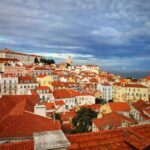


Baixa and the Earthquake Rebuild: Lisbon’s Smart Grid
After hill energy, the tour moves into Baixa, Lisbon’s downtown core—neoclassical buildings, wide streets, and elegant squares. Baixa was rebuilt after the 1755 earthquake, and the design is one of the reasons Lisbon still feels legible today.
This is where you’ll connect the dots between Lisbon’s past and its present shape. The guide’s stories around the rebuilding make the city’s layout feel less random and more intentional, especially the grid-like street plan associated with the Marquis of Pombal.
Baixa is also where major squares anchor your walk through the city’s key landmarks. You’ll get close to Praça do Comércio territory (more on that in a later stop), plus the grand central feeling of the downtown system.
If you like architecture and want to understand why Lisbon’s center looks the way it does, Baixa is your payoff.
The Sé Cathedral Area: A Very Old Church in the Heart
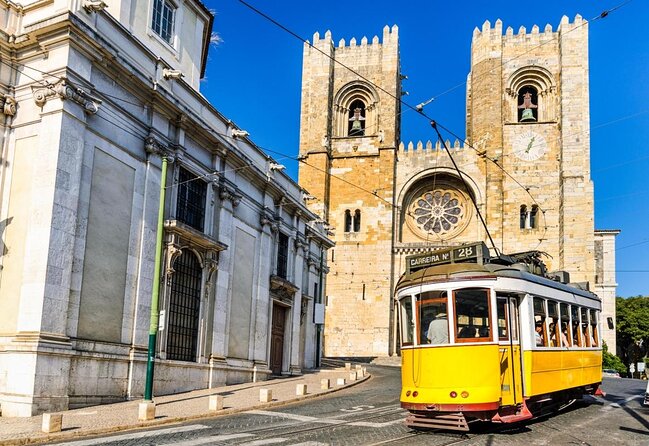
The route includes the Basilica of Saint Mary Major (Sé de Lisboa), Lisbon’s metropolitan cathedral and patriarchal seat. Construction started in 1148, which is why it’s often described as the oldest church in Lisbon.
Seeing it during a tuk-tuk route works well because Sé de Lisboa isn’t just a landmark; it’s a time marker. It helps you notice how many centuries Lisbon layers over itself, from stone foundations to modern street life.
If churches aren’t your thing, you might skim this moment. But if you enjoy the feeling of time travel you get in old-city centers, Sé gives you an anchored point.
Largo das Portas do Sol and Alfama Views: The Sunset-Ready Stop
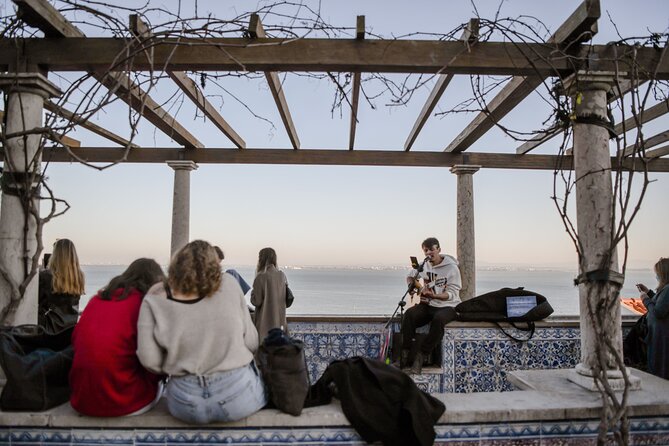
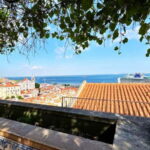
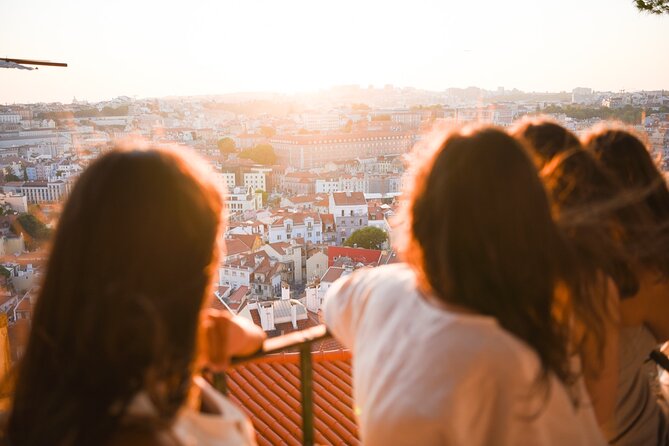
From downtown order, you slide toward the viewpoints that make Lisbon famous. Largo das Portas do Sol sits in Alfama and is known for one of the most iconic views: the Tagus River, the Baixa Pombalina area, and the Castelo de São Jorge in the same frame.
The name is tied to old city walls, with a gate facing east so morning sunlight could reach the area. That small detail is the kind of thing that makes a viewpoint feel more meaningful than just pretty.
This is also a classic sunset-style spot, and it’s a good starting point for Alfama’s winding streets. Even if you don’t walk far from here, the view helps you understand where the hills and historic quarters sit relative to the river.
Practical consideration: viewpoints can attract crowds. The value here is that the guide manages timing and gets you into the right moment without you wasting time searching.
Miradouro Nossa Senhora do Monte: Panoramas Plus a Chapel Story
One of the most memorable stops is Miradouro Nossa Senhora do Monte, in the Graça area. This viewpoint is all about panoramic Lisbon, with the Tagus River visible and the city stretching out behind you.
What makes this more than a postcard view is the history attached to the site. The area includes the Chapel of Nossa Senhora do Monte, a pilgrimage place with roots going back to the 13th century, and it was impacted by the 1755 earthquake through renovations over time.
The admission here is free, so you’re not paying extra to enjoy the skyline moment. The stop lasts long enough to take photos and pause, even if the day is moving quickly.
If your group loves viewpoints but wants guided context, this is one of the best “wow” sections of the route.
Graça and São Vicente de Fora: Neighborhood Life Meets Religious Landmarks
Graça sits on one of Lisbon’s hills and is known for narrow cobbled streets, local community energy, and a string of cafés and miradouros (viewpoints). It’s often a more authentic-feeling area compared with the busiest tourist lanes—mostly because it’s built around daily life.
On the route, you also pass the Monastery of São Vicente de Fora, located at the intersection of Graça and Alfama. The name clue de fora matters: it was outside the city walls and not under the jurisdiction of the Lisbon bishop at the time.
That kind of detail makes the architecture feel tied to city politics, not just religion.
National Pantheon (Panteão Nacional): Santa Engrácia’s Big Role Change
The tour includes the National Pantheon of Portugal, housed in the Church of Santa Engrácia. The current building stands on a site where an earlier church began in 1568, ordered by Infanta Maria, daughter of King Manuel I, tied to the creation of the parish.
Then comes the big turning point: it served as a pantheon starting in 1916. So you see Lisbon’s layers again—old religious structure repurposed into a national memorial setting.
If you like understanding how buildings change meaning over time, this stop gives you that. If you’re only chasing views, the time spent here may feel more “museum-ish.” But on a tuk-tuk food-and-wine day, it’s a nice cultural counterweight.
Chafariz de El-Rei and Praça do Comércio: Water, Power, and Big Square Energy
A standout historical detail is Chafariz de El-Rei, described as the first public ornamental fountain in Lisbon. It dates back to the 13th century, built during the reigns of Afonso III and Denis I using groundwater from Alfama.
This isn’t only a pretty structure. Water management mattered in Lisbon’s growth, and the tour highlights how water channels supported the ships during the Age of Discovery (with channeling from springs dated to 1487). The current façade is from 1864.
There’s also an eye-opening social detail: the fountain once had nine functioning gutters, each reserved for a different social group. That’s the kind of story that makes you look longer at a city object you might otherwise walk past.
Then the tour ends with Praça do Comércio, sometimes called Terreiro do Paço. This is the huge riverside square next to the Tagus. The site was once the palace area for Portuguese kings for about two centuries, and today it’s lined with government departments and those iconic arches.
It’s one of the largest squares in Europe—around 36,000 m², bordered by 79 arches—and it’s also described as a symbol of political power and capitalism tied to the state’s centralism. That framing makes the scale feel intentional, not just dramatic.
By the time you reach the square, you’ve gone from markets to hills to churches to fountains. Praça do Comércio acts like the visual closing chapter.
Price and Value: Getting More Than Just a Few Stops
At $107.03 per person for about 3 hours, this tour sits in the midrange for private sightseeing. The value comes from three things working together.
First, it’s private. Your group gets the tuk-tuk vehicle and guide attention without the compromises of a mixed group route. Second, you’re not only seeing landmarks; you’re also tasting wines and cheeses and other snack-style bites, with vegetarian adaptation possible. Third, the tour is designed to start with no queues or waiting, which is a big deal in central Lisbon.
Also, the tuk-tuk is electric and sustainable, and it’s fitted for the real world: rain and wind covers, plus blankets. That matters if you’re visiting when weather can change fast.
One pricing-related caution: the tuk-tuk capacity is tied to 4 passengers per tuk-tuk (legally). That means groups may need multiple vehicles if the party size is large.
Who This Private Food and Wine Tuk-Tuk Tour Fits Best
This is a great match if you:
- Want a guided route that hits Lisbon’s main zones in a short amount of time
- Like both food and sightseeing, but you don’t need a food-only crawl
- Prefer comfort over long hill walks, especially between viewpoints and neighborhoods
- Enjoy cultural context tied to places like Livraria Bertrand, Sé de Lisboa, and the National Pantheon
It might not be the best fit if you:
- Want an intensive, dish-by-dish culinary deep lesson where a very specific menu item is guaranteed
- Expect to choose your own stops or rewrite photo moments on the fly
Practical Tips to Make the Most of the Route
- Wear shoes for cobblestones. Even with a tuk-tuk, you’ll step out for viewpoints and photo moments.
- Bring a light layer. Lisbon weather can swing, and they provide blankets and covers, but you’ll still feel better with a jacket.
- If you’re vegetarian, say so at booking. The menu can be adapted, but you should flag dietary needs early.
- Plan around the fact that the route is preset. It’s designed for flow, not freedom.
Should You Book This Tour?
I’d book this if you want a tight, private way to connect Lisbon’s food and wine with the city’s real landmarks—markets, viewpoints, historic churches, and major river squares—without spending your whole day walking hills. The private eco tuk-tuk setup, quick start, and comfort gear make it especially appealing.
Skip it only if you’re looking for a strictly food-first tasting program where the exact dish list is the main event. If you’re more interested in tasting while learning how the neighborhoods fit together, this route is a smart use of time.
FAQ
Is this a private tour?
Yes. It’s private, meaning only your group participates.
How long is the Food and Wine Lisbon tour?
It runs for about 3 hours.
Does the tour include pickup?
Pickup isn’t at a hotel. Pickup is available around the cruise port area (Lisbon Cruise Port – Jardim do Tabaco Quay), depending on the option you choose. For the 3- and 4-hour options, you’ll be sent a message the day before your tour to select your pickup point (Time Out Market or Lisbon Cruise Port).
What food and wine tastings are included?
The tour includes snacks and different tastings of wine and cheeses, plus other small bites as part of the experience.
Can the menu be adjusted for vegetarians?
Yes. The menu can be adapted to vegetarians.
What if I’m late on the day of the tour?
If you’re delayed, the activity may be reduced based on the time lost, which can change the fixed route. If you’re more than 15 minutes late, the activity is cancelled and the amount paid is not refunded.