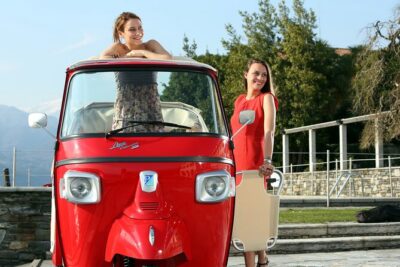
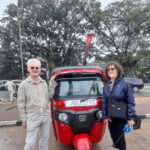
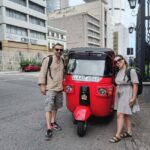
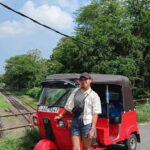
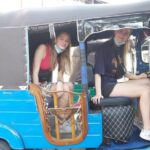
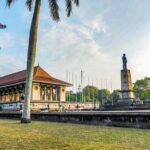
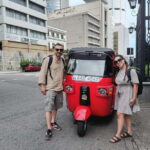
Tuk-tuk temples in a tight loop. This private Colombo heritage tour bundles major stops like Gangaramaya Temple and Galle Face Green with hotel pickup and drop-off, so you spend less time figuring out the city. I especially like the way it covers multiple faiths in one go, and I love that several key entrance fees are handled for you. One thing to plan for: Gangaramaya Temple is $2 per person paid on site, and some stops are brief photo-and-questions breaks.
In the feedback, the on-the-ground team gets praised for communication and reliability, including guides like David and Selin. Even the booking handler, Dilan Joshua, comes up when people needed help adjusting due to flight delays, which is reassuring if your day is unpredictable.
If you want a slow, deep study of one neighborhood, this won’t be that. But if you want get your bearings fast Colombo style, the pace makes sense—and the tuk-tuk route helps you cross town without the stress.
In This Review
- Key takeaways before you go
- A tuk-tuk shortcut through Colombo’s key faiths and landmarks
- Price and what the $30 really covers
- How the 3–4 hour timing keeps the day fun (not exhausting)
- Stop 1: Gangaramaya Temple and the $2 on-site payment
- Stop 2: Sri Kailawasanathan Swami Devasthanam Kovil on Sea Street
- Stop 3: Independence Memorial Hall for the civic story
- Stop 4: Jami Ul-Alfar Mosque and its red-and-white façade
- Stop 5: Sambodhi Chaithya for a calmer tempo
- Stops 6–8: Fort Clock Tower, Lotus Tower road views, and the Old Parliament Building
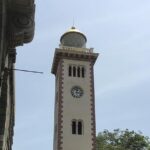
- Colombo Fort Clock Tower
- Colombo Lotus Tower area
- Old Parliament Building
- Stops 9–10: Tea time at Ceylon Tea Supermarket and a classic fortside walk
- Ceylon Tea Supermarket (about 30 minutes)
- Old Town Hall (about 15 minutes)
- Stop 11: Galle Face Green for ocean air and a real city vibe
- Stops 12–14: Viharamahadevi Park, Wolvendaal Church, and the Colombo Lighthouse
- Viharamahadevi Park (about 20 minutes)
- Wolvendaal Church (about 15 minutes)
- Colombo Lighthouse (about 10 minutes)
- Stop 15: Laksala handicrafts showroom for souvenirs with a purpose
- What you need to pack for a half-day tuk-tuk temple circuit
- Who should book this tour (and who should choose a slower one)
- Should you book this Colombo Heritage and Cultural Temples Tour?
- FAQ
- How long is the Colombo Heritage and Cultural Temples Tour?
- What does the tour cost?
- Is this a private tour?
- Is hotel pickup and drop-off included?
- Do I need to buy tickets during the tour?
- Is coconut water and WiFi included?
- Is lunch included?
- Which types of stops are included besides temples?
- What if the weather is bad?
- Can I cancel and get a refund?
Key takeaways before you go
- Hotel pickup and drop-off means you start and end with less hassle
- Private tuk-tuk keeps the day flexible, with choice of timing
- Several entrance fees are included, while Gangaramaya Temple is paid separately ($2)
- A fast-hit mix of temples, landmarks, and classic Colombo views fits a half-day window
- Coconut water and WiFi are included, plus bottled water for the ride
- A shopping stop isn’t random: tea and state-run crafts show up on purpose
A tuk-tuk shortcut through Colombo’s key faiths and landmarks
Colombo can feel like two cities at once: temple lanes and sea-front promenades, colonial-era buildings and everyday street life. This tour is built for that contrast. You hop between major landmarks in a small vehicle, then walk short stretches where you actually want your feet on the ground.
The big win is variety. You’re not just doing one religious site type. You’ll move from Buddhist stops to a Hindu kovil, then through major civic landmarks and iconic faith buildings like a red-and-white striped mosque and a Dutch Reformed church. It’s an efficient way to understand how Colombo layers beliefs, history, and daily routine in the same small radius.
You can also read our reviews of more tours and experiences in Colombo.
Price and what the $30 really covers
At $30 per person for 3 to 4 hours, this tour is priced like a good convenience package. You’re paying for transportation, a driver-guide setup, and multiple built-in stops—plus some entrance fees taken care of.
Here’s what’s included that matters in real life:
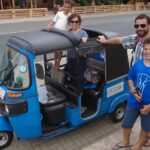
- Private transportation (tuk-tuk) with fuel surcharge
- Bottled water
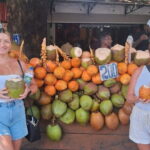
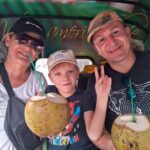
- Coconut water on the route
- Entrance fees for several featured sites, including Independence Memorial Hall, Jami Ul-Alfar Mosque, Sambodhi Chaithya, Colombo Fort Clock Tower, and Wolvendaal Church
- Mobile ticket
- WiFi
- Hotel pickup and drop-off
The one clearly flagged extra cost is Gangaramaya Temple at $2 per person paid on site. If you budget a small amount for that, you avoid the most common half-day surprise.
How the 3–4 hour timing keeps the day fun (not exhausting)
This is a half-day format, so the stops are intentionally short. You’ll spend around:
- 5–20 minutes at several major photo stops
- about 30 minutes at the tea and crafts-style stops
That means you get variety without getting dragged. It also means there’s a rhythm: quick look, quick context, then move on. If you like to linger, you can still do it—but the structure won’t turn into a long classroom session.
I also like that the private setup helps with timing. You can choose your departure time, and the driver-guide can keep the flow sensible around the day’s traffic and daylight.
Stop 1: Gangaramaya Temple and the $2 on-site payment
Gangaramaya Temple is the spiritual opening scene in the heart of Colombo. It’s described as a fusion of cultural, historical, and spiritual heritage, so this is a strong first stop when you want the day to start with meaning.
Practical things to know:
- The Gangaramaya admission is not included. Plan $2 per person paid on site.
- This is a temple environment, so dress modestly and be ready to follow on-site guidance about covering and behavior.
- Expect a shorter visit window, so focus on what you’re seeing and ask your guide what matters most about the site.
The reason this stop works early in the trip is psychological: once you’ve seen one major temple space, the rest of the religious stops start to feel connected instead of random.
Stop 2: Sri Kailawasanathan Swami Devasthanam Kovil on Sea Street
Next comes a Hindu stop devoted to Lord Shiva: Temple of Sri Kailawasanathan Swami Devasthanam Kovil on Sea Street. The route change here is part of the point—different faith, different visual style, same city.
Because your time is limited, treat this as a focused look:
- Notice the temple setting and how people move through it
- Ask what makes this specific kovil important
- Keep your expectations realistic: it’s a short stop, not a full walk-through
If you’re the type who likes checking off must-sees, you’ll appreciate how this tour covers both Buddhist and Hindu landmarks without making you choose one lane only.
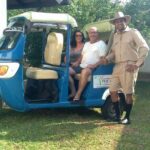
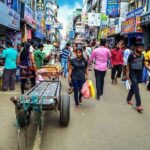
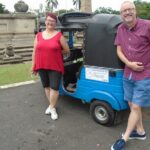
Stop 3: Independence Memorial Hall for the civic story
Then you pivot from religion to nation-building with Independence Memorial Hall in Independence Square. This landmark commemorates Sri Lanka’s independence from British colonial rule on February 4, 1948.
Why it’s worth including:
- It gives you a timeline anchor early on, so later colonial-era buildings feel less like disconnected architecture.
- It helps you understand Colombo beyond temples and street scenes.
Entrance is covered here, which is a nice time-saver. Even if your interest in politics is small, the date makes it instantly placeable in your head.
Stop 4: Jami Ul-Alfar Mosque and its red-and-white façade
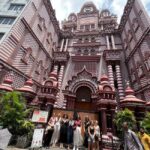
From civic to faith again: Jami Ul-Alfar Mosque is one of Colombo’s iconic landmarks, known for its striking red and white striped façade.
This is a good stop even for non-religious history nerds because:
- It’s visually memorable, so you won’t forget it after the tour
- It’s located in a central area where you can feel how different communities share space
Entrance is included, so you won’t have to manage another ticket. The visit is short, so I’d treat it like a controlled walk: look first, then listen to any guidance your driver-guide offers about what you’re seeing.
Stop 5: Sambodhi Chaithya for a calmer tempo
After two big landmark-type stops, you get Sambodhi Chaithya, a Buddhist stupa symbolizing spirituality and devotion.
This is the kind of stop that can reset your senses during a fast tour:
- It offers a quieter pause compared to street corners and major squares
- It’s a useful contrast after mosque architecture and civic monuments
Entrance is included. With only about 15 minutes, you won’t get long contemplation, but you can still catch the atmosphere and move on with clearer focus.
Stops 6–8: Fort Clock Tower, Lotus Tower road views, and the Old Parliament Building
Now the route pushes into Colombo Fort and skyline landmarks.
Colombo Fort Clock Tower
This clock tower is described as a colonial-era structure built in the mid-19th century. It’s a “stop-and-look” moment that helps you visually connect Colombo’s layered past to what’s still around today.
Colombo Lotus Tower area
Next comes Colombo Lotus Tower, noted as the tallest structure in Sri Lanka at about 350 meters. Even if you can’t go far inside, the inclusion gives you a modern skyline contrast to the older fort buildings.
Old Parliament Building
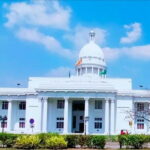
Finally, Old Parliament Building in Fort, completed in 1930. It reflects colonial and political heritage, and that’s the point: by the time you reach here, you’ve already seen both the religious landmarks and the civic independence story.
These three together work well as a timeline strip:
- mid-1800s colonial landmark
- modern vertical icon
- early 1900s political building
Stops 9–10: Tea time at Ceylon Tea Supermarket and a classic fortside walk
This is where the tour becomes practical and fun, not only sightseeing.
Ceylon Tea Supermarket (about 30 minutes)
You’ll spend about half an hour at Ceylon Tea Supermarket on Deans Road. Sri Lanka’s tea is a huge cultural export, and this stop is a straightforward way to meet it in a retail setting. If you like buying gifts that actually reflect where you are, this is your chance.
Old Town Hall (about 15 minutes)
Then you’ll visit the Old Town Hall, built in 1865 and serving as the administrative center for the city of Colombo when it was constructed. It’s another colonial-era building stop, but with a different function than a clock tower: more city governance energy.
These stops are a good reminder that history isn’t only temples. It’s also the daily systems that shaped how the city operated.
Stop 11: Galle Face Green for ocean air and a real city vibe
You end up at Galle Face Green, one of Colombo’s best-known outdoor spots along Galle Main Road. It’s a long promenade that gives you breathing room, with views over the ocean area.
Even in a short visit, this stop changes the tone:
- Your eyes get a horizon instead of walls and doorways
- It’s where you see how people actually move around the city
If your day started early, this is also a good place to pause and rehydrate after temple-heavy focus.
Stops 12–14: Viharamahadevi Park, Wolvendaal Church, and the Colombo Lighthouse
Now you get a nice trio of greenery, European faith architecture, and harbor views.
Viharamahadevi Park (about 20 minutes)
This park is named after Queen Viharamahadevi and is described as a tranquil green escape in the center of Colombo. It’s a clear counterbalance to Fort area buildings.
Wolvendaal Church (about 15 minutes)
Wolvendaal Church, built in 1749, is a major Dutch Reformed church in Sri Lanka. Entrance is included here. If you like architecture, this is one of the best “quick education” stops on the route because Dutch colonial-era religious style is distinctive.
Colombo Lighthouse (about 10 minutes)
Finally, the Colombo Lighthouse at Colombo Fort harbor entrance area. It was originally built in 1867 and later replaced in 1913 with the current structure described in the listing.
This lighthouse timing is perfect for photos. You get a sense of place: Colombo isn’t only a political and temple city—it’s also a port city.
Stop 15: Laksala handicrafts showroom for souvenirs with a purpose
You’ll also visit Laksala, a state-run handicrafts showroom on Bauddhaloka Mawatha. It’s set up to show authentic Sri Lankan crafts and souvenirs.
I like this stop because it’s not just random shopping time. It gives you a chance to:
- compare craft styles without hunting all over town
- buy something that feels tied to local production
Spend your time with intention. If you’re unsure what to pick, focus on items that reflect the techniques you can still recognize later at home.
What you need to pack for a half-day tuk-tuk temple circuit
Since this is a mix of temples, churches, and open outdoor viewpoints, pack like you’re doing both walking and respectful indoor stops:
- light layers (temples and churches can feel cooler than the street)
- clothing that works for temple visits (shoulders and knees are a safe baseline)
- water is already included, but sunscreen still helps at sea-front areas
- a small cash amount for Gangaramaya Temple ($2 per person on site)
Comfort matters on tuk-tuk rides. You’ll feel the motion, so avoid shoes that make you miserable when you hop out quickly.
Who should book this tour (and who should choose a slower one)
This tour is ideal if you:
- want a fast introduction to Colombo’s key sites
- like comparing different faith spaces in one day
- prefer private, pickup-included comfort over public transport
It’s also a good option for solo visitors. In the feedback, Selin is specifically noted for making a solo traveler feel safe.
You might want a slower, more focused plan if you:
- want longer visits at each site (this tour is built for breadth)
- plan to shop heavily (the tea and crafts stops are time-limited)
- dislike quick photo stops and short indoor windows
Should you book this Colombo Heritage and Cultural Temples Tour?
If you’re in Colombo for a short stay, I’d lean yes. For $30, you’re buying time, transportation, and a smart mix of landmarks that cover Buddhist and Hindu sites, plus civic monuments, church architecture, and ocean views. The route makes it easy to get oriented without committing a full day.
I’d book especially if you want a guided day where you can ask questions—people in the feedback call out guides like David for being reliable, and Selin for being patient and safety-minded for solo visitors. Just remember the one extra cost to plan for at Gangaramaya Temple, and you’ll be set.
FAQ
How long is the Colombo Heritage and Cultural Temples Tour?
It runs for about 3 to 4 hours.
What does the tour cost?
The price is $30 per person.
Is this a private tour?
Yes. It’s a private tour, so only your group participates.
Is hotel pickup and drop-off included?
Yes, pickup and drop-off from your hotel are included.
Do I need to buy tickets during the tour?
Entrance fees are included for several stops, including Independence Memorial Hall, Jami Ul-Alfar Mosque, Sambodhi Chaithya, Colombo Fort Clock Tower, and Wolvendaal Church. Gangaramaya Temple is not included and is paid on site at $2 per person.
Is coconut water and WiFi included?
Yes. Bottled water, coconut water, and WiFi are included.
Is lunch included?
No. Lunch or dinner is not included.
Which types of stops are included besides temples?
You’ll also visit landmark buildings and areas like Galle Face Green and Viharamahadevi Park, plus shopping stops like Ceylon Tea Supermarket and Laksala.
What if the weather is bad?
The experience requires good weather. If it’s canceled due to poor weather, you’ll be offered a different date or a full refund.
Can I cancel and get a refund?
Yes. You can cancel up to 24 hours in advance for a full refund.