REVIEW · NEW DELHI
Delhi Tour with Tuk Tuk Rikshaw Experience
Book on Viator →Operated by Tour Guide Delhi · Bookable on Viator
Rickshaws, minarets, and merciful air-conditioning. This Delhi tour strings Old Delhi street life to New Delhi monuments in one long day, with a tuk-tuk/rickshaw ride that gets you past the bottlenecks without grinding your feet down. I love the contrast of experiences in a single outing: Mughal-era faith and trade energy in Old Delhi, then big, spread-out viewpoints in New Delhi.
I also like the built-in comfort that keeps the day human: an air-conditioned car with a professional driver, plus cold unlimited drinking water and a govt approved guide. One drawback to plan for is that some of the biggest sights are marked as not included for admission, and a few stops are photo stops from outside rather than full visits.
In This Review
- Key Highlights Worth Your Time
- How the Day Flows From Pick-up to Old Delhi to New Delhi
- The Tuk-Tuk/Rickshaw Ride: A Smart Way to Beat Old Delhi Chaos
- Jama Masjid: Big-Scale Faith Right at the Start
- Chandni Chowk Spice Market: Smells, Colors, and Buying If You Want
- Red Fort and Raj Ghat: Meaningful Stops Without the Full Dayweight
- New Delhi Landmarks by Car Photos: India Gate, Rashtrapati Bhavan, and Parliament
- Lunch, Rest, and Gurudwara Bangla Sahib’s Calm Break
- Agrasen Ki Baoli and Qutub Minar: The Stepwell and the Big Finish
- Price and Value: What $99 Buys for 7–8 Hours in Delhi
- Who Should Book This Delhi Tour (and Who Might Feel Rushed)
- Should You Book It?
- FAQ
- What time does the tour start?
- Where can you be picked up?
- How long is the tour?
- Is the tour private?
- Which parts include a tuk-tuk or rickshaw ride?
- Is lunch included?
- Is bottled water included?
- Which sights have admission tickets not included?
- Which sights are listed as free admission?
- Can I cancel for a full refund?
Key Highlights Worth Your Time
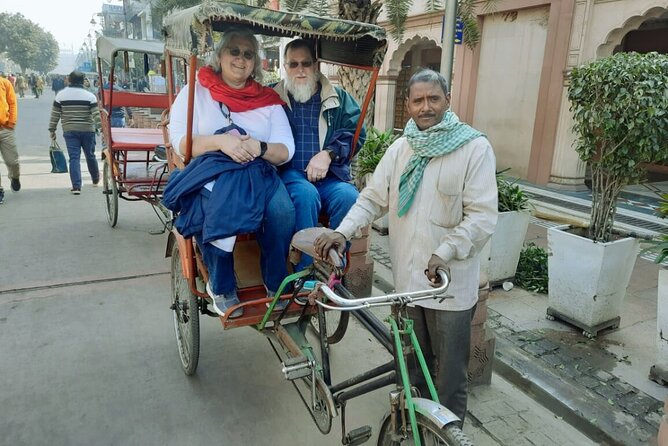
- Old Delhi without the leg burn: a cycle rickshaw/tuk-tuk ride through narrow lanes
- Jama Masjid + Chandni Chowk combo: one of the clearest ways to get Old Delhi context fast
- Photo stops that still matter: Red Fort, India Gate, Rashtrapati Bhavan, and Parliament views without long detours
- Gandhi and sacred stops: Raj Ghat memorial and Gurudwara Bangla Sahib included
- Stepwell and the Qutub Minar finale: Agrasen Ki Baoli and a world heritage minaret
How the Day Flows From Pick-up to Old Delhi to New Delhi
You start at 09:00 AM (or at your chosen time) with pick-up from a location in Delhi, Gurugram, or Noida. Then you’re in a private, air-conditioned vehicle driven by a professional chauffeur, which matters in Delhi because traffic can turn a simple “let’s see one more place” plan into a timing headache.
This is set up as a private tour/activity, so it’s only your group. That changes the feel. You’re not being squeezed into someone else’s pace. And you have a guide who can explain what you’re looking at instead of you just reacting to noise and crowds.
The practical win here is how the route mixes “go slow” and “see fast.” Old Delhi gets the closer, slower, sense-of-place treatment (especially during the rickshaw segment). New Delhi then shifts into efficient viewpoints from the road. It’s a good structure if you’re on a tight schedule and want a real cross-section of the city.
You can also read our reviews of more tours and experiences in New Delhi.



The Tuk-Tuk/Rickshaw Ride: A Smart Way to Beat Old Delhi Chaos
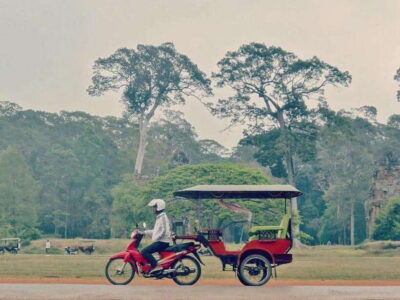
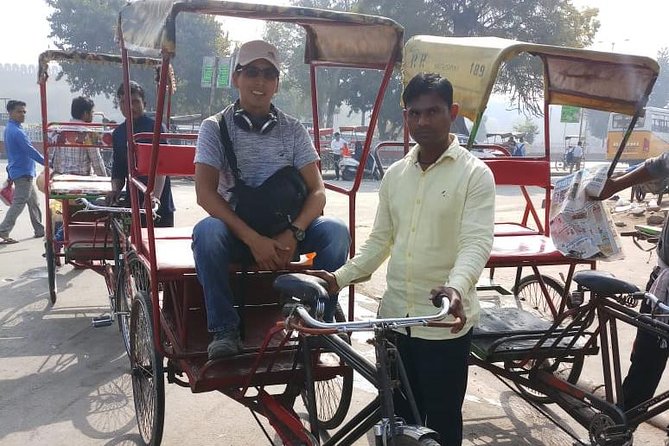
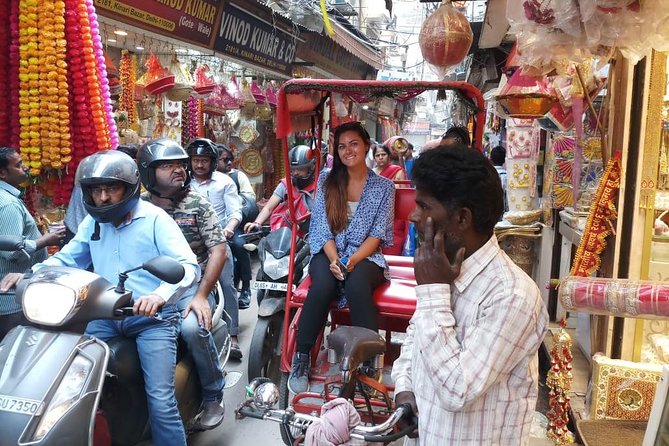
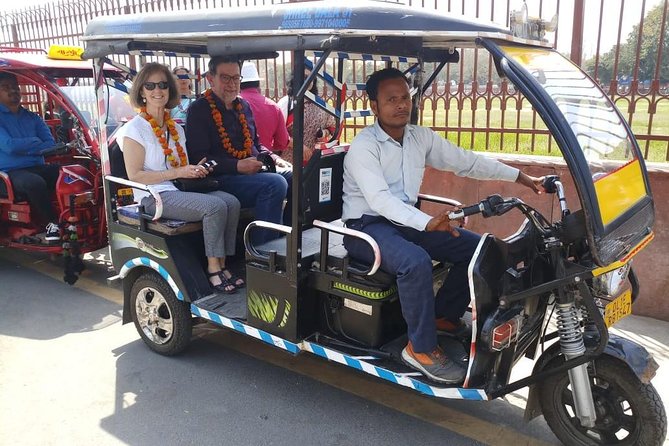
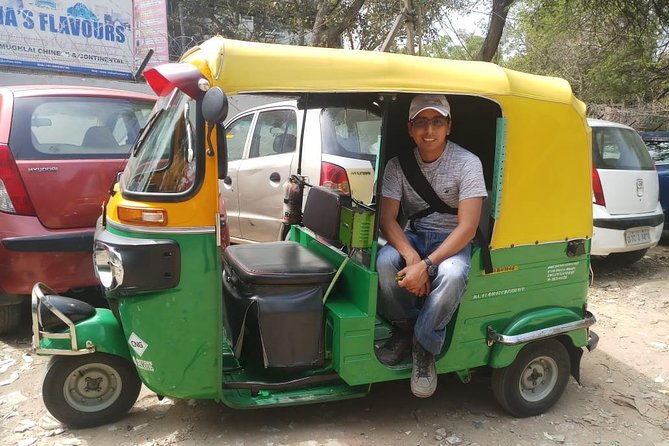
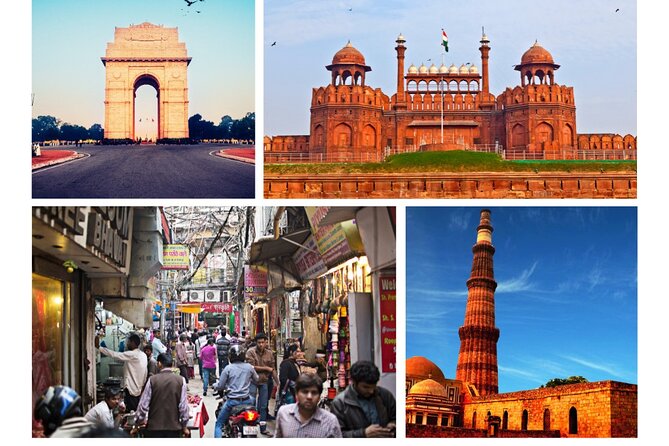
The star-feeling moment for many people is the tuk-tuk or cycle rickshaw ride after Jama Masjid. This is where Delhi goes from “big-city sights” to “you’re inside the place.” You get to pass colorful bazaars and busy streets without walking the whole time.
I like that this ride isn’t just for fun. Your guide is there to point out what’s going on around you and explain the role of the markets. When you understand the basic rhythms, the narrow streets stop feeling like random chaos and start feeling like a system—trade, religion, everyday errands, all stacked together.
There’s also a safety-and-comfort factor. In the past, the guide Vivek has been highlighted for being knowledgeable and making people feel safe while moving through tight lanes. That’s not a small point in a city where crowded lanes can feel intense.
One consideration: the rickshaw/cycle rickshaw portion is a short chunk of time (45 minutes), so treat it like a focused taste. If you want deep, slow wandering with lots of stops to browse, you’ll probably want extra time in Chandni Chowk after the tour ends.
Jama Masjid: Big-Scale Faith Right at the Start
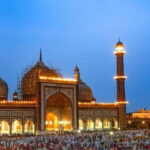
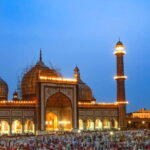
You spend about 30 minutes at Jama Masjid, the congregational mosque of Old Delhi. It’s a major Mughal-era landmark and a logical starting point because it anchors the rest of your Old Delhi experience. Standing near a space like this helps you understand why the surrounding bazaars and lanes grew the way they did.
Admission for Jama Masjid is not included, so you should expect you may need to purchase tickets on site or have your plan ready for an extra step. Still, the time allocation is reasonable: you’re not stuck for hours, but you get enough presence to take in the scale and atmosphere.
This stop also sets the tone for photos and orientation. If you’re trying to get your bearings fast, this is a strong “first big landmark” choice.
Chandni Chowk Spice Market: Smells, Colors, and Buying If You Want
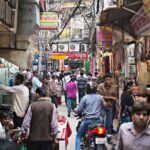
After Jama Masjid, you ride toward Chandni Chowk’s market area. The stop here is labeled as free for admission and lasts about 45 minutes. This is where the day earns its reputation for senses: you’re surrounded by stalls, packaging, and the back-and-forth energy of shopping streets.
The tour description also calls out Chandni Chowk as home to the largest spice market in Asia. Even if you’re not planning to buy souvenirs, it’s a powerful place to look closely at everyday commerce—what people buy, how spices are displayed, and how vendors explain their goods.
If you do buy spices, keep expectations grounded. You’ll likely be purchasing in a busy street setting where bargaining and quick decisions are normal. I’d suggest setting yourself a small budget and thinking of spices as gifts that work because they travel well—your future self will thank you when you cook with them later.
And again, having a guide helps. It turns the market from just a wall of goods into something you can actually navigate and understand.
Red Fort and Raj Ghat: Meaningful Stops Without the Full Dayweight
You’ll drive around and stop for photos at the Red Fort. The tour notes that you’ll mostly see it from outside because much of the building is acquired by the Indian Army. That means the experience here is about sightlines and photography rather than a long interior visit. It’s efficient—15 minutes is enough to get your shots without turning the day into a line-wait marathon.
Then you head to Raj Ghat, the memorial to Mahatma Gandhi. It’s described as a black marble platform symbolizing the spot where Gandhi was cremated, and you get about 30 minutes here. Admission is free, and the time feels right: enough to reflect and take in the memorial’s simplicity without rushing.
I appreciate how these two stops balance visual power and meaning. You get a major symbol of India’s historical layers (Red Fort) and then a quieter, focused place tied to the nation’s modern identity (Raj Ghat).


New Delhi Landmarks by Car Photos: India Gate, Rashtrapati Bhavan, and Parliament
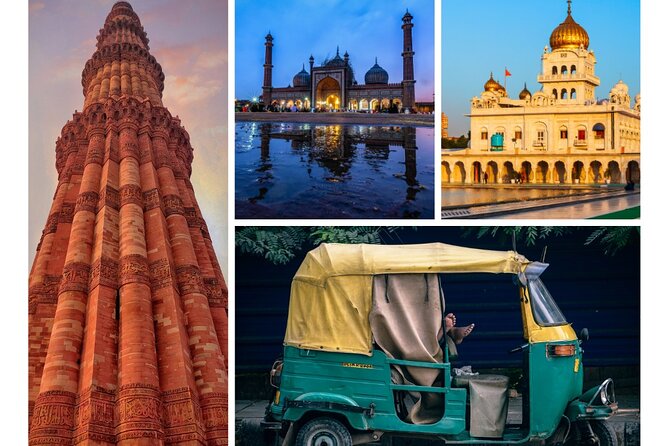
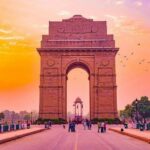
After lunch time planning kicks in later, the earlier New Delhi block gives you broad, iconic landmarks with minimal walking. You’ll pause for photos at India Gate, described as a 140 feet high arc-of-triumph-like war memorial built in memory of 70,000 soldiers of the British Indian Army who lost their lives.
Then you drive around for photos at Rashtrapati Bhavan (the Viceroy’s House before independence) and Parliament House. The Parliament building is linked to British architect Edwin Lutyens and Herbert Baker in the tour notes. The structure and scale are the point here, and you get short photo time: 15 minutes for Rashtrapati Bhavan, then another drive-by photo stop for Parliament.
What you should know: none of these are long “inside” visits here. They’re positioned as viewpoint moments. That works if you want breadth and photos in one day. If you want deep museum time or guided interior tours at these sites, you’d need a separate add-on day.
The upside is you save energy for the parts that really benefit from being on foot—Old Delhi streets, the sacred shrine visit, and Qutub Minar.
Lunch, Rest, and Gurudwara Bangla Sahib’s Calm Break
There’s a buffet lunch stop in New Delhi, about one hour, but it depends on your option: buffet lunch is included only if you pick the all-inclusive route. Admission is listed as free here, but the key detail is that lunch itself is conditional.
If you do choose the all-inclusive option, this is one of the better value moments because it reduces decision fatigue. You don’t have to hunt for food between major stops. You also get a full meal window rather than a quick snack and go.
After lunch, you visit Gurudwara Bangla Sahib, a Sikh temple with a golden dome and one of the most important sacred shrines in the capital. The time is about one hour, and admission is listed as free.
I like placing this kind of stop after a busy, fast-moving set of city sights. It’s a built-in reset. Even if you’re not deeply familiar with Sikh worship, being in a calm, structured space after crowds can make the day feel less exhausting and more balanced.
Agrasen Ki Baoli and Qutub Minar: The Stepwell and the Big Finish
Toward the end of the day, you visit Agrasen Ki Baoli, a stepwell noted as 60 meters long and 15 meters wide. The tour description says it was once a water reservoir and highlights its ancient engineering and architecture, with the time allocation at about 15 minutes. Admission is not included, so again, plan for tickets if you want to enter.
This stop is short, but it’s a smart change of pace. A stepwell is the kind of monument that feels surprising—something utilitarian and human in scale. If you’re interested in how cities used water systems before modern infrastructure, this is a meaningful angle.
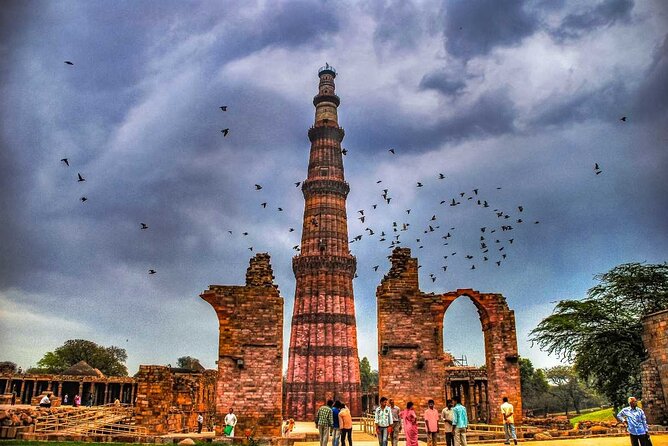
Then you finish at Qutub Minar, a world heritage site with a minaret built in 1192 by Qutab-ud-din Aibak. The description calls it an exquisite example of Indo-Islamic Afghan architecture and notes it has survived the ravages of time. You get about one hour here, but admission is not included.
If you only know Qutub Minar as a name, I’d treat this as your “slow down and look up” moment. The tour gives you enough time to absorb details, not just stand for a single photo and rush away.
Price and Value: What $99 Buys for 7–8 Hours in Delhi
At $99 per person for a 7 to 8 hour day, the value comes from how many moving pieces are bundled together. You’re not just paying for entry tickets. You’re paying for a govt approved guide, an air-conditioned vehicle with a professional driver, and the structured combination of Old Delhi and New Delhi highlights.
The tour includes a tuk-tuk/rickshaw ride in Old Delhi, packaged drinking water that’s cold and unlimited, and you’re also covered on the “transport side” so you don’t lose half your day in transit decisions. That’s often where budget tours fall apart, because you end up spending time negotiating your way between areas.
Two parts can affect what you personally spend after booking:
- Entrance fees are included only if you choose the all-inclusive option.
- Several stops list admission as not included (like Jama Masjid, Agrasen Ki Baoli, and Qutub Minar).
So the best “value math” depends on whether you choose all-inclusive and how comfortable you are handling tickets in the moment. If you want the simplest day with fewer add-on payments, choose the all-inclusive option. If you prefer to keep control and only pay for what you prioritize, you can still do it—just know which monuments may require separate admission.
Who Should Book This Delhi Tour (and Who Might Feel Rushed)
This tour suits you if you want a full-day sampler of Delhi’s layers with comfort built in. It’s especially good for first-timers who want both Old Delhi (Jama Masjid and Chandni Chowk) and New Delhi (India Gate, Rashtrapati Bhavan, Parliament views) in one go.
It’s also a strong match if you dislike walking through crowds for long stretches. The rickshaw segment and air-conditioned car mean you can keep your energy for the stops that need your attention.
You might want to skip or add time if you prefer slow museum-style pacing or deep interior visits. Several key sites here are photo stops or have admission not included, so the “how much you see” depends on ticketed access and your personal interests. Also, it’s a 7–8 hour commitment, so plan for a full day of moving.
Should You Book It?
Yes—if you want a guided, efficient, comfort-friendly way to see Old and New Delhi in one shot, this makes sense. I especially like the balance of a guided Old Delhi rickshaw experience plus calmer, scheduled stops like Raj Ghat and Gurudwara Bangla Sahib.
Before booking, decide how you feel about separate admissions. If you want fewer ticket decisions during the day, the all-inclusive option is the smoother path because lunch and entrance fees are handled. If you enjoy planning your own entry fees and you’re okay with photo-focused viewpoints at some landmarks, this still works well.
If your goal is maximum variety with minimal stress, this is a solid choice.
FAQ
What time does the tour start?
The tour starts at 09:00 AM, or at your given time if you select a different start.
Where can you be picked up?
Pick-up is available from a location of your choice in Delhi, Gurugram, or Noida.
How long is the tour?
It runs about 7 to 8 hours.
Is the tour private?
Yes. It is a private tour/activity, and only your group will participate.
Which parts include a tuk-tuk or rickshaw ride?
You include a tuk-tuk or cycle rickshaw ride in Old Delhi after Jama Masjid, with about 45 minutes allocated for that market-area segment.
Is lunch included?
Lunch is included only if you choose the all-inclusive option. It’s a 1-hour buffet lunch stop in New Delhi.
Is bottled water included?
Yes. The tour includes packaged drinking water that is cold and unlimited.
Which sights have admission tickets not included?
Admission is not included for Jama Masjid, Red Fort (as an outside photo stop), Agrasen Ki Baoli, and Qutub Minar.
Which sights are listed as free admission?
Admission is listed as free for Chandni Chowk (the market segment), Raj Ghat, and Gurudwara Bangla Sahib.
Can I cancel for a full refund?
Yes. Cancellation is free, and you can cancel up to 24 hours in advance for a full refund.