REVIEW · COLOMBO
Colombo by Tuk Tuk – Sightseeing Entry Fees included
Book on Viator →Operated by Black Caviar Tours & Travels · Bookable on Viator
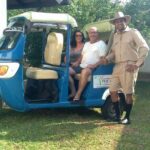
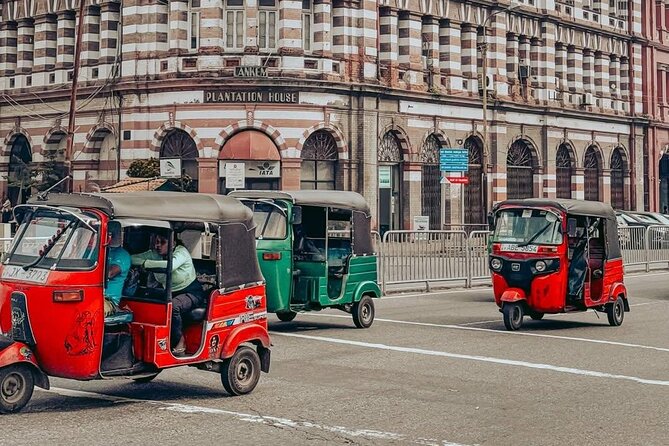
Colombo feels like a thousand turns per minute. This private tuk-tuk loop strings together the city’s top sights in one half-day plan, so you spend less time figuring out traffic and more time looking.
I like the simple format: your driver handles navigation, you choose how long you linger, and you hop from one landmark to the next with fewer hassles.
Two things I especially like are the hotel pickup/drop-off convenience and the way the route covers both old Colombo and modern parts of town. The only real catch is time: with about 4 hours total, you’ll get great snapshots, not slow, deep museum sessions everywhere.
In This Review
- Key highlights you’ll feel right away
- Why a tuk-tuk is the smart move for Colombo’s “too busy” streets
- Price and value: what $35 includes (and what’s extra)
- The morning route through Fort: temples, icons, and colonial-era anchors
- Temple of Sri Kailawasanathan Swami Devasthanam Kovil (Lord Shiva)
- Lotus Tower (a Colombo landmark break)
- Colombo Fort Railway Station: a functional landmark with scale
- Fort’s colonial core: clock tower, museums, and iconic buildings
- Pettah markets and classic Dutch-era landmarks: religion meets commerce
- Pettah Market area: free entry, lots to notice
- Old Town Hall and the street-shop side of Pettah
- Vegetable Market and Kayman’s Gate Belltower
- Grand Mosque of Colombo (Jami Ul-Alfar Mosque) and Wolvendaal Church
- Beira Lake, Port City, and tea: how the tour mixes old Colombo with new Colombo
- Floating Market over Beira Lake
- Old Parliament Building and Independence-adjacent monuments
- Colombo Lighthouse and the port maritime museum
- Zylen Tea: a quick Ceylon tea stop
- Gangaramaya Temple: important site, small extra charge
- Independence Memorial and the monuments near Viharamahadevi Park
- Independence Memorial Hall
- Cenotaph War Memorial and city civic landmarks
- What the 4-hour pace actually means for you
- Who should book this Colombo tuk-tuk day (and who should skip it)
- Should you book Colombo by Tuk Tuk?
- FAQ
- How long is the Colombo by Tuk Tuk sightseeing tour?
- What is the meeting point for this tour?
- Do I get hotel pickup and drop-off?
- Is this tour private?
- What’s the group size limit?
- Are sightseeing entry fees included?
- Does the tour include bottled water?
- Will I receive a ticket on my phone?
- What is the cancellation policy?
- Is this tour suitable for most travelers?
Key highlights you’ll feel right away
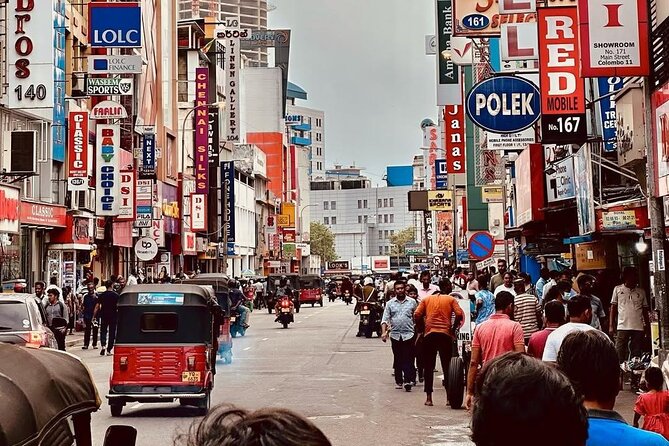
- Private tuk-tuk comfort for up to 2: you’re not sharing your day with strangers.
- Pickup and drop-off: fewer logistics headaches than self-guided sightseeing.
- Entry fees included for many stops: you can budget without constant ticket hunting.
- Fort + Pettah in one run: colonial-era landmarks and everyday market life, side by side.
- Beira Lake and port area stops: you see where Colombo’s past meets its future.
- A driver who talks (and checks in): the experience is designed around questions, not just photo stops.
Why a tuk-tuk is the smart move for Colombo’s “too busy” streets
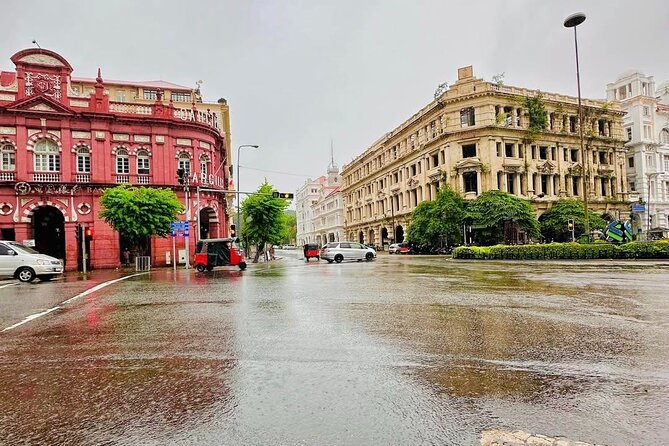
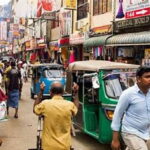
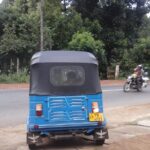
Colombo can move fast, and not always in a straight line. A tuk-tuk tour works because it’s built for stop-and-go streets, tight corners, and the kind of traffic where your average bus route starts to feel like a slow-motion obstacle course.
What you’ll like most is the pacing control. You’re not stuck marching on a strict schedule with no say. The tour is set up for sightseeing time, and your driver handles the navigation and the crowd-avoiding instincts that Colombo demands.
Because it’s private (just your group), you also avoid the awkward moments where you’re waiting for someone to catch up or deciding whether to change plans. If your driver suggests a quick route tweak, you can go with it or keep your own rhythm.
And yes, the name of the game is efficiency. In four hours, you’ll cover a lot of Colombo’s main zones: Fort, Pettah, the Beira Lake area, and the Independence Square side of town.
You can also read our reviews of more tours and experiences in Colombo.
Price and value: what $35 includes (and what’s extra)
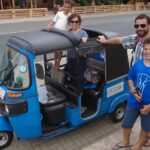
This tour costs $35 per group (up to 2) for about 4 hours. For that price, you’re getting private transportation, bottled water, and a driver who’s doing the work of getting you between major stops without you having to map everything out.
The big value piece is the headline: sightseeing entry fees included. Several stops are explicitly marked with admission included, and some are free. That matters because Colombo can have surprise ticket costs once you start hopping into specific buildings or attractions.
That said, two small add-ons are clearly noted:
- Gangaramaya temple chargers: $2 per person
- Old Town Hall chargers: $1 per person
So if you want the cleanest budget, plan on that extra cash for those two places. For the rest, you’ll mainly follow the tour’s included setup.
If you’re traveling solo, this can still be a good deal because it’s priced per group, not per seat. If you’re two people, it’s one of those rare situations where private feels affordable.
The morning route through Fort: temples, icons, and colonial-era anchors
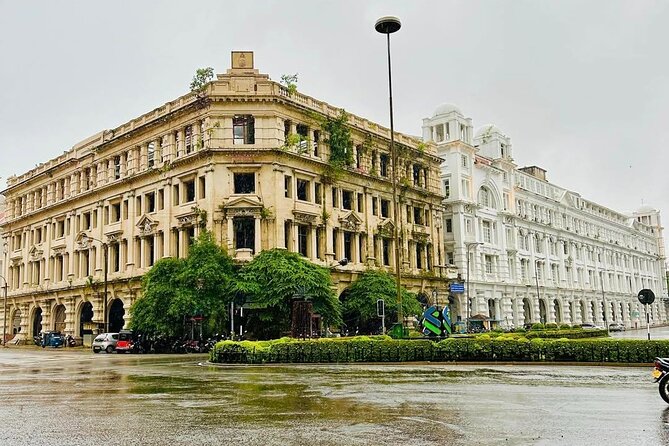
Most Colombo first-timers miss the pattern: Fort and Pettah explain so much of the city’s personality. Fort gives you the colonial architecture and institutional landmarks; Pettah gives you the human scale—markets, religion, and everyday life.
Temple of Sri Kailawasanathan Swami Devasthanam Kovil (Lord Shiva)
The tour kicks off at a major Hindu temple dedicated to Lord Shiva. It’s one of the oldest and most significant Hindu temples in Colombo, with Dravidian-style architecture that’s designed to pull your eyes upward.
You’ll get about 15 minutes here, plus admission is marked included. That’s long enough for a respectful look around, photos if allowed, and a quick read of the place’s mood—bright details, active worship, and the sense that this is lived religion, not just a stop on a checklist.
Lotus Tower (a Colombo landmark break)
Next comes Lotus Tower, a 350 m tall landmark and a symbolic site. Even if you don’t go inside for a view, it works as a visual marker that Colombo is also a modern city with big ambitions—not only old streets.
The tour time here is short, so treat it like a reset moment: a place to check your bearings, grab a couple of photos, and keep your energy for Fort’s denser cluster next.
Colombo Fort Railway Station: a functional landmark with scale
Then you move to Colombo Fort Railway Station, a major rail hub. Admission is marked included, and the stop is about 10 minutes—just enough to spot the station’s role as a gateway.
Here’s why I think this stop matters: it shows Colombo’s rhythm. Rail isn’t just history; it’s how people move today. A quick station look also helps you understand how Fort became such a central hub.
Fort’s colonial core: clock tower, museums, and iconic buildings
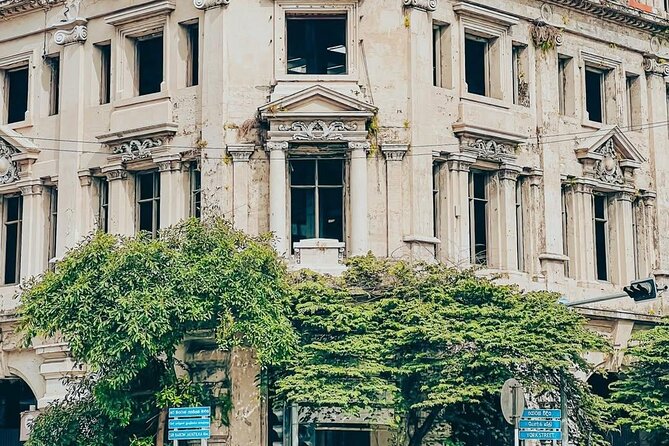
From Fort’s transport hub, the route keeps circling the colonial-era center. You’ll pass and/or visit several well-known landmarks in the Fort zone, including:
- Colombo Fort itself, connected to Portuguese foundations and later Dutch/British expansion
- Colombo Fort Clock Tower, originally built in 1857
- Colombo Economic History Museum, also called the Currency Museum, inside the Central Bank premises
- Colombo President’s Museum, located in the historic President’s House
- Colombo Old Post Office, a late-19th-century British colonial building
- Cargills Building, a striking late-19th-century mercantile landmark
- Grand Oriental Hotel (GOH), opened in 1837
The time at each is tight, so you won’t do a slow walk through every corridor. But you will get the sense of the city’s power centers—finance, governance, communications, and business—stacked close together.
One practical tip: keep your phone charged. Fort has a strong “photo per minute” ratio, especially with the clock tower and the older façades. Also, wear shoes that handle uneven sidewalks, because Fort areas can be a little rough around the edges.
Pettah markets and classic Dutch-era landmarks: religion meets commerce
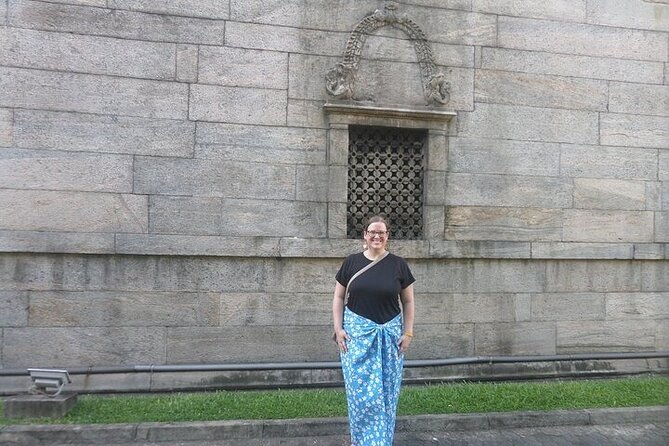
After Fort, the tour shifts to Pettah, the neighborhood east of the city center Fort. This is where Colombo feels more immediate. You’ll see the market zones and the religious landmarks that sit right inside daily life.
Pettah Market area: free entry, lots to notice
You’ll have about 15 minutes in the Pettah area, and admission there is marked free.
This stop is more about sensory context than collecting souvenirs. You’ll get the real sense of how Colombo trades—what people buy, how vendors set up, and the pace of foot traffic.
Old Town Hall and the street-shop side of Pettah
From there, you head to Old Town Hall. Admission is marked not included, and there’s an extra $1 per person charge listed for this place.
This is the spot to pay attention to architectural details: arches, old columns, and the feel of a building that’s been repurposed into part of the street ecosystem. If you’re short on time, prioritize photos and quick exterior looks, then decide if the interior cost is worth your interest level.
Vegetable Market and Kayman’s Gate Belltower
You’ll continue into:
- Vegetable Market (free, about 15 minutes)
- Kayman’s Gate Belltower (free, about 5 minutes)
Kayman’s Gate marks the location of one of the original entrances to the Dutch Fort, built during the Dutch colonial period in the 17th century. It’s a quick stop, but it connects Pettah to the Fort walls and explains why this area grew into a dense commercial zone.
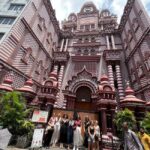
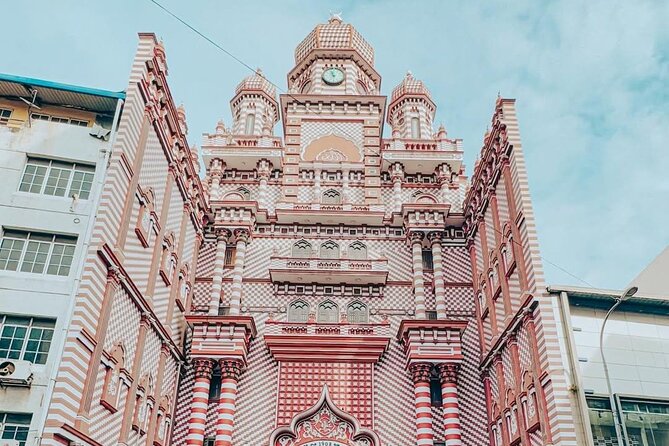
Grand Mosque of Colombo (Jami Ul-Alfar Mosque) and Wolvendaal Church
Pettah also brings two strong religious landmarks:
- Grand Mosque of Colombo (Jami Ul-Alfar Mosque)
- Christian Reformed Church of Sri Lanka, also known as the Wolvendaal Church, built in 1749 by the Dutch
Both are marked as free stops, with short time windows. These short visits are the right length for Colombo: you get to appreciate the architecture and significance, then move on before the crowds and heat take over.
If you plan to enter, dress respectfully. Even if there isn’t a strict rule mentioned, temples and churches in Sri Lanka generally expect shoulders and knees covered, and visitors often appreciate a low-key, respectful approach.
Beira Lake, Port City, and tea: how the tour mixes old Colombo with new Colombo
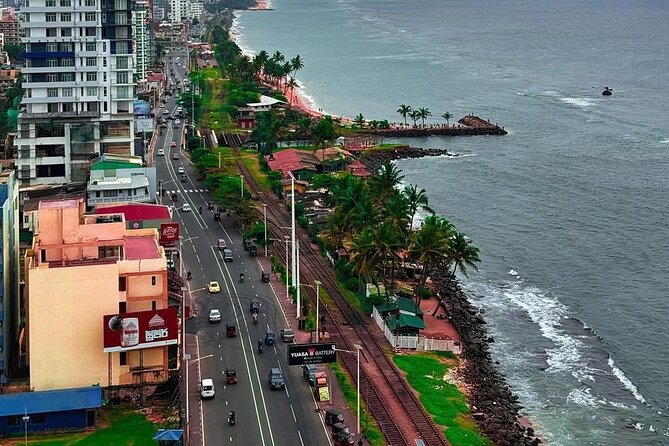
The next chunk shifts toward the waterfront-adjacent zones and Colombo’s modern story. This is where the tour feels different from a purely colonial day. It’s still Sri Lanka, but you’re watching the city change in real time.
Floating Market over Beira Lake
You’ll stop at the Floating Market in the Pettah/Beira Lake area. It’s about 10 minutes, and admission is marked included.
This is one of those attractions that works because it’s visual and easy to understand quickly. You get the concept immediately: commerce plus scenery, designed to fit the waterfront setting rather than fight it. It’s also a good “cooling down” pause during a busy day.
Old Parliament Building and Independence-adjacent monuments
The route then includes:
- Old Parliament Building (listed with admission included)
- Colombo Port City (a major reclaimed-land development project; stop marked with admission included)
These are short stops, about 5 minutes each for Port City, which means the goal is orientation. You’ll see where big planning decisions are happening and how Colombo’s skyline and coastline are becoming part of a new narrative.
Colombo Lighthouse and the port maritime museum
Next, you’ll hit:
- Colombo Lighthouse, specifically the Galbokka Lighthouse near Colombo Harbour and Galle Face area
- Colombo Port Maritime Museum (Sri Lanka Ports Authority Maritime Museum)
The lighthouse stop is about 10 minutes with admission included. The maritime museum is about 15 minutes with admission included as well.
This pairing works well because it’s practical: lighthouse = maritime safety and signals; museum = maritime knowledge and trade history. Together they explain Colombo’s relationship with the sea without turning it into a long classroom session.
Zylen Tea: a quick Ceylon tea stop
You’ll also have a 15-minute tea tasting at Zylen Tea. Admission is marked included.
Even in a short time slot, a tea stop gives you a sensory souvenir that isn’t just a mug. Sri Lanka’s tea culture is a big deal, and a tasting keeps you connected to what the country exports and celebrates.
Gangaramaya Temple: important site, small extra charge
Finally in this section, you’ll reach Gangaramaya Temple, a major Colombo temple completed in the late 19th century and located on/near the Beira Lake area.
Admission is marked not included, with $2 per person listed for chargers. This is one of the few times you should plan for an additional cash expense even if you’ve been told entry fees are mostly covered.
This stop is worth the extra effort because Gangaramaya is known for mixing modern architecture with older cultural elements. It’s also a “pause” stop in the route, where you slow down a bit compared with Fort and market areas.
Independence Memorial and the monuments near Viharamahadevi Park
The last stretch brings you into Colombo’s symbolic zones—places that explain the country’s identity and public memory.
Independence Memorial Hall
You’ll stop at Independence Memorial Hall, about 10 minutes, with admission included. It commemorates Sri Lanka’s independence from British rule on February 4, 1948.
This is one of those stops where short timing works. You don’t need hours to appreciate the scale and intent of the monument, especially after the dense city wandering earlier.
Cenotaph War Memorial and city civic landmarks
Then you’ll visit the Cenotaph War Memorial (admission included), about 10 minutes. It honors those who lost their lives in conflicts, specifically World War I and World War II, with the design concept famously associated with the Whitehall Cenotaph in London.
You may also pass or stop at:
- Colombo Municipal Council (CMC) in a white domed building established in 1865
- Viharamahadevi Park, Colombo’s oldest and largest public park, formerly Victoria Park
These last stops are a nice way to end. By this point you’ve seen the markets, the colonial architecture, the religious landmarks, and the port side of Colombo. The monuments help stitch the day together into one city story.
What the 4-hour pace actually means for you
Most stops are 5 to 20 minutes long, with a couple of longer museum-type moments (like Fort zone and maritime museum). That’s not a flaw. It’s the design.
You’re doing the Colombo “greatest hits” style of touring, which is perfect if:
- you want a fast orientation on your first visit
- you don’t want to struggle with navigation and traffic
- you prefer guided context over random browsing
If you’re the type who loves lingering in museums, you’ll probably want a longer, separate outing after this tour. Still, as a first stop, this tuk-tuk day gives you a map in your head: neighborhoods, landmarks, and the logic behind the city’s layout.
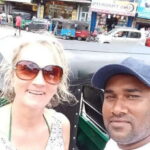
One detail I appreciate from the way the tour is run: it’s private, so your driver can check in and adjust your pace. In past experiences on this route, drivers like Mr. Mugilan have been described as friendly and well informed, answering questions and keeping the group moving in a way that feels human, not rushed.
Who should book this Colombo tuk-tuk day (and who should skip it)
This is a great fit if you want:
- a small-group experience (up to 2)
- hotel pickup/drop-off convenience
- a tour focused on sightseeing, not complicated planning
- a route that combines Fort, Pettah markets, and the port/Beira Lake zone
You might want to skip it if you:
- need a slower pace with deep time inside major museums
- hate market crowds and prefer quieter neighborhoods
- are looking for a nature-heavy or off-the-beaten-track style trip (this is more city-focused)
Also, keep expectations realistic. Colombo is busy, and your time gets used up efficiently. If you treat it like a smart highlights tour, it will feel like good value. If you treat it like a full-day museum crawl, you’ll feel the time pressure.
Should you book Colombo by Tuk Tuk?
I’d book it if you want a compact, well-paced introduction to Colombo with private transport, most entry fees handled, and a plan that covers the big contrasts of the city. The price is hard to beat for a four-hour private outing, especially with pickup and bottled water included.
Before you go, plan for the two possible extra charges: Gangaramaya ($2 per person) and Old Town Hall ($1 per person). And wear temple-appropriate clothing in case you go inside places that require more respectful dress.
If your goal is to understand Colombo fast and then return later to the stops you love most, this tuk-tuk day is a strong way to start.
FAQ
How long is the Colombo by Tuk Tuk sightseeing tour?
It lasts about 4 hours.
What is the meeting point for this tour?
The start point is Colombo Lighthouse, WRPR+G86, Chaithya Rd, Colombo 00100, Sri Lanka, and the tour ends back at the meeting point.
Do I get hotel pickup and drop-off?
Pickup is offered, and the tour includes hotel pickup and drop-off convenience.
Is this tour private?
Yes. It’s private, and only your group participates.
What’s the group size limit?
The price is per group (up to 2).
Are sightseeing entry fees included?
Many sightseeing entry fees are included, but two items are listed as not included: Gangaramaya temple chargers ($2 per person) and Old Town Hall chargers ($1 per person).
Does the tour include bottled water?
Yes. Bottled water is included.
Will I receive a ticket on my phone?
Yes. The tour includes a mobile ticket.
What is the cancellation policy?
You can cancel for a full refund if you cancel at least 24 hours before the experience start time, and free cancellation is offered.
Is this tour suitable for most travelers?
The information says most travelers can participate.