REVIEW · LISBON
Tuk Tuk Lisbon: Lisbon Iconic Highlights 1.5-Hour
Book on GetYourGuide →Operated by TukGuide Portugal · Bookable on GetYourGuide
Lisbon is full of hills, steps, and big streets. This 1.5-hour electric tuk-tuk route gives you a guided highlight reel without making you “tour all day.” You’ll hop between famous squares, photo viewpoints, and historic neighborhoods with a clear speaker so you don’t miss the story.
I like two things right away: the ride itself stays comfortable with transparent, waterproof covers and cold-day blankets, and the guide work is built around history and practical context (including names like Filipe, known for being friendly and explaining monument history clearly). One consideration: this isn’t a slow, super-flexible walkabout—your stops are timed, and the tuk-tuk isn’t wheelchair/walker accessible.
In This Review
- Key points to know before you go
- A 100% electric tuk-tuk that keeps views going in rain
- Pickup, drop-off, and how the route starts fast
- Restauradores Square and Avenida da Liberdade: the clean introduction to Lisbon
- Rossio Square, Santa Justa glimpses, and the downtown heartbeat
- Praça do Comércio: the waterfront payoff and big Tagus views
- Rua da Madalena, Mouraria, and the neighborhood texture
- Viewpoint strategy: Portas do Sol, Miradouro Santa Luzia, and Graça
- Miradouro da Senhora do Monte: the longer look over Lisbon
- São Vicente de Fora and Pantheon area: religion, power, and art
- Fado Museum and Alfama: closing in on Lisbon’s soul
- Commerce Square to Rossio return: a tight loop that makes sense
- Ginjinha taste, what to bring, and small comfort wins
- Price and logistics: is $56 worth your 1.5 hours?
- Who this tuk-tuk tour fits best
- Should you book Tuk Tuk Lisbon Iconic Highlights?
- FAQ
- How long is the Tuk Tuk Lisbon Iconic Highlights tour?
- What is the price per person?
- Does the tour include hotel pickup and drop-off?
- Is the tuk-tuk electric, and does it handle bad weather?
- Will I be able to hear the guide?
- What language options are available for the live guide?
- Is ginjinha included?
- What’s not included in the price?
- Is this tour accessible for wheelchairs or walkers?
- Who can’t join the tour?
Key points to know before you go
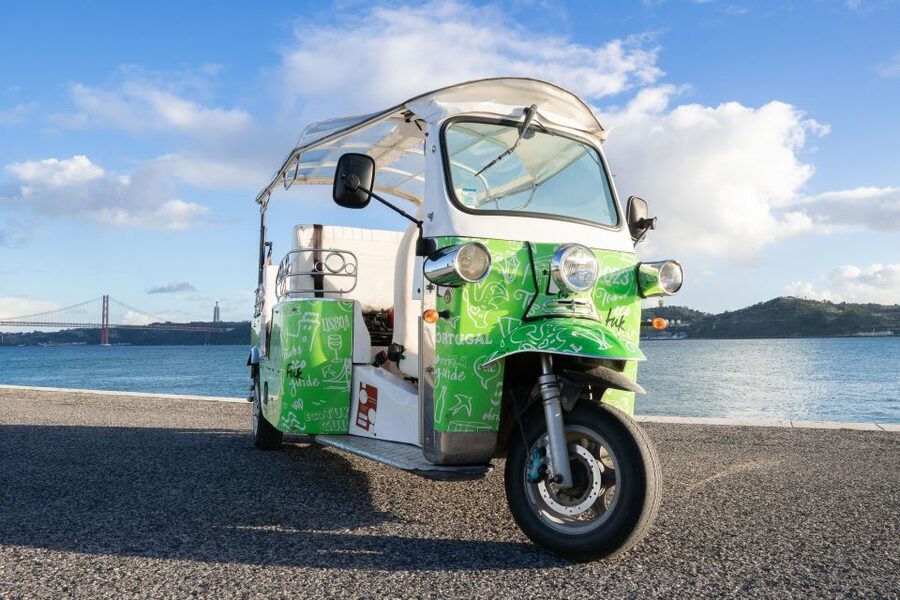
- 100% electric tuk-tuk with panoramic, weather-friendly covers
- Live storyteller + speaker, so the info stays audible
- Restauradores to Rossio route with major squares and lookout stops
- Two quick viewpoint photo breaks plus a longer viewpoint stop at Senhora do Monte
- Ginjinha taste included, plus hotel pickup and drop-off
- Private group up to 6 people for a more personal pace
A 100% electric tuk-tuk that keeps views going in rain

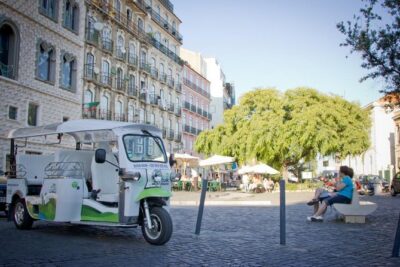
The best part of this tour is the vehicle design. It’s a 100% electric tuk-tuk, and you ride under transparent and waterproof covers, so you keep sightlines even if the weather turns gray.
On top of that, it’s not just “weather protection.” There’s a speaker system so you can hear the guide clearly while moving through busy streets. If you’ve ever done a city tour where the audio is half-muffled by traffic, you’ll appreciate this.
The cold-season extras matter too. You get blankets for the coldest days, which turns a short tour from “quick and uncomfortable” into “worth staying out for.”
You can also read our reviews of more tours and experiences in Lisbon.



Pickup, drop-off, and how the route starts fast

This runs for about 1.5 hours, so efficiency is the point. You get hotel pickup and drop-off, and there are two pickup location options listed in the booking info. That matters if you’re staying outside the central core, because you don’t have to fight Lisbon’s traffic or find your own starting point.
The tour is also set up as a private group. The tuk-tuk holds up to 6 people (maximum weight 400 kg), which keeps the experience calmer than a big bus and usually helps with listening and questions.
Restauradores Square and Avenida da Liberdade: the clean introduction to Lisbon
You start at Restauradores Square, a lively hub at the north end of Avenida da Liberdade. Right away you get that “Lisbon is grand” feeling—this is the kind of boulevard where the buildings and monuments set the tone for everything that follows.
From there, you ride down Avenida da Liberdade, Lisbon’s elegant, tree-lined avenue. It’s a simple move, but it’s a smart one. You’re orienting yourself while the guide gives you the cultural framing for the monuments ahead.
This segment is ideal if you’re arriving and feeling a bit lost. You get a guided overview before the narrow streets and viewpoints start stacking up.
Rossio Square, Santa Justa glimpses, and the downtown heartbeat
Next is Rossio Square, one of Lisbon’s most iconic public spaces. It’s busy for a reason: the buildings around you feel central to how the city evolved, and the Rossio Train Station façade is one of the standout sights in the area.
The tour also passes through Baixa (downtown). You’ll see a “downtown Lisbon” mix of squares and streets, plus a chance to catch the Elevador de Santa Justa—even if it’s not the main stop where you go inside, it’s still a memorable silhouette.
Then you continue toward the waterfront area, keeping the focus on landmarks rather than getting stuck in slow, stop-and-go traffic all afternoon.
Praça do Comércio: the waterfront payoff and big Tagus views
One of the most rewarding moments in the route is the move to Praça do Comércio (Commerce Square). This is Lisbon at full scale: wide space, historic buildings along the edges, and a clear relationship to the Tagus River.
Even if you don’t have time for a long waterfront walk, this stop helps you understand why Lisbon developed the way it did. You get the sense of the city as a port and a crossroads, not just a hill-and-tile postcard.
If you like photos, this is where your camera gets the widest angles of the day.






Rua da Madalena, Mouraria, and the neighborhood texture
After the big square, the route shifts into street-level energy. Rua da Madalena is known for traditional shops, cafés, and historic buildings, and it’s a good transition between “major landmark” Lisbon and “human-scale” Lisbon.
Then you head into Mouraria, a historic district with narrow streets and a multicultural feel. This part is less about one single monument and more about atmosphere—how the neighborhood supports street life and local food culture.
This is also where listening matters. The guide’s storytelling turns what could be just a quick drive-by into something you can actually connect to Lisbon’s bigger story.
Viewpoint strategy: Portas do Sol, Miradouro Santa Luzia, and Graça
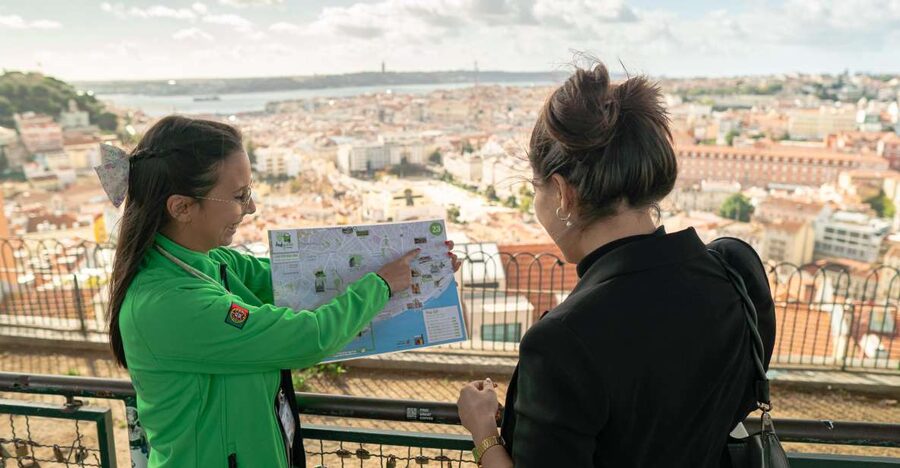
You get three strong viewpoint moments, staged for timing. First, there’s a photo stop at Portas do Sol Terrace (about 5 minutes)—short, but enough to frame the historic center and nearby Alfama views.
Then you do Miradouro de Santa Luzia for another 5-minute photo stop. These two are close enough that you can compare them. You’ll notice how the angle changes the shapes of rooftops, churches, and streets.
From there, the tour spends time in Graça. You get a guided look through the Graça Historic District, and you’ll also visit Convento da Graça. The convent stop adds context and atmosphere, and it’s a nice complement to the street-art visual side of the neighborhood.
Graça is also known for its creative street scene. Here, the route helps you see why people paint these hills—because the city view is part of the canvas.
Miradouro da Senhora do Monte: the longer look over Lisbon
Your next viewpoint is Miradouro da Senhora do Monte, with about 10 minutes for photos and a guided explanation. This is the segment where you slow down the most, even though the whole tour stays short.
Why it works: you’re already warmed up by the earlier viewpoints, so the big skyline view feels less like a rushed photo sprint. You get time to actually register the scale of the city and pick out landmarks from different angles.
If you’re traveling with someone who loves photos, this is usually the stop where they stop saying “just one more picture,” because the view is that good.
São Vicente de Fora and Pantheon area: religion, power, and art
After the viewpoints, the tour shifts back toward major institutions and architecture. You visit Monastery of São Vicente de Fora, which is known for its impressive architecture, cloisters, and city views.
Then the route continues through Campo de Santa Clara (guided). It’s a pause point that helps you break up the climb-and-view rhythm into something more balanced.
Next up is the National Pantheon of Santa Engracia, another guided stop. You’re looking at Portuguese national symbolism here—big dome, major figures, and a sense of permanence that contrasts with Lisbon’s everyday street motion.
This run of stops gives you a better “why these places matter” understanding. It’s not just seeing buildings; it’s learning what they represented and how they shaped the city.
Fado Museum and Alfama: closing in on Lisbon’s soul
One of the more cultural parts of the tour is the Fado Museum, where you get a guided look. Fado is more than music in Lisbon—it’s a mood, a historical expression, and a way the city tells stories about longing and identity.
From there, you head into Alfama, which the tour treats as a guided neighborhood stop rather than a drive-by. You’ll move through the area with context, so you know what you’re looking at as you go.
This is the best fit if you want a Lisbon highlight that includes more than viewpoints and monuments. It nudges you toward understanding the city’s cultural backbone.
Commerce Square to Rossio return: a tight loop that makes sense
You finish the tour back at Commerce Square and then conclude at Rossio Square. That loop is practical. Rossio is where many people orient themselves, so ending there helps you transition back into your evening plans without feeling stranded on a hill.
You also get a better sense of the city as a system—central avenues, old neighborhoods, lookout points, and the waterfront—rather than just a list of famous sites.
Ginjinha taste, what to bring, and small comfort wins
You’re included for a taste of ginjinha, a classic local drink. It’s a small add-on, but it’s one of those things that makes the tour feel like you left Lisbon with a real flavor, not just photos.
Bring a passport or ID card. You also want to dress for weather and hills. Even though the route is mostly driven, you may still be out and around for guided moments and photo stops.
If you’re sensitive to cold, you’ll be glad the tour includes blankets. And if it rains, those waterproof covers help you stay in the tour without instantly losing the day.
Price and logistics: is $56 worth your 1.5 hours?
At $56 per person for about 1.5 hours, the value depends on what you want from Lisbon.
If you’re short on time, it’s a strong deal. You’re packing in a lot of “Lisbon must-sees” across districts: major squares, cathedral area, multiple viewpoints, monastery stops, and a cultural stop at the Fado Museum—without the exhausting mix of stair-climbing and long walking that can chew up your day.
You also get real extras in the package: hotel pickup/drop-off, a speaker for the guide, blankets, and a vehicle with panoramic weather protection. Those details matter because they reduce friction. You spend more time learning and looking, less time figuring things out.
The main trade-off is the short duration. This is not a slow, hang-out-in-each-place tour. If you want long entry times, this is more of a curated highlight circuit.
Who this tuk-tuk tour fits best
This tour makes the most sense for:
- First-time visitors who want a guided hit list fast
- People who want viewpoints but don’t want the full stair grind
- Travelers who appreciate city context, not just sightseeing photos
- Small groups that like a calmer pace (private group, up to 6)
It may not be ideal for:
- Anyone needing wheelchair/walker access (it’s not accessible)
- People who are pregnant (not suitable per the activity notes)
- Families with kids under 7 (not suitable)
Should you book Tuk Tuk Lisbon Iconic Highlights?
If you want Lisbon in a tight time window, I’d book it. The mix of Restauradores, Rossio, Praça do Comércio, multiple viewpoint stops, and guided neighborhood work hits a smart balance of iconic and local.
I’d only hesitate if you’re expecting a long, self-paced tour with lots of time inside monuments. This is timed and guided, built to keep you moving and giving you an overview that you can build on later.
One more decision tip: if your biggest concern is managing weather or hearing the guide clearly, this tour is designed for that. The waterproof covers, blankets, and speaker system remove common tour headaches.
FAQ
How long is the Tuk Tuk Lisbon Iconic Highlights tour?
It lasts 1.5 hours.
What is the price per person?
The price is listed as $56 per person.
Does the tour include hotel pickup and drop-off?
Yes. Hotel pickup and drop-off are included.
Is the tuk-tuk electric, and does it handle bad weather?
Yes, it’s 100% electric. The vehicle has transparent and waterproof covers so you can keep a panoramic view on rainy days.
Will I be able to hear the guide?
Yes. A speaker is included so you can hear the guide clearly.
What language options are available for the live guide?
The guide is available in English, French, Italian, Spanish, and Portuguese.
Is ginjinha included?
Yes. You’ll have taste of ginjinha included.
What’s not included in the price?
Monument entry tickets and food and drinks are not included.
Is this tour accessible for wheelchairs or walkers?
No. The tuk-tuk is not wheelchair/walker accessible.
Who can’t join the tour?
It’s not suitable for children under 7 years and not suitable for pregnant women.
—
If you tell me your hotel area and what time of day you’re considering, I can help you judge whether this route will pair well with your other plans (like Alfama evening or a daytime museum stop).