REVIEW · LISBON
Lisbon: Street Art TukTuk Tour
Book on GetYourGuide →Operated by Live Portugal - Tours & Tales · Bookable on GetYourGuide
Lisbon turns walls into living lessons. I love the mix of street art from both local and international names, and I love that the ride happens on an electric tuk tuk so you spend more time seeing and less time walking. You also get a local guide who connects what you’re looking at to the bigger story of street art worldwide and in Portugal.
The main consideration: you’ll be climbing into a tuk tuk and rolling over cobblestones, so expect some bumpiness and bring shoes you’re comfortable in.
In This Review
- Key highlights you’ll care about
- Why This 2-Hour Street-Art Ride Makes Sense in Lisbon
- Electric Tuk Tuks: Faster Than Walking, but Still Real Streets
- Baixa de Lisboa: A Quick Start in the Heart of the City
- Alfama: Photo Stops with Historic Texture Around Every Corner
- Graça Historic District: Views That Make the Art Feel Placed
- Xabregas: Where the Scene Often Feels More Contemporary
- The Guide’s Job: Turning Murals Into Meaning
- Price and Value: What You’re Paying for at $94
- Who This Tour Fits Best (and Who Should Skip It)
- Before You Go: Simple Tips That Improve Your Experience
- Should You Book This Lisbon Street Art TukTuk Tour?
- FAQ
- How long is the Lisbon Street Art TukTuk Tour?
- How much does the tour cost?
- Is this a private tour?
- What size group is allowed?
- Which languages are available for the guide?
- Are hotel pickup and drop-off included?
- Is the tuk tuk ride included?
- Are monument entrance fees included?
- Is luggage or large bags allowed?
- What accessibility limitations should I consider?
Key highlights you’ll care about

- Electric tuk tuk transport cuts the walking and helps you cover more neighborhoods in 2 hours
- Live guide storytelling adds context on street-art history and Portugal’s scene
- Photo stops in classic quarters give you the views plus the art nearby
- Artist callouts you can recognize like Vhils, Obey Giant, Pichiavo, and Bordalo II
- Private group setup keeps the experience focused, not crowded
Why This 2-Hour Street-Art Ride Makes Sense in Lisbon
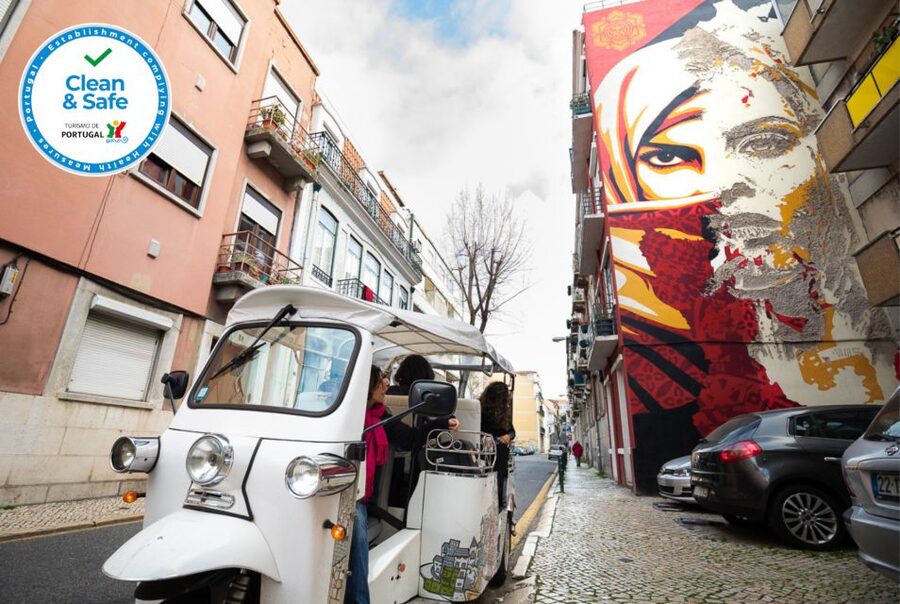
Lisbon is famous for tiles, viewpoints, and winding streets. This tour adds a different kind of sightseeing: street art you can actually track from one neighborhood to the next. At 2 hours, it’s a sweet spot. Long enough to learn how the scene developed, short enough that you’re not stuck “on tour mode” all afternoon.
The other thing I like is the structure. You’re not just chasing murals at random. You’re taken between areas where the street art feels tied to the city itself—historic streets nearby, then modern expression just steps away. That contrast is part of the point. It helps you see Lisbon as a living city, not a museum you pass through.
You can also read our reviews of more tours and experiences in Lisbon.



Electric Tuk Tuks: Faster Than Walking, but Still Real Streets
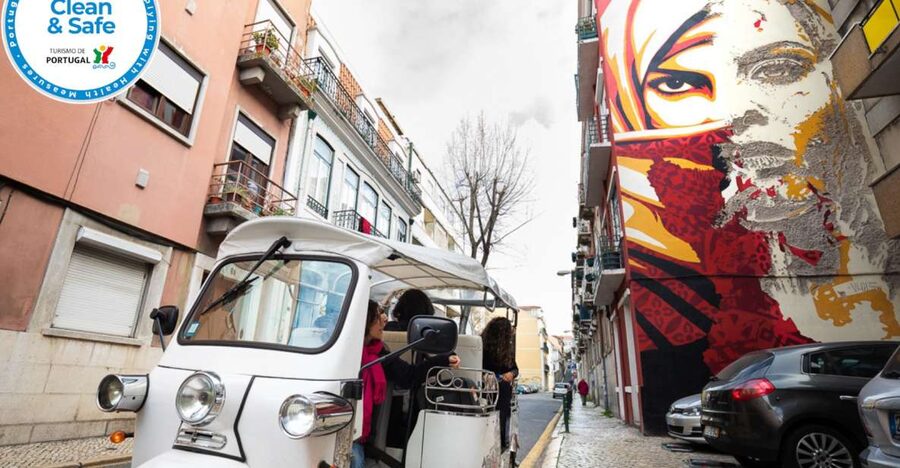
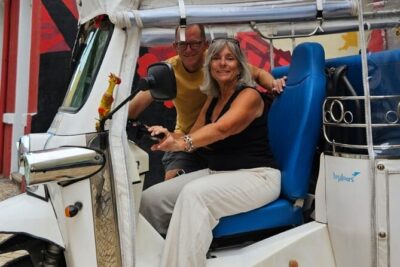
This is private transport in an eco-friendly tuk tuk—so yes, it’s fun. But the bigger value is practical: Lisbon’s best street-art pockets often sit along steep, uneven lanes. With a tuk tuk, you get to move between stops without burning your energy before you even start looking closely at the art.
Still, don’t expect a smooth ride. The route includes streets where cobblestones are common, and you should be prepared for bumpy moments. Also note the physical requirement: there’s some level of mobility needed to climb into the vehicle. If you know you struggle with stairs, curbs, or uneven footing, take that seriously.
Group size stays small—max 6 people total, with the most comfortable setup described as up to 4 adults and 2 children. That matters because street art is visual detail work. A small group means your guide can slow down when you need a moment to look.
Baixa de Lisboa: A Quick Start in the Heart of the City

You begin in Baixa de Lisboa, where you’ll get a guided introduction alongside a scenic stretch of driving through the center. This first part works as a warm-up. You’re not dropped into the most intense mural streets right away. Instead, you’re given the context to recognize what you’re about to see—street art techniques, visual languages, and why some artists use certain styles.
Even if you’ve seen photos of Lisbon’s central streets, this start helps you reset your expectations. Street art in Lisbon isn’t only “random graffiti.” You’ll see works that feel designed for a specific wall, a specific neighborhood, and a specific dialogue with the city’s everyday life.
Alfama: Photo Stops with Historic Texture Around Every Corner
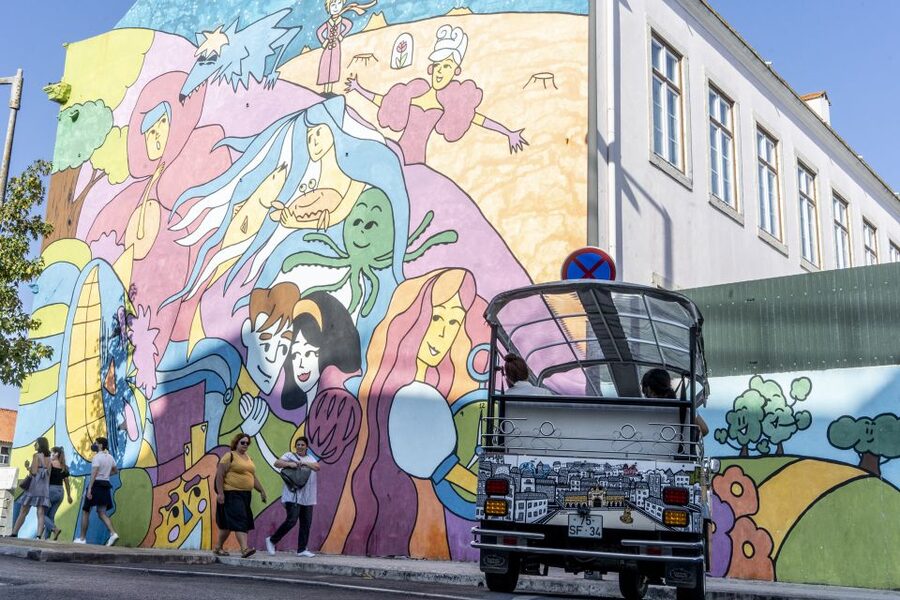
Next comes Alfama, one of those neighborhoods where the architecture alone makes you stop. Here you’ll get a photo stop plus guided time and scenic driving. The key is how quickly the mood shifts. Historic walls and steep lanes sit side by side with modern mural work, and that’s exactly what makes this stop click.
This is also where the guide’s explanations start to matter more. Street art can be easy to dismiss as “just decoration” if you don’t know what to look for. A good guide helps you notice recurring ideas: social commentary, style signatures, and how street artists adapt techniques to available surfaces.
Drawback to keep in mind: you’ll be taking photos and looking around in streets that can be uneven. If you’re the type who likes to shoot steady video, plan for the reality of bumpy roads and quick photo moments.
Graça Historic District: Views That Make the Art Feel Placed
Then you head to the Graça Historic District. Expect another photo stop, more guided looking, and scenic driving with views along the way. Graça is great because it offers a kind of “connection point.” From the higher angles, you can understand why certain walls and streets became platforms for artists—because the city’s layout affects what’s visible, what’s reachable, and what gets noticed.
This is also a good section for learning the history of street art in a grounded way. You’re not only hearing where the movement came from globally. You’re hearing how it translates into Lisbon’s local context. That’s where the tour becomes more than a sightseeing snack.
One practical note: if you’re sensitive to movement on uneven streets, you’ll want to keep your expectations realistic. Scenic in Lisbon often includes uneven footing and short transitions between viewpoints.






Xabregas: Where the Scene Often Feels More Contemporary
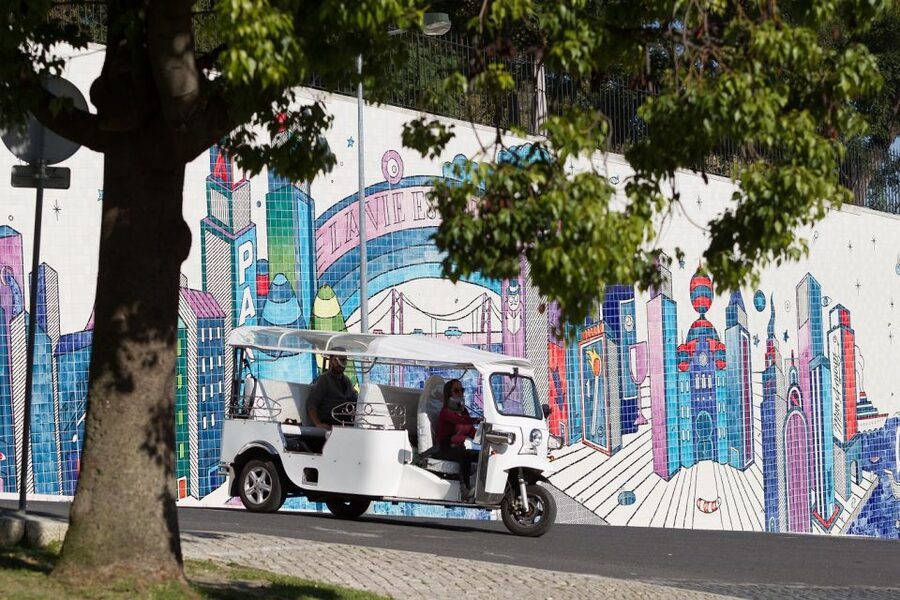
The tour continues to Xabregas, another area where you’ll get a photo stop, guided time, and scenic driving. This is the part where the tour can feel more “street-level” and present. The kind of street art you see here tends to show modern technique and bold artist identity.
You should also be ready for variety. Lisbon’s street art scene includes different styles and materials, and this tour is designed to show that range. If you’ve only seen one kind of mural before—say, clean stencil work or large paste-ups—Xabregas is where you often start noticing how many approaches exist side by side.
And if you’re a fan of identifiable names, this is where the guide’s artist references can really help you. You’ll hear about artists such as Vhils, Obey Giant, Pichiavo, and Bordalo II, plus more. Having those names tied to visible walls makes it easier to remember what you saw instead of just collecting a memory dump of images.
The Guide’s Job: Turning Murals Into Meaning
What makes this tour hit harder than a quick photo walk is the guide. You get live explanations about the history of street art in the world and in Portugal, then context tied directly to the pieces you’re seeing.
And it’s not just facts. The tone matters. In the guide lineup, names like Claudio and Tiago come up for being attentive and good at keeping things lively, while guides such as Tomas and Felipe are described as humorous and enthusiastic. That blend—story plus momentum—is what keeps you engaged when the street art gets detailed.
Also worth noting: the tour runs with a live guide in multiple languages, including English, French, Portuguese, Spanish, and German. If your language matters for understanding the art, you’re covered.
The best part of having history woven in is that you stop looking at murals as separate “art objects.” Instead, you begin seeing them as responses—responses to the city, to politics and culture, and to earlier street-art waves.
Price and Value: What You’re Paying for at $94
$94 per person for a 2-hour private group isn’t cheap, but it can be good value in Lisbon. Here’s what you’re getting that reduces the usual costs and hassle:
- Tuk tuk ride (electric, private transport rather than a public bus shuffle)
- Local guide with live explanations and context
- Hotel pickup and drop-off, which saves time you’d otherwise spend figuring out meeting points
- Insurance included
The tour doesn’t include entrance fees for monuments, so if you’re hoping to pay nothing extra while also ticking off museums, plan accordingly. But for a street-art focused outing, the expenses are mostly handled.
In my mind, the value comes from time and access. Street art spotting is partly about walking slowly and reading visual cues. This tour trades some wandering for smart transport and story-driven stops. If you like art but don’t want to spend half a day hunting for the right walls, this pricing can feel fair.
Who This Tour Fits Best (and Who Should Skip It)
This tour is set up for people who can handle street-level movement. It’s not suitable for children under 4 years. It’s also not recommended for pregnant women, people with back problems, or anyone with mobility impairments.
You should also know luggage is limited: luggage or large bags aren’t allowed. That’s usually not a big issue if you’re traveling light, but it can matter if you’re carrying a larger daypack plus extra gear.
If you fit the comfort profile—able to climb into the tuk tuk and tolerate cobblestones—this is a strong option. It’s especially good if you want:
- street art explanations, not just photos
- a quick way to cover multiple neighborhoods
- a private setup that feels flexible
Before You Go: Simple Tips That Improve Your Experience
A few small things can make your time smoother:
- Wear comfortable shoes with grip. You’ll be on old streets and uneven surfaces.
- Bring a camera ready for both close shots and wider angles. The tour includes photo stops with scenic views.
- Go with curiosity. Street art is visual communication, and the guide will help you read it.
- Keep expectations practical for movement. Some bumpiness is expected, and the vehicle entry requires some mobility.
If you’re planning the rest of your day, try to pair this with calmer sightseeing afterward. Street-art tours are fun, but you’ll be focusing and looking for details. Give yourself time to decompress after.
Should You Book This Lisbon Street Art TukTuk Tour?
I’d book it if you want a guided street-art experience that also functions as neighborhood sightseeing, and you like the idea of learning the story behind the visuals. The guide-led history, the recognizable artist names, and the electric tuk tuk transport are a good match for a short Lisbon stay.
Skip it if you need barrier-free mobility support or if cobblestones and vehicle entry are likely to be an issue. And if you’re looking for a museum-style day with lots of paid entrances, remember that monument entrance fees aren’t included.
If your priority is street art with real context—and you want to do it efficiently—this is a solid choice.
FAQ
How long is the Lisbon Street Art TukTuk Tour?
The tour duration is 2 hours.
How much does the tour cost?
The price is $94 per person.
Is this a private tour?
Yes. It’s listed as a private group.
What size group is allowed?
The maximum occupancy is 6 people total.
Which languages are available for the guide?
The guide is available in English, French, Portuguese, Spanish, and German.
Are hotel pickup and drop-off included?
Yes, hotel pickup and drop-off are included.
Is the tuk tuk ride included?
Yes, the tuk tuk ride is included.
Are monument entrance fees included?
No. Entrance fees for monuments are not included.
Is luggage or large bags allowed?
No. Luggage or large bags aren’t allowed.
What accessibility limitations should I consider?
The tour requires some level of mobility to climb into the vehicle, and it’s not suitable for people with mobility impairments, people with back problems, pregnant women, or children under 4 years.