REVIEW · LISBON
Lisbon Private Tuk Tuk Tour: City Highlights
Book on Viator →Operated by Battuta Experiences · Bookable on Viator
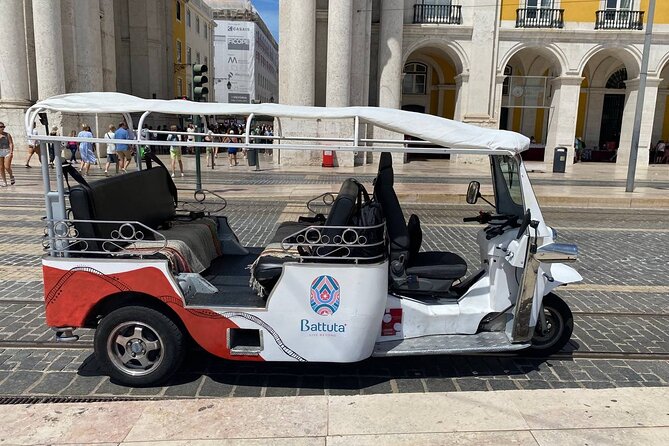
Lisbon is a city you feel in steep streets and big viewpoints. This private electric tuk-tuk tour strings together the must-sees without making you fight for taxis or buses, and it’s built for short photo stops and real orientation. I like that it covers both viewpoints and neighborhoods, so you leave understanding how Lisbon fits together. I also like that it’s actually guided, not just dropped at stops. One possible drawback: cobblestones and tight turns mean expect some bumps and a slower pace on hills.
This is the kind of tour you book when you want structure on your first day, or when your time is tight. You’ll cover places like Rossio, Alfama, Praça do Comércio, and several miradouros (lookouts) that make Lisbon look like a postcard. If you’re hoping for long museum time, keep your expectations realistic since museum entries aren’t included and the tour is designed around quick stops.
In This Review
- Key points to know before you go
- Entering the Lisbon you can actually navigate
- Price and what $83.27 buys you in real value
- The core route: Restauradores, Rossio, and Lisbon’s oldest church
- Miradouros that instantly explain Lisbon’s geography
- Portas do Sol: Alfama and the Tagus in one frame
- Senhora do Monte: a bigger panorama with more layers
- São Pedro de Alcântâara: a garden viewpoint with an old-city feel
- Garden pause at Príncipe Real
- Alfama: the oldest streets, plus fado culture and ginjinha
- Flea market mornings: Feira da Ladra timing matters
- Praça do Comércio: the grand plaza after the 1755 earthquake
- Chiado and Bairro Alto: where creativity spills into the streets
- Santa Engrácia and the Pantheon: faith meets national memory
- Practical riding tips so your tuk-tuk day stays fun
- Picking the right guide: ask for names you’ll recognize
- Should you book this Lisbon private tuk-tuk tour?
- FAQ
- How long is the Lisbon Private Tuk Tuk Tour?
- Is this tour private or shared with strangers?
- Do you offer hotel pickup?
- Is the tuk-tuk electric?
- What language is the tour guide?
- Are museum or attraction entrance fees included?
- Do the viewpoint stops require admission?
- What happens if the weather is bad?
Key points to know before you go

- 100% electric tuk-tuk means an easier, quieter way to cover Lisbon’s hills than walking the whole day
- Private tour for your group so you can set a comfortable pace and ask questions as you roll
- You get viewpoints that are free at Portas do Sol and Senhora do Monte, so you spend time looking, not paying
- Stops include iconic squares like Praça do Comércio and viewpoints that frame Alfama and the Tagus
- The route includes culture touchpoints like Alfama and the Fado Museum plus local flavor with ginjinha
- It’s offered in English, and hotel pickup is only for city center locations on request
Entering the Lisbon you can actually navigate

Lisbon’s biggest trick is that the best views are always uphill. That’s why this tour works: it moves you between viewpoints and key squares without draining your legs before you even start sightseeing.
You’re not doing one big loop and hoping you guessed right. Instead, the stops are chosen to show you Lisbon in layers: the downtown squares, the historic core around Alfama, then the riverfront grandeur at Praça do Comércio, and finally the mix of Chiado and Bairro Alto streets that feel artsy and lived-in. The tuk-tuk format also makes it easier to hop out for a few minutes at a lookout, snap photos, then get back to rolling.
And because it’s private, you’re not stuck with someone else’s pace. If your group prefers more photo time at a viewpoint, you can usually slow down. If you want to keep it moving, you can do that too.
You can also read our reviews of more tours and experiences in Lisbon.



Price and what $83.27 buys you in real value

At $83.27 per person, the cost is reasonable for what you’re getting: a driver/local guide plus hotel pickup (city center only, on request), using a 100% electric tuk-tuk, and a route designed for 2 to 4 hours of focused highlights.
Here’s how I think about value in a city like Lisbon. If you were to cover these stops on your own, you’d burn time figuring out routes, paying for multiple rides, and losing prime moments at lookouts to crowds. This tour bundles transportation and explanation into one guided flow.
Two more value notes:
- Duration flexibility (2 to 4 hours) lets you match the tour to your schedule, especially if you’re arriving with limited time.
- Museum entries are not included, but the tour still gives you culture stops like the Fado Museum area and key landmarks, so you can decide on paid time based on your interests.
The core route: Restauradores, Rossio, and Lisbon’s oldest church
Your morning (or afternoon) energy starts in central Lisbon, where the city’s story is written in stone.
First up is Monumento to the Restauradores, a 30-meter obelisk inaugurated in 1886. This one is easy to miss if you only rush for photos, but it matters. It commemorates Portugal’s liberation from Spanish rule on December 1, 1640. Seeing it early helps you understand that Lisbon isn’t just pretty hills—it’s proud history.
Next is Praça de D. Pedro IV, better known as Rossio. This square has been a meeting point for locals for centuries. It’s the kind of place where you can feel daily Lisbon life, not just tourist life.
Then you’ll reach the area tied to the oldest church in Lisbon, seat of the Patriarchate of Lisbon. This stop gives you that anchor feeling: you’re visiting something foundational, not just a backdrop. It’s also a good “reset” moment because the tour shifts from squares into viewpoints and neighborhoods.
Practical note: wear shoes you’re comfortable walking in. Even with a tuk-tuk, you’ll step out repeatedly.
Miradouros that instantly explain Lisbon’s geography
If you do only one thing in Lisbon, do not just look—understand. These viewpoints do that.
Portas do Sol: Alfama and the Tagus in one frame
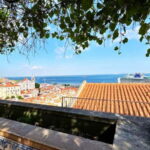
At Miradouro Das Portas Do Sol, you get sweeping views over the eastern part of Lisbon, including the red rooftops of Alfama and the Tagus River. This is one of those “quick stop, huge payoff” places. Admission is free here, so you can focus on the view and photos without digging for tickets.






Senhora do Monte: a bigger panorama with more layers
Next is Miradouro Da Senhora Do Monte, which is famous for panoramic sightlines. You can see the Castle of São Jorge, downtown Lisbon, the Tagus estuary, Bairro Alto, and even Monsanto Forest Park. It’s the kind of lookout that helps you picture where everything sits relative to the river.
São Pedro de Alcântâara: a garden viewpoint with an old-city feel
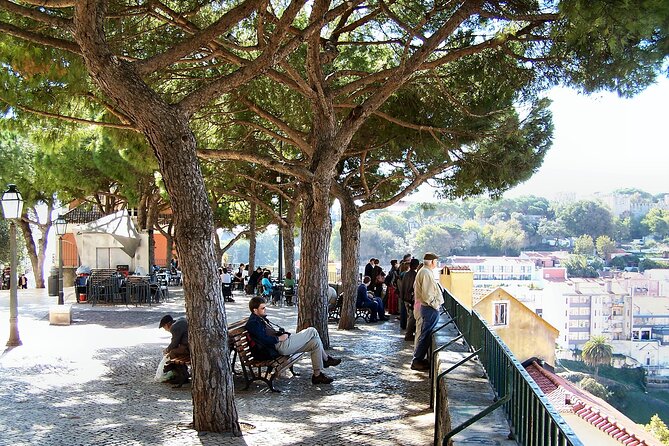
Later, Miradouro São Pedro de Alcantara adds another angle. It’s a garden setting on two terraces, built in 1864, and it focuses on views over the older parts of Lisbon. This one is often great if your legs need a break but you still want the best angles.
Garden pause at Príncipe Real
You’ll also pass by Jardim do Príncipe Real, a romantic, mid-19th-century garden layout. It’s a nice change of pace after lookouts—less “look up and gasp,” more “sit for a minute and breathe.”
Alfama: the oldest streets, plus fado culture and ginjinha

Alfama is why people fall for Lisbon. The tour gives you the right mix: history context, scenic moments, and culture you can feel.
You’ll spend time in Alfama, Lisbon’s oldest and one of its most typical neighborhoods. This is where the steep streets start to make sense. The route is set up so you don’t just drive past it—you stop and take it in.
A highlight here is the chance to try ginjinha, the famous Portuguese cherry liqueur. The tour includes a stop time for it (and it’s free time in the itinerary). It’s a small thing, but it’s the kind of local taste that makes your photos and memories feel more real.
Then comes the Fado Museum, devoted to fado and the Portuguese guitar. Even if you don’t go inside for an extended visit, this stop helps you connect Alfama to Lisbon’s most iconic music tradition. If you want to do it properly, plan on paying museum entry separately since entrances aren’t included.
Flea market mornings: Feira da Ladra timing matters
One of the most local stops on this route is Feira da Ladra, a flea market held in Lisbon every Tuesday and Saturday.
If your tour date lands on those days, expect more energy in the area. Even if you only browse for a few minutes, you’ll get that sense of Lisbon’s everyday commerce and old-school trading. If it’s not Tuesday or Saturday, this stop may be more about the neighborhood vibe than the market itself, so don’t plan on shopping on every day.
Praça do Comércio: the grand plaza after the 1755 earthquake

The route pulls you down toward the river at Praça do Comércio, once home to a royal palace destroyed in the 1755 earthquake. Now it’s one of Lisbon’s most stunning squares, and the point of the stop is not just the view—it’s the scale and the geometry.
Look for Rua Augusta Arch, a striking feature that frames the square. This stop is great for photos, but it’s also a useful mental map moment. From here, you start to see how Lisbon’s downtown opens toward the Tagus—and how different the city feels near the water compared to the steep old quarters.
Chiado and Bairro Alto: where creativity spills into the streets

Lisbon’s artsy side lives around Bairro Alto and Chiado. The tour treats these areas as more than “photo spots.” You get a feel for Lisbon’s alternative energy: cafés, shops, and street art layered over historic neighborhoods.
Also in this area is Largo do Carmo, tied to the ruins of the Carmo Convent, built in the 14th century and destroyed by the 1755 earthquake. These ruins have a haunting calm. They’re not just a landmark to tick off; they’re a visible reminder of how Lisbon rebuilds, not just how it decorates.
And yes, you’ll also stop at Praça Luís de Camões, a pleasant open space with trees and stone benches. The pavement has Portuguese geometric designs that reference the sea, mermaids, and caravels—exactly the kind of detail you’d miss if you only passed through.
Santa Engrácia and the Pantheon: faith meets national memory
Another important cultural stop is the National Pantheon, installed in the Church of Santa Engrácia. Even without going inside, the church context makes this feel weighty. It connects Lisbon to national memory in a way that fits nicely with the rest of the route’s “Portugal story” theme.
If you want to do an extended look, you’ll need to budget for entrances separately, since museum entrance fees are not included.
Practical riding tips so your tuk-tuk day stays fun
A few real-world tips make a difference with tuk-tuk touring.
- Expect some bumpiness on cobblestones. This isn’t a shock-absorbing world. It’s part of the charm, but it can be uncomfortable if you’re sensitive.
- Build in time for quick photo exits. This tour works best when you’re willing to stand out for a few minutes at each viewpoint, then hop back in.
- Bring a layer. Lisbon weather can shift, especially when you climb toward the viewpoints.
- Snacks aren’t included, and tips aren’t included—so if you need food, plan your own small breaks around the day.
Finally, the tour requires good weather. If bad conditions cancel it, you’ll be offered a different date or a full refund.
Picking the right guide: ask for names you’ll recognize
One of the best reasons people love this experience is the human factor. Guides often go beyond the basic route, sharing safety-minded driving and practical local recommendations.
If you have the option to request a guide, it’s worth aiming for names you’ll see repeatedly praised such as Sergio, Luis, Catarina, Dominique, or Adriano. The pattern is consistent: punctuality, a friendly approach, and flexibility when your group wants to slow down for a photo or swap priorities.
Should you book this Lisbon private tuk-tuk tour?
Book it if:
- You’re seeing Lisbon for the first time and want high-impact orientation in 2 to 4 hours.
- You want a private, guided tour that mixes squares, neighborhoods, and lookouts instead of only driving past them.
- You like photo stops at miradouros and want to cut down on walking hills.
Skip it or consider a different format if:
- Your main goal is long museum time, since museum entrance fees aren’t included and the schedule is built around short stops.
- You hate uneven cobblestones and would rather do fully accessible, flat-city options.
If you’re the “first day, get oriented” type, this is one of the easiest ways to start Lisbon right. You’ll leave with a mental map, not just a camera roll.
FAQ
How long is the Lisbon Private Tuk Tuk Tour?
It runs for about 2 to 4 hours, depending on how the timing works for your group and day.
Is this tour private or shared with strangers?
It’s private. Only your group participates.
Do you offer hotel pickup?
Yes, hotel pick-up is offered for city center locations only, and it’s on request.
Is the tuk-tuk electric?
Yes. The tour uses a 100% electric tuk-tuk.
What language is the tour guide?
The tour is offered in English.
Are museum or attraction entrance fees included?
No. Entrance fees, including museum entrance fees, are not included.
Do the viewpoint stops require admission?
Some viewpoint stops on the route list free admission, including Miradouro Das Portas Do Sol and Miradouro Da Senhora Do Monte.
What happens if the weather is bad?
The experience requires good weather. If it’s canceled due to poor weather, you’ll be offered a different date or a full refund.