REVIEW · LISBON
Lisbon: Private Tuk Tuk Tour (Alfama, Bairro Alto, Belém)
Book on GetYourGuide →Operated by Tuk On Me Sightseeing Tours · Bookable on GetYourGuide
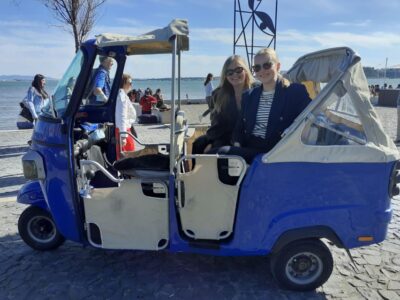
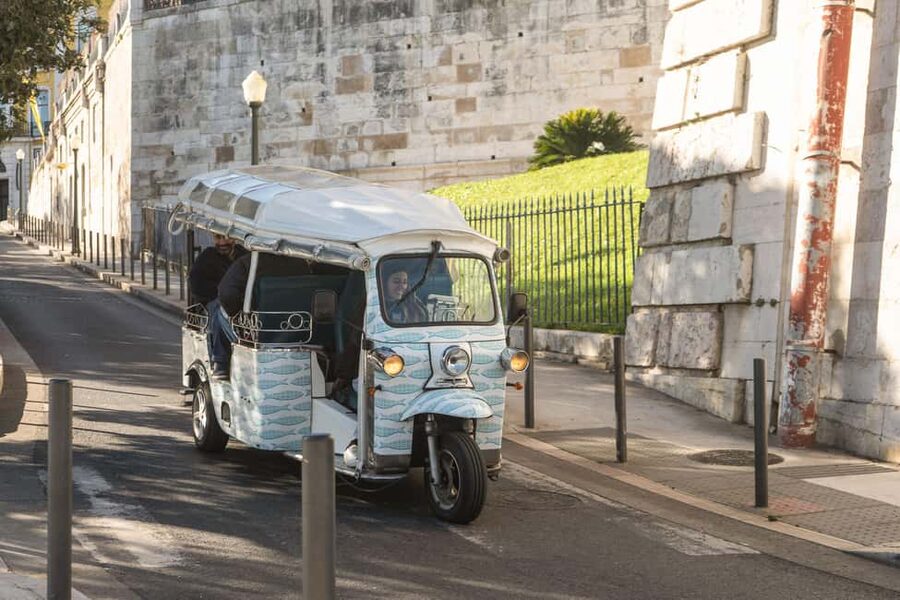
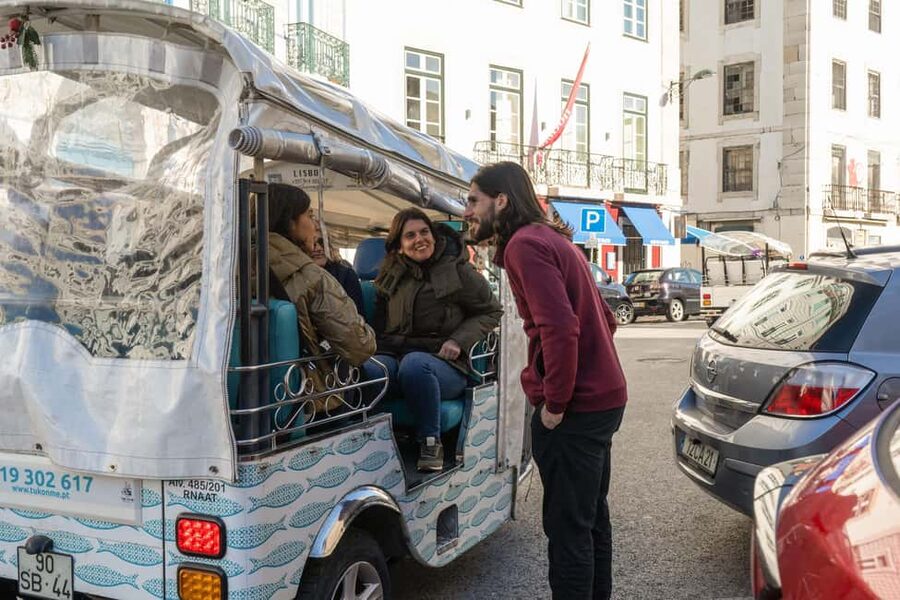
Lisbon’s hills get easier on a tuk tuk. You ride through neighborhoods that normally feel like a puzzle of steep streets, with easy access to viewpoints and guided history explanations that connect what you see to who lived here before. I like that the pace stays relaxed, so you’re not just looking at maps—you’re actually getting angles and context you can remember.
One thing to plan for: the tuk tuk is an open vehicle, so weather matters. Also, it’s not suitable for wheelchair users, and children under 3 years old aren’t allowed.
In This Review
- Key things that make this tuk tuk tour worth your time
- Private tuk tuk power: Lisbon’s hills without the stair sprint
- Where you start at Av. da Liberdade (and why it helps)
- Baixa de Lisboa and the Cathedral: first textures, then meaning
- Miradouro time: Portas do Sol and Senhora do Monte
- Graça and Alfama: the old districts feel lived-in
- São Vicente de Fora, Santa Engrácia, and the art of quick stops
- Commerce Square and Mercado da Ribeira: modern Lisbon in the middle of the old
- Belém break: Pastéis de Belém and a short taste stop
- Jerónimos Monastery, Belém Tower, and the Discoveries monument
- Estrela Basilica, Parliament area, and the “city layers” feeling
- Bairro Alto, Chiado, and Carmo Convent: classic neighborhoods, quick perspective
- Miradouro de São Pedro de Alcântara and Eduardo VII Park: final viewpoint payoff
- Marquess of Pombal Square and the ride back to Avenida da Liberdade
- Price and value: $23 per person, private pace, big coverage
- Who this tour fits best (and who should think twice)
- The guide quality factor: when the history clicks, the whole day improves
- Should you book this Lisbon Private Tuk Tuk Tour?
- FAQ
- Where do I meet for the Lisbon private tuk tuk tour?
- How long is the tour?
- Is this a private group tour?
- What languages does the live guide speak?
- Is the tuk tuk open-air, and do you have rain covers?
- What should I bring?
- What’s included, and what’s not included?
- Is the tour suitable for wheelchairs or very young children?
Key things that make this tuk tuk tour worth your time
- Viewpoints you reach by tuk tuk, including multiple miradouros for quick photo moments
- A local guide who ties architecture to influences, from Roman to Moorish and beyond
- Lots of “short stops” done well: quick history, then right back on the road
- Belém + Old Lisbon in one outing, so you don’t waste half your day switching plans
- Photo timing built into the route, not just rushed passing views
- Rain covers included, which helps if Lisbon does its usual surprise drizzle
Private tuk tuk power: Lisbon’s hills without the stair sprint
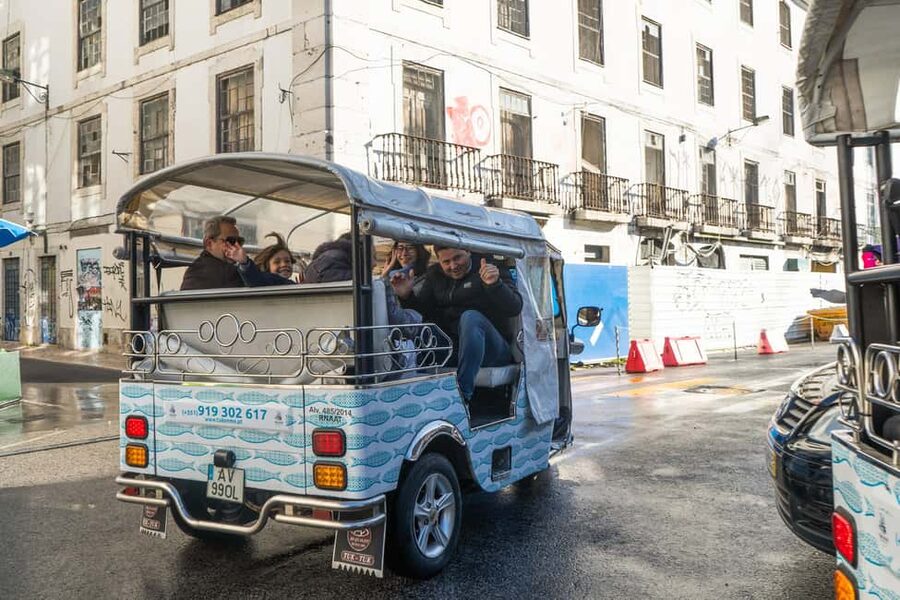
Lisbon is famous for views, but getting to them can be a workout—especially if your day already includes tram lines, walking tours, and waiting around. This private tuk tuk format solves that by letting you move close to the action while still stopping often enough to actually enjoy the panoramas.
I love that the route is designed around viewpoints on and near the city’s steepest areas. The tour leans into what tuk tuks do well: visibility and access to “photo corners” that you’d struggle to reach comfortably on foot, especially with older legs or limited time.
The other win is how the guide treats the ride like a story. You’re not stuck only on highlights; you get enough history to understand why Lisbon looks the way it does, from old churches and districts to the layers left by different empires and communities.
You can also read our reviews of more tours and experiences in Lisbon.



Where you start at Av. da Liberdade (and why it helps)
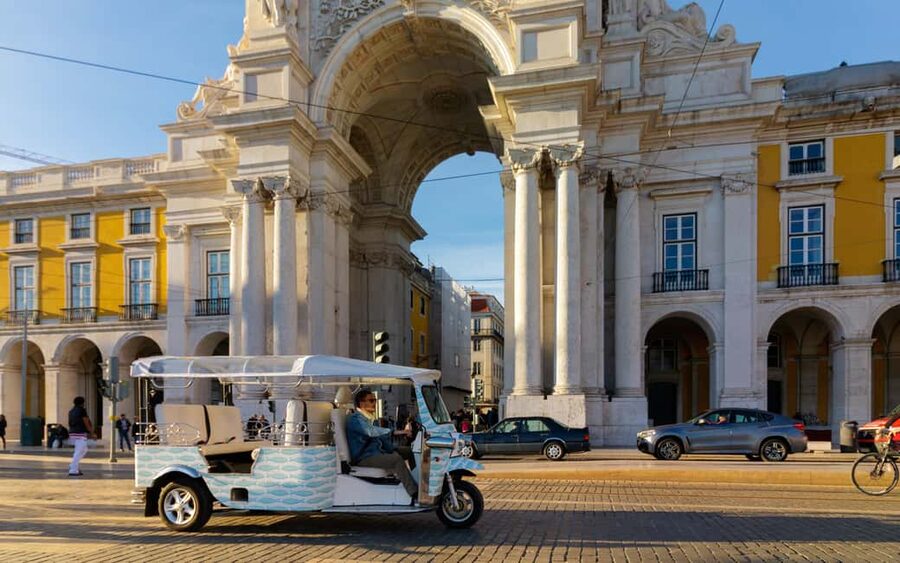
You meet at Av. da Liberdade 2, in front of the Hard Rock Café. That’s an easy landmark for getting oriented, and it puts you near central Lisbon so you’re not starting from the far edges of the city.
From there, the tour works like a gentle ramp: it starts in the downtown area (Baixa de Lisboa) and then builds upward into the older hill districts. If you’re trying to see a lot in a short stay, this start point is practical—less time crossing town, more time with the guide.
Bring a camera. This is the kind of tour where you’ll want quick shots, not one big photo at the end.
Baixa de Lisboa and the Cathedral: first textures, then meaning
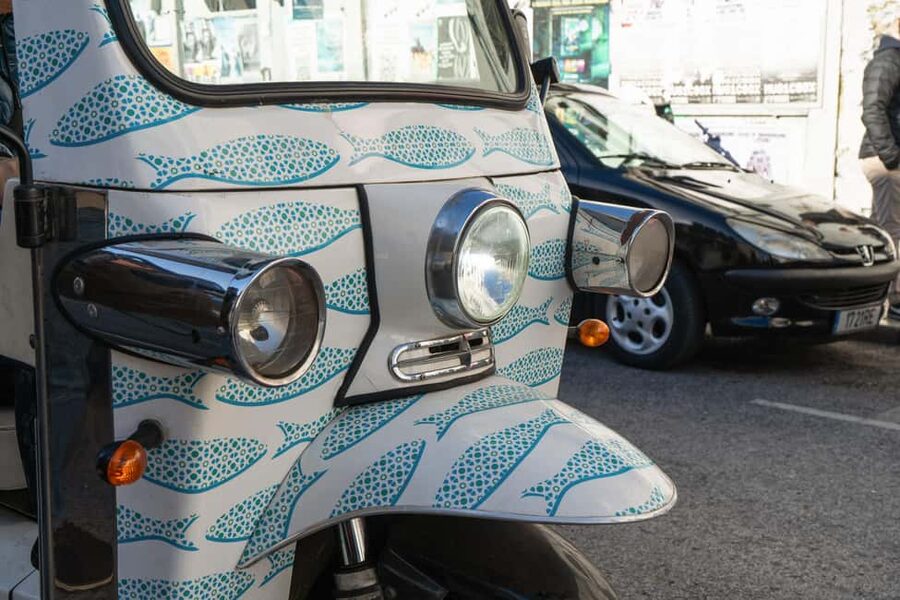
Your early stop at Baixa de Lisboa is a helpful baseline. It’s where Lisbon’s urban “main character” shows through—streets and buildings that give you your bearings before the climb into the historic quarters.
Then you roll to Lisbon Cathedral for a short photo stop and guided explanation (about 5 minutes). The cathedral stop is brief, but it’s timed early so you can connect the city’s religious and architectural roots to what comes next, without losing momentum.
A quick heads-up: these early stops move fast. If you like slow museum-style touring, you’ll want to use the tour as your overview and then return later on foot for the details that really catch your eye.
Miradouro time: Portas do Sol and Senhora do Monte
Lisbon viewpoints can feel repetitive if you’ve seen photos already. This tour avoids that by hitting multiple viewpoints with short guided context, so each stop adds a different slice of the city.
Miradouro das Portas do Sol is one of the classic angles, and you get a photo stop with a bit of history around what you’re seeing (about 5 minutes). It’s the kind of stop where you’ll want to stand still for a minute—look over the rooftops, then let the guide’s explanation give names and meaning to what’s spread out below.
Later you reach Miradouro da Senhora do Monte, which gets a longer photo stop (about 10 minutes). This is one of the moments where the tuk tuk earns its keep: it gets you close enough that you can focus on the view, not the climb.
Graça and Alfama: the old districts feel lived-in
Graça Historic District comes next with guided touring. This area is where Lisbon starts to feel more “old-town” and less “downtown.” You’ll get context as you move through the neighborhood, which helps when the streets narrow and the buildings look like they’ve been here through major historical shifts.
Then the tour hits Alfama, with guided touring. Alfama is Lisbon’s old-soul district, and the guide’s job here is key: explaining how different cultural influences shaped what you see. The tour specifically frames influences across centuries—Roman, Moorish, Phoenician, Jewish—so when you notice architectural details or religious sites, you’re not guessing what you’re looking at.
The pace works well for Alfama because the tuk tuk lets you cover ground without constantly hiking uphill between stops. You still get the feeling of being in the thick of the city.





São Vicente de Fora, Santa Engrácia, and the art of quick stops
You’ll pause at Monastery of São Vicente de Fora for a short photo stop and guided explanation (about 5 minutes). You’ll also visit National Pantheon of Santa Engracia with similar timing.
These are exactly the kind of stops that can become frustrating on a rushed day—too many sites, too little time. Here, the stops are structured: a quick look, then a guide tells you what to notice. If you’re the type who enjoys learning what a building represents, these brief moments can be surprisingly satisfying.
From the reviews I’ve seen reflected in the experience style—especially one standout case where Patricia from Patricia Fernandez Tours stepped in—the guide role matters. When the guidance is strong, even short visits feel anchored instead of random.
Commerce Square and Mercado da Ribeira: modern Lisbon in the middle of the old
After the hill districts, you swing back toward central Lisbon with guided tour time at Commerce Square, Lisbon. This stop helps reset your sense of scale. You see how Lisbon’s identity isn’t only old stone and narrow lanes—it’s also open spaces and civic design.
Then you go to Mercado da Ribeira for guided touring. This is where you can feel Lisbon as a working city. You’re not touring it like a set; you’re moving through a space that still functions as a marketplace.
If you’re visiting in a food-minded mood, Mercado da Ribeira is a good chance to spot what you might want to eat later without turning the tour into a full food crawl.
Belém break: Pastéis de Belém and a short taste stop
A short break time is built into the route for Pastéis de Belém, including a food tasting (about 5 minutes). This is smart for two reasons. First, it’s scheduled so you’re not searching for a snack while your afternoon is slipping away. Second, the tasting window gives you a taste of the local classic without turning the whole day into a queue and a sit-down meal.
Also, it keeps the day balanced. You get architectural highlights and historical context, then you get an edible reset.
Food and drinks are not included overall, so budget for anything beyond that tasting.
Jerónimos Monastery, Belém Tower, and the Discoveries monument
Now you hit the Belém section—where the story of Lisbon’s maritime reach becomes visible in stone.
At Jerónimos Monastery, you get a photo stop with guided explanation (about 10 minutes). Next is Belém Tower with a short photo stop and guided tour (about 5 minutes). These stops are tightly timed, so the guide’s ability to point out what you’re looking at makes a difference. You’ll likely leave with names, themes, and the sense that these aren’t just famous because they’re big—they’re famous because they represent a specific historical moment.
You’ll also stop for the Monument to the Discoveries, with photo stop and guided explanation (about 5 minutes). This is a useful “big picture” marker. After spending time among districts like Alfama and Graça, it’s a natural shift to Portugal’s era of exploration—different themes, same city.
If you’re the type who wants to spend hours inside major sights, take this tour as a high-quality overview. Then, if something grabs you, plan to return separately when you have time to linger.
Estrela Basilica, Parliament area, and the “city layers” feeling
The tour keeps moving and keeps layering Lisbon’s identity. You’ll stop at Estrela Basilica for a photo stop and guided tour (about 5 minutes), then pass by the Assembleia da República area with guided tour time.
These stops matter because they show Lisbon isn’t only built from old-world charm. You’re seeing different periods side by side—religious architecture, civic life, and the geography that connects it all.
The quick guided segments are also a benefit if you get tired of long explanations. You get a chunk of context, then you’re back in motion.
Bairro Alto, Chiado, and Carmo Convent: classic neighborhoods, quick perspective
Next comes Bairro Alto with guided touring, followed by Chiado and Carmo Convent. These areas often feel best when you can compare them as neighborhoods rather than as isolated sights, and the tuk tuk helps with that.
Bairro Alto adds texture and street life vibe. Chiado feels more polished and central. Carmo Convent provides a more reflective historical note. Even with short stops, you’re building a mental map of what each place “does” in Lisbon.
There’s no pretending these segments are slow. But for many first-time visitors, that’s exactly the point: you get orientation and a feel for where you’d want to wander after the tour ends.
Miradouro de São Pedro de Alcântara and Eduardo VII Park: final viewpoint payoff
You’ll take a break at Miradouro de São Pedro de Alcântara with a photo stop (about 10 minutes). This is a great time to slow down, reset, and frame your final photos before the route returns closer to central areas.
Then you stop at Eduardo VII Park for a photo stop and guided tour time (about 10 minutes). Parks and viewpoints like this help you catch the city’s layout and distance—how neighborhoods relate to each other across hills.
From a “value” angle, these last viewpoint stops are important. They help you end the tour with images you’ll actually want to share, not just a few blurry snaps from constant motion.
Marquess of Pombal Square and the ride back to Avenida da Liberdade
The tour winds down with guided touring at The Marquess of Pombal Square, then continues through Avenida da Liberdade back to Av. da Liberdade 2.
This return route is convenient. You end near the starting landmark, so you’re not stuck figuring out a second set of transport plans. You also get a final sense of Lisbon’s major streets after spending the day in older lanes.
Price and value: $23 per person, private pace, big coverage
At about $23 per person, the price can feel like a smart deal if your goal is coverage plus guided context. You’re paying for three things at once: private transport on a vehicle that can reach tight viewpoints, a local guide who explains what you’re seeing, and multiple photo stops that would be expensive in time if you did them by foot or public transit.
The “private group” part is also where the value can tip for families, couples, and small friend groups. If you’d otherwise hire separate guides or keep stopping to re-plan, a single coordinated ride can save stress.
Just be honest about what you’re buying: this is not a slow, museum-heavy day. It’s a great choice when you want a curated overview and you like being guided to viewpoints and history nodes.
Who this tour fits best (and who should think twice)
This tour is a strong fit if:
- you’re short on time but want major areas covered
- you like photos with guided context, not just wandering
- you want to understand Lisbon’s cultural influences across centuries
- you’d rather spend energy enjoying views than climbing between distant viewpoints
It may be less ideal if:
- you need step-free access (the tuk tuk isn’t suitable for wheelchair users)
- you’re traveling with a child under 3 years old (not allowed)
- you prefer long stays at a few sites over short stops at many
The guide quality factor: when the history clicks, the whole day improves
The experience shines when the guide can turn stops into stories. One group had a situation where the scheduled guide didn’t show up, and Patricia from Patricia Fernandez Tours stepped in and was described as excellent—showing many parts of the city and explaining history behind churches and other visited places. Another highlight style: drivers who keep a cheerful tone and give enough time to make photos, even making calls to arrange a special location when requested.
You can’t guarantee a specific guide, but you can choose a tour format that makes strong guiding a central feature. This one is built that way.
Should you book this Lisbon Private Tuk Tuk Tour?
I’d book it if you want Lisbon’s “greatest hits” plus cultural context in one relaxed ride—especially if you’re trying to cover Baixa, Alfama, and Belém without turning your day into a climbing contest. The mix of hill viewpoints, short guided explanations, and a quick Pastéis de Belém tasting is a very practical combo for first-time visitors.
Skip it if you’re looking for long, in-depth museum time or if accessibility needs make an open vehicle unrealistic for your group. Otherwise, this is a fun, efficient way to see Lisbon the way photos don’t fully capture: with people and history explained as you move between viewpoints.
FAQ
Where do I meet for the Lisbon private tuk tuk tour?
You meet at Av. da Liberdade 2, in front of the Hard Rock Café.
How long is the tour?
The duration is 1 to 4 hours, depending on the starting time and availability.
Is this a private group tour?
Yes, it’s a private group tour.
What languages does the live guide speak?
The guide speaks English, French, Portuguese, and Spanish.
Is the tuk tuk open-air, and do you have rain covers?
Yes, the tuk tuk is an open vehicle. Rain covers are included, and you’ll want to dress for the ambient temperature and weather.
What should I bring?
Bring a camera for photos at the viewpoint stops.
What’s included, and what’s not included?
Included: the guided tuk tuk tour, time to explore narrow streets and significant old-town points, and viewpoints. Not included: food and drinks (other than the brief Pastéis de Belém tasting), and hotel pickup/drop-off.
Is the tour suitable for wheelchairs or very young children?
No. It isn’t suitable for wheelchair users, and children under 3 years old aren’t allowed.