REVIEW · LISBON
Lisbon: Private Professional Guided Tuk-tuk Tour
Book on Viator →Operated by DaGamma Expeditions · Bookable on Viator
Lisbon is a city of steep turns, sudden views, and shortcuts. This private guided tuk-tuk route strings together the places you want most, from Alfama miradouros to Belém UNESCO monuments, without making you zigzag for hours. I really like the stop planning, because it hits both big landmarks and the smaller “pause here” moments like scenic lookouts; I also like the human touch from professional guides such as Joana, who handles history in English and Spanish and gives helpful day plans for after the tour. One thing to consider: Lisbon streets can get loud, so if you’re sensitive to sound, you may struggle to hear every word during moving segments.
With pickup offered and a private group experience, you can set your own pace when streets tighten. You’ll also get a mobile ticket for easier access, plus everything is in English. The big question is whether you want to pay for a guided, vehicle-based highlight pass—because a few key sights are not included and you’ll need to handle those tickets yourself.
In This Review
- Key things that make this tour worth your time
- Private Tuk-tuk, real neighborhoods: why this route works
- Monument to the Restauradores, Rossio, and Baixa Pombalina: Lisbon’s center in one sweep
- Sé de Lisboa and Alfama: the old Lisbon core, with the right order
- Miradouros: Portas do Sol and Senhora do Monte for big-city views
- Feira da Ladra and Panteão Nacional: markets and a baroque dome
- Ribeira das Naus and Praça do Comércio: the Tagus riverfront reset
- Chiado, Bairro Alto, São Pedro de Alcântâra, and the 25 de Abril Bridge
- Belém in one sitting: Jerónimos, Torre de Belém, and the Discoveries monument
- Joana’s guiding style: what you should look for from your guide
- Price and value: is $144.18 per person a good deal?
- Should you book this Lisbon private tuk-tuk tour?
- FAQ
- How long is the Lisbon private guided tuk-tuk tour?
- How much does the tour cost per person?
- Is this tour private or shared with other groups?
- What language is the tour offered in?
- Is pickup offered?
- Where does the tour start?
- What monuments or sights are not included in the price?
- Are any stops free?
- What’s the minimum age for children?
- Can I cancel for a refund?
Key things that make this tour worth your time
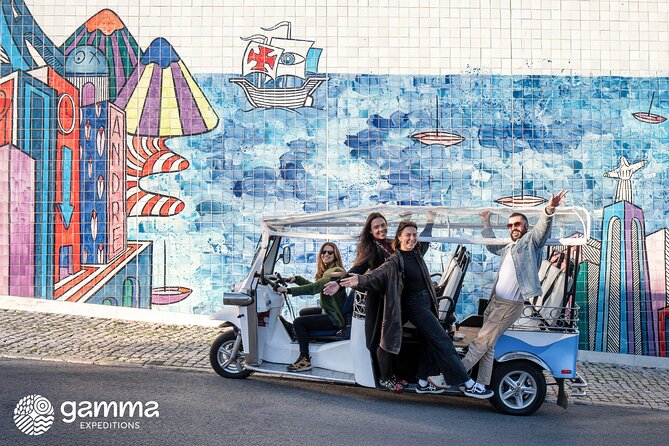
- Private tuk-tuk transport: a faster way to move between neighborhoods that feel far apart on foot.
- Multiple viewpoint stops: you’re not just touring buildings; you’re taking in Lisbon’s city-picture angles.
- Professional guidance with real follow-up: Joana is singled out for clear explanations and useful suggestions beyond the tour.
- A smart mix of free stops and ticketed landmarks: plan around what you want to enter.
- Belém in one go: Jerónimos, Torre de Belém, and the Monument to the Discoveries are packed into a short window.
Private Tuk-tuk, real neighborhoods: why this route works

Lisbon rewards you for timing and viewpoint hunting. This tour is built around that. The tuk-tuk format means you can cover central Lisbon, climb into the viewpoints area, then drop toward the riverfront and continue out to Belém—all in about 4 hours.
Starting at Av. da Liberdade 2 is practical. You’re positioned for the city’s major routes, and you’ll spend less time figuring out where to be than if you stitched together separate buses, trams, and walking routes.
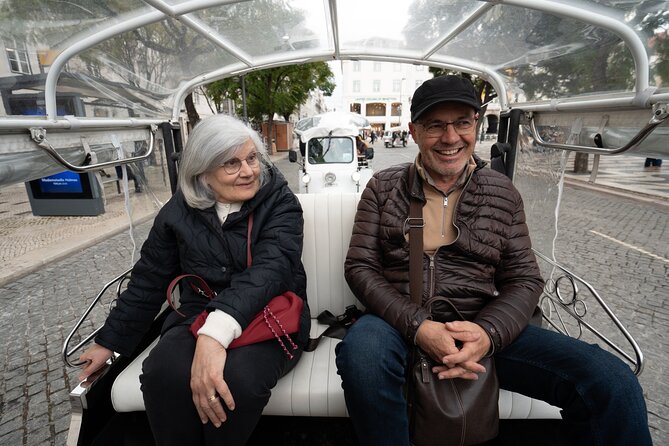
The private nature is the real upgrade. It’s only your group in the vehicle, and pickup is offered. In a city where walking can turn into a stair-and-slope workout, having transport that keeps you moving is the difference between seeing the highlights and just surviving the day.
One caution from the feedback: street noise can make it hard to catch every line when the guide is repeating explanations. If that’s a problem for you, consider earplugs, and ask for a quick pause when you really want to hear details.
You can also read our reviews of more tours and experiences in Lisbon.



Monument to the Restauradores, Rossio, and Baixa Pombalina: Lisbon’s center in one sweep

You begin with a classic Lisbon landmark moment: the Monument to the Restauradores. It’s anchored by a tall obelisk around 30 meters high, inaugurated in 1886, tied to Portugal’s liberation from Spanish rule on December 1, 1640. This kind of opening sets the historical tempo early, so the rest of the tour makes more sense.
Then you roll into Rossio Square (Dom Pedro IV Square). Look down at the wave-patterned cobblestones, and you’ll see why this stop is more than a place to pass through. It’s also a natural orientation point: historic buildings, traditional shops, and the nearby Rossio metro station make Rossio feel like Lisbon’s everyday center.
Next comes Baixa Pombalina, the downtown grid rebuilt after the devastating 1755 earthquake. The neat, orderly layout is exactly what you want after wandering older streets elsewhere in the city. It’s Lisbon’s “after” story: architecture and street planning designed to bring order back.
What you’ll like here is balance. If your Lisbon day is only tram rides and camera stops, you miss how the city tried to rebuild. This segment gives you that context without slowing you down.
Potential drawback: because these are central squares and streets, you’ll still feel crowds and traffic—so keep your focus on the guide’s commentary and move when it’s time, rather than lingering for a perfect photo at the curb.
Sé de Lisboa and Alfama: the old Lisbon core, with the right order
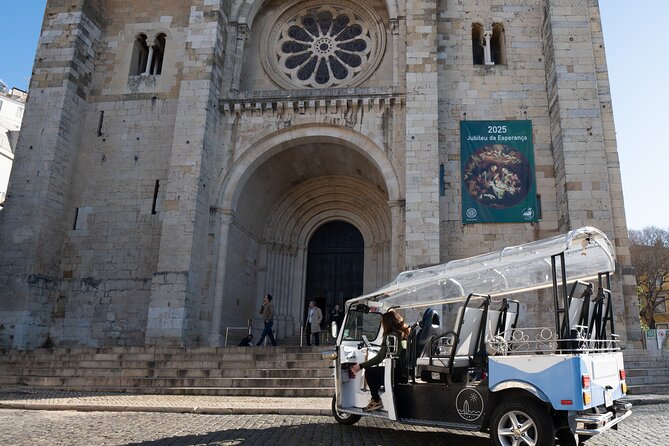
A highlight for many people is Lisbon Cathedral (Sé de Lisboa). This is a serious landmark dating back to the 12th century, with a mix of Romanesque, Gothic, and Baroque elements. The façade is robust, there are rose windows, and you’ll see the twin bell towers. Inside, the nave and chapels offer a calmer, heavier mood than you get outside.
Important for your planning: entry for the cathedral is not included, so decide ahead of time whether you want to go in or focus on the exterior and the surroundings.
From there, the tour leans into Alfama, Lisbon’s oldest and most character-driven neighborhood. You’ll feel it in the street geometry: narrow lanes, colorful houses, and steep staircases. It’s also tied to Lisbon traditions, including fado, which tends to appear in the background of the neighborhood’s life.
This is where the tuk-tuk makes sense. Alfama can be a maze on foot, and transport helps you stay oriented while still experiencing the neighborhood’s texture. You also get key landmarks in the area, including the cathedral and viewpoints that guide you upward.
One consideration: Alfama’s streets can involve stairs and uneven ground near viewpoints. Even with the vehicle, expect a bit of on-foot movement.
Miradouros: Portas do Sol and Senhora do Monte for big-city views
Lisbon viewpoints are not a single thing. They’re a rhythm. This tour gives you two of the most recognizable viewpoints in different neighborhoods.
First up is Miradouro das Portas do Sol in Alfama. It’s famous for panoramic views over the red rooftops of Alfama, across the Tagus River, and toward the wider city. The streets around it tend to feel atmospheric, with cobbles and traditional houses, and nearby you’ll also find spots like São Vicente de Fora Monastery.
Next is Miradouro da Senhora do Monte in Graça. This one carries a quieter, more relaxed feel, with a panoramic view that includes São Jorge Castle, the Tagus River, and the 25 de Abril Bridge. It’s especially popular at sunset, when the light turns warm and the city looks extra layered.
Both viewpoints are scheduled as short stays, so you get the moment without losing the day. The bigger value is that the guide can point out what you’re looking at, instead of you guessing which hill or bridge is which.
Good news for planning: both of these viewpoints are free. You’re paying for the route and the guide, not for the view.
Feira da Ladra and Panteão Nacional: markets and a baroque dome
Lisbon knows how to mix the practical with the beautiful. This tour brings that combo with Feira da Ladra at Campo de Santa Clara. This is Lisbon’s best-known flea market, happening every Tuesday and Saturday. If your dates line up, it’s a great chance to browse antiques, vintage items, books, and second-hand curiosities while soaking up local weekend energy.
Then you head toward Panteão Nacional (National Pantheon), an impressive Baroque structure originally built as the Church of Santa Engrácia. The massive dome and white façade dominate the skyline. Inside, it serves as a resting place for prominent Portuguese figures, and there’s also a panoramic terrace view.
This is another ticketed stop: entry is not included. If you want the interior and terrace, budget for tickets separately. If you don’t, you can still appreciate the scale from outside and keep moving.
Why this segment matters: it gives you variety. A day of only monuments can blur. A market and a dome keep the story human and memorable.






Ribeira das Naus and Praça do Comércio: the Tagus riverfront reset
After climbing and looking outward, you get a breather at the water. Ribeira das Naus is a revitalized waterfront promenade along the Tagus, stretching between Cais do Sodré and Praça do Comércio. It used to be tied to shipbuilding, and now it’s a comfortable riverside walkway with benches and open space.
From a photography standpoint, it’s one of the easiest places to capture Lisbon in motion: river views, skyline angles, and the chance to sit for a minute without hunting for a viewpoint.
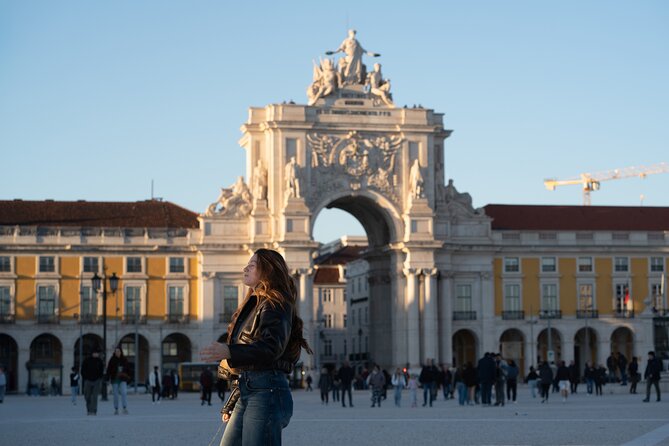
Then comes Praça do Comércio (Terreiro do Paço), one of Lisbon’s iconic squares right on the river. This is where you’ll notice the yellow Pombaline-style buildings and the big presence of Arco da Rua Augusta. Historically, the square is tied to Lisbon’s recovery after the 1755 earthquake, so it feels like Lisbon’s comeback in architectural form.
Both of these stops are free, which is a nice value perk. You’re spending your money on your guide and transport, while the best scenery here doesn’t ask for extra tickets.
Chiado, Bairro Alto, São Pedro de Alcântâra, and the 25 de Abril Bridge
The next stretch gives you Lisbon’s day-and-night contrast.
Chiado sits between Bairro Alto and Baixa and leans more elegant and cultured. It’s linked with literary heritage and upscale shops, and it’s known for classic cafés like A Brasileira. The tone here is more refined, and it’s also where you’ll come across theater and museum landmarks (without needing to commit to any one building if you’re short on time).
Then you shift to Miradouro São Pedro de Alcântâra, one of the most beloved viewpoints in the Bairro Alto area. The garden setting includes fountains and decorative tile details, plus a landscaped spot that’s easier to enjoy than some harsher, windy lookouts. It’s a strong sunset option, but it’s still good at daytime when the city is crisp.
Next is Bairro Alto, which changes mood as the day progresses. During the day it’s calmer; at night it becomes active with bars, restaurants, and places tied to fado. Even if you’re not going out, it helps to understand how Lisbon turns after dark.
Finally, you cross to a modern icon: the 25 de Abril Bridge. It’s often compared to the Golden Gate, and you get the striking red suspension-bridge look over the Tagus. The bridge connects Lisbon to Almada, and it’s a key part of daily life with trains and cars crossing regularly.
Planning tip: this part of the tour ties viewpoints and skyline into a single storyline, but traffic and crowds can affect how long you can safely pause for photos. The guide’s pacing matters here.
Belém in one sitting: Jerónimos, Torre de Belém, and the Discoveries monument

Belém is where Lisbon’s maritime story becomes stone and sculpture. You’re given enough time to see three major icons without turning the day into a checklist sprint.
First is Mosteiro dos Jerónimos (Jerónimos Monastery), a UNESCO World Heritage Site known for Manueline architecture. Built in the 16th century to commemorate Vasco da Gama’s voyage, it’s loaded with maritime motifs in its ornate details. The monastery also connects to notable tombs, including Vasco da Gama and the poet Luís de Camões. Entry is not included, so consider whether you want to spend extra time inside.
Next is Torre de Belém, the fortified tower on the riverbank. Also UNESCO-listed, it served as part of the defense system for the Tagus and as a ceremonial gateway. Like the monastery, it’s Manueline in spirit, with maritime carvings and mixed Gothic and Renaissance influences. Entry is not included.
Then comes Padrão dos Descobrimentos (Monument to the Discoveries). This one is easier to appreciate quickly: it’s shaped like a ship’s prow, with larger-than-life statues of key explorers and figures like Henry the Navigator and Vasco da Gama. You also get an observation deck option and a mosaic compass rose marking distances to former Portuguese territories. Entry is not included.
What I like about bundling these: Belém is spread out and demands context. This tour gives it to you without forcing you to travel by multiple transit modes or guess which order makes the most sense.
Possible drawback: because tickets aren’t included for these three, your total time inside will depend on your preferences and how quickly you move through lines. If you’re the type who hates waiting, you’ll still enjoy the exteriors and guide explanations, but you may choose one interior rather than all.
Joana’s guiding style: what you should look for from your guide
One of the strongest signals from the feedback is the guide experience. Joana is highlighted for being organized and helpful, and for explaining history in both Spanish and English. She also followed up with recommendations for day trips outside Lisbon, which is a smart add-on for anyone using this tour as a starting point.
There’s also a practical note: sometimes the street noise made it hard to hear, and the guide needed to repeat herself. That doesn’t erase the value, but it does change how you should prepare mentally. If audio is important to you, bring earplugs and stay attentive at stops where you’re standing still.
Price and value: is $144.18 per person a good deal?
At $144.18 per person for about 4 hours, you’re not paying only for sightseeing. You’re paying for:
- Private tuk-tuk transport across multiple Lisbon neighborhoods
- A professional guide in English
- Pickup offered and a route that reduces your own planning stress
- A balance of free stops (viewpoints, major squares) and ticketed sights you can choose to enter
If you were to try to recreate this route solo, you’d likely spend time coordinating transit, walking long uphill stretches, and losing the context that makes Lisbon’s layout click. The price starts to feel fair when you value time and comfort, especially in Alfama and between central Lisbon and Belém.
Where the value shifts: if you only plan to look from outside and skip most paid entries, you might feel you’re paying for time rather than access. Still, the viewpoints and orientation benefits tend to pay off.
Should you book this Lisbon private tuk-tuk tour?
Book it if you want a guided highlight pass that also respects Lisbon’s geography. This is a great fit for couples, small groups, and anyone who wants Alfama views, Baixa orientation, and Belém landmarks without turning the day into a logistics puzzle.
Skip it or rethink if you already have a tight interest only in interiors and want maximum time inside specific sites. The tour can’t replace a long Belém day on your own schedule. Also consider that some key monuments require tickets you’ll buy separately, so your enjoyment will depend on whether you’re ready to add those entries.
If you want Lisbon to feel coherent—history, viewpoints, squares, and the river—this private tuk-tuk route is one of the cleaner ways to do it.
FAQ
How long is the Lisbon private guided tuk-tuk tour?
It’s about 4 hours.
How much does the tour cost per person?
The price is $144.18 per person.
Is this tour private or shared with other groups?
It’s private. Only your group participates.
What language is the tour offered in?
The tour is offered in English.
Is pickup offered?
Yes, pickup is offered.
Where does the tour start?
The meeting point is Av. da Liberdade 2, 1250-144 Lisboa, Portugal.
What monuments or sights are not included in the price?
Tickets are not included for Lisbon Cathedral, Panteão Nacional, Jerónimos Monastery, Torre de Belém, and the Padrão dos Descobrimentos.
Are any stops free?
Yes. Viewpoints like Miradouro das Portas do Sol and Miradouro da Senhora do Monte are free, and stops like Feira da Ladra and Praça do Comércio are listed as free.
What’s the minimum age for children?
Children must be from 3 years old. Children under 3 years aren’t listed as participating.
Can I cancel for a refund?
Yes. You can cancel up to 24 hours in advance for a full refund.