REVIEW · KAVALA
Kavala: City Grand Tour by Eco Friendly Tuk Tuk
Book on GetYourGuide →Operated by Xplora City · Bookable on GetYourGuide
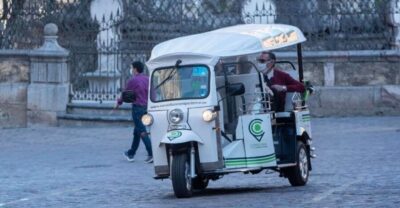
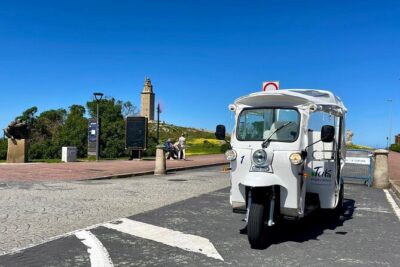
Kavala’s hills get easier with a tuk tuk. You get the eco friendly tuk tuk to glide between steep old-town lanes, plus a multilingual audio app that helps you understand what you’re seeing as the city shifts from Byzantine to Ottoman to neoclassical. I like that the format is fast but not chaotic, and I like that the story includes everyday life, especially tobacco. The only real drawback is time: many stops are brief, so you might want to return later if you’re the type who hates rushing.
The star moments are still worth it, especially the Kavala Fortress with its big Aegean Sea views and the stops tied to Kavala’s tobacco boom. Just note that entrance fees for the fortress, Mehmet Ali’s House museum, and the Municipal Tobacco Museum are not included, so you’ll want euros ready.
In This Review
- Quick Hits (What You’ll Feel Quickly)
- Why This Works So Well in 2 Hours
- Price and Value: What $79 Actually Buys You
- Starting at Xplora: The Convenience Factor
- The Old Town Setup: Panagia and First Photo Stops
- Imaret and Mehmet Ali’s Corner: Ottoman Power in Real Buildings
- Lighthouse of Kavala and Halil Bey Mosque: Views Plus Atmosphere
- Kavala Fortress: The Best Photo Time on the Route
- Kamares Aqueduct and the City’s Water Story
- Tobacco Museum and Municipal Tobacco Warehouse: The Human Side of Trade
- Apostle Paul’s Mosaic: A Moving Final Stop
- Getting the Most From Short Stops (Without Feeling Rushed)
- Guides and Comfort: What Makes the Ride Feel Smooth
- Who This Tour Fits Best
- Should You Book Kavala City Grand Tour by Eco Friendly Tuk Tuk?
- FAQ
- FAQ
- How long is the Kavala City Grand Tour by Eco Friendly Tuk Tuk?
- What is the price for the tour?
- Where does the tour start and end?
- Is there an audio guide, and what languages are available?
- Does the tour include entrance fees?
- What currency are entrance fees charged in?
- What should I bring for the tour?
- Is the tour suitable for wheelchair users or people with mobility impairments?
- Are food or alcoholic drinks allowed in the vehicle?
Quick Hits (What You’ll Feel Quickly)
- Eco-friendly tuk tuk keeps things moving on narrow, steep streets
- Multilingual audio guide app in six languages, with disposable headphones
- Kavala Fortress gets the longest stop for real photo time
- Tobacco stops connect the city’s economy to the human stories behind it
- Many groups run small, with a max size noted around 8 people
- The tour ends at Apostle Paul’s mosaic, a meaningful final stop
Why This Works So Well in 2 Hours
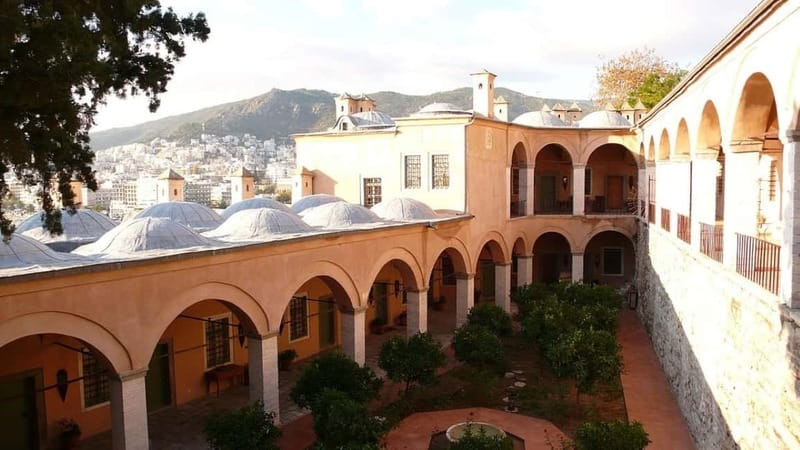
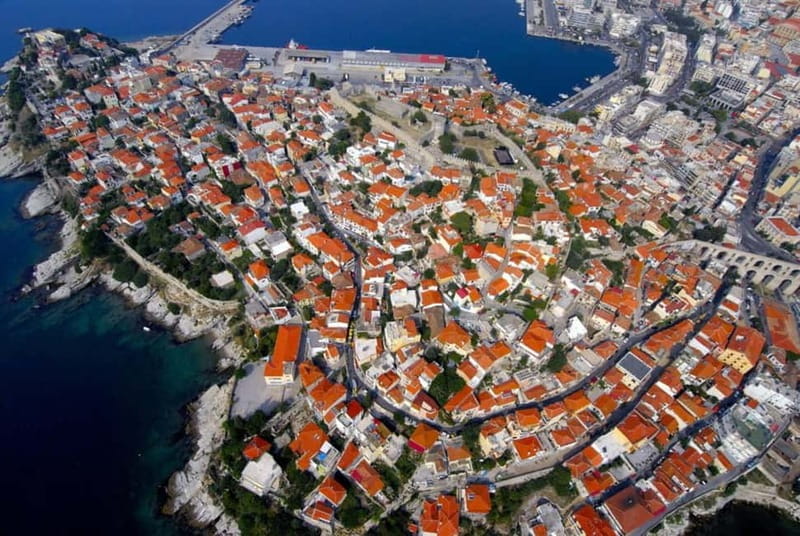
This tour is built for orientation. You’re not just ticking off landmarks; you’re watching Kavala’s layers stack up as you move from the old town toward the waterfront, climb up to the fortress, then circle back through the places tied to tobacco trade and early Christianity.
You get a compact route with photo stops, short self-guided moments, and a couple of longer visits. That mix matters in Kavala, because the city can feel hilly and tight-footed if you’re walking everything.
Also, the tuk tuk format is genuinely practical here. Old streets are narrow, and the vehicle helps you keep your energy for viewpoints instead of spending it on logistics.
Price and Value: What $79 Actually Buys You
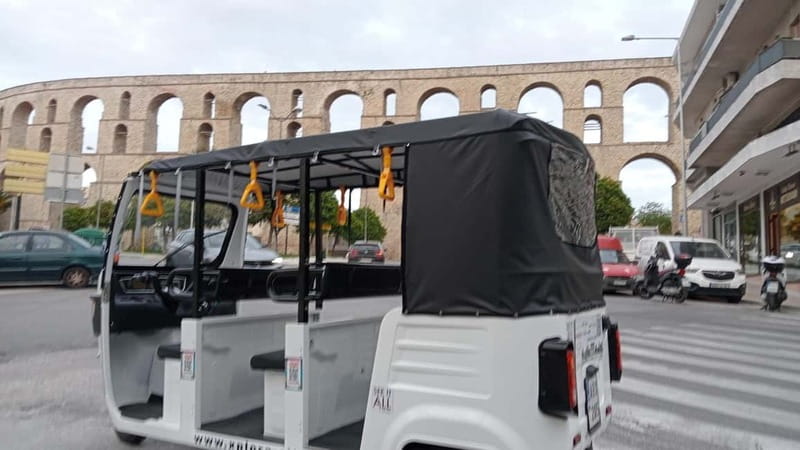
At $79 per person for a 2-hour city grand tour, the value comes from structure and translation, not from long museum time. You’re paying for transportation, a driver, and an audio guide app that explains each stop in multiple languages while you’re moving.
The biggest thing to budget for is entrance fees. The fortress, Mehmet Ali’s House museum, and the Municipal Tobacco Museum require separate payment, and the tour notes these fees are paid in euros only. So if you’re hoping for lots of time inside multiple sites, your real cost is $79 plus the entrances you choose.
Where this still makes sense even with added fees: you get your bearings fast. If Kavala is your only stop in the area, this is a smart way to understand the city before you spend more time on your favorites later.
Starting at Xplora: The Convenience Factor
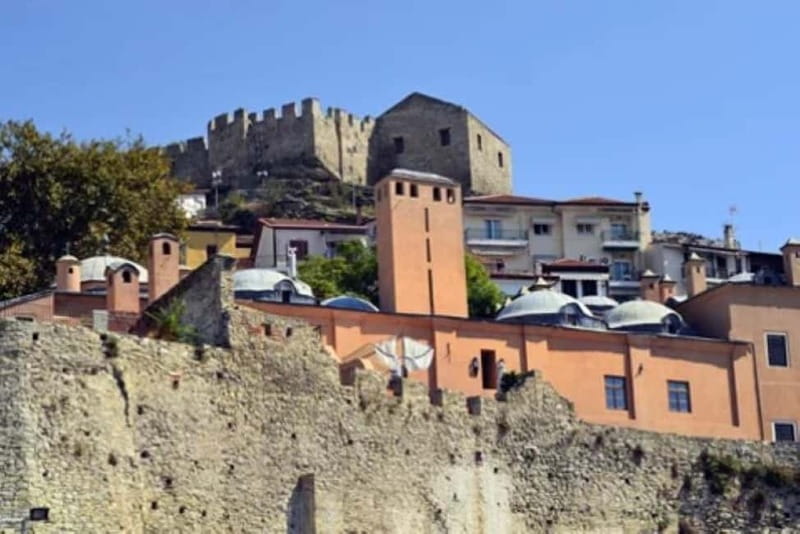
The tour starts at City Spot by Xplora, behind the old courthouses, across from the Kamares. The check-in point is easy to spot thanks to the large sign and the friendly staff greeting you.
From there, there’s a short transfer before you hit the first old-town stop. That matters because Kavala’s routes can be steep, and a quick reposition helps you start the tour with less effort and fewer wrong turns.
The Old Town Setup: Panagia and First Photo Stops
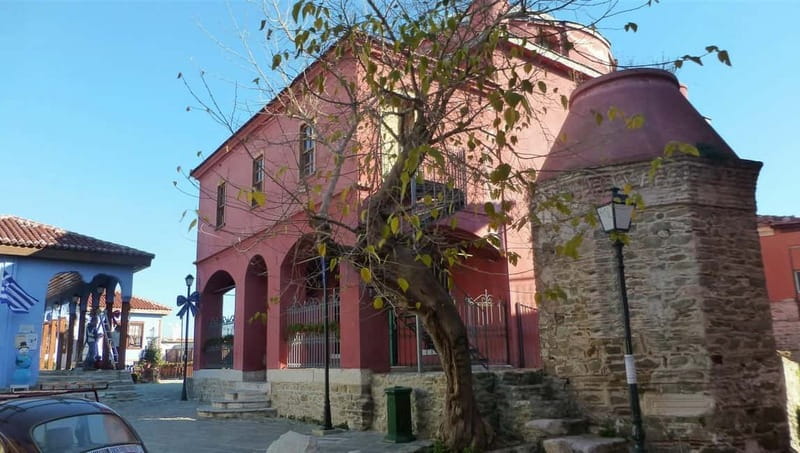
Your first meaningful moment is in the Old Town – Panagia area. Expect a short photo stop and a quick self-guided look, enough time to orient yourself to the old street feel and the views you’ll keep seeing throughout the tour.
This is the kind of start that helps you read the rest of the city. You’ll notice how tightly buildings and streets are packed, and why a small vehicle is a big advantage for getting between points efficiently.
If you’re sensitive to walking uphill in short bursts, keep an eye on your shoes and pace here. Several later stops involve walking even if the photo moments are brief.
Imaret and Mehmet Ali’s Corner: Ottoman Power in Real Buildings
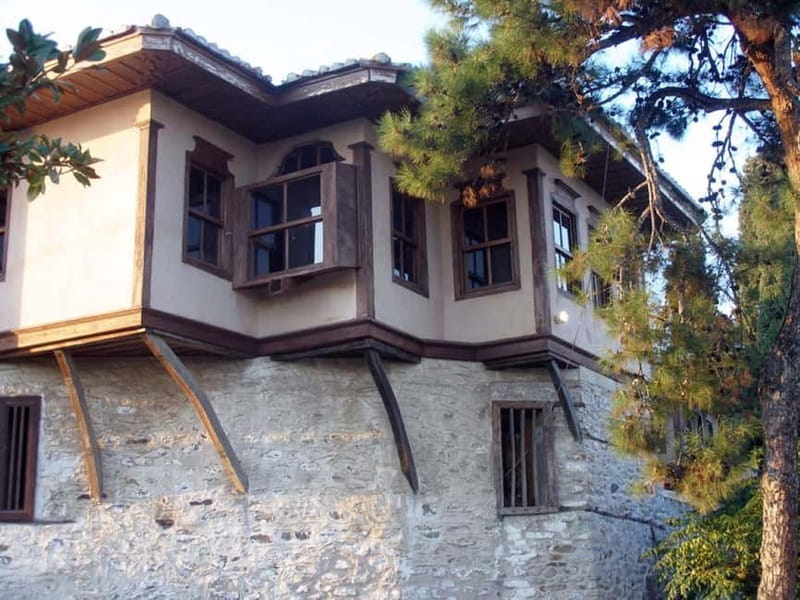
Next, you’ll pass the Imaret Kavalas, an Ottoman-era complex now used as a boutique hotel. You only have a short pass-by moment, but it’s the kind of building that signals status and purpose in its architecture and setting.
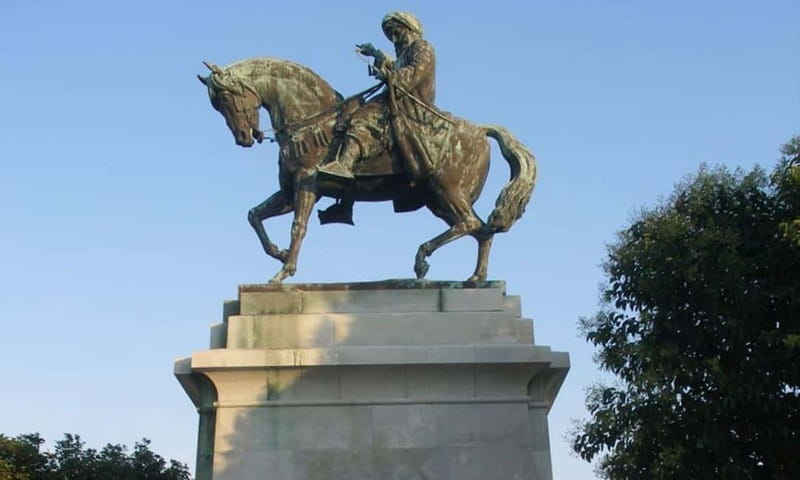
Then come the Square Mehmet Ali photo stop and the Mehmet Ali’s Residence Museum. This residence is tied to the birthplace of the Egyptian ruler Mehmet Ali, which adds a surprising extra layer: Kavala wasn’t just local—people and influence traveled beyond the region.
Even if your time inside is limited, this stop gives you a key context point for understanding Ottoman-era presence. The driver and audio guide help you connect the dots between prominent people, architecture, and how power was represented in the city.
Lighthouse of Kavala and Halil Bey Mosque: Views Plus Atmosphere
The Lighthouse of Kavala stop includes photo time, a visit, and a short walk. This is one of those locations where even a brief stop can pay off, because the coastline and city geometry tend to look great from the right angle.
After that, you’ll reach Halil Bey Mosque, again with a photo stop and sightseeing time. Mosques in this part of Greece are more than buildings to glance at—they help you understand what the city’s spiritual and social life likely looked like across eras.
If you enjoy architecture details, take your time with the audio guide here. Let the guide explain what you’re seeing before you move on, because the shorter duration can make you want to rush.
Kavala Fortress: The Best Photo Time on the Route
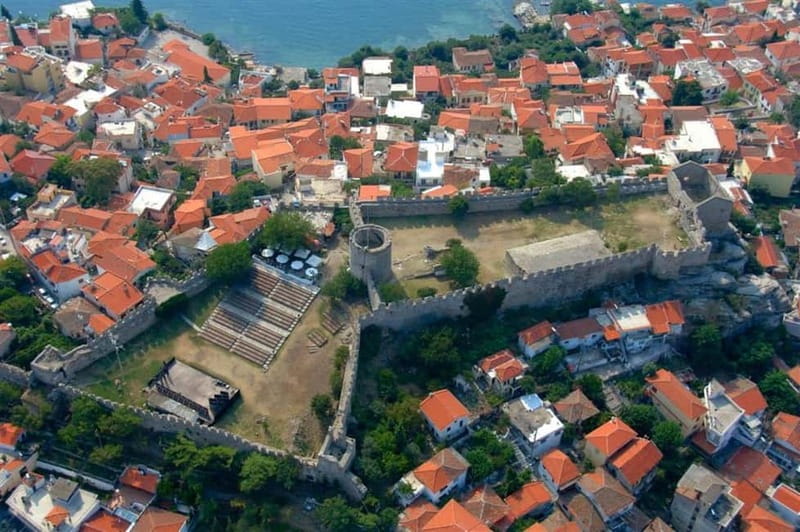
The tour’s longest practical stop is the Kavala Fortress, with about 30 minutes for photo taking, visiting, and walking. This is the big payoff for people who want city-and-sea views without spending half a day climbing on their own.
The fortress sits like an Acropolis-style viewpoint, and the description is spot on: it gives wide panoramas over Kavala and the Aegean Sea. You’ll also hear its story through the centuries, and you can look at the well-preserved walls, towers, and the layout from multiple angles.
One caution: fortress time is short enough that you should plan how you’ll use it. I recommend doing two things in order: first, find the best viewpoint spot for photos; second, do a quick loop to see the walls and towers before you catch up on any audio segments you missed.
Kamares Aqueduct and the City’s Water Story
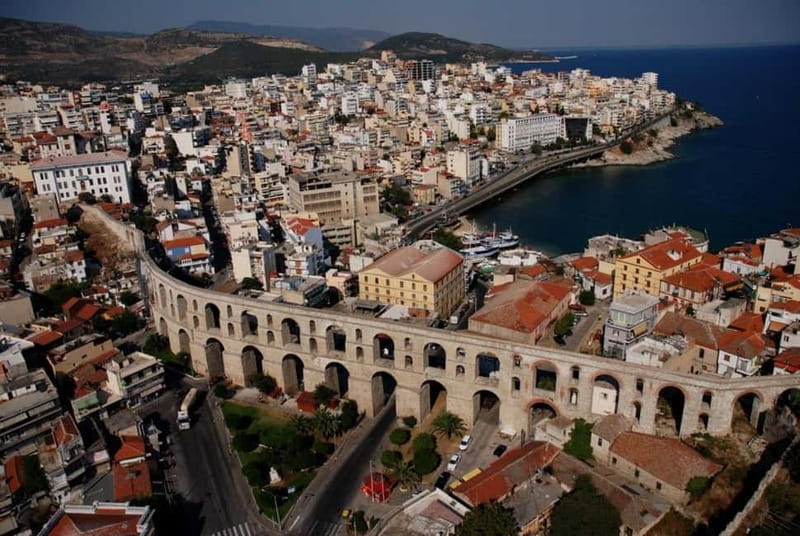
Next up is Kamares, the historical site of the iconic aqueduct. This stop includes a photo stop and short sightseeing time, and it’s one of the most memorable examples of how infrastructure shapes a city.
Even in a brief visit, you can see how water management mattered. In a place like Kavala—built across slopes and neighborhoods—aqueducts aren’t just engineering. They’re a reason people could live, trade, and build the city in the first place.
If you love “how it worked” travel, this is a strong stop. Keep your camera ready because the structure looks dramatic from the right angles.
Tobacco Museum and Municipal Tobacco Warehouse: The Human Side of Trade
If there’s one theme that runs through the whole experience, it’s tobacco. You’ll feel that shift most clearly at the Municipal Tobacco Museum of Kavala (about 10 minutes for visit and sightseeing) and at the Municipal Tobacco Warehouse near Kapnergatis Square (mostly a pass-by, but still part of the story).
These stops connect the economic boom with the struggles of tobacco workers. That’s important because it turns a product from a label into people—labor, conditions, and the realities behind prosperity.
There’s also a stop at Great Club Kavala for photo time and sightseeing. It helps you understand how trade wealth shaped institutions and social life.
Practical note: entrance fees apply to the tobacco museum. So if this theme matters to you, it’s worth budgeting early so you don’t have to decide at the last minute.
Apostle Paul’s Mosaic: A Moving Final Stop
The tour wraps at Μνημείο Αποστόλου Παύλου, the mosaic depicting the arrival of the apostle in what’s described as the first European soil, Neapolis, the earlier name for Kavala. Even if you’re not a religious-history specialist, this ending works because it gives meaning to the place you’ve been walking through.
It’s also a good way to close a tour that includes Ottoman architecture, fortress walls, and trade sites. You leave with a sense that Kavala mattered across eras—not just for one empire or one industry.
Getting the Most From Short Stops (Without Feeling Rushed)
Because many segments are built as photo stops plus quick self-guided time, you’ll get better results if you travel with a small strategy. Here’s the approach I’d use if I were planning it with friends:
- Pick one main target for photos (Kavala Fortress usually wins).
- Use the audio app actively during walk sections, not while standing still.
- Plan for euros if you want entrances inside the fortress, Mehmet Ali’s House museum, and the Municipal Tobacco Museum.
- Wear shoes built for slopes, since old town streets can be steep and uneven.
- Bring sun protection, because coastal viewpoints and open areas can feel exposed.
If you want to extend the day, the tour guidance mentions finishing with local sweets like kurabie or bougatsa. After you’ve mapped the city, that kind of stop feels even better because you’re eating with context.
Guides and Comfort: What Makes the Ride Feel Smooth
The experience is very guide-led in the way it matters: navigation. The narrow streets and steep corners are exactly where having a confident driver helps, and the route notes that clearly.
In the small-group style, you also get personal attention. One highlight from past groups is the quality of guides such as Kostas/Costas and Costantinos, described as helpful and engaging. That kind of energy matters when your time at each place is short—good guidance helps you know what not to miss.
Comfort-wise, a review also mentioned practical extras like wet towels and water if needed. Even if that varies by group, it’s a sign the team thinks about real-world comfort, not just sightseeing checklists.
Who This Tour Fits Best
This tour is a strong match if you want:
- A high-efficiency introduction to Kavala’s top sights
- A city route that explains what you’re seeing with multilingual audio
- A mix of architecture, viewpoints, and the tobacco story
- Something that works for families who don’t want a long day of walking
It’s less ideal if you:
- Want long museum time at multiple indoor sites
- Need wheelchair-friendly access (the tour is noted as not suitable for wheelchair users)
- Prefer slow, deep exploration without tight timing
Should You Book Kavala City Grand Tour by Eco Friendly Tuk Tuk?
Book it if you want to learn Kavala’s “why” in a short window. For many people, the best result is not a perfect deep dive into every building—it’s understanding the city enough to choose where to return on your own.
Skip or consider alternatives if you hate rushing. The route is packed with great stops, but several are brief, and entrances cost extra in euros. If your priority is long indoor time, plan a separate visit for the fortress and tobacco museum so you’re not trying to do everything in one 2-hour sprint.
FAQ
FAQ
How long is the Kavala City Grand Tour by Eco Friendly Tuk Tuk?
The tour lasts 2 hours.
What is the price for the tour?
It is listed at $79 per person.
Where does the tour start and end?
It starts at City Spot by Xplora behind the old courthouses, across from the Kamares, and it ends back at the same meeting point.
Is there an audio guide, and what languages are available?
Yes. The audio guide is included in a multilingual tour guide app, available in Bulgarian, English, Greek, Romanian, Russian, and Turkish.
Does the tour include entrance fees?
No. Entrance fees are not included for Kavala Fortress, Mohammed Ali’s House (museum), and the Municipal Tobacco Museum.
What currency are entrance fees charged in?
Entrance fees are paid in euros only, so bring enough cash if you plan to enter the sites.
What should I bring for the tour?
Bring comfortable shoes, a sun hat, and comfortable clothes.
Is the tour suitable for wheelchair users or people with mobility impairments?
No. It is not suitable for people with mobility impairments and not suitable for wheelchair users.
Are food or alcoholic drinks allowed in the vehicle?
No. Alcoholic drinks are not allowed in the vehicle, and food and drinks are also not allowed in the vehicle.