Lisbon in a tuk tuk changes your angle fast. This ride strings together the iconic neighborhoods and the big photo moments (including the 25th of April Bridge), guided by people like Elsa and Sonia who tend to explain history in a clear, upbeat way. I especially like how the tour builds momentum: quick hops, smart stops, and viewpoint photos without turning your whole day into an endurance test.
The one thing to consider is the street surfaces. Lisbon has plenty of cobblestones, and even if you stay in the tuk tuk, you may feel the jolts—so it helps to wear sturdy shoes and plan for a slightly bumpy ride.
In This Review
- Key Things I’d Prioritize
- Entering the Day at Hard Rock Cafe Lisboa
- Alfama, Graça, and Mouraria: Old Lisbon in Short Bursts
- Baixa, Chiado, and the Viewpoints That Explain the City
- Santa Engracia, Pombal Square, and Santa Justa Lift Photos
- Belém: Jerónimos Monastery, Tower, and the Age of Discoveries
- Crossing the 25th of April Bridge to South Lisbon
- Cristo Rei and Boca do Vento: Views with a Calmer Tempo
- The Pastéis de Belém Stop: Optional, But I’d Plan for It
- Price and Time: Is $117 Worth It for Up to 4?
- Who This Tuk Tuk Tour Fits Best (and Who Should Reconsider)
- Should You Book This Tour?
- FAQ
- How long is the tuk tuk tour?
- Where does the tour start?
- How many people is the tour for?
- What’s included in the price?
- Is Pastéis de Belém included?
- What languages are available for the live guide?
- Are photo stops part of the tour?
- Can the route change?
- Is smoking allowed in the tuk tuk?
- Is the tour wheelchair accessible?
Key Things I’d Prioritize
- A viewpoint-heavy route that helps you understand Lisbon fast, not just collect photos
- Neighborhood variety in one sweep, from Moorish roots in Alfama to the rebuilt elegance of Baixa
- City panoramas with minimal waiting, especially around Miradouro viewpoints
- Belém highlights built into the schedule, including Jerónimos Monastery area sights and Tower photos
- A bridge crossing that actually changes the feel of the city, plus Cristo Rei and Boca do Vento
- Guide energy matters, and names like Ernesto, Elsa, and Sonia show up for a reason
Entering the Day at Hard Rock Cafe Lisboa
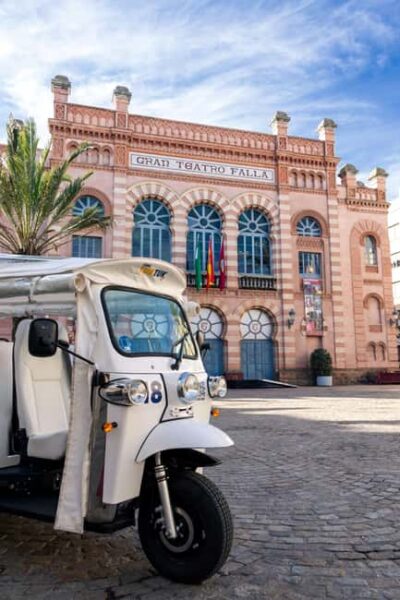
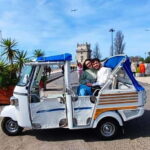
You start in front of Hard Rock Cafe Lisboa, where the tuk tuks are easy to spot: white vehicles with red accents (or classic red). This matters more than you might think, because tuk tuk tours live and die by timing. With a clear meeting point, you’re not wasting the first 20 minutes hunting down transport on side streets.
From there, the tour moves in a rhythm that works well in Lisbon: a mix of guided bits, short photo stops, and spots where you can take things in at your own pace. The biggest payoff here is orientation. Even if you’ve read about Lisbon, you’ll still be surprised how quickly the city shifts—from narrow hillside quarters to wide downtown avenues, and later to the riverfront world of Belém.
You’ll also get live guidance in multiple languages (English, French, Italian, Portuguese, Spanish). That’s helpful if you’re traveling as a group with mixed language needs, and it usually leads to better explanations at each stop, not just generic signboard reading.
You can also read our reviews of more tours and experiences in Lisbon.



Alfama, Graça, and Mouraria: Old Lisbon in Short Bursts
This tour’s early segment is where Lisbon feels most like a story. You’ll pass through places tied to Fado culture and Moorish roots, especially around Alfama. The charm is in the details: steep lanes, tight corners, and that sense that the city grew upward instead of outward. You don’t need to walk every step to get the point—you just need the right angle, and the tuk tuk gives you that.
From there, the route heads toward Graça, where you’ll reach the Nossa Senhora do Monte viewpoint area. This is one of those Lisbon moments where your brain clicks: the city looks layered, not flat. You’ll understand why viewpoints are such a big deal here. When you’re taking photos, you’ll want to keep your camera ready, because light changes fast along these slopes.
Then comes Mouraria, where the tour leans into the idea of Lisbon as a blend of cultures in one neighborhood. In practical terms, it means you’ll feel a different street vibe than you just had in Alfama. It’s also a good place to watch for everyday life—the kind of scenes you don’t usually see if you only stick to the central viewpoints.
A small heads-up: some stops include a guided component and others are more self-paced. If you like structure, you’ll feel it early. If you like freedom, you’ll enjoy the short photo windows, but you may want to stay alert so you don’t miss the best angles.
Baixa, Chiado, and the Viewpoints That Explain the City
After the older quarters, the tour reaches Baixa de Lisboa—the downtown area rebuilt after the 1755 earthquake. This section is useful because it shows Lisbon’s different personality. Instead of winding lanes, you get cleaner lines and a more formal street plan. For first-time visitors, Baixa is where you start to map Lisbon in your head.
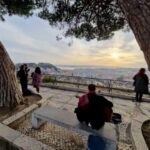
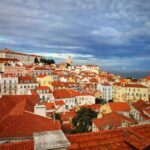
Next up is Chiado, and then viewpoint stops like Portas do Sol (and others in the same viewpoint zone). These terraces are built for a reason: Lisbon is made to be seen from above. When you stop, take a few minutes to scan slowly. Look for the way the river sits relative to the hills, and how the city’s main blocks spread out from the center.
You’ll also visit Miradouro da Senhora do Monte for photos and a bit of free time. This is a good place to pause, even if you don’t go far on foot. The reason: viewpoints aren’t just scenic. They’re how you learn Lisbon’s geography without studying a map for hours.
If you’re the type who likes a bit of architecture, you’ll appreciate the built contrasts here. Chiado and Baixa together show you the classic Lisbon idea of balance: practical urban design paired with sweeping sightlines.
Santa Engracia, Pombal Square, and Santa Justa Lift Photos
The middle of the tour shifts from neighborhood exploration into specific landmark zones. You’ll have a photo stop at the Lisbon Cathedral area, then later you’ll reach the National Pantheon of Santa Engracia. This is one of those stops that tends to reward people who like churches and history, even if you’re not a museum person. At the very least, it gives you a visual anchor in the middle of all the viewpoints.
The schedule also includes photo stops and visits around Marquess of Pombal Square. That part helps you understand how Lisbon connects the older districts to newer, broader avenues.
Then you’ll reach Santa Justa Lift for a photo moment. Even if you skip the lift itself, the structure works as a landmark in the city layout. It’s the kind of thing that makes you say, okay, that’s central and I can find my way from there. For navigation later, that’s a real benefit.
One more practical point: this portion of the tour tends to involve short stops with a mix of guided time and break time for photos. If you’re traveling with kids or teens, this pacing can be a win because nobody has to listen nonstop. In past groups, guides like Elsa and Sonia were specifically praised for patience and for keeping multi-age families engaged.
Belém: Jerónimos Monastery, Tower, and the Age of Discoveries
When the tour heads west to Belém, the tone changes. Lisbon stops being only about hills and street corners and starts talking about ships, explorers, and the river’s influence.
You’ll visit or photo-stop around some of the big names: Jerónimos Monastery area sights, the Belém Tower by the water, and the Monument to the Discoveries. You don’t have to be a Portuguese history nerd to enjoy this. The value here is scale and context. Seeing these monuments from the street (and from the angles the route offers) helps you understand why Belém became a symbol of Portugal to the world.
The biggest advantage of doing Belém on a tuk tuk tour is efficiency. The riverfront area can be spread out, and it’s easy to lose time walking between major sites. Here, you get photo chances at key points, plus just enough guidance to connect what you’re seeing.
If the weather is clear, this is also when you’ll want your sunscreen and a bottle of water. Belém can feel more exposed than the older neighborhoods. The tour gives you breaks, but it’s still a long day if you choose the full duration.





Crossing the 25th of April Bridge to South Lisbon
One of the most memorable moments is crossing the 25th of April Bridge. It’s one of Europe’s longest suspension bridges, and crossing it changes your sense of the city immediately. You’re no longer only looking at Lisbon’s hills—you’re seeing the city’s size and the river’s role in it.
This segment is less about monuments and more about experience. You feel the wind, you get that wide-open perspective, and suddenly Lisbon looks bigger. It’s also a great photo window because the bridge provides strong lines and scale.
Cristo Rei and Boca do Vento: Views with a Calmer Tempo
After the bridge, you head into South Lisbon. Two highlights here are Cristo Rei Sanctuary and Boca do Vento Viewpoint in Cacilhas.
Cristo Rei Sanctuary is a classic viewpoint stop. The practical benefit: you’ll get sweeping city views that help you connect the earlier neighborhoods to the big picture. It’s like checking your mental map against reality.
Then you’ll go to Boca do Vento, a viewpoint described as peaceful and a bit of a hidden-feeling angle with dramatic river views. This is a nice contrast to the heavier tourist flow around some of the famous spots. Even if you only spend a short time there, it gives you a different kind of Lisbon memory: quieter, windier, and more focused on the river than the crowds.
If you’re a photographer, this is often where the photos start looking less like postcards and more like Lisbon. The light and the water give you depth.
The Pastéis de Belém Stop: Optional, But I’d Plan for It
The tour includes everything you need to see the highlights, but it leaves the tasting choice up to you. Pastéis de Belém is optional, yet highly recommended.
Why? Because Lisbon’s food culture is part of understanding the city. The moment you add Pastéis de Belém, your tour becomes more than “I saw stuff.” It becomes “I ate something iconic after I learned why the place matters.” It’s also a practical break—sugar and downtime help you enjoy the bridge and south Lisbon segment instead of racing through it on fumes.
Just keep in mind that this isn’t included in the price, so budget a little extra if you want to sit down and really enjoy it.
Price and Time: Is $117 Worth It for Up to 4?
The price is $117 per group up to 4, and that’s a key part of the value equation. This isn’t priced per person. If you’re traveling with a couple or small family, the per-person cost can be surprisingly reasonable compared to tours that charge individually, especially once you factor in live guide time and transportation.
You can also choose the duration range from about 90 minutes up to a full day (6 hours). That flexibility matters. If you only want the big hits, a shorter option can be enough to get Alfama, central viewpoints, Belém highlights, and at least one bridge-and-south Lisbon payoff. If you want a slower pace with more photo time, go longer.
A smart way to decide:
- If it’s your first day and you want orientation, lean toward the longer end.
- If you’re already comfortable with central Lisbon and just want the signature viewpoints plus Belém, the shorter duration can work well.
- If you’re traveling with teens who need frequent breaks, the mid-range often hits the sweet spot.
Route adaptation is also a reality here. Traffic and weather can change the exact path. That’s normal in Lisbon. What you want is flexibility, not a rigid schedule that ignores real-world conditions.
Who This Tuk Tuk Tour Fits Best (and Who Should Reconsider)
This tour suits you if you:
- Want to cover a lot of Lisbon without long stretches of walking
- Like photo stops with guidance so you know what you’re looking at
- Prefer a small-group feel with a live guide
- Are visiting for the first time and want an efficient way to understand neighborhood differences
It may be less suitable if you:
- Have mobility challenges that make uneven streets hard (the info says wheelchair accessible, but it also states it’s not suitable for people with mobility impairments—so you should confirm directly with the provider before booking)
- Dislike bumpy rides. Even if the ride is short between stops, Lisbon’s streets can be rough.
Smoking isn’t allowed in the vehicle, and that’s good for comfort.
Should You Book This Tour?
If you want a fast, scenic way to connect Lisbon’s neighborhoods—Alfama to Baixa to Belém, plus the bridge and south Lisbon viewpoints—this tuk tuk tour is a strong choice. The guide quality seems to be a real theme, with Elsa, Sonia, and Ernesto showing up as memorable guides who keep explanations clear and groups engaged, including families.
I’d especially recommend it if you’re the kind of traveler who likes learning as you go. The stops aren’t just random scenic pull-offs; they help you understand why Lisbon is built the way it is—hills, viewpoints, rebuilt downtown blocks, and the river’s role from Age of Discoveries onward.
If you already have a tight plan and only want one district (say, only Belém), you might not need the full route. But if you want Lisbon to make sense quickly, this is one of the better ways to do it without burning your legs or your attention span.
FAQ
How long is the tuk tuk tour?
The experience duration can be chosen from about 90 minutes up to a full day (6 hours). You can also select shorter options like 1h30, 2h, 3h, or 4h.
Where does the tour start?
You meet in front of Hard Rock Cafe Lisboa.
How many people is the tour for?
It’s a private group, priced for a group up to 4 people.
What’s included in the price?
The tour includes the tuk tuk tour, a live tour guide, and photo stops at viewpoints.
Is Pastéis de Belém included?
No. Pastéis de Belém is an optional stop (not included), but it’s recommended.
What languages are available for the live guide?
The live guide is available in English, French, Italian, Portuguese, and Spanish.
Are photo stops part of the tour?
Yes. The schedule includes photo stops at viewpoints and landmark areas.
Can the route change?
Yes. The route may be adapted depending on traffic or weather conditions.
Is smoking allowed in the tuk tuk?
No, smoking is not allowed in the vehicle.
Is the tour wheelchair accessible?
The tour info says wheelchair accessible, but it also says it’s not suitable for people with mobility impairments. If this applies to you, it’s best to confirm details with the provider before booking.