REVIEW · LISBON
Classic Lisbon & Earthquake Tour by Private Tuk Tuk (4 Hours)
Book on Viator →Operated by Just Tour It · Bookable on Viator
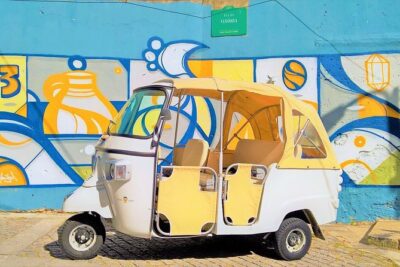
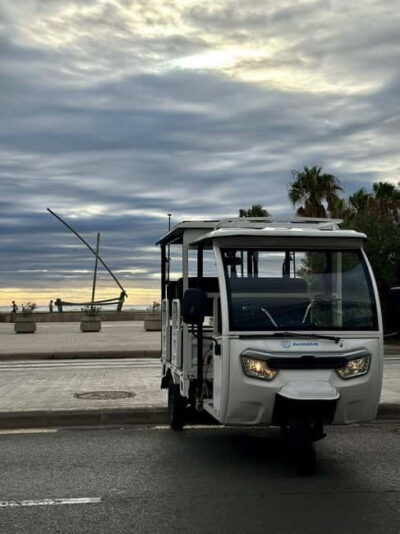
Tuk tuk beats sore feet in Lisbon. This private Classic Lisbon and Earthquake tour uses a comfortable tuk tuk to connect big sights fast, with a guide who keeps the history clear and the stops flexible for photos. I particularly like the hop-on, hop-off feel, since you can linger at a viewpoint or dart back quickly when it’s busy. One thing to consider: several major Belém sights have extra admission fees, so you’ll want to decide in advance what you want to go inside.
The second thing I really liked is the way the route links Lisbon’s look-and-feel today to the 1755 earthquake story. You’ll see the rebuilt central areas around Praça do Comércio and Rossio, and you’ll also touch the Pombaline era of post-quake planning. The mix of viewpoints plus architectural stops is ideal for a first visit, even if you’re traveling with kids or you just don’t want to spend the whole day walking.
In This Review
- Key highlights at a glance
- 4 Hours in a Private Tuk Tuk: The Lisbon pace that makes sense
- Where you start at Hard Rock Cafe and why it helps
- Pombaline, Chiado, and Luis de Camões Square: the “earthquake Lisbon” begins
- Miradouro Sao Pedro de Alcântara and Principe Real: viewpoints with built-in time
- Parliament, Estrela Basilica, and Parque Eduardo VII: architecture plus a garden break
- Marques de Pombal, Restauradores Square, and Rossio Station: moving from looks to context
- Convento do Carmo and the earthquake imprint: what to expect when you add tickets
- Praça do Comércio and Rossio area: neoclassical Lisbon after 1755
- LX Factory and Lisbon’s modern art side, without losing the plot
- The 25 de Abril Bridge and riverfront context: Lisbon beyond the old center
- Belém highlights on one tight route: where you’ll likely spend extra
- Jerónimos, Tower of Belém, and Padrão dos Descobrimentos: what each adds
- Price and value: is $174.22 per person fair?
- Who this tour fits best
- A small caution: the day is packed, so choose your inside time
- Should you book this Classic Lisbon & Earthquake Tuk Tuk tour?
- FAQ
- How long is the Classic Lisbon & Earthquake Tour by Private Tuk Tuk?
- What’s included in the tour price?
- Are entry fees included for major monuments in Belém?
- Is this tour private?
- What languages is the tour offered in?
- Is there a minimum age for children?
Key highlights at a glance
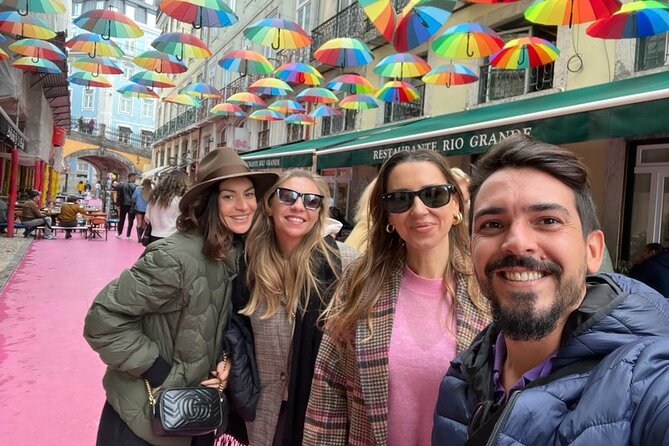
- Private, flexible touring with time to take photos without rushing the whole route
- Earthquake story on the ground, especially around downtown’s rebuilt plazas
- Belém plus big river moments like Torre de Belém, the 25 de Abril Bridge, and the waterfront area
- Multiple photo-friendly stops at miradouros and parks, not just “look and leave” stops
- Strong guide experience in English (often praised for clear explanations and problem-solving)
4 Hours in a Private Tuk Tuk: The Lisbon pace that makes sense
Lisbon can feel like two cities at once: hills and viewpoints on one side, and tightly packed historic streets on the other. This tour’s format is built for that. You get a private tuk tuk ride so you’re not fighting stairs or long uphill walks for every stop, but you also get enough time at key points to actually see what you’re passing.
For your day planning, the 4-hour length is a sweet spot. It’s long enough to get your bearings and hit the major neighborhoods people first want, but short enough that you can still enjoy an unstructured evening afterward. The private nature also matters: you’re not stuck in a rigid line of strangers at each stop.
The comfort angle is real. A tuk tuk may sound like a novelty, but in practice it’s about energy. You keep moving while the guide handles the “what am I looking at” part, so you’re not constantly stopping to read, translate, and cross-check.
You can also read our reviews of more tours and experiences in Lisbon.



Where you start at Hard Rock Cafe and why it helps

Your meeting point is straightforward: Hard Rock Cafe Lisboa, Av. da Liberdade 2. That central location makes a big difference. You’re not starting in a far-flung neighborhood and then spending the first hour getting to the real sights.
From there, the tour threads through central Lisbon toward the viewpoints and historic core. You’ll also benefit from the fact that your guide can tailor the pace for your group. If you need an extra minute for a photo, a quick bathroom stop, or you want to adjust timing because of crowds, private tours tend to work better than fixed group schedules.
Pombaline, Chiado, and Luis de Camões Square: the “earthquake Lisbon” begins
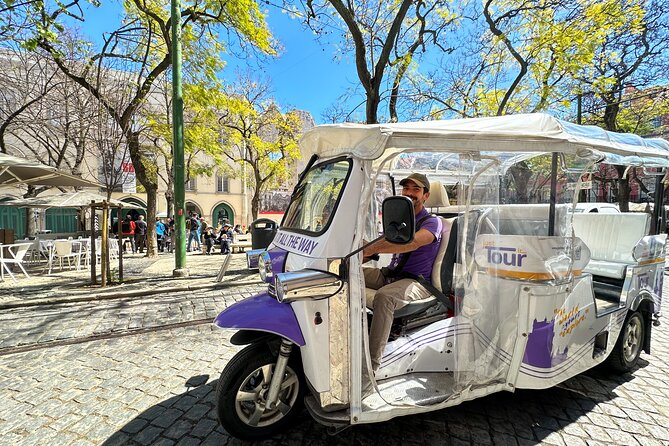
The tour kicks off with a pass through downtown Pombaline and Chiado. This is a good opening for two reasons. First, it sets up the earthquake context before you dive into specific monuments. Second, Pombaline Lisbon is visually recognizable once you start paying attention to how the city was rebuilt and arranged.
Next comes the Luis de Camões Square area. This stop is more than a breather. The Portuguese sidewalk design with geometric effects and drawings connected to the sea, the mermaid, and the caravel gives you a fun, art-on-the-street moment. It’s the kind of detail that’s easy to miss if you’re just rushing between major landmarks.
And then you’ll move to Church of Sao Roque, with time for the guide to point out the curiosities of the site. Churches in Lisbon can be fast to “check” and then move on—but a guided explanation is what turns it into understanding. Expect a short, focused visit rather than a long museum-style experience.
Miradouro Sao Pedro de Alcântara and Principe Real: viewpoints with built-in time

Lisbon is famous for views, but viewpoints can also become a hassle if you’re chasing them without a plan. Here, you get a structured rhythm.
At Miradouro Sao Pedro de Alcântara, you get about 15 minutes and an imposed sense of order: the guide helps you see Lisbon from a unique angle instead of just staring at rooftops. This is one of those stops where 10 extra minutes can change the whole experience, because you start noticing the city layers—river, hills, and the way neighborhoods spill outward.
Then Jardim do Principe Real gives you a quieter, more resident-feeling pocket. It’s still very much in the tourist orbit, but the park setting helps you breathe. The 15-minute pace here is about tasting the “real Lisbon climate,” not about trying to squeeze in another indoor attraction.
Parliament, Estrela Basilica, and Parque Eduardo VII: architecture plus a garden break
You’ll pass by and stop for quick looks at major civic and religious landmarks, including Assembleia da Republica (the Portuguese legislative body). Even if you don’t go inside, the exterior and the setting help you understand the city’s scale and its official gravity.
Then it’s Basilica da Estrela, with time for details and history. This is a good stop for anyone who likes ornate façades and wants more than a quick postcard glance. The guide’s job is to connect those details to broader Lisbon themes—power, faith, and the city’s long timeline.
Next comes Parque Eduardo VII, described as breathtaking. In practice, that means it’s not just scenic; it’s also a reset. If your feet are tired (and Lisbon usually makes them tired), a park stop helps you recharge while still “doing Lisbon.”






Marques de Pombal, Restauradores Square, and Rossio Station: moving from looks to context
The tour includes a moment for the statue of Marques de Pombal, a key figure for understanding post-earthquake Lisbon. Even a short stop here can make the next parts of the day click, because Pombal isn’t just a name on a street sign. He’s tied to the rebuilding era and the city’s modern-looking urban logic.
Then you’ll continue to Restauradores Square, a natural hub in the center where you can re-orient visually. From there you’ll hit Estação do Rossio. Don’t treat Rossio Station like just a train stop. The architecture is a major attraction here, and it’s also a clue that Lisbon’s central core is more than streets and shops. It’s designed space.
At this stage, I like thinking of the tour like a story arc: first the earthquake-era foundations, then the civic and architectural spine, then the riverfront and grand monuments.
Convento do Carmo and the earthquake imprint: what to expect when you add tickets
One of the most meaningful stops is Convento do Carmo (Carmo Church/Convent area). The construction dates back to 1389, and it sits on a hill opposite Castelo de S. Jorge. That location matters because it ties the convent to the city’s topography—Lisbon’s hills are not background; they’re part of how the city is read.
This stop has an admission fee listed as extra: Basilica and Convent of Nossa Senhora do Carmo €5.00 per person. Whether it’s worth paying depends on what you want. If you like structural ruins, history layers, and seeing how major events shape places, it’s a strong choice. If you’re trying to keep costs down and prefer only exterior time, you can still get value from the surrounding area, though you’ll miss the deeper inside access.
Praça do Comércio and Rossio area: neoclassical Lisbon after 1755
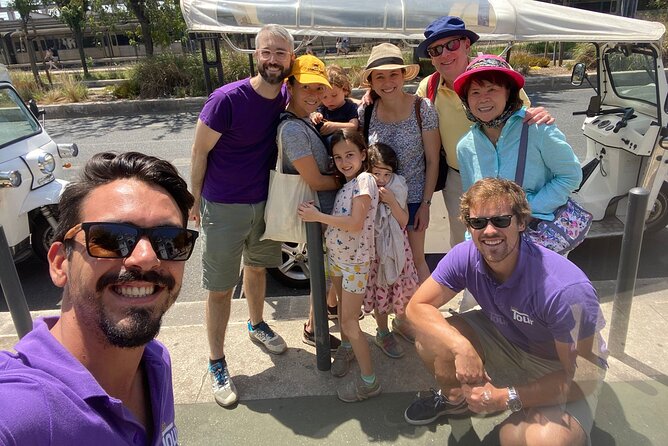
Then you move into the downtown heart around Praça do Comércio, with time to enjoy the river-facing square atmosphere. This is also where the earthquake theme becomes very practical. The neoclassical feel and the way space was rebuilt after 1755 is tied to what you see around Praça do Comércio and Rossio.
You’ll be near the Tagus River, and that helps the whole story feel real. When you’re standing in a large open space, it’s easier to imagine why rebuilding plans were so important.
There’s also an Elevador de Santa Justa stop. The fun here is that it’s short. Even if you don’t ride it (admission not included), you get the chance to see one of Lisbon’s iconic vertical landmarks in the middle of the historic grid.
LX Factory and Lisbon’s modern art side, without losing the plot
After the classic central core, you head toward LX Factory in Alcântara. This is a different Lisbon mood: commercial and artistic, a place where creativity and commerce share space.
The point of including LX Factory on an earthquake-and-history tour is balance. It stops you from ending the day with only solemn monuments. Even with a brief stop (about 10 minutes here), it can be a good place to pick up a small snack, wander a little, and reset your brain before Belém.
The 25 de Abril Bridge and riverfront context: Lisbon beyond the old center
The tour then adds big-picture river moments. You’ll see the 25 de Abril Bridge, a road-rail suspension bridge connecting Lisbon to Almada. Even if you’ve seen bridges in photos, this is where the scale clicks. It’s Lisbon showing its modern connections across the water.
There’s also a stop near Cordoaria Nacional, described as a Portuguese Navy manufacturing establishment. The real value here is the contrast: ship-building industry alongside historic districts and monumental Belém structures. Lisbon keeps layering its identities.
Belém highlights on one tight route: where you’ll likely spend extra
Belém is where Lisbon’s postcard sights pile up. This tour covers a lot quickly, and the trade-off is that you choose what you want to go inside.
Here’s what’s included as stops, with the extra-ticket notes you’ll want to plan around:
- Museu Nacional dos Coches (National Coach Museum): admission not included, listed at €8.00
- Jerónimos Monastery (Mosteiro dos Jerónimos): admission not included, listed at €10.00
- Torre de Belém: admission not included, listed at €6.00
- Padrão dos Descobrimentos: admission not included, listed at €5.00
Even if you skip one interior, the exterior stops still help you connect the area. Palácio de Belém (the president’s official residence) is also on the route, with a quick look that gives you a sense of the neighborhood’s formality.
Also on the Belém beat are cultural spaces like Centro Cultural de Belém (CCB) and the Museu do Combatente area (the Great War and overseas history theme is specifically mentioned). If you’re into 20th-century history, that’s a worthwhile stop to consider when your guide times the day.
Jerónimos, Tower of Belém, and Padrão dos Descobrimentos: what each adds
If you decide to pay for only one or two inside entries, pick based on what you care about most.
Jerónimos Monastery is the classic reason people come. The itinerary timing gives it time to matter (about 20 minutes listed), and the guide’s job is to frame why it was built at the end of the 15th century by King D. Manuel I. You’ll get a sense of how Portugal’s maritime era and religious power overlap in the architecture.
Torre de Belém works well if you like fortifications and river strategy. It’s described as a fortification, and seeing it with the river in the frame helps you understand its purpose. The fee is listed as extra (€6.00), so if it’s a top priority, pay for it.
Padrão dos Descobrimentos is another fee option (€5.00). It’s less about a long interior and more about understanding Portugal’s Age of Discoveries storytelling through place-based monument design.
Price and value: is $174.22 per person fair?
At $174.22 per person for roughly 4 hours, you’re paying for three things: private transportation, a private guide, and a tight loop of Lisbon and Belém highlights that would be harder to string together smoothly on your own.
The value gets better if:
- You want a first-pass tour that still feels personal.
- You dislike long walking circuits in steep terrain.
- You’re interested in the earthquake angle and want it explained in context, not just read on signs.
Your main cost variable is extras. Several big-name sites aren’t included in the ticket price, with costs listed for things like Jerónimos, Torre de Belém, and the Coach Museum. If you go inside most of them, your total spend rises. If you treat interior tickets as optional and focus on exterior viewpoints plus key indoor choices, the tour can feel like a smart deal.
Who this tour fits best
This is especially good for:
- First-time Lisbon visitors who want the “greatest hits” with context
- Families who need breaks from walking
- Anyone who wants photo-friendly stops without feeling like they’re sprinting
It’s also a nice option for travelers who want both sides of Lisbon in one go: the hillside viewpoints and the Belém monument zone.
A small caution: the day is packed, so choose your inside time
Because the route covers both central Lisbon and Belém in one session, you’ll be making choices. The stops are planned to keep momentum, not to give you hours in each museum. If you love lingering in places, you might feel slightly rushed at your top pick unless you plan your interior entry carefully.
Think of it as a guided highlight run with context, not a slow wandering museum day.
Should you book this Classic Lisbon & Earthquake Tuk Tuk tour?
I’d book it if you want a private way to get oriented quickly and you care about the earthquake-era story behind Lisbon’s shape. The comfortable tuk tuk pacing, the flexible stop style for photos, and the mix of viewpoints plus Belém monuments make it a strong fit for a first visit.
Skip or adjust if you’re the type who wants long, unhurried museum time at multiple paid sites. In that case, you’d still enjoy the viewpoints and exteriors, but you might not want to pay for several interiors in one 4-hour window.
If you do book, do this: decide ahead of time which 1–3 paid Belém entries matter most to you. That way your guide can time the day around your priorities, and you won’t leave thinking you paid for too much or missed the one thing you wanted.
FAQ
How long is the Classic Lisbon & Earthquake Tour by Private Tuk Tuk?
It runs about 4 hours.
What’s included in the tour price?
The tour includes private transportation and a private tour guide.
Are entry fees included for major monuments in Belém?
No. Several sites have tickets listed as not included, including Jerónimos Monastery (€10), Torre de Belém (€6), Museu Nacional dos Coches (€8), Padrão dos Descobrimentos (€5), and Basilica and Convent of Nossa Senhora do Carmo (€5).
Is this tour private?
Yes. It’s a private tour/activity, so only your group participates.
What languages is the tour offered in?
It’s offered in English.
Is there a minimum age for children?
Yes. The minimum age is 7 years old, and children must be accompanied by an adult.