REVIEW · VIENNA
Vienna: Tour with locals in RAXI electric rickshaw
Book on GetYourGuide →Operated by Guide from Vienna - RAXI Tours · Bookable on GetYourGuide
If Vienna feels too big on foot, this fixes it. A RAXI electric rickshaw tour lets you see key sights with almost zero leg burn.
I especially like how you ride in places cars often can’t reach, like Danube Canal bike lanes, so you get closer to the city without the stop-and-go. The second big win for me is the way the route can be adjusted to your style—architecture, history, or both—so you’re not just checking boxes. One thing to consider: it’s built for a maximum of two people with a total weight cap, and you can’t bring luggage or large bags.
In practice, the tour feels like a calm, guided city-walk… only faster and warmer. The heated blanket for chilly weather and the waterproof picnic blanket for wind or light rain are genuinely useful. Still, Vienna weather has limits for electric riding, so if conditions don’t cooperate, you’ll switch to a public-transport version that includes some walking.
In This Review
- Key things to know before you go
- Why a RAXI electric rickshaw works so well in Vienna
- 90 minutes to 3 hours: how the timing feels on the ground
- Historic Center by bike-lane logic: finding Vienna fast
- Hofburg Palace: a quick but meaningful taste
- Hundertwasser House: ecology you can see up close
- Donau Park and the Old Danube: Danube Canal bike-lane magic
- Imperial and modern together: Prater green and the Ringstraße ride
- Personalizing the route and making use of drop-off points
- Comfort gear that actually helps: heated blanket and blankets for the wind
- Weather rules and the plan B when the ride can’t happen
- The price question: $175 per group for up to two, and what that buys you
- Who should book this RAXI tour (and who might skip it)
- Should you book the Vienna RAXI electric rickshaw tour?
- FAQ
- How long is the Vienna RAXI electric rickshaw tour?
- What is the price for the tour?
- Is this a private tour?
- What languages are available for the live guide?
- Do you get hotel pickup and where can pickup happen?
- What’s included in the tour?
- What are the rules on luggage and bags?
- Are non-folding wheelchairs allowed?
- What happens if weather makes the RAXI tour impossible?
- How many people can ride in the RAXI and is there a weight limit?
Key things to know before you go
- Bike-lane routing: You get to ride like the locals do, especially around the Danube Canal area.
- Imperial-meets-modern views: You’ll drive through spots where the Ringstraße and Prater layout help you read the city fast.
- Hundertwasser House focus: Expect dedicated time to understand the building’s eco idea and its bold design.
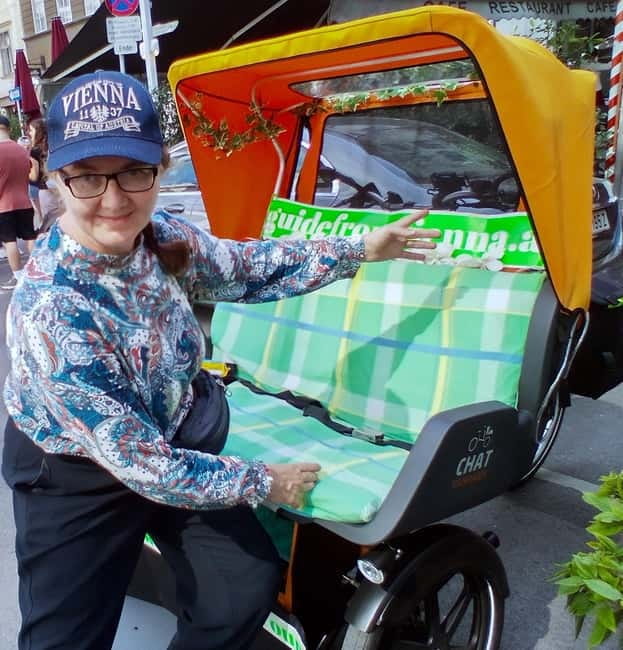
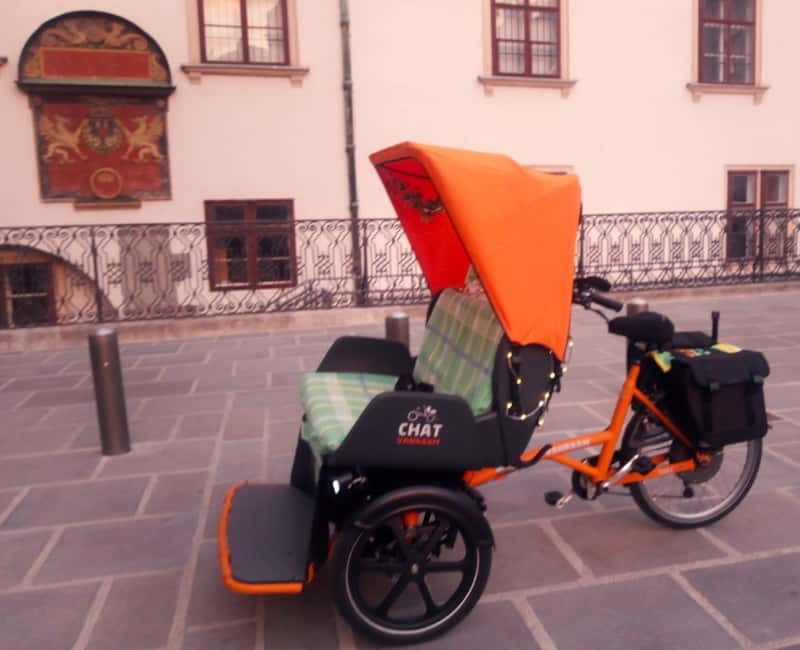
- Comfort design details: Shock absorbers, an orange canopy, and an engine positioned under the seats help keep the ride smooth.
- Cold-weather cover: A battery-heated blanket can run for about 3 hours, plus a windproof, waterproof blanket.
Why a RAXI electric rickshaw works so well in Vienna
Vienna has a lot of “important” streets—and an even bigger set of “important but awkward” streets. Some areas are pedestrian-only, some are bike-lane dominated, and some are simply tiring to cross because everything feels spread out. A two-person electric rickshaw is an easy answer to that. You move with the flow, but you don’t have the stress of traffic or parking. And because it’s not a car, you often end up in spaces that feel more human-scale.
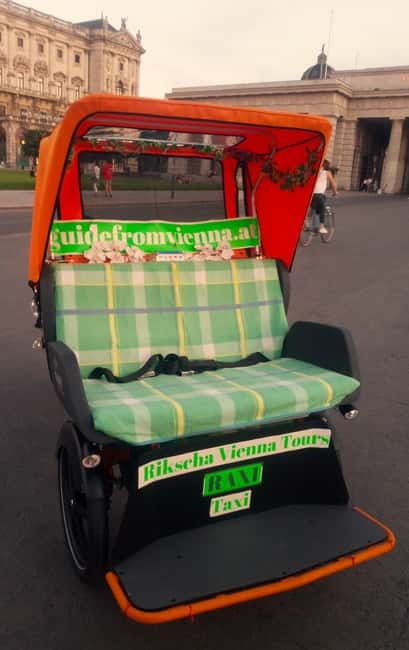
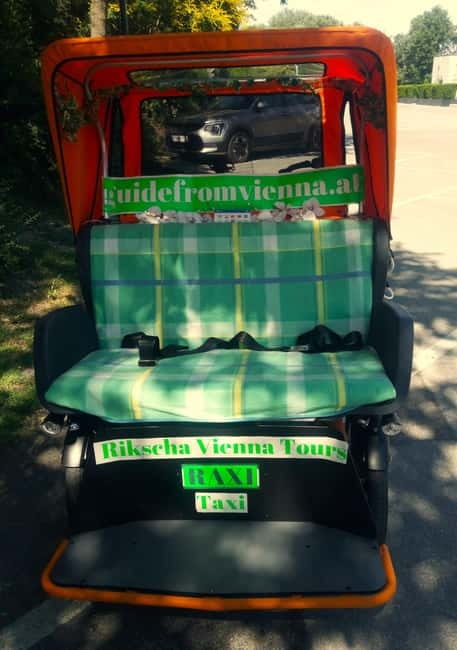
The RAXI platform is also built for comfort. It has shock absorbers, a canopy for shade and weather, and a retractable footplate for easier entry and exit. The engine sits under the seats, so you’re not blasted with engine heat. That matters more than it sounds when you’re cruising along canals or pausing for photos.
This is the kind of tour where you can enjoy the city instead of surviving it. If you’re traveling with someone who can’t handle long walks, or you simply want to spend your energy on seeing things (not negotiating streets), this format is a smart fit.
90 minutes to 3 hours: how the timing feels on the ground
You’re looking at 90 minutes to 3 hours, depending on the route and pacing you choose. That range is key, because Vienna can be either “a quick hit” or “a real orientation session,” and you decide which you want.
In the shorter version, you’ll concentrate on the core sights and the most readable viewpoints. In the longer version, you gain breathing room—more time to stop for perspectives, ask questions, and actually process what you’re looking at instead of rushing past it.
One practical advantage: the tour is guided with headsets, so you don’t have to lean in and strain over street noise. The guide also works with you to tailor the route around what you care about—architecture versus history—so the time you spend feels personally relevant.
Historic Center by bike-lane logic: finding Vienna fast
The tour starts in Vienna’s Historic Center, with a short safety briefing and then about an hour of guided walking-and-riding style sightseeing—only without the tired legs. This is your orientation layer. You’ll get oriented quickly to how the city is laid out, where the major concentrations of power and culture sit, and which streets feel most like the real daily city.
A standout theme here is access. Instead of just aiming for big monuments from a distance, you’ll likely move through areas where cars aren’t the main story. That’s where you catch the “how people actually move” feeling. It also helps you see the kind of detail most first-timers miss—street-level textures, older building forms, and corners that would be annoying to reach by bus.
The guide also points out lesser-known stops, including the oldest Gothic residential tower in Vienna (and you’ll also spend time around Danube Park later). That kind of detail is exactly why this tour works better than repeating a standard bus circuit.
A small consideration: if your idea of sightseeing is museum interior time only, the core focus here is outside views, short guided stops, and walking sections when needed.
Hofburg Palace: a quick but meaningful taste
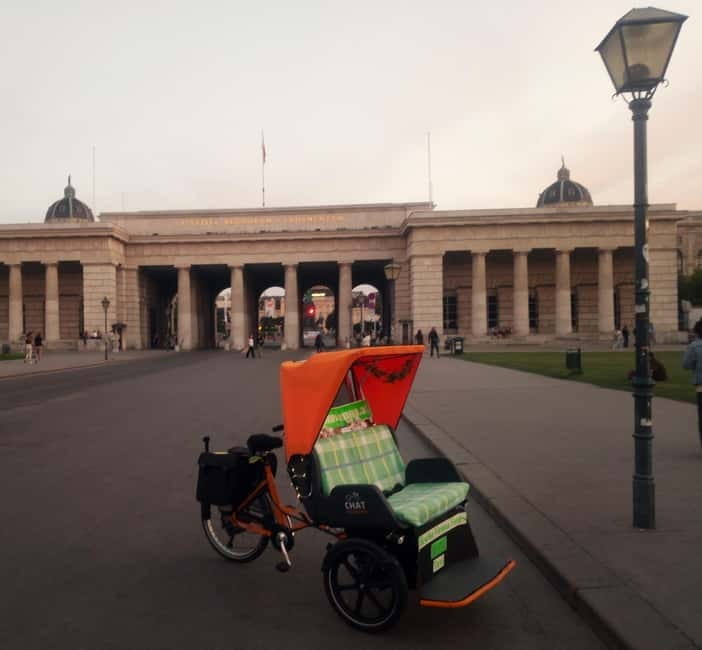
You’ll spend about 15 minutes at Hofburg Palace, which sounds short until you realize what that format is good for. Hofburg is huge, and trying to “do it all” on a single tour often leads to fatigue and blurry impressions.
In this short slot, the goal is to help you understand what Hofburg represents in Vienna’s story and how it connects visually to the rest of the imperial core. You’ll get the key sight lines—what the façade communicates, how the complex sits in the historic center, and why it’s still such a dominant reference point.
Think of Hofburg here like a strong chapter opener. You won’t leave with a complete timeline of every wing, but you’ll leave with enough context to explore further on your own later—when you know what you’re looking at and what matters.
Hundertwasser House: ecology you can see up close

Then comes one of the most memorable stops: the Hundertwasser House, with about 45 minutes dedicated to it. This isn’t just a look-and-go photo stop. You’ll have enough time to notice what makes it different and why it’s considered the first ecological building in Europe.
The building’s look is instantly recognizable, but the tour time is for the interpretation—how the design ties into the idea of ecological thinking, and why the place feels less like a uniform structure and more like a statement about living environments. You’ll get a clearer sense of what the building is trying to say by seeing it slowly, from more than one perspective, and with guidance explaining the details.
This stop is a great example of where a rickshaw shines: you can move to the right angles without burning time crossing roads or waiting for the next bus. It also keeps the pace gentle enough that you can actually absorb the weird and wonderful features rather than snapping a single photo and moving on.
Donau Park and the Old Danube: Danube Canal bike-lane magic
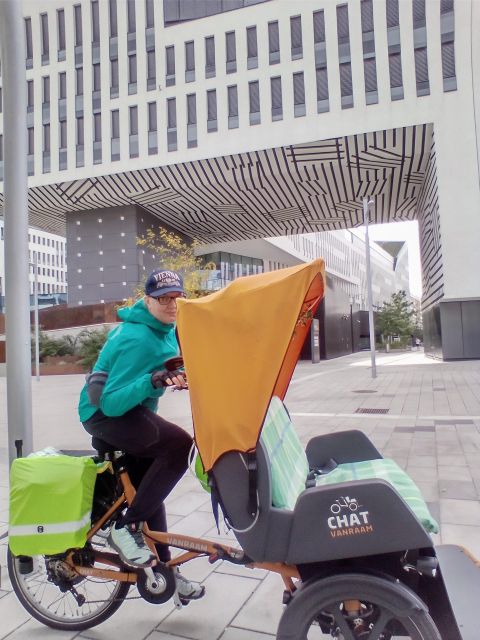
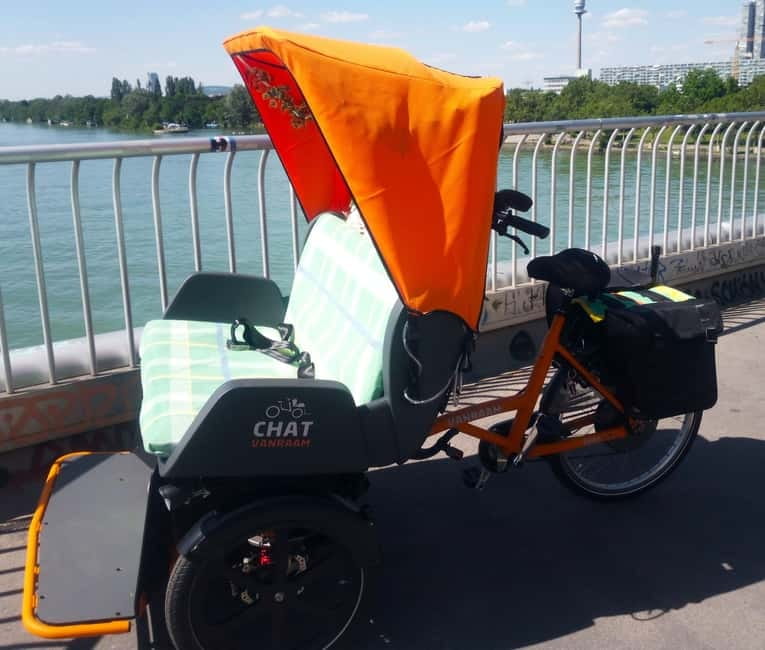
The center shifts toward the water with Donau Park (about 45 minutes) and the Old Danube (about 30 minutes). This is where the tour leans into one of its biggest claims: riding the routes that feel like they belong to everyday Vienna.
You’ll experience the kind of flow you’d get from cyclists and walkers—especially around the Danube Canal area—where the city becomes more relaxed and the views open up. Instead of feeling like you’re “escaping” Vienna, it feels like you’re seeing another face of it: greener, calmer, and more about daily life than monument photography.
What I like about this section is the balance. You still get guided context, but you also get recovery time. The ride format reduces the physical strain, so you can enjoy the sights rather than counting steps. And because the guide can tailor the route, you’re not stuck with only the most obvious canal views—you can focus on the parts that connect best to your interests.
If you enjoy architecture and city planning, these water-adjacent areas help you see how Vienna’s built form interacts with natural space. If you just want a scenic break, this section delivers that too.
Imperial and modern together: Prater green and the Ringstraße ride
Vienna’s magic is that old and new sit side by side, and this tour is built to show you that contrast in motion. You’ll drive through the green Prater and along the Ringstraße, with a focus on panoramic perspectives of imperial and modern architecture.
This is one of those sections where being on a rickshaw changes the experience. Cars can race the streets and buses can force you to look through windows. Here, you can slow down, stop when something catches your eye, and keep the tour from turning into a blur. It’s also easier to absorb the “reading the city” feeling—how the grand imperial planning creates a frame, and how modern buildings add new layers.
If you care about photography, this is often where the best shots come from: wide views, street-level geometry, and the ability to reposition quickly without feeling like you’re sprinting across a bridge.
One practical note: the ride depends on weather. The tour can run within a cold-to-warm range, and there are wind limits. When it works, it feels smooth and scenic. When it doesn’t, Vienna’s plan B is still workable (more on that below).
Personalizing the route and making use of drop-off points
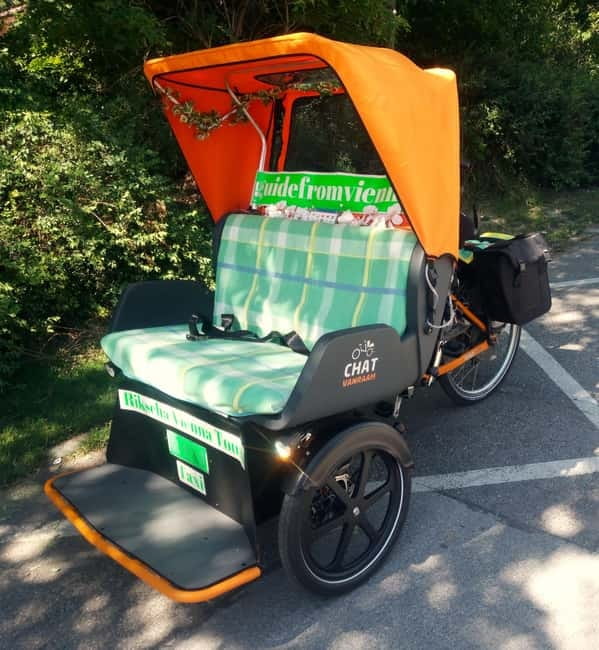
A big part of the value is that you’re not locked into a single fixed circuit. The guide can personalize the route based on what you want—architecture, history, or a mix. That matters because Vienna is so layered that two first-time visitors can have totally different goals.
You also get pickup and drop-off options that help you avoid wasting time. Pickup can be arranged from many hotels in the city, including first, second, third, and fourth districts (depending on where you’re staying and local routing). Or you can meet at a scheduled point.
Drop-offs include Praterstern, the area of the Wiener Musikverein / Musikverein Wien, Reichsbrücke, and Mozart cafe. That’s not random. It puts you near major transit connections and famous city hubs, so ending the tour doesn’t feel like you got dropped in the middle of nowhere.
If you want a smooth first day or a “city orientation plus highlights” session, this pickup/drop-off flexibility is a quiet but real advantage.
Comfort gear that actually helps: heated blanket and blankets for the wind
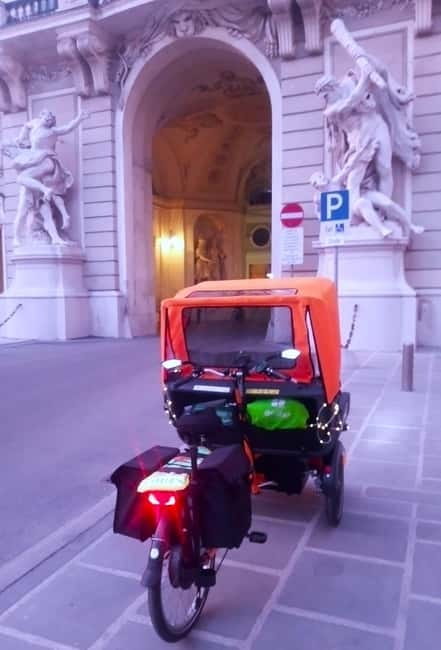
Vienna can be cold, then sunny, then windy, sometimes within hours. This tour anticipates that with serious comfort gear.
You get a warm battery-powered heated blanket for two people, built to last about 3 hours. That’s ideal for shoulder season days when the air cuts through but you still want to be outside. You also get a large waterproof picnic blanket that’s designed for wind and light rain or snow conditions.
Then there are the ride mechanics. The orange canopy gives you overhead cover, and the shock absorbers help on rougher patches or transitions where you’d normally feel every jolt. The engine heat is managed by placement under the seats, which is a nicer detail than it first sounds.
There’s also space for walking sticks or hiking sticks, which can ride on a special frame. So if you use support gear, you’re less likely to end up juggling equipment while trying to enjoy the route.
Weather rules and the plan B when the ride can’t happen
Electric rickshaws have real-world limits, and this one is transparent about them. The tour can run in temperatures from about +2°C up to 30°C with wind limits listed up to roughly 40–50 km/h, depending on the condition notes. Light rain or snow is handled with available rain protection.
But if weather makes the RAXI tour impossible, you still get help. The tour can be switched to an almost-equivalent route using public transport, with the caveat that you’ll have to walk. Pickup from your meeting point or hotel remains free in that scenario. The guide sends a message 48 hours in advance if a switch is needed, and if you don’t want the public-transport version, you can cancel free of charge.
This setup is practical. It prevents the classic travel problem of spending the day disappointed with no option. It also helps you decide based on your own walking tolerance: if you dislike walking, it’s worth understanding that the plan B includes walking.
The price question: $175 per group for up to two, and what that buys you
At $175 per group for up to two people, you’re paying for a private, guided, comfort-first way to see a lot of Vienna in a limited time window. For many travelers, the key value is the combination of privacy plus access.
A two-person rickshaw can be a better deal than you’d expect when you factor in how much public transit time you’d spend moving between far-apart areas, plus the hassle of transfers, walking distances, and trying to catch the right viewpoints on your own.
You’re also getting included extras that reduce your planning effort: headsets, an orientation map of Vienna, and a tailored route based on your interests. In plain terms, you pay so you can spend your energy on seeing, not figuring.
One consideration: it’s priced per group, so it’s usually most cost-effective when you’re traveling as a couple or a duo. If you’re traveling as a family of three or four, you’d need additional people/arrangements, and the two-person rickshaw limit is firm.
Who should book this RAXI tour (and who might skip it)
This tour is a great match if you want:
- A guided introduction to Vienna that includes architecture and city layout, not just a list of monuments
- A comfortable way to cover more ground than walking, especially around canals and green spaces
- A private experience with adjustable focus—architecture-heavy, history-heavy, or mixed
- A winter-possible option thanks to the heated blanket and weather-ready picnic blanket
It’s less ideal if:
- You plan to travel with luggage or large bags (not allowed)
- You expect long stops at interiors as the main event (this tour is about guided time on key stops and viewpoints)
- You rely on a non-folding wheelchair (not allowed)
- You’re counting on recording the guide’s explanations (recording explanations is strictly prohibited)
Should you book the Vienna RAXI electric rickshaw tour?
If you like Vienna best when you’re moving calmly, seeing variety in a short window, and avoiding the fatigue of long walking days, I think you should book it. The combo of bike-lane style routing, comfort gear, and a guide who can shift the plan toward your interests makes it feel like a smart private outing rather than a generic highlight loop.
I’d especially recommend it for couples, friends, and anyone with limited walking stamina who still wants a real sense of Vienna’s geography—from Hofburg’s imperial core to Hundertwasser’s eco statement to the water-and-park sections along the Danube.
If you’re traveling with heavy gear, need wheelchair accommodations beyond what’s allowed, or you’re only interested in museum interiors, you might find a different style of tour better fits your day. But for most visitors, this is one of the easiest ways to see Vienna without turning your trip into a walking test.
FAQ
How long is the Vienna RAXI electric rickshaw tour?
It lasts between 90 minutes and 3 hours. The exact timing depends on availability and the route plan.
What is the price for the tour?
The price is $175 per group, up to 2 people.
Is this a private tour?
Yes, it’s a private group experience.
What languages are available for the live guide?
The live tour guide is available in English, German, and Italian.
Do you get hotel pickup and where can pickup happen?
Pickup is optional. The guide can pick you up from many hotels in Vienna, including areas in the first, second, third, and fourth districts (depending on road constructions and bike ways). You can also choose one of the meeting points.
What’s included in the tour?
Included items are hotel pickup/drop-off (as possible), headsets to hear clearly, a map of Vienna, an individual route, a battery-powered heated blanket for two people, and a large waterproof picnic blanket.
What are the rules on luggage and bags?
Luggage or large bags are not allowed.
Are non-folding wheelchairs allowed?
Non-folding wheelchairs are not allowed.
What happens if weather makes the RAXI tour impossible?
If RAXI can’t operate, the guide can run an almost similar tour using public transport, and you’ll also have to walk. Pickup from your hotel or meeting point stays free. You’ll be messaged 48 hours in advance.
How many people can ride in the RAXI and is there a weight limit?
The rickshaw can transport a maximum of two people whose combined weight must not exceed 180 kg.