REVIEW · LISBON
Tuk Tuk Lisbon: Street Art 2-Hour
Book on GetYourGuide →Operated by TukGuide Portugal · Bookable on GetYourGuide
Lisbon’s walls read like a street-level history book. I like the electric tuk-tuk format because it gets you close without wrestling hills, and I love the guided stories behind the pieces, from Vhils to Shepard Fairey. One thing to consider: it’s only 2 hours, so most stops are quick photo moments, not long museum-style viewing.
This is set up for comfort and clarity. You’ll have hotel pickup and drop-off, a speaker so you don’t miss key explanations, and transparent waterproof covers plus blankets on colder days. Still, it’s not for everyone, since the tuk-tuk isn’t suitable for children under 7 or for pregnant travelers.
In This Review
- Key highlights at a glance
- Electric tuk-tuk street art in Lisbon: a smart way to cover real neighborhoods
- Price and value: what $70 gets you (and what it doesn’t)
- The ride setup that makes the tour actually work in real weather
- Stop-by-stop: Vhils, Shepard Fairey, Mário Belém, Tamara Alves, and the city views
- Pickup points: Restelo or 1200
- Vhils & Shepard Fairey: signatures and styles in one quick stop
- Portas do Sol Terrace: art with a city viewpoint
- Saudade by Mário Belém: a mural that carries an emotion
- ADD / FUEL: technique and message in the same frame
- Saudade again: why repetition helps you notice details
- Escape into Life by Tamara Alves: a theme you can feel
- Graça Historic District: street art meets neighborhood history
- Santa Justa Lift: a classic Lisbon icon at the end
- What you’ll learn to see in Lisbon street art (beyond the pretty colors)
- The guide makes the difference: Nuno, Paulo, and Diogo energy
- Who should book this tuk-tuk street art tour?
- Should you book Tuk Tuk Lisbon Street Art 2-Hour?
- FAQ
- How long is the Tuk Tuk Lisbon Street Art 2-Hour tour?
- What’s the price per person?
- What’s included, and what isn’t?
- Where do pickup and drop-off happen?
- What languages are offered on this tour?
- Is the tour suitable for children or pregnant travelers?
Key highlights at a glance
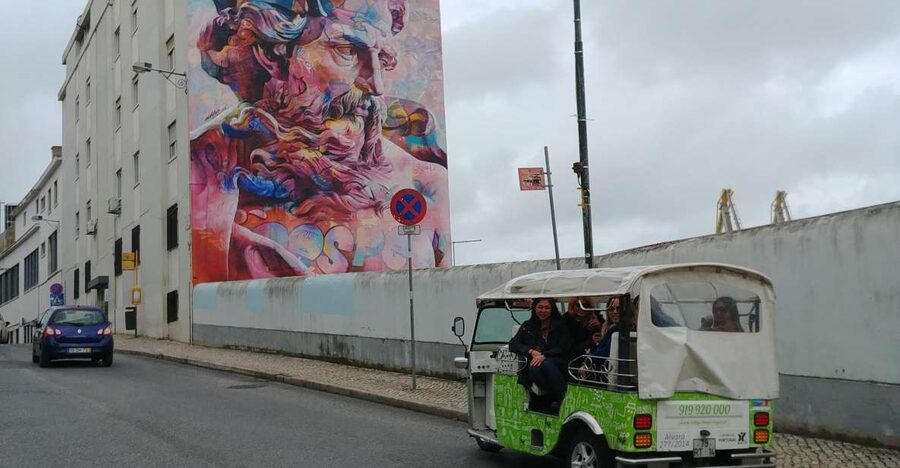
- Electric tuk-tuk with panoramic rain protection so you keep moving even if the weather turns.
- Artist-name photo stops tied to the meanings behind the work (Vhils, Shepard Fairey, Mário Belém, Tamara Alves).
- Short, efficient views through Lisbon’s street art hubs like LX Factory, Bairro Alto, and Mouraria.
- Comfort extras: speaker for clear guide audio and blankets for cold days.
- A taste of Lisbon with included ginjinha, the cherry liqueur locals actually drink.
- Private group travel in a vehicle designed for up to 6 people.
Electric tuk-tuk street art in Lisbon: a smart way to cover real neighborhoods
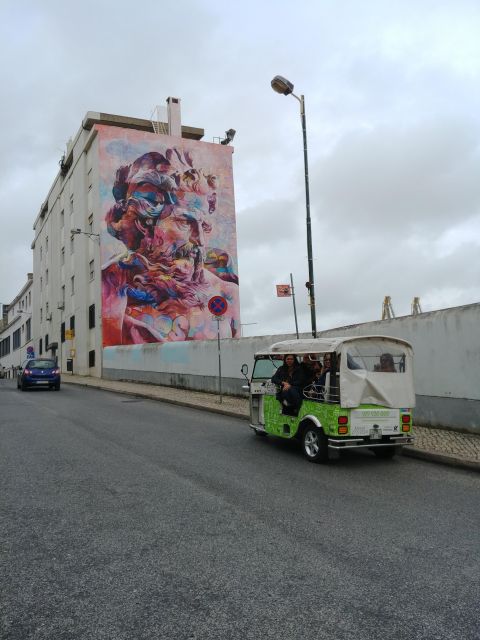
Lisbon can be a lot on foot. Steps, steep streets, and the constant feeling of turning one corner and forgetting the last view. This tour solves that with an electric tuk-tuk that’s built for short hops and quick sightlines. You don’t just see street art from far away—you get guided pacing through the areas where it shows up again and again.
I also like that the approach is about interpretation, not just pictures. Your guide connects the street art to Lisbon’s culture and to what the artists are trying to say—style, message, and context—so the walls start to feel like a conversation rather than decoration.
And yes, you’ll still take photos. But the main value is that you’ll learn how to “read” the art: the difference between a mural meant to last and a stencil meant to hit fast, or why an artist’s signature shows up in multiple places.
You can also read our reviews of more tours and experiences in Lisbon.



Price and value: what $70 gets you (and what it doesn’t)
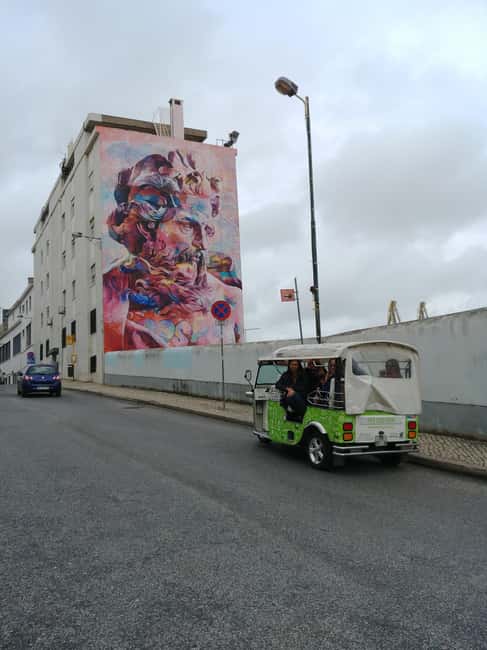
At $70 per person for a 2-hour private group tour, the price makes sense if you care about guided walking energy without the walking. You’re paying for three things that add up fast in Lisbon:
- Transportation plus pickup/drop-off, so you don’t waste time figuring out how to reach scattered art areas.
- A live guide in English, French, Italian, Portuguese, Spanish (and Japanese is listed as an option).
- Comfort and visibility support, including the speaker and the waterproof panoramic covers.
The deal also includes taste of ginjinha. It’s a small item, but it’s a real local touch that feels less like a souvenir stop and more like Lisbon identity.
What’s not included is straightforward: monument entry tickets and food and drinks beyond the ginjinha. If you want long indoor visits to major monuments, plan that separately. This tour is built for street-level art, plus quick context tied to big-name heritage sites mentioned in the tour framing, like Belém Tower and Jerónimos Monastery.
The ride setup that makes the tour actually work in real weather
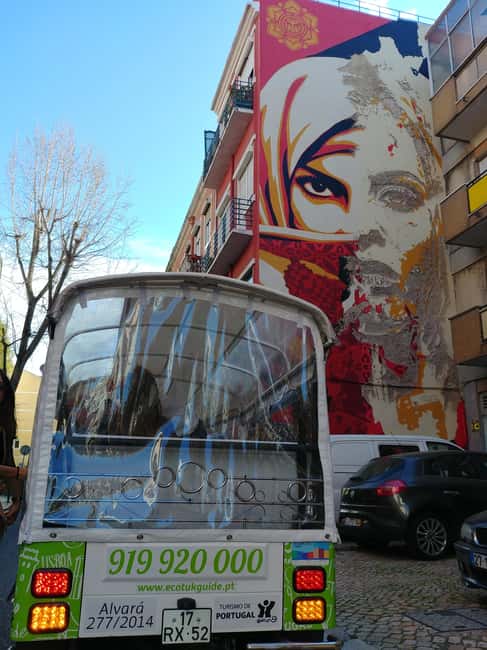
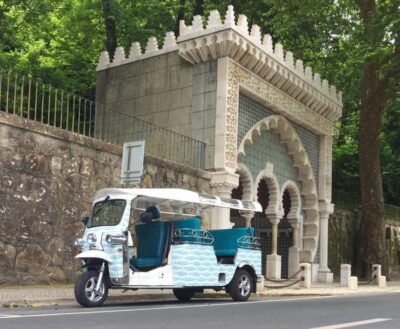
You’ll be in an electric tuk-tuk with transparent and waterproof covers. That matters in Lisbon because weather can flip quickly, and street art is best seen when you’re not cutting your route short.
The tuk-tuk includes a speaker for the guide’s audio. That sounds small, but in a city with wind, traffic noise, and uphill turns, it’s the difference between enjoying the commentary and only catching bits of it.
On colder days, you’ll get blankets. Not every operator thinks about comfort, and this one does.
One more practical note: the tuk-tuk can accommodate up to 6 people with a maximum weight of 400 kg. That’s useful for planning with friends or family, but it also explains why the tour keeps the group tight.
Stop-by-stop: Vhils, Shepard Fairey, Mário Belém, Tamara Alves, and the city views
This experience is paced as a series of short photo stops with guided commentary, so you’ll spend a lot of the 2 hours looking at art up close and learning why it’s there.
Pickup points: Restelo or 1200
You have two pickup options listed: 1200 and Restelo. Choosing the nearer one can save you time and reduce any “getting to the meeting point” stress.






Vhils & Shepard Fairey: signatures and styles in one quick stop
Your first major art-focused moment is a stop tied to Vhils & Shepard Fairey. Expect a guided explanation that connects artist styles to Lisbon’s street scene. This is a good early stop because it gives you a mental framework—what to look for and how to interpret it—before the route moves through more neighborhoods.
You’ll get a short window to take photos, but the real payoff is the guide’s context.
Portas do Sol Terrace: art with a city viewpoint
Next comes Portas do Sol Terrace, where the stop combines a photo moment with sightseeing time. Even though this isn’t a “street art-only” stop, it’s valuable because it helps you understand the city’s geography—Lisbon is built on views, and street art often relates to how communities occupy slopes and viewpoints.
Take a few minutes here and you’ll understand why the murals and tags feel so anchored to place.
Saudade by Mário Belém: a mural that carries an emotion
Then you’ll see Saudade – a mural by Mário Belém. The title alone matters, because saudade is a Portuguese word loaded with emotion—more than “missing someone.” The guide’s job here is to connect that feeling to the design and the message.
You’ll notice how the tour keeps returning to this theme (yes, Saudade appears again later). That repetition is useful: it gives you a chance to compare how you notice a piece after the guide has already trained your eye on what to look for.
ADD / FUEL: technique and message in the same frame
At ADD / FUEL, you’re back in the world of identifiable street art names and styles. This stop is short, but it’s meaningful because it supports what you’ll learn through the whole tour: street art isn’t one style. It ranges from large murals to tighter interventions like stencils and graphic forms.
If you’re the type who usually sees street art as “cool,” this is where you start recognizing how different techniques tell different stories.
Saudade again: why repetition helps you notice details
Seeing Saudade a second time is one of those choices that may feel odd on paper, but it works in practice. After several stops, you’ll be primed to notice brush texture, composition, and how the piece fits the street layout.
This is also where you’ll appreciate the guide’s timing—each comment lands after you’ve already seen enough to compare.
Escape into Life by Tamara Alves: a theme you can feel
The stop for Escape into Life – murales by Tamara Alves brings another artist voice into the mix. The title is a clue: this isn’t only about tagging or style—it’s about what the artwork wants to make you think or feel.
This stop is again a short photo + guided viewing moment, but it’s a strong “art meaning” anchor before the route shifts toward historic districts and iconic views.
Graça Historic District: street art meets neighborhood history
You’ll spend about 10 minutes in the Graça Historic District. That extra time compared with other stops helps you slow down a bit and notice how street art lives in a real neighborhood, not just in a highlight reel.
If you like photos, you’ll find angles here. If you like stories, Graça gives the guide enough space to connect street art to everyday place-making.
Santa Justa Lift: a classic Lisbon icon at the end
Finally, you’ll reach Santa Justa Lift for another guided photo stop. Even if you don’t go inside, it’s a fitting end: you get one last big Lisbon landmark as a backdrop to what you’ve learned about the city’s visual language.
It’s a good moment to get your bearings for the rest of your day.
What you’ll learn to see in Lisbon street art (beyond the pretty colors)
The tour’s whole point is teaching you how the art works as a system—artists, styles, and messages moving through neighborhoods.
Here are a few things I’d expect you to come away understanding:
- Different techniques have different goals. Large murals often linger and speak more directly to the street. Stencils and faster forms often feel like commentary that’s meant to hit hard and spread.
- Local and international names share the walls. The guide highlights major artists like Vhils and Shepard Fairey, then balances that with other works tied to Lisbon’s current street scene.
- Street art is also neighborhood identity. It changes block by block, so your photos end up documenting the city’s cultural moods, not just artwork.
- Meaning matters. Instead of treating each piece as decoration, you’ll get the story behind it—why it exists, what it responds to, and why it’s placed where it is.
And if you’re lucky (or the schedule allows), the tour notes also mention interactive elements like a graffiti workshop or meeting local artists. Even if that part isn’t active every day, the framing is clear: this isn’t only spectator tourism.
The guide makes the difference: Nuno, Paulo, and Diogo energy
Street art tours can go two ways: a lot of facts with no spark, or a lot of enthusiasm with weak explanations. The best version is what you get when the guide brings both.
From what I’ve been able to pick up about guide experiences associated with this tour, the standout quality is how the guide handles the room. For example:
- Nuno is described as funny and packed with knowledge, with the tour feeling like it was made by him.
- Paulo is noted for passion, with explanations that turn Lisbon into a story you can walk through.
- Diogo is credited with doing an incredible job, with the tour positioned as a highlight.
You don’t need a personality contest, but you do want someone who can connect the art to place without turning it into a lecture. This tour’s format is built for that.
Who should book this tuk-tuk street art tour?
This tour fits best if:
- You want street art with context, not just a photo hunt.
- You’re short on time but still want to see multiple neighborhoods and styles in one outing.
- You like guided pacing—small stops, clear stories, and quick transitions by vehicle.
- You appreciate Lisbon culture enough to enjoy a small local taste like ginjinha as part of the experience.
It might not be your best choice if:
- You want longer monument visits with entry tickets included (those aren’t included here).
- You need a tour that’s suited for children under 7 or pregnant travelers, since it’s not recommended for those groups.
Also, expect the stops to be brief by design. If you want to stare at one mural for 30 minutes, you’ll need a longer self-guided plan after.
Should you book Tuk Tuk Lisbon Street Art 2-Hour?
If your goal is to get a guided taste of Lisbon’s street art world in a short, easy-to-manage time window, I’d book this. The value is strongest when you factor in pickup/drop-off, the speaker, and the rain-proof viewing setup, plus the included ginjinha.
I’d pass if you’re looking for a slow-paced deep museum day or if you need a route that works for kids under 7 or for pregnant travelers.
Overall, this is a practical way to see real neighborhoods and learn what the street art is saying—while still ending the tour with a classic Lisbon view at Santa Justa Lift.
FAQ
How long is the Tuk Tuk Lisbon Street Art 2-Hour tour?
The duration is 2 hours. Starting times vary, so you’ll need to check availability.
What’s the price per person?
The price is $70 per person.
What’s included, and what isn’t?
Included are hotel pickup and drop-off, a speaker for clear guidance, blankets for colder days, an electric tuk-tuk with transparent and waterproof covers, and a taste of ginjinha. Monument entry tickets and food and drinks are not included.
Where do pickup and drop-off happen?
There are two pickup options: 1200 and Restelo. There are two drop-off options as well: 1200 and Restelo.
What languages are offered on this tour?
The tour guide is available in English, Spanish, French, Italian, Portuguese, and Japanese.
Is the tour suitable for children or pregnant travelers?
It’s not suitable for children under 7 and not suitable for pregnant women.