Lisbon’s hills feel like a cheat code. One moment you’re rolling past grand avenues, and the next you’re stopping at viewpoints that make Alfama and the Tagus look almost unreal. I like that this tour mixes big-scenery stops with short, practical walking so you get bearings without burning your whole day.
My second favorite part is the combo of seven-hill viewpoint magic and the Belém monuments at the riverfront, including Jerónimos and Tower of Belém (tickets not included). The main consideration: a few of the major sights are ticketed, so you’ll want to budget extra time and money if you plan to go inside.
In This Review
- Key highlights worth planning for
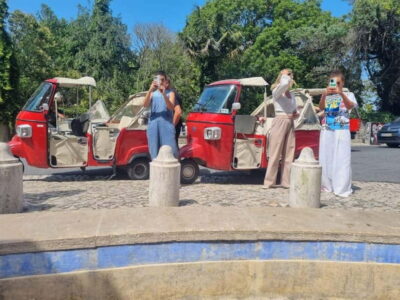
- Getting Your Bearings: Electric Tuk-Tuk Start at Restauradores
- Why “Seven Hills” Works Here (and Not Just as a Theme)
- Portas do Sol: Tejo and Alfama Views in a Tight Time Window
- Senhora do Monte: The Big Panoramic Moment (Including Christ King)
- San Pedro de Alcântara: Castle-and-City Panoramas for Starters
- Alfama’s Narrow Streets: Old Lisbon You Can Actually Walk
- Chiado, Bairro Alto, and Baixa: The Central Connective Tissue
- National Pantheon: Lisbon’s Honor in Stone
- Belém Time: Jerónimos Monastery, Tower of Belém, and the Riverfront
- Pastéis de Belém: The Sweet Stop That Makes It Feel Like Lisbon
- Guide Quality: The José Factor (José Lago and José Lobo)
- Tickets, Entry, and How to Manage the Extra Money
- Timing and Comfort: A 4-Hour Route That Doesn’t Feel Like a March
- Price Value: What $180.76 Buys You in Real Terms
- Who This Tour Fits Best
- Should You Book This 7 Hills + Belém Electric Tuk-Tuk Tour?
- FAQ
- How long is the tour?
- What does the $180.76 per person price include?
- Are admission tickets included for the major monuments?
- Are the viewpoints free?
- Is this tour private?
- Where does the tour start and end?
- Is the meeting point near public transportation?
- Do I need to wait for confirmation before going?
- Is the tour weather dependent?
- Is the tour suitable for most people?
Key highlights worth planning for
- Electric tuk-tuk transport that keeps the day moving across steep streets
- Miradouro Portas do Sol and other viewpoints with quick, high-impact photo stops
- Alfama and funicular views that help you understand how the city works
- Belém monuments on the Tagus: Jerónimos, Torre de Belém, and Padrão dos Descobrimentos
- Pastéis de Belém factory visit to wrap the tour with a classic Lisbon bite
Getting Your Bearings: Electric Tuk-Tuk Start at Restauradores
The day starts near Restauradores Carpark, by the S. Entrance on Rua dos Condes. It’s a smart choice because you’re already in a central zone, which means the whole tour feels like a guided “map with motion,” not just a sightseeing checklist.
Then you’re in the electric tuk-tuk—quiet enough that you can actually listen to your guide. That matters in Lisbon, where the best details are often in how locals describe the city: street angles, why certain viewpoints exist, and how districts relate to each other.
Because it’s private for your group, you don’t have to match your pace to strangers. If you like to linger at a viewpoint for one extra photo, or you want a quick clarification about a monument, you can.
You can also read our reviews of more tours and experiences in Lisbon.



Why “Seven Hills” Works Here (and Not Just as a Theme)
Some tours slap the word “seven” on a route and call it a day. This one actually earns the concept. You’re hit with multiple viewpoints in different directions, so the city’s shape makes sense fast.
The hill-stops are timed as short hangs—about 10 minutes at key miradouros—so you don’t get viewpoint-fatigue. You’ll rotate through places that show you how the Tagus, the bridge area, and neighborhoods like Alfama line up on the slopes.
And because you’ll also pass by Bairro Alto, Chiado, and Baixa along the way, the viewpoints aren’t isolated moments. They connect back to the streets you can see below.
Portas do Sol: Tejo and Alfama Views in a Tight Time Window
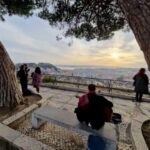
Your first major viewpoint stop is Miradouro das Portas do Sol. This is one of those Lisbon places where the view is doing half the explaining for you.
You’ll get an easy look over the Tagus and down toward Alfama. Even if you’re not deep into architecture, you can still read the city’s logic: where the river sits, where the older neighborhood clings to the slope, and why people keep building terraces and lookout points here.
The best part is the pace. About 10 minutes is enough to take photos, find a comfortable spot, and still move on to the next viewpoint without dragging your feet.
Senhora do Monte: The Big Panoramic Moment (Including Christ King)
Next is Miradouro da Senhora do Monte, which the tour frames as one of the most beautiful viewpoints in Lisbon. It’s a high-payoff stop with wide views over the city, the Tagus, the 25 de Abril bridge, and the Christ King.
If you want one “wow, okay I get it now” viewpoint, this is where it often happens. The angle tends to make distances feel real, and you’ll likely notice how Belém’s direction lines up across the river later.
This stop is also about 10 minutes. That time window keeps the tour moving, but if you’re the type who likes to watch the light shift, consider taking a few quick shots first, then settling for a longer look during the later minutes.
San Pedro de Alcântara: Castle-and-City Panoramas for Starters
Miradouro de São Pedro de Alcântara is the next viewpoint on the route, again with roughly 10 minutes on the clock. Here, the payoff is the panoramic view that includes the castle area and the city stretching outward.
This stop is especially useful if you’re trying to understand Lisbon’s layering. You start the day with a river-and-Alfama angle, then you pivot to broader city geometry, and suddenly the hills feel less random.
It’s also a great moment to ask your guide a quick question—like why certain streets funnel where they do—because you’re finally high enough to connect the dots.






Alfama’s Narrow Streets: Old Lisbon You Can Actually Walk
After the viewpoint rotation, you get time for Alfama, the city’s oldest and most characteristic neighborhood. Expect about 15 minutes here, which is a good amount for a short wander rather than a full district tour.
Alfama isn’t just a backdrop. It’s where Lisbon’s hill geography becomes daily life: narrow passages, steep grades, and corners that suddenly open into little glimpses of the rooftops.
This is also where you get the sense that Lisbon didn’t grow as a grid. It grew by moving with the terrain, and Alfama shows that without needing a lecture.
If you’re traveling with anyone who needs a lighter pace, this stop is still doable because you’re not committing to a long walking loop.
Chiado, Bairro Alto, and Baixa: The Central Connective Tissue
You’ll pass through and spend short time in the areas tied to Lisbon’s more central rhythm: Chiado and nearby streets, plus Baixa and Bairro Alto in the mix.
Chiado is described as commercial, artistic, and intellectual activity, which is exactly why it feels different from Alfama. You get a change in tempo: more open streets, more day-to-day energy, and a sense of the city as a place people live and work—not just a set of monuments.
Baixa is also part of the story as Lisbon’s main avenue area, the monumental stretch that makes the city feel organized in contrast to the medieval slope streets.
This “between” time is helpful. If you go from viewpoint to viewpoint without connecting routes, Lisbon can feel like separate postcards. Here, the movement across neighborhoods keeps your mental map coherent.
National Pantheon: Lisbon’s Honor in Stone
One of the tour’s stop highlights is the National Pantheon, with a short stop designed for understanding its role in honoring notable Portuguese figures. The tour framing is about memory and preservation, and that’s what you’ll likely feel when you look at the exterior and learn what the building represents.
This is a nice contrast point. After the open-view panorama moments, a monumental civic building shifts your focus to Lisbon’s national identity—something you won’t get if your day is only mirrors and river views.
Time-wise, it’s a brief stop, so don’t expect a full museum experience unless you plan to add it later. Think of it as context, not a deep entry.
Belém Time: Jerónimos Monastery, Tower of Belém, and the Riverfront
Now you pivot from hills to the river’s edge, heading into Belém. This part is where Lisbon’s “global Portugal” story shows up in stone and scale.
You’ll visit Mosteiro dos Jeronimos (Jerónimos Monastery), a late-15th-century masterpiece tied to King D. Manuel I. It’s UNESCO-listed, and it’s one of those buildings where the craftsmanship does a lot of the talking even in a short stop.
Next is Torre de Belém (Tower of Belém). The tour notes it as an architectural icon from the reign of D. Manuel I, also UNESCO-listed, and chosen as one of the Seven Wonders of Portugal in 2007. Since admission is not included, treat this as a planned stop where you can decide on entry depending on your interests and energy.
Finally, you move to Padrão dos Descobrimentos (Pattern of Discoveries). It sits prominently on the right bank of the Tagus and was built in 1960 to honor figures connected to the Portuguese Discoveries. Again, admission is not included, so this stop is more about seeing the monument and connecting the story than about ticking boxes.
One practical note: Belém can feel windier than the hill viewpoints. Dress like it’s a bit breezy, and keep water handy.
Pastéis de Belém: The Sweet Stop That Makes It Feel Like Lisbon
The tour includes a visit to the famous Pastéis de Belém factory. This is the kind of ending that feels practical, not touristy-for-tourism’s-sake, because it’s local food culture tied to a specific place.
Since the tour data doesn’t list pastry costs as included, plan to buy your own treats during the visit. If you’re there for the classic experience, a short snack break can also help you reset before the last stretch back to the meeting point.
This part is worth doing even if you’re not a dessert person. Lisbon’s sweets are part of how people experience the city, and it gives your day a satisfying, edible memory.
Guide Quality: The José Factor (José Lago and José Lobo)
In my book, a city tour lives or dies on the guide’s ability to make details feel useful. Here, the guide name comes through strongly in the feedback: José Lago and José Lobo are highlighted for being friendly and knowledgeable, with explanations that make streets and landmarks easier to understand.
What you should look for in practice is how your guide connects each stop. You want answers like: What do you notice from this angle? Why does this viewpoint matter? How does this neighborhood connect to the next one?
When that connection is done well, the tour feels smoother. You don’t just see places; you understand why they’re positioned where they are.
Tickets, Entry, and How to Manage the Extra Money
This tour is a mix of free viewpoints and ticketed monuments. Viewpoints like Portas do Sol, Senhora do Monte, and São Pedro de Alcântara are free, and the Alfama stroll and most street passing are also set up to be easy.
But three bigger Belém anchors have admissions not included: Jerónimos Monastery, Tower of Belém, and Padrão dos Descobrimentos. So you’ll want to decide in advance if you’re aiming for inside entry or just the outside experience.
If you do want to go inside, plan for that cost and factor in that a shorter stop can feel like a quick preview. If you’d rather keep it light, you can still get a lot from the architecture and the riverfront setting.
Timing and Comfort: A 4-Hour Route That Doesn’t Feel Like a March
The tour runs about 4 hours. That’s a solid length for seeing multiple Lisbon highs without turning the day into a full-day grind.
Most of your time is spent traveling in the electric tuk-tuk, with short stops for viewpoints and key sights. That structure is ideal if you want a packed itinerary but you don’t want to commit to long stair climbs back and forth.
It’s also a private setup, so the rhythm can be adjusted to your group’s needs, as long as you stay within the schedule.
Price Value: What $180.76 Buys You in Real Terms
At $180.76 per person, this is not a cheap bus-and-hope option. You’re paying for three main things: private tuk-tuk transport, a professional guide, and coverage through liability and personal injury insurance.
That insurance piece matters more than people think. It’s part of the reassurance that the tour is run responsibly.
The private transport is the biggest value driver. Lisbon’s hills are steep, and switching between neighborhoods on foot would take far longer and feel more exhausting. Here, you get the payoff—the viewpoints and Belém monuments—without spending the whole trip fighting your way up.
Finally, the mix of free viewpoints and ticketed monuments helps you control costs. If you choose to enter only one or two of the ticketed sites, you can shape the day to match your budget.
Who This Tour Fits Best
This route fits best if you want:
- a short, high-impact introduction to Lisbon’s hill-and-river layout
- a guided understanding of neighborhoods like Alfama, Chiado, and Baixa
- the Belém highlights without having to plan a complicated self-guided route
It also works well for couples and small groups who want a private pace. If you love history inside museums, you might add more time on your own after the monument outside views.
Should You Book This 7 Hills + Belém Electric Tuk-Tuk Tour?
I’d book it if you want the best parts of Lisbon packed into a manageable 4-hour window—especially the hill viewpoints plus the Belém monument cluster. The electric tuk-tuk does real work here by reducing hill fatigue, and the guide names José Lago and José Lobo are a strong sign that the explanations are human, not just robotic facts.
Skip it or adjust expectations if you’re planning to spend lots of time inside ticketed sites during the same window. Admission isn’t included for Jerónimos, Tower of Belém, and Padrão dos Descobrimentos, so you’ll either pay extra or keep it mostly as an outside-and-stories day.
If the weather is good, this is the kind of tour that helps Lisbon click fast—then you can come back later for the details you care about most.
FAQ
How long is the tour?
It’s about 4 hours.
What does the $180.76 per person price include?
It includes private transportation in an electric tuk-tuk, a professional guide, and liability and personal injury insurance. You also receive a mobile ticket.
Are admission tickets included for the major monuments?
No. Tickets are not included for Jerónimos Monastery, Tower of Belém, and Padrão dos Descobrimentos.
Are the viewpoints free?
Yes. The listed admission for Portas do Sol, Senhora do Monte, and São Pedro de Alcântara is free.
Is this tour private?
Yes. It’s a private tour/activity, with only your group participating.
Where does the tour start and end?
It starts at Restauradores Carpark (S. Entrance), Rua dos Condes 2, 1250-147 Lisboa, Portugal, and ends back at the same meeting point.
Is the meeting point near public transportation?
Yes, it’s near public transportation.
Do I need to wait for confirmation before going?
You’ll receive confirmation at the time of booking.
Is the tour weather dependent?
Yes. It requires good weather. If canceled due to poor weather, you’ll be offered a different date or a full refund.
Is the tour suitable for most people?
The info says most travelers can participate.