REVIEW · LISBON
Special Guided Tour of Tuk Tuk Lisbon Historic 2 Hours
Book on Viator →Operated by SPR Tours · Bookable on Viator
Lisbon goes vertical fast, and this tour turns that into an advantage. You start near Restauradores and ride a loop of elevators, viewpoints, and old-city squares with an English-speaking guide who explains what you’re seeing. I especially like the photo-friendly pacing that gets you to key “must see” corners without walking your legs into dust, and the pickup/drop-off options that make the whole thing easy. The main drawback is simple: each stop is brief, so if you want deep museum time, you’ll need to plan that separately.
This is a private tuk tuk experience (just your group) lasting about 2.5 hours, and most of the stops are quick pauses with no entry ticket required. The price is $117.96 per person, which can feel steep until you realize how much ground it covers and how much you’d otherwise miss on a self-guided day—especially with Lisbon’s hills.
Expect short rides, frequent viewpoint moments, and lots of “oh right, that’s why this place matters” history as you hop from one neighborhood feel to the next. It’s designed for first-time orientation, great for couples, solo travelers, and families who want a controlled, low-stress way to get their bearings.
In This Review
- Key points worth knowing before you go
- Getting Oriented at Restauradores and Gloria’s Elevator
- Rossio’s Manueline Station and the D. Maria II Square Stop
- Largo do Carmo, the 25 April Revolution, and the Carmo Ruins
- São Roque’s Jesuit Church: Lottery Man and Father António Vieira
- Miradouro São Pedro de Alcântara: The Castle View Starter
- Parliament at São Bento, Bica Funicular, and the Pink Street Break
- Time Out Market Lisboa: A Snack Stop That Actually Works
- Alfama’s Views: Santa Luzia, Portas do Sol, and Santa Engrácia Area
- Panteão Nacional and the Santa Engrácia Photo Moment
- Senhora do Monte: Highest Point, Church Views, and King D. João I
- How the Tuk Tuk Tour Makes the Seven Hills Work for You
- Price and Value: What $117.96 Really Buys You
- Who This Tour Fits Best (and Who Should Skip It)
- Should You Book This Tuk Tuk Lisbon Historic Tour?
- FAQ
- How long is the Tuk Tuk Lisbon Historic tour?
- Is this tour private or shared?
- Where does the tour start, and can you arrange a different meeting point?
- Are pickup and drop-off included?
- What’s included in the price?
- Do you need to buy admission tickets at each stop?
Key points worth knowing before you go
- Private tuk tuk, your group only: less waiting, more control over pace and photo stops.
- Many free stops: frequent miradouro overlooks and exterior sights keep the schedule moving.
- Elevators and funiculars included in the story: you’ll see Lisbon’s vertical transit landmarks up close.
- Viewpoints on multiple hills: Santa Luzia, Portas do Sol, and Senhora do Monte give you “Lisbon in layers.”
- Time Out Market as a practical break: quick access to pastel de nata and ginginha if you want to snack.
Getting Oriented at Restauradores and Gloria’s Elevator
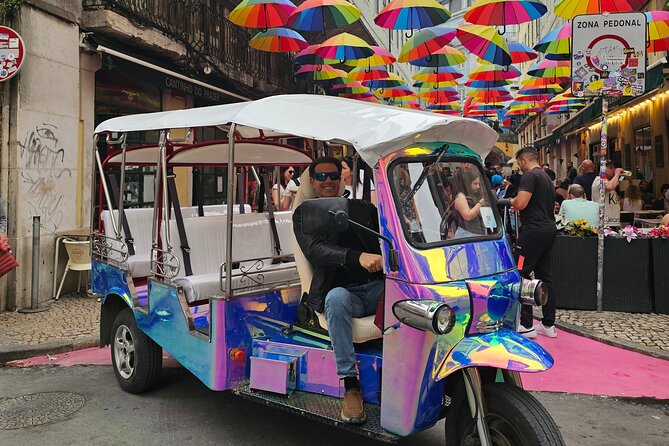
The tour begins at Hard Rock Cafe Lisboa on Avenida da Liberdade, right where the city’s grand avenues meet the older cores. If you prefer, you can usually arrange a different meeting point in central Lisbon, and there’s also collection from select hotels and the cruise port (Jardim do Tabaco Quay area). Either way, the point is to start you in the right neighborhood so you don’t waste the first hour fighting logistics.
From there, you head to Restauradores, where you’ll spot the Obelisk and the famous Elevador da Glória. This is more than a photo stop. Elevators like this are Lisbon’s cheat code for getting between levels quickly, and your guide uses these spots to explain why the city grew the way it did—topography first, streets second.
You then move up toward São Pedro de Alcântara, including the ride on the older elevator line. Lisbon’s old vertical transportation isn’t just scenic; it’s functional. Seeing it early helps you understand what you’ll be doing later on foot (and what you can skip).
What I like: you get “orientation” without turning it into a classroom.
Consideration: there’s no long time to wander—your best experience comes from letting the route guide you.
You can also read our reviews of more tours and experiences in Lisbon.



Rossio’s Manueline Station and the D. Maria II Square Stop
Next comes the Manueline-style train station, the kind of ornate architecture that makes Lisbon feel like it’s speaking in flourishes. Manueline features are easy to recognize once you know what to look for—stonework details that hint at the city’s historic confidence. It’s one of those sights that looks better when you slow down for 30 seconds, not when you try to rush past it.
Then you reach the square where you’ll see the D. Maria II Theater and the D. Pedro IV Statue. This is a good “big-picture” pause. You’re in the city’s central gravity well: from here you can feel how Lisbon’s neighborhoods are arranged around viewpoints and routes that climb and fall.
Even if you don’t go inside any buildings on this tour, these stops matter. They show you the Lisbon of grand civic squares—different from the steep alleys you’ll see later around Alfama.
Quick note: museum and monument entrances aren’t included. That’s not a bad thing, just a planning reality. The tour is built for seeing exteriors well, not for museum deep dives.
Largo do Carmo, the 25 April Revolution, and the Carmo Ruins
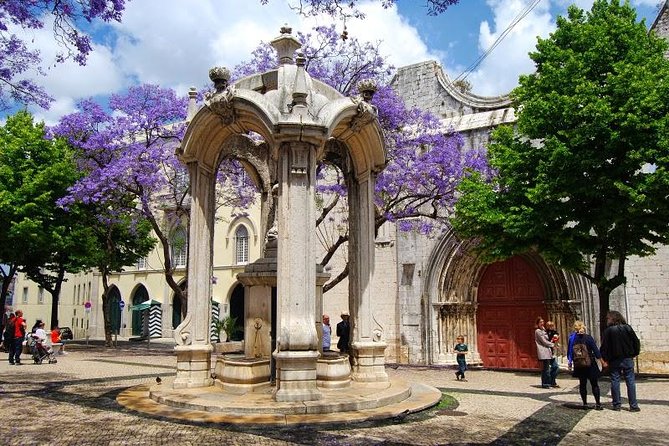
As the route continues, you’ll pass from the old Rua Áurea elevator area toward Largo do Carmo, where you can look toward the ruins of Carmo Church. This is one of the tour’s strongest “why this place is here” moments because the location connects physical architecture to modern political history.
You also learn that this is where the 25 April Revolution took place. That detail changes how you look at ruins. Instead of “pretty old stone,” it becomes a reminder that Lisbon’s streets have hosted turning points, not just tourism postcards.
This part of the day is also where you’ll notice the rhythm of a tuk tuk tour: you’re moving, stopping, moving again. If you’re prone to motion sickness, consider taking it easy with water and keeping your gaze toward the direction of travel.
São Roque’s Jesuit Church: Lottery Man and Father António Vieira
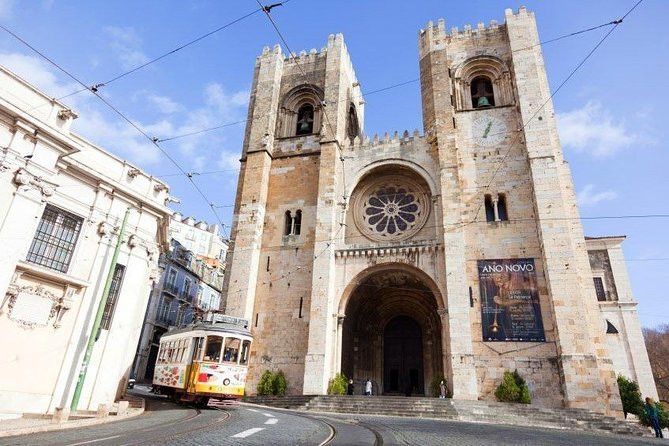
Next up is an early Jesuit church in Lisbon. You’ll see statues tied to the stories your guide explains—among them the Lottery Man and Father António Vieira.
This is the kind of stop that works even if you’re not into religious sites. The details aren’t abstract. Your guide ties the art and figures to Portuguese culture and the way Lisbon has always blended faith, power, and public life.
If you like architecture, you’ll appreciate that the church presence here is more than “one building.” It’s part of a neighborhood of history layers, sitting near the city center where people have moved for centuries.
Miradouro São Pedro de Alcântara: The Castle View Starter

You’ll then reach Miradouro São Pedro de Alcântara, which is one of the best “warm-up” viewpoints. You get about 10 minutes to look out, and your view typically includes the Castle area and the hills across the city.
This stop is valuable for two reasons. First, it gives you an easy, wide orientation. Second, it sets the mental map you’ll use at later overlooks—suddenly those next miradouros won’t feel random.
After that, there’s also a garden pause. Think of it as a calmer moment within a very active tour schedule—short, but useful.






Parliament at São Bento, Bica Funicular, and the Pink Street Break
The route shifts toward landmarks that show Lisbon as a working city, not just a scenic one.
At Parlamento São Bento, you’ll take a photo stop near the palace area. The tour notes that the Assembly of the Republic meets daily and that the parliament includes 230 deputies, with elections for four-year terms. There’s also mention that the Prime Minister’s official residence is at the rear. Even if you’re not seeing inside, that context helps you understand what you’re looking at.
Then comes Bica Funicular, another classic Lisbon vertical transit moment. The funicular makes for a quick, satisfying photo stop, especially with Lisbon’s hills in the frame.
After that, you’ll pause for a well-known Portuguese poet connected to the Age of Discoveries. It’s brief, but it reinforces the theme of Lisbon: exploration and maritime identity are woven into the city’s monuments.
Next is Calle Rosa de Lisboa, the famous pink pavement street with colorful umbrellas and bars/restaurants along the way. This stop is short, but it’s a fun tonal change from stone viewpoints and formal civic spaces.
Time Out Market Lisboa: A Snack Stop That Actually Works
When you arrive at Time Out Market Lisboa, you get around 5 minutes. You’re not going there for a sit-down meal, but it’s a practical stop if you want immediate food.
The market is specifically called out for classic pastel de nata and the Portuguese liqueur ginginha (cherry liqueur). If you want something quick and easy, this is a good moment to grab it without stretching the schedule.
Keep expectations realistic: the tour is about sights and viewpoints. The market gives you a quick chance to eat or drink, not to spend an hour browsing.
Alfama’s Views: Santa Luzia, Portas do Sol, and Santa Engrácia Area
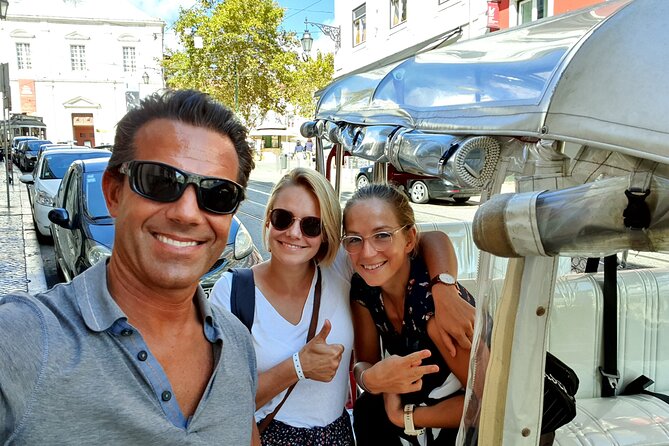
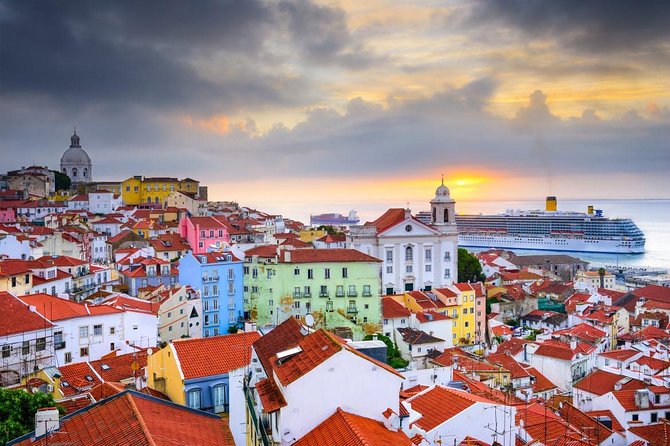
After the central stops, the tour turns toward the parts of Lisbon that people fall in love with—especially Alfama, one of Europe’s older districts. Your day includes multiple miradouros, each with a different angle.
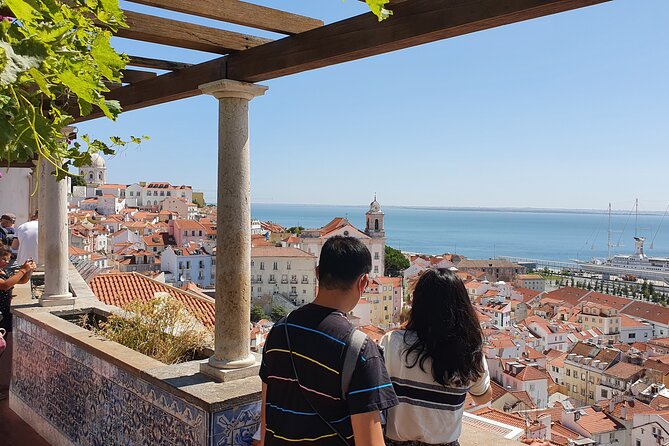
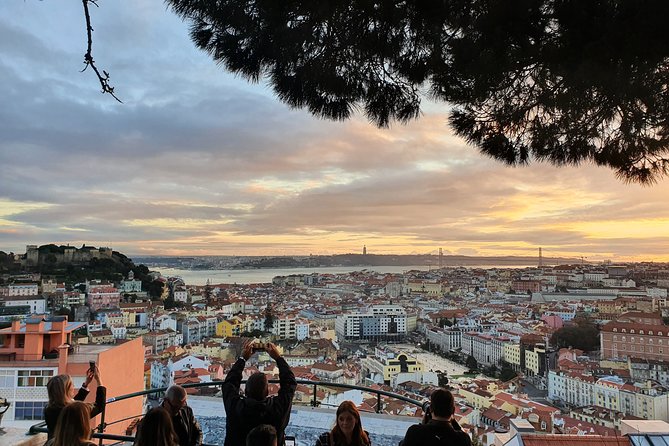
At Miradouro de Santa Luzia, you get about 10 minutes to admire the view with Alfama in sight, plus the distinctive tilework of Santa Luzia Church. Tile details are the kind of thing you miss when you just walk by fast, and a guided stop gives you the time to notice.
Then you’ll move to Miradouro das Portas do Sol, another standout. This viewpoint also gets around 10 minutes and includes views toward Alfama again, plus the area of São Vicente, where the Lisbon symbol is mentioned. Two viewpoints that “sound similar” end up feeling different once you see them.
From there, you’ll pause around areas that include a church built outside castle walls, and you’ll also hear about Vila Sousa, described as one of the oldest villages in the area. The point isn’t the exact sentence-level history. The point is that you see how Lisbon’s neighborhoods grew around defense, water, and trade routes—then you connect that to the views you’re photographing.
Panteão Nacional and the Santa Engrácia Photo Moment
Next comes Panteão Nacional, with a stop for photos of Santa Engrácia Church. The tour frames it as Lisbon’s national pantheon, so even though you’re mainly outside here, the stop has meaning.
This is a good moment to pause, reset your legs, and take a different type of shot than the miradouro panorama. If you’ve spent the earlier time looking outward, this gives you a “Lisbon landmark portrait” angle.
The route also includes passing the area where the flea market runs every Tuesday and Saturday. If your dates line up with those days, you’ll at least know what you’re walking into later.
Senhora do Monte: Highest Point, Church Views, and King D. João I
To finish with maximum payoff, you head to Miradouro da Senhora do Monte, described as the highest point of the city. You’ll have about 10 minutes, and the tour points out Nossa Senhora do Monte Viewpoint and the nearby Church of Saint Genes.
This is where Lisbon feels most layered. From higher ground, the city’s steep climb makes sense visually. You see why those earlier elevators and viewpoints weren’t “random stops”—they’re Lisbon’s practical way to connect different elevations.
The final photo focus includes the statue of King D. João I. It’s a clean closing note that connects the present-day city you’re riding through to the monarchy and identity that shaped Lisbon for centuries.
How the Tuk Tuk Tour Makes the Seven Hills Work for You
A tuk tuk isn’t just a fun way to ride. It’s a strategy for Lisbon.
You avoid long, repetitive climbs while still getting to the viewpoints that sit above the street grid. That matters if you’re short on time, carrying bags, traveling with limited mobility, or simply tired from landing and trying to see everything the same day.
Also, this tour is structured around short pauses. That’s why it’s a strong first-day option. You’ll likely end the tour with a mental map and a short list of where you want to go next—on foot, on a tram, or with a separate ticketed plan.
One practical consideration: because the stops are timed, you’ll need to move with the group. If you’re the type who loves lingering in a single spot for an hour, this might feel a bit fast.
Price and Value: What $117.96 Really Buys You
At $117.96 per person, this tour sits in the “not cheap, but smart” category—especially because it’s private. With a private setup, you’re not sharing the day with strangers you don’t know, and you can get more effective stops per hour.
You also get several included basics that matter in Lisbon: liability and personal accident insurance, an experienced guide, and hotel pickup/delivery is offered (depending on hotel listing). There’s a mobile ticket, too, which usually reduces stress on the meeting day.
What you should plan around: entrance tickets to museums and monuments are not included, and food/drinks aren’t included. The good news is many viewpoints and exterior stops are marked as free, so your costs stay predictable while you still see a lot.
Who This Tour Fits Best (and Who Should Skip It)
This tour is a great fit if you want a high-impact overview with minimal walking. It’s especially strong for first-time visitors who want to learn what the city’s famous zones mean—Restauradores, Alfama viewpoints, and Lisbon’s vertical transit story—without committing to a full day of hopping between tickets and transit lines.
It’s also a good choice if you’re traveling with someone who prefers comfort over marathon sightseeing. The tuk tuk format helps you keep the day enjoyable.
You might want to skip or add a different plan if you’re seeking long museum visits, guided church interiors, or deep neighborhood walking routes. This one is about seeing a lot and understanding the big picture fast.
Should You Book This Tuk Tuk Lisbon Historic Tour?
Yes, if you want a smooth way to hit Lisbon’s highlights in about 2.5 hours and you like the idea of guided context at every stop. The route is built around viewpoints and iconic structures—elevators, squares, and miradouros—so you come away with a real sense of Lisbon’s shape.
If you hate time pressure, want guaranteed indoor entrances, or already have a full day packed with museums, you may prefer a slower, walking-focused plan. But for an efficient start, this tour is one of the most practical ways to get your bearings quickly, then go explore the parts that truly grab you.
FAQ
How long is the Tuk Tuk Lisbon Historic tour?
It runs for about 2 hours 30 minutes.
Is this tour private or shared?
It’s private. Only your group participates.
Where does the tour start, and can you arrange a different meeting point?
It starts at Hard Rock Cafe Lisboa on Av. da Liberdade. Collection is also offered, and you can inform the operator where you want to meet the guide within central Lisbon.
Are pickup and drop-off included?
Pickup is offered, and after the tour the activity ends back at the meeting point with drop-off available in the downtown area.
What’s included in the price?
A trained guide, liability insurance and personal accident insurance, hotel reception/delivery, and the private tuk tuk tour. Entrance tickets and food/drinks are not included.
Do you need to buy admission tickets at each stop?
Most listed photo and viewpoint stops are free, but museum and monument entrance tickets are not included. You may still need tickets if you want to enter specific places.