REVIEW · LISBON
Private Tour in Lisbon with Tuk Tuk
Book on Viator →Operated by Ticket Online · Bookable on Viator
Lisbon by tuk-tuk feels like flipping through a photo album—fast. This private ride strings together major neighborhoods and viewpoints so you can see a lot without stress. You get a driver, you dodge the worst crowd moments, and you spend your time where Lisbon looks best.
I especially love how the route mixes big-name areas with quick, meaningful stops—Chiado, Alfama, and multiple miradouros. Second, the private setup really helps if you’re short on time: you’re not hunting buses or taxis, and your guide can pause for photos and short walks.
One consideration: time is tight at each stop, and extra entry fees apply (like Lisbon Cathedral and Panteão Nacional). Also, depending on your guide and vehicle setup, you may struggle to hear commentary over traffic—so it’s worth asking about audio at the start.
In This Review
- Key things to know before you ride
- Price and logistics: what you’re really paying for
- Meeting point and pickup: Hard Rock Cafe as your anchor
- The “hit Lisbon fast” route: how the stops work together
- Stop 1: Chafariz d’El Rei (Palacete do Chafariz d’El Rei)
- Stop 2: Chiado for culture, shopping, and quick orientation
- Stop 3: Miradouro das Portas do Sol (the classic “sun kiss” viewpoint)
- Stop 4: Museu do Fado (Alfama) if you want the music context
- Stop 5: Miradouro de Santa Luzia with Tagus views and tile panels
- Stop 6: São Vicente de Fora for an Alfama neighborhood feel
- Stop 7: Lisbon Cathedral (Sé) for the oldest church stop
- Stop 8: Panteão Nacional for the big white dome monument view
- Stop 9: Alfama for the old-city maze vibe (and fado atmosphere)
- Stop 10: Praça do Comércio (Terreiro do Paço) for the waterfront palace-square feeling
- Stop 11: Feira da Ladra (Campo de Santa Clara) for market browsing and bargain hunting
- Stop 12: Miradouro da Senhora do Monte for the big skyline view
- Stop 13: Shepard Fairey x Vhils mural in Graça (street art moment)
- Vehicles and audio: what can make or break the experience
- Who this tour suits best (and who should skip it)
- Should you book the Lisbon private tuk-tuk?
- FAQ
- How long is the Private Tour in Lisbon with Tuk Tuk?
- Where do we meet, and is pickup available?
- What is included, and what isn’t?
- Is this a private tour?
- What language is the tour offered in?
- What happens if the weather is bad?
- Can I cancel for free?
Key things to know before you ride
- Private tuk-tuk or buggy with your own group, so you can move efficiently.
- Pickup offered (meet at Hard Rock Cafe lobby area at Av. da Liberdade 2).
- Viewpoint-heavy route: Portas do Sol, Santa Luzia, and Senhora do Monte.
- Fado stops on the way including the Museu do Fado (ticket not included).
- Extra costs are limited but real: Lisbon Cathedral (€4) and Panteao Nacional (€3).
- Expect short stops—great for quick orientation, not ideal if you want long museum time.
Price and logistics: what you’re really paying for

At $76.22 per person for roughly 1 hour 40 minutes to 1 hour 50 minutes, this is priced like a “time-saving” Lisbon experience. You’re not paying for a full-day museum plan. You’re paying for a private, driver-led sweep that can cover big stretches of the city quickly—plus the convenience of being picked up and returned to the same meeting area.
That’s why it can feel like good value if it’s your first day in Lisbon or if you’re traveling with limited walking energy. Lisbon’s hills and uneven streets can wear you down. A tuk-tuk or buggy keeps you moving, and you only walk when a spot is worth a quick leg-stretch—miradouros, church exteriors, and a few key streets.
Also note what isn’t included: lunch, plus entrance fees at Lisbon Cathedral (€4) and Panteao Nacional (€3). The Fado Museum ticket is not included. If you care about inside-the-building time, budget extra and expect that your time at each location will still be brief.
You can also read our reviews of more tours and experiences in Lisbon.



Meeting point and pickup: Hard Rock Cafe as your anchor

The tour starts at Hard Rock Cafe, Av. da Liberdade 2, 1250-144 Lisboa. If pickup is offered for your booking, you’ll be asked to wait at the lobby area and provide a correct phone number and email so the driver can contact you.
In practice, meeting at a well-known spot like this helps with peace of mind—especially if you’re staying near the center or if your day includes other plans. And because the tour ends back at the meeting point, it’s easier to build the rest of your afternoon or evening around it.
The “hit Lisbon fast” route: how the stops work together
This isn’t one long straight line. It’s a smart sampler that walks you through Lisbon’s “wow” zones in a logical flow: from an ornate fountain mansion vibe, into Chiado, down toward Alfama viewpoints, across key churches and monuments, then out toward the waterfront square, markets, and a high sunset/lookout area.
Think of it like this:
- First half: central Lisbon into Alfama’s hills (miradouros + fado-adjacent stops).
- Second half: Baixa waterfront energy + a classic Lisbon market scene, then up to Graça’s big viewpoint and street art.
That structure matters because it helps you understand Lisbon’s geography without needing to plan transport.
Stop 1: Chafariz d’El Rei (Palacete do Chafariz d’El Rei)

You start with Palacete do Chafariz D’El Rei, an eclectic neo-Moorish style building from the late 1800s, with interiors described as Brazilian Art Nouveau from the turn-of-the-century fashion era. It’s the kind of stop that works well from a vehicle because you’re not committing to a long visit—you’re getting an immediate sense of Lisbon’s layered design history.
You’ll get a short window here (listed around 4 minutes). The “why it’s worth it” angle: it sets a tone. Lisbon isn’t only tiles and tram lines. It also has architecture that feels imported, mixed, and restored—like it’s always been trying to reinvent itself.
Tip: if you like architecture, stand where you can see the building’s decorative details clearly, not just the street-facing facade.
Stop 2: Chiado for culture, shopping, and quick orientation

Next up is Chiado, an important cultural and commercial district in Lisbon’s historic center, known for theatres, museums, landmarks, and luxury shopping.
Chiado is useful on a tour like this because it’s a hinge point. From here, you can feel the shift from “downtown elegance” toward the older maze-like neighborhoods that climb toward the castle zone.
This stop is brief (around 8 minutes). You’ll want to use the time to absorb the street layout and pick a couple photo angles. If you’re planning a longer walk later on your own, Chiado is a good place to memorize where you are.






Stop 3: Miradouro das Portas do Sol (the classic “sun kiss” viewpoint)

From Chiado you hit Miradouro das Portas do Sol, a popular viewpoint where the goal is simple: get that iconic Lisbon skyline look. This is the kind of spot that can be crowded at peak times, so having a private plan helps you time your short stay.
Listed time is short (around 4 minutes). You’re not here for a long hang. You’re here to see Lisbon’s rooflines, the river direction, and the steep geography that makes the city so dramatic.
Practical advice: keep your camera ready when you stop. The best views are visible right away, and you don’t want to waste your limited minutes adjusting settings.
Stop 4: Museu do Fado (Alfama) if you want the music context
Then comes Museu do Fado, located in Alfama. The museum is dedicated to the world of fado and the guitar, inaugurated in 1998. This is one of the few stops that clearly has an “inside” option.
Your timing here is listed around 3 minutes, and the museum admission is not included. Translation: if you want the museum experience, you’ll probably need more time than the stop allows. If your priority is the surrounding neighborhood vibe, you might treat this as a quick photo and decide later whether to return.
If you do go inside elsewhere in your trip, you’ll appreciate why this stop fits the route: Alfama is where fado’s atmosphere makes more sense.
Stop 5: Miradouro de Santa Luzia with Tagus views and tile panels
Next you’ll reach Miradouro de Santa Luzia, another major viewpoint overlooking Alfama and the Tagus River. The viewpoint’s description highlights recognizable landmarks in a left-to-right sweep: the dome of Santa Engrácia, the Church of St. Stephen, and the two white towers of the Church of St. Michael.
The Santa Luzia stop also points out decorative details: modern tile panels on the south wall referencing historical moments, including events connected to the Trade Square before the 1755 earthquake.
Time listed is around 8 minutes, but keep expectations realistic. Even if you only stand and look, the value here is the “Lisbon geography in one frame” feeling—river, hills, churches, and the city’s dense rooftops.
Consideration: the route’s timing is tight. If you want to read tile details carefully, you’ll need to move slowly but choose the best angle fast.
Stop 6: São Vicente de Fora for an Alfama neighborhood feel
Then you roll into São Vicente de Fora, a historic area of Lisbon located east of Santa Maria Maior and near Alfama’s broader zones. It’s framed as a district with numerous historic neighborhoods, including Alfama.
Listed stop time is about 7 minutes. This works well as a “blend” stop: you’re not forced into an entry fee or a museum. You’re tasting the neighborhood atmosphere and getting a sense of why the area feels old-world and layered.
Quick tip: if you want fado bars later, pay attention to street energy here. The vibe often shows up before you reach the best-known venues.
Stop 7: Lisbon Cathedral (Sé) for the oldest church stop
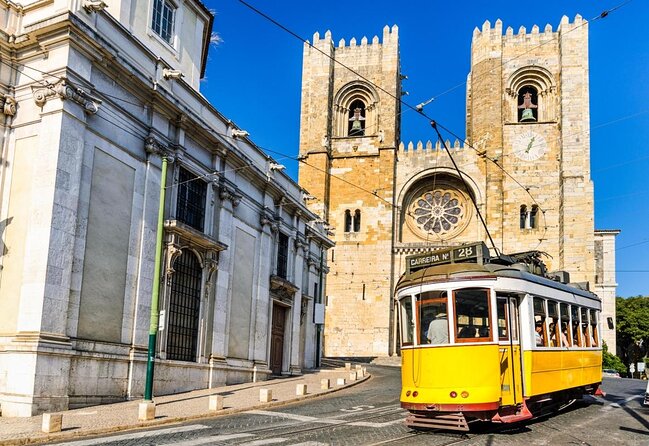
Next is Lisbon Cathedral, also called Sé de Lisboa, identified as the oldest church in Lisbon. Admission is €4, not included. Listed time is around 5 minutes.
This is a classic “see it now, decide later” stop. If you’re curious about interior architecture, you can plan for the ticket. If you’re trying to save time, you can still get a strong first impression from outside.
Practical note: since entry isn’t included, deciding on the spot is smarter than rushing into it. If lines or weather slow you down, you can adapt.
Stop 8: Panteão Nacional for the big white dome monument view
You’ll also pass Panteão Nacional, Portugal’s national pantheon and a key burial site for important Portuguese figures. Admission is €3, not included. The massive white dome is a skyline marker, so even if you skip entry, you’ll recognize it.
The listed time is around 7 minutes. This stop complements Lisbon Cathedral well: both are monumental religious landmarks, and together they help you see how Lisbon organizes power and memory in stone.
If you do pay the small fee, aim for a clear mental snapshot: exterior first, then decide if inside fits your remaining time.
Stop 9: Alfama for the old-city maze vibe (and fado atmosphere)
After the landmark monuments, you enter Alfama, described as Lisbon’s oldest neighborhood, spread along the slopes between São Jorge Castle and the Tagus River. The name is linked to Arabic roots meaning “hot fountains” or “baths.”
This stop is listed around 8 minutes, and it’s where Lisbon’s identity clicks. Alfama is full of historic attractions and, as the description notes, lots of fado bars and restaurants.
In a short visit, you’ll get the feel more than the full neighborhood. Use your time to:
- identify how streets curve and narrow,
- spot viewpoints that you might return to on foot later,
- and take a photo that shows the slope.
Also noted near this area is Convento do Salvador—a 15th-century palace converted into a factory and then into a hotel, positioned down the street from Miradouro das Portas do Sol and close to the castle. It’s not an entry stop here, but it’s a reminder that in Lisbon, “historic use” often changes over time.
Stop 10: Praça do Comércio (Terreiro do Paço) for the waterfront palace-square feeling
Next comes Praça do Comércio, still commonly called Terreiro do Paço, the large square by the Tagus River. It’s historically tied to Portuguese royal palaces, then government buildings, and shaped in the post-1755 reconstruction period.
The description also notes the scale: about 36,000 m² with 79 arches. Listed time is around 8 minutes, and admission is not included.
This stop is valuable because it changes the mood. Alfama feels tight and steep. Praça do Comércio feels open, grounded, and river-facing—great for a reset and a wide-angle photo.
Practical advice: if you want a calmer break, pick a spot where you can look at the river without needing to dodge crowds.
Stop 11: Feira da Ladra (Campo de Santa Clara) for market browsing and bargain hunting
Then you hit Feira da Ladra in Campo de Santa Clara, a popular market for new and second-hand items, antiques, crafts, and tiles. The tour description also points out bargain potential for original souvenirs.
This is listed around 8 minutes. In that time, you won’t “shop the whole market,” but you can still grab one or two meaningful souvenirs—or just experience the chaos and color without a full plan.
If you’re the type who likes bargaining, go early in your trip day energy. If you’re tired, keep it light: look, take photos, and pick one thing, not five.
Stop 12: Miradouro da Senhora do Monte for the big skyline view
Next you climb to Miradouro da Senhora do Monte, described as a sunset viewpoint where you can see a large portion of Lisbon. The listed stop time is about 10 minutes, and admission is free.
This is the “final view payoff” stop. Even if you don’t catch sunset, the viewpoint is still worth it because it shows Lisbon’s sprawl and hill structure.
Practical advice: wear something comfortable and plan for wind. Viewpoints can feel colder than nearby streets.
Stop 13: Shepard Fairey x Vhils mural in Graça (street art moment)
To close, you visit Shepard Fairey x Vhils in the Graça district. The mural is described as depicting a military woman with a flower gun, nodding to the Carnation Revolution and women’s rights—using the artists’ recognizable styles.
Time listed is short (around 2 minutes). This is mostly a photo-and-recognition stop: a quick culture hit that breaks up the typical viewpoint-heavy pattern.
If street art is part of your travel brain, this final touch helps Lisbon feel current, not just old.
Vehicles and audio: what can make or break the experience
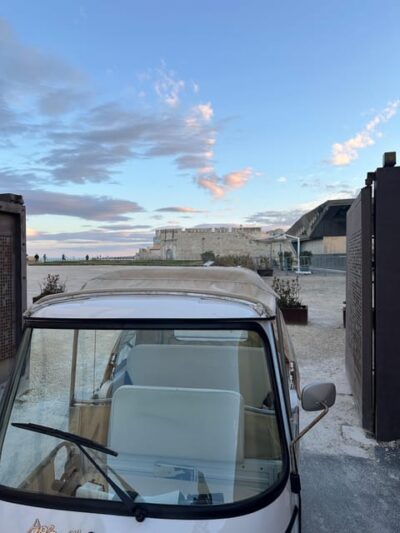
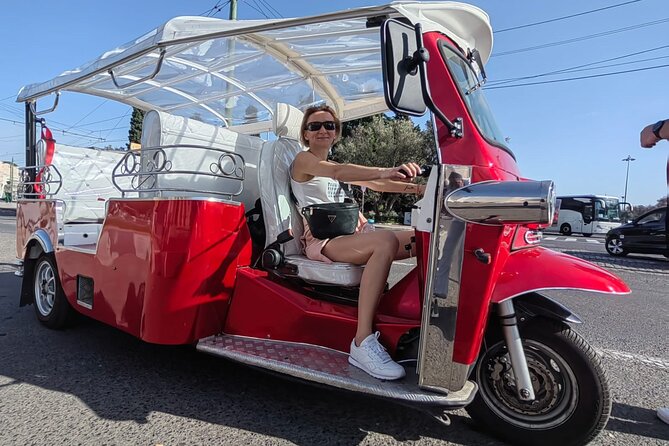
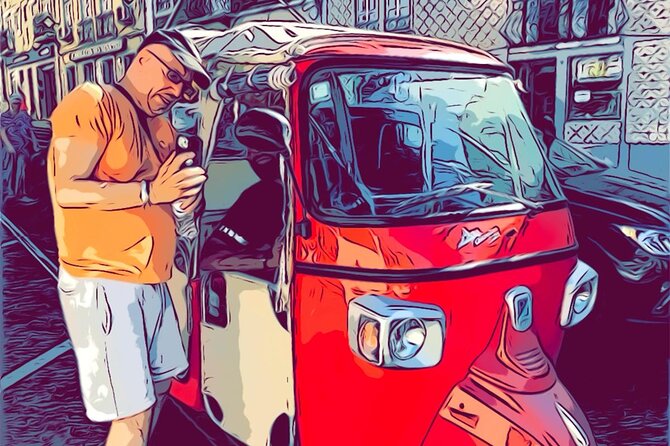
The tour includes private transportation and a tuk-tuk or buggy. That’s the fun part—seeing neighborhoods from a driver-run route with fewer navigation worries.
But pay attention to two practical factors:
- Some vehicles may feel more enclosed if you’re using protective coverings in weather. If you want maximum open-air sightlines while driving, ask what kind of vehicle you’ll get.
- A few people noted difficulty hearing the guide when there’s traffic noise and when there isn’t a microphone setup. So, at the start, ask your driver/guide to ensure you can hear them over the road noise.
It sounds small, but with a tour this short, hearing the stories matters. You’re paying for not just movement, but context.
Who this tour suits best (and who should skip it)
This is a great match if you:
- want a first-day Lisbon orientation in under two hours,
- prefer not walking uphill for long stretches,
- like viewpoints and want quick access to them,
- and want a private plan rather than crowd chaos.
It might not be your best choice if you:
- want deep museum time (like inside the Fado Museum) during the tour window,
- hate a schedule with short stops,
- or need a very talkative, audio-forward guide experience (because hearing can vary with vehicle setup and noise).
Should you book the Lisbon private tuk-tuk?
If your goal is to get your bearings fast, you should book this. The route is built for quick understanding: Chiado → viewpoints → Alfama → cathedral/monument landmarks → waterfront square → market browse → final viewpoint → street art.
Just make your expectations match the format. Choose your “worth paying extra for” moments ahead of time (Lisbon Cathedral and/or Panteão Nacional), and treat other stops as photo-and-feel breaks. If you do that, this tour becomes a smart foundation for the rest of your Lisbon days—one that helps you decide where to return on foot later.
FAQ
How long is the Private Tour in Lisbon with Tuk Tuk?
The tour runs about 1 hour 40 minutes to 1 hour 50 minutes.
Where do we meet, and is pickup available?
The meeting point is Hard Rock Cafe, Av. da Liberdade 2, 1250-144 Lisboa, Portugal. Pickup is offered, and you should wait at the lobby while sharing your correct phone number and email so the driver can contact you.
What is included, and what isn’t?
Included are private transportation and a tuk-tuk or buggy. Not included are lunch, and certain entrance fees such as Lisbon Cathedral (€4) and Panteão Nacional (€3). The Fado Museum ticket is also not included.
Is this a private tour?
Yes. It’s a private tour/activity, meaning only your group participates.
What language is the tour offered in?
The tour is offered in English.
What happens if the weather is bad?
This experience requires good weather. If it’s canceled due to poor weather, you’ll be offered a different date or a full refund.
Can I cancel for free?
Yes. Free cancellation is available up to 24 hours in advance for a full refund.