REVIEW · LISBON
Private 1H30 Tuk Tuk Tour in Lisbon City
Book on Viator →Operated by Tourism Hub Lisbon · Bookable on Viator
Lisbon is built for viewpoints, not walking marathons. This private 1H30 tuk tuk tour keeps you moving while still hitting the city’s best lookouts, with lots of time to stop for photos. I like that you get panoramic miradouros plus landmark history in one smooth loop. One thing to plan for: a few of the bigger sights (like the cathedral and National Pantheon) don’t include admission in the tour price, so you may need extra budget.
You’ll start near Time Out Market and end back there, with pickup available if you need it. The format is simple: short hops by tuk tuk, then quick breaks to take in places like Alfama and Lisbon’s grand squares without spending your whole day in transit or on steep sidewalks.
In This Review
- Key highlights you’ll feel fast
- Why a 90-minute tuk tuk works so well in Lisbon
- Where the tour starts: Time Out Market as your easy meeting point
- Pink Street’s darker past on Rua Nova do Carvalho
- Lisbon Cathedral (Se de Lisboa): from mosque to cathedral
- Miradouro Das Portas do Sol: Alfama’s classic high view
- Miradouro da Senhora do Monte: the big panorama plus live music vibes
- Mosteiro de São Vicente de Fora and the royal pantheon connection
- Panteão Nacional: Portugal’s heroes and the tombs you recognize
- Alfama streets: tram 28 energy, craft shops, and Fado mood
- Chafariz de El-Rei: Lisbon’s old water system story
- Fado Museum and Praça do Comércio: culture in two different volumes
- Rua Augusta Arch: an earthquake-rebuild monument in motion
- How the pace really feels in 1.5 hours
- Safety and comfort in a tuk tuk with seatbelts
- Price: what you’re paying for and what you might add
- Who should book this tuk tuk tour
- Should you book the Private 1H30 Tuk Tuk Tour in Lisbon?
- FAQ
- How long is the Private 1H30 Tuk Tuk Tour in Lisbon City?
- Where does the tour start and end?
- Is pickup available?
- Is this tour private?
- Are admission tickets included for the main sights?
- What’s the cancellation option if plans change?
Key highlights you’ll feel fast
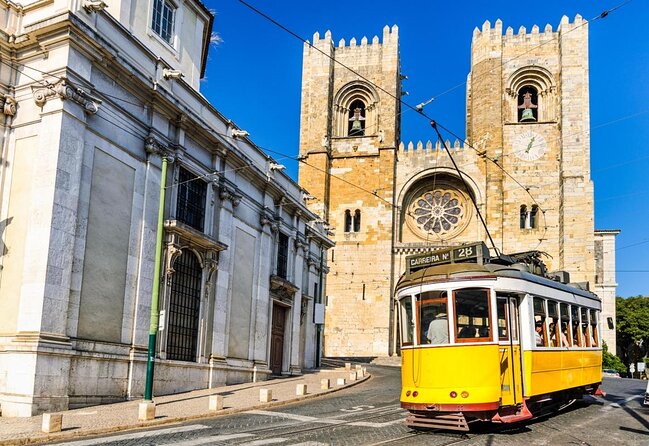
- Tuk tuk time-saving on Lisbon’s steep streets so you can actually see more in 90 minutes.
- Miradouro stops built for real skyline views, including Alfama’s heights and the big panorama from Senhora do Monte.
- Top history hits in one route: Se de Lisboa, Mosteiro de São Vicente de Fora, and the National Pantheon.
- Alfama without the stress: you’ll pass the tram line, craft shops, and the neighborhood’s classic Fado vibe.
- Lisbon’s water and maritime past via Chafariz de El-Rei and the stories tied to the old port city.
- A smooth photo-friendly pace, with time built into each stop rather than rushing straight through.
Why a 90-minute tuk tuk works so well in Lisbon

Lisbon’s charm is also its challenge. The city is steep, the streets are winding, and even “short” walks can turn into a sweaty mission. A tuk tuk tour fixes that problem by doing the hard part—getting you between viewpoints—while you focus on seeing the places that matter.
This one is a private tour, so you’re not stuck following a big crowd. That matters because you can take breaks when you want, get photos without shoulder-checking strangers, and ask your guide to slow down at the spots with the best angles. If you’re a first-timer, this is the kind of tour that helps you orient the city fast, so later, when you’re on your own, you know what you’re looking at.
Also, the tour is built around Lisbon’s “layers.” You get medieval church architecture, Moorish origins, royal tombs, and neighborhood stories—plus a few iconic harbor-and-earthquake landmarks—without the usual planning headache.
You can also read our reviews of more tours and experiences in Lisbon.



Where the tour starts: Time Out Market as your easy meeting point

You meet at Time Out Market (Mercado da Ribeira) on Av. 24 de Julho. It’s a convenient launch pad because it’s a major landmark area, with plenty of nearby transit options and food if you want to snack before or after.
If you request pickup, the guide may choose a pickup location and could change it ahead of time if needed. That’s normal for city tours, especially in crowded areas. My practical tip: if you have a hotel nearby that’s easy to reach, confirm the pickup spot early so you’re not playing phone-tag on the morning of.
You’ll return to the same starting point at the end. That makes planning the rest of your day much easier—no long “you end across town” scramble.
Pink Street’s darker past on Rua Nova do Carvalho
The tour begins with a story that flips the mood. You’ll pass Rua Nova do Carvalho, Lisbon’s so-called Pink Street, located in the Cais do Sodré area.
This is a port-city tale: when sailors came into Lisbon, there was gambling, drinking, and the kind of nightlife that leaves behind more than just souvenirs. Rua Nova do Carvalho became a meeting place for criminals and streetwalkers as well as prostitutes and shady bars. It’s a reminder that Lisbon’s nightlife districts aren’t new inventions—they’re built on older currents of trade and tourism.
Why I think this stop works even if you’re not into nightlife: it adds context. When you later walk around Cais do Sodré, you’ll understand what you’re seeing instead of just noticing neon and crowds.
Lisbon Cathedral (Se de Lisboa): from mosque to cathedral
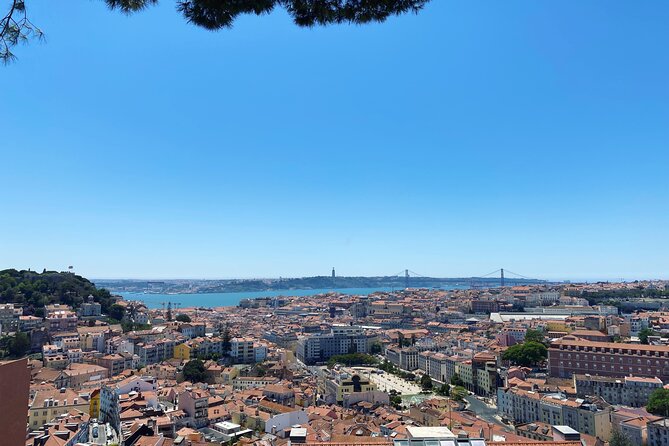
One of the first major historic stops is Lisbon Cathedral (Se de Lisboa), also noted as the oldest cathedral of Lisbon.
The story here is exactly the kind of layered history Lisbon is famous for: it was built by the Moors as a mosque in the 8th century, then after the Moorish defeat, it became Portuguese. Even if you only spend a few minutes inside or look around the exterior, the building is a physical timeline.
The tour allows time at this stop (about 5 minutes), and admission is not included. So if you want deeper time inside—architecture details, chapels, and views from within—you’ll likely need to decide whether to pay for entry.
A practical note: because the tour is short overall, the cathedral stop is best if you’re okay with a quick orientation moment. If you want a long, slow cathedral visit, pair it with separate time another day.
Miradouro Das Portas do Sol: Alfama’s classic high view

Then comes the “point and look” moment: Miradouro das Portas do Sol.
This viewpoint is tied to Alfama, Lisbon’s oldest neighborhood, and it’s described as one of Alfama’s highest vantage points. From here, you can look toward the cruise ship port, the River Tagus, and the Vasco da Gama Bridge, which helps you understand Lisbon’s geography beyond the hilltop streets.
This stop is also free for admission, and it’s brief by design. That’s ideal for a tuk tuk format: you get the payoff quickly, then move on.
If you’re traveling during cruise season, you may see a lot of ships. That can actually be a benefit. It makes the port views more dramatic and gives you a sense of how Lisbon operates as both a historic city and a working harbor.






Miradouro da Senhora do Monte: the big panorama plus live music vibes
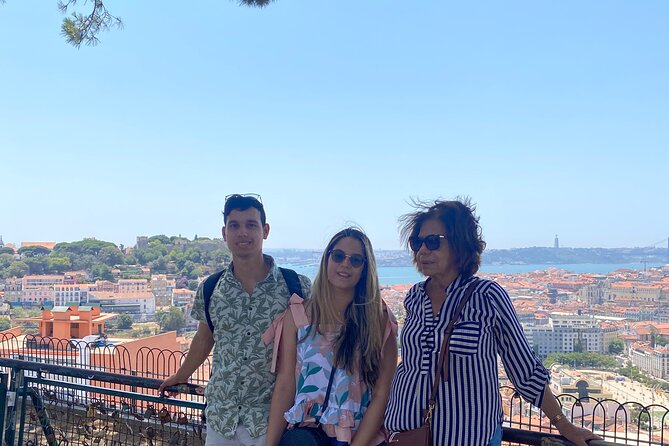
Next is Miradouro da Senhora do Monte, described as the highest viewpoint of Lisbon in this route.
This stop is all about scale: a panoramic overview of Lisbon and surrounding districts, with a view that includes São Jorge Castle. The route info also mentions live music in connection with the area, so even during a short stop, you might catch a bit of that atmosphere.
Admission is free, and the tour schedule gives about 5 minutes here. That’s enough time to frame a few photos and take in the city’s shape—the hills, the rooftops, and the way Alfama clings to its slopes.
My advice: plan your photos first, then relax for a minute. When you rush, you end up collecting images instead of actually understanding what you’re looking at.
Mosteiro de São Vicente de Fora and the royal pantheon connection

You’ll stop at Mosteiro de São Vicente de Fora, a church complex that’s described as the first one built by Portuguese outside the Royal Palace territory.
One of the reasons it’s worth quick attention is what the stop is linked to today: it’s associated with the Portuguese Royal family Pantheon, where royal family members are buried. The route info also points out colorful tile decoration and architecture details.
Admission is not included on this tour, so treat this stop as a guided orientation unless you’re willing to pay entry.
This is the kind of stop where even a few minutes can help you “read” Lisbon later. Portuguese church architecture can look similar at street level, but once you connect it to royal burial traditions and specific building choices, it clicks.
Panteão Nacional: Portugal’s heroes and the tombs you recognize
After that, it’s Panteao Nacional (National Pantheon), one of the tour’s strongest “name recognition” stops.
The route description highlights Portuguese heroes buried here, including Amália Rodrigues (often called the Fado queen), Eusébio (the famed footballer), and references to madrigal tombs associated with Vasco da Gama and Luís de Camões.
This stop is about 5 minutes, and admission is not included. If you’re a history buff—or if you already know you want to see the tombs—check your timing so you don’t feel rushed. The upside of the tuk tuk format is that you can decide quickly if you want to return later for a deeper visit.
Even without entry, you’ll get context. Lisbon’s identity is tied to music, exploration, literature, and sport as much as it is to monuments and streets.
Alfama streets: tram 28 energy, craft shops, and Fado mood
Then you roll into Alfama, the oldest neighborhood in Lisbon.
This part of the route is less about single monuments and more about feeling the place. You’ll be driven through the steep, historic streets lined with shops selling traditional crafts and cafes. The tour also points out the classic tram number 28, which climbs through Alfama on its way to São Jorge Castle.
The neighborhood also carries a “night signal” in the description: in the evening, long-running restaurants may have Fado music. Even if you’re not there at night, the area’s reputation comes through in the street layout and the way Lisbon keeps pointing you toward the sound.
This stop is free and short (about 5 minutes), so you’re not getting a full Alfama wander here. Instead, it’s a sampler that sets you up to explore later at your own pace.
Practical tip: if tram 28 is running when you pass, you’ll feel why it’s always photographed. If you miss it, it’s fine—you’ve still got the neighborhood’s shape and vibe.
Chafariz de El-Rei: Lisbon’s old water system story
A surprisingly memorable stop is Chafariz de El-Rei (Royal Fountain).
This is described as the oldest city spring and first public fountain in Lisbon, built in the 13th century using water from the Alfama slope. The story continues with royal involvement: King D. Dinis expanded it, and an order from King D. João II (1487) directed water through pipes to supply drinking water to ships setting off for commercial purposes and discovery expeditions.
The fountain once had nine working nozzles, each with different purposes, including one specifically mentioned for sailors.
Why this matters for your trip: it connects three themes—water engineering, everyday city life, and Lisbon’s maritime identity. It’s a break from big monuments, and it makes Lisbon feel lived-in instead of just photographed.
This stop is free and short, so you’ll mainly leave with the story and a sense of why Lisbon’s port history is everywhere.
Fado Museum and Praça do Comércio: culture in two different volumes
The tour passes the Fado Museum. It’s framed as more than a tribute to Fado. The description says it shows the cultural and political environment in Portugal, especially in Lisbon, throughout the 20th century.
That means you don’t need to be a Fado fan to enjoy it. Even if music isn’t your thing, you can still appreciate how Lisbon’s art forms mirror national life and politics.
From there, you’ll reach Praça do Comércio, a large, harbor-facing plaza. The route highlights its size and its connection to the harbor landscape. It’s one of the best places to look at Lisbon as a trading city—the kind of city where ships and people constantly reshape the streets behind them.
Admission isn’t mentioned for Praça do Comércio, and in a tuk tuk format this is more of a quick “feel the scale” moment than a museum visit.
Rua Augusta Arch: an earthquake-rebuild monument in motion
The route also passes the Rua Augusta Arch, described as a triumphal arch-like historical building at Praça do Comércio.
This one has a very specific reason for existence: it was built to commemorate Lisbon’s reconstruction after the 1755 earthquake. The description adds details like six columns and statues of historical figures.
Even if you don’t go inside (and this tour doesn’t promise entry), the arch works because it’s a visible marker of how Lisbon keeps rebuilding. It’s history you can literally walk under, and it helps you connect the earlier “old city” stops with the modern city plan around the harbor.
How the pace really feels in 1.5 hours
This tour is short by design: roughly 1 hour 30 minutes total.
Each stop is typically about 5 minutes. That sounds fast because it is. But the value is in the mix: you see big names, big views, and big neighborhood context without spending a day hopping buses.
One helpful detail from the experience reports: the group may be split across two tuk tuks. The tour format is still meant to keep everyone together, but you should know that your group might not all sit in the same cart.
Also, the pace includes time for photos and looking around, not just a drive-by. That balance is what makes this work for first-timers who want memory-making without a full day commitment.
Safety and comfort in a tuk tuk with seatbelts
You might wonder if Lisbon streets feel chaotic enough for a tuk tuk. In this format, safety seems built in: the reports note seatbelts and even mention that they can feel tight, with minimal bouncing even on bumpier stretches.
If you’re traveling with kids, grandparents, or anyone who dislikes unpredictable rides, this is exactly the kind of reassurance you want. Still, bring basic common sense: wear the seatbelt properly and keep your hands and bags secure, just as you would on any vehicle in a busy city.
Price: what you’re paying for and what you might add
The price is $78.31 per person for about 90 minutes. That’s not the cheapest way to do Lisbon, but it’s also not priced like a full-day private guide with vehicle all day.
Here’s what you’re really buying:
- Efficient routing between high-value stops.
- Private group time instead of being absorbed into a mass schedule.
- Photo-friendly stops at multiple viewpoints.
- History context so you’re not just passing buildings with no meaning.
What might cost extra:
- The tour notes admission tickets not included for places such as Lisbon Cathedral and the National Pantheon (and also indicates admission not included for Mosteiro de São Vicente de Fora).
So if you want to enter buildings rather than just see exteriors or viewpoints, you should set aside a bit more money.
Value check: if you’re only in Lisbon for a short stay, or you dislike long hill walks, this is a practical spend. If you’re the kind of traveler who loves slow wandering and you already plan to hike Alfama, you may feel less urgency for a short tuk tuk loop.
Who should book this tuk tuk tour
This tour fits best if you:
- Want major Lisbon sights in a short window.
- Prefer avoiding steep walking early in your trip.
- Like history that’s explained in plain language while you move through the city.
- Want viewpoints first, then neighborhood context.
It might be less ideal if you:
- Want extended time inside multiple churches or museums.
- Plan to do a lot of alfresco wandering and don’t need the orientation.
- Need a very slow pace with lots of transit time buffer.
For many people, the sweet spot is “I’m here for a few days and want to get oriented fast.” That’s where this route shines.
Should you book the Private 1H30 Tuk Tuk Tour in Lisbon?
If you want a quick, high-impact Lisbon sampler, I’d book it. The combination of miradouros, landmark history, and a private tuk tuk approach is a smart way to see a lot without burning your energy on hills.
Just go in with the right expectations: it’s short, so some stops are quick look-and-learn moments rather than deep museum time. If you like to enter and linger, plan to add extra time later for the cathedral or Pantheon.
If you’re ready to get your bearings fast and still leave with a real sense of Lisbon’s layers—port-city past, Alfama’s slopes, and the grand squares rebuilt after disaster—this is a strong choice.
FAQ
How long is the Private 1H30 Tuk Tuk Tour in Lisbon City?
It’s approximately 1 hour 30 minutes.
Where does the tour start and end?
Both the start and end are at Time Out Market (Mercado da Ribeira), Av. 24 de Julho, 1200-479 Lisboa, Portugal.
Is pickup available?
Yes, pickup is offered if required. The guide may change the pickup location and will inform you well ahead of time.
Is this tour private?
Yes. It’s listed as a private tour/activity, so only your group participates.
Are admission tickets included for the main sights?
No. The tour information notes admission tickets are not included for stops including Lisbon Cathedral (Se de Lisboa) and Panteão Nacional, and also indicates admission ticket not included for Mosteiro de São Vicente de Fora.
What’s the cancellation option if plans change?
You can cancel for a full refund if you cancel at least 24 hours in advance of the experience start time. If you cancel less than 24 hours before, the amount paid won’t be refunded.