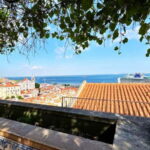
REVIEW · LISBON
Old Lisbon : Private Guided Tour by Electric Quad & Tuk Tuk
Book on Viator →Operated by Eco Wheels Tours · Bookable on Viator
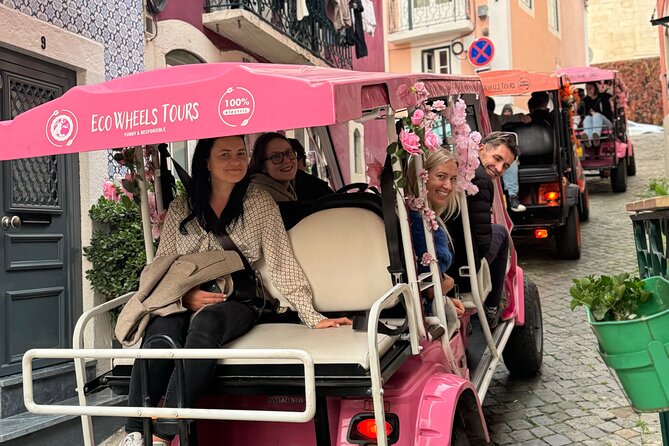
Lisbon hills meet wheels in a fun way. This private electric quad and tuk-tuk tour is built for moving fast between viewpoints, old churches, and lookout spots, with time to stop and take photos. I love the photo-friendly stops and the no-rush feel once you’re parked at a viewpoint.
What really sold me is how much you can cover with free admissions at several major sights, plus a Pastéis de Belém treat along the way. The one drawback to plan around: when weather turns cold or rainy, you may do less walking at certain stops, even though the ride is set up to keep you warmer than a straight walking tour.
In This Review
- Key things I’d mark on your map first
- Why Old Lisbon is made for tuk-tuks and electric quads
- Starting point near Praça do Comércio: the easy launch into Lisbon
- Stops that ground you in Lisbon’s core: Roman theater to the Cathedral
- Museu de Lisboa – Teatro Romano (Roman theater)
- Lisbon Cathedral
- Alfama viewpoints and Graça: where the photos actually make sense
- Alfama medieval streets + Portas do Sol and Santa Luzia
- Miradouro da Graça (Sophia de Mello Breyner Andresen)
- Miradouro da Senhora do Monte: Lisbon’s highest point
- Historic churches and monuments that feel like Lisbon’s memory
- Mosteiro de São Vicente de Fora
- Panteão Nacional (admission not included)
- Igreja de Nossa Senhora da Conceição Velha
- Largo do Carmo and the roofless Carmo Basilica
- Churches with big interiors: São Roque and the Chapel of St. John the Baptist
- Igreja de São Roque
- Miradouro São Pedro de Alcântara: finishing the “high view” loop
- Parque Eduardo VII and then the modern Lisbon feel
- Parque Eduardo VII
- A Paris-inspired boulevard and Pink Street
- Basilica da Estrela to LX Factory: churches, then art and street design
- Basilica da Estrela
- Assembleia da República
- LX Factory
- Pastéis de Belém: the stop that’s both tasty and efficient
- Pastéis de Belém
- The Belem stretch: what’s free, what needs tickets
- Palacio Nacional da Ajuda
- Jerónimos Monastery (admission not included)
- Torre de Belém (admission not included)
- MAAT (admission free)
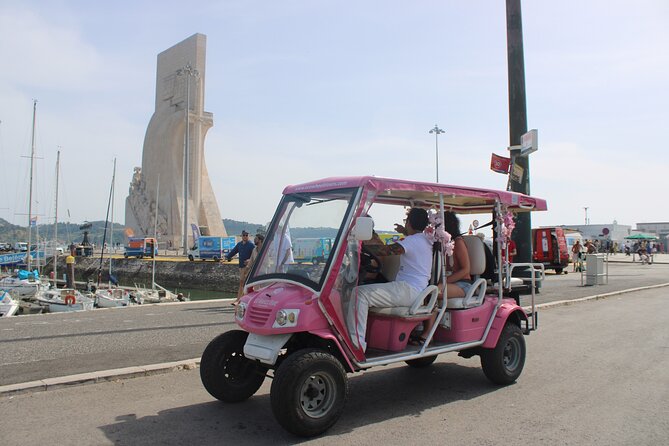
- Padrão dos Descobrimentos (admission not included)
- The value of the guide: safety, pacing, and real Lisbon storytelling
- Price and timing: how to pick 1, 2, 3, or 4 hours
- Should you book Old Lisbon by electric quad and tuk-tuk?
Key things I’d mark on your map first
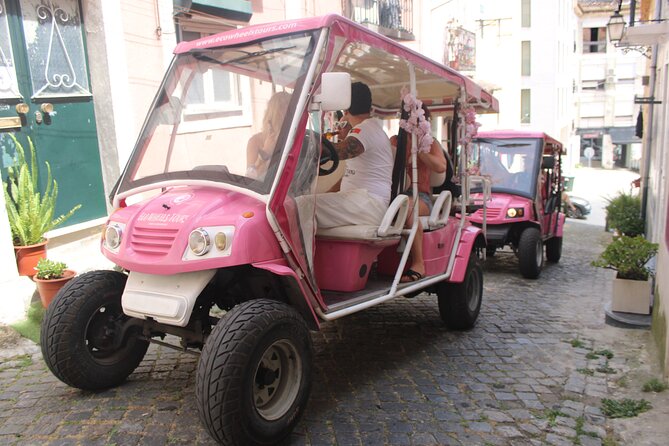
- Private tour pace: it’s just your group, so your guide can adjust the route and stops to fit your time.
- Electric quad + tuk-tuk comfort: you still get plenty of movement, but you avoid the steep, cobblestone punishment.
- Miradouro focus: multiple viewpoints let you see Lisbon from different angles, not just one scenic pull-off.
- Free-entry stops dominate: many landmark stops don’t require paid tickets to enjoy the time there.
- Pastéis de Belém included: you get one Pastel de Belém during the visit, which is a practical win on a tight schedule.
- Weather is handled better than you’d expect: the open-air style ride is paired with protective cover and quick photo help when conditions get rough.
Why Old Lisbon is made for tuk-tuks and electric quads
Lisbon looks compact until you start walking. Then you remember the hills, the narrow streets, and the way everything climbs like it’s personally offended by your shoes. That’s where a tuk-tuk or electric quad shines.
On this tour, the vehicle gets you up and around key neighborhoods without draining your day. You’re not stuck choosing between seeing a lot and actually enjoying it. And because it’s private, you’re not forced into someone else’s pace.
The setup also helps with photos. Instead of sprinting from street corner to street corner, you can stop at viewpoints long enough to frame the skyline, rotate for better angles, and get real shots of tiled façades and church domes.
And yes, you’ll hear history too, but the practical goal is simple: you get oriented fast, so you know what to return to later on foot.
You can also read our reviews of more tours and experiences in Lisbon.



Starting point near Praça do Comércio: the easy launch into Lisbon
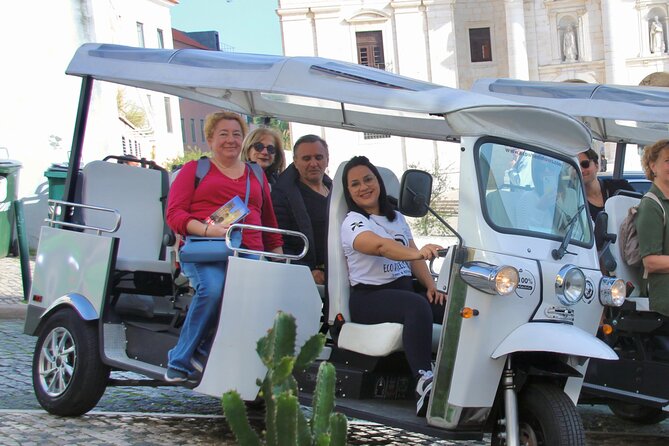
Most tours in Lisbon start with a hike. This one starts with you meeting at R. do Comércio 44, 1100-150 Lisboa. It’s a handy area for kicking things off, especially if you’re already spending time near the waterfront district.
If you opt for pickup, hotel transfers are part of the package. That matters because Lisbon’s hills can eat time quickly. Less time spent figuring out the best route on your own means more time at miradouros and inside the stops you care about.
This also sets expectations for the day: your guide is there to shepherd the route so you spend less time navigating and more time actually seeing.
Stops that ground you in Lisbon’s core: Roman theater to the Cathedral

This is where the tour gives you context, not just scenery.
Museu de Lisboa – Teatro Romano (Roman theater)
Your first major stop is Museu de Lisboa – Teatro Romano, a roman theater built in the first century. Even if you’re not a hardcore Roman-history person, it’s a solid early anchor. It shows Lisbon’s timeline in a concrete way: this city didn’t start as a postcard.
The stop is short, and the admission ticket here is listed as free, so it’s a low-effort add-on.
Lisbon Cathedral
Next up: Lisbon Cathedral. It’s described as a symbol of the reconquest of the city by Portugal’s first Christian king. That’s useful framing, because it helps you interpret the area around Sé (the surrounding streets and church presence) rather than treating everything like separate stops.
Again, this one is quick, and the admission ticket is free in the plan.






Alfama viewpoints and Graça: where the photos actually make sense
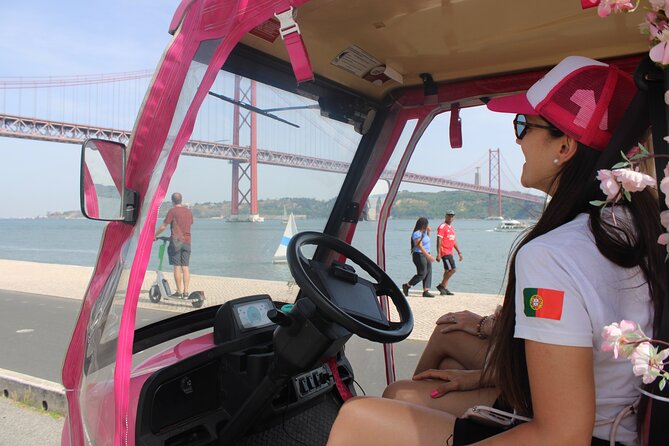
After the foundational sights, the tour turns to the part of Lisbon that most people come for: views, winding lanes, and the feeling of being in an older city.
Alfama medieval streets + Portas do Sol and Santa Luzia
You’ll stroll through Alfama, a medieval neighborhood with that classic layered look: stonework, steep steps, and windows stacked like they’re holding secrets. The plan specifically calls out panoramic viewpoints from Portas do Sol and Santa Luzia.
This is one of the best segments to slow down. Don’t rush. Spend a few extra minutes looking toward the river and spotting rooflines. The terrain makes Lisbon easy to photograph but hard to mentally map when you’re walking fast.
Admission here is listed as free, and the allotted time is around 25 minutes.
Miradouro da Graça (Sophia de Mello Breyner Andresen)
Then you go to Miradouro da Graça, with free access to Convento da Graça noted in the tour plan. This is a viewpoint-plus-church moment, which is great when you want both skyline views and a sense of place.
The stop duration is around 15 minutes. It’s enough time to grab photos, stand back, and then enjoy the surrounding atmosphere without turning into a full detour.
Miradouro da Senhora do Monte: Lisbon’s highest point
The next big view is Miradouro da Senhora do Monte, described as Lisbon’s highest point for panoramic city scenes. This is the stop that helps everything click. When you see Lisbon from higher up, you suddenly understand how the neighborhoods relate.
Plan for another ~15 minutes here. Admission is listed as free.
Historic churches and monuments that feel like Lisbon’s memory

Lisbon keeps certain stories in stone. This portion leans into that.
Mosteiro de São Vicente de Fora
You’ll visit Mosteiro de São Vicente de Fora, described as a historic landmark known for architecture and history. It’s a short stop (about 5 minutes) and marked free, so think of it as a quick art-and-stone moment. It’s the kind of place you appreciate most when you’re not exhausted from walking.
Panteão Nacional (admission not included)
Next comes Panteão Nacional, a monument that houses tombs of Portugal’s notable figures. The tour plan lists the admission as not included, so you may want to budget for a ticket if you decide to go inside (or if you’re visiting specifically for the interior).
It’s a quick stop (around 5 minutes), but it’s still worth knowing this one may cost extra.
Igreja de Nossa Senhora da Conceição Velha
There’s also a stop for Igreja de Nossa Senhora da Conceição Velha, noted for Manueline architecture from Portugal’s Renaissance era. This is a great contrast after the broader skyline viewpoints. You’re shifting from the city’s “where am I?” moment to “look at the details” moment.
Admission is listed as free in the plan.
Largo do Carmo and the roofless Carmo Basilica
Then: Largo do Carmo, home to the roofless 14th-century Carmo Basilic, a reminder of the 1755 earthquake. This is one of those places where Lisbon’s past isn’t abstract.
The stop is short (about 5 minutes), and it connects to an optional practical idea: the plan notes nearby Santa Justa Elevator as a scenic shortcut toward the Baixa district. Even if you don’t ride it, it helps you understand how Lisbon’s layers connect.
Admission is listed as free for this stop.
Churches with big interiors: São Roque and the Chapel of St. John the Baptist
Igreja de São Roque
Igreja de São Roque is listed as a highlight, especially for its Chapel of St. John the Baptist, often described as one of the most expensive chapels ever built. The stop is about 5 minutes, with free admission listed.
Even if you can’t see everything in that time, the exterior and the significance are enough to make it feel like Lisbon, not just a collection of points on a map. If you like ornate religious art, this is one of the stops you’ll feel most.
Miradouro São Pedro de Alcântara: finishing the “high view” loop

You’ll reach Miradouro São Pedro de Alcântara next, with Lisbon’s historic center framed from another angle. The tour plan positions it as the opposite-side complement to the highest point visit.
This pairing is smart. Seeing two strong angles prevents the “same-view, same-photo” problem. It’s another short stop (~10 minutes) with free access noted.
Parque Eduardo VII and then the modern Lisbon feel
Not all Lisbon vibes are medieval.
Parque Eduardo VII
Parque Eduardo VII is Lisbon’s largest central park, and the plan calls out views over the city and the Tagus River. It’s about 10 minutes with free access listed.
Parks are also a good reset after lots of stairs and narrow streets. Even a short break here can make the rest of the day feel easier.
A Paris-inspired boulevard and Pink Street
The tour then moves into Lisbon’s more modern, showy side. There’s mention of an elegant boulevard lined with luxury shops and leafy promenades, described as inspired by Parisian charm. Then you hit Pink Street, known for nightlife, with pink pavement and lively cafés.
These stops are brief (around 5 minutes each), with free admission listed. They’re not about museums here. They’re about giving you a feel for where locals might stroll at night and where the city’s mood changes.
If you’re staying in Lisbon for more than a day, this is helpful: you’ll know which areas are for views and which are for evenings.
Basilica da Estrela to LX Factory: churches, then art and street design
Basilica da Estrela
Basilica da Estrela is described as baroque, with a grand dome, located in a quieter neighborhood. The plan gives about 5 minutes and free admission.
This stop works well because it’s a change of tempo. You’re not on the skyline anymore. You’re in a calm church setting that feels more neighborhood than tourist circuit.
Assembleia da República
Next: Assembleia da República, the neoclassical seat of Portugal’s Parliament. It’s on a hill and loaded with political history in the plan description.
This is another quick stop (~5 minutes) with free admission listed. Think of it as a “Lisbon isn’t only churches and viewpoints” moment.
LX Factory
Then there’s LX Factory, a creative hub set in a former industrial complex with street art, design shops, cafés, and Lisbon’s trendiest cultural spaces (as described in the plan). The stop is about 15 minutes, free.
This is one of the better “you can actually explore a bit” moments. If you like design stores or street-art wandering, this is where you’ll enjoy slowing down, even if only briefly.
Pastéis de Belém: the stop that’s both tasty and efficient
Pastéis de Belém
You’ll visit Pastéis de Belém, where you can watch how the famous custard tarts are made. Best part: the plan says one fresh Pastel de Belém is offered to each guest.
This is a smart inclusion because it solves a common travel problem. You’re sightseeing all day, and you need an easy, local food win that doesn’t require research on the fly.
It’s about 15 minutes and free admission is listed for the stop itself. The point is not to turn it into a full pastry vacation. It’s to give you a classic Lisbon taste while you’re already nearby in the tour flow.
The Belem stretch: what’s free, what needs tickets
The later stops skew toward Portugal’s Age of Discoveries and modern riverfront culture. This portion is most satisfying if you choose a longer tour window.
Palacio Nacional da Ajuda
Palácio Nacional da Ajuda is a royal neoclassical palace. The plan calls out lavish interiors, historic artifacts, and 19th-century Portuguese royalty.
This stop is around 10 minutes with free admission listed.
Jerónimos Monastery (admission not included)
Then you reach Mosteiro dos Jerónimos, described as a UNESCO masterpiece of Manueline architecture built to honor the Age of Discoveries and maritime glory.
Admission is listed as not included. The stop is around 10 minutes, so if you want time inside the monastery itself, you may want to plan a ticket in advance.
Torre de Belém (admission not included)
Next is Torre de Belém, described as the iconic fortress that guarded Lisbon Harbor during the Age of Discoveries. Admission is also not included, and the stop is about 15 minutes.
If you’re the type who needs to go inside, this is where your extra ticket budget matters. If you’re happy with exterior views, this can still be a strong photo stop in that timeframe.
MAAT (admission free)
You then hit MAAT – Museu de Arte, Arquitetura e Tecnologia, a modern art museum with futuristic design and a rooftop viewpoint mentioned in the plan.
Admission is listed as free here, with about 10 minutes. This contrast is a good way to avoid ending the day on only heavy monuments. It shifts your eyes from medieval stone to modern angles.
Padrão dos Descobrimentos (admission not included)
Finally, Padrão dos Descobrimentos is described as a bold riverside monument honoring Portugal’s explorers, shaped like a ship’s prow with iconic historical figures.
Admission is listed as not included, and the stop is about 15 minutes. If you’re excited by symbolism and design, this one is a solid ending.
The value of the guide: safety, pacing, and real Lisbon storytelling
A big reason this tour gets consistently high marks is the guide experience. You can run into different personalities depending on the day, but names that pop up include Mauricio, Shah, Joao, John, Julio, Yasin, Rai, Mobarok, Yossi, and Johnny.
What matters for you isn’t the name, though. It’s the behavior:
- Guides help you get where you need to go without drama.
- They make photo stops actually work for you, not just for their schedule.
- They’re often willing to adjust when the weather isn’t cooperating.
If you have specific priorities, ask your guide early. For example, if you really want to include the places with tickets not included (like Panteão Nacional, Jerónimos, Torre de Belém, and Padrão dos Descobrimentos), ask which ones are planned for your exact route length. That one question can prevent disappointment.
Also, if you’re prone to motion sickness, keep in mind the tour involves driving through Lisbon quickly on curved streets. One person in the feedback described needing Dramamine for the ride. If that’s you, plan accordingly.
Price and timing: how to pick 1, 2, 3, or 4 hours
The listed price is $16.45 per person, with a duration of about 1 to 4 hours. The itinerary can vary based on how long you book.
Here’s how to think about value:
- If you only have a short window, you’re buying efficiency. You’ll get a fast orientation to old districts plus key viewpoints.
- If you go longer, you’re buying variety: more viewpoints, more churches, and a better shot at finishing the riverfront/Belém stretch.
Because the itinerary includes many free-entry stops, you can often keep your day spend under control. The paid admissions to watch for are the ones explicitly listed as not included: Panteão Nacional, Jerónimos Monastery, Torre de Belém, and Padrão dos Descobrimentos.
A practical tip: this tour is ideal as an early-day plan. It helps you decide what you want to revisit later without wasting hours getting your bearings.
Should you book Old Lisbon by electric quad and tuk-tuk?
Book it if you want a high-impact way to see Old Lisbon and a chunk of Belém without turning your day into a leg workout. It’s especially smart for:
- first timers who want orientation
- anyone who doesn’t love hills and cobblestones
- groups that want one shared plan with photo stops
Skip or rethink if you know you only want a few specific paid attractions and you dislike the idea of weather affecting how much you walk at each stop.
If your goal is to see the city’s best angles, get a taste of classic Lisbon food, and leave with a map in your head, this tour is a very reasonable way to start.