REVIEW · MUNSTER
Münster Unpacked Tour : Rickshaw City Tour with Guide
Book on Viator →Operated by Leezen Heroes · Bookable on Viator
One hour, but it hits a lot of Münster. A guided Rickshaw City Tour is a smart way to get your bearings, then hear the city’s big twists as you glide past the places that matter.
What I like most is the mix of sights and street-level context. You get to park at the Historisches Rathaus, the cathedral area, and the lakeside park without spending your legs on a long walk.
One thing to consider: the whole experience is tight on time. If the rickshaw has an operational hiccup (there was at least one mention of battery trouble), you may feel like the hour ends sooner than expected.
In This Review
- Key highlights that make this one worth your time
- Why this rickshaw tour fits Münster so well
- Price and timing: what $41.57 buys you in real terms
- Starting at Prinzipalmarkt: quick orientation in the heart of town
- Stop 1: Historisches Rathaus Münster and the Friedenssaal
- Stop 2: Münster Cathedral (St. Paulus Dom) and the origin story
- Stop 2 (market chapter): what Münster’s weekly markets feel like
- Stop 3: Schloss Münster (prince-bishop’s palace) and the 1780 build
- Stop 4: St Lambert’s Church and the stories in the details
- Stop 5: Antiquariat Michael Solder and a pop-culture wink
- Stop 6: Erbdrostenhof, baroque drama at second glance
- Stop 7: Aasee park, sculptures, and what to do after
- What the guide style feels like (and what to watch for)
- Who should book this rickshaw city tour
- Should you book the Münster Unpacked Rickshaw City Tour?
- FAQ
- What is the duration of the Münster rickshaw city tour?
- How much does the tour cost?
- Is the tour offered in English?
- Where do I meet for the tour?
- Is admission included for the main stops?
- How many people are in a group?
- Is there a mobile ticket?
- What is the cancellation policy?
- Are service animals allowed?
Key highlights that make this one worth your time
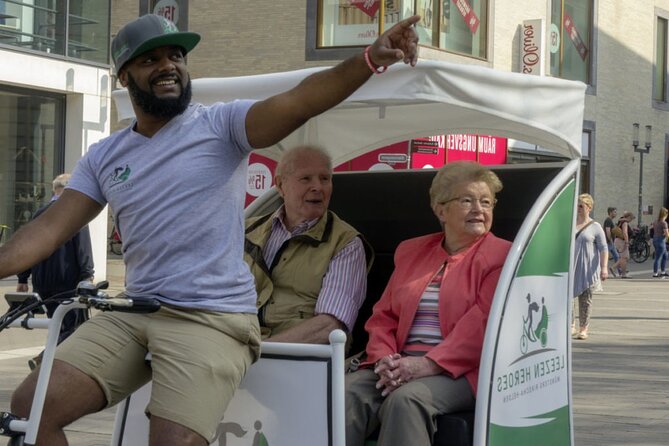
- Small-group feel (max 14) that keeps the guide’s attention on you, not on a crowd.
- English guides and quick, clear storytelling that fits a 1-hour rhythm.
- Free-entry stops at every main stop, so you can focus on seeing and listening.
- Münster’s bike-city angle: the rickshaw is a good match for getting around efficiently.
- From medieval roots to modern moments at locations tied to the Hanseatic League and the 2023 G7 meeting.
- Aasee park break with sculptures plus tips for what to do after.
Why this rickshaw tour fits Münster so well
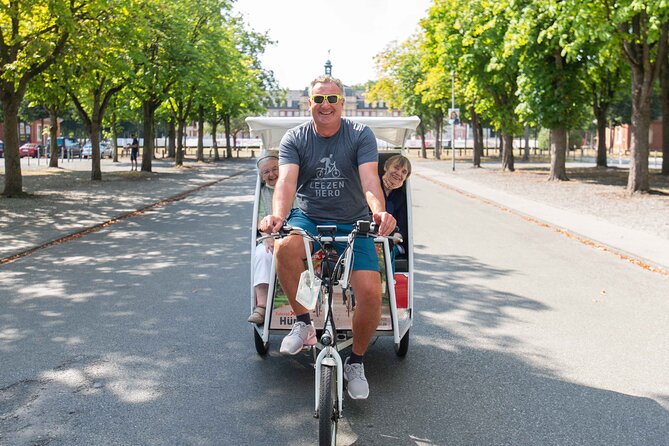
Münster is the kind of city where you can walk it, sure. But it’s also a place that rewards looking at details while you move at a comfortable pace. That’s where the rickshaw shines. You’re not stuck in traffic or walking long distances between stops. Instead, you get a steady flow of viewpoints, then short stops where the guide points out what you’d easily miss on your own.
I also like that the route is built for “first-time in town” energy. You start right in the historic center area at Prinzipalmarkt 10, and the tour loops through the core sights in a way that helps you understand how the city is layered: civic power, religious origins, market life, and public spaces along the water.
Most of all, this is a listening tour. The rickshaws keep your legs fresh, and the guide uses each stop as a chapter. If you’re the kind of person who likes history told like a story (not a textbook), this format suits you.
Price and timing: what $41.57 buys you in real terms
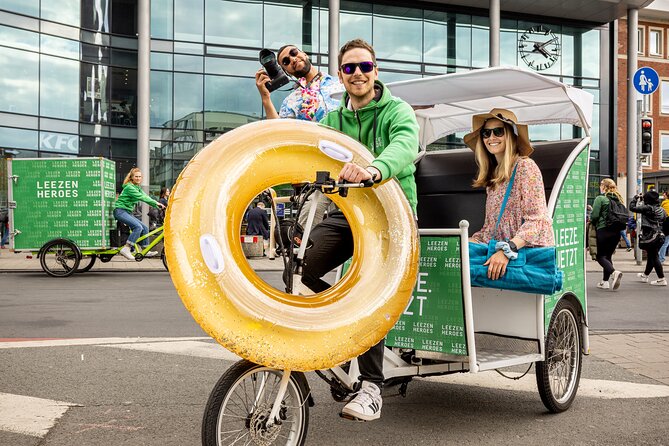
The price is $41.57 per person for about 1 hour. On paper, it’s a short slot. In practice, it’s designed like a city “sampler,” where you trade deep, time-consuming museum visits for a guided highlights route.
That value comes from three things you can actually feel:
- You get transportation plus guiding in one package (private transportation is included).
- Most stops are free entry, so you’re not paying extra to access the viewpoints your guide is taking you to.
- The stops are timed, which makes planning easier if you have a lunch reservation or an evening plan after.
If you’re visiting with limited time, this kind of tour can help you decide what to do next on your own. You’ll leave knowing what’s worth a longer look later, and you won’t feel like you wandered randomly.
Starting at Prinzipalmarkt: quick orientation in the heart of town

The tour begins at Prinzipalmarkt 10 and ends back at the same meeting point. That matters more than it sounds. If you’re arriving by tram or bus, you can stay flexible and not worry about getting back across town at the end.
Once you’re mounted up, you’ll get that classic Münster advantage: everything feels close together, but the guide helps you understand what each location signals. The route is short enough that you can keep your attention on stories, not logistics. If you’re traveling with someone who hates long walks, this is a good compromise too.
And since this experience is in English, you won’t have to work to translate the city’s meaning. You can focus on the details as they’re explained and then use your phone to take pictures of the right things.
Stop 1: Historisches Rathaus Münster and the Friedenssaal
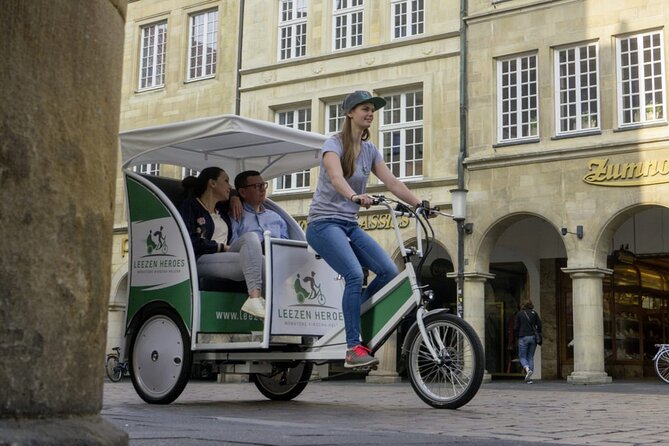
The tour starts with a top-tier civic stop: the Historisches Rathaus Münster and its Friedenssaal. This isn’t just a pretty facade. You get the sense of why it matters, past and present.
What makes this stop interesting is the way it connects different eras:
- It’s tied to the Hanseatic League story of Münster.
- It also links to modern political attention, since the G7 meeting took place there in 2023.
The guide doesn’t treat the building like a distant monument. You’ll hear how a place like this becomes the stage for power and decisions. Even if you’re not a politics person, it’s one of those stops that adds weight to the city. After this, Münster feels less like a postcard and more like a place with real influence.
Practical note: the stop is short (about 5 minutes), but entry here is listed as free, so you’re not juggling tickets.
Stop 2: Münster Cathedral (St. Paulus Dom) and the origin story
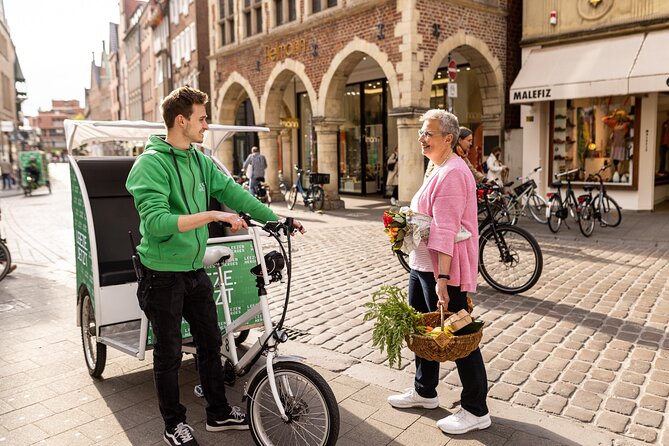
Next comes Muenster Cathedral, St. Paulus Dom. This is the kind of stop where the guide can turn a landmark into a timeline.
The big idea you’ll hear: this is a key site connected to where Münster was founded. With that framing, the cathedral stop stops being a single building and starts being the beginning of the city’s storyline.
Even in a quick 5-minute window, you’ll likely come away with two useful takeaways:
1) the cathedral anchors the city’s early religious identity, and
2) the city grew around ideas and institutions, not just streets.
If you’re the type who likes to return later and look longer, this is a good “show the door, then invite you back” start point.
Stop 2 (market chapter): what Münster’s weekly markets feel like
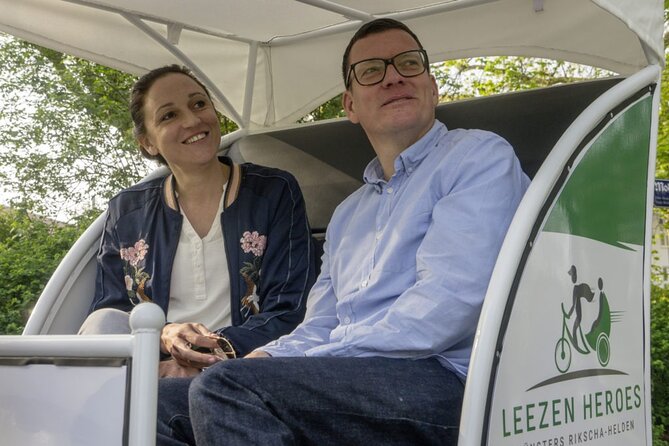
One of the most memorable parts is the market-focused segment: the weekly market on Wednesdays and Saturdays. The idea here isn’t just to see stalls. It’s to understand how Münster’s daily life shapes the city.
The guide gives the background on how the markets developed and shares practical tips and tricks. Even if you only catch a slice of the market, you’ll understand what you’re seeing: trade, routine, and community energy in an ordinary setting.
This matters because it’s the opposite of a “look but don’t touch” sightseeing day. Markets are where you learn how locals use the city. When you’re done with the tour, you’ll be better equipped to wander with purpose—knowing what to notice and when.
Stop 3: Schloss Münster (prince-bishop’s palace) and the 1780 build
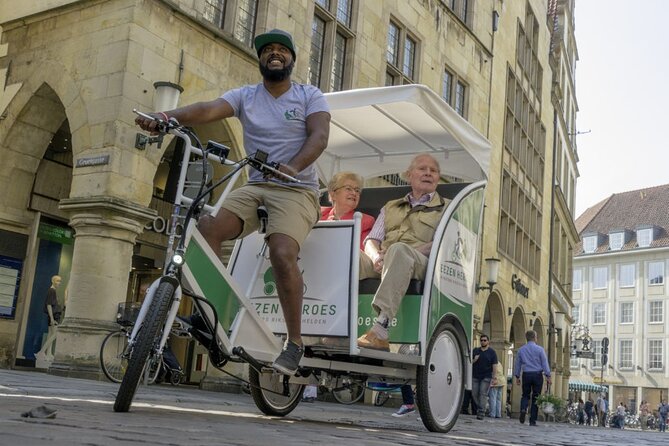
Then you roll to Schloss Munster, built in 1780. This is the prince-bishop’s palace and a recognizable landmark in the city.
One of the nice things here is that the stop isn’t just about the exterior. If you’re interested, you can take a look at the castle garden as part of the visit window.
Why it’s worth your time: palaces like this explain the power structure that came before modern city governments. You’ll hear how church and political authority overlapped in earlier Münster life. And even if you don’t go deep, seeing the palace as part of a chain of stops helps everything connect.
Entry is listed as free, and you get about 5 minutes to soak it in before moving on.
Stop 4: St Lambert’s Church and the stories in the details
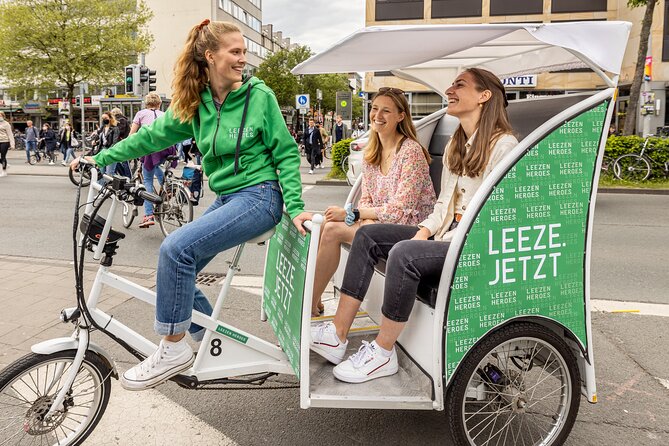
St Lambert’s Church is a stop where the guide’s storytelling really matters. The landmark is packed with references, and the tour gives you the human layer behind the architecture.
You’ll hear mention of stories like:
- the tower woman
- the baskets of the Anabaptists
- connections to classical poets
- and references to modern art
That mix can sound wild at first. But here’s why it works: it shows that Münster doesn’t only preserve its past. It also reinterprets it, and layers meaning over time.
The practical angle: because the stop is short (again about 5 minutes), the guide acts like your personal highlight map. You get told what to look for without needing to research for hours ahead of time.
Stop 5: Antiquariat Michael Solder and a pop-culture wink
Next is Antiquariat Michael Solder, an antiquarian bookshop known from the German TV series Wilsberg.
This stop is a small one, but it’s a fun change of pace. City tours often focus only on big monuments. Here, you get something that reflects Münster’s everyday culture and how media can put a spotlight on local places.
Even if you’re not a Wilsberg fan, it’s still useful. Bookshops like this tend to serve as quiet cultural hubs. Seeing it on the route helps Münster feel lived-in, not just historic.
Stop 6: Erbdrostenhof, baroque drama at second glance
The tour then pauses at Erbdrostenhof, described as a baroque magnificent building where you notice more on a second look than on the first.
That phrasing is spot-on for why this stop works on a guided route. If you’re only glancing while passing, you may miss the details that create the atmosphere. With the guide’s cues, you can see the design thinking: ornamentation, symmetry, and the way baroque architecture tries to impress.
You’ll get about 5 minutes here, and entry is listed as free, so it’s another low-friction stop that adds visual rewards fast.
Stop 7: Aasee park, sculptures, and what to do after
Last on the route is Aasee, the lake-area park. This is the most relaxed section, with about 10 minutes allotted.
The guide focuses on the scenic feel of the park, plus numerous sculptures. This is where the tour shifts from “historic chapters” to “present-day space.” You’re not just learning facts anymore. You’re getting a sense of how people actually spend time here.
Aasee is also a practical end-of-tour finish. The guide shares tips for going out, which is helpful if you’re planning dinner or an evening stroll afterward. Even if you don’t follow every suggestion, the tour gives you a framework for where the action tends to be.
And since the tour ends back at the starting point, you won’t be stuck figuring out a complicated return.
What the guide style feels like (and what to watch for)
The biggest pattern in the experience is storytelling. Guides like Stefan and George (when you’re matched with them) explain the city with vivid, humorous energy. That comes through in how they connect landmarks to everyday meaning: politics at the Rathaus, origin stories at the cathedral, and lived culture via markets and local shops.
The small-group size (maximum 14 travelers) also helps. In a group that small, you’re more likely to hear the guide clearly and get the sense of a personal pace rather than a factory line.
Now, the consideration: because it’s a mostly fixed-duration plan, anything that affects the rickshaw’s operation can compress the experience. You can’t control that. But you can control how tightly you schedule your day. If you have a tight appointment right after the tour, give yourself some breathing room.
Also, if you’re sensitive to sound or you want quiet listening time, consider that the weekly market segment can be lively when it’s market days (Wednesdays and Saturdays).
Who should book this rickshaw city tour
I’d point you to this if:
- you want a fast first look at Münster with a guide doing the heavy lifting on context
- you prefer short stops with meaningful explanations over long museum sessions
- you’re traveling with someone who wants to minimize walking
- you like seeing both civic landmarks and everyday culture in one loop
You might hesitate if:
- you only have a super tight one-hour window and zero flexibility for delays
- you’re expecting a deep, long-form visit of each site (this is built for snapshots with guidance)
But if you’re aiming for orientation plus stories, it’s a solid fit.
Should you book the Münster Unpacked Rickshaw City Tour?
If your goal is to understand Münster quickly and feel confident wandering afterward, I think this is a strong booking. For $41.57 you get guide-led stops at major landmarks, free-entry highlights, and a comfortable ride through the center with a small group cap.
My recommendation comes down to value and pacing. The route covers the city’s key identity points—Rathaus power and the G7 connection, the cathedral’s origin role, market life on Wednesdays and Saturdays, palace and church stories, then a calmer finish at Aasee with sculpture time.
Just build in a little buffer in your schedule. A fixed 1-hour plan is great when everything runs smoothly, and it’s still workable if you know to keep your next plan flexible.
FAQ
What is the duration of the Münster rickshaw city tour?
It runs for about 1 hour.
How much does the tour cost?
The price is $41.57 per person.
Is the tour offered in English?
Yes. The tour is offered in English.
Where do I meet for the tour?
You start at Prinzipalmarkt 10, 48143 Münster, Germany.
Is admission included for the main stops?
The tour notes free admission for the listed stops.
How many people are in a group?
This experience has a maximum of 14 travelers.
Is there a mobile ticket?
Yes. The tour includes a mobile ticket.
What is the cancellation policy?
You can cancel for a full refund up to 24 hours in advance. After that, the amount paid is not refunded.
Are service animals allowed?
Yes. Service animals are allowed.
—
If you tell me your travel dates (and whether you land on a Wednesday or Saturday), I can suggest a simple plan for the hours before or after this tour so you get more from Münster.