REVIEW · LISBON
Lisbon-Private Tuk Tuk Tour With Free Hotel Pickup & Drop off
Book on Viator →Operated by Lisbon Private Tuk Tuk Tours · Bookable on Viator
Lisbon is steep, so ride smart. This private tuk-tuk tour strings together Alfama hilltop views and Belém riverside sights, with free hotel pickup and drop-off to cut down on time lost to taxis or steep stairs. You’ll also get an English-speaking guide and a route that keeps the day feeling organized instead of chaotic.
I especially like the way the guide helps you hit the best photo angles at viewpoints without guessing. In particular, riders singled out guides like Mukhbirul for being very helpful with pictures, and Fahad for adjusting the plan when part of the route was already covered and still keeping the day on track.
One drawback to plan around: many stops are short, and several major sights have tickets that are not included, so this works best as a highlights route, not a slow, deep museum day.
In This Review
- Key highlights to know before you go
- Private Tuk-Tuk Logistics: Pickup, Timing, and How the Day Flows
- First Up: Alfama and Mouraria’s Narrow-Lane Magic
- Santa Luzia Viewpoint: Azulejos, Shadows, and River-Blue Views
- Elevador de Santa Justa: That Neo-Gothic Lift You’ll Remember
- São Pedro de Alcântara and Senhora do Monte: Two Views, Different Moods
- Miradouro das Portas do Sol: Lisbon’s Balcony Feel
- Castelo de São Jorge: The Walls, the Views, and the Ticket Reality
- Feira da Ladra and the Pantheon: Market Energy Plus Portugal’s Memorial Side
- São Vicente de Fora: The Tile-Painting Legends and Saint Stories
- Belém by Tuk-Tuk: Tower, Monastery, Discoveries, and Pastéis
- Praça do Comércio and Lisbon Cathedral: Empire Square Meets Medieval Stone
- Price and Value: What $36.12 Buys You (and What It Doesn’t)
- Who This Tour Suits Best, and Who Should Skip It
- Should You Book This Lisbon Private Tuk-Tuk Tour?
- FAQ
- How long is the Lisbon private tuk-tuk tour?
- Do you offer hotel pickup and drop-off?
- Is this tour private?
- Is the tour offered in English?
- Are entrance tickets included?
- What is the cancellation policy?
Key highlights to know before you go

- Free hotel pickup and drop-off from central locations, so the day starts smoothly
- English-speaking guide who can help with timing and photo spots
- Viewpoint circuit done the easy way across Alfama and surrounding hills
- Santa Justa and São Jorge add big wow views even when you’re short on time
- Market + monuments in one loop including Feira da Ladra and a Belém tasting stop
- Some entrances cost extra like the castle, Pantheon, Santa Justa, and Belém attractions
Private Tuk-Tuk Logistics: Pickup, Timing, and How the Day Flows
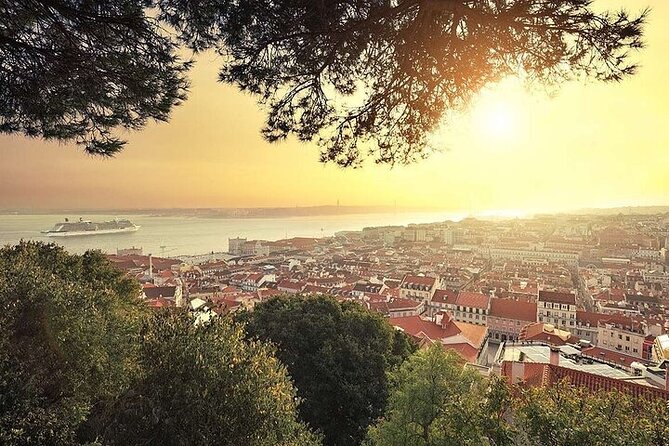
This is a private experience, meaning only your group is on the tuk-tuk. The tour runs about 4 hours, and it usually feels like a “highlights route with quick stops,” not a one-sight-at-a-time crawl.
You start around Praça Luís de Camões (1200-243 Lisboa). If you’re staying around central Lisbon, pickup is available from your hotel or a suitable nearby spot, and you’ll finish back at the meeting point.
The tuk-tuk matters here. Lisbon’s hills can turn a sightseeing plan into an endurance test, especially if you also want photos. This tour keeps you moving across the city while still giving you time to step out at key viewpoints.
There are also shorter options mentioned by riders (like historic one-hour or two-hour versions). If you’re choosing a shorter time, just remember you’ll have even less time at each viewpoint, so it’s worth being clear about what you most want to see.
You can also read our reviews of more tours and experiences in Lisbon.



First Up: Alfama and Mouraria’s Narrow-Lane Magic
The tour’s early focus makes sense: Alfama and Mouraria are where Lisbon feels most old-school. You’ll wander winding alleys tied to the city’s oldest neighborhoods, with stops that mix small courtyards, historic churches, and classic Lisbon atmosphere.
This is also where you tend to hear the real soundtrack of the city—fado vibes nearby and the general sensory swirl that comes with Lisbon’s street life. Even without a long sit-down, the short walk segments help you get your bearings fast.
The stop time is about 20 minutes, and admission is listed as free for that portion. That’s plenty for a first look, photos, and a quick stretch, but it won’t replace an Alfama afternoon on foot if you want to get lost on purpose.
The practical advantage is that a guide can point out what to look for in a place where everything is a little confusing (in the best way). If you’ve got limited time in Lisbon, this part helps you understand the city’s layout quickly.
Santa Luzia Viewpoint: Azulejos, Shadows, and River-Blue Views
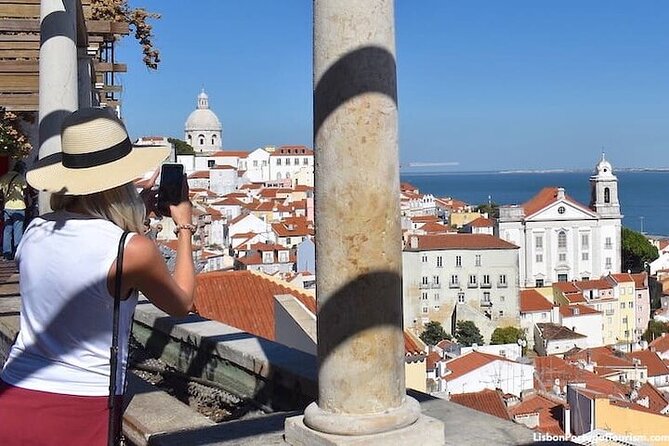
Miradouro de Santa Luzia is one of those Lisbon stops that feels like a postcard while you’re standing inside it. You get a panoramic view over Alfama, with the Tagus River and Lisbon’s red rooftops in the same frame.
What makes this viewpoint extra is the setting. The terrace is decorated with azulejos—blue-and-white tiles—with scenes that include Lisbon’s rebuilding story after the 1755 earthquake. You’re also looking at bougainvillea and shaded areas that make it easy to slow down for a moment.
The time here is about 20 minutes, and it’s another free-entry stop. That’s enough to enjoy the view, grab a nearby coffee, and listen for street music without rushing.
If you care about photos, this is a good moment to pause. Viewpoints like this are where you’ll want to switch from wide shots to angles that show depth—streets dropping down into Alfama and the river beyond.
Elevador de Santa Justa: That Neo-Gothic Lift You’ll Remember

From the viewpoint rhythm, the plan adds one of Lisbon’s most distinctive structures: Elevador de Santa Justa. This historic iron elevator links lower streets in Baixa up toward Carmo Square.
It was built in 1902 and has a striking neo-Gothic look. The description notes it originally ran on steam but now operates electrically, and the ride still draws people because of both the design and the city views from the top.
Admission is not included for this stop, so think of it as a paid add-on you’ll choose to experience during the tour. In a shorter 4-hour day, it’s a great swap for fighting hills on foot.
The trade-off is simple: because it’s a timed experience, you won’t have long hanging around afterward. If you want to study the architecture or take lots of angles, plan to use your time efficiently once you’re there.
São Pedro de Alcântara and Senhora do Monte: Two Views, Different Moods

After the Santa Justa moment, the tour shifts back to the hills with two viewpoints that feel different from each other.
Miradouro de São Pedro de Alcântara sits in Bairro Alto. It’s a terraced garden with shade from palm trees and an easy place to take a coffee break from the kiosk. You’ll also spot azulejo tile maps and statues of Portuguese heroes—small details that make the viewpoint feel more like a landscaped spot than just a lookout.
This stop is about 15 minutes with free entry. As the light changes, the vibe can shift too, with musicians often playing during the evening.
Then comes Miradouro da Senhora do Monte, described as a strong alternative if you want top views without the biggest crowds. You’ll still get a wide sweep: Alfama, the castle, the river, and even the bridge in the same broad panorama.
It’s a 10-minute stop and free entry. That makes it a useful closer for this viewpoint block—enough time to take in the big picture and then move on while you still feel energetic.






Miradouro das Portas do Sol: Lisbon’s Balcony Feel

Portas do Sol is one of those places where the viewpoint description almost sounds too poetic—yet once you’re there, it makes sense. You’re looking over terracotta rooftops, twisting streets, and the Tagus River.
The name translates to Gate of the Sun, and the orientation is meant for morning light (it’s described as ideal for sunrise). There’s also a statue of São Vicente in the center of the terrace, holding a boat with two ravens, which gives the spot a strong focal point beyond just the view.
This is about 15 minutes, and admission is listed as free. You’ll likely notice a nearby kiosk (Quiosque Portas do Sol) where refreshments and light snacks are available, making this an easy stop if you want a quick reset.
The drawback is that because it’s so scenic, you can feel a little rushed during peak times. If you time your day for softer light, you’ll usually get a calmer photo experience.
Castelo de São Jorge: The Walls, the Views, and the Ticket Reality

Castelo de São Jorge is the big one. The castle sits on one of Lisbon’s famous seven hills and has weathered stone walls that connect you to centuries of power and defense.
The description frames a long timeline: Moors once defended the castle, and it later fell to King Afonso Henriques in 1147. You’ll feel the scale of the hill right away, even if you don’t spend hours inside.
This stop is about 10 minutes, and admission is not included. That’s short, so treat it as a viewing-and-orientation moment unless you’re comfortable returning later for a deeper visit.
Still, even a short walk near the castle walls can change how you understand the city. From up here, Alfama doesn’t look like a maze anymore—it looks like a system, and the viewpoints start to connect in your head.
Feira da Ladra and the Pantheon: Market Energy Plus Portugal’s Memorial Side

Mid-tour, the route becomes more local with Feira da Ladra, also known as Lisbon’s Thieves’ Market. It’s described as an open-air flea market in Alfama near the National Pantheon, held every Tuesday and Saturday and dating back to the 13th century.
Despite the nickname, it’s framed as colorful and fun rather than sketchy. You can hunt for vintage finds—old furniture, books, vinyl records, tiles, handmade crafts, and odd little surprises you didn’t know you needed.
This stop is about 15 minutes with free entry. You won’t have time to browse everything thoroughly, but you’ll get the atmosphere, chat with sellers, and maybe spot something worth grabbing if your timing is right.
Then the plan shifts to Panteão Nacional. The description highlights the dome like a pearl against the sky and marble halls that house stories of Portugal’s heroes. It also points out specific tombs, including Amália Rodrigues (Queen of Fado) and Humberto Delgado.
Admission is listed as not included, with about 10 minutes on the schedule. If you’re into cultural stops beyond viewpoints, this is a smart pairing with Alfama because it connects Lisbon’s identity threads—music, memory, and monuments.
São Vicente de Fora: The Tile-Painting Legends and Saint Stories
Between the Pantheon and the Belém section, the itinerary includes a stop tied to São Vicente de Fora monastery. The narrative given with the stop focuses on legend and tradition: a vow connected to King Afonso Henriques, relics said to have arrived by sea, and symbols like the two black ravens.
It also highlights the monastery’s connection to tile art. The description mentions a monk named Tomás who painted tiles with notable detail, including a reference to scenes inspired by La Fontaine’s fables.
This kind of stop is valuable even when you only see a portion of it because it gives context. Lisbon’s azulejos aren’t random decor here—they’re part of how the city tells stories about faith, power, and identity.
Just keep expectations realistic. Like many stops on this type of loop, you’ll experience it as a highlight moment rather than a full museum-style visit.
Belém by Tuk-Tuk: Tower, Monastery, Discoveries, and Pastéis
After the hilltop segment, the tour pivots to Belém, and you get a breezier, scenic ride across Lisbon’s riverside side. The description lays out what you’ll focus on in Belém: Torre de Belém, Jerónimos Monastery, the Monument to the Discoveries, and a food moment for Pastéis de Belém.
You’ll see the Tower described as a 16th-century fortress built to guard the city and welcome returning explorers. Jerónimos Monastery is described as Manueline architecture and as the home to Vasco da Gama’s tomb.
The Monument to the Discoveries is framed as having river views, which is exactly what you’d want after spending earlier hours looking at rooftops and hills. And Pastéis de Belém is positioned as the classic custard tart stop from the original 1837 bakery.
This portion is about 30 minutes, and admission is listed as not included, meaning you may pay for entry if you want to go inside the major sites. If you’re trying to taste the tarts, aim to keep your order simple so you don’t lose your window.
The benefit of doing Belém by tuk-tuk is timing. Instead of coordinating buses or walking far between major landmarks, you can hit the signature checklist while still feeling like you enjoyed the ride.
Praça do Comércio and Lisbon Cathedral: Empire Square Meets Medieval Stone
The final Lisbon highlights blend two different eras.
First is Praça do Comércio (Terreiro do Paço), right on the Tagus. The description calls it one of Europe’s largest squares and explains how it was once home to the Royal Ribeira Palace during the Age of Discoveries. After the 1755 earthquake, the area was rebuilt with planning associated with the Marquis of Pombal, using the ordered, open style seen in the surrounding yellow buildings.
This stop is about 5 minutes and free entry, so think of it as a quick visual reset. It’s a strong place for a wide shot because the square and river create a clean horizon line.
Then you end with Lisbon Cathedral (Sé de Lisboa) in Alfama. It’s described as a 12th-century cathedral built after the Christian reconquest, and it’s tied to earthquakes that shaped Lisbon’s buildings. The description also mentions the rose window and Romanesque arches.
Admission is not included and the time is about 10 minutes. This is short, but it’s a nice final contrast after Belém’s empire-era story: medieval Lisbon on stone, still steady after the city’s worst days.
Price and Value: What $36.12 Buys You (and What It Doesn’t)
At about $36.12 per person for roughly 4 hours, you’re paying for three things: private transport, a guide, and hotel pickup/drop-off. For many people, that combination is what makes the day feel worth it.
Pickup and drop-off alone can save real time and hassle, especially in the center where parking and taxi lines can slow things down. The guide also matters because viewpoint stops are all about timing and angles, and a good guide helps you avoid spending your limited hours wandering in the wrong direction.
Insurance is listed as included, and the tour also includes a guide plus an English option. You’ll get a mobile ticket, which is convenient when you’re juggling multiple stops.
The part to budget for is entrances. Multiple major sights are listed as not included: the castle, the elevator, the Pantheon, Lisbon Cathedral, and Belém sites like Jerónimos and others tied to that area. If you add up tickets on top of the tuk-tuk fee, your total will be higher, but you’ll also get flexibility to choose what to enter versus just view.
One more real-world note from the experience feedback: shorter tour options may sometimes be priced in a way that’s less friendly for solo booking. If you’re traveling alone, check what duration you’re actually getting and whether the option forces a minimum group size. Also, given one report of a no-show situation, I’d recommend you keep your confirmation details handy and be ready to contact the operator quickly if anything seems off on the day.
Who This Tour Suits Best, and Who Should Skip It
This works well if you want a structured Lisbon day but still want to feel the neighborhoods. It’s ideal for first-time Lisbon visitors who want Alfama viewpoints plus Belém’s signature landmarks without spending hours planning transit.
It also suits people who like photography but don’t want to solve the city on a map. Guides who help with photo timing can turn a quick stop into a better set of shots.
A moderate physical fitness level is mentioned, which fits the reality here: you’ll likely do some walking around viewpoints and streets. If you prefer fully level, long museum time, you might find the tour’s short durations frustrating.
And if you already know Lisbon’s viewpoints well and just want one area, you could do better with a self-guided plan. This route is designed to cover a lot in one go.
Should You Book This Lisbon Private Tuk-Tuk Tour?
Book it if you want a smart, time-saving way to cover Alfama lookouts and Belém landmarks in about half a day, with hotel pickup and a guide helping you get to the right places quickly. It’s a good “get oriented” day, especially if you plan to return later for deeper time at your favorites.
Skip it if your top priority is spending long hours inside specific sites like the castle or major monasteries. This is a highlights loop, so you’ll need follow-up time if you want to go slow.
If you’re flexible and you like viewpoint-to-viewpoint travel, you’ll likely enjoy how the day connects Lisbon’s layers: old neighborhoods, memorial spaces, and Portugal’s seafaring era—all from the comfort of a tuk-tuk.
FAQ
How long is the Lisbon private tuk-tuk tour?
It runs for about 4 hours.
Do you offer hotel pickup and drop-off?
Yes. Pickup is offered from hotels around the city center (or a suitable nearby location), and you also get drop-off back.
Is this tour private?
Yes, it’s a private tour/activity, so only your group participates.
Is the tour offered in English?
Yes, the tour is offered in English.
Are entrance tickets included?
Some stops list admission as free, while others list admission as not included (for example, major sites like the castle and several Belém and cathedral-related stops).
What is the cancellation policy?
You can cancel for a full refund up to 24 hours before the experience start time, with free cancellation available under that window.