REVIEW · LISBON
Lisbon: Private Guided Tuktuk Tour With History
Book on GetYourGuide →Operated by Lisbon TukTuk Tour · Bookable on GetYourGuide
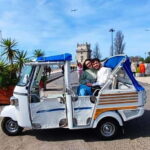
Lisbon feels like a maze of stairs and sudden views, and this tour turns it into a smooth ride. You get a private eco tuk-tuk guided walkthrough of Old Town Alfama and classic sights around Belem, with photo stops where you’ll actually have time to look up.
I especially like two things: the chance to see major places like Praça do Comércio and Lisbon Cathedral without spending the whole day fighting hills on foot, and the way the viewpoints in Alfama are built into the route so you can take photos and catch the city’s angles fast.
One thing to plan for: the roads can be a bit bumpy. If you’re sensitive to rough rides, bring a steady attitude and wear comfortable shoes.
In This Review
- Key things that make this tour worth your time
- Where you’ll start: Sophia Restaurant near Time Out Market
- The tuk-tuk ride: fast views, tight streets, and a little bounce
- Praça do Comércio: Lisbon’s grand, straight-backed first impression
- Lisbon Cathedral and the church stops: old stones with context
- Santa Luzia and Portas do Sol: viewpoint hopping without the stair workout
- Miradouro da Senhora do Monte: the long look from higher up
- São Vicente de Fora and the National Pantheon: history you can point to
- Cruise Terminal and the Fado Museum: two sides of Lisbon’s identity
- Rua Augusta Arch and the Pink Street: the city’s dramatic contrasts
- Markets and the Art-on-Tiles flea area: color, texture, and local clutter
- If you choose the longer route: Belem’s Age of Discovery highlights
- Your guide and audio options: how to get the most out of the narration
- Timing and photo stops: how to avoid the feel-rushed trap
- What to bring (and what can ruin the ride)
- Value: why this works when you don’t want to plan all day
- Who this tour fits best
- Should you book this private tuk-tuk tour?
- FAQ
- FAQ
- How long is the Lisbon private guided tuk-tuk tour?
- Where do I meet the guide?
- What neighborhoods and areas does the tour cover?
- What are the main sightseeing stops on the route?
- Is the tour guided in English?
- Is an audio guide included?
- Does the tour include skipping ticket lines?
- What should I bring for the tour?
- Who might not be able to join?
- What’s the cancellation policy and payment option?
Key things that make this tour worth your time
- Private, eco-friendly tuk-tuk: you move through tight streets without doing endless steep climbing
- Real viewpoints on schedule: Santa Luzia, Portas do Sol, and Senhora do Monte are treated like highlights, not afterthoughts
- Photo-stop pacing: short stops (often around 5 minutes) help you see a lot without feeling rushed for the whole day
- History with an English guide: live narration plus audio options in many languages
- Alfama-to-Belem coverage (depending on duration): Old Town views first, then major Belem monuments like Jerónimos and Belém Tower if you choose longer time
- You skip some friction: ticket lines are skipped, so the time you buy goes into seeing
Where you’ll start: Sophia Restaurant near Time Out Market
Your tour kicks off in the area of Time Out Market, meeting at the entrance of Sophia Restaurant (Natural Italian), which is directly opposite. The operator has you waiting there about 5 minutes early, and your guide comes to pick you up right before departure.
This matters because the meeting point is a simple landmark. Time Out Market is easy to find, and it also gives you a handy fall-back plan. If you arrive early, you can grab a coffee or snack nearby rather than wandering.
You can also read our reviews of more tours and experiences in Lisbon.



The tuk-tuk ride: fast views, tight streets, and a little bounce

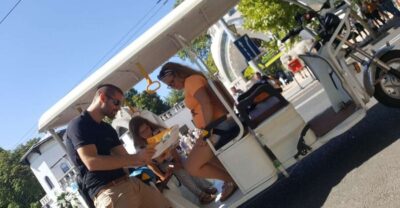
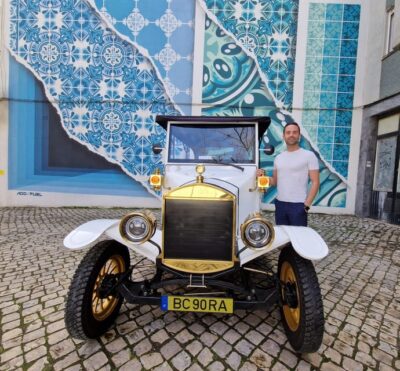
This is a private eco tuk-tuk, so you get direct access to parts of Lisbon that are a hassle on foot. The big win is that Lisbon’s center can feel like it’s designed for stamina tests—narrow lanes, steep slopes, and stair-only shortcuts. With the tuk-tuk, you still get the drama of the old streets, but you spend less time grinding uphill.
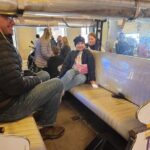
Now, about comfort: expect the ride to feel a little bumpy at times. One of the best practical tips I can give is to sit back, keep your footing steady when you get in and out, and wear shoes you trust. If you’re prone to motion discomfort, it’s worth considering before you book.
Also, this is a guided experience with photo stops, so you’re not just chauffeured past buildings. The stops are timed so you can look, frame photos, and listen—then move on.
Praça do Comércio: Lisbon’s grand, straight-backed first impression
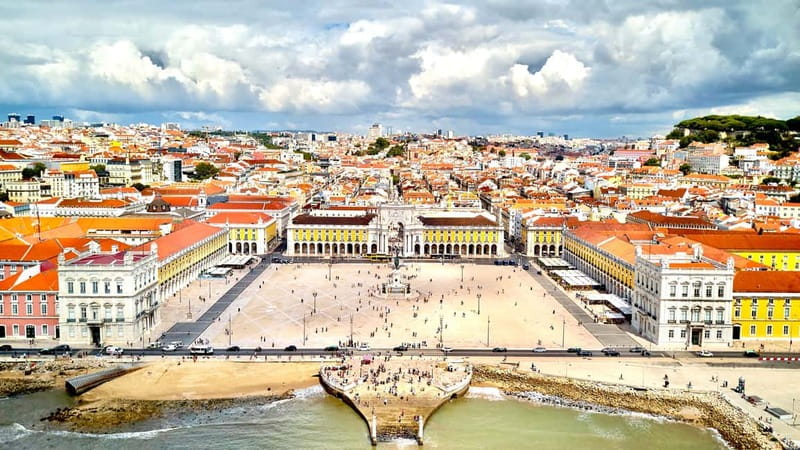
The first “wow” stop is Commerce Square (Praça do Comércio). This is where Lisbon feels formal and open—wide space after the tight maze of older streets. It’s a great place to orient yourself, because you see the scale of the city and the layout of the waterfront area.
You get a brief photo stop (around 5 minutes), which is long enough to get a couple of angles and then reset before heading toward older, hillier neighborhoods.
Lisbon Cathedral and the church stops: old stones with context

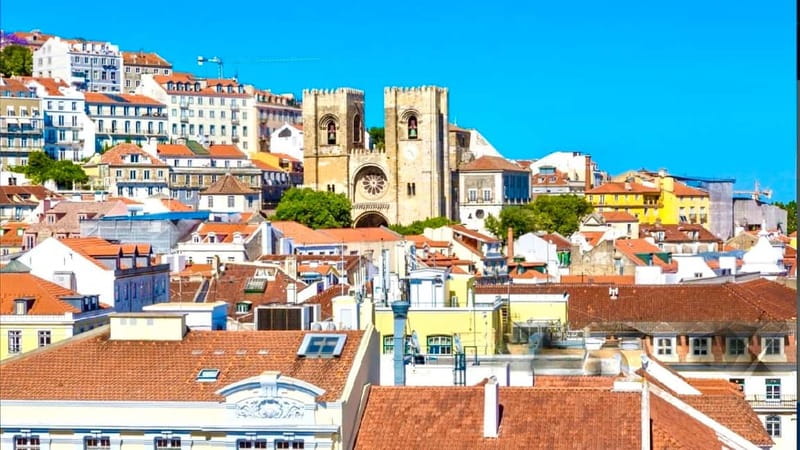
From the square, you move toward Lisbon Cathedral, getting another short photo stop. A cathedral stop can turn into a quick glance on some tours, but here it’s part of a bigger story about why Lisbon grew where it did and how religious landmarks became anchors for neighborhood identity.
Later, you’ll also pass by and stop near major religious sites in Alfama, including the Church of Santo António. Even if you don’t go inside for a long visit, the guide narration gives you reasons to notice details—where power lived, how communities formed around key institutions, and why these churches sit where they do.
Santa Luzia and Portas do Sol: viewpoint hopping without the stair workout
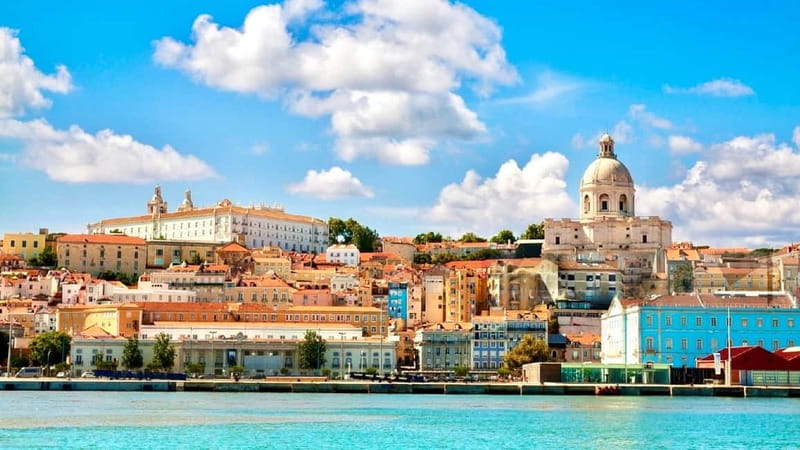
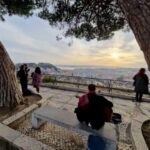
One of the strongest parts of the experience is the built-in schedule for viewpoints in Alfama—specifically Santa Luzia and Portas do Sol. These are the places where the city spreads out below you, and where Lisbon looks like Lisbon: terracotta roofs, stacked streets, and that feeling of depth you can’t fully capture from street level.
You’ll get short photo stops at Santa Luzia and Portas do Sol. That’s smart pacing. You don’t spend 45 minutes waiting for the perfect light; you get in, get your photos, and keep moving with the guide’s explanations.
If you’ve ever tried to hit these viewpoints by foot, you know why this matters. The route is not just scenic—it’s efficient.





Miradouro da Senhora do Monte: the long look from higher up
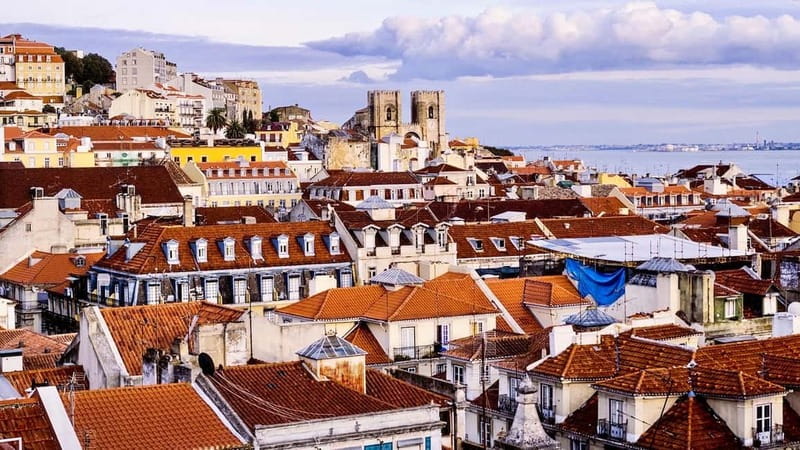
Then comes Miradouro da Senhora do Monte, with a longer photo stop (around 10 minutes). That extra time helps because this viewpoint is less about a quick snapshot and more about taking in the sweep of the city.
I like this stop for one reason: you can see how Alfama’s slopes feed into the wider city. It helps your brain connect the dots between the neighborhoods you just drove through and the major landmarks you’re heading toward next.
São Vicente de Fora and the National Pantheon: history you can point to
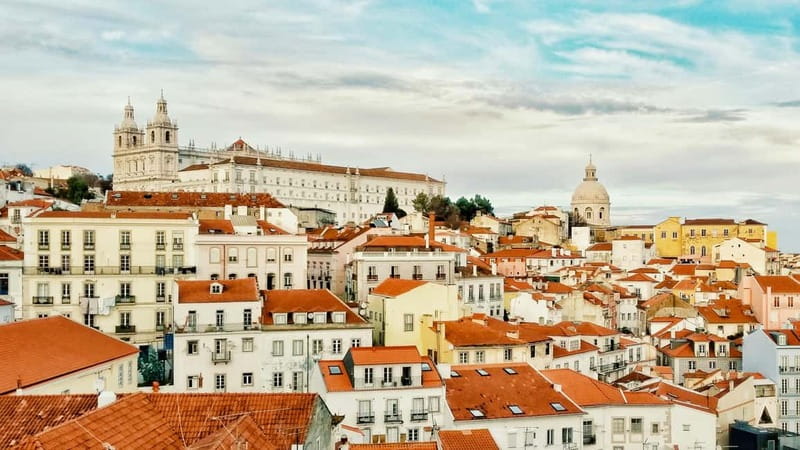
Two stops that add weight to the route are São Vicente de Fora and the National Pantheon of Santa Engrácia. These aren’t just pretty buildings; they give you a sense of how Lisbon’s history is layered—monastery spaces and commemorative architecture telling stories that still shape how people navigate the area.
You’ll have a short sightseeing window (often about 5 minutes noted in the schedule), which is enough to get the highlights and absorb the guide’s explanation. The payoff is when you start recognizing features as you move. After these stops, you’re not seeing random old facades—you’re seeing the structure of the city’s memory.
Cruise Terminal and the Fado Museum: two sides of Lisbon’s identity
The route also passes the Lisbon Cruise Terminal, which is useful even if you don’t have a ship itinerary. It’s a quick way to connect Old Town Lisbon with the modern flow of visitors and transport.
Then you’ll reach the Fado Museum, with a photo stop. Fado is one of Lisbon’s most recognizable cultural signatures, and seeing the museum within this tuk-tuk route makes it feel less like a ticketed detour and more like part of Lisbon’s everyday storytelling.
And here’s a practical note: because your guide is live and the stops are short, ask questions while you’re stopped. A good guide will connect music, neighborhood life, and the city’s past so you leave with more than a photo.
Rua Augusta Arch and the Pink Street: the city’s dramatic contrasts
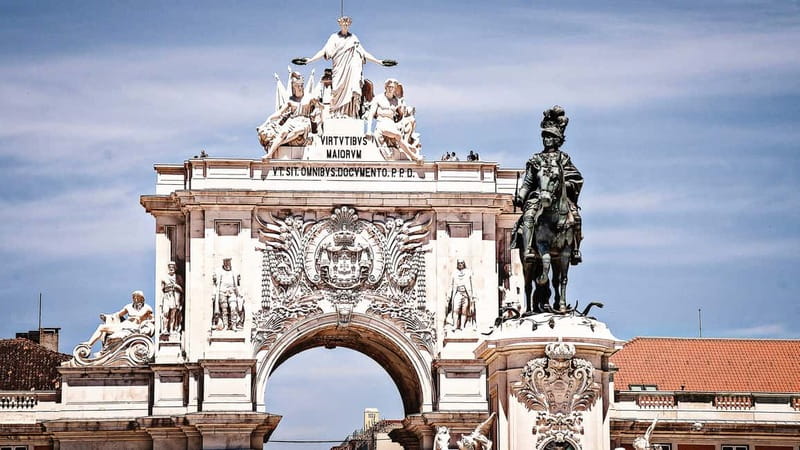
Back in the central area, you’ll see Rua Augusta Arch. This is one of those Lisbon landmarks that works as a visual reset point—an instantly recognizable shape that helps you orient between older and newer parts of the city.
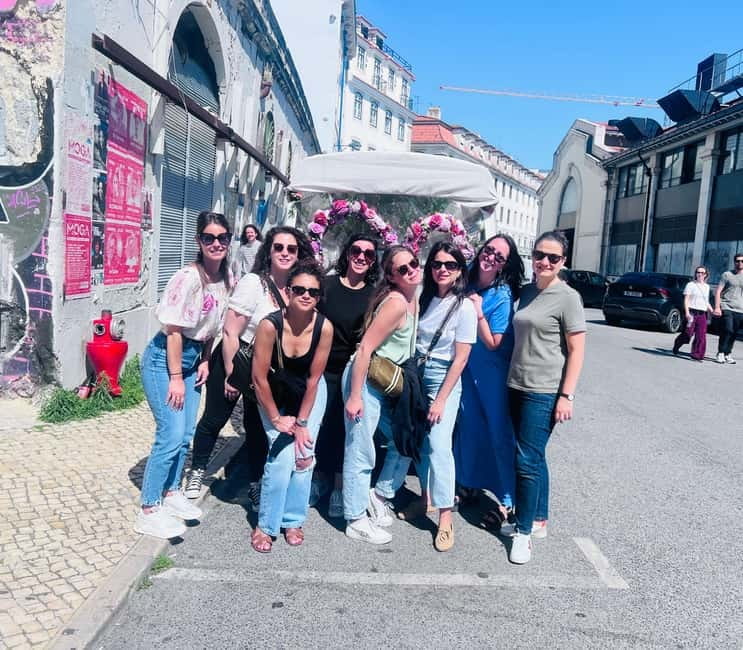
Then you hit The Pink Street (Rua Nova do Carvalho / the Pink Street area). It’s a famous stretch, and your stop is designed for a quick look and photo (around 5 minutes). I like adding a stop like this because it balances the heavy historical stops with something more about Lisbon’s modern pulse.
If you’re the type who wants the full story—old stones and street life—this inclusion makes the tour feel more complete.
Markets and the Art-on-Tiles flea area: color, texture, and local clutter
Lisbon isn’t just monuments. This tour also includes time around local market energy, including the Flea Market and an Art on Tiles Flea Market stop.
You might not spend hours browsing (the tour is time-boxed), but even a quick look is valuable. These markets are where Lisbon shows its handmade side: ceramic pieces, small designs, and everyday objects that don’t feel like tourist-shop replicas.
This is also where your camera earns its keep. The colors are in the details.
If you choose the longer route: Belem’s Age of Discovery highlights
The bigger theme—especially if you’re doing a longer time slot—is the shift from Alfama to Belem, where you’ll get Portugal’s Age of Discovery storyline in the form of major monuments and institutions.
In the Belem area, you may visit or ride past places such as:
- LX Factory, a creative zone with modern atmosphere
- Belém Palace
- tasting Pastéis de Belém (the famous pastry)
- Mosteiro dos Jerónimos (Jerónimos Monastery)
- Belém Tower
- Padrão dos Descobrimentos (Monument to the Discoveries)
- Museu do Combatente for military history
- MAAT – Museum of Art, Architecture, and Technology
Even if you’re not a museum person, this part helps you see Lisbon’s “why.” Old Town tells you how people lived close together on hills. Belem helps you understand why Portugal projected power outward and how that wealth and ambition show up in architecture and public monuments.
Your guide and audio options: how to get the most out of the narration
The tour runs with a live English guide. That alone is a big deal because you can ask things as you go, not just read a sign and guess.
Audio support is also included in many languages, including Chinese, Portuguese, Japanese, French, Polish, Danish, Swedish, Dutch, German, Spanish, and a long list of others. The point is simple: you’re not locked into one language experience if you’re traveling with someone who prefers audio.
One useful detail from recent feedback: when audio is used, it can be better to follow the guide’s English explanations too. In one case, the guide helped a guest understand how to use the audio alongside the English narration. That’s good advice for you as well—think of audio as a support layer, not the whole meal.
Timing and photo stops: how to avoid the feel-rushed trap
This tour uses short photo stops—often about 5 minutes, with one longer viewpoint stop at Senhora do Monte (about 10). That’s intentional. You’ll cover more than one neighborhood in the same trip without spending half your time parked.
Still, don’t treat each stop like a quick selfie and move on. If you want photos, arrive ready: phone/camera charged, lens clean, and one “must-have” photo angle in mind. Tell yourself: look first, shoot second.
Short stops also mean you’ll want to stay close to the guide during loading and unloading. The tuk-tuk ride is the easy part; transitions can eat time if you wander.
What to bring (and what can ruin the ride)
For comfort, bring comfortable shoes, water, and a camera if you like to document views. Lisbon can be warm and bright, and the viewpoints can be surprisingly exposed.
Also follow the simple rule: no smoking.
My practical advice: if you’re doing multiple stops and photo moments, you’ll get more out of the day if you dress for walking even though you’re not doing most of the walking. You’ll still be moving in short bursts—especially around viewpoint edges.
Value: why this works when you don’t want to plan all day
There’s a clear logic to this tour’s value. You’re paying for guided context plus efficient transport through places that are inconvenient for regular sightseeing routes.
What makes it good value isn’t just the tuk-tuk. It’s the combination of:
- Major landmarks plus viewpoints in a single package
- Skips the ticket line (so you’re less at the mercy of queues where applicable)
- Private format, which usually means you aren’t squeezed into a rigid crowd rhythm
If your Lisbon days are packed—Sintra, day trips, museum visits—this tuk-tuk tour can act like a “city orientation.” You come out with a mental map and a better sense of where you’d want to return on foot later.
Who this tour fits best
This is a strong option if you:
- want a high-impact overview of central Lisbon and Alfama’s viewpoints
- dislike long, steep hill walks
- want history explained in plain language by an English guide
- like short stops and efficient photo moments rather than long museum marathons
It may be less suitable if you need a very gentle ride or if mobility needs are a priority, since the tour information includes restrictions (including children under 6, pregnant women, and people with mobility impairments, and it also lists wheelchair users as not suitable). The vehicle is described as wheelchair accessible, but the restriction note is there too—so you’ll want to confirm directly with the operator before booking.
Should you book this private tuk-tuk tour?
If you’re trying to see Lisbon without spending your day in steep hills, I think this is a smart buy. The mix of grand Lisbon (Praça do Comércio, Rua Augusta Arch), dramatic viewpoints (Santa Luzia, Portas do Sol, Senhora do Monte), and culture anchors (Cathedral, São Vicente de Fora, National Pantheon, Fado Museum) makes it feel like you get the city’s main threads fast.
Book it if you want:
- an organized route with photo-stop pacing
- a guide who can explain what you’re looking at
- the option to extend toward Belem for Jerónimos, Belém Tower, and the monuments of discovery
Skip it if you hate motion in vehicles or prefer a slow, on-foot deep walk where you’re in control of every step and pause.
FAQ
FAQ
How long is the Lisbon private guided tuk-tuk tour?
The tour duration is listed as 1 to 4 hours, depending on the option you choose.
Where do I meet the guide?
Meet at the entrance of Sophia Restaurant (Natural Italian), opposite Time Out Market in Lisbon. The guide picks you up about 5 minutes before the start time.
What neighborhoods and areas does the tour cover?
It’s designed to cover Old Town Lisbon, including Alfama, and it also includes sights in the Belem district.
What are the main sightseeing stops on the route?
You can expect stops and/or photo stops around Praça do Comércio, Lisbon Cathedral, Santa Luzia, Portas do Sol, Miradouro da Senhora do Monte, São Vicente de Fora, the National Pantheon of Santa Engrácia, the Cruise Terminal, the Fado Museum, Rua Augusta Arch, and the Pink Street. Belem highlights may be included depending on your time slot.
Is the tour guided in English?
Yes. The live tour guide language is English.
Is an audio guide included?
Yes. An audio guide is included with language options such as Chinese, Portuguese, Japanese, French, Polish, Danish, Swedish, Dutch, German, Spanish, and many others listed.
Does the tour include skipping ticket lines?
The activity information says it includes skipping the ticket line.
What should I bring for the tour?
Bring comfortable shoes, a camera, and water, plus comfortable clothes.
Who might not be able to join?
The information states it’s not suitable for children under 6 years, pregnant women, people with mobility impairments, and wheelchair users.
What’s the cancellation policy and payment option?
Free cancellation is available up to 24 hours in advance for a full refund, and the booking offers a reserve now & pay later option.