REVIEW · LISBON
Lisbon by Electric Tuk-Tuk: From Roman Ruins to the Carnation Revolution
Book on GetYourGuide →Operated by Lisbon Xpert · Bookable on GetYourGuide
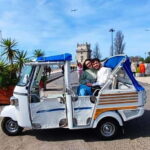
Lisbon looks like it has rules. Then you climb into an electric tuk-tuk that politely ignores them. In about 3 hours, you roll through Lisbon’s steepest streets and best viewpoints, while a live guide ties the city together from Roman Lisbon to the Carnation Revolution.
I especially like the photo-friendly stops (Santa Luzia, Portas do Sol, Graça, São Pedro de Alcântara) that help you see the city in layers, not just pass buildings. The tasting of Pastel de Belém is also a smart payoff, because you end with the flavor people actually travel for. One caution: you’re in a ride with seatbelts the whole way, and the tour isn’t suitable for kids under 7.
If you get a guide like Jorge (a name that shows up in the highest-rated experiences), you’ll get story-driven Lisbon, with lots of quick answers and extra photo breaks when you want them.
In This Review
- Key Highlights You’ll Care About
- Electric Tuk-Tuk Pickup and Drop-Off: Lisbon Without the Time Crunch
- Alfama and Graça: Where Lisbon’s Oldest Layers Still Show
- Baixa, Rossio, and Chiado: Roman Lisbon to the Streets You Actually Shop
- Santa Justa, Roman Galleries, and Praça do Comércio: The Earthquake Rebuild You Can See
- Churches, Tiles, and Lisbon’s Seat at the World Stage
- Largo do Carmo to Bairro Alto: Carnation Revolution and Night-Ready Viewpoints
- Belém by the Discoveries: Jerónimos, Tower, and the MAAT Views
- Pastel de Belém Tasting: The Sweet Finish That Makes Sense
- Value and Price: Is $226 for Up to 6 Worth It?
- What the Best Guide Approach Looks Like (Jorge’s Style)
- Who Should Book This Tour (and Who Should Skip It)
- Quick FAQ About Lisbon by Electric Tuk-Tuk
- FAQ
- How long is the tour?
- What does it cost?
- Is pickup and drop-off included?
- Which areas of Lisbon does the route cover?
- Is Pastel de Belém included?
- Are drinks included?
- Do we enter any sites, or is it only walking outside?
- Can the guide help with photos?
- What languages are offered?
- Do I have to wear a seat belt?
- Should You Book This Lisbon Electric Tuk-Tuk Tour?
Key Highlights You’ll Care About
- Electric tuk-tuk climbs hills without the sweat-fest
- Viewpoint stops built for photos, not just sightseeing from the street
- Pastel de Belém tasting with a special invitation included
- Private group pace that feels calmer than large group tours
- A guide who connects eras from Roman landmarks to 1974 revolution sites
- Tile and church entries plus a PDF guide you can use after
Electric Tuk-Tuk Pickup and Drop-Off: Lisbon Without the Time Crunch
Lisbon runs on hills, and hills are time thieves. This tour’s big practical win is the pickup and drop-off at your chosen location. That matters because the city center can be a maze on foot, and taxis add cost and uncertainty fast.
The electric tuk-tuk itself is the second win. Reviews and the tour design point to a ride that’s fast where it can be, safer than scrambling up steep lanes, and able to handle spots other vehicles might struggle with. You’re not just being transported; you’re being positioned. That makes a 3-hour sightseeing window feel realistic instead of rushed.
One more small detail I like: the tour includes soft drinks/cold drinks, so you can keep energy up while you’re hopping between viewpoints and historic stops.
You can also read our reviews of more tours and experiences in Lisbon.



Alfama and Graça: Where Lisbon’s Oldest Layers Still Show
This is where Lisbon earns its reputation. Alfama has that unmistakable maze feeling—tight streets, old stone, and the sense that you’re walking through different centuries at once. You’ll start with guided time here, then head toward Graça, which is more than just a district. It’s a viewpoint idea: the city spreading out beneath you.
The tour also includes entrance to the 13th-century Graça Church. That’s a useful choice because churches in Lisbon often act like time capsules: architecture, survival after earthquakes, and the way neighborhoods organized their lives around religious buildings.
You’ll also hit key viewpoints like Santa Luzia and Portas do Sol, plus the Graça viewpoint. These stops are the difference between seeing Lisbon and understanding it. From up there, it’s easier to grasp why people built where they did—why certain streets look like they were drawn by gravity and not rulers.
Practical tip: bring your phone charged and your photo expectations flexible. Viewpoints are popular areas, and you’ll want quick photos without turning the whole ride into a line-wait.
Baixa, Rossio, and Chiado: Roman Lisbon to the Streets You Actually Shop
Baixa is Lisbon’s comeback story in stone. This tour moves through the area around Rossio, including a guided walk connected to the old Roman hippodrome. Even if Roman Lisbon sounds like a classroom topic, the point here is to connect it to what you see today. The city’s street geometry wasn’t invented from scratch; it’s layered.
From there, you head toward Chiado and the central walkways that mix old-world elegance with modern life. You’ll pass through areas like Avenida da Liberdade, the kind of grand avenue that’s easy to appreciate from a vehicle window. But the value comes when you understand what the boulevard represents in the city’s evolution.
The tour also stops around the National Theater and includes a visit to places tied to Lisbon’s cultural spine. Another highlight is a stop connected to the oldest library in the world, which is the kind of detail that makes you feel like you’re getting a curator’s version of the city, not just a checklist.
If you care about photography and street texture, this midsection is where you can get both: grand facades and the smaller, human-scale lanes nearby.
Santa Justa, Roman Galleries, and Praça do Comércio: The Earthquake Rebuild You Can See
Lisbon has a before and after story, and this part of the tour makes sure you don’t treat it like trivia. You’ll pass sights tied to the Arco da Rua Augusta and Praça do Comércio, a symbolic square known for being part of Lisbon’s rebirth after the 1755 earthquake.
You’ll also see Santa Justa Elevator, a landmark that’s easy to spot and fun to talk about. Even without riding it, it’s a strong visual anchor for how Lisbon changed: engineering ambition, city pride, and the way vertical movement became part of daily life.
Plus, there are stops connected to the Roman Galleries. It’s the kind of stop that makes “Lisbon’s 2,000+ year timeline” feel tangible. Instead of hearing a date, you’re looking at the physical evidence that Lisbon has been rebuilt, reused, and repurposed over time.
If you’re the type who likes to understand why a city looks the way it does, this section will make you slow down a little, even inside a 3-hour schedule.
Churches, Tiles, and Lisbon’s Seat at the World Stage
You don’t just move from viewpoint to viewpoint. There’s cultural stop time too. The tour includes a baroque collection of Portuguese tiles and visits a historic church tied to Saint Anthony of Padua, plus Sé de Lisboa (Lisbon’s imposing cathedral).
That mix is smart. Lisbon’s identity isn’t only monuments on postcards. Tiles show craft and aesthetics. Churches show community continuity. Cathedrals show how power and faith met in public spaces.
The tile stop is also one I’d recommend even if you’re not a “museum person.” You’re not stuck in a long exhibit. You get an entrance included and then you’re moving on, which keeps the tour’s energy without losing a sense of place.






Largo do Carmo to Bairro Alto: Carnation Revolution and Night-Ready Viewpoints
Then you switch gears from old stone to modern history that shaped Lisbon’s politics and identity. Largo do Carmo is where the Carnation Revolution story sits, and the tour guides you through that context so it clicks instead of floating around as a date you remember later.
From there, you head into Bairro Alto area energy, including São Pedro de Alcântara viewpoint. This viewpoint is one of the best places to feel how Lisbon balances history and nightlife. You can almost see how day becomes evening there, because the hills and streets naturally feed into that rhythm.
This segment is ideal if you like human-scale history—places where events happened in real public spaces, not behind glass.
One more practical note: because Lisbon nightlife areas can be busy, your best experience comes from quick, focused stops with the guide keeping the timing tight.
Belém by the Discoveries: Jerónimos, Tower, and the MAAT Views
Belém is Lisbon’s “go big” district, and this tour covers the big names without making you spend your whole day commuting. You’ll see Belém Palace, the Jerónimos Monastery, Belém Tower, and the Monument to the Discoverers.
Even if you’ve heard these names before, Belém is where Lisbon becomes a world story. This is the section that connects the city to exploration and global trade. It also works because the architecture is strong and recognizable, so your brain has something steady to anchor the narrative.
You’ll also stop at MAAT and enjoy views toward the 25 de Abril Bridge and Cristo Rei. That’s a great combo: classic Lisbon heritage plus a more modern viewpoint that shows how the city keeps reinventing itself.
If you want the Lisbon experience that feels complete—old quarters and Belém in one day—this is the part you’ll be grateful you didn’t skip.
Pastel de Belém Tasting: The Sweet Finish That Makes Sense
A tour like this needs a payoff, and the Pastel de Belém is the right one. You get the classic tasting included, with a special invitation mentioned, which turns it from a random snack into a meaningful cultural moment.
It’s also a smart timing choice. By the time you reach Belém and the sweets, you’ve already walked through centuries. The dessert doesn’t compete with history; it seals the deal with something you can taste immediately.
If you like practical travel rewards, this is it.
Value and Price: Is $226 for Up to 6 Worth It?
At $226 per group up to 6, this tour is priced for groups who want a private guide, not for solo budget travelers. The value jumps when you’re traveling with family or friends who can share the cost. With a private setup, you’re not squeezed into someone else’s pace.
Even for two people, the math often works if you’re trying to save time. Lisbon’s steep walking can slow you down in ways you don’t notice until you’re tired. This ride helps you cover more ground in 3 hours and still hit the most meaningful viewpoints.
What you also get that adds value: photo support, PDF guide material for after your tour, entrances (tile collection and Graça Church), and the ride includes soft drinks/cold drinks. If you’ve ever paid separately for taxis and individual tickets, this can feel more even.
One small consideration: it’s a 3-hour experience. If you want long sits in museums or deep indoor time, you might crave more after the tour ends.
What the Best Guide Approach Looks Like (Jorge’s Style)
The highest-rated experiences highlight a guide named Jorge as excellent at storytelling and answering questions. The key part isn’t just facts. It’s how he links eras—1755 earthquake rebuilding, Old Town versus New Town ideas, and the Belém story—so it feels coherent fast.
Jorge’s approach also shows up in practical behavior: picture stops on demand, extra humor, and keeping the tour moving without feeling like you’re sprinting. One review even calls out that the tuk-tuk helped keep people dry and warm in rainy weather, which is the kind of comfort detail that matters when your schedule is tight.
If you land with a similar guide style, you’ll get more than a route. You’ll get a guide who treats Lisbon like a living narrative.
Who Should Book This Tour (and Who Should Skip It)
This is a good match if you want:
- A private, fast-moving overview across Lisbon’s major areas (Alfama/Graça/Baixa/Chiado/Bairro Alto/Belém)
- Viewpoints and photo stops built into the schedule
- History explained in context, from Roman roots to the Carnation Revolution
- Enough structure to avoid planning chaos, but still with freedom through pickup and drop-off
You might skip it if:
- You’re traveling with children under 7, since it’s not suitable
- You want hours in one museum rather than multiple guided stops
- You dislike rides where you must wear a seatbelt the whole time
Quick FAQ About Lisbon by Electric Tuk-Tuk
FAQ
How long is the tour?
It runs for 3 hours.
What does it cost?
The price is $226 per group up to 6.
Is pickup and drop-off included?
Yes. Pickup and the end of the tour are at your chosen locations.
Which areas of Lisbon does the route cover?
You’ll visit highlights across Alfama, Graça, Baixa de Lisboa, Chiado, Bairro Alto, and Belém, plus many viewpoints and landmarks along the way.
Is Pastel de Belém included?
Yes. You get a tasting of the authentic Pastel de Belém.
Are drinks included?
Yes. The tour includes a soft drink, and it also notes cold drinks.
Do we enter any sites, or is it only walking outside?
There are included entrances, including a baroque collection of Portuguese tiles and the 13th-century Graça Church.
Can the guide help with photos?
Yes. There are photo support stops built into the experience.
What languages are offered?
English, Swedish, Italian, Spanish, and Portuguese.
Do I have to wear a seat belt?
Yes. You must wear a seat belt during the entire ride.
Should You Book This Lisbon Electric Tuk-Tuk Tour?
I’d book it if you want maximum Lisbon in a short time without wasting your day climbing hills and figuring out logistics. The combination of viewpoints, guided context from Roman-era sites to 1974 revolution landmarks, plus the Belém sights and Pastel de Belém tasting makes it feel like a complete city sampler.
If you’re a careful planner and like to understand where your photos come from, this tour does that. And if you’re traveling as a small group, the $226 per group price can look especially fair for a private guide day.