REVIEW · KAMAKURA
Kamakura Heritage Bike or Walk Tour with ex-Rickshaw guide
Book on Viator →Operated by Ichi · Bookable on Viator
Kamakura is best when someone shows you the shortcuts. This private bike-or-walk tour led by ex-rickshaw guide Ichi turns the classic sights into a smooth, story-filled half day. I like that you can choose your pace (bike or walk) and even switch modes during the tour window. I also like how the stops connect into one clear theme: Kamakura as a city shaped by power, worship, and coastal life. One thing to consider is that the tour needs good weather, and the bike option is not recommended for kids who can’t comfortably ride an adult-sized bike.
You start at Kamakura Station and end right back where you began, which makes this feel easy to plug into a longer Japan trip. The route mixes famous stops—like the Great Buddha—with quieter pauses such as Egara Tenjin Shrine and a matcha break option near Hokokuji. The guide also takes plenty of photos so you’re not stuck constantly asking strangers for help.
Price is $150.24 per person for about 4 hours, and it’s truly private. For value, you’ll want to use that time well: if you enjoy guided context and want to hit multiple sites without puzzle-solving routes all day, it’s a strong buy.
In This Review
- Key things I’d plan around before you go
- Why a private Kamakura bike or walk tour makes the city click
- From Kamakura Station: choosing bike vs walk (and using the switch)
- Kotoku-in and the Great Buddha: start with the iconic tone
- Tsurugaoka Hachimangu Shrine: samurai-era spirituality in a walkable layout
- Sanetomo and Hojo Masako graves: a short stop that changes your perspective
- Hokoku-ji’s bamboo grove: where your pace usually slows
- Yuigahama Beach: the coast reset you didn’t know you needed
- Hasedera Temple: Kannon and the coastline view
- Egara Tenjin Shrine: quick, peaceful, and easy to miss alone
- How Ichi’s rickshaw-driver background shows in the route
- Rain, crowds, and the reality of half-day timing
- Price and value: what $150.24 buys in real terms
- Who this Kamakura tour suits best
- Should you book this Kamakura Heritage Bike or Walk Tour?
- FAQ
- Is this tour a bike tour, a walking tour, or both?
- How long does the Kamakura tour take?
- What are the main stops during the tour?
- Are any admission fees included?
- Where does the tour start and end?
- Do I need lunch or snacks during the tour?
- What if the weather is bad?
Key things I’d plan around before you go
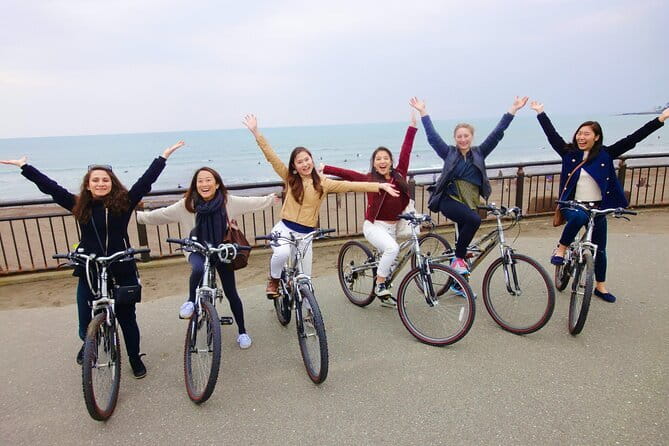
- Private guide named Ichi with years of experience showing people around on the same streets
- Bike or walking options, with the flexibility to change how you move mid-tour
- Great Buddha + Hokokuji fees included, so you’re not nickel-and-diming your way through admissions
- Photo-friendly pace so you’ll actually capture the day without rushing
- Yuigahama Beach time as a relaxing break between temples and shrines
- Best for adults and teens comfortable riding an adult-sized bike for the bike option
Why a private Kamakura bike or walk tour makes the city click
Kamakura can feel like a “checklist town” if you do it solo. Temples, shrines, and coastal stretches are all there, but getting the order right and keeping energy up takes effort. This tour solves that with one person guiding the route and the rhythm.
What I like most is that private doesn’t just mean quieter. It means you can move at a pace that fits your group, stop when something grabs your attention, and get explanations while you’re standing in the exact spot that matters. You’re also not stuck guessing which turn to take next—your guide does that work.
The other win is the focus on walking- and biking-friendly sightseeing. Instead of bouncing around with long gaps, you keep momentum through central to eastern areas and finish with the coast in reach.
From Kamakura Station: choosing bike vs walk (and using the switch)
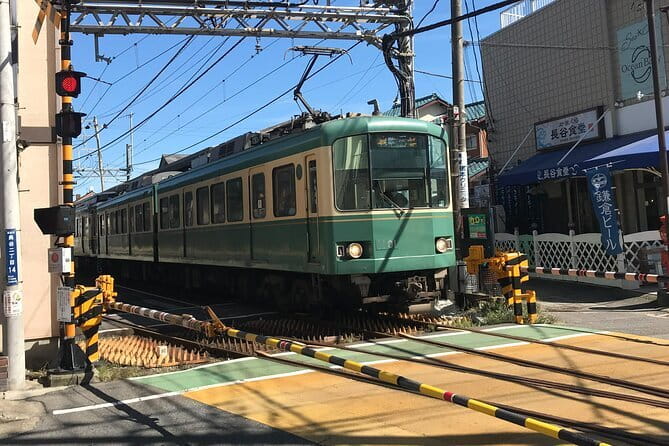
The meeting point is Kamakura Station (1-chōme-1-15 Onarimachi). Ending back at the same spot is a nice bonus. It removes the stress of planning a final transfer after a few temple climbs and a seaside stroll.
You’ll have an option to tour by bike or on foot. And you’re not locked into one forever during the tour window. That flexibility matters because Kamakura’s vibe changes fast—quiet temple grounds feel different from busier street corners and the beach road. If your legs get tired, switching to walking might feel smarter. If you want to cover more ground without feeling rushed, go for the bike time.
Practical note: the bike option is for people who can handle an adult-sized bike. If you’re traveling with a teen or young child, this matters more than age on paper. When kids can’t ride that kind of bike comfortably, the tour isn’t a good match.
Kotoku-in and the Great Buddha: start with the iconic tone
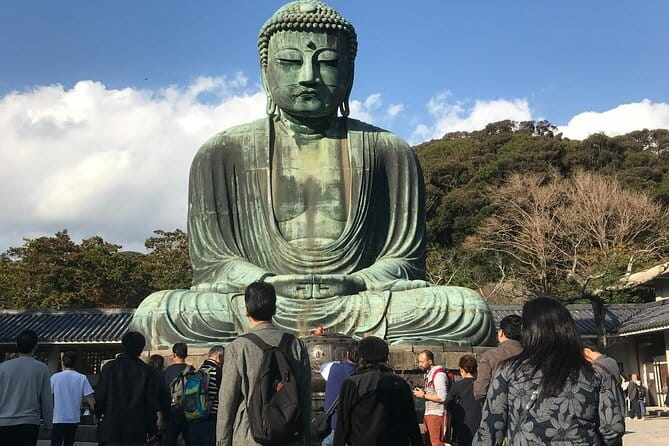
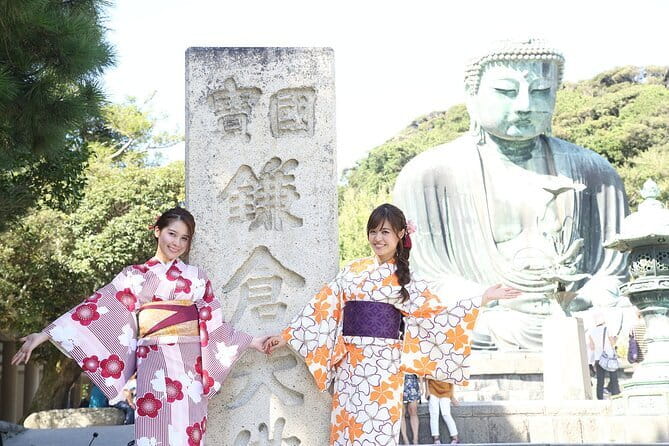
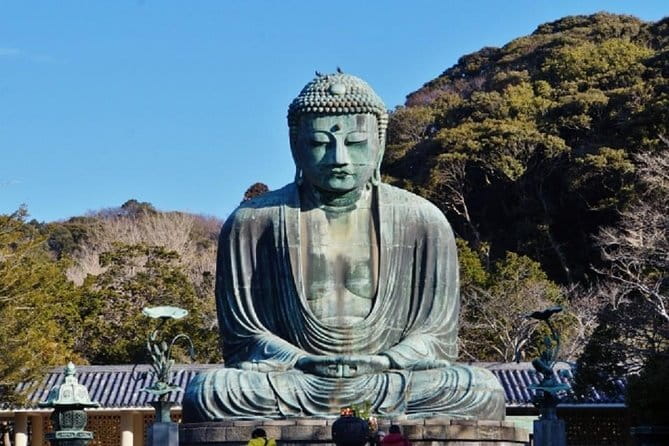
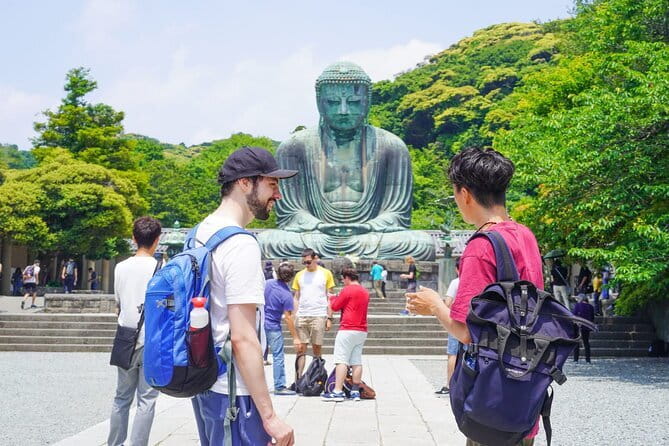
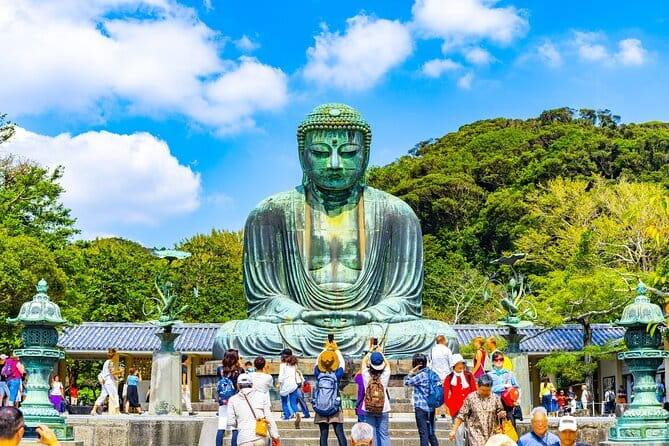
Your first major stop is Kotoku-in (Kotokuji / Great Buddha of Kamakura). You spend about 30 minutes here, with an admission ticket included. This is the moment that makes first-time visitors understand why Kamakura is such a magnet.
I like starting here because it sets the “why” before you add more names and dates. The Great Buddha is instantly recognizable, but the guide’s role is what turns it into something you remember—how this site fits into Kamakura’s religious traditions and why it became such a defining landmark.
Time-wise, 30 minutes feels just right. You’re not forced into a speed-run, but you also don’t burn the whole tour on the most famous single view.
Tsurugaoka Hachimangu Shrine: samurai-era spirituality in a walkable layout
Next up is Tsurugaoka Hachimangu Shrine, about 30 minutes, with admission free. This is one of those places where the surroundings and the route through the grounds matter as much as the buildings themselves.
You’re dedicating time to a spiritual and historical center connected to samurai-era belief. The guide’s stories help you read the site like a map: what you’re seeing, why it’s placed there, and how it ties into Kamakura’s role in Japan’s past.
Drawback to know: this stop is popular. If you’re the kind of person who likes quiet photos without people in the frame, you’ll need to accept that it’s a shared world. The advantage of a private guide is that they can help with timing and positioning while you’re there.
Sanetomo and Hojo Masako graves: a short stop that changes your perspective
Then you head to the Grave of Minamotono Sanetomo and Hojo Masako for about 10 minutes. Admission is free.
Ten minutes sounds quick because it is. But these kinds of stops are where the tour becomes more than famous landmarks. You start connecting the dots between temple culture and the people who shaped the political heart of Kamakura.
I recommend treating this as a “pause for meaning” moment. Don’t expect this to replace the big sites. It’s more like the short sentence that changes how you read the whole book.
Hokoku-ji’s bamboo grove: where your pace usually slows
Hokoku-ji is one of the reasons people fall for Kamakura in the first place. You’ll spend about 30 minutes here, and admission is included.
This stop is known for its bamboo grove, and even when it’s not perfectly silent, it’s a calmer pocket compared to shrine streets. The guided explanations make it easier to understand why this place is respected, not just photographed.
You might also take a break for optional green tea (500 yen) at a cafe near Hokokuji. This is not required, but it’s an easy add-on if you want to sit for a moment and let the day reset. Just plan on skipping lunch-heavy expectations here, since lunch isn’t included.
Yuigahama Beach: the coast reset you didn’t know you needed
Between temples and shrines, you get time at Yuigahama Beach. You ride or walk along the seaside road, with a note that it can be more crowded in summer.
This is a smart pacing choice. After hours of stone paths and sacred grounds, beach air does what stairs can’t: it refreshes you fast. The scenery also changes your photo set—you get different light and a different kind of view.
If you’re sensitive to crowds, avoid peak time if possible. The guide can’t control the calendar, but your private route and timing usually help.
Hasedera Temple: Kannon and the coastline view
Next is Hasedera Temple, about 20 minutes, with admission free. This is where the tour adds one of Kamakura’s best “how did they build this here” moments.
Hasedera is known for gardens and views over the coast. You also get time around a 9.18-meter wooden statue of Kannon (Goddess of Mercy). That scale matters. Up close, it reads as monumental rather than decorative.
In a short stop like this, I suggest focusing on two things: the statue experience and the viewpoints. Let the gardens be a background layer, not your only job, so you don’t run out of tour time before you’ve seen the best angles.
Egara Tenjin Shrine: quick, peaceful, and easy to miss alone
Your final shrine stop is Egara Tenjin Shrine (also written Egara Tenjin / Egara Tenjin Shrine), about 10 minutes. Admission is included here.
This shrine is dedicated to Sugawara no Michizane, associated with scholarship and learning. It’s a smaller, quieter kind of stop compared to the big names elsewhere on your route, which is exactly why it works on a guided tour.
This is the point where you’ll likely feel the contrast. You’re not sprinting to the next headline temple. You’re taking a breath and ending with a respectful, low-stress visit.
How Ichi’s rickshaw-driver background shows in the route
This tour is led by Ichi, who has about five years of experience as a rickshaw driver guide. That kind of local street experience matters more than people think.
On a bike or even on foot, Kamakura’s charm comes from small turns and the feeling of moving through real neighborhoods. A guide who’s used to escorting people through these streets tends to be better at:
- choosing smoother paths between major sights
- managing timing so you’re not constantly waiting around
- explaining what you’re seeing in plain language while you’re still in the moment
In the field, I also like that the guide takes photos. You spend the day looking, not performing as your own photographer.
Rain, crowds, and the reality of half-day timing
Weather can change quickly in Japan. One review experience included a bike ride in the rain, with the guide handling it well and still keeping the atmosphere friendly.
Still, the tour does require good weather. If conditions are poor enough, you’ll be offered a different date or a full refund. In practical terms: if you’re traveling during a season where rain is frequent, consider booking a day with flexibility in your schedule.
On crowd days, the private structure helps. You’re not stuck in a mass guided group, and you can spend more time where you’re interested rather than following a rigid pace just to stay on schedule.
Price and value: what $150.24 buys in real terms
At $150.24 per person for about 4 hours, you’re paying for a private guide plus entrance fees for key stops.
Here’s what’s included that you can feel immediately:
- Professional guide (private)
- Entrance fees for Kotoku-in (Great Buddha) and Hokokuji
- Entrance included for Egara Tenjin Shrine
- A guided, photo-friendly route that covers multiple major landmarks
- Mobile ticket and a start/end that loops back to Kamakura Station
Optional costs are relatively minor on paper. You may buy green tea (500 yen) if you want it. Lunch is not included, so plan for food outside the tour.
Is it worth it? I think it is if you want three things at the same time:
1) guided context that makes the stops more meaningful
2) efficient route planning without stressing over transit and walking distances
3) a private pace that fits your group
If your idea of a great day is going solo, wandering slowly, and looking up details on your phone at each stop, then a paid tour might feel like extra structure. But if you want the city organized for you, this price can make sense.
Who this Kamakura tour suits best
This is a good match for adults, and it can work well for teens who are comfortable with the bike option. The tour notes it’s not recommended for young travelers/children under 13 who cannot ride an adult-sized bike.
It’s also ideal if:
- you want to cover the highlights without treating the day like a scavenger hunt
- you like temples and shrines but also want the stories behind them
- you enjoy taking photos and want help getting them
- you’re short on time in Kamakura but want more than one or two stops
If you have mobility limitations that make stairs and uneven temple paths hard, you’ll want to consider whether the bike option helps or whether walking time will still be challenging. The data here doesn’t spell out accessibility details beyond the bike/age note.
Should you book this Kamakura Heritage Bike or Walk Tour?
I’d book it if you want Kamakura to feel connected, not random. The mix of Great Buddha, Tsurugaoka Hachimangu, Hokokuji bamboo, a beach reset at Yuigahama, and a finish at Egara Tenjin Shrine makes this a strong “one half-day” plan.
Choose it especially if you value a guide who can explain the significance of what you’re seeing and keep the day moving without rushing you. The private format and included entrances help justify the cost.
Pass on it if you’re only interested in one or two sites, or if you’re traveling with someone who can’t comfortably handle the adult-sized bike when you choose that mode. Otherwise, this is one of the more practical ways to experience Kamakura’s sacred corners and coastal breathing room in a single afternoon.
FAQ
Is this tour a bike tour, a walking tour, or both?
It’s a bike or walking tour. You can choose your preferred way to explore, and you can switch your schedule during the tour time frame to match your pace and interests.
How long does the Kamakura tour take?
It lasts about 4 hours.
What are the main stops during the tour?
You’ll visit Kotoku-in (Great Buddha), Tsurugaoka Hachimangu Shrine, the grave of Minamotono Sanetomo and Hojo Masako, Hokoku-ji, Yuigahama Beach, Hasedera Temple, and Egara Tenjin Shrine.
Are any admission fees included?
Yes. The tour includes fees to enter the Buddha (Kotoku-in) and Hokokuji Temple. Egara Tenjin Shrine admission is also marked as included. Other listed stops are free.
Where does the tour start and end?
It starts at Kamakura Station (1-chōme-1-15 Onarimachi, Kamakura) and ends back at the same meeting point.
Do I need lunch or snacks during the tour?
Lunch is not included. At Hokokuji Temple, there’s an optional green tea purchase listed as 500 yen.
What if the weather is bad?
The tour requires good weather. If it’s canceled due to poor weather, you’ll be offered a different date or a full refund.