REVIEW · JOHANNESBURG
Johannesburg: Soweto Tour by Tuk Tuk
Book on GetYourGuide →Operated by One Day Africa · Bookable on GetYourGuide
Soweto hits different when you roll up by tuk-tuk. This 2.5-hour tour in Orlando West is a smooth way to cover big landmarks, ride through different neighborhoods, and learn how events like the Soweto uprising shaped South Africa. I especially love the chance to see multiple places that feel connected but are too far for a typical walking route, and the live English guide keeps the stops understandable and practical. One thing to consider: there’s no hotel pickup, so you’ll need to get yourself to the meeting point at Rampa and Moema Street.
The second thing I really liked is how the route balances famous memorial stops with real-life neighborhood contrasts, including a visit to an informal settlement with a local guide. You’re also not just watching from the sidelines, because you get time for questions and photos in the places that matter. The main downside is the “2.5 hours” part of the plan: it’s fast by design, so if you want lots of lingering inside every site, you may wish you had more time.
Key moments and logistics at a glance
- Tuk-tuk mobility: easier touring in a short window, with access to places other tours struggle to reach
- Mandela House + Desmond Tutu House: major names on Vilakazi Street, tied to the story of apartheid
- Neighborhood mix: Orlando West and Orlando East, plus an informal settlement visit with local guidance
- Soweto uprising focus: Hector Pietersen Museum as a key turning-point stop
- Food included: you finish with South Africa’s famous KOTA sandwich
In This Review
- Why a Tuk-Tuk Works So Well in 2.5 Hours
- Orlando West Start: 1886, City Stories, and Quick Orientation
- Orlando Towers and the Neighborhood Thread Through Soweto
- Vilakazi Street: Mandela House and Desmond Tutu House
- Orlando East: First Formal Houses and the Informal Settlement Reality Check
- Women’s Hostel and Mama Lilian Ngoyi’s Family Home
- Hector Pietersen Museum: Where the Soweto Uprising Happened
- The End Stop: KOTA Sandwich and Included Food
- Price and Value: What $67 Gets You (and Why It’s Fair)
- Who This Private Tuk-Tuk Tour Best Fits
- Before You Go: Comfort, Questions, and Gratuity
- Should You Book This Soweto Tuk-Tuk Tour?
- FAQ
- How long is the Soweto tuk-tuk tour?
- How much does it cost?
- What’s included in the tour price?
- Is hotel pickup or drop-off included?
- Where does the tour start and end?
- Is there anything to plan for when visiting an informal settlement?
Why a Tuk-Tuk Works So Well in 2.5 Hours

Soweto is big, and most first-time visitors underestimate how quickly time disappears. A tuk-tuk tour solves that problem by getting you moving without the fatigue that comes with hours of walking. In a short span, you can still hit the names you came for and see the neighborhood texture you came to understand.
The best part is not just comfort. It’s access. The tour is designed to reach areas and viewpoints that would be harder with bigger vehicles or other tour styles, which helps you get a better sense of how spaces actually connect.
Orlando West Start: 1886, City Stories, and Quick Orientation
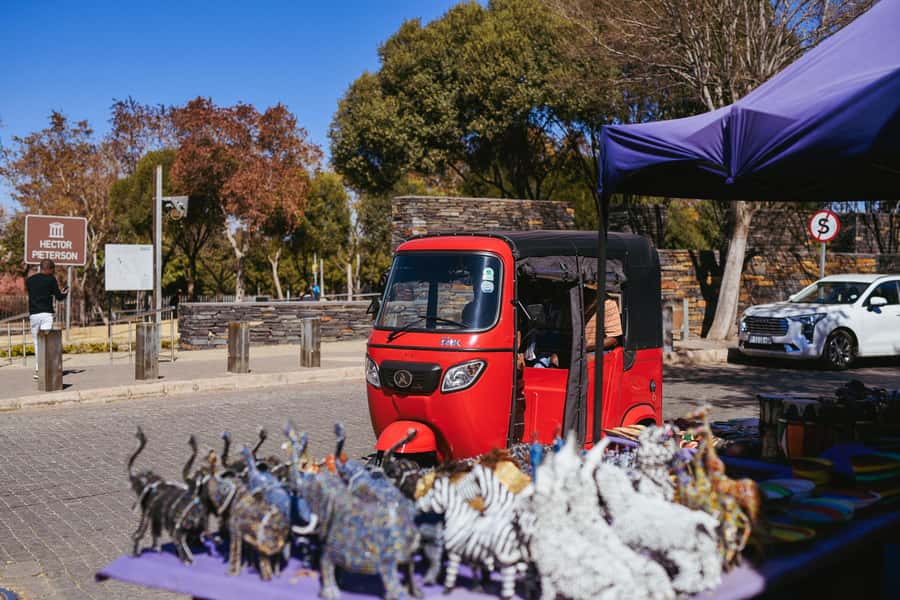
You start at the corner of Rampa and Moema Street in Orlando West. That location matters because Orlando West is a good “base” neighborhood for getting oriented fast, and it’s the kind of starting point where your guide can set context right away.
From there, you begin with the township’s establishment dating back to 1886, plus a broader look at Johannesburg and how it shaped life in Soweto. This is the part of the tour where things start to click: not just where you’re going, but why these places exist and how they changed over time.
Expect a practical pace. You’re not stuck waiting between stops, and you’ll get to ride while your guide threads the story through the neighborhoods.
Orlando Towers and the Neighborhood Thread Through Soweto

One of the tour highlights is passing Orlando Towers with your local guide. Even if you’ve seen pictures before, being there in person helps you understand the scale and the way Soweto landmarks sit within everyday life.
As you move through the route, the guiding idea feels consistent: Soweto isn’t one single story. It’s many parts of the same place, seen through different streets, housing types, and community challenges.
If you like tours that explain the “so what,” this style works well. You’ll get the big references, but also enough local grounding to make the stops feel connected rather than random sightseeing.
Vilakazi Street: Mandela House and Desmond Tutu House
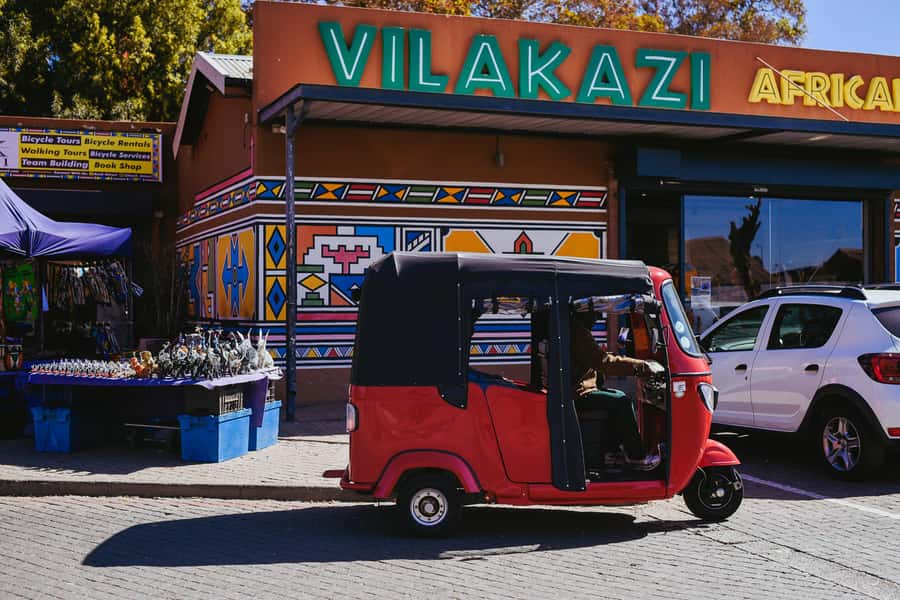
The tour’s Vilakazi Street segment is the headline section for many visitors. You visit Mandela House and Archbishop Desmond Tutu House, both on Vilakazi Street, where South African history is right there in the neighborhood.
What I find most useful here is how these stops are tied to the idea of apartheid’s downfall rather than treated like isolated photo ops. Your guide connects the symbolism of the people associated with these homes to what changed in the country and how Soweto fits into that larger arc.
This is also a great place to slow your brain for a moment and look carefully. The area has a lived-in quality, so even if you’re visiting as a short stop, you’ll still feel the weight of why these homes are remembered.
Photo tip: shoot wide first, then close. The wide shots help you place the homes in their street context.
Orlando East: First Formal Houses and the Informal Settlement Reality Check
From Vilakazi Street, the tour shifts toward different neighborhood stories, including Orlando East. One key focus is the idea of Orlando East having the first formal houses of Soweto, which gives you a sense of how housing history developed over time.
Then the tour adds a necessary counterpoint: a visit to an informal settlement, guided by someone local. This part isn’t just a stop on a route. It’s where you see how uneven access to services and space can be, even within the same broader community.
There’s also a clear “how to be respectful” guide here. During or at the end of the informal settlement visit, you’re welcome to offer a gratuity of R20–R50 (or more, if you choose) at your discretion. That’s a small moment that signals you understand this is not a theme park.
Women’s Hostel and Mama Lilian Ngoyi’s Family Home
The tour also includes a visit to a former women’s hostel and then to Mama Lilian Ngoyi’s family home. These stops give the anti-apartheid story a human scale.
A lot of history tours focus on one kind of hero. Here, you get a reminder that women’s roles in activism were essential, and the places you visit help you picture organizing, courage, and everyday risk.
Because the tour is short, your guide keeps the explanation focused, but you still get enough detail to understand why this portion matters. If you want history that connects people to place, this section delivers.
Hector Pietersen Museum: Where the Soweto Uprising Happened

One of the most powerful stops is Hector Pietersen Museum. This is where the Soweto uprising transpired, and it’s described as a turning point in apartheid.
If you’ve heard the name before, expect the visit to sharpen what it means. You’re not just learning a date—you’re learning why that moment mattered and how it shifted the pressure on the system.
Even with a limited time window, your guide’s job here is to keep the story clear. You’ll leave with a stronger sense of how a single uprising can reshape national momentum.
The End Stop: KOTA Sandwich and Included Food
You finish the tour with a taste of South Africa’s famous KOTA sandwich. This is more than a snack break. It’s a low-pressure way to end the day while your brain is still collecting details from the streets.
Food and drinks are included, which is a real value in a short tour like this. It also helps you pace yourself, especially if you’re taking pictures and asking questions throughout the ride.
If you’re traveling with kids or you’re simply not into long museum time, the KOTA stop is an easy win. It feels like part of the culture rather than an optional extra.
Price and Value: What $67 Gets You (and Why It’s Fair)

At $67 per person for a 2.5-hour private group experience, the value comes from three things working together:
First, you get transportation included through neighborhoods via tuk-tuk, including access to places that other tours can’t reach as easily. That matters because in Soweto, time and distance are real constraints.
Second, you get a live English guide plus a driver, and the stops are organized around major landmarks and key historical moments. You’re not paying for random driving; you’re paying for guided context.
Third, you get food and drinks included, plus the signature KOTA at the end. When a tour includes the meal, it reduces the annoying extra costs that add up fast.
If you’re someone who wants a first-pass orientation to Soweto without committing to a full day, this price makes sense.
Who This Private Tuk-Tuk Tour Best Fits
This tour is a strong match if you:
- are visiting Johannesburg for the first time and want a fast, organized understanding of Soweto
- want to reduce walking time while still seeing major stops
- like tours where the guide can explain history without turning it into a lecture
- prefer small, private-group pacing (this is a private group tour)
It’s also a solid option if you’re traveling with kids, since the tuk-tuk helps you cover more ground without everyone having to keep up on foot for hours.
If you’re the type who insists on going slowly and reading every sign, you might want to pair this with an extra independent visit later. The tour is built for coverage, not marathon time.
Before You Go: Comfort, Questions, and Gratuity
Wear comfy shoes anyway. Even with tuk-tuk travel, you’ll still spend time standing at stops and walking short distances around entrances and viewing areas.
Bring a quick-question mindset. The tour is set up for you to ask about what you’re seeing—why a place is important, how neighborhoods differ, and what the major events changed. A good guide will make those questions easy to answer, and you’ll get more out of the experience.
Most important practical detail: during or at the end of the informal settlement visit, consider the suggested gratuity of R20–R50 (or more). It’s your chance to show respect in a meaningful, non-performative way.
Should You Book This Soweto Tuk-Tuk Tour?
I’d book it if your top goal is a well-paced introduction to Soweto in a short time, with Mandela House, Desmond Tutu House, the Hector Pietersen Museum, and a strong food finish in one outing. The tuk-tuk format helps you see more with less strain, and the route’s mix of landmark history plus neighborhood reality makes it feel grounded.
I’d think twice if you hate structured itineraries and want to wander independently for long stretches. Also consider that there’s no hotel pickup, so you’ll need to be comfortable getting to the meeting point on your own.
FAQ
How long is the Soweto tuk-tuk tour?
The tour duration is 2.5 hours.
How much does it cost?
The price is listed as $67 per person.
What’s included in the tour price?
Food and drinks are included, along with a local guide and driver.
Is hotel pickup or drop-off included?
No. Hotel pickup and drop-off are not included.
Where does the tour start and end?
The tour starts at the corner of Rampa and Moema Street, Orlando West, Soweto, and it ends back at the same meeting point.
Is there anything to plan for when visiting an informal settlement?
You may offer a gratuity during or at the end of the informal settlement visit. A suggested range is R20 to R50, or more at your discretion.