REVIEW · LISBON
All Historical Lisbon Tuk Tuk Tour
Book on GetYourGuide →Operated by Soul Trippin Tours · Bookable on GetYourGuide
Four hours by electric tuk-tuk in Lisbon. What makes this tour feel like a shortcut is the private local guide plus a 100% electric tuk-tuk that carries you between neighborhoods without making you climb everything on foot. I love how it gives you cultural and historical context while still moving at a sightseeing-friendly pace, and I love that the guide can tailor what you pay attention to. One possible drawback: the time at each place is brief, and a handful of major landmarks are viewed from the road rather than entered or lingered at.
The value here is that you get structure without feeling locked in. You’re picked up at a city-center location (choose from 11 areas), then the guide maps out the historic story as you pass squares, viewpoints, churches, and finally the Belém waterfront. The tour runs in multiple languages, so you’re not stuck translating on the fly.
If you want long museum hours or extended church time, you may need to plan a follow-up day. The good news: this tour is built to help you understand Lisbon fast, so your later wandering makes more sense.
In This Review
- Key highlights to look for on this Lisbon tuk-tuk tour
- Getting oriented fast: why this electric tuk-tuk beats “winging it”
- Price and value for a 4-hour private history ride
- Pickup zones and the pace: how the route feels in real time
- Old center classics: Restauradores, Rossio, and Santa Justa from the street
- Igreja de Santo António and Lisbon Cathedral: what to see in the short stop
- Alfama and the miradouros: Graça, São Vicente, and the best viewpoint moments
- Chafariz del Rei and Terreiro do Paço: the city flips from hills to open space
- Chiado and Bairro Alto: quick hits around Convento do Carmo and Igreja de São Roque
- Príncipe Real, Parliament area, and Estrela: Lisbon’s calmer side for a breather
- Crossing to Belém: from old Lisbon to the riverfront highlights
- Museums and modern edges: MAAT and Museu da Eletricidade in the same story
- Who this tour suits best (and who should plan something else)
- Should you book the All Historical Lisbon Tuk Tuk Tour?
- FAQ
- How long is the All Historical Lisbon Tuk Tuk Tour?
- Is the tour private, and how many people can fit in the tuk-tuk?
- Where does the tour start from?
- What’s included in the price?
- Is entry to Lisbon Cathedral included?
- Are food and drinks included?
Key highlights to look for on this Lisbon tuk-tuk tour

- Electric tuk-tuk comfort: 100% electric ride, sized for up to 6 people.
- Private, guide-led flow: you’re not sharing your story with strangers.
- Short-but-smart stops: quick visits at the places that benefit from a photo + a little context.
- Viewpoints included: miradouro moments in multiple hilltop neighborhoods.
- Old center to Belém: you cover both the historic core and the riverfront highlights.
- Real guide impact: guide João stood out for tailoring the tour to the group.
Getting oriented fast: why this electric tuk-tuk beats “winging it”

Lisbon can feel like a magic trick: hills, terraces, tile-lined streets, and viewpoints at every turn. The challenge on day one is figuring out what connects everything. This tour solves that by giving you a guided route that links neighborhoods to their roles in Lisbon’s story.
I like that the tuk-tuk is 100% electric. That matters more than you might think because it keeps the ride calmer and easier to enjoy while you’re listening. It also helps when you’re hopping between districts with different vibes—central squares one moment, then suddenly you’re up at a miradouro where the city opens up.
This is also a genuinely good “first city” plan because it’s private. When your guide can focus on you, you get better answers, and you can steer the emphasis. In the guide role, João is specifically called out for being excellent at matching the tour to what the group wanted to see.
You can also read our reviews of more tours and experiences in Lisbon.



Price and value for a 4-hour private history ride
At $119 per person, the price is the key question. Here’s how I think about the value:
- You’re paying for private guiding (not just transport).
- You’re paying for city-center pickup and a packed route.
- You’re paying for an electric vehicle that handles hills and tight streets efficiently.
If you were to build this yourself, you’d spend time coordinating transport, figuring out which viewpoints are worth your legs, and then paying admission selectively where it actually makes sense. This tour’s goal is to compress that decision-making into four hours.
One note to keep your expectations clean: entry/admission isn’t included for Lisbon Cathedral, so if cathedral interior time matters to you, you’ll want to plan for that cost separately. Food and drinks also aren’t included unless you request them, which is important later when you reach Pastéis de Belém.
Pickup zones and the pace: how the route feels in real time

This tour starts with pickup at city center, with 11 options you can choose from: Campo de Ourique, Estrela, Bairro Alto, Cais do Sodré, Baixa de Lisboa, Alfama, Lisbon, Lapa, Príncipe Real, Chiado, and Santos-o-Velho.
That’s a big deal for practical Lisbon travel. Lisbon’s best sights are spread out, and “getting to the start” can eat half your day. With pickup already arranged, you go straight into the sightseeing flow.
The timing is built for momentum. There are places where you pass by without stopping (great for orientation), and there are places where you get out for about 10 to 20 minutes. So you get just enough time to step in, look around, and get the meaning from your guide—without turning the day into a checklist marathon.
Old center classics: Restauradores, Rossio, and Santa Justa from the street

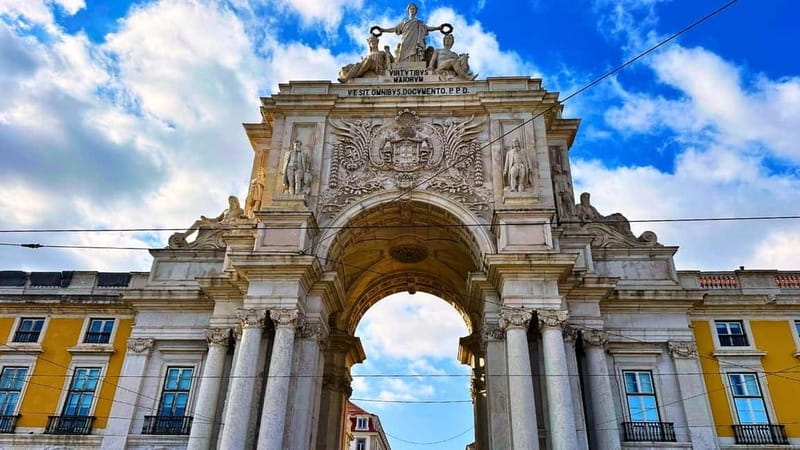
You’ll begin in the central zone, starting around Praca dos Restauradores and passing by iconic blocks like Rossio Square. These are the kind of places you’ll see in photos, but being in them for real helps your brain attach names to geography.
From there, the route keeps going toward the Elevador de Santa Justa area. You may pass by first, then later you’ll get additional time around it. The big value of seeing it twice is that Lisbon has sightlines from multiple angles—your guide can explain how the city’s layers stack up.
You don’t need to sprint here. Think of this part as setting your mental map: where the center sits, where foot traffic tends to gather, and how quickly the streets change once you start climbing toward older quarters.
Igreja de Santo António and Lisbon Cathedral: what to see in the short stop
A highlight you’ll actually step into is the Church of St. Anthony, followed by a stop for Lisbon Cathedral.
The stop time is about 10 minutes, so don’t expect a long, slow worship or museum-style visit. Instead, use it the way the tour intends: quick orientation, then a short look at key religious and historic features with context from your guide.
Important practical detail: Lisbon Cathedral entry/admission isn’t included. That doesn’t make the stop less useful—it just means your guide can still point out what’s special, and you can decide whether to pay for interior access during your visit window.






Alfama and the miradouros: Graça, São Vicente, and the best viewpoint moments
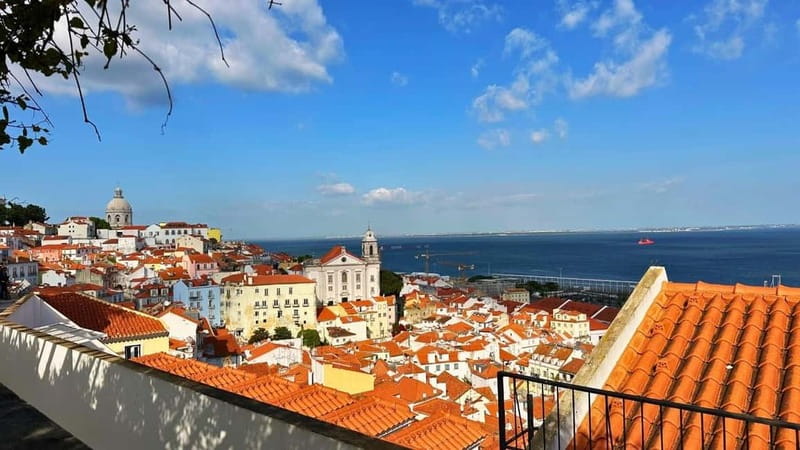
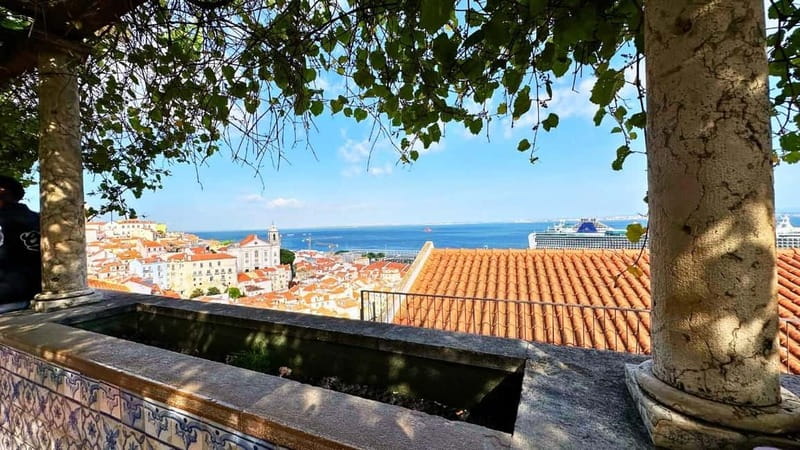
After the central churches, the tour starts to feel more like Lisbon’s postcard comes to life. You’ll pass through areas tied to older neighborhoods like Alfama, and you’ll keep encountering viewpoints (miradouros), which is where Lisbon earns its reputation.
You’ll roll past Miradouro de Santa Luzia without stopping at that specific moment, then you’ll get a real stop at Miradouro das Portas do Sol for about 10 minutes. This is one of those places where you don’t need a long speech—you just need a minute for the view to land, and then your guide can connect it to what you’re seeing below.
From there, you’ll be guided toward Miradouro da Senhora do Monte with about 20 minutes there. More time helps at this type of lookout because you can watch the city shift visually while you orient: rooftops, church towers, and the direction of the river.
You’ll also pass by spots tied to older Lisbon like Igreja de São Vicente de Fora and areas connected to the Feira da Ladra market. Even when you’re just passing, your guide can explain why these places matter and how the city’s historical neighborhoods functioned.
Chafariz del Rei and Terreiro do Paço: the city flips from hills to open space

Mid-route, the vibe changes. You pass by Chafariz d’El Rei, then you reach Praca do Comercio (Terreiro do Paco).
This is useful because Lisbon isn’t just hills and stairs. The Terreiro do Paço area gives you a sense of Lisbon’s relationship with the river and commerce. Seeing it from a quick stop helps you understand the city’s geography: where the “public face” is, and how the older quarters connect back down toward the water.
It’s also a smart break in the walking rhythm. After viewpoint time, you’re not stuck in a narrow stair maze. You get open space, big perspectives, and an easier mental transition to the central neighborhoods ahead.
Chiado and Bairro Alto: quick hits around Convento do Carmo and Igreja de São Roque
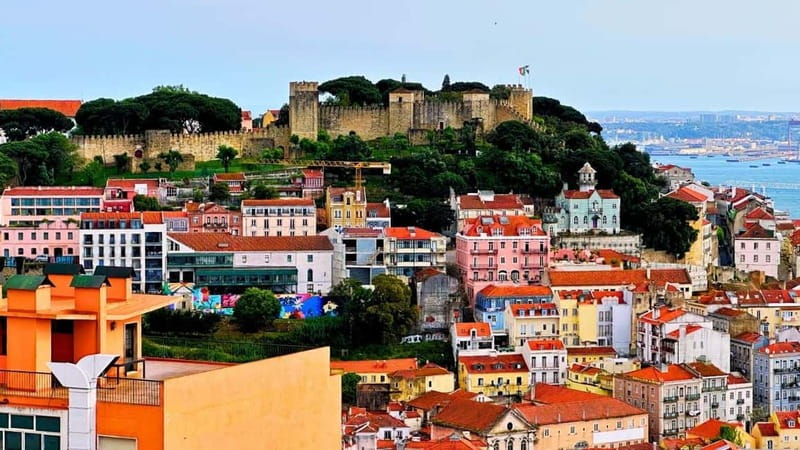
The tour continues into areas like Chiado and Bairro Alto, passing by Praca Luis de Camoes along the way.
Then you get two meaningful stops:
- Convento do Carmo (about 10 minutes)
- Igreja de São Roque (about 20 minutes)
These are the kind of stops where a guide’s explanations can turn “pretty church” into “why this church matters.” The longer 20-minute window at São Roque is a clue that this stop is intended for more than a quick glance.
You’ll also get more time near Elevador de Santa Justa again (about 10 minutes) and then head toward Miradouro São Pedro de Alcântara for about 20 minutes. That extra miradouro time is handy if you want your photos to include both viewpoints and the neighborhood style below.
Príncipe Real, Parliament area, and Estrela: Lisbon’s calmer side for a breather

After the busier central quarters, the tour includes a quieter reset in the Príncipe Real area and then heads toward Assembleia da República by passing rather than stopping.
The next stops are Jardim Da Estrela Park (about 10 minutes) and Basilica da Estrela (about 10 minutes). I like this section because it gives your feet a short rest while still keeping you in the historic-and-cultural thread. A park stop also gives you a visual break from architecture and steps.
If you’re the type who gets overloaded by landmarks, this is where the tour helps you breathe without losing momentum.
Crossing to Belém: from old Lisbon to the riverfront highlights
The tour then shifts across to the Belém side, passing 25 de Abril Bridge without stopping and continuing toward Alcantara-Mar by passing.
This transfer matters because it changes what Lisbon feels like. The riverfront half of town is less about steep alleys and more about monuments, maritime connections, and famous sites.
You’ll pass by Palácio de Belem, then stop for Pastéis de Belém for about 10 minutes. Practical heads-up: food and drinks aren’t included unless you request them, so treat this as a quick window to buy and taste rather than a full meal.
Then you’ll head toward the Mosteiro dos Jerônimos (stop time isn’t explicitly listed in the data, but it’s one of the major highlights in this part of the route) and continue along Belém’s monument belt. You’ll pass by Centro Cultural de Belém (CCB) and then spend time at:
- Torre de Belém (about 20 minutes)
- Padrão dos Descobrimentos (about 15 minutes)
These are big-ticket sights. Even in shorter windows, they benefit from context because they’re tied to Portugal’s exploration era and the way Lisbon presented itself as a maritime power.
Museums and modern edges: MAAT and Museu da Eletricidade in the same story
Belém doesn’t stop at old monuments. The route also includes pass-by moments around Museu da Eletricidade and MAAT (Museum of Art, Architecture and Technology).
I find this pairing smart, especially if you’re traveling with someone who doesn’t want the day to be only churches and towers. It also helps you see Lisbon as a city that keeps remixing its identity—heritage next to contemporary design.
Who this tour suits best (and who should plan something else)
This is a strong fit if you:
- want a first-timer orientation that connects neighborhoods into a story
- prefer private guiding over joining a crowded group
- like viewpoints and churches but don’t want to spend all day walking between them
- have limited time and want to see both old Lisbon center and Belém highlights
It might be less ideal if you:
- want long museum-style time at one location
- plan to spend extra time inside Lisbon Cathedral (since entry isn’t included)
- prefer slow neighborhood wandering without quick transitions
If that’s you, I’d still recommend this tour as your first day, then plan a longer follow-up day in whichever neighborhood grabbed you most.
Should you book the All Historical Lisbon Tuk Tuk Tour?
Yes—if you want Lisbon’s highlights explained in a way that helps you navigate the city afterward. The combination of private guiding, electric tuk-tuk efficiency, and short, meaningful stops is exactly what makes a first visit feel less overwhelming.
Go for it especially if you care about viewpoints and want the route to feel intentional rather than random. Just remember the tradeoff: this is designed for seeing and understanding, not for deep, hours-long time in every single monument. If you accept that pace, you’ll come away with a much clearer sense of where to go next—and why.
FAQ
How long is the All Historical Lisbon Tuk Tuk Tour?
The tour duration is 4 hours.
Is the tour private, and how many people can fit in the tuk-tuk?
Yes, it’s a private group. The tuk-tuks can accommodate up to 6 people.
Where does the tour start from?
It includes hotel/apartment pickup in the city center, with 11 pickup area options including Campo de Ourique, Estrela, Bairro Alto, Cais do Sodré, Baixa de Lisboa, Alfama, Lisbon, Lapa, Príncipe Real, Chiado, and Santos-o-Velho.
What’s included in the price?
Included are hotel/apartment pick-up at city center, 15-minute stops on iconic monuments and sightseeing, a local guide, and company liability and personal damage insurance.
Is entry to Lisbon Cathedral included?
No. Entry/admission is not included for Lisbon Cathedral.
Are food and drinks included?
Food and drinks are not included unless requested.