REVIEW · LISBON
4h/half-day Lisbon Tuk Tuk Tour with a local
Book on Viator →Operated by Battuta Experiences · Bookable on Viator
Lisbon rewards curiosity, and this tuk-tuk route delivers it fast. You get a local-led overview of the city’s big sights, from downtown squares to hilltop miradouros and on to Belém. It’s a smart way to get your bearings without spending the whole day stuck in transit or doing guesswork on where to walk.
I especially like two things: the tour uses the viewpoints (not just monuments) to explain how Lisbon is built, and the route hits both classic postcard spots and useful neighborhoods like Alfama, Bairro Alto, and Cais do Sodré. You also get plenty of photo moments without the stress of a long walking day.
One consideration: this is a tight half-day plan, so a couple of paid Belém stops (like Torre de Belém and the Padrão dos Descobrimentos) may be outside-only if timing gets tight.
In This Review
- Key takeaways before you go
- Why a Lisbon tuk-tuk tour makes sense for first-time orientation
- Meeting at Praça dos Restauradores: what the 4-hour timeline really feels like
- Downtown Lisbon foundations: Monument to the Restauradores, Rossio, and the cathedral area
- Portas do Sol and Senhora do Monte: the miradouros that explain Lisbon’s layout
- Alfama’s big culture stops: Fado Museum, National Pantheon, and ginjinha
- Casa dos Bicos, Ribeira de Lisboa, and Praça Luís de Camões
- Bairro Alto and the gardens that keep Lisbon breathable
- Chiado to Cais do Sodré: opera, Time Out Market, and evening energy
- LXFactory and the National Coach Museum: creative Lisbon and royal history
- Belém highlights: Pastéis de Belém, Jerónimos, and quick looks at the waterfront icons
- What you should expect if you care about museum entry
- Price and value: what $126 buys in a private 4-hour Lisbon plan
- Guides, communication, and why photo stops matter more than you think
- Who this Lisbon tuk-tuk tour fits best (and who should choose differently)
- Should you book this Lisbon tuk-tuk tour?
- FAQ
- How long is the Lisbon Tuk Tuk Tour?
- Is this a private tour?
- Is pickup available?
- What’s included in the price?
- Are any admissions included?
- Do I have to pay for Pastéis de Belém during the tour?
- Will we go inside Torre de Belém and Padrão dos Descobrimentos?
- What neighborhoods and areas does the tour cover?
- Is there a specific food stop during the tour?
- What happens if the weather is bad?
Key takeaways before you go
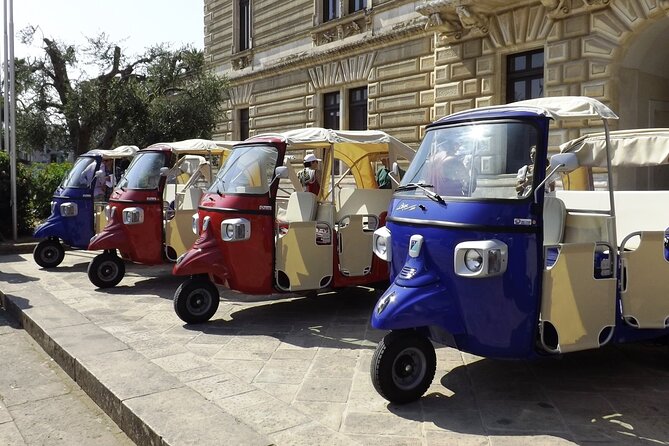
- Private tuk-tuk + local guidance for a route that stays flexible when you want photos.
- Hilltop miradouros (Portas do Sol and Senhora do Monte) for the clearest “how Lisbon fits together” views.
- Alfama + fado culture stops, including the Fado Museum and a chance to try ginjinha.
- River and earthquake history at Ribeira de Lisboa, where the 1755 disaster still shapes the story.
- Belém highlights with smart expectations: you’ll see them, but interior entry isn’t guaranteed on this timeline.
Why a Lisbon tuk-tuk tour makes sense for first-time orientation
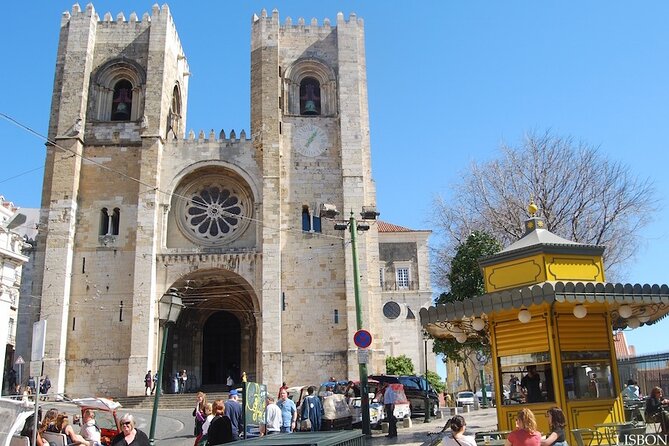
Lisbon is a city of angles. You climb, you look down, you turn corners and suddenly the river shows up again. A tuk-tuk works because it gets you to those changes quickly, while your guide gives context so the sights don’t feel random.
This particular route is built like an orientation lesson. You start in the downtown core, then work up through viewpoints, down into older neighborhoods, and over toward Belém. That arc helps you understand Lisbon’s geography: the hills aren’t obstacles here. They’re the main character.
The private format also matters. Your time stays yours. If you want an extra minute at a viewpoint or a quick stop for a landmark photo, you’re not fighting a big group schedule.
You can also read our reviews of more tours and experiences in Lisbon.



Meeting at Praça dos Restauradores: what the 4-hour timeline really feels like
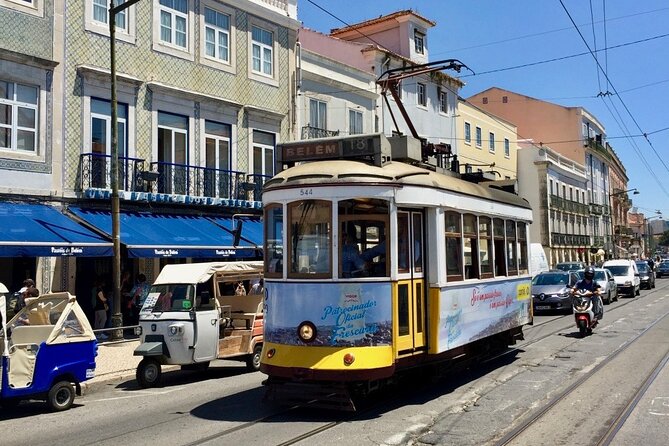
You meet at Praça dos Restauradores 24 (1250-187 Lisboa), and the activity ends back there. Pickup is offered, and you’ll use a mobile ticket. The duration is about 4 hours, including transportation, so you should plan on a focused but not rushed day.
The rhythm is “short stop + explanation + photos + next viewpoint.” That’s ideal for seeing a lot without feeling like you’re dragging yourself uphill for hours. It also means you won’t get long museum sessions at every stop, so think of it as a guided highlight tour that shows you what to return to later.
This also helps with pacing if you’re traveling with family. One review highlighted the tour’s cultural value and the quality of guidance. In practice, that’s what you want: solid information, but not long lectures that slow the fun.
Downtown Lisbon foundations: Monument to the Restauradores, Rossio, and the cathedral area
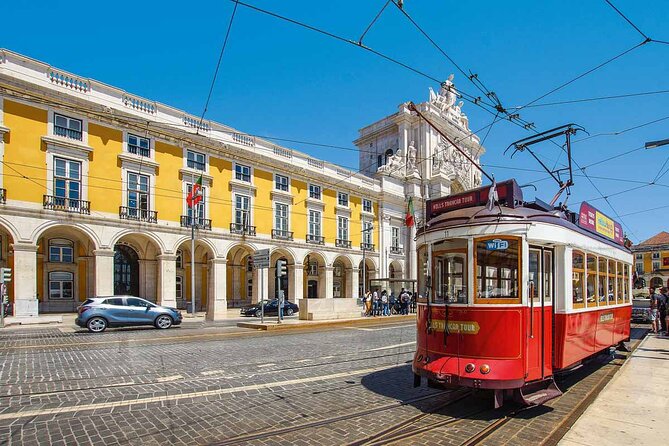
Your first big anchor is the Monument to the Restauradores. It’s a tall obelisk—about 30 meters—inaugurated on April 28, 1886. It commemorates the country’s liberation from Spanish rule on December 1, 1640. Even if you don’t read every plaque, you’ll feel why this matters: it sets a tone for Lisbon as a city that remembers its political turning points.
From there, you move to Praça de D. Pedro IV, better known as Rossio. This is downtown Lisbon’s nerve center, the kind of square where streets branch off and daily life happens. It’s an important stop because it’s not just about a building. It’s about the “grid” of the old city and how people moved around it.
You’ll also pass through the Patriarchate of Lisbon and the area tied to the Parish of the Cathedral. It’s a useful cultural waypoint. Lisbon’s religious institutions are not side notes; they’re part of the city’s planning, architecture, and identity.
Portas do Sol and Senhora do Monte: the miradouros that explain Lisbon’s layout
If you only did one type of stop in Lisbon, do the viewpoints. This route includes two of the best-known miradouros for panoramic understanding.
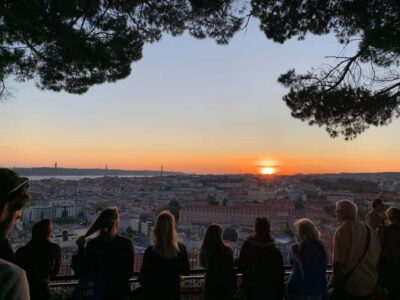
Miradouro Das Portas Do Sol gives you a veranda-like viewpoint with a grand view over eastern Lisbon and out toward the Tagus River. Think of it as your first “wow” angle. It’s also a great moment to orient yourself—after this, you start to recognize neighborhoods by shape and elevation.
Then you head to Miradouro Da Senhora Do Monte, in front of the Chapel of Nossa Senhora do Monte. From here you can look south toward the Castle of São Jorge, across downtown, and out over the Tagus estuary. To the west you see from Bairro Alto toward Parque Florestal de Monsanto, and to the north you catch views around Avenida Almirante Reis.
Both viewpoints are listed as free admission, so you’re paying for transportation and local guidance—not entry fees for the best views.
Alfama’s big culture stops: Fado Museum, National Pantheon, and ginjinha
Now you shift into the part of Lisbon most people associate with atmosphere: Alfama, the oldest and one of the most typical neighborhoods. This is where the tour’s cultural stops start stacking up.
One highlight is the Fado Museum, located in Alfama. It’s centered on the world of fado and the guitar, which helps if you want more than just hearing fado songs later. Even if you don’t go inside for long, the stop anchors the idea that fado isn’t only performance—it’s tied to place.
You’ll also encounter the National Pantheon, installed in the Church of Santa Engrácia. The tour treats it as part of the city’s big story, not just another church stop. If you like architecture and national symbols, this is the kind of location that makes those links feel real.
Another fun stop is the chance to try ginjinha, Lisbon’s famous cherry liqueur. You’re given time to experience it during the Alfama portion. It’s a small moment, but it’s one of those travel memories that lasts because it ties culture to taste.
And because Alfama’s streets are lively, you may also pass by the Feira da Ladra, a popular flea market. Even if you don’t shop, the market vibe is part of what makes the neighborhood feel lived-in.






Casa dos Bicos, Ribeira de Lisboa, and Praça Luís de Camões
Lisbon history is layered, and this route shows that in two different ways: through specific buildings and through the scars left by disaster.
Casa dos Bicos is a historic building that today connects to the Museum of Lisbon and the José Saramago Foundation. The name alone hints at its visual character, but the point of stopping here is the connection between place and Portuguese literature and culture.
Then you reach Ribeira de Lisboa, the old riverside quarter destroyed by the 1755 earthquake and seaquake. It’s tied to the city’s shipyards—first medieval tercenas, later called Ribeiras das Naus. If you’re the kind of traveler who likes cause-and-effect stories, this is the stop that explains why Lisbon looks the way it does along the water.
From there, Praça Luís de Camões adds a different kind of Lisbon detail: the Portuguese pavement (calçada) with geometric effects and designs tied to the sea, mermaids, and caravels. This is a great place to slow down for a minute and look at how the street surface is basically public art.
Bairro Alto and the gardens that keep Lisbon breathable
Lisbon’s neighborhoods change in personality. Bairro Alto is a perfect example. It represents one of the city’s most bohemian and alternative areas, and the tour uses the stop to help you feel that contrast versus more formal or historic zones.
Next come the gardens and terrace-like spaces—Lisbon’s “in-between” moments where you get shade and calmer views.
You’ll visit the Jardim do Príncipe Real, a romantic-style garden built in the mid-1800s. Then there’s Miradouro São Pedro de Alcântara, also linked to a garden setup built in 1864 on two terraces. Finally, you’ll pass Jardim da Estrela, later renamed Jardim Guerra Junqueiro, built in an English garden style, with an entrance near the Basilica da Estrela.
These stops are not just green space. They’re part of Lisbon’s rhythm. They break up the city’s steep travel and give you a pause between photo-heavy sections.
Chiado to Cais do Sodré: opera, Time Out Market, and evening energy
The tour then swings into the Chiado-to-river stretch, which is where Lisbon mixes classic culture with modern food culture.
At Largo do Chiado, you see the west end of the square with the towers of the ancient Portas de Santa Catarina (built 1373–1375, demolished in the early 18th century). Even if you’re not focused on medieval architecture, this stop helps you understand that Lisbon keeps redeveloping while still leaving visible clues of earlier city layouts.
Nearby, you may pass Armazéns do Chiado (also referred to as Palácio Barcelinhos / Grandes Armazéns do Chiado), a commercial building tied to the Chiado shopping and built environment.
Then comes Teatro Nacional de São Carlos, Lisbon’s main opera house. It’s a classic cultural stop that makes sense here because the whole route is about “big picture” Lisbon—not only viewpoints.
As you head toward the river, Cais do Sodré is described as a lively nightlife and gastronomy destination. You even get a stop at Time Out Market Lisboa in Mercado da Ribeira. This is a food hall format—great for grazing on short time, and useful if you want a low-effort meal without locking yourself into one restaurant.
LXFactory and the National Coach Museum: creative Lisbon and royal history
Once you’re over in the Alcântara side, the tour shifts tone again.
LXFactory is a commercial and artistic space in a former industrial area, renovated in 2008. It’s known for industrial-inspired creativity, so it feels like a different Lisbon chapter than the centuries-old streets you’ve been seeing. If you like contemporary contrast—old stone next to modern design—this stop makes the day feel balanced.
Then there’s the National Coach Museum, noted for a major collection of royal coaches and carriages from the 16th to the 19th centuries. This is one of those stops that tells you Lisbon wasn’t only a seafaring power; it also developed impressive ceremonial transport and royal culture. On a short tour, it’s more about the quick context and exterior orientation than a full deep visit.
Belém highlights: Pastéis de Belém, Jerónimos, and quick looks at the waterfront icons
Belém is the big finish, and this route hits the essentials.
First up is Pastéis de Belém. The tour explains that pastries began in 1837 using an old recipe linked to the Jerónimos Monastery, with the pastries made daily. Importantly, Pastéis are not included in the tour price. The listed prices are €1.30 per unit or €7.80 for a box of 6. If you’ve ever had a Lisbon custard tart, this is the one people line up for back-to-back with sightseeing.
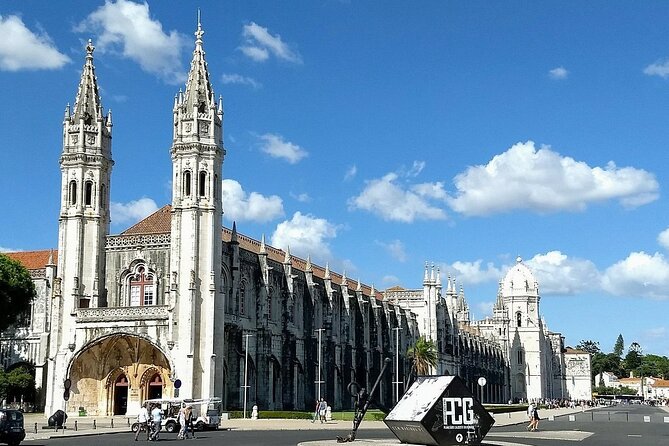
Then you’ll reach Mosteiro dos Jerónimos (Monastery of Santa Maria de Belém), built at the end of the 15th century by King Manuel I, entrusted to the Order of São Jerónimo. This is one of those Lisbon stops where you don’t need to read every detail to appreciate the scale and significance.
After that, the waterfront icons come in two forms: “see and photograph” rather than “go inside and linger.”
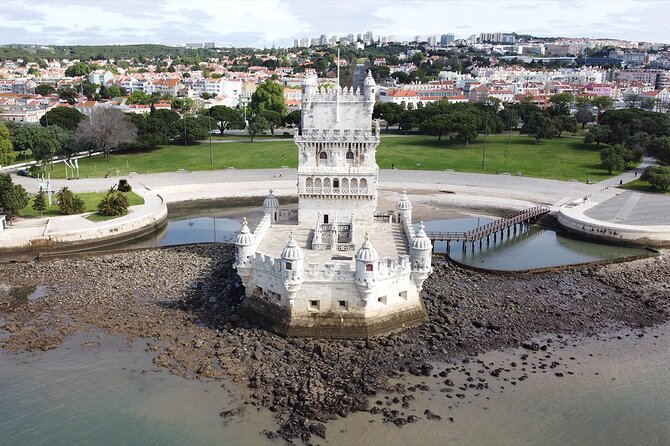
- Torre de Belém (Belém Tower): entrance is €6, but not every tour has enough time to go inside. Often it’s mostly pictures and a walk around.
- Padrão dos Descobrimentos: entrance is €10, and again the tour may be short enough that you mainly get photos and a quick look.
That’s not a failure—it’s reality for a half-day plan.
What you should expect if you care about museum entry
This tour is best if you want guided seeing more than museum immersion. A few major Belém items have entry fees and may not fit into the schedule for inside visits.
If your priority is going into places like Torre de Belém or the Padrão dos Descobrimentos, I’d treat this tuk-tuk route as the day you set up your next day. You’ll get orientation, photos, and the “why this matters” context. Then you can pick one paid interior stop to do properly when you have time to slow down.
Same idea with the food. Pastéis de Belém is listed with prices, but it’s not included. That means you control what you order and whether you want just one taste or a small box.
Price and value: what $126 buys in a private 4-hour Lisbon plan
The headline price is $126 for about 4 hours with private transportation. In a city where getting around can be time-consuming, that private transport is a real part of the value. You’re not only buying a guide; you’re buying time saved between hilltop viewpoints and far-flung neighborhoods.
What makes this feel fair is that many of the biggest “wow” stops are free: both miradouros (Portas do Sol and Senhora do Monte) are listed as free admission, and the tour builds its sightseeing around those viewpoints. The paid items are clearly marked as not included: Pastéis de Belém, Torre de Belém, and Padrão dos Descobrimentos.
So the cost is best understood as a guided transport + route fee. You still budget a little extra for Belém food and possible entries if you want them.
Guides, communication, and why photo stops matter more than you think
The best tuk-tuk days run on trust: can the guide explain fast, adapt on the fly, and still keep you moving? The guides for this experience have been praised for exactly that—clear communication, patience with photo stops, and an ability to make the city make sense in a few hours.
Names you may hear associated with the experience include Joana, Mariana, Fernando, and Diogo. One highlight: Fernando is noted for speaking great Spanish, which can be a big comfort if that’s your language.
Even if you don’t speak Portuguese or Spanish, good guiding shows up as practical pointers: where to look next, how to connect the neighborhoods you’re seeing, and when a viewpoint is worth the extra minute.
Who this Lisbon tuk-tuk tour fits best (and who should choose differently)
This tour is a great match if:
- You’re a first-time visitor and want quick orientation across Lisbon.
- You like views and neighborhoods more than long museum sessions.
- You want a private experience where questions and photo stops don’t feel like a disruption.
- You’re traveling with family and need breaks built into the plan.
Consider a different approach if:
- You want to spend most of your time inside major monuments and museums.
- You’re hoping for a long, slow walk through Alfama alleys without transport.
This is a half-day “see it, understand it, then return” kind of plan.
Should you book this Lisbon tuk-tuk tour?
I think it’s a smart book if you want to leave Lisbon with the city’s shape in your head. The mix of downtown squares, two major miradouros, Alfama culture stops, and a well-paced push into Belém makes it easy to plan what you do next.
If you’re the type who likes spending money only where it counts, this tour helps you do that. You’ll already know what you care about—then you can decide whether you want to pay to go inside places like Torre de Belém or the Padrão dos Descobrimentos.
One final note: the experience requires good weather, so pick a day with decent skies if you can. And remember: this is private and structured, so it’s not the best match if you want unlimited wandering.
FAQ
How long is the Lisbon Tuk Tuk Tour?
It’s listed as about 4 hours (half-day), and the total duration includes transportation.
Is this a private tour?
Yes. It’s a private tour/activity, and only your group participates.
Is pickup available?
Pickup is offered, and the meeting point is Praça dos Restauradores 24, 1250-187 Lisboa, Portugal. The tour ends back at the meeting point.
What’s included in the price?
The included items are private transportation and you receive a mobile ticket.
Are any admissions included?
Some stops are listed as free admission, like the viewpoints at Portas do Sol and Senhora do Monte. Other paid items (like Pastéis de Belém and certain Belém monuments) are not included.
Do I have to pay for Pastéis de Belém during the tour?
Yes, Pastéis de Belém is not included. The listed prices are €1.30 per unit or €7.80 for a box of 6.
Will we go inside Torre de Belém and Padrão dos Descobrimentos?
Not every tour has enough time. Torre de Belém (listed at €6) and Padrão dos Descobrimentos (listed at €10) may be mostly photos and a walk around if time is tight.
What neighborhoods and areas does the tour cover?
The route includes downtown areas like Rossio, hilltop miradouros, Alfama, Bairro Alto, Chiado, Cais do Sodré, Alcântara (LXFactory), and Belém.
Is there a specific food stop during the tour?
Yes. You’ll stop at Time Out Market Lisboa (food hall) and also have the option to buy Pastéis de Belém.
What happens if the weather is bad?
The experience requires good weather. If it’s canceled due to poor weather, you’ll be offered a different date or a full refund.