REVIEW · LISBON
4-hour Tuk Tuk Tour of Belém, City Center, and Lisbon’s Old Town
Book on Viator →Operated by PORTUGALGEOGRAPHICTOURS · Bookable on Viator
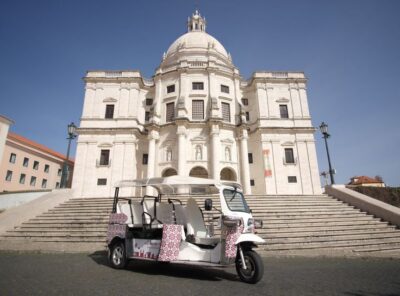
Lisbon from a tuk tuk feels like magic. This 4-hour private loop blends Old Town viewpoints with Belém highlights, so you get the big sights without tiring yourself out on stairs. I love the short, efficient stops and the way the route is built around miradouro views.
A second thing I like is the human side of it. You’ll get a real local-style narration in English, with guides like Frederico, Rachel, Ivo, and Raquel described as upbeat, quick to adjust, and good at keeping the ride moving smoothly. I also like that the day builds in practical pauses for photos, water, and bathroom breaks.
One consideration: the main monuments charge separate entry fees, and the tour ticket doesn’t cover them. Expect extra costs for places like Lisbon Cathedral (€5) and Belém Tower (€8), plus food and drinks.
In This Review
- Key things worth knowing before you go
- Why This 4-Hour Tuk Tuk Route Works for Lisbon and Belém
- Stop 1: Lisbon Cathedral and Saint Antony’s Church Next Door
- Stop 2 and 3: Alfama Views at Santa Luzia and Portas do Sol
- Stop 4: Igreja de São Vicente de Fora and the Big Organ
- Stop 5 and 11: The Skyline Hit from Senhora do Monte and São Pedro de Alcântara
- Stop 6: Praça da Figueira and Tile-Faced Lisbon
- Stop 7 and 8: Teatro Nacional D. Maria II and the Rossio Station Fantasy Look
- Stop 9 and 10: Restauradores and Avenida da Liberdade
- Stop 12 and 13: Parque Eduardo VII, Assembleia da República, and Central Gardens
- The 25th of April Bridge Moment and Museum Stops by the River
- Belém Royal Area: Presidential Museum and a Smart Break for Pastéis
- Jerónimos and Belém Tower: The Paid Monuments That Define the Day
- Padrão dos Descobrimentos and MAAT’s Roof-Walk Style Architecture
- What the Tuk Tuk Ride Feels Like With a Local Guide
- Price and Value: What $300.40 per Group Really Buys
- Best Fit: Who Should Book This Tuk Tuk Tour
- Should You Book This Belém and Old Town Tuk Tuk Tour?
- FAQ
- How long is the tuk tuk tour?
- How many people are in a group?
- Is the tour guided in English?
- What’s included in the price, and what isn’t?
- Which major sights have extra entry fees?
- What’s the cancellation window?
Key things worth knowing before you go
- Private tuk tuk for up to 6 means you can keep your group together and control the pace.
- Alfama viewpoint chain: Santa Luzia and Portas do Sol sit a few yards apart, but they feel like different worlds.
- Two big Belém paid sights are the Jerónimos area and Belém Tower, so plan your budget early.
- Frequent photo moments with planned stops, not random pull-offs.
- Local-style guiding in English that focuses on what you’re looking at, not just dates.
Why This 4-Hour Tuk Tuk Route Works for Lisbon and Belém
This tour is designed for one clear goal: show you the Lisbon you picture on postcards, plus the Belém side of the river, in about 4 hours. That timing matters. In a city of hills, narrow streets, and long sight lines, a tuk tuk route helps you keep energy for actually enjoying the views.
You’ll go in a private group (up to 6 people), which usually means less waiting and more flexibility with photo time. It also helps if you’re traveling with a mix of ages or walking comfort levels—because you can linger at a viewpoint without the stress of losing the whole group.
The tour uses a mobile ticket, and you’ll be riding with an English-speaking guide. Parking fees are included, so you avoid the little operational surprises that can pop up with city transport.
You can also read our reviews of more tours and experiences in Lisbon.



Stop 1: Lisbon Cathedral and Saint Antony’s Church Next Door

The day starts at Lisbon Cathedral, Lisbon’s oldest cathedral. The draw here is architecture plus artwork. You’re looking at a major historic landmark right away, then immediately get an easy add-on without spending more time searching.
Just a minute’s walk away is Saint Antony’s church, and entry to that part is free. The timing is smart: you’re not stuck on a long paid line first thing, and you’re warm-up ready for the rest of the route.
What to expect: a short visit window (about 10 minutes) focused on the main sights. If you’re curious about details, use that time to look at the outside first, then step inside to catch the artwork that’s highlighted on this stop.
Possible drawback: this is a paid attraction. Lisbon Cathedral entry is listed as €5, so be ready to add it to your day budget.
Stop 2 and 3: Alfama Views at Santa Luzia and Portas do Sol
Next you hit the Miradouro de Santa Luzia. This is one of those “instant wow” viewpoints where Lisbon’s older fabric comes into focus: Alfama’s heart, the river spread in the distance, and the big bridge panorama. You’ll also get a mention of the Fado Museum nearby, which is useful if you want to connect this ride to what you’ll explore later.
Then you go to Miradouro das Portas do Sol, around the corner. The clever part: it’s very close to Santa Luzia, but the view feels different—extended horizon, a wider sweep across another stretch of Alfama, and a different line of sight toward major churches.
What makes these stops valuable: these two miradouros teach you how Lisbon is layered. You’ll see how the city stacks on hills, with neighborhoods changing character block by block. It’s also a great place for photos because you have clear sight lines and open space to reposition.
Time reality: each viewpoint stop is short (10 to 15 minutes). If you want slow sightseeing, treat this as a “look, then photograph” stop and save slow walking for a second visit.
Good to know: both viewpoints list free admission.
Stop 4: Igreja de São Vicente de Fora and the Big Organ
Your route then turns toward Igreja de Sao Vicente de Fora. This stop is about interior architecture, not just exterior views. A key detail on the stop list is that the church features one of the biggest church organs in Europe, which gives you something specific to look for once you’re inside.
Why it’s worth your time: even if you’re not a church-architecture specialist, it gives a contrast to the miradouros. Views are all about distance; this is about scale up close—materials, structure, and what the building is designed to hold.
Time: about 10 minutes. That’s enough for a respectful look, but not enough for a long, slow sit-down.
Admission: this stop is listed as free.
Stop 5 and 11: The Skyline Hit from Senhora do Monte and São Pedro de Alcântara

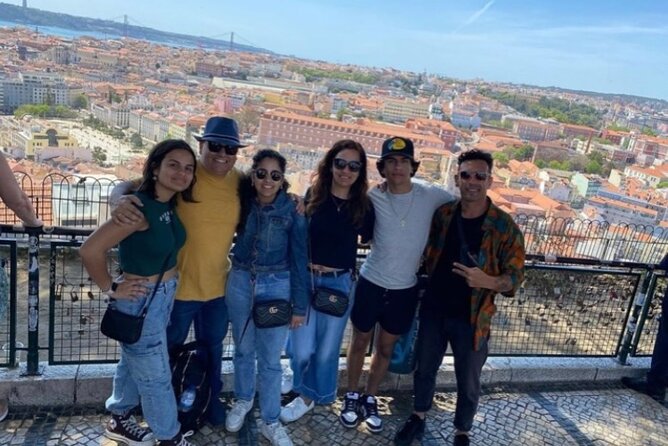
Lisbon’s “postcard picture perfect” moment lands at Miradouro da Senhora do Monte. This is described as the number one view point in the city, and the payoff fits the hype: you look over Mouraria, you see São Jorge’s Castle, King Christ, Santa Justa’s Ascensor, the 25th of April Bridge, and the Tagus River meeting the Atlantic Ocean.
Then later, you circle back to another strong viewpoint: Miradouro de São Pedro de Alcântara. The route frames this as a second best view from the opposite side, so the city looks different again. When you’re in Lisbon, this is one of the best ways to understand geography fast: the same skyline changes personality depending on which hill you’re on.
What to expect in practice: both are free, and both are time-boxed (15 minutes each). So don’t plan to chase every detail. Pick 2–3 landmarks you care about and use your phone/eyes to locate them quickly, then enjoy the broader sweep.
Time-saver tip: if you’re a photo person, take your first “wide shot” early, then do a second pass for closer landmark framing.






Stop 6: Praça da Figueira and Tile-Faced Lisbon

Downtown shifts to Praca da Figueira. This square is in the heart of downtown and includes a statue of King Don João I, plus the kind of traditional Lisbon building facades covered with tiles.
Why this works after viewpoints: it grounds you in street-level Lisbon. After hills and distance views, you get a more human scale—arches, entrances, tiled walls, and city bustle around a central plaza.
Admission: free, and the stop is about 10 minutes.
Stop 7 and 8: Teatro Nacional D. Maria II and the Rossio Station Fantasy Look

At Teatro Nacional Dona Maria II, you get a look at iconic theater architecture near Rossio Square. The stop note flags that admission isn’t included, so expect to view from outside or use limited inside time if the entrance situation allows.
Then you’ll reach Estação do Rossio, with Neo-Manueline architecture. The route description frames it as castle-like, and that’s the right mental picture. Even if you only have a few minutes, the station is an easy win for architecture lovers.
Possible drawback: again, some of these stops list admission as not included (and this one specifically notes not included). If you’re someone who needs to go inside every stop, you may want to treat this day as “exterior plus quick look.”
Stop 9 and 10: Restauradores and Avenida da Liberdade

You’ll pass Praca dos Restauradores, anchored by a monument related to the Portuguese Restoration War. This stop is short (about 10 minutes) but it places you near shopping and dining areas, so it helps you understand how Lisbon’s center is organized.
Then you roll along Avenida da Liberdade, Lisbon’s main avenue. The highlights here are long-lined trees, older hotels and cinemas, and the presence of well-known fashion storefronts. It’s also a nice change of pace because you’re traveling a straight-ish corridor compared with the hill-heavy Old Town.
Why it matters: this is Lisbon’s “grand boulevard” side—use it to reset your eyes before you head toward the river.
Stop 12 and 13: Parque Eduardo VII, Assembleia da República, and Central Gardens
More viewpoints and civic Lisbon follow.
At Parque Eduardo VII, the focus is on a classic garden layout plus a wide city overview, with the Marquês de Pombal statue in the mix. It’s also a good break in the middle of the sightseeing day because you’re in a designed park space rather than constantly moving.
Next is Assembleia da República (in São Bento). You’re shown the building’s scale and purpose through its architecture. It’s quick but striking—one of those “oh, this is how the country presents itself” moments.
Then you also get to enjoy the Jardim da Estrela/Jardim Guerra Junqueiro area (listed as a relaxing, beautiful park within the city center). This is where the day feels more calm without stopping sightseeing entirely.
Practical note: these park moments are free and short, but they do make a big difference if you’re sensitive to crowds or heat.
The 25th of April Bridge Moment and Museum Stops by the River
On the route, you’ll also get the perspective of driving under a giant bridge, a direct way to understand just how massive it is. That’s one of those “moving viewpoint” moments that you can’t replicate as easily on foot.
Then the tour describes two museum-style stops for vehicles and cars:
- a more modern coaches museum setting, with classic car shows and events
- an older cars-related museum space that also hosts different kinds of events
Because those stops are described by function rather than specific names here, the key takeaway is simple: you’ll get a change of theme from architecture and monuments to design, transport, and objects tied to Portuguese culture.
Belém Royal Area: Presidential Museum and a Smart Break for Pastéis
The Belém portion includes the official residence of the Nation’s President, which also features the Presidential Museum. This is an easy “culture and power” stop that gives context for Portugal’s current institutions while staying in the historic Belém area.
Then comes Pastéis de Belém. Even if you’re not a sweets person, the route description is clear: you should try pastel de nata (custard tarts). It’s one of the few food stops built into this tour, and it’s valuable because it gives you a local tasting moment without forcing you to plan a separate meal stop.
Admission: listed as free for this stop, but of course your pastry cost depends on what you buy.
Jerónimos and Belém Tower: The Paid Monuments That Define the Day
Now you get to the two best-known Belém heavyweights.
At Mosteiro dos Jeronimos, the stop note says it’s difficult to do inside in 20 minutes because you’d need a couple of hours for a proper visit. The church might be possible if the line is short or sometimes there’s no line at all.
So use this stop smartly:
- aim for the exterior details and the general grounds
- if the church line is reasonable, grab the inside look
- don’t force a full monastery visit if you only have a short window
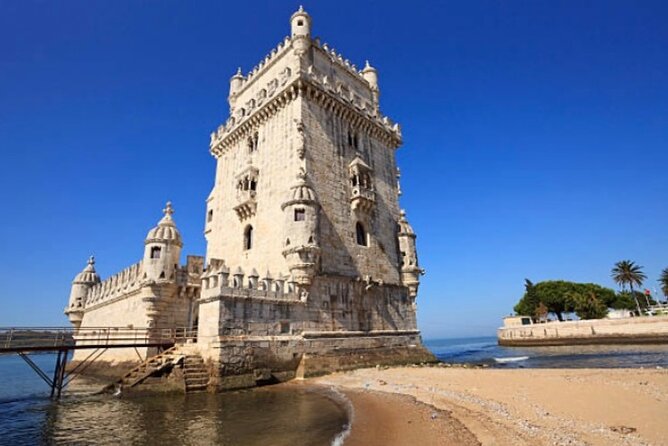
Then comes Torre de Belém. This is listed as a special monument with history at the Portuguese Golden Gate, and you also have the Fighter Museum a one-minute walk away. The tower stop gives you time to see both areas, but entry isn’t included, and the tower admission cost is listed as €8.
Why this pair is worth the extra ticket price: the Jerónimos area gives you religious and historic scale, while Belém Tower feels like a finishing piece that belongs to maritime Portugal. Together they make the riverfront feel like its own chapter of Lisbon.
Padrão dos Descobrimentos and MAAT’s Roof-Walk Style Architecture
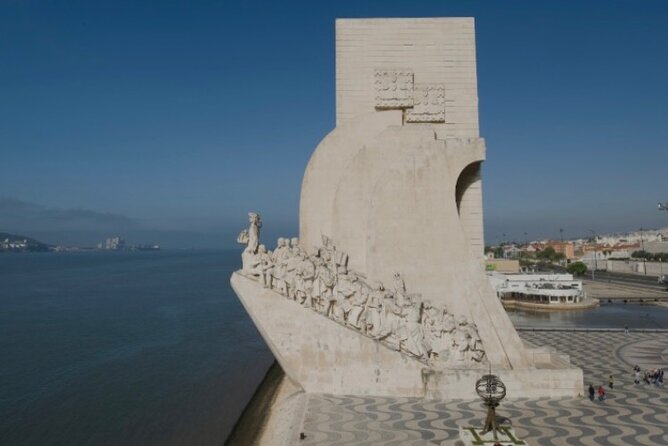
The route then moves to Padrão dos Descobrimentos, a modern monument built to celebrate Portugal’s discoveries. It’s especially photo-friendly, with statues of main characters involved in those explorations.
Next is MAAT (Museu de Arte, Arquitetura e Tecnologia). The highlight is the modern architecture that lets you walk through the roof of the building. That’s not just a pretty stop; it’s designed for people who want their sightseeing to have physical perspective—view angles from unusual places.
Both of these are listed as not included for entry, so again, plan on adding admission if you want full access.
What the Tuk Tuk Ride Feels Like With a Local Guide
The best part of this experience isn’t only the monuments. It’s how the ride connects them.
Guides described with names like Frederico and Ivo are portrayed as local residents who know the stories and can turn history into something you can follow while you’re moving. There’s also a recurring theme of safe, cautious driving, which matters a lot when you’re taking short hops around hills and streets.
The pace is also built for comfort. The tour includes multiple photo stops, plus breaks for water and bathroom time. And guides like Rachel and Raquel are described as bringing fun energy—one guide even associated with good music taste—so the ride doesn’t feel like a lecture stuck on wheels.
My practical advice before you ride:
- wear shoes that handle uneven stone and quick walking
- bring water if you tend to get thirsty
- charge your phone early; the viewpoints tempt you to shoot everything
- keep a small note of your must-see landmarks so your eyes have something to aim for during the 10–15 minute windows
Price and Value: What $300.40 per Group Really Buys
The price is $300.40 per group for up to 6 people, lasting about 4 hours. That’s roughly $50 per person if you fill all six spots, which is often a fair match for a private guide plus tuk tuk transport across multiple areas (Old Town and Belém).
What makes it feel like value:
- Parking fees are included, so you don’t pay separate city handling costs.
- You hit a lot of stops without doing a full-day walking itinerary.
- Most stops are free viewpoints (miradouros) and central sightseeing areas, so your money goes mainly to transport and guiding.
What could reduce value for budget travelers:
- entry fees add up. The tour lists extra entry costs for Lisbon Cathedral (€5) and Belém Tower (€8), and it also flags that entry is not included for places like Teatro Nacional Dona Maria II, Mosteiro dos Jeronimos, and Torre de Belém.
- Food and drinks aren’t included, and Pastéis de Belém still means you’ll pay for what you eat.
If you budget for the paid monuments you care about most, the price tends to make sense, especially for small groups.
Best Fit: Who Should Book This Tuk Tuk Tour
This tour makes the most sense if you:
- want Old Town and Belém together without a full day of walking
- like viewpoints and architectural stops more than long museum marathons
- are traveling with a small group (up to 6) and want a private vibe
- prefer a guide who can explain what you’re seeing while you’re still in motion
If you’re the kind of traveler who wants to spend hours inside major sites like Jerónimos, you may find the short time windows frustrating. In that case, you can still do this tour for orientation, then return on your own for the deeper dive.
Should You Book This Belém and Old Town Tuk Tuk Tour?
I’d book it if your plan is “see the highlights, get great views, and keep moving at a comfortable pace.” The mix of miradouros, downtown landmarks like Rossio, and Belém’s big monuments creates a strong arc for first-time visitors.
One more reason to act: this tour is booked about 31 days in advance on average. If your dates are tight, it’s smart to reserve early rather than assume you’ll find space last minute.
My decision checklist:
- You’ll enjoy fast, scenic stops more than long museum time.
- You’re okay adding a few monument entry fees on top.
- You want a guide-led route that helps you understand Lisbon’s layout in one go.
FAQ
How long is the tuk tuk tour?
The tour lasts about 4 hours.
How many people are in a group?
It’s priced per group and can include up to 6 people.
Is the tour guided in English?
Yes, it’s offered in English.
What’s included in the price, and what isn’t?
Parking fees are included. Entry fees for some sights are not included, and food and drinks aren’t included.
Which major sights have extra entry fees?
Lisbon Cathedral has an entry fee listed at €5, and Belém Tower has an entry fee listed at €8. The tour also notes that entry is not included for several other sights.
What’s the cancellation window?
You can cancel for a full refund up to 24 hours before the experience starts.