REVIEW · SYRACUSE
Syracuse and Ortygia by tuk-tuk 2-hour tour
Book on Viator →Operated by Ape Tour Siracusa · Bookable on Viator
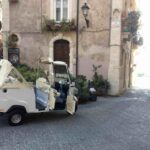
Syracuse looks different when you’re riding a tuk-tuk. In just about two hours, you can cover key corners of Syracuse and Ortigia with short stops for photos and quick looks at places you’d otherwise miss. I particularly like the fast rhythm (it keeps you moving without feeling rushed) and the way the route strings together big-name landmarks plus local religion and legends.
Two standout highlights for me: the Cathedral of Syracuse (built on the old Temple of Athena) and the stop at Caravaggio in the Basilica of Santa Lucia al Sepolcro. One consideration: while the tour is offered in English, language quality can vary a lot by guide, and you may get less help if the audio/translation isn’t working smoothly.
In other words, this is a smart “get your bearings fast” tour—especially if you’re only in town for a day or you don’t want to fight summer heat on foot. If you want a deep academic history lesson, this loop is more overview than textbook, but it’s still a great way to see the highlights with a smile.
In This Review
- Key things to know before you ride
- Why a tuk-tuk tour makes sense in Syracuse and Ortigia
- The 2-hour pacing: how fast it feels (and how not to rush yourself)
- Stop-by-stop: the Syracuse and Ortigia highlights you’ll actually see
- Piazza Duomo and the old Athena Temple
- Fonte Aretusa: a short pause with big waterfront energy
- Maniace Castle viewpoint photos
- Temple of Apollo: the Greek sixth century photo moment
- Piazza Archimede and the Fountain of Diana
- Chiesa di San Filippo Apostolo and the Giudecca Jewish quarter
- Basilica Santa Lucia al Sepolcro: Caravaggio and Saint Lucia
- Parrocchia San Giovanni Evangelista e San Marziano: quick photo stop
- Santuario Madonna delle Lacrime: the 1953 tear story
- Guides make or break the experience (and you can sense the difference)
- Price and value: when $204.81 per group makes sense
- Practical tips for enjoying it smoothly
- Should you book this tuk-tuk tour?
- FAQ
- How long is the Syracuse and Ortigia tuk-tuk tour?
- Is pickup included?
- Is this a private tour?
- Do I need to speak Italian?
- Are entrance fees included?
- Is there a mobile ticket?
- Is the tour accessible for most people?
- Is it close to public transportation?
- Can I cancel for a full refund?
Key things to know before you ride
- Private group up to 4: you’re not competing with strangers for the best photo angle.
- Pickup is part of the plan: you’ll get your exact pickup time and place after booking confirmation.
- Entrance fees aren’t uniform: the cathedral visit is listed as not included; many other stops are free.
- Major sights in a tight loop: Temple of Apollo, Fonte Aretusa, and Ortigia churches are all on the same circuit.
- Guides like Francesco, Marco, and Tony: strong personalities can turn quick stops into memorable moments.
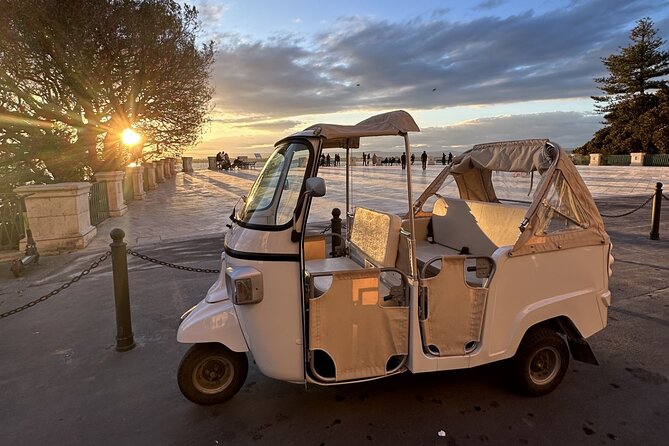
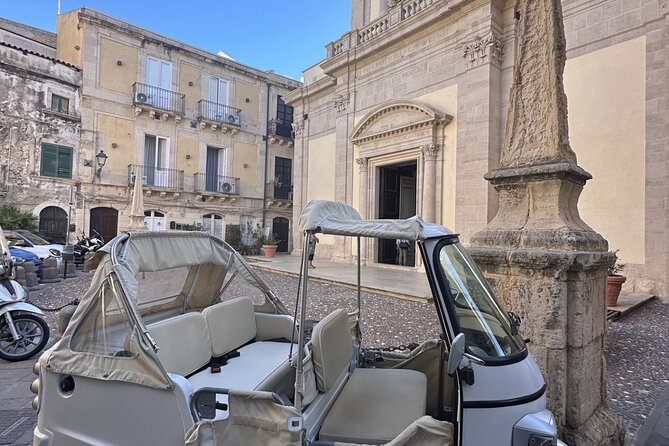
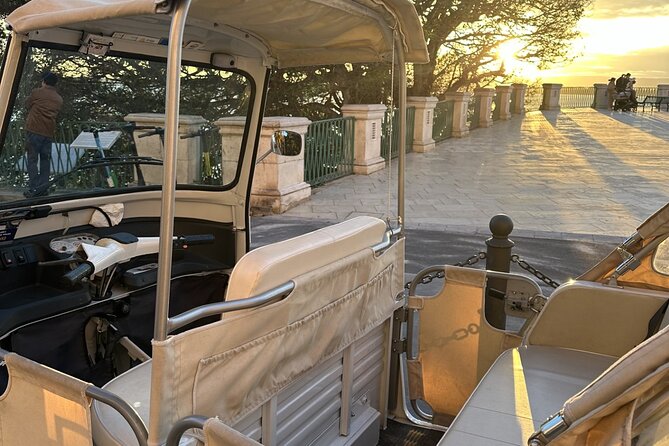
- Heat-friendly vehicle: some rides include a convertible-style top to keep things comfortable.
Why a tuk-tuk tour makes sense in Syracuse and Ortigia
Syracuse’s best-known sights aren’t all in one neat block. You have ancient ruins, church squares, and waterfront mythology tucked into different corners. That’s exactly where a tuk-tuk helps: it cuts down the time you’d spend walking between spots that are close on a map but far in real life.
I also like that this tour is built around short, purposeful moments. You’re not asked to commit to long museum-style visits at every stop. Instead, you get quick orientation—enough time to look around, take photos, and absorb a bit of context from your guide—then you’re off to the next place.
Finally, this is a private format. With only your group, you can ask questions without waiting for the whole bus to catch up. On a short 2-hour itinerary, that matters.
The 2-hour pacing: how fast it feels (and how not to rush yourself)
This tour runs for about two hours, with multiple stops ranging from 5 to 20 minutes. That might sound short, but it’s a good match for people who want to see a lot without burning energy or time.
Here’s how to get the most out of it:
- Arrive ready to move. Think of each stop as a quick visit, not a long stay.
- Use the photo-stop moments strategically. If you want detail shots, position yourself early before you’re moving again.
- If something matters to you—like religious art or the ancient layers—say so early. A good guide can adjust how they explain things within the time limits.
Also, because pickups are confirmed after booking, make sure you’re reachable and ready at the agreed location. Some guides have picked people up at the harbor or the train station, which is convenient when you’re arriving on a schedule.
Stop-by-stop: the Syracuse and Ortigia highlights you’ll actually see
This route is basically a greatest-hits survey—ancient origins, waterfront legend, and the religious art that locals treat as living history. Let’s walk through what each stop means and what to watch for.
Piazza Duomo and the old Athena Temple
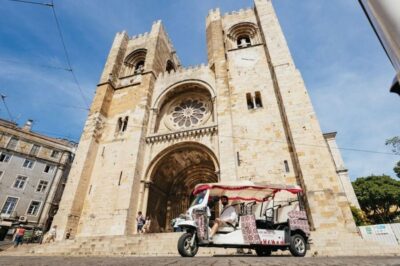
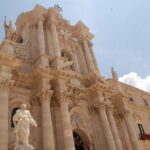
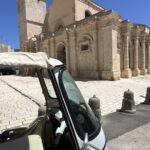
Your first major stop is Piazza Duomo, where you’ll visit the Cathedral of Syracuse. The big story here is that the cathedral was built on the site of the former Temple of Athena—so you’re stepping into a layered place where ancient Greek identity and later Christian architecture overlap.
You get around 20 minutes here. That’s enough time to look up, notice the scale, and understand why this square anchors the city’s identity. Do note: admission for this stop is listed as not included, so plan for any entry cost you might encounter.
If you like history, this opening stop pays off. It gives you a baseline, so later stops stop feeling like random churches and start feeling like a continuous timeline.
Fonte Aretusa: a short pause with big waterfront energy
Next is Fonte Aretusa, with about 10 minutes. This is one of those spots where the myth and the real water feel connected. Even with limited time, you can enjoy the setting and take a breather before the tour moves deeper inland.
The good part: it’s listed as free. The practical part: because the stop is short, don’t spend your whole time scanning for the perfect photo angle. Look around once, grab photos quickly, then enjoy the moment without rushing.
Maniace Castle viewpoint photos
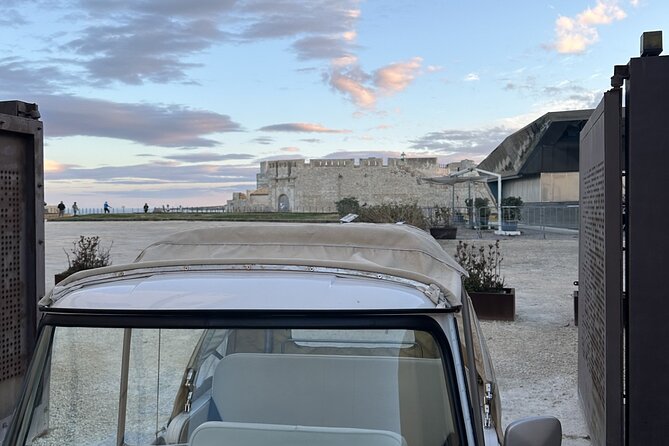
You’ll then get a photo stop at Maniace Castle. Expect roughly 15 minutes, though the format is primarily for photos rather than a long visit.
This stop works as a “spot the shape of the place” moment. Castles on coasts and islands aren’t only about buildings—they’re about sightlines. Use this time to take a few angles of the surroundings so your later church stops make geographic sense in your head.
Temple of Apollo: the Greek sixth century photo moment
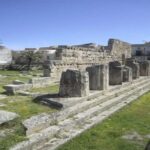
Then comes the Temple of Apollo (Tempio di Apollo), a Greek temple dating to the sixth century B.C. You’ll have about 10 minutes, mainly for photos.
Even if you’re not an archaeology nerd, this is one of those visuals that can reset your understanding of where you are. You’re seeing a remnant of ancient civic power, placed on a route that also includes living religious sites nearby.
Since it’s a photo stop, your best move is to keep your camera ready and look up and around, not just straight ahead.
Piazza Archimede and the Fountain of Diana
At Piazza Archimede, you’ll stop briefly—around 5 minutes—at the Fountain of Diana, the goddess of hunting. This is a quick hit, but it’s a useful one because it ties the city’s mythic language to a visible piece of public art.
If you’re moving quickly, take one wide photo to show the square, then a tighter shot of the fountain details if you can. That way you’ll remember it later, not just the name.
Chiesa di San Filippo Apostolo and the Giudecca Jewish quarter
One of the most interesting stops is Chiesa di San Filippo Apostolo, paired with a visit connected to the Jewish quarter known as Giudecca. Time here is about 5 minutes—so it’s more of an orientation than a long exploration.
This stop can be a highlight because it broadens Syracuse beyond only the ancient Greek and Christian layers. Still, here’s the consideration: on at least one occasion, some guests felt the Jewish-quarter element didn’t match what they expected from the tour description and were offered an extra hour. Translation: the exact emphasis and time can vary, so if this part matters deeply, go in with flexible expectations—or ask your guide what you can realistically see in the allotted time.
If you do get the full segment, it’s a strong reminder that Ortigia’s story is not single-threaded.
Basilica Santa Lucia al Sepolcro: Caravaggio and Saint Lucia
Now you reach Basilica Santa Lucia al Sepolcro for about 15 minutes. This is the art stop on the route, centered on the Caravaggio painting dedicated to Saint Lucia, the patron saint of the city of Syracuse.
You’ll want to slow down here—fifteen minutes can still fly by on a tight tour, but this is the kind of place where one good look at the painting is worth more than five extra photos.
Also, this stop adds emotional context. Saint Lucia isn’t just a name on signage; she’s linked to why the basilica is a destination for locals. Even if you don’t know the story, you’ll feel why people keep returning here.
Parrocchia San Giovanni Evangelista e San Marziano: quick photo stop
At Parrocchia San Giovanni Evangelista e San Marziano, you’ll have roughly 5 minutes for a photo stop. This is another short moment, but it’s useful because the tour keeps threading you through residential and neighborhood religious life, not only big monuments.
Treat it like a “capture the vibe” stop. If you like architecture, take one photo from a small distance and one from closer if you’re allowed.
Santuario Madonna delle Lacrime: the 1953 tear story
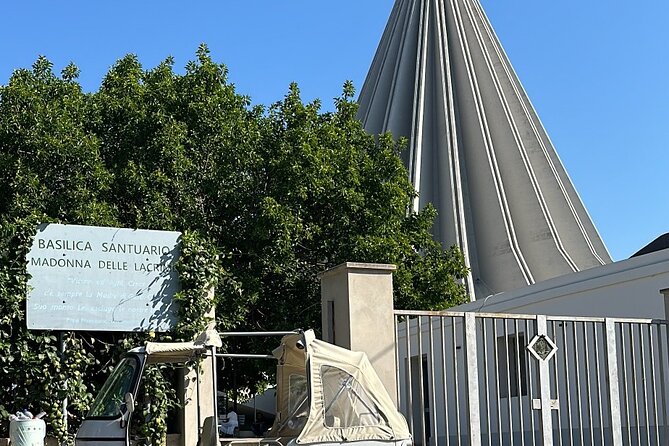
The final major stop is Santuario Madonna delle Lacrime for about 15 minutes. This sanctuary houses the painting of the Virgin Mary associated with the tears that occurred in 1953. The sanctuary was inaugurated in 1994 by Pope John Paul II.
If you remember one detail from this tour, make it this: you’re standing somewhere tied to a modern religious event, not just ancient ruins. That’s why the stop can feel surprisingly powerful even with a time limit. The setting makes sense of why the site is treated as meaningful long after the original story.
It also gives you a clean ending point. By the time you reach this sanctuary, your brain has already traveled through the ancient, the mythic, and the neighborhood layers. This stop connects the last dots.
Guides make or break the experience (and you can sense the difference)
The tour’s success depends heavily on your guide’s energy and clarity. The best experiences in the reviews include names like Francesco, Marco, and Tony—and you can tell the difference between a “perform the route” guide and a guide who actually enjoys explaining their home town.
I’d pay attention to these signals when you meet your guide:
- Are they answering your questions directly, without rushing?
- Do they tie each stop together so the loop feels intentional?
- Do they point out what to notice during the short stops?
One caution from less-perfect experiences: English can be hit-or-miss depending on the guide and audio/translation setup. Some guests reported having to rely on translation tools, with audio that cut in and out. That’s rare, but it’s enough of a flag that I recommend you consider confirming you’ll receive smooth English commentary, especially if you’re traveling with kids or you want every stop explained.
Price and value: when $204.81 per group makes sense
The price is $204.81 per group for up to 4 people, for about 2 hours. On paper, that’s not cheap—until you do the math for private transport and a guide.
If you have 4 people, you’re roughly around $50 per person. If you have fewer, the per-person cost goes up, and then you should ask yourself: is this tour saving me enough time and stress to justify it?
Here’s where I think the value is strongest:
- You’re a small group (2 to 4) and you want private pacing.
- You’re in Syracuse for a limited window and want the highlights without planning.
- You’d rather pay for orientation and commentary than spend your time routing yourself across Ortigia’s streets.
Also, the tour is popular—booked about 41 days in advance on average. That usually means good availability tends to sell out in peak periods, so it’s smart to book earlier rather than later.
Practical tips for enjoying it smoothly
A few small things will make your 2-hour ride much more pleasant.
First, plan your footwear and posture like you’ll be hopping on and off quickly. The tour involves multiple stops, and even if time is brief, you’ll still want to move comfortably.
Second, take advantage of the fact that the ride can be heat-friendly. One guest noted that in hot weather the vehicle had a convertible-style top to stay cooler. Even if yours is different, the tuk-tuk format is generally easier than long walks in full sun.
Third, bring your patience for photo-stop timing. This route is structured around short windows. If you want to maximize photos, position yourself quickly and keep an eye on when the group starts moving again.
Should you book this tuk-tuk tour?
I think this is a great booking for you if you want a fun, time-efficient way to connect Syracuse’s ancient roots with modern religious and neighborhood life. It’s especially worth it for small groups who value commentary and prefer a guided overview over a slow, deep dive.
Skip it—or at least approach with caution—if English clarity is your top priority and you’re very sensitive to translation/audio problems. In that case, it’s worth considering another guide option or pairing this tour with independent sightseeing so you’re not relying on perfect narration for your experience.
If you’re after a route that helps you get your bearings fast, see the big names, and end with a strong sense of place, this tuk-tuk loop is a solid choice.
FAQ
How long is the Syracuse and Ortigia tuk-tuk tour?
The tour lasts about 2 hours.
Is pickup included?
Pickup is offered. After you book, you’ll receive confirmation with the pickup time and place.
Is this a private tour?
Yes. It’s a private tour/activity, and only your group will participate.
Do I need to speak Italian?
The tour is offered in English.
Are entrance fees included?
Admission is not included for the Cathedral of Syracuse in Piazza Duomo. The other listed stops are marked as free for admission.
Is there a mobile ticket?
Yes, a mobile ticket is included.
Is the tour accessible for most people?
Most travelers can participate, and service animals are allowed.
Is it close to public transportation?
Yes, it is listed as near public transportation.
Can I cancel for a full refund?
Yes. Free cancellation is allowed if you cancel at least 24 hours before the experience’s start time.