REVIEW · KAGOSHIMA
Rickshaw Tour of Kagoshima’s Historical and Cultural Sites
Book on Viator →Operated by KAGOWA Kagoshima Tours & Activities · Bookable on Viator
A short ride, big Kagoshima stories. This rickshaw loop of city sights packs museum views, shrine calm, and castle remains into just about half an hour, with stops designed for photos. You also get a guide who explains what you’re actually seeing, not just where it is.
I especially love Kyoichi’s lively, personal style and the way the route hits major landmarks without making you wait around. One thing to consider: each stop is brief (about five minutes), and admission fees are not included, so you’ll want to know ahead of time whether you plan to pay to enter museums.
In This Review
- Key Highlights at a Glance
- A 30-Minute Rickshaw Tour That Still Feels Like Kagoshima
- Where You Start: Hotel Pickup at Nanshukan and a Simple Plan
- Stop 1: Reimeikan and the Story of Kagoshima’s Modern Turn
- Stop 2: Tsurumaru Castle Ruins and Goromon at Shiroyama Hill
- Stop 3: Terukuni Shrine and Shimazu Nariakira’s Legacy
- Stop 4: Saigo Takamori’s Statue in Central Park
- The Real Star: Kyoichi’s Humor, Knowledge, and Photo Help
- Timing and Expectations: How 5 Minutes at Each Stop Works
- Price and Value: Is $71.53 Worth a Private 30-Minute Ride?
- Weather Matters More Than You Think
- Who This Tour Suits Best
- Should You Book This Kagoshima Rickshaw Tour?
- FAQ
- FAQ
- How long is the Kagoshima rickshaw tour?
- Is this tour private or shared?
- What stops are included?
- Are admission fees included?
- Where does the tour start and end?
- Can I leave luggage during the tour?
- Is the tour suitable for children?
Key Highlights at a Glance
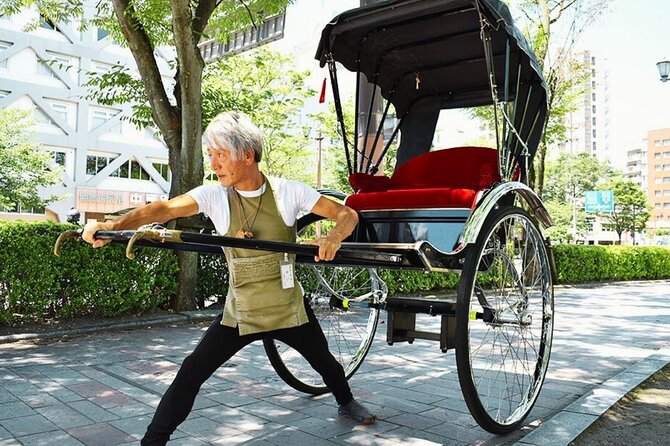
- A private rickshaw for just your group: no mixing with strangers during the ride.
- Kyoichi’s running commentary: explanations that turn quick stops into real understanding.
- Photo-friendly timing: planned breaks so you can step out and capture the moment.
- Meiji-era stops in compact form: Reimeikan, Terukuni Shrine, and Saigo Takamori’s statue connect the dots fast.
- Castle ruins with real atmosphere: original stone walls and moat at Tsurumaru Castle ruins.
- Easy match for couples and families: suitable for all ages, and kids under 6 are free.
A 30-Minute Rickshaw Tour That Still Feels Like Kagoshima
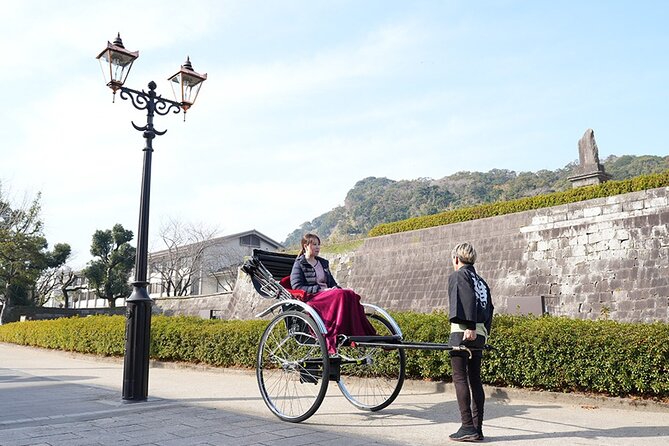
If you want Kagoshima City highlights without a half-day commitment, this rickshaw format makes sense. The whole experience runs about 30 minutes, so it’s built for quick orientation and memorable snapshots, not for lingering for hours.
You’ll be moving through key points that reflect how Kagoshima grew and changed over time. It’s a compact way to see both the historical anchors—castle remains, a major shrine, and Meiji-era figures—and the everyday city setting around them.
Where You Start: Hotel Pickup at Nanshukan and a Simple Plan
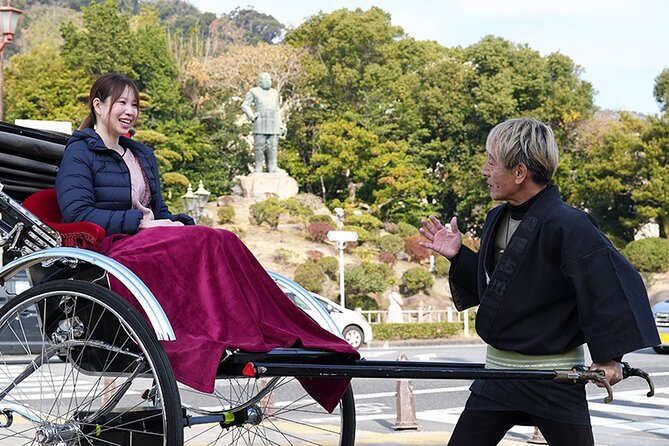
The tour starts and ends back at the meeting point at Hotel & Residence Nanshukan on Higashisengokuchō. Plan to arrive about 10 minutes early so you don’t feel rushed when it’s time to get started.
One practical detail I like: you can leave luggage at the hotel pickup point during the tour. That’s a small thing, but it changes the experience. You can travel lighter and focus on the sights instead of dragging bags around the city.
You’ll also get a mobile ticket, and confirmation comes within 48 hours of booking (as long as availability holds). If you’re picky about routes, there’s a smart option too: you can contact in advance to tailor the tour by suggesting places you’d like to visit.
Stop 1: Reimeikan and the Story of Kagoshima’s Modern Turn
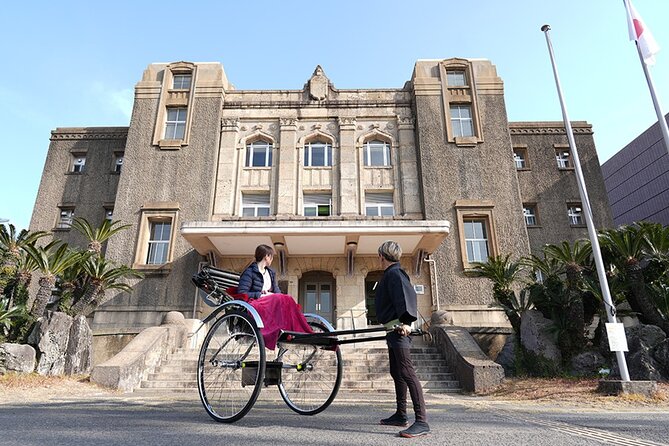
Your first stop is Reimeikan – Kagoshima History Museum and Fine Arts Center. This place isn’t only about objects behind glass. It’s positioned as a symbol of Kagoshima’s role during major turning points, including the Meiji Restoration and the Satsuma Rebellion.
Even with a short time window, the value here is context. A museum can feel overwhelming if you walk in cold. With a guide, you can start noticing themes right away—what shaped the region, why it mattered, and how the modern story connects back to local people.
Admission fees aren’t included here, so you’ll want to decide what you want out of Reimeikan. If your priority is just orientation and photo moments, you can treat it as a window into the museum’s significance. If you want to actually go inside, budget for admission separately.
Stop 2: Tsurumaru Castle Ruins and Goromon at Shiroyama Hill
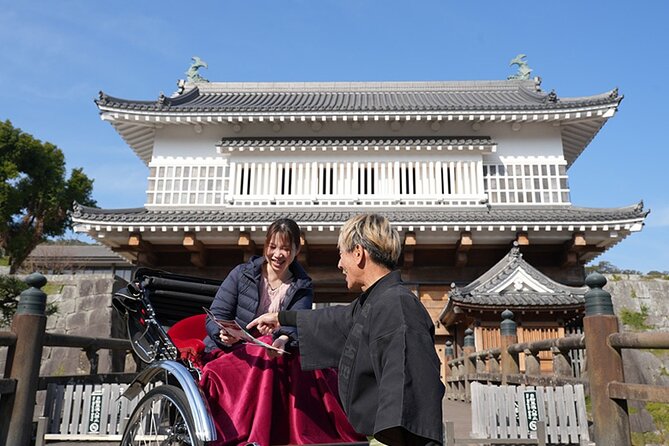
Next you’ll see the Kagoshima (Tsurumaru) Castle Ruins & Goromon, also known as Tsurumaru Castle. This is where the tour starts to feel grounded and physical.
The castle dates back to 1602–1606, and what you get to look at includes original stone walls and a moat, with lush forest on Shiroyama Hill as a backdrop. In a short tour, ruins like these are ideal because they still give you a sense of scale without needing a long walk.
Goromon is the kind of feature that helps you visualize how castle approaches worked. You’re not just looking at a name on a map—you’re seeing a piece of the defensive layout and the way the site sits in the terrain.
As with other stops, the time is brief, so don’t plan to read every panel or do a long loop. Instead, use this stop to get your bearings. If you later want more time, you’ll already know what area matters most to you.
Stop 3: Terukuni Shrine and Shimazu Nariakira’s Legacy
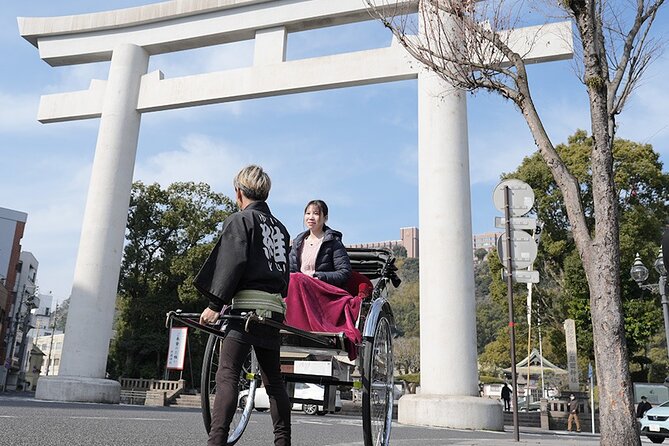
Then it’s on to Terukuni Shrine, dedicated to Shimazu Nariakira, the 28th feudal lord of Satsuma Domain. What makes this stop especially relevant is the focus on the late Edo period and Japan’s modernization—exactly the kind of transition era that shaped Kagoshima’s identity.
A shrine visit can be soothing, even when it’s quick. You get a change of pace from stone and museum exhibits into something more reflective. And when your guide ties the place to the people behind the historical shift, it clicks faster.
Here again, admission isn’t required or included for the tour itself, so the stop tends to work well even if you’re only there for a short look. It’s a strong way to understand why Kagoshima is tied to national history, without turning your day into a full itinerary of paperwork and tickets.
Stop 4: Saigo Takamori’s Statue in Central Park
The tour wraps with Saigo Takamori’s statue, a bronze monument in Central Park honoring his life and legacy. Saigo Takamori is strongly associated with the Meiji Restoration and later rebellion against the Meiji government, and this stop keeps the “why it matters” thread going.
Even if you’ve read about Saigo before, seeing the monument in person helps you connect the national narrative to a specific local spot. For photos, this is the most straightforward stop: step out, frame the statue, and capture an easy anchor for your Kagoshima day.
The time here is short, but for many people this becomes the emotional finish line. It’s one of those landmarks that makes the tour feel like it ends with a clear idea rather than a hard stop.
The Real Star: Kyoichi’s Humor, Knowledge, and Photo Help
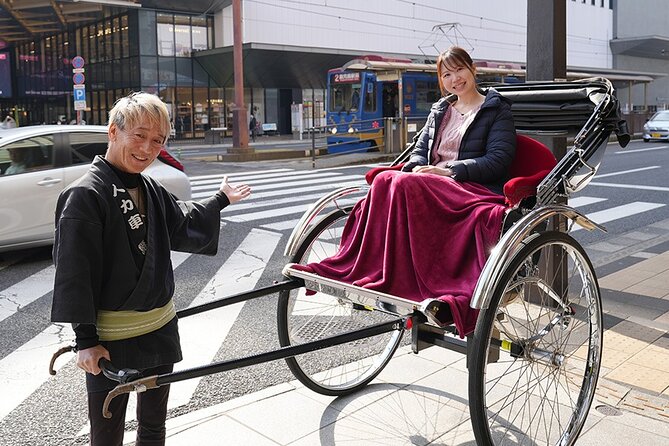
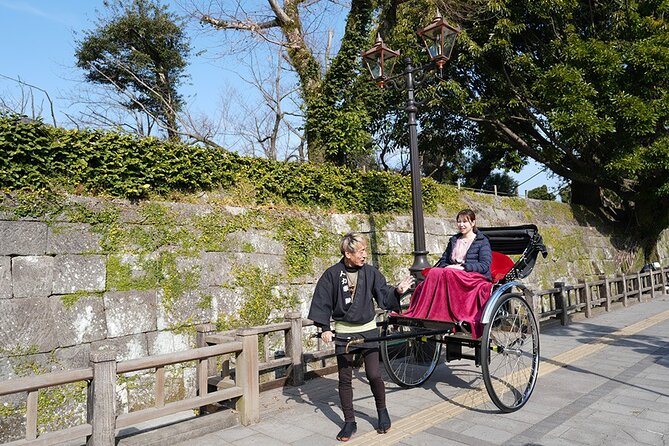
What makes this tour feel fun rather than rushed is the guiding style—especially Kyoichi. The vibe is friendly and upbeat, and the explanations come as a running conversation while you’re moving.
In the best moments, you’re not just learning facts. You’re getting the personal feel of how Kagoshima’s landmarks connect to each other. One guide’s humor stood out too, including playful photo energy like a 1-2-3 cheese moment and other light banter that kept the ride from feeling strictly formal.
There’s also a surprisingly memorable cultural detail: in one exchange, Kyoichi talked about his favorite music being heavy metal. When a guest mentioned an obscure heavy metal song, the guide recognized the artist too. That kind of back-and-forth isn’t about sightseeing trivia. It’s about feeling like you’re hanging out with someone who actually lives in the same cultural world.
And yes, the guide takes time with photos. That matters because, on a quick tour, you don’t want to feel like you’re asking for help at every stop.
Timing and Expectations: How 5 Minutes at Each Stop Works
The route is built with short blocks: each main stop is around five minutes. That can feel limiting if you want to go deep at every location. But it’s also what makes the whole experience doable in half an hour.
Here’s how to make the most of it:
- Pick what you want from each stop: photo, quick context, or decide if you want to enter later.
- Stand in the spot that gives you the right angle first. Then look around for the details you care about.
- Don’t try to “finish” a museum in five minutes. Use the time to decide whether you want a return visit.
Admission fees aren’t included at places like Reimeikan, so if you’re on a tight budget, this short format can be a smart way to sample the theme without committing to entry everywhere. If you want to go inside later, the guide’s explanations help you choose what’s worth your time.
Price and Value: Is $71.53 Worth a Private 30-Minute Ride?
At $71.53 per person, this tour isn’t the cheapest way to see Kagoshima. But it’s not priced like a generic city bus ride either.
Here’s the value logic:
- It’s private, meaning you get the rickshaw and guide focused on your group.
- You’re paying for time plus interpretation, not just transportation.
- You get group discounts (useful if you’re traveling as a small group).
- You can tailor the plan in advance by suggesting places you want to hit.
- Kids under 6 are free, which can make it a strong family option.
Also, it’s commonly booked fairly far ahead (around 44 days on average). That suggests demand for something like this—quick, comfortable, and easy to fit into a day.
If your goal is one highlight loop that makes Kagoshima feel understandable fast, the price can feel fair. If you’re the type who wants slow museum browsing and long shrine visits, you might find a longer tour format better.
Weather Matters More Than You Think
This experience needs good weather. If conditions are poor, it may be canceled and you’ll be offered a different date or a full refund.
Plan your day with that in mind. If Kagoshima weather is unpredictable during your dates, keep this tour near the middle of your schedule so you have flexibility.
Also, arrive on time. If you miss the start, you can’t count on a do-over the same day. The whole timing is tight by design.
Who This Tour Suits Best
This is a great fit for:
- Couples who want a low-effort, high-impact way to see big Kagoshima landmarks.
- Families with kids who can handle short walks and quick photo breaks.
- Anyone doing a first day in Kagoshima and wanting an easy orientation.
- Travelers who like history when it comes with clear, human explanations.
It’s less ideal if you want long time inside museums or you need a lot of walking time between far-apart sites. This one keeps things close and structured on purpose.
Should You Book This Kagoshima Rickshaw Tour?
I’d book it if you want a short, guided highlight loop that connects Kagoshima City sights to the stories behind them. The combination of a private rickshaw ride, photo stops, and Kyoichi’s energetic commentary is exactly what turns a quick tour into a real memory.
Skip it (or pair it with other time blocks) if you know you want extended museum time. Because Reimeikan and the other key points are mostly about quick context here, not long stays, plan to come back later if any stop really hooks you.
FAQ
FAQ
How long is the Kagoshima rickshaw tour?
The tour runs for about 30 minutes.
Is this tour private or shared?
It’s a private tour/activity, so only your group participates.
What stops are included?
The tour includes Reimeikan (Kagoshima History Museum and Fine Arts Center), Kagoshima (Tsurumaru) Castle Ruins & Goromon, Terukuni Shrine, and a Saigo Takamori statue in Central Park.
Are admission fees included?
No. Admission fees are not included or required for the tour as described, so you may need to pay separately if you choose to enter a museum.
Where does the tour start and end?
It starts and ends at Hotel & Residence Nanshukan at 19-17 Higashisengokuchō, Kagoshima.
Can I leave luggage during the tour?
Yes. Luggage can be left at the hotel pickup point during the tour.
Is the tour suitable for children?
Yes. It’s suitable for all ages, and it’s free for kids under 6.