REVIEW · MARRAKECH
Private Tour in Marrakech By Tuk Tuk
Book on Viator →Operated by Ourikatravel · Bookable on Viator
Marrakech is chaotic in the best way, and a tuk-tuk helps you ride it fast. This private city tour gets you from landmark to landmark through the medina’s narrow streets without spending your whole day inside. I love the flexibility to follow your driver’s plan or steer it your way, and I love how the route stacks the big hits efficiently. One thing to consider: there is no official guide on board, so you’ll rely on your driver for context and direction.
The half-day timing is a real win. You cover six classic stops (garden, palace, souks, madrasa, main square, and tanneries) in about 3 to 4 hours, then you’re free to roam after. I also like that pickup is included for hotels in central Marrakech, so you aren’t spending your morning wrestling with local transport.
Just go in with clear expectations: this is transportation with a driver, not a full guided walkthrough at every site. If you want deep explanations for each place, plan to use signage, quick questions, and whatever short guidance your driver gives during stops.
In This Review
- Key things to know before you hop in
- Tuk-Tuk in Marrakech: what that 3-wheeled ride really does for you
- The half-day route: how you fit Marrakech’s biggest hits without losing your evening
- Jardin Majorelle: the famous garden stop where you’ll want your camera ready
- Bahia Palace: 150 rooms, a palace layout that rewards slow wandering
- Souk Cherifia: shopping energy, haggling reality, and how long to stay
- Medersa Ben Youssef: a free stop that feels important, even on a tight schedule
- Jemaa el-Fnaa: the main square hit-and-move experience
- Tanneries in Bab Debbagh: fascinating, but plan for smell and sales pressure
- Driver vs local guide: what you’re actually paying for
- Price and value: why $30 can be smart in Marrakech
- Practical tips that make the day smoother
- Cancellation and weather: keep one simple safety plan
- Should you book this Marrakech tuk-tuk tour?
- FAQ
- How long is the Private Tour in Marrakech by Tuk Tuk?
- Is this tour private or shared?
- What stops are included on the tour?
- Is hotel pickup included?
- Are admission tickets included for the sights?
- Is a local guide included?
- Can I customize the itinerary?
- Does the tour include transportation only?
- What should I bring for the tour?
- What happens if the weather is bad?
Key things to know before you hop in
- Private tuk-tuk ride through tight alleyways that would be slow or annoying on foot
- Hotel pickup in the city center to start without stress
- Entrance tickets for major sights are not included (you’ll pay separately)
- Most stops are free (souks, madrasa area, square, and tanneries)
- Your driver can adjust the flow if you want more time at one stop
- No official guide is included, so communication and guidance vary by driver
Tuk-Tuk in Marrakech: what that 3-wheeled ride really does for you

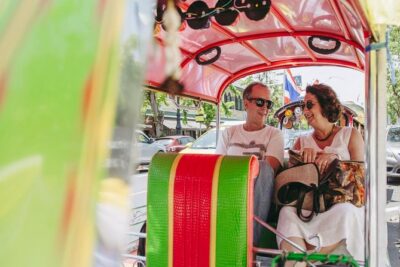
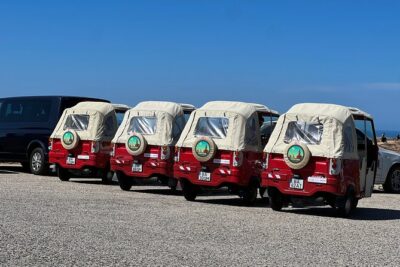
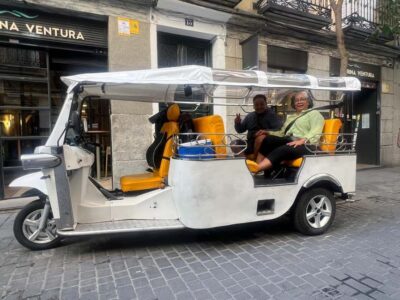
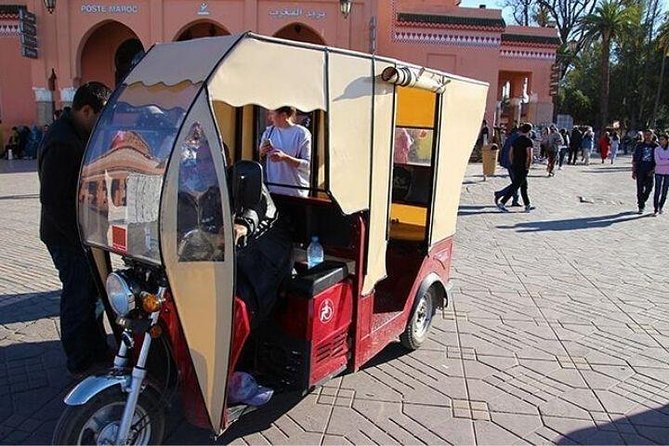
A tuk-tuk in Marrakech is not just a fun photo. It changes the whole feel of the medina. You get a window into the city’s motion—shop fronts, people stepping out, scooters weaving—while still having a vehicle that fits where cars cannot.
I like that you’re moving at a pace that keeps you from burning hours on “how do we get there?” You’ll also see why Marrakech is famous for its tight street layout. Even when the alleys look too narrow on the map, your driver handles them day-to-day.
Comfort-wise, remember this is a small vehicle. One practical caution from real experiences: there aren’t seatbelts, and traffic can be busy. That doesn’t mean you shouldn’t go—it just means you should ride with your eyes open and your expectations realistic.
The half-day route: how you fit Marrakech’s biggest hits without losing your evening
This tour is built around a simple idea: cover the essentials fast, then let you keep the rest of your day. The stops are scheduled like “hit and pause,” not like a museum marathon. That’s why it works well for first-timers who want bearings quickly, and for people who don’t want to plan transit between scattered sights.
A big benefit: your driver can wait while you explore inside. In multiple experiences, drivers were described as friendly and willing to hold the timeline while you step away for an hour here or there. That matters because some Marrakech sights take longer than you think once you’re inside and walking at your own pace.
Jardin Majorelle: the famous garden stop where you’ll want your camera ready
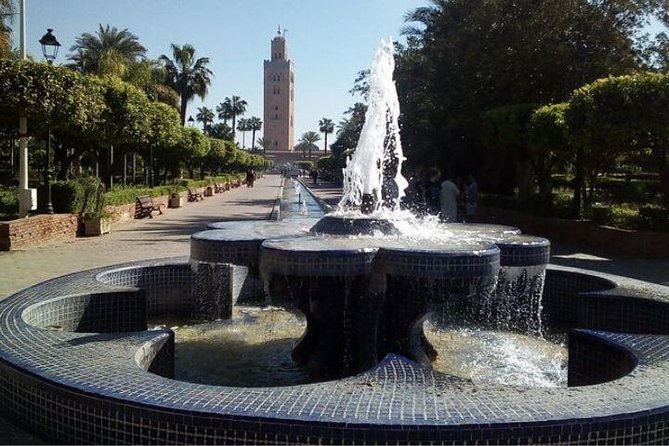
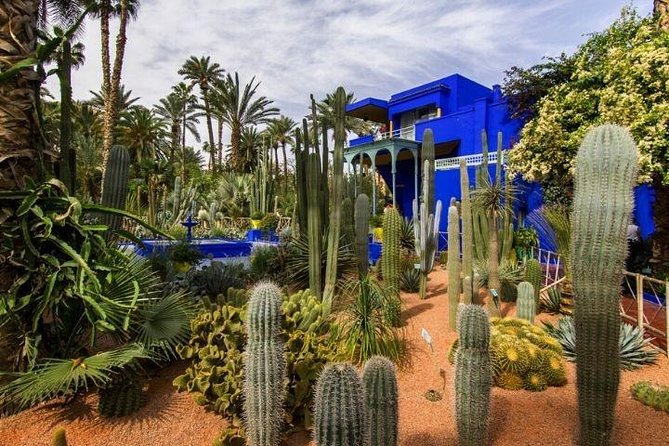
Jardin Majorelle is one of the most visited places in Marrakech for a reason. You’re walking shaded lanes surrounded by exotic plants, pools, and lots of water sounds. Even if you don’t love gardens in general, you’ll likely get why people rave about it once you see the setting in the ochre city.
Plan for about 1 hour here. Admission is not included, so this is one of the two ticketed stops you’ll need to pay for separately. The garden is strongly associated with the French painter Jacques Majorelle, who spent decades creating it, and the complex includes a striking building painted in the intense blue Majorelle associated with his vision—Moorish charm with an Art Deco feel.
One practical note: because entry costs extra, it’s smart to treat this stop as a must-pay item and build it into your budget early. If you’re on a tight schedule, decide in advance what you care about most—plants, the buildings, or just soaking in the calm.
Bahia Palace: 150 rooms, a palace layout that rewards slow wandering
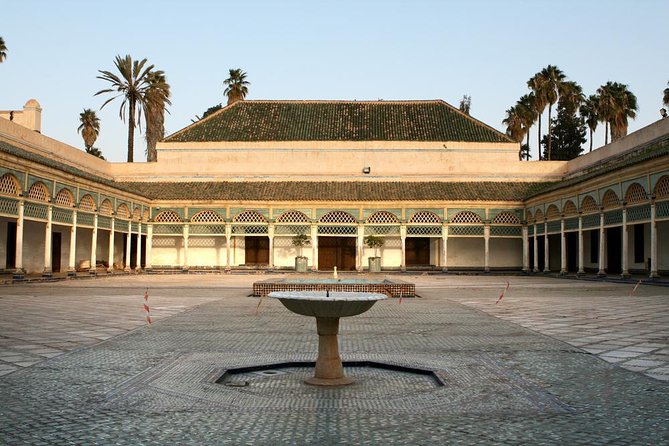
If Jardin Majorelle is a visual reset, Bahia Palace is the full-on medina grandeur. This place is often described as one of the best-preserved palace sites in Marrakech, and it’s spread over about two acres.
You’ll spend about 1 hour here, and like Majorelle, admission is not included. Bahia Palace was built in 1866–1867 by Si Moussa, and it’s known for having 150 rooms, including areas that were part of a harem section off the Court of Honour. During the French Protectorate era, it also housed the Resident General, and today it functions as a public historical museum.
The reason I think this stop is a strong value: it gives you a “real palace, real rooms” experience without you needing a long guided explanation. Even if you keep your reading light, the layout and scale do the teaching.
Souk Cherifia: shopping energy, haggling reality, and how long to stay
Souk Cherifia is a classic Marrakech covered-market experience, and it moves fast. You’re looking at a specialized network of streets where different goods tend to cluster—rugs, leather goods, spices, metalwork, and clothing.
Your scheduled time is about 45 minutes, and entry here is free. This is the stop where you’ll likely run into the most “culture plus commerce” at once. The first price you see is usually high, and haggling is expected. French can help, but in practice you’ll find that money talks, and some English is available depending on the stall and the seller.
My practical advice: go with a target. Pick one category you want to browse—spices or leather or rugs—and set a rough budget. If you try to do everything in 45 minutes, you’ll end up tired, hot, and spending more than you meant to. If you want souvenirs that don’t feel impulsive, treat Souk Cherifia like a quick research lap.
Medersa Ben Youssef: a free stop that feels important, even on a tight schedule
Medersa Ben Youssef is connected to the adjacent Ben Youssef Mosque and is an Islamic madrasa commissioned in 1564–65 by the Saadian sultan Abdallah al-Ghalib. Even if you don’t know the terminology, you’ll feel the sense of place. It’s quieter than the main shopping streets, and it’s the kind of stop that gives balance to the palace and the garden.
You’ll have about 45 minutes, and it’s free. That makes it a smart use of time because you can slow down without paying another ticket. If you like architecture, patterns, and courtyard spaces, you’ll probably enjoy it more than you expect.
Jemaa el-Fnaa: the main square hit-and-move experience
Jemaa el-Fnaa is Marrakech’s big public square and market place. It’s not a “museum stop.” It’s a living square where locals and visitors gather, and it can feel intense—bright, loud, and full of motion.
Your time here is short—about 15 minutes—and entry is free. That’s enough for orientation and a quick sense of the place. If you love street life, you’ll likely want to come back later on your own time, which is exactly what this half-day design lets you do.
If you do spend time lingering, keep an eye on your tuk-tuk meeting point. In a square like this, “Where should we meet?” can become a mini adventure.
Tanneries in Bab Debbagh: fascinating, but plan for smell and sales pressure
The tannery stop is one of those “I’m glad I saw it” experiences for many people. The traditional leather process is still practiced here, using large stone vessels or pits—often referred to as dyeing vats—filled with natural substances.
Your scheduled time is about 15 minutes, and entry is free. But here’s the practical consideration: it’s not gentle on the senses. One of the most direct pieces of feedback I saw: the leather manufacturing shop element can be hard to deal with, with strong smells and high-pressure sales behavior. That doesn’t mean the tanneries themselves are bad—it means you should be ready to manage what you choose to engage with.
My suggestion: if you want the visual of the process, focus on the tannery area and keep your shop time short. If you feel pushed, you can simply step away and head back to your driver’s meeting spot. You are not required to buy anything to finish the experience.
Driver vs local guide: what you’re actually paying for
This tour is explicitly self-guided with a driver. That’s important. You’re getting private transportation and a driver, but a local guide is not included.
In real-world use, that setup can be great. Drivers often do the navigation through tiny streets, drop you at each site, and wait while you enter. Some drivers also speak clear English and communicate pick-up and drop-off points well.
But this can also explain why some experiences feel more informative than others. If your driver doesn’t speak much English, you might feel like you’re being “transported between places” rather than guided through the meaning of them. If you want context, come prepared with quick questions, or do a little reading about each stop before you go.
A few driver names popped up in feedback, which is always a comforting sign: Hamza, Ismail, and Hamsa (spelling may vary). What matters is not just the name—it’s that drivers were described as accommodating, willing to wait, and able to alter the route based on your preferences.
Price and value: why $30 can be smart in Marrakech
At $30 per person, this tour is basically buying two things: a private tuk-tuk ride and the driver who can get you through the medina efficiently. You’re not paying for entrance fees or a separate guide.
The value equation looks like this:
- Two ticketed stops (Jardin Majorelle and Bahia Palace) are not included, so your final cost depends on those admissions.
- Many other stops are free, so you’re not constantly adding paid entries.
- Compared to taxis, private tuk-tuk transport through tight areas can feel like less hassle for the same day.
When this works best is when you’re the type of traveler who wants a tight plan but still wants freedom to roam. If you’re the type who loves long, guided lectures at every site, you may find this format too light.
Practical tips that make the day smoother
Here’s what will help you get the most out of your time on a short route.
Bring cash. You’ll likely need it for admission tickets, small purchases, and tipping. Advice from real experiences specifically recommended taking some cash.
Go in with a stop priority list. If you care most about gardens, spend a little more time there and shorten shopping. If palaces are your thing, plan to linger inside Bahia Palace.
Wear shoes you can walk in. You’ll be on foot for walking lanes, courtyards, and market areas.
Manage the tannery stop with boundaries. If the shop part feels too intense, keep it brief and focus on the tannery process view.
Use your driver’s flexibility. If you want a change—more time at a single stop—ask early. Some drivers were described as adjusting the itinerary based on preference.
Cancellation and weather: keep one simple safety plan
This tour requires good weather. If it gets canceled due to poor weather, you’ll be offered a different date or a full refund. Since this is a short half-day, you’ll want to keep your schedule flexible enough to rebook if necessary.
Should you book this Marrakech tuk-tuk tour?
I’d book it if you want an efficient first look at Marrakech’s core sights without spending your day figuring out logistics. It’s especially appealing for families and for anyone who doesn’t want to walk long distances in the medina’s heat and density. The tuk-tuk adds confidence—many people feel safer and more relaxed when they aren’t negotiating every turn on foot.
I wouldn’t book it if you want a full guided tour with deep explanations at every stop. This is transportation plus a driver, not an on-site expert guiding you through every detail. Also, if you’re sensitive to strong smells and high-pressure selling, go in with a plan for the tannery/shop portion.
FAQ
How long is the Private Tour in Marrakech by Tuk Tuk?
The tour lasts about 3 to 4 hours.
Is this tour private or shared?
It’s private. Only your group participates.
What stops are included on the tour?
The route includes Jardin Majorelle, Bahia Palace, Souk Cherifia, Medersa Ben Youssef, Jemaa el-Fnaa, and the tanneries.
Is hotel pickup included?
Pickup is included for hotels in the center of Marrakesh.
Are admission tickets included for the sights?
No. Admission tickets are not included for Jardin Majorelle and Bahia Palace. The other listed stops are free.
Is a local guide included?
No. This is a self-guided tour with a driver, and a local guide is not included.
Can I customize the itinerary?
Yes. You can create a bespoke itinerary for your group, or follow your driver’s suggestions.
Does the tour include transportation only?
Yes. It includes private transportation and a driver.
What should I bring for the tour?
Bring cash, especially for tickets and purchases at stops where you may want to buy items.
What happens if the weather is bad?
This experience requires good weather. If it’s canceled due to poor weather, you’ll be offered a different date or a full refund.