REVIEW · LECCE
Lecce: City Highlights Guided Tour by Rickshaw
Book on GetYourGuide →Operated by Velo Service Lecce · Bookable on GetYourGuide
Baroque Lecce feels like it was built for photos. This Lecce rickshaw tour lets you glide through the Old Town eras in comfort, with a live guide calling out details as you roll past landmarks like the Basilica di Santa Croce.
I love the fast way you can cover major stops without battling tight streets on foot, and I like that the guide turns big monuments into small, human stories—Shout-out to guides like Matteo, Mattias, Francesca, and Flore, who people consistently mention for humor and clarity.
One consideration: if you book the shortest timing, the pace can feel a bit tight at each stop, so you may want a longer slot if you prefer slower wandering.
In This Review
- Key Takeaways Before You Ride
- Why an Electric Rickshaw Is a Smart Way to See Baroque Lecce
- Getting Oriented at Velo Service Lecce (and Parking Without Stress)
- Piazza del Duomo: Lecce’s Main Square From the Right Angle
- Porta Napoli: A Monumental Entrance You Can Actually Take In
- Basilica di Santa Croce: Baroque Stonework With Stories Attached
- Piazza Sant’Oronzo and the Roman Thread in Lecce
- Roman Amphitheater Remains: Small View, Big Context
- Guide Energy, Photo Stops, and That Summer Comfort Factor
- Duration Choices: When 1 Hour Feels Fast (and 3 Hours Feels Better)
- Price and Value: Is $77 Worth It?
- Who Should Book This Rickshaw Tour (and Who Might Skip It)
- Should You Book the Lecshaw Rickshaw Tour?
- FAQ
- How long is the Lecce rickshaw tour?
- Where do I meet the tour?
- What’s included in the price?
- Are church entry fees included?
- Is this tour private or shared?
- What languages are available for the guide?
- Do I need a minimum number of adults?
- What if the weather is bad?
Key Takeaways Before You Ride
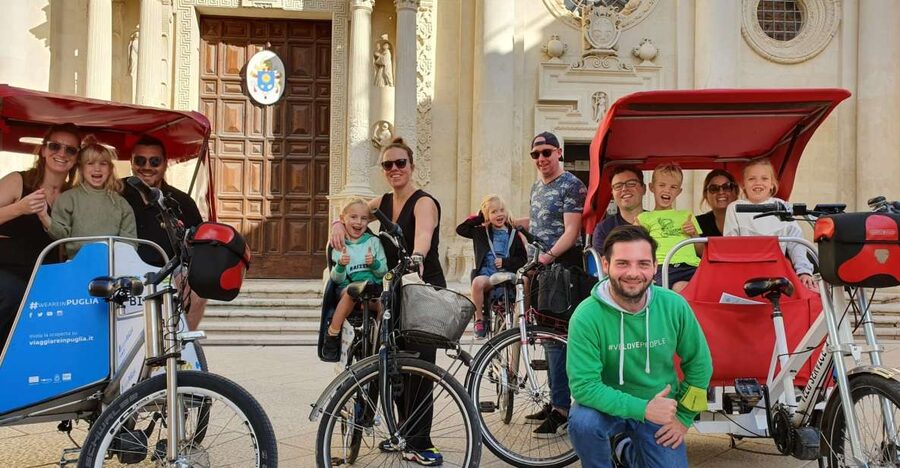
- Electric rickshaw comfort: a practical solution for summer heat and limited walking.
- Major Lecce sights in one loop: Piazza del Duomo, Porta Napoli, Santa Croce, Piazza Sant’Oronzo, and Roman remains.
- Guides who explain with personality: names you may encounter include Matteo, Mattias, Francesca, Flore, and Antonio.
- Photo-friendly routing through the Old Town: you can pause and look without doing steep backtracking.
- Possible sweet or coffee stop: some departures add Lecce ice cream or pasticciotto for a tasty reset.
- Small-group or private options: easier to ask questions when you want details.
Why an Electric Rickshaw Is a Smart Way to See Baroque Lecce
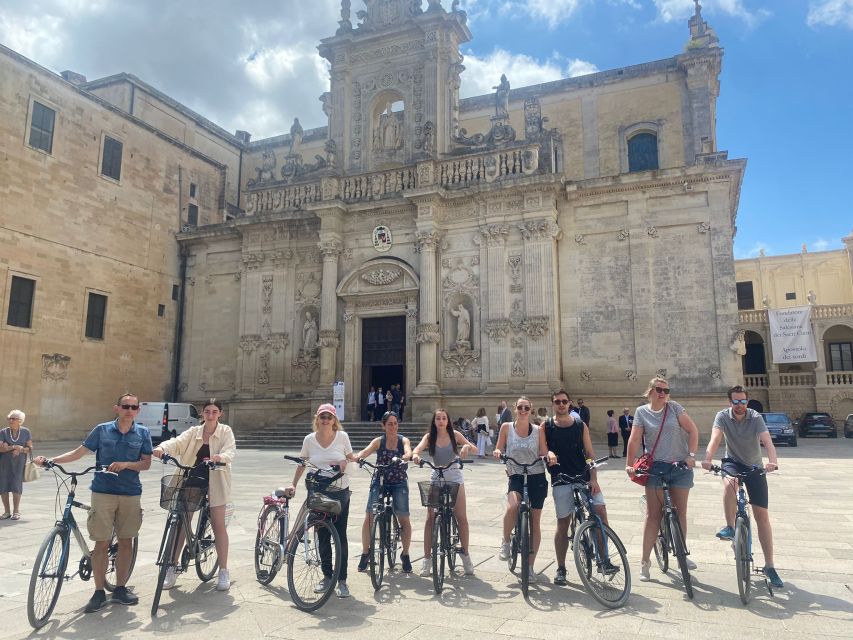
Lecce’s famous baroque is not subtle. Up close, those carved façades and pale-stone flourishes can be overwhelming—so the trick is seeing them in the right order and with someone explaining what you’re looking at. A rickshaw tour does that for you, and it keeps the experience light: you sit, relax, and watch the city unfold in short, clear segments.
The electric rickshaw matters more than it sounds. It’s a comfortable way to move through the historic center without long walks, and it also helps you keep your focus on the architecture rather than your feet.
This tour is also built for real sightseeing time. You’re not stuck doing the “where do I go next?” dance, and you’re not limited to only what fits on a bus route. You get a guided path across key eras—medieval, baroque, and even Roman traces.
Getting Oriented at Velo Service Lecce (and Parking Without Stress)
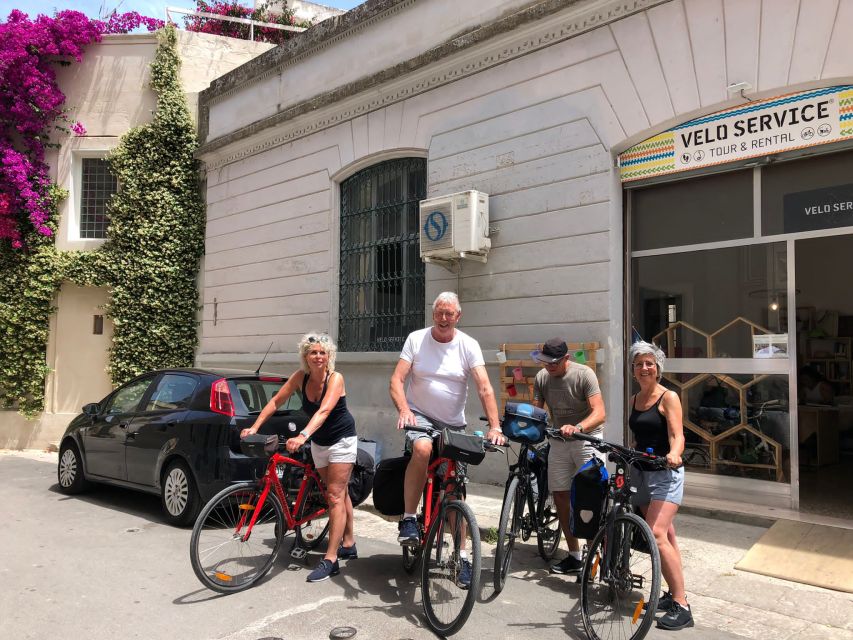
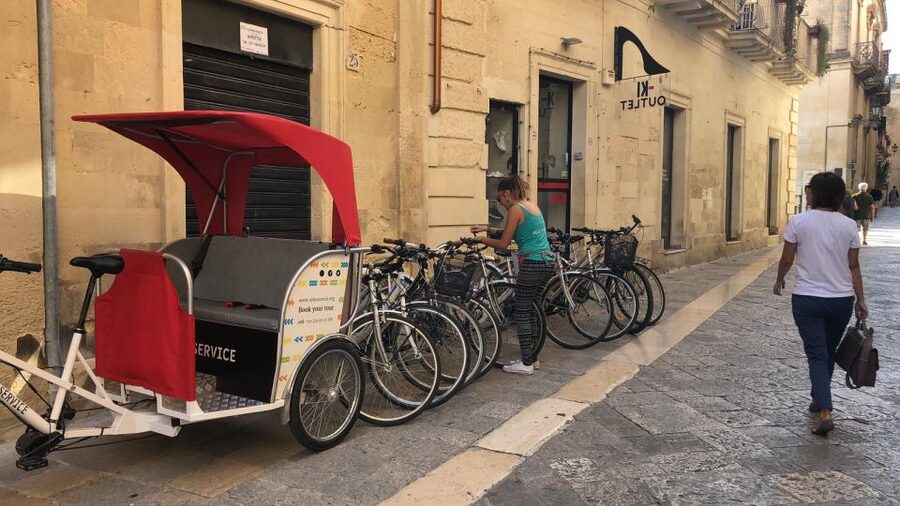
You meet at Velo Service Lecce, at Vico de Argenteris 16a. The important practical detail is that there’s a list of nearby car parks, which helps if you’re driving or renting a car and want a low-stress meetup close to the historic center.
In real life, the biggest hassle with Old Town tours is simple: finding the group. One review notes they got lost before joining and the team handled it by phone and picked them up nearby. That’s reassuring, and it also tells you to keep your phone handy and follow the meeting directions closely.
Once you’re seated, the tour is easy to settle into. The rickshaw is driven by the guide, so you don’t have to think about navigation, and you can ask questions without interrupting your own plan.
Piazza del Duomo: Lecce’s Main Square From the Right Angle
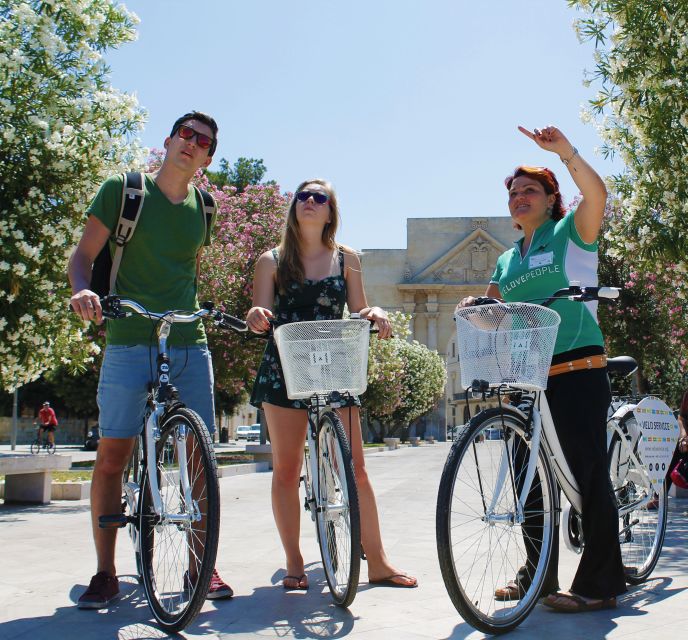
Your tour starts with a stop at Piazza del Duomo, where the scale of Lecce starts to make sense. This is the kind of place where you can read the city by looking at the façade details and the way buildings frame the square.
The value here is timing and pacing. From the rickshaw, you can view the architecture without stopping every five minutes, and you can still enjoy photo breaks. If you’re the type who likes a quick architectural “orientation” before deeper wandering, this stop is the one that sets you up.
Also, the Duomo area is a natural place to hear the big-picture story. Guides often connect the baroque look to the city’s development, so the square isn’t just a photo moment—it becomes your reference point for everything else you’ll see later.
Porta Napoli: A Monumental Entrance You Can Actually Take In
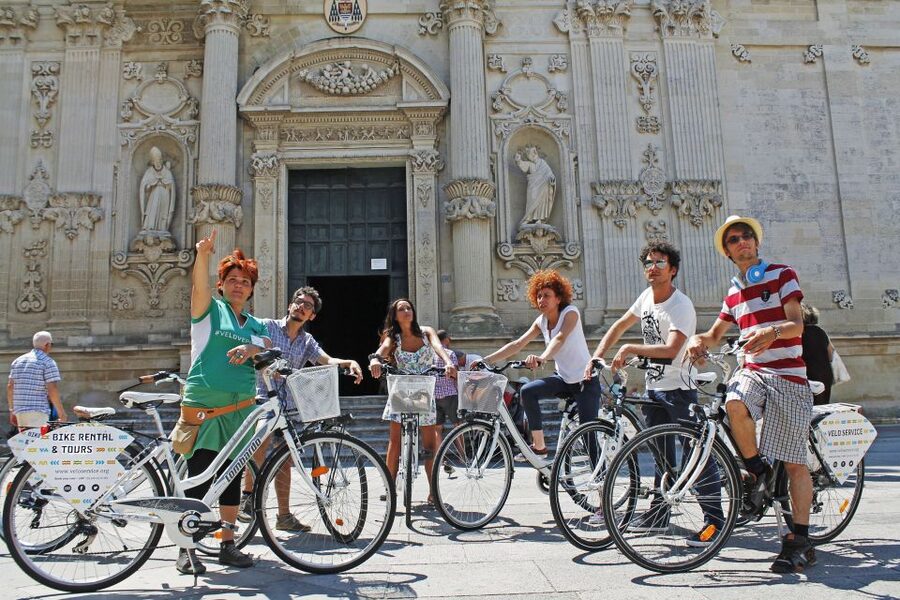
From the center of power, the route moves to Porta Napoli, the city’s monumental entrance. Standing at a gate can feel like a basic sightseeing checkbox, but it’s rarely basic in Lecce because gates weren’t just for traffic. They were statements.
From the rickshaw, you can get a clear view without stepping into the flow of cars or squeezing through narrow sidewalks. You also get an easier rhythm for comparison: after Piazza del Duomo, Porta Napoli helps you feel how Lecce’s layout and architecture guide movement through the city.
The practical benefit: you can observe the transition from “open square energy” to “old streets and tighter space,” which makes the later alleyway moments feel more meaningful instead of random.
Basilica di Santa Croce: Baroque Stonework With Stories Attached
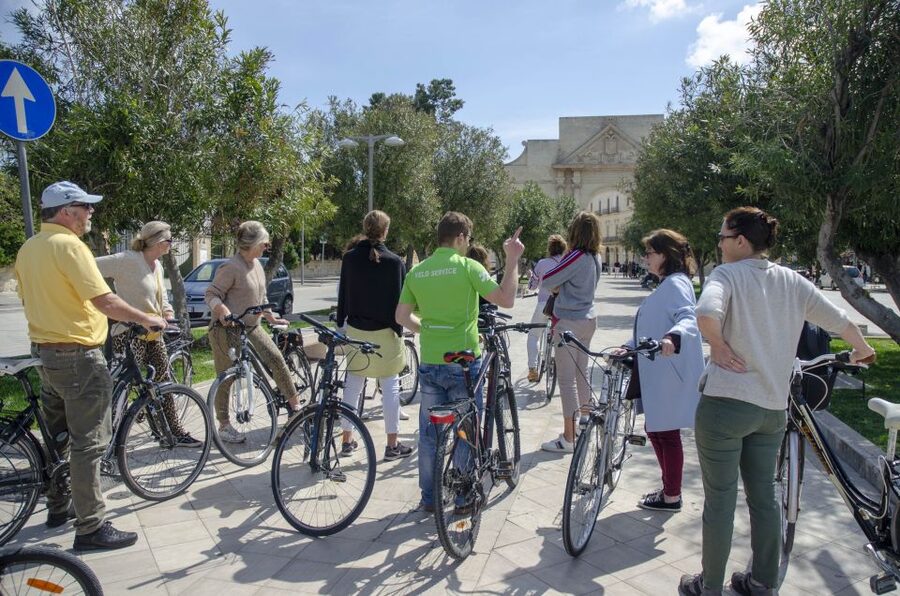
Next up is the Church of the Holy Cross—the Basilica of Santa Croce. This stop is central to why people call Lecce baroque architecture the “south of Italy” version you don’t want to miss.
Santa Croce is where the carvings become more than decoration. The guide’s job is to connect the visible details to artistic development, so you’re not just admiring pretty stone. You’re learning what those features meant and how the city’s taste evolved.
This is also a good point to slow your looking. Even if your total tour time is short, Santa Croce is usually the place where you can focus on fewer things and still get more value out of the stop.
From reviews, guides like Flore and Matteo are praised for passion and for giving you details you actually remember, not just facts you forget five minutes later. If you’re choosing between guide-led clarity and “read it later” sightseeing, this is where the guide role pays off.
Piazza Sant’Oronzo and the Roman Thread in Lecce
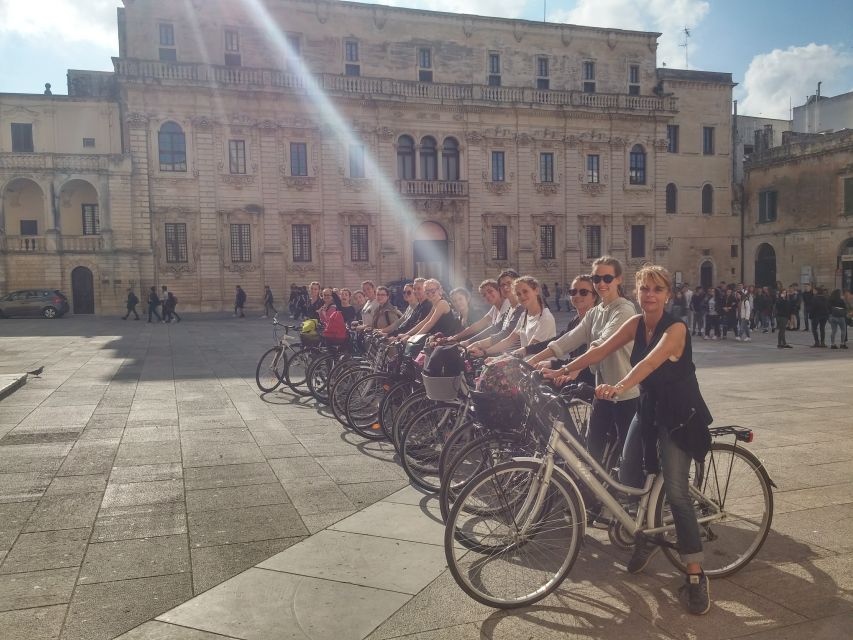
At Piazza Sant’Oronzo, you get a shift in perspective. You’re still in historic Lecce, but the guide angle turns toward the older layers—especially the Roman presence that still shows up in the city fabric.
This matters because Lecce can feel like it belongs to one era at a time. Piazza Sant’Oronzo helps you connect the baroque city you see on façades to the older city beneath and around it. Even if you only get a short look from the route, the “why it’s here” explanation helps the ruins make sense.
Also, the square is a natural place for a breather. Even a quick pause helps you digest what you just saw at Santa Croce before moving on to the Roman remains.
Roman Amphitheater Remains: Small View, Big Context
Your last key sightseeing stop is the Roman Amphitheater of Lecce, reached as the tour finishes near Piazza Sant’Oronzo. The big win here is not that you’ll tour an entire museum—you won’t. The win is that you’ll understand where the Roman layer fits into the city’s later growth.
From a rickshaw, you can get a quick, readable look without turning the day into a deep-dig archaeology project. If you want to do more later, this gives you the context to know what you’re seeing when you return on your own.
So even though it’s a shorter stop, it works well as the “final chapter” of the route: baroque storytelling, then the older roots that still influence the city’s identity.
Guide Energy, Photo Stops, and That Summer Comfort Factor
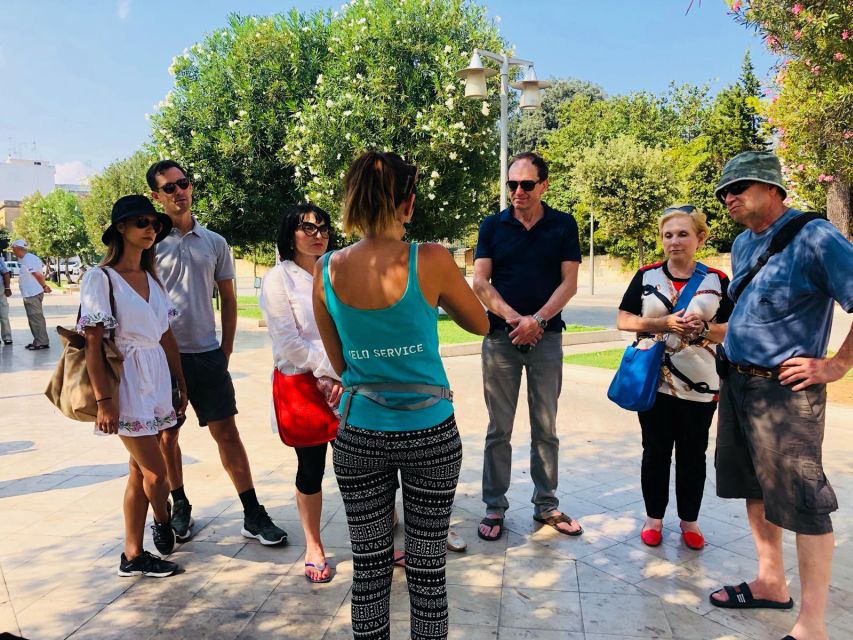
What people consistently praise is not just the sights—it’s the people running the tour. Guides are repeatedly described as humorous, personable, and proud of their hometown, with English called out as strong in multiple cases (Matteo and Mattias are mentioned often).
Another smart detail: you’ll get frequent opportunities for photos. Since Lecce is all about texture—carved stone, layered façades, and street scenes—being able to stop at the right moments can change the whole quality of your photos.
And the comfort is real. Reviews mention how the rickshaw helps especially in heat, and one even notes extra care for elderly parents to avoid sun exposure. That’s practical, not fancy. It’s the difference between “we saw a few things” and “we could enjoy the day.”
One note to consider: a review mentions that amplifiers for the guide could help. If you’re sensitive to hearing voices in crowded spaces, pick a quieter start time if you can, and don’t be shy about stepping closer when you want to catch details.
Duration Choices: When 1 Hour Feels Fast (and 3 Hours Feels Better)
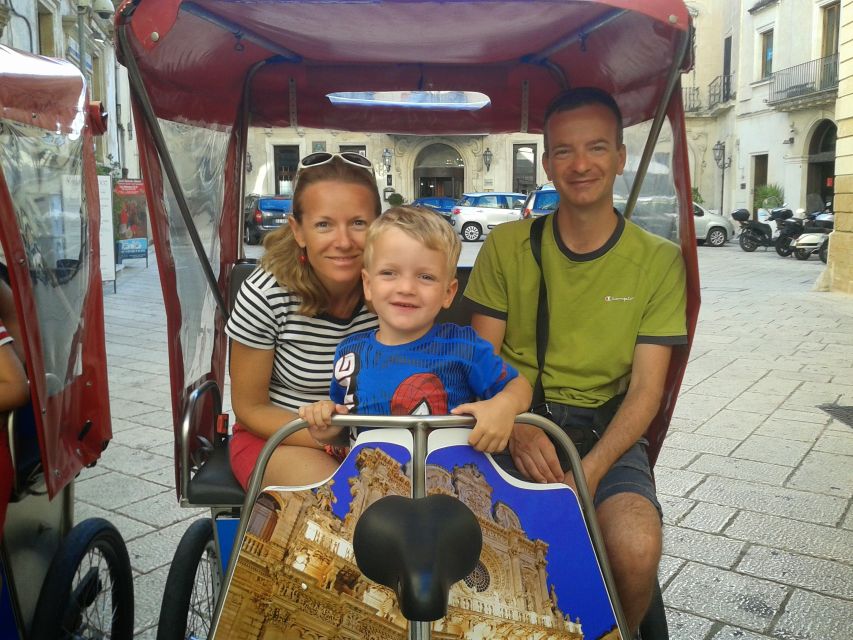
This tour offers 1–3 hours, and that range can matter more than you’d expect. If you choose a short slot, you’ll cover the key points but the experience can feel rushed at each stop. If your style is to linger—especially at Santa Croce—aim for the longer timing.
Here’s a simple way to choose. If you like a quick overview and you’re pairing Lecce with other plans, the shorter duration can be fine. If you want time for photos, questions, and breathing in the atmosphere between stops, go longer and keep your expectations realistic.
Price and Value: Is $77 Worth It?
At $77 per person, the value comes from what’s included: a tour guide and an electric rickshaw driven by the guide. You’re paying for two things at once—someone who can point out the meaning behind the monuments, and transport that keeps you in the sightseeing mode.
Church entry fees are not included, so if you want to go inside, plan for that separately. Also, you’re not buying a slow, full-on walking day with hours of browsing—this is a structured, high-sightings route.
The upside is that it compresses key Lecce highlights into one easy outing. For many people, that’s the sweet spot in a city where walking can eat time fast and where the best architectural details are hard to interpret without context.
On top of that, some departures include a break for Lecce coffee and sweets like pasticciotto, or for artisanal ice cream. That kind of stop can turn a good tour into a memorable one, and it gives your group time to talk without the city pressing you forward.
Who Should Book This Rickshaw Tour (and Who Might Skip It)
This tour fits well if you:
- want the major Lecce sights without long walks through narrow streets
- enjoy learning how architecture evolved, not just taking photos
- care about comfort in warm weather
- prefer a structured route with a guide who answers questions
It might be less ideal if you:
- want fully unscripted roaming with lots of time inside churches
- hate any sense of schedule, even a loose one
- expect a museum-style deep dive at ruins (this is more about guided context and key viewing)
If you’re traveling with family, the comfort factor becomes a big plus. One review mentions accommodating elderly parents by minimizing exposure to heat and sun, which shows the guiding approach can be flexible.
Should You Book the Lecshaw Rickshaw Tour?
I’d book it if you want a high-value way to see Lecce’s most important baroque landmarks fast, with a guide who can turn stone façades into stories you’ll actually remember. The rickshaw makes the experience easier on your body, and the itinerary touches the main anchors: Piazza del Duomo, Porta Napoli, Santa Croce, Piazza Sant’Oronzo, and the Roman amphitheater remains.
If you’re the kind of traveler who likes time to linger, pick a longer duration slot. And if hearing details matters a lot to you, plan to position yourself where you can clearly hear the guide during commentary.
FAQ
How long is the Lecce rickshaw tour?
The tour duration can be selected in the range of 1 to 3 hours, depending on availability and the time slot you choose.
Where do I meet the tour?
You meet at Velo Service Lecce, located at Vico de Argenteris 16a. The operator also shares information about nearby car parks close to the historic center.
What’s included in the price?
The tour includes a live guide and an electric rickshaw that is driven by the guide.
Are church entry fees included?
No. Church entry fees are not included in the tour price.
Is this tour private or shared?
It can run as a private tour or as a small-group tour, depending on what you book.
What languages are available for the guide?
The tour guide is available in English, Italian, and Spanish, and the tour can be multilingual/bilingual.
Do I need a minimum number of adults?
Yes. A minimum of 2 adults is required to start the tour.
What if the weather is bad?
If weather is poor, the booking can be modified.
If you want, tell me your travel month and whether you prefer a shorter overview or slower lingering, and I’ll suggest the best timing approach for Lecce baroque viewing.