REVIEW · ANURADHAPURA
Anuradhapura: 14 Ancient City Sites Tuk Tuk Tour
Book on Viator →Operated by RAJARATA ANCIENT City · Bookable on Viator
Anuradhapura in one half-day is a smart move. You get a private auto-rickshaw loop plus an audio guide that helps you understand what you are seeing, instead of just walking past giant stupas. I like how the route hits the big landmarks without wasting time, and I also like the front-door pickup and drop-off that keeps the day simple. One thing to watch: entry tickets for UNESCO sites are not included, and the ground can be brutally hot, so plan for hot sand and tiles.
This is built for a practical kind of sightseeing. The sights are spread out, so trying to do it on foot (or by flagging tuk-tuks) can turn into more commuting than temples.
You’ll spend about 4 to 6 hours out in the ancient city, visiting 14 key stops in one go. It’s private for your group (up to 3), so the driver can adapt timing a bit if you’re moving slowly in crowds or lingering at carvings.
In This Review
- Key highlights I’d actually plan around
- The big idea: why this tuk-tuk route works in Anuradhapura
- Price and value: what $46.40 per group really buys
- How the day runs: pickup, the app, and the pacing
- Stop-by-stop route: 14 sites, what to look for, and how long to linger
- Isurumuniya Temple: carvings and the story around the pond
- Ranmasu Uyana: ancient garden space near the sacred water
- Mirisaveti Stupa: a victory story made into stone
- Sri Maha Boodhi Temple: the sacred fig with human planting history
- Ruwanwelisaya: the stupa that defines the skyline for a reason
- Dagoba of Thuparama: bell-shaped and shaped by destruction and rebuilding
- Lankarama Sthupa: a stupa with a king behind it, and mystery around the earlier form
- Moonstone (Sandakada pahana): the carvings you almost miss
- Rathna Prasadaya and Guardstone: prosperity and protection symbols
- Abhayagiri Monastery’s main refectory: the scale of daily life
- Abhayagiri Dagaba: monasteries, royal power, and what used to rise high
- Samadhi Statue: a posture you can map onto meaning
- Twin Baths (Kuttam Pokuna): ancient bathing tanks with a design purpose
- Jethawanaramaya: the tall stupa that measures ambition
- What to bring so the day feels easy, not painful
- Is this tour worth your time?
- Should you book this Anuradhapura 14-site tuk-tuk tour?
- FAQ
- FAQ
- How long is the Anuradhapura 14 Ancient City Sites tuk-tuk tour?
- Does the tour include hotel or station pickup?
- How much does it cost per group?
- Is an audio guide included?
- Are UNESCO entry tickets included in the tour price?
- Do you get a mobile ticket?
- What happens if the weather is poor?
- Can I cancel for a full refund?
Key highlights I’d actually plan around
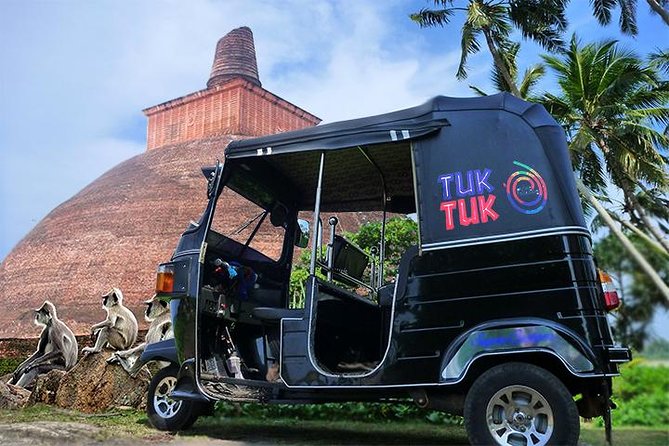
- Hotel or railway pickup and drop-off so you start and end with less stress
- Digital audio guide for all sites, which makes the kings, relics, and carvings click fast
- 14 stops in one loop, ideal for first-time visitors who want the main monuments without running in circles
- Bottled water and included parking fees, so small costs don’t sneak up on you
- Mobile ticket that keeps check-in easy
- Socks are worth packing because hot sand and tiles can be painful if you end up going barefoot
The big idea: why this tuk-tuk route works in Anuradhapura
Anuradhapura is not a “one straight street and you’re done” kind of place. Temples, stupas, monasteries, and sacred trees are scattered across an older sacred zone, which means distance adds up quickly.
This tour solves that problem with a private auto-rickshaw, not a car-and-stare plan. You’re still seeing the sites up close, but you are not losing half your time to transport. In a place like this, that time-saving matters.
The audio guide also changes the whole feel. When you know what a stupa is, who built it, and what to look for in carvings, you spend less energy trying to guess and more energy actually noticing details.
And since it’s private for your group of up to three, you aren’t stuck with the pacing of strangers.
Price and value: what $46.40 per group really buys
The price is $46.40 per group (up to 3) for the tour itself. That’s for the private ride, the audio guide experience, and practical extras like bottled water and parking fees.
The key cost to budget is the separate entry fee. Entry tickets for 8 UNESCO World Heritage sites are $30 per person and are not included. So your all-in cost will depend on how many people are sharing the group price.
For example, if you’re a group of three, the tour portion works out to about $15.47 per person for the ride and guide app experience. Then you add the $30 per person UNESCO entry tickets when you get to the sites that require them.
If you are traveling solo, the tour portion is still reasonable, but you’ll feel the per-person UNESCO ticket cost more. Either way, this is a good deal if you plan to hit multiple major monuments in one day rather than sampling a couple and calling it a half-day.
How the day runs: pickup, the app, and the pacing
You get front-door pickup from your hotel or from the railway station area, then drop-off back at the same kind of location after the tour. That matters here. Local transport can be confusing when you are also trying to find correct entrances and ticket points.
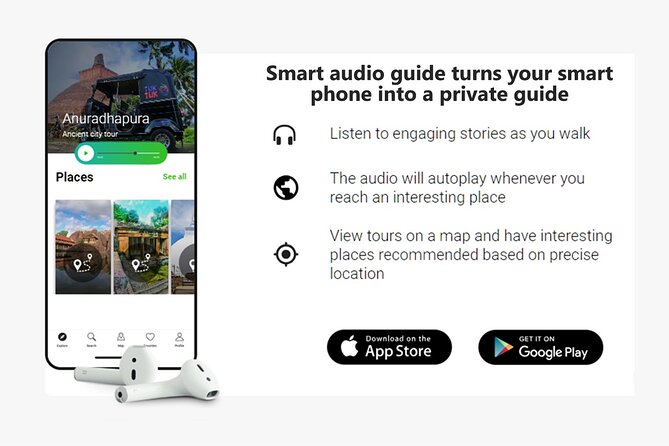
You also get a mobile ticket, and the experience uses a digital audio guide for the sites on the route. The practical benefit is simple: you don’t need to hunt for explanations at each stop. You can focus on the monuments, carvings, and layout.
The tour is designed for a 4 to 6 hour half-day window. That gives you enough time to take photos and read stone details without turning your day into a rushed marathon.
One more practical point: the experience asks for good weather. If weather turns, you may get a different date or a refund. Plan your other sightseeing around that flexibility.
Stop-by-stop route: 14 sites, what to look for, and how long to linger
Below is the flow you’ll follow. Think of it like a guided circuit through the city’s most recognizable sacred spots, with enough time at each stop to actually see something.
Isurumuniya Temple: carvings and the story around the pond
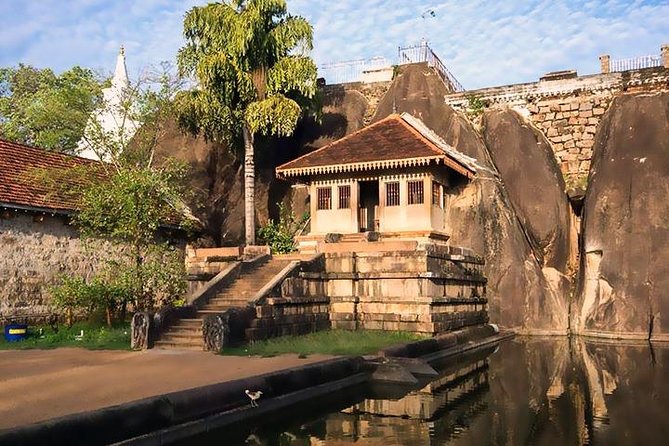
You start at Isurumuniya Temple, near Tissa Wewa. This place is famous for its carvings—especially the Isurumuniya Lovers, the Elephant Pond, and the Royal Family carvings.
What I’d do here: slow down for a full minute and pick out the faces and scenes before you move on. Carvings look different depending on sun angle, and this temple is one of those spots where the details are the point, not the size.
Expect around 20 minutes, and yes—this is a site where heat can creep in fast. If you need to pace yourself, this is a good early stop to take breaks.
Ranmasu Uyana: ancient garden space near the sacred water
Next is Ranmasu Uyana, a park area tied to the ancient Magul Uyana, close to Isurumuni Vihara and Tissawewa. This stop is less about a single monument and more about context—how the sacred city shaped everyday space around water and temples.
Give yourself the 40 minutes here if you want to breathe a bit. Even if you don’t linger long, the placement helps you connect the rest of the circuit.
Mirisaveti Stupa: a victory story made into stone
At Mirisaveti Stupa, you’re dealing with a monument tied to royal legend. King Dutugamunu built it after defeating King Elara, and the relic story is part of the meaning.
This is one of those stops where the audio guide helps you avoid the “big dome, next stop” feeling. With the background, it’s easier to understand why this stupa matters in the local religious storyline.
Plan around 10 minutes. This is a quick hit, but it sets the tone for the larger stupas you’ll see later.
Sri Maha Boodhi Temple: the sacred fig with human planting history
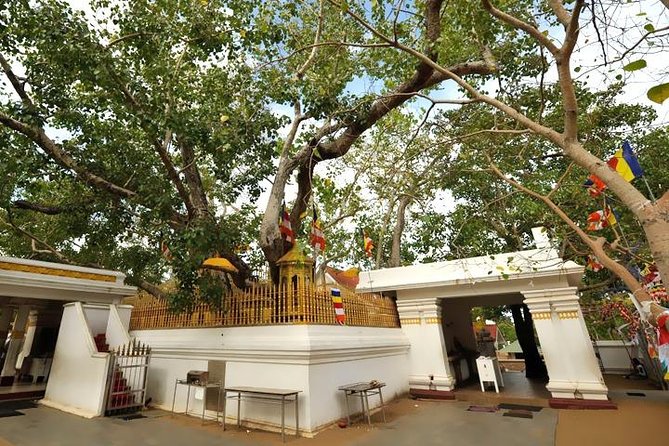
Then you’re at Sri Maha Boodhi Temple, centered on the 2,300-year-old sacred fig (bo-tree) known as Sri Maha Bodhiya. The detail that makes this stop special is that it is described as the oldest known tree planted by a human rather than natural seeding.
This is a place where you can stand back, watch people’s habits, and notice the reverence without needing to decode everything yourself. Let the audio guide set the scene, then take in the atmosphere and symbolism.
Give it about 20 minutes.
Ruwanwelisaya: the stupa that defines the skyline for a reason
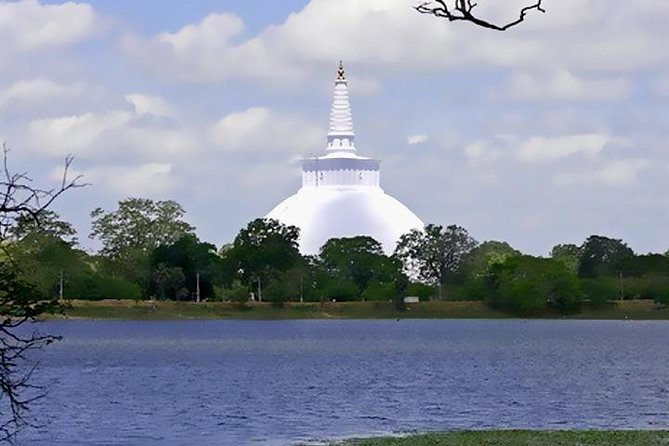
At Ruwanwelisaya, you’re looking at a hemispherical stupa considered sacred to Buddhists worldwide. It was built by King Dutugemunu around 140 B.C.
Even if you’ve seen stupas before, this one hits differently because it’s a landmark on the scale of Anuradhapura itself. I like to circle my attention between the structure and the people moving around it, because the rhythm tells you how the site is used.
It’s a 20-minute stop—enough for photos and for absorbing the monument’s presence.
Dagoba of Thuparama: bell-shaped and shaped by destruction and rebuilding
Next comes the Dagoba of Thuparama, described as a bell-shaped dagoba. It was destroyed at different times, and then restored during the reign of King Agbo II.
This stop is more interesting than it sounds at first, because it adds a layer of time. Temples here weren’t just built—they were repaired, erased, and rebuilt as history pushed and pulled.
Plan about 10 minutes.
Lankarama Sthupa: a stupa with a king behind it, and mystery around the earlier form
At Lankarama Sthupa, the story centers on King Valagamba and its location at Galhebakada. The note to remember is that not much is known about the stupa’s earlier form, and later versions reflect what survived.
This stop works best if you keep your expectations flexible. You are seeing religious architecture across layers of change, not a perfectly preserved “one period” monument.
Give it about 10 minutes.
Moonstone (Sandakada pahana): the carvings you almost miss
Now you hit Moonstone, or Sandakada pahana—a semi-circular stone slab carved with designs that repeat across similar moonstone pieces. Look for the half lotus in the center and the concentric bands framing it.
This is one of the stops where the audio guide earns its keep. It helps you see that these stones aren’t just decorative. They are part of how ancient entrances guided movement and meaning.
It’s a short stop, around 10 minutes, so be ready to focus quickly.
Rathna Prasadaya and Guardstone: prosperity and protection symbols
Next: Rathna Prasadaya & Guardstone, listed also with Sinhala names for the pohoy geta and muragala*. The focus here is on the guardstones that supported a heavy stone balustrade and how over time they became carved with symbols representing prosperity and protection.
If you like “small details with big meaning,” this is a good moment to slow down. The stones can look subtle at first, but once you know what you are looking for, they become the main event.
Plan around 10 minutes.
Abhayagiri Monastery’s main refectory: the scale of daily life
At the Main Refectory of Abayagiri Monastery, you’re stepping into a ruined building tied to daily alms-giving. It’s described as a ruined structure within the larger Abhayagiriya monastery premises.
This is a different kind of site: less about one hero object, more about the feeling of an institution. If you want to understand how the monastery supported communities, this stop helps you picture that routine.
Give it about 20 minutes.
Abhayagiri Dagaba: monasteries, royal power, and what used to rise high
Then you’re at Abhayagiri Dagaba. It’s described as a historically great monastic center and royal capital, with magnificent monasteries that rose to many stories. The description also includes that roofs were made with gilt bronze or clay tiles glazed in brilliant colors.
Even as ruins, you can get a mental picture. I like this stop because it shifts you from “stupa spotting” to “city power and religious organization.”
It’s about a 30-minute stop—long enough to take a breath and read the layout.
Samadhi Statue: a posture you can map onto meaning
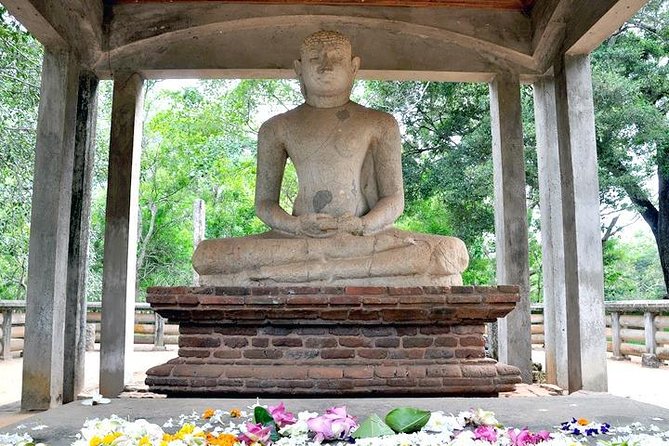
At the Samadhi Statue in Mahamevnāwa Park, the Buddha is depicted in Dhyana Mudra, the posture of meditation. The description ties it to the Buddha’s meditation position associated with his first Enlightenment.
This isn’t about size. It’s about a specific visual language: how posture becomes a statement. The audio guide should make it easier to recognize what you’re looking at.
Plan around 10 minutes.
Twin Baths (Kuttam Pokuna): ancient bathing tanks with a design purpose
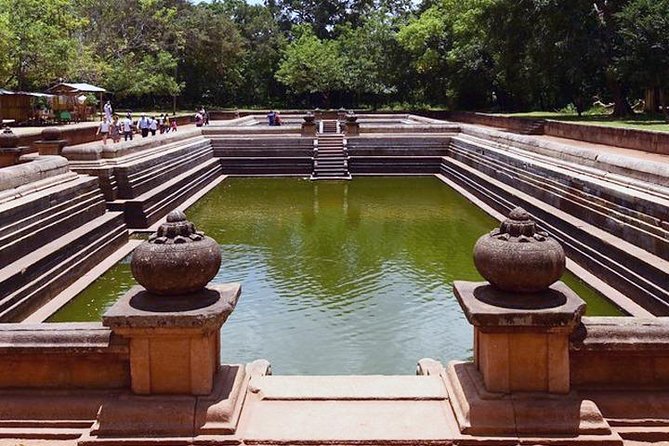
Next is Twin Baths (Kuttam Pokuna), also called Twin Ponds/Pools. This is described as one of the best specimens of bathing tanks in ancient Sri Lanka, built by the Sinhalese in the ancient kingdom of Anuradhapura.
If you’re into architecture that served real life, this stop delivers. Look for how the pairs of pools relate to each other and what that implies about hygiene, ritual cleaning, or daily routines.
Give it 20 minutes.
Practical tip: bring socks. One reason is that surfaces here can be harsh—hot sand and stone tiles. If you end up removing shoes, you’ll feel it fast.
Jethawanaramaya: the tall stupa that measures ambition
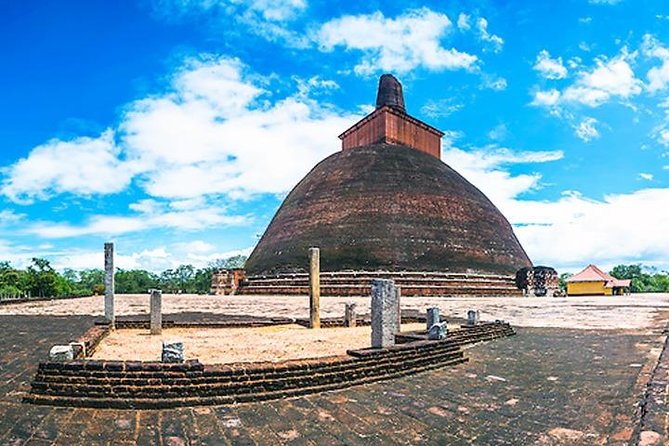
Finally, Jethawanaramaya at the ruins of the Jetavana monastery. It’s described as a reliquary monument and noted at 122 meters (400 ft) as the world’s tallest stupa.
This is a capstone stop. Even if some details fade with distance or heat, the scale is the message. It closes the loop from small carvings and bathing tanks into the sheer religious ambition of the city.
Plan about 20 minutes.
What to bring so the day feels easy, not painful
This is one of those tours where comfort affects your enjoyment more than you’d expect.
I strongly recommend:
- Socks (especially if you plan to go without shoes at any sites). Heat on stone and sand can hurt quickly.
- Water bottle access: bottled water is included, but you’ll still want to sip steadily.
- Sun protection: Anuradhapura can feel intense in the middle of the day.
- Light shoes you can remove easily, because some sites involve removing footwear.
Also, keep expectations realistic: 14 stops means each one gets a practical amount of time. If you love one specific type—carvings, stupas, monasteries—you’ll want to let that passion guide how long you linger at each.
Is this tour worth your time?
If you want the highlights of Anuradhapura in a single half-day, this tour makes sense. The private transport removes the most annoying part: figuring out how to move between far-flung sites without wasting your energy.
It’s especially good for first-time visitors who want the major monuments—Isurumuniya Temple, Sri Maha Bodhi, Ruwanwelisaya, and Jethawanaramaya—without turning the day into transit logistics.
It’s also a good fit if you like understanding what you’re seeing. The audio guide is the difference between snapping photos and actually learning the meaning behind carvings and royal-era building stories.
The biggest downside is cost stacking: the tour price is reasonable, but UNESCO entry tickets are added per person. If you are traveling with only one person and you’re watching every dollar, budget for that.
Should you book this Anuradhapura 14-site tuk-tuk tour?
I’d book it if you want a tight, high-value circuit that gets you to the city’s core sacred landmarks with a guide app doing the explaining. The pickup and drop-off, private group setup, and audio guide combine into an experience that feels structured without feeling like a lecture.
I’d think twice if you hate paying site-by-site entrance fees or if you’re not comfortable with short stops in hot weather. In that case, you might prefer fewer monuments with longer time at each.
FAQ
FAQ
How long is the Anuradhapura 14 Ancient City Sites tuk-tuk tour?
It lasts about 4 to 6 hours.
Does the tour include hotel or station pickup?
Yes. Front-door pickup and drop-off are offered from your hotel or railway station.
How much does it cost per group?
The price is $46.40 per group, up to 3 people.
Is an audio guide included?
Yes. A digital audio guide is included for all sites.
Are UNESCO entry tickets included in the tour price?
No. Entry tickets for 8 UNESCO World Heritage sites are not included and cost $30.00 per person.
Do you get a mobile ticket?
Yes. A mobile ticket is provided.
What happens if the weather is poor?
This experience requires good weather. If it is canceled due to poor weather, you will be offered a different date or a full refund.
Can I cancel for a full refund?
Free cancellation is allowed. You can cancel up to 24 hours in advance for a full refund; if you cancel less than 24 hours before the start time, the amount you paid will not be refunded.