REVIEW · TARANTO
Private Tuk Tuk Tour of the Millenary Olive Groves in Ostuni
Book on Viator →Operated by Ape Calessino - Ostuni Touring · Bookable on Viator
A tuk-tuk tour can feel like a shortcut. This one is actually a slow, story-led ride through Ostuni and Puglia’s millenary olive groves. You travel along the route tied to the ancient Romans, then roll straight into a medieval village setting before heading out toward the farms.
I like how the drivers explain history as you move, from the medieval village to how olives were planted and how milling techniques developed. It keeps the ride from feeling like a drive-through, even though the pace stays easy and relaxed.
One thing to consider: the olive oil experience is brief. You do get a free tasting, but if you want a deep, step-by-step breakdown of olive oil production, this tour may feel more like an overview than a full workshop.
In This Review
- Key moments that make this tour worth it
- A tuk-tuk that actually tells a story around Ostuni
- Following the Via Traiana to the medieval core
- Stop 1: Piazza della Libertà (a quick orientation win)
- Stop 2: Inside the old walls of Ostuni
- Stop 3: The New Gate and Porta Nova bastion
- Stop 4: Parco Dune Costiere and the monumental olive groves
- What the drivers teach about planting and milling
- The farm sales point stop: free tasting and an easy way to buy
- Price and value: $404.89 for a private group up to 4
- Timing and logistics: 1:00 pm, 1.5 to 2 hours, ends where you start
- Weather matters more than you might expect
- Who should book this Ostuni olive grove tuk-tuk tour?
- Should you book it?
- FAQ
- How many people can join this private tuk-tuk tour?
- How long is the tour?
- What time does the tour start?
- Where does the tour begin?
- What are the main stops during the tour?
- Is admission included for the stops?
- Do you get a tasting of olive oil?
- Do you need to bring anything for entry?
- What happens if it rains or weather is poor?
- Is the booking refundable if I cancel?
Key moments that make this tour worth it
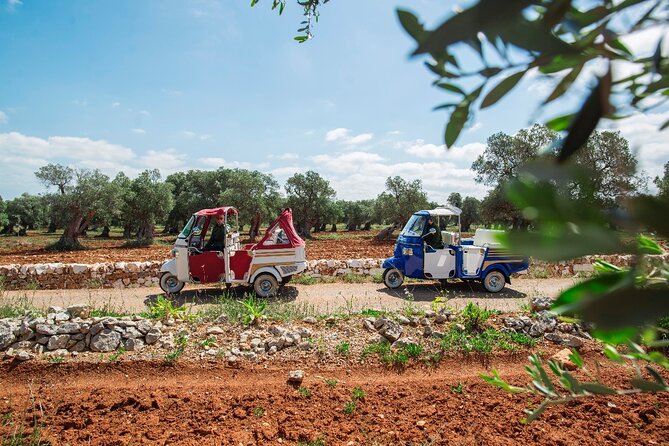
- A private tuk-tuk for up to 4 people, so the day stays calm and flexible
- Via Traiana route vibe, connecting Ostuni to the older Roman road story
- Medieval Ostuni stops inside and around the old walls, with quick historical notes
- Parco Dune Costiere time to actually see the monumental olive groves on the ground
- Free extra-virgin olive oil tasting at a farm sales point, with time to buy if you want
A tuk-tuk that actually tells a story around Ostuni
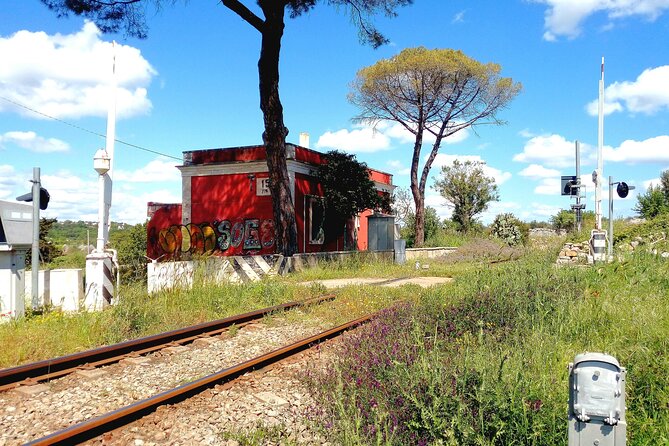
The best way to enjoy Ostuni is to slow down enough to notice details. This tour’s setup helps: you glide in a private tuk-tuk along a route connected to the ancient Romans, then you switch into a medieval frame of mind once you reach the old village area.
I appreciate that the experience is designed like a mini historical reenactment. You’re not just sitting for facts; you’re moving through the spaces where those stories make sense. And because it’s private for up to four, you can focus on what you care about—views, walls, trees, or the olive oil side of the day.
Following the Via Traiana to the medieval core
Your trip starts in Ostuni with a 1:00 pm departure, then unfolds at a comfortable tempo. The ride itself matters here. You’re traveling along a path linked to the ancient Roman world, which sets the tone before the medieval stops begin. Even if you don’t consider yourself a history person, the route helps you understand why people settled and farmed in this region.
The tuk-tuk format also keeps you from burning energy on tight streets and uphill walking. You get to be curious without being tired. If you like taking photos but don’t want the day to turn into a stair workout, this is a friendly compromise.
Stop 1: Piazza della Libertà (a quick orientation win)
The tour begins with a short stop at Piazza della Libertà. It’s only about five minutes, and there’s no waiting around for a long talk. Think of it as an orientation moment: drivers provide historical notes about the place so you know what you’re looking at as the tour moves into the old village.
For you, this is useful because it helps you build context fast. For example, once you know what a square represents in the town’s story, the rest of the medieval stops start clicking together.
Stop 2: Inside the old walls of Ostuni
Next comes La cinta muraria della città vecchia di Ostuni—a short route inside the medieval village. This segment is around 20 minutes, and the idea is simple: you pass through the old fabric of town long enough to get the feel of the place without turning it into a long walking tour.
Here’s why this works well. Ostuni’s medieval core can be visually intense—white stone, winding lanes, wall lines—so a guided path saves you from wandering aimlessly. You’ll see the character of the city and also learn what matters, instead of just collecting pretty pictures.
There’s also a practical advantage: this stop is “short but meaningful.” You won’t feel like the tour is front-loaded with walking that drains you before the olive groves.
Stop 3: The New Gate and Porta Nova bastion
After crossing walls, you end the medieval portion with the story of the new gate and bastion, specifically Porta Nova. This is another brief stop—about five minutes—focused on the military side of the town.
I like that this segment adds contrast. Medieval Ostuni isn’t just scenery; it was built for defense, control, and movement of people. Even a short explanation can help you see the structure differently. When you understand why a gate or bastion existed, the stones stop looking accidental.
If you enjoy architecture or city planning, this is the stop that gives you the most “aha” for the least time.
Stop 4: Parco Dune Costiere and the monumental olive groves
Then you head out to Parco Dune Costiere for about 1 hour 20 minutes. This is where the tour becomes truly about the land.
This part matters because you’re no longer dealing with the town scale. You’re in the olive grove environment: the trees, the spacing, and the feel of a working farming landscape. You get the time to look around and notice how the groves unfold rather than just snapping a few quick photos and moving on.
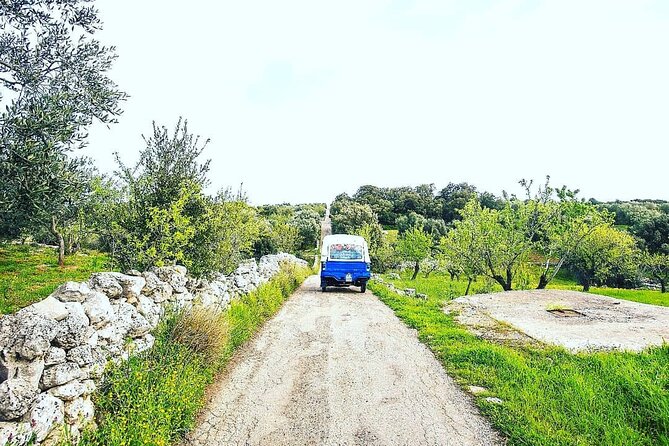
And this is the heart of the tour’s promise: the monumental olive groves and Puglia’s millenary olive trees. These aren’t just old trees as a concept. You’re meant to see them as living heritage—part of why Puglia is so serious about olive cultivation.
What the drivers teach about planting and milling
A standout feature is that drivers don’t treat this as a sightseeing drive with a single sales stop. They explain the history of planting and the origin of milling techniques. As you move through the route, the explanations connect the Roman-age path to the long timeline of farming.
This is where you’ll likely get the most value if you’re curious but not looking for a technical lecture. The drivers frame it in plain, practical terms: how olives were handled over time, and how milling evolved into something people relied on.
One note: because the tour is only around 1.5 to 2 hours total, the teaching is necessarily selective. Some visitors prefer more production detail, so if you’re looking for a long, step-by-step olive oil course, plan for this to be more of a guided overview plus tasting.
The farm sales point stop: free tasting and an easy way to buy
When you return, the day ends with a stop at a farm sales point for a free tasting of extra virgin olive oil. This is short enough to stay convenient, but it’s long enough to do the simple part well: taste and decide what you like.
I especially like that this segment gives you a realistic option at the end. You can taste first, then buy if you want. One of the best parts of the experience is that the driver brings you to a shop where you can purchase olive oil right after the tasting.
You don’t have to guess what to look for or whether the oil is good. You get the sensory comparison and then you can take a bottle home while it’s still fresh in your mind.
Price and value: $404.89 for a private group up to 4
The price is $404.89 per group, up to four people. That’s private pricing, so the value comes down to how many people you’re sharing it with and what you want out of the day.
Here’s how I think about it:
- If you’re traveling as a couple, you’re paying for comfort and time-saving. In exchange, you get a guided route, private transportation, and a tasting stop built into the flow.
- If you’re a small group (up to four), it becomes more about dividing costs. Then it starts to look like a smart way to get history plus olive groves without committing to a longer full-day plan.
- Compared with public transit or generic tours, the biggest “value” isn’t just the ride. It’s the private attention and the way the stops are sequenced to keep the day coherent.
The booking pace also suggests it’s popular for good reason—on average it’s booked about 16 days in advance. If you know you want this specific timing, it’s worth not waiting.
Timing and logistics: 1:00 pm, 1.5 to 2 hours, ends where you start
You’ll start at the Province of Brindisi meeting point in Ostuni at 1:00 pm, then return at the end back to the meeting point. The total duration runs about 1 hour 30 minutes to 2 hours.
That time window is ideal if:
- you want a focused activity rather than a half-day commitment
- you have other plans in Ostuni (or want to keep dinner flexible)
- you’d rather not add a lot of walking to your day
The tour also uses a mobile ticket, which makes day-of logistics easier.
Weather matters more than you might expect
This experience requires good weather. If it gets canceled due to poor weather, you’ll be offered a different date or a full refund. In practice, you’re going through outdoor areas and seeing the groves, so cloudy or rainy conditions can change the feel of the tour.
If your schedule is tight, check the forecast soon after booking and keep your schedule flexible enough for a possible reschedule.
Who should book this Ostuni olive grove tuk-tuk tour?
This is a great fit if you want:
- a private day with minimal stress
- guided context while you see Ostuni’s medieval walls
- a direct experience of monumental olive groves without committing to a long hike
- an end-of-tour extra virgin olive oil tasting that also lets you buy if you like what you taste
It may be less ideal if:
- you’re hoping for a longer, technical olive oil production workshop
- you want more tastings than the one tasting stop included in the flow
As for comfort and practicality, service animals are allowed, it’s near public transportation, and most travelers can participate.
Should you book it?
I’d book this tour if your goal is a compact, well-paced mix of Ostuni history + real-time olive grove viewing + a tasting. The structure is efficient: quick medieval stops that set the stage, then a longer time out in Parco Dune Costiere where the olive trees are the main event.
I’d think twice if olive oil production is your main obsession. This tour gives you helpful background on planting and milling techniques, but it doesn’t position itself as a deep production class. In that case, pair it with an extra stop at a local tasting room or shop for more focused explanation.
If you’re traveling as a couple or a small family and you want an easy way to connect Roman-era paths, medieval walls, and working groves, this is an excellent use of a short window in Ostuni.
FAQ
How many people can join this private tuk-tuk tour?
It’s a private tour for up to 4 people per group.
How long is the tour?
The duration is about 1 hour 30 minutes to 2 hours.
What time does the tour start?
The start time is 1:00 pm.
Where does the tour begin?
The meeting point is in the Province of Brindisi, 72017 Ostuni, BR, Italy.
What are the main stops during the tour?
You’ll stop at Piazza Della Liberta, the city old-wall area in Ostuni, the new gate and bastion (Porta Nova), and Parco Dune Costiere.
Is admission included for the stops?
The itinerary lists admission tickets as free for the stop locations included.
Do you get a tasting of olive oil?
Yes. At the end, you’ll stop at a farm sales point for a free tasting of extra virgin olive oil.
Do you need to bring anything for entry?
A mobile ticket is included, and confirmation is received at booking time.
What happens if it rains or weather is poor?
This experience requires good weather. If it’s canceled due to poor weather, you’ll be offered a different date or a full refund.
Is the booking refundable if I cancel?
No. The experience is non-refundable and cannot be changed for any reason.