REVIEW · ROTTERDAM
Private Pedicab/Rickshaw Tour of Rotterdam With a Local Guide
Book on Viator →Operated by TourGuys · Bookable on Viator
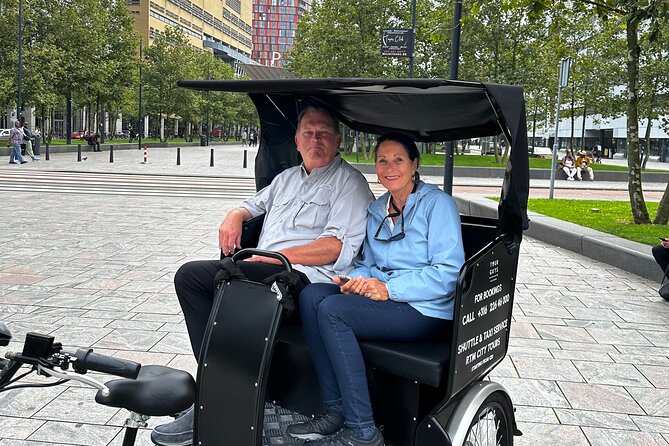
Rotterdam feels different when you slow down. This private pedicab/rickshaw tour lets you ride at your pace while a local guide connects the dots between rebuilds, architecture, and street life. You’ll get hotel or cruise port pickup and a customizable route that fits your time window.
I especially love the way the guide turns quick stops into real context. At landmarks like Rotterdam Centraal and City Hall, you’re not just looking at buildings, you’re hearing how decisions after the war shaped what you see today. I also like the practical touches that make it easy to enjoy the ride: bottled water, snacks, and the fact that you can keep moving without doing a bunch of heavy walking.
One thing to consider: the tour needs good weather, and there’s a combined passenger weight limit of 200 kg/440 lbs. If either of those is an issue for your day, plan ahead so you don’t end up stressing in the morning.
In This Review
- Key things to know before you go
- Why a pedicab tour works so well in Rotterdam
- Pickup and meeting points that save your brain cells
- How long you’ll be out and what that means for your plan
- Stop 1: Rotterdam Centraal Station and the postwar makeover
- Stop 2: Nieuwe Delftse Poort and the city gate that got relocated
- Stop 3: Rotterdam City Hall and the May 14, 1940 survival
- Stop 4: Meent, cafés, and the story behind Mr. Meent
- Stop 5: Markthal and eating-your-way through modern design
- Stop 6: Cube Houses and the Kijk-Kubus museum-house
- Price and value: what $150.18 buys you in real terms
- Guide style you can actually use: facts, timing, and quick personalization
- What to wear and bring for a 1 to 1.5 hour pedicab ride
- Should you book this Rotterdam pedicab tour?
- FAQ
- How long is the private pedicab/rickshaw tour?
- What does it cost, and how many people can be on the tour?
- Is hotel or cruise port pickup included?
- What language is the tour guide?
- Are tickets for the stops included?
- Can service animals come on the tour, and is there a weight limit?
- What if the weather is bad or I need to cancel?
Key things to know before you go
- Private, up to 2 people: more personal than a bus group, with flexibility in how long you pause for photos.
- Hotel or cruise pickup: less guessing, more time for the city right away.
- A short, high-impact route: six stops that cover the old and the new, from medieval remnants to modern design.
- Tickets handled for key interiors: Laurenskerk and the Cube House museum-house are included.
- Bike-lane friendly touring: you get around in a way that matches how Rotterdam is built to move.
- Guide-led storytelling: multiple guides (including Izzy and Ali, per past experiences) focus on the city’s history with fun details.
Why a pedicab tour works so well in Rotterdam
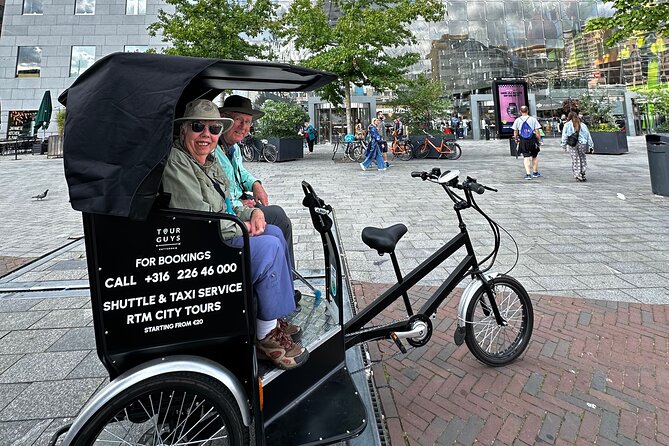
Rotterdam can be intense if you try to do it all by foot. Distances can surprise you, and the city is also built for bikes and transit. That’s where a private pedicab/rickshaw shines. You get transport that feels local, not touristy, and you can spend your energy on looking, asking questions, and taking photos.
What makes this particular tour feel smart is the way it balances “big hits” with a lived-in feel. You ride past major anchors, but the guide also explains why places matter, like how postwar choices changed the city center layout—or why one gate had to move because traffic got too heavy. Even if you only have an hour (or closer to 90 minutes), you leave with a clear sense of where you are and what to notice next.
Pickup and meeting points that save your brain cells
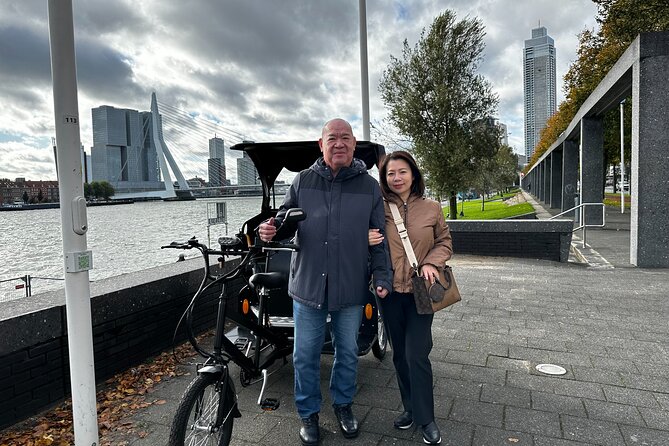
Your day starts before you even roll. This is set up with traveler pickup and drop-off, and the easiest option is hotel pickup if you’re staying in the center. The same idea works from cruise: most sea cruises dock at the Rotterdam Cruise Terminal, and many river cruises dock at Boompjeskade.
Why I think this matters: Rotterdam can be a bit tricky if you’re trying to find a meeting point while your ship is in a schedule crunch. When pickup is handled, you’re not spending your short visit buffering in the wrong place, chasing a driver, or thinking through how to reach the right street.
How long you’ll be out and what that means for your plan
Plan for about 1 to 1.5 hours. That’s long enough to get a genuine orientation plus several named stops, but short enough that you can stack other plans—lunch, a museum later, or a coffee with a view.
Because it’s private, timing is easier to manage than with a large group. One of the most common reasons people love this tour is that guides can pace the ride so you still catch key sights without feeling rushed. If you’re traveling on a tight schedule (layover, cruise day, one-day trip), this length is a sweet spot.
Stop 1: Rotterdam Centraal Station and the postwar makeover
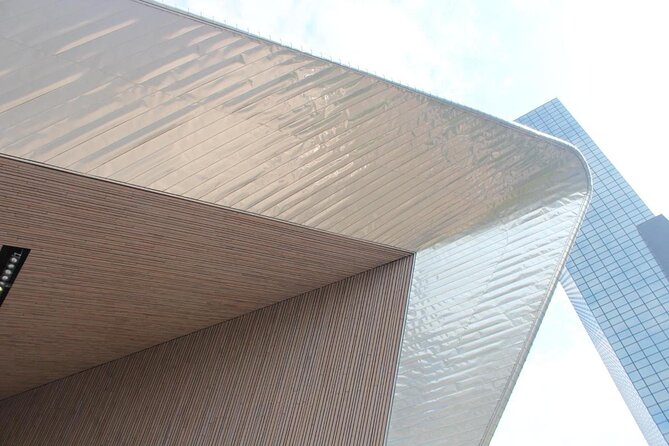
You start at Rotterdam Centraal Station, a place that basically tells the Rotterdam story in one glance.
Before the current central station, there wasn’t a single central hub. Instead, Rotterdam had four stations around the center, and the city’s growth eventually forced a new plan. The station you see today opened in 1957 at this location. Later, a major renovation began in 2004 and reached its current result in 2014. The reason? The old setup couldn’t keep up with the passenger influx.
What I like about starting here: it’s a natural orientation point. Even if you don’t enter the station interiors, the guide’s explanation helps you understand why the station matters to how Rotterdam functions now. Admission for this stop is free, so you’re paying for the storytelling and timing, not extra entry fees.
A practical tip: if you’re arriving from elsewhere that morning, you’ll instantly get your bearings. And if you’re a photo person, station areas give you great angles without having to walk far.
Stop 2: Nieuwe Delftse Poort and the city gate that got relocated
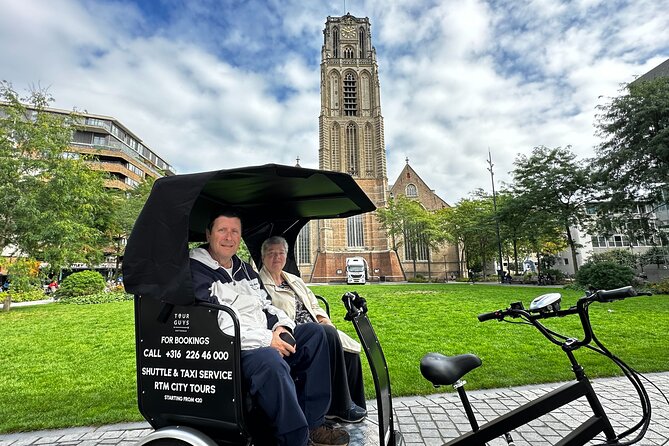
Next up is Nieuwe Delftse Poort, a former city gate location that you’d easily miss without local context.
Rotterdam used to have multiple city gates—this one dates back to the Middle Ages as part of that system. Then, in the 1930s, Rotterdam expanded rapidly. The gate started blocking traffic flow, so the municipality decided to move it about 100 meters. Even the fact that demolishing parts of the gate met resistance gives you a sense of how people felt about change.
World War II delivered the next chapter. The gate was severely damaged during the bombardment. A year after, it was demolished because it could no longer be completed. The good news for history lovers: some ornamental parts were saved and built into nearby structures around town hall square.
How this stop helps you: it shows Rotterdam’s pattern—old elements get altered, relocated, or repurposed, not simply erased. For a city that rebuilt after war, that matters.
Photos are often great here, but don’t expect a full “original gate” experience. It’s more like reading the city’s notes left behind, with the guide pointing out the details you’d otherwise overlook.
Stop 3: Rotterdam City Hall and the May 14, 1940 survival
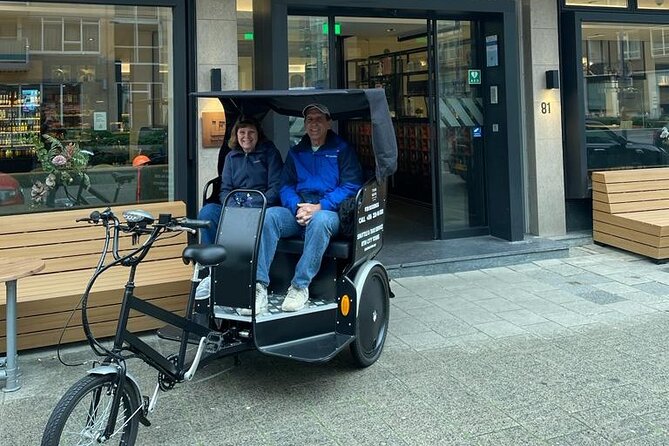
At City Hall Rotterdam, you’re looking at a building with a rare claim to fame: it’s one of the few in the center that survived the May 14, 1940 bombardment.
The town hall was built between 1914 and 1920, designed by Henri Evers. The guide typically uses this stop to connect the architecture to the city’s survival and rebuilding mindset—why certain structures remained standing, and what that meant for the center’s later shape.
One review detail that’s worth knowing: your guide may point out bullet-hole scars or visible damage marks on the building. It’s an uncomfortable reminder, but it gives the site weight far beyond a quick glance.
Admission is free for this stop, so you’re not paying extra to experience one of the city’s most direct ties to wartime history. Give yourself a moment to stand still, read what you can, and let the guide’s story sink in.
Stop 4: Meent, cafés, and the story behind Mr. Meent
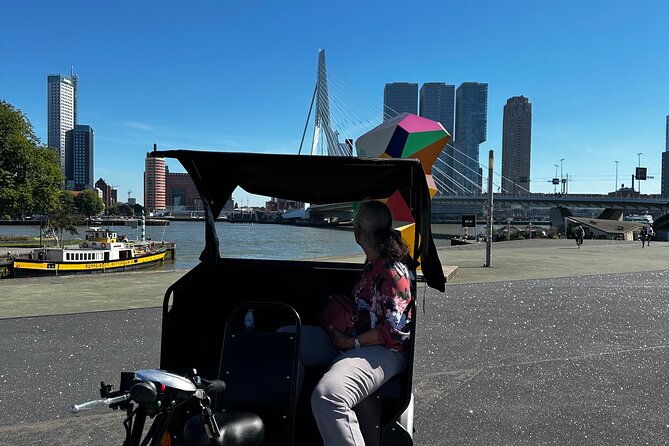
From monumental history, you shift into everyday Rotterdam at Meent, a street area known today for cafés, eateries, and clothing shops.
This is where the guide brings the city’s personality into focus. In the 90s, Meent reportedly wasn’t the relaxed hangout you’d expect—it was more of a street with temporary employment and travel agencies, and it had the feel of a place with vacancies. Over time, it became a hotspot again, and one person became closely linked with that change.
Your guide may talk about Robin von Weiler, whose nickname is Mr. Meent, tied to his efforts for the street. Even if you don’t know the name ahead of time, the story helps you see how urban identity can shift through local work, not just big redevelopment projects.
What to expect here: not a museum moment. It’s a “feel the place” segment. It’s also a good place for photos because you’ll see street life and the kind of everyday scene that makes Rotterdam feel real, not just rebuilt.
Stop 5: Markthal and eating-your-way through modern design
Then you ride into Markthal, a modern complex with a covered market and restaurants under an arch of apartments.
This stop is short, about 30 minutes, so I treat it like a chance to absorb the space rather than trying to tour everything. The value is that it’s modern Rotterdam in a very visible, recognizable form: a single structure that mixes housing above and food below.
Admission here is free, so you’re not paying to enter the market area during the tour window. Even if you skip buying anything, it’s worth walking through the vibe and letting your guide point out why the design works: the arch shapes movement, and the stacked functions tell you how the city uses space efficiently.
Practical move: if you want to eat afterward, Markthal is an easy reference point. You’ll know where you are and where to return, even if you didn’t have time to linger for a full meal today.
Stop 6: Cube Houses and the Kijk-Kubus museum-house
Your final stop is the Kijk-Kubus museum-house, and this is one of those places where the design story matters as much as the visuals.
The cube houses come from an architectural push in the 1970s. After WWII, Rotterdam’s reconstruction era brought a lot of large-scale modernism, and some architects wanted housing that felt more human and involved residents and other users. One key figure is Piet Blom, influenced by ideas of human-scale building. He assumed big buildings should be made with small, recognizable elements, and he built the concept on columns.
That columns idea is important. It keeps open space beneath the structures so the area can remain public. If you know Le Corbusier, the connection is part of the explanation here too—this design borrows inspiration from that broader modernist conversation.
Ticketing for this stop is included, and the time is about 15 minutes. That’s enough to see how the cube geometry works and to appreciate the “why” behind it without turning the day into a long interior visit.
One more thing: cube houses are popular, and they can be photo-heavy. If you care about angles, this is the stop where I’d pause and ask your guide to help you find the best view from where the pedicab can stop.
Price and value: what $150.18 buys you in real terms
At $150.18 per group (up to 2) for about 1 to 1.5 hours, you’re paying for a private guide plus private transport—by rickshaw/pedicab—and the small extras that remove friction.
Here’s how I think about the value:
- You’re not sharing the guide with strangers. For a city orientation, that matters because you can ask follow-ups and adjust to what you personally care about.
- Pickup and drop-off reduce wasted time. In a port day or one-day trip, that can be the difference between seeing the highlights or feeling like you missed them.
- You get bottled water and snacks, so you’re not scrambling for sustenance mid-tour.
- Several stops are free entries, and two are ticketed for you (the church and the cube house museum-house). That means you’re not trying to calculate add-on costs while you’re out.
Compared with larger group tours, this feels more like paying for a short, guided “Rotterdam orientation session” that also happens to be fun. Compared with self-guided exploring, you’re buying speed, context, and convenience.
Guide style you can actually use: facts, timing, and quick personalization
The guides here tend to work like hosts, not lecturers. People often highlight that the stories connect the dots between the city’s past and what you see now. Guides like Izzy and Ali have been praised for explaining Rotterdam’s history and culture in a way that keeps stops interesting rather than turning them into a checklist.
Another detail worth calling out: some guides plan timing so you catch sights with practical constraints in mind, like museum and closing times. You’re not going to get a perfect, slow museum day in 90 minutes, but you can make better choices because your guide helps you keep momentum.
If you want to personalize: tell your guide your interests early—architecture, war history, modern design, street life, or food-and-market vibes. With a private format, you can steer how much time you spend in places like Meent versus Markthal.
What to wear and bring for a 1 to 1.5 hour pedicab ride
This tour needs good weather, and the ride can be exposed depending on conditions. I’d plan for wind and cool air even in mild seasons, and bring layers you can handle quickly.
Bring:
- Comfortable shoes for the short stop-and-look moments
- A camera or phone with space for photos
- Any meds/snacks you personally need, even though water and snacks are provided
Also note the practical limit: the combined passenger weight must not exceed 200 kg/440 lbs. If that applies, check before you book.
Should you book this Rotterdam pedicab tour?
Book it if:
- You want a fast, high-value orientation in a short time window.
- You prefer a private guide who can shape the pace to your day.
- You’re arriving by cruise or staying close to the center and want pickup that works.
- You like the mix of Rotterdam’s story—war-era survival, city gates and rebuilding, and modern design like the cube houses.
Skip or rethink it if:
- You’re traveling in a bigger group than two without flexibility.
- Bad weather is likely and you’d rather plan a museum-heavy day instead.
- You want a long, slow interior museum visit rather than a guided overview.
If your goal is to get your bearings fast and understand why Rotterdam looks the way it does, this is a strong choice. It’s short, focused, and guided in a way that makes the city feel readable.
FAQ
How long is the private pedicab/rickshaw tour?
It runs about 1 hour to 1 hour 30 minutes.
What does it cost, and how many people can be on the tour?
The price is $150.18 per group for up to 2 people.
Is hotel or cruise port pickup included?
Yes. Traveler pickup and drop-off are offered, including pickup from hotels in and around central Rotterdam and from common cruise docking locations.
What language is the tour guide?
The tour is offered in English.
Are tickets for the stops included?
Some sites are included and others are free to enter during the tour. The Grote of Sint-Laurenskerk and the Kijk-Kubus museum-house are listed with included admission; other stops are listed as free.
Can service animals come on the tour, and is there a weight limit?
Yes, service animals are allowed. There is also a safety limit: the combined passenger weight must not exceed 200 kg/440 lbs.
What if the weather is bad or I need to cancel?
The experience requires good weather. If it’s canceled due to poor weather, you’ll be offered a different date or a full refund. For cancellation, it’s free up to 24 hours in advance for a full refund; within 24 hours, the amount isn’t refunded.