REVIEW · NORTE REGION
Porto Tuk-Tuk City Tour
Book on GetYourGuide →Operated by LIVING TUK TUK · Bookable on GetYourGuide
Porto by tuk-tuk is a fast way to get oriented. I like how the ride is in an electric tuk-tuk, so you move through tight streets without the usual slog, and you still hit the big sights like Clérigos Tower and the Lello Bookstore. Best part: you finish with strong Douro River views from Ribeira. One thing to keep in mind is that this is a short, intro-style tour—if you want deep museum time or long stops, you’ll need extra time on your own.
I also like that the guide gives real city context, not just photo stops, and you get a walking tour voucher you can use the next day. It’s a smart way to keep day one easy and day two more flexible. If you’re dealing with mobility limits or back issues, check whether this style of riding and getting on/off works for you.
In This Review
- Key highlights that actually matter
- A fast, friendly intro to Porto on an electric tuk-tuk
- Finding the meeting point near São Bento (and why location helps)
- From old-city walls to São Bento Station and the Cathedral
- Avenida dos Aliados: the Porto boulevard moment
- Clérigos Tower: iconic views, but plan for tickets
- Lello Bookstore stop: stunning exterior, inside is optional
- Taipas Street to Miragaia and Ribeira: Douro River views from the edge
- The walking tour voucher: how to turn a 50-minute ride into two days
- Price and value: what $20 buys you in Porto
- What the guide adds (and why language matters)
- Accessibility and comfort: who this tuk-tuk tour suits best
- Should you book the Porto Tuk-Tuk City Tour?
- FAQ
- How long is the Porto Tuk-Tuk City Tour?
- What does the tour cost?
- Where do I meet for the tour?
- What’s included in the ticket price?
- Are monument or museum tickets included?
- What languages are offered for the live guide?
- Who should avoid booking?
Key highlights that actually matter
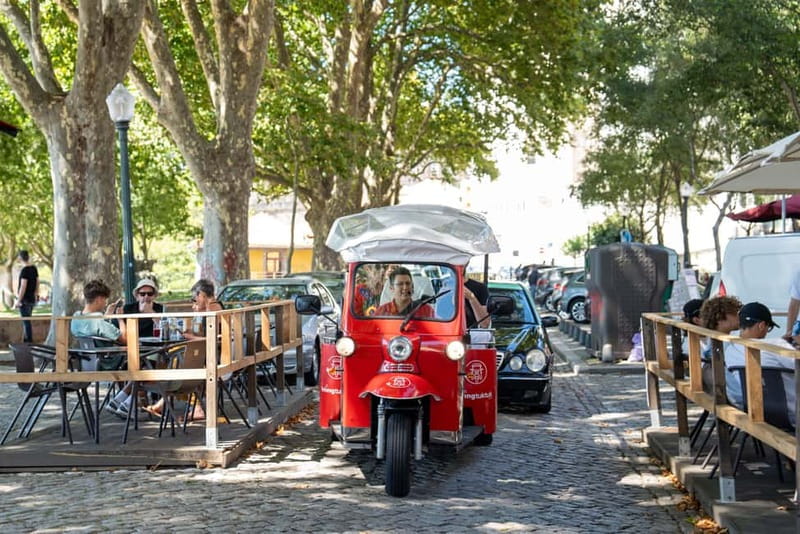
- 100% electric tuk-tuk ride through Porto’s steep, old-street maze without exhausting yourself
- São Bento Station, Cathedral, and Avenida dos Aliados as quick anchors for your first-time map
- Clérigos Tower plus Lello Bookstore on the same route, so you don’t waste hours
- Taipas Street to Miragaia and Ribeira for Douro River viewpoints at a comfortable pace
- Walking tour voucher (from the day after) to stretch your visit beyond 50 minutes
- Local guide with history + practical tips (one guide named Tiago even got a shout for restaurant advice)
A fast, friendly intro to Porto on an electric tuk-tuk
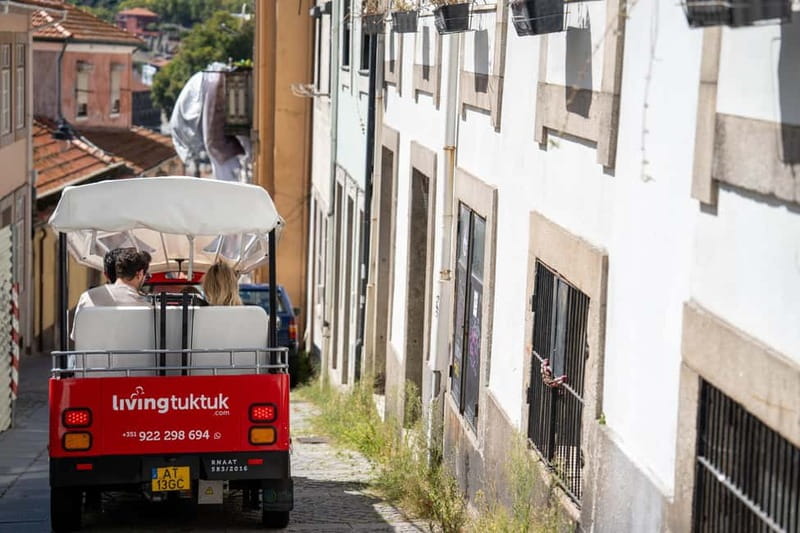
If Porto is your first stop on the Portugal trip, this tour is made for you. In just 50 minutes, you get enough landmarks that the city starts to make sense. Instead of wandering and trying to “figure it out,” you ride with a local guide who points out what to look for and why it matters.
The electric tuk-tuk is the biggest comfort win. Porto’s central streets can be a mix of steep stretches and narrow lanes, and it’s easy to burn energy early. Here, you keep moving while staying positioned to see architecture as you pass by. It’s also a fun way to travel—more like a guided “city sampler” than a bus tour.
You should go in with the right expectations: this tour helps you choose what to do next. Entry tickets aren’t included for museums or monuments, so treat these stops as orientation and photo-and-spotlight time unless you plan to pay separately for inside visits.
Finding the meeting point near São Bento (and why location helps)
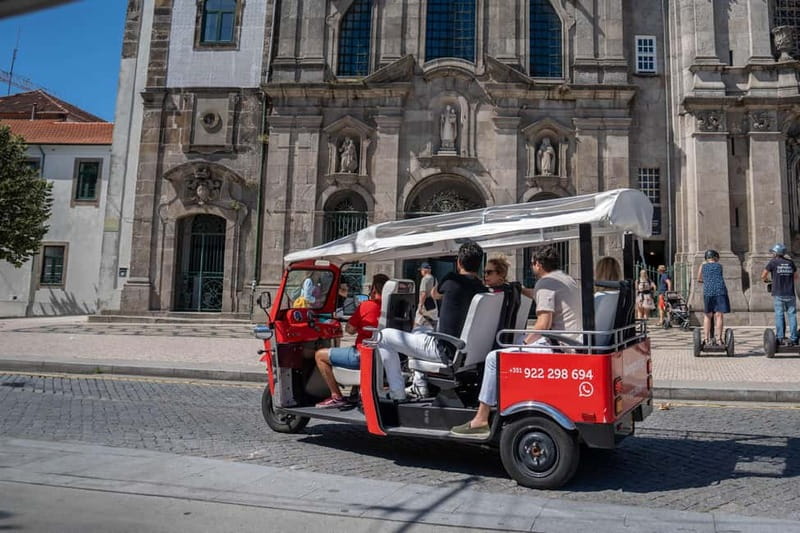
The tour starts at the Living Tours Agency Tourist Service across from São Bento train station, in the red building. That’s a practical choice. São Bento is one of the best “fixed points” in Porto, so you’re not scrambling to meet in a random neighborhood.
I like that you’re told to arrive 15 minutes before departure. With a short tour, being late can cut into your time quickly. Also, if you want to take a moment to look at the station area before you board, showing up early gives you that cushion.
No hotel pickup or drop-off is included, so plan to reach São Bento on your own (walk, taxi, or public transport). The good news is that this area is usually easy to navigate once you’ve arrived.
From old-city walls to São Bento Station and the Cathedral
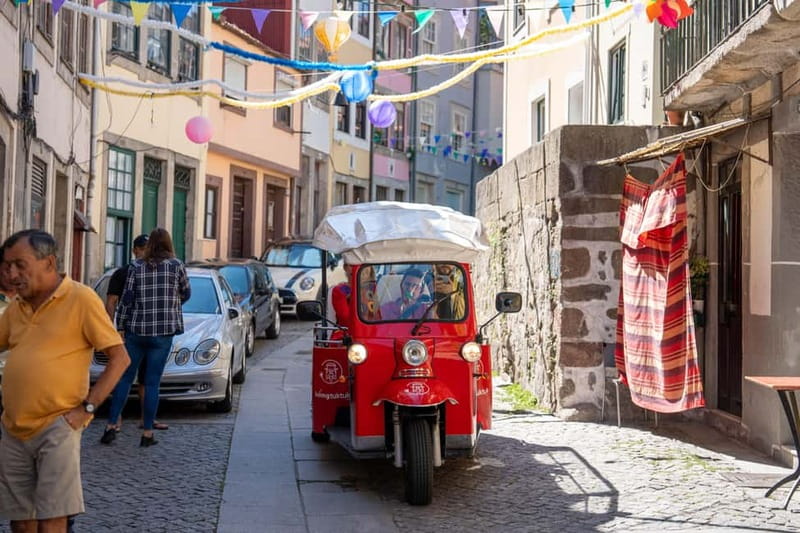
One of the smartest parts of this route is how it begins in the older part of Porto. You start by crossing the streets of the old city, passing ancient walls, then moving through a zone where you can feel the city layering up through time.
You also get a pass by São Bento Train Station—a classic Porto landmark—and the Cathedral. Even if you’ve never been to Porto before, these stops act like anchors. They help you understand where the old city “starts” and where major pedestrian areas and viewpoints are likely to lead.
What I like about this approach is that you don’t waste your first hour searching for the obvious photo targets. Instead, you’re guided past them immediately, which makes it easier to build a mental map for later. If you’re a first-timer, this is exactly what you want.
A small consideration: since the tour is only 50 minutes, you won’t have unlimited time at each sight. You’re getting the highlights, and you’ll use your extra time later.
Avenida dos Aliados: the Porto boulevard moment
After the old-city start, the route brings you to Avenida dos Aliados. This is one of those wide, dramatic streets that helps Porto feel like a real European city rather than just a scenic river town.
You’ll also pass Carmo & Carmelitas along the way. That’s useful because these are the kinds of landmarks you might miss if you’re just walking and trying to stay on a single route.
In my view, the value here isn’t only the scenery—it’s the orientation. When you later walk around Porto on your own, knowing the “main artery” street makes the rest of the city easier to interpret. You’ll understand why certain neighborhoods connect where they do.
Clérigos Tower: iconic views, but plan for tickets
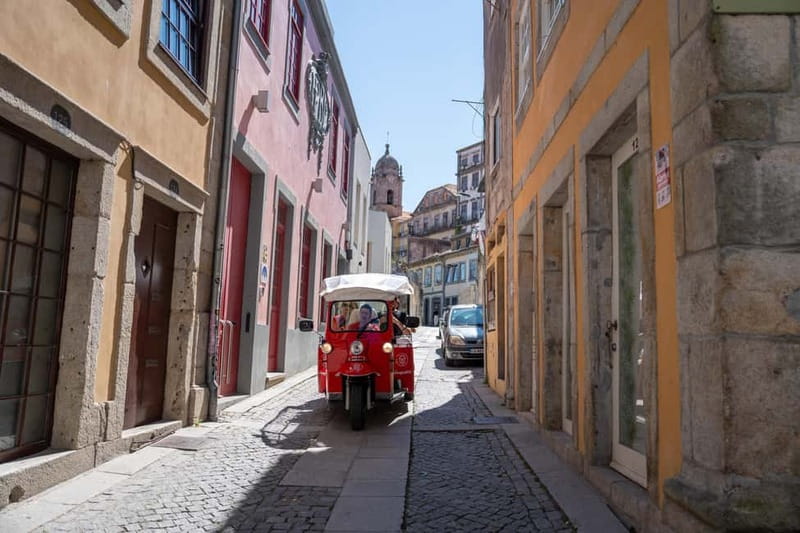
Then comes Clérigos Tower, one of Porto’s most recognizable monuments. Even if you don’t go inside, seeing it from the right angles helps you place it in the broader city plan. The tower is a visual landmark that you can spot again later, which is great for navigation.
Important detail: tickets for monuments and museums aren’t included. So if you want to go up, you’ll likely need to arrange entry separately. For many visitors, that means deciding whether you want stairs and time, or just the exterior views and photos during the tour window.
This is still a worthwhile stop. It’s not just a random stop on a list; it’s the kind of landmark that shapes how you experience Porto’s skyline. When you come back for more time, you’ll already know what you’re looking for.
Lello Bookstore stop: stunning exterior, inside is optional
After Clérigos, you head to Lello Bookstore, known for its striking interior design and famous façade. Even without deep museum time, this is a strong stop because it’s so distinctive. You’ll recognize it instantly, which helps you anchor the “Porto highlights” story in your head.
Again, entry tickets aren’t included. That means you should think ahead about whether you want to spend time inside (if available) or keep the visit focused on seeing the building and getting your bearings. If your schedule is tight, doing it as a highlight stop on the tour can still be a win, because you won’t feel like you missed it completely.
This is also a good moment to ask questions. A local guide can point out what to notice in the design and how the bookstore fits into the city’s cultural identity. One recurring theme from real-world feedback is that guides often share practical extras—like how to plan the next stops efficiently.
Taipas Street to Miragaia and Ribeira: Douro River views from the edge
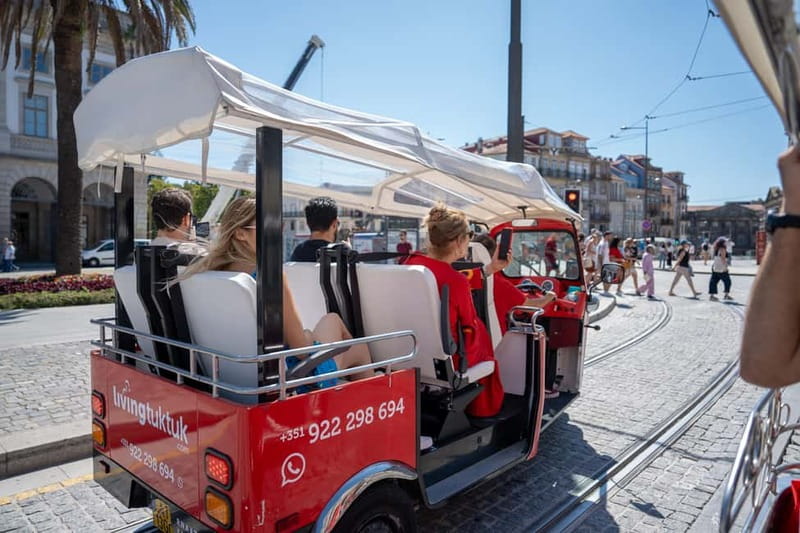
One of the most satisfying parts of this tour is the tail end: going down Taipas Street toward Miragaia and then Ribeira. This is where Porto starts to feel dramatically “river-built.”
You get magnificent views of the Douro River from the Ribeira area. For many people, this is the exact photo they came for—the river, the lower district, the sense of place. Doing it on a tuk-tuk also helps because you’re not rushing on steep bits or trying to speed-walk for perfect timing.
If you’re thinking about where you’ll want to linger later, this is your scouting lap. After this ride, you’ll know where the riverfront stretches and where the best angles likely are. You can then choose to return for a longer walk once you’re done with the rest of your day.
The walking tour voucher: how to turn a 50-minute ride into two days
Here’s a smart “value booster” that I really appreciate: you get a Porto city walking tour voucher. The key detail is timing—it’s available from the day after your experience. That matters because it lets you use this tour to build context today, then use the voucher tomorrow when everything clicks.
In practice, I think of it like this:
- Day one gives you landmark orientation.
- Day two lets you walk at a slower pace with better direction.
So when you redeem the walking voucher, you’ll likely spend less time lost and more time noticing details. That’s the real payoff of combining vehicle-based orientation with a follow-up walking option.
Also, the tour is guided by a local expert with history insights. That kind of background makes your walking time feel less like a checklist and more like a guided story—even when you’re on your own.
Price and value: what $20 buys you in Porto
At $20 per person for 50 minutes, this is priced like an “efficient orientation” product. It’s not a long half-day tour, and it’s not trying to replace paid entries to major monuments. You should judge it by what it does well: it gets you to a cluster of top sights without spending hours crisscrossing on your own.
Here’s why the value can be strong:
- You see multiple major landmarks in one loop, including São Bento, Avenida dos Aliados, Clérigos Tower, Lello Bookstore, and the Ribeira/Douro viewpoint area.
- You travel in a 100% electric tuk-tuk, which is comfortable and keeps energy for later.
- You get a walking voucher for the next day, which can turn a single short tour into a bigger visit.
The trade-off is that you’re not paying for entry tickets. Since tickets and museum/monument entries aren’t included, your total “sightseeing spend” might rise if you choose inside visits. Still, you’ll be making those decisions with far better knowledge of what you actually want to see.
What the guide adds (and why language matters)
A big reason this tour works for many people is the guide. You’re traveling with a driver/tour expert specialized in the destination, and you get a live guide who shares history and context.
Language options include Portuguese, French, English, and Spanish. For me, having a live guide you can understand fully is the difference between a ride that’s fun and a ride that actually helps you appreciate what you’re seeing. One set of feedback specifically praised French explanations and included practical restaurant tips. Another mention highlighted a guide named Tiago, which tells me the guiding experience can have personality and helpful local guidance, not just scripted talking points.
Use the guide time well. If you’re deciding between two nearby neighborhoods for later, ask what pairs best with the route you just did. The closer your follow-up plans match the guide’s suggestions, the more your day hangs together.
Accessibility and comfort: who this tuk-tuk tour suits best
This tour is not built for everyone. It is marked not suitable for people with back problems, mobility impairments, wheelchair users, or people with epilepsy.
If any of those apply to you, you should treat this as a stop-and-check moment before booking. Electric tuk-tuks are still vehicles with boarding steps and movement, and the tour schedule is short, meaning there’s less flexibility once you’re on the route.
Also note the rules: pets aren’t allowed, and you can’t bring food and drinks or alcohol/drugs. Electric wheelchairs aren’t allowed either. If you’re traveling with anything that might not fit these rules, better to sort it out in advance.
Should you book the Porto Tuk-Tuk City Tour?
I’d book this tour if you want a quick, well-guided introduction to Porto’s most recognizable sights—without draining your energy on steep walking routes. It’s especially good if you like the idea of using your time strategically: ride today, then walk tomorrow with the voucher.
Skip it (or at least seriously reconsider) if you need long stops, museum time included, or you have accessibility needs that make short vehicle travel difficult. Also, if you’re already spending hours in specific interiors (bookstore entry, tower entry, museums), plan for extra tickets and extra time on your own.
Overall, this is a solid way to get your bearings fast, see the big icons in one go, and end with those Douro River views from Ribeira—then set yourself up to explore more thoughtfully right after.
FAQ
How long is the Porto Tuk-Tuk City Tour?
The tour lasts about 50 minutes.
What does the tour cost?
It’s priced at $20 per person.
Where do I meet for the tour?
Meet at Living Tours Agency Tourist Service across from São Bento train station in the red building.
What’s included in the ticket price?
You get a driver/tour expert, a 100% electric tuk-tuk ride, a Porto walking tour voucher available from the day after, and company liability/personal injury insurance.
Are monument or museum tickets included?
No. Tickets for other activities, entry to museums and monuments are not included.
What languages are offered for the live guide?
The live guide is available in Portuguese, French, English, and Spanish.
Who should avoid booking?
The tour is not suitable for people with back problems, mobility impairments, wheelchair users, or epilepsy.