REVIEW · ZADAR
Panorama guided Zadar Eco Tuk Tuk tour
Book on Viator →Operated by Eco Tuk Tuk Zadar · Bookable on Viator
Zadar sounds better from a tuk-tuk ride. In about 1.5–2 hours, I love how an easy eco tuk-tuk loop gets you to major highlights like the Sea Organ and the Renaissance Land Gate without map stress. It’s also small-group, so you can actually hear the story behind each stop. One drawback to plan for: it runs best in good weather, and the tour is short, so you’ll get “see it, learn it, move on” rather than lingering for hours.
Here’s the good part: you get pickup from your address (or the port), a private driver-like experience in a fun vehicle, and a route that strings together sweeping viewpoints and key landmarks. Even the quick stops feel intentional, with photo-friendly orientation in the old town near St. Donatus and the Forum.
In This Review
- Key Points to Know Before You Go
- Why an Eco Tuk-Tuk Works So Well in Zadar
- What the 90–120 Minutes Really Buy You
- Pickup From Your Address and the Zadar Port
- Arbanasi, Old Zadar, and the Kolovare Beach Stretch
- Land City Gates (Kopnena vrata): Renaissance Detail at Foša Harbour
- Zadar Sphinx: Stories, Legends, and a Quick Photo Stop
- Greeting to the Sun: The Glass-Plate Circle by the Sea
- Sea Organ: How Waves Become Music Underwater
- St. Donatus and the Forum: A Fast Old-Town Sense-Maker
- Guides, Photo Stops, and That Small-Group Feel
- Price and Value vs. Hiring a Car or DIY Walking
- When to Go: Heat, Rain, and Getting the Light Right
- Should You Book This Zadar Eco Tuk-Tuk Tour?
- FAQ
- How long is the Panorama guided Zadar Eco Tuk Tuk tour?
- What does the tour cost per person?
- Do they offer pickup in Zadar?
- What language is the tour offered in?
- How many people are in the group?
- What major sights are included during the ride?
- Are admission tickets required for the stops?
- Is a mobile ticket used?
- What happens if weather is poor?
- Can I bring a service animal?
- Is free cancellation available?
Key Points to Know Before You Go
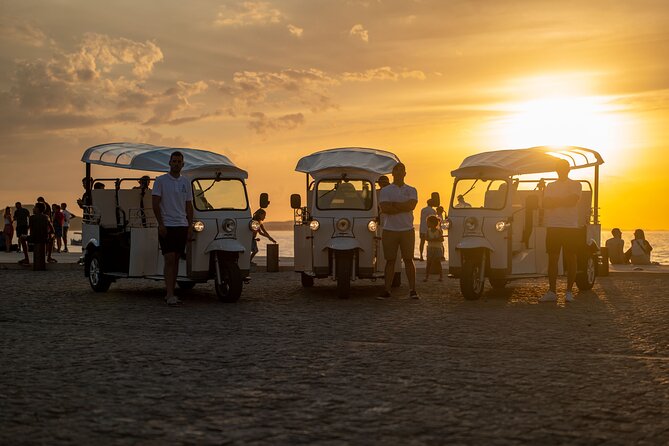
- Pickup from your address or Zadar Port so you don’t waste time figuring out where to meet
- Sea Organ + Greeting to the Sun in the same coastal area for a sunset-ready plan
- Renaissance Land Gate and the Zadar Sphinx add more than just seaside scenery
- Kolovare Beach + Arbanasi route means you see how Zadar spreads beyond the old town
- Small group up to 16 keeps the ride calm and photo stops realistic
- Short and focused timing (about 1.5–2 hours) works well on cruise days or tight schedules
Why an Eco Tuk-Tuk Works So Well in Zadar

Zadar’s highlights are concentrated, but they’re still spread across a few neighborhoods and viewpoints. That’s where the eco tuk-tuk shines: you get the energy of a city ride with far less walking than a DIY plan, especially if you’re trying to see multiple spots in one morning or afternoon.
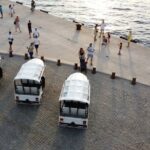
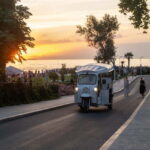
I also like that the vehicle feels like part of the experience. It turns the route into an easy sightseeing loop, not a chore of parking, buses, and cross-city transfers. The “no navigation” perk is real—you’re just along for the ride while someone else handles the turns.
Finally, this is the kind of tour where the timing tends to make sense. You’re not bouncing across the coast all day. Instead, you’re hitting the core landmarks that many people come to Zadar for, then you’re free to explore the old town at your own pace afterward.
What the 90–120 Minutes Really Buy You
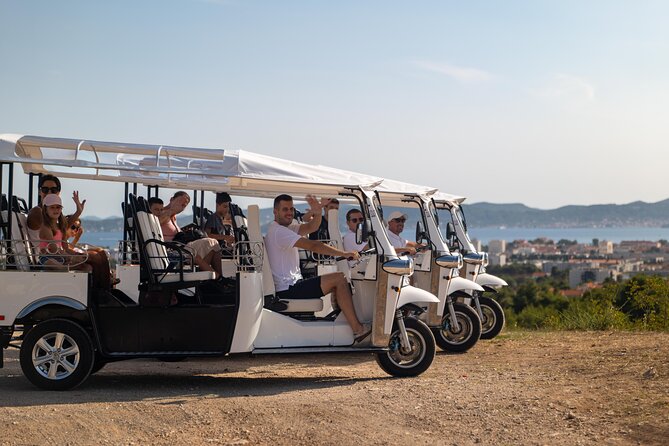
This tour runs about 1 hour 30 minutes to 2 hours. That isn’t a lot of time, but it’s enough to connect the dots: coastal landmarks, old-town architecture, and a couple of iconic modern installations.
In practice, you’ll get a guided “highlights circuit” with short stops—several are brief, and that can actually be a benefit. You’ll see everything in a logical order, and you’ll know what to circle back to later if you want deeper time in one place.
The small-group cap (maximum 16 travelers) matters too. When it stays small, photo pauses and question time don’t turn into a crowd-control problem. I’d still plan on moving briskly between stops since the whole point is covering several sights efficiently.
Pickup From Your Address and the Zadar Port
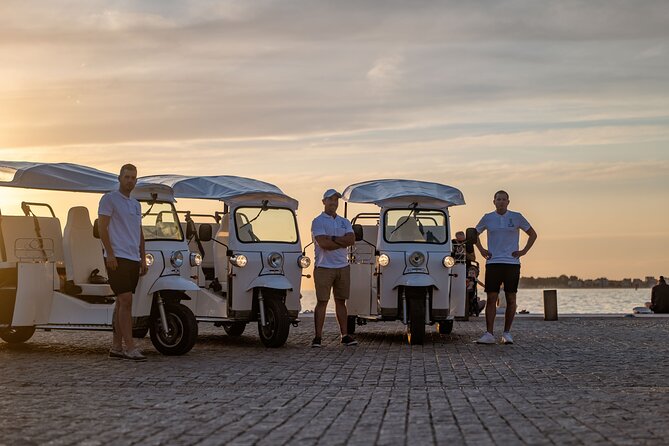
The best part for many people is the start. Pickup is offered within the city at your address, or you can start from Zadar Port.
If you’re on a cruise, port pickup usually turns this into a low-stress plan. Instead of searching for a meeting point with limited time ashore, you’re picked up and taken through Zadar in a direct loop.
One practical tip: when a tour has an address pickup option, make sure you share your exact location clearly the moment you finalize your plans. The tour time changes mentioned in some feedback are usually tied to city timing and other departures, so being reachable helps keep your day smooth.
Arbanasi, Old Zadar, and the Kolovare Beach Stretch
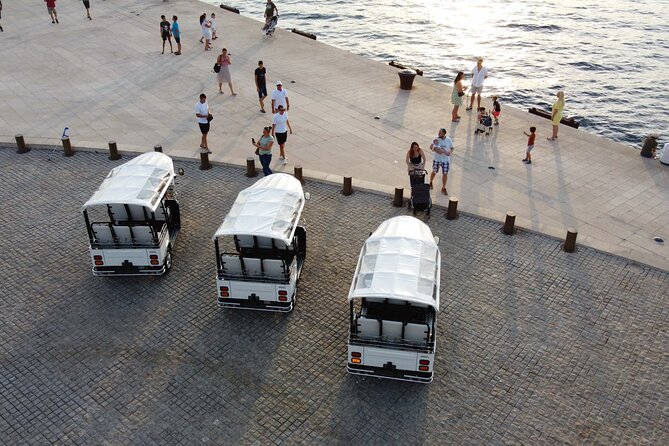
Before you reach the historic and coastal stops, you’ll ride through Arbanasi, along parts of the old city, and past Kolovare Beach—a popular seaside area.
This driving segment is more than just transport. It helps you understand Zadar’s layout: where the old town sits, how the shoreline curves, and how beach areas connect back toward the peninsula. You also get some relaxed “window-view” moments that are harder to get when you’re walking and constantly checking directions.
If you’re sensitive to heat or you’d rather save your energy for the stops, Kolovare and the coastal route are a nice compromise. You get scenery without committing to long stretches on foot before you even reach the top sights.
Land City Gates (Kopnena vrata): Renaissance Detail at Foša Harbour
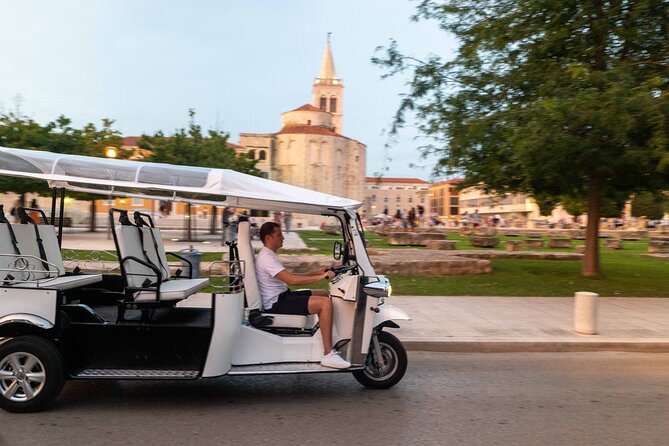
The first named landmark stop is the Zadar Land City Gates, also called Land Gate (Kopnena vrata). It’s on the southern side of the old town near the small harbor area called Foša, and it’s one of the most impressive gates in the city.
What makes it special is the architecture. The gate was built by a Venetian architect, Michele Sanmicheli, and completed in 1543. That Renaissance style detail is exactly why this stop feels worth the quick stop time—this isn’t just a gate for photos; it’s a piece of Dalmatian history shaped by Venetian influence.
You’ll also appreciate that this stop is listed as free for admission. So you can spend a few minutes looking closely without thinking about ticket lines or extra costs.
Zadar Sphinx: Stories, Legends, and a Quick Photo Stop
Next up is Sfinga (the Zadar Sphinx). Even if you’re not into legends, it’s a fun stop because the stories around it have stuck around through generations of Zadar residents.
The attraction here isn’t a long museum-style visit. It’s the idea—treasure tales, local fantasy, and the way a small landmark can shape the city’s folklore. You’ll have time for a few photos and a quick explanation, then you’ll keep moving.
Like the gates, the stop is marked as free. That makes it easy to include without turning the tour into a checklist of paid entries.
Greeting to the Sun: The Glass-Plate Circle by the Sea

If you like modern design with a strong sense of place, don’t rush Greeting to the Sun. It’s located in the port area of Zadar on the west side of the peninsula, right next to the Sea Organ.
The main reason this stop matters is timing. It’s set up for views of the Zadar islands and the sunset. Even if you’re visiting earlier in the day, you’ll see why people like to plan this area around golden-hour light.
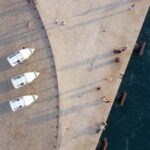
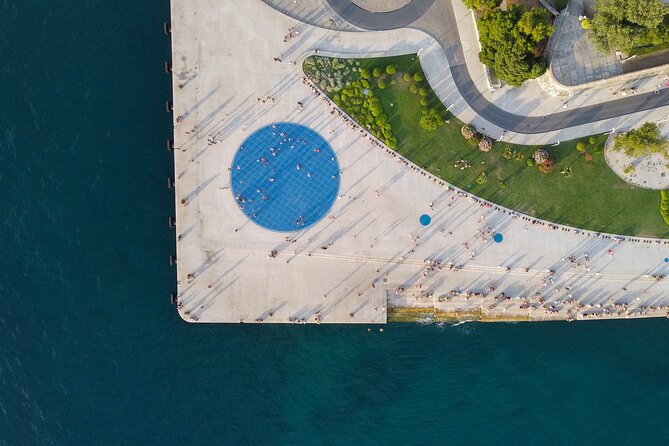
This installation is built from 300 multilayer glass plates, arranged in a 22-meter-wide circle like an amphitheater. It’s designed to represent the Solar System with the planets and their orbits.
The stop is short, but you’ll leave with the basic idea and a visual reference point for later. If you want the most dramatic photos, come prepared to linger a bit after the guided part, since the sunset view is the whole point.
Sea Organ: How Waves Become Music Underwater

Now for the Zadar signature. The Sea Organ is a modern icon of the city, built into the underwater part of the quay. The concept is simple but genius: wave action pushes air through musical pipes below the surface, creating that signature sea sound along the promenade.
The architect credited for the Sea Organ is Nikola Bašić, and he’s also connected to Greeting to the Sun. So these two installations aren’t random stops—they’re part of the same design mind, using sound and sunlight in the city’s waterfront.
There’s a story tied to this viewpoint too. The port promenade here is associated with a quote often linked to Alfred Hitchcock about it being among the best sunset viewing in the world. Whether or not you care about the famous name, the location makes sense: you’re on the peninsula’s edge, looking out over water.
Practical note: you’ll typically get enough time for a look and photos, but sound can be weather-dependent. If it’s windy or there’s swell, the experience can feel more alive.
Admission is marked as free, so you’re paying for the experience and orientation—not for entry.
St. Donatus and the Forum: A Fast Old-Town Sense-Maker
After the coastal wow-factor, you shift back into old-town context with quick orientation stops near the most recognizable historic core.
First is the Church of St. Donatus area. You’ll get an orientation walk and a chance for photos. St. Donatus is one of Zadar’s best-known silhouettes, so even a short stop helps you anchor where you are geographically before you wander on your own.
Then you’ll reach The Forum, located in front of St. Donatus and the Archbishop’s Palace. This was the center of public life in Roman times, described as the largest forum on the east coast. The Roman dating given for this site is broad but clear: it was built from the 1st century BC to the 3rd century AD.
These two stops are brief on purpose. They’re here to help you understand what you’re looking at once you start walking around the old town independently. If your goal is to get your bearings fast and still enjoy the ride, this format works.
They’re also marked as free for admission in the tour notes, which helps keep the whole day uncomplicated.
Guides, Photo Stops, and That Small-Group Feel
The quality of the guide can make or break short tours, and this one clearly leans on that. Names like Rocco, Luka, Joe, and Joseph show up again and again in feedback, and the common thread is friendly, practical explanations tied directly to what you’re seeing.
I especially like the idea of having a guide who will accommodate real needs. Feedback includes examples like stopping for photos when people ask and adjusting the route for comfort when someone needed help with an injured ankle. That’s not just politeness—it’s the difference between a rigid script and a tour that actually fits your day.
Weather adaptability also matters in Zadar. Some departures come with blankets or a covered setup when conditions aren’t perfect. That means even if the sky turns, you’re not stuck in a miserable, exposed situation.
For photo lovers, don’t assume you’ll get perfect angles at every stop. Use the guide’s rhythm: ask for the best moment for a shot, and then take two minutes to frame and reframe while the driver keeps things flowing.
Price and Value vs. Hiring a Car or DIY Walking
At $66.54 per person, this isn’t the cheapest way to see Zadar. But it’s also not trying to be the cheapest. The value is in three places:
1) You avoid the logistics headache. No parking decisions, no route planning, and no hunting for meeting points. Pickup is part of the deal.
2) You get multiple “must-see” anchors in one pass. Sea Organ and Greeting to the Sun are next to each other, and the tour also covers Land Gate, Sphinx, and old-town orientation near St. Donatus and the Forum. That’s harder to do quickly on foot.
3) Your time is protected. At 1.5–2 hours, you can still keep the rest of your day flexible for the old town streets, coffee, or a longer self-guided walk.
If you’re traveling with someone who doesn’t want to walk much, or if you’re on a cruise with limited shore time, the price starts to feel more reasonable. If you’re the type who loves wandering and you already know you’ll spend hours in the old town, you might feel the tour is a shortcut. In that case, treat it as a fast primer.
When to Go: Heat, Rain, and Getting the Light Right
Zadar can get hot, and the tour format helps because much of your time is shaded or partially sheltered inside the vehicle. Still, plan for sun exposure. Bring water and a hat, and treat the stop lengths like a schedule—short looks, quick photos, then back on the tuk-tuk.
Weather is also explicitly part of the plan. The experience notes say it requires good weather. If it’s canceled due to poor weather, you’ll be offered a different date or a full refund.
If you want to time your photos, think about the Greeting to the Sun + Sea Organ area. This is where sunset planning pays off, because the port setting is made for that kind of view.
Some feedback also points out that rain can be handled better when the vehicle setup includes coverage and blankets. So if bad weather is in the forecast, don’t automatically write it off—just be ready for a weather-adjusted experience.
Should You Book This Zadar Eco Tuk-Tuk Tour?
Book it if you want an efficient, fun way to see Zadar’s top landmarks without getting stuck in transport details. It’s especially smart for first-time visitors, couples, families with mixed ages, and cruise days when you need highlights fast.
Skip it (or rethink timing) if you’re hoping for a long, slow tour with deep stops. This ride is designed to move. You’ll leave with the major story points and a sense of direction, not with a day of museum-level wandering.
If your priority is Sea Organ, Greeting to the Sun, and a smooth old-town orientation that doesn’t eat your afternoon, this is a strong match.
FAQ
How long is the Panorama guided Zadar Eco Tuk Tuk tour?
It’s approximately 1 hour 30 minutes to 2 hours.
What does the tour cost per person?
The price is listed as $66.54 per person.
Do they offer pickup in Zadar?
Yes. Pickup is offered within the city, or you can meet at Zadar Port.
What language is the tour offered in?
The tour is offered in English.
How many people are in the group?
The tour has a maximum of 16 travelers.
What major sights are included during the ride?
The route passes Arbanasi, the old part of Zadar, and Kolovare Beach, and it includes stops at Zadar Land City Gates, Sfinga (the Zadar Sphinx), Greeting to the Sun, the Sea Organ, the Church of St. Donatus, and The Forum.
Are admission tickets required for the stops?
The stops are marked as admission ticket free in the tour details.
Is a mobile ticket used?
Yes, a mobile ticket is offered.
What happens if weather is poor?
The experience requires good weather. If it’s canceled due to poor weather, you’ll be offered a different date or a full refund.
Can I bring a service animal?
Service animals are allowed.
Is free cancellation available?
Yes. You can cancel up to 24 hours in advance for a full refund.


![[30 minutes] Rickshaw tour around Asakusa [History, sightseeing, Tokyo Skytree] - Tokyo Skytree in the Mix: The Best Kind of Modern Contrast](https://s3.tuktuktourer.com/wp-content/uploads/30-minutes-rickshaw-tour-around-asakusa-history-sightseeing-tokyo-skytree-400x267.jpg)