REVIEW · NEGOMBO
Negombo City Tour by Tuk Tuk with hotel pickup
Book on Viator →Operated by Travel Asia Ceylon · Bookable on Viator
Negombo feels lived-in, fast. This tuk tuk city tour with hotel pickup turns a half day into a walk through real local routines, from Sea Street churches to the fish market and lagoon area. I like that it’s guided by someone who can connect the dots between colonial leftovers and today’s everyday Negombo.
You’ll also be happy you get free pickup and drop-off within Negombo, plus a cold bottle of water and an umbrella in case weather changes. One possible drawback: most stops are timed at about 10–20 minutes, so you’ll see a lot, but you won’t linger long in any single place unless you add the optional lagoon boat ride.
In This Review
- Key Highlights
- How the Negombo Tuk Tuk Tour Actually Fits Together (3 to 5 Hours)
- Price and Value: What You Pay $25.90 For
- Step by Step: Sea Street Churches, Hindu Temple Stops, and What to Watch For
- Stop 1: St. Sebastian’s Church (about 20 minutes)
- Stop 2: Sri Singama Kali Amman Kovil (about 20 minutes)
- Stop 3: St. Mary’s Church (about 20 minutes)
- Dutch Fort and Colonial Edges You Can Still Touch
- Stop 4: Dutch Fort (about 20 minutes)
- Stop 5 and Stop 6: Negombo Fish Market + Dry Fish Processing (around 20 minutes each)
- Negombo Lagoon and the Dutch Canal: Calm Waters, Optional Boat Time
- Stop 7: Negombo Lagoon (about 15 minutes)
- Stop 8: Dutch Canal (about 10 minutes)
- City Centre Time + Angurukaramulla Temple: Your Best Chance to Slow Down
- Stop 9: Negombo City Centre (about 40 minutes)
- Stop 10: Angurukaramulla Temple (Bodhirajaramaya) (about 1 hour)
- What Your Guide Adds (Including When It’s Robin Fernando)
- Quick Tips to Get the Most from 3–5 Hours
- Should You Book This Negombo City Tour?
- FAQ
- How long is the Negombo City Tour by tuk tuk?
- Is hotel pickup included?
- Is the tour private?
- Do I pay for entrance fees?
- Is there a mobile ticket?
- Is the lagoon boat ride included?
- How much does the lagoon boat tour cost?
- What happens if it rains?
- Can I cancel for a full refund?
Key Highlights
- Free hotel pickup and drop-off in Negombo keeps the tour stress-free from the start.
- Short, focused stops let you cover churches, colonial ruins, markets, and temples in one ride.
- Fish market + dry fish processing area show Negombo’s working coastal life, not just monuments.
- Dutch Fort and Dutch Canal add a clear sense of Portuguese and Dutch influence.
- Angurukaramulla Temple (Bodhirajaramaya) gives you a longer, calmer reset after busy streets.
- Optional lagoon boat tour is extra (but you can choose not to).
How the Negombo Tuk Tuk Tour Actually Fits Together (3 to 5 Hours)
This is a private tuk tuk tour with a local guide, designed for a practical half-day. You’re not sharing a vehicle with strangers, so your guide can set the pace for your group and handle little timing issues without turning it into a scramble.
The duration is listed as about 3 to 5 hours, and the itinerary reflects that. You’ll move from stop to stop in the center and coastal areas, with most locations around 10–20 minutes each. One stop runs longer, and that’s the point: you get quick hits for variety, then a slower stretch where you can actually breathe.
The “comfort” details matter more than you’d think in Negombo’s heat. You get a cold bottle of water per person and an umbrella provided for rain. If your plan was to just wander, this tour helps you do it with fewer wrong turns and less time stuck figuring out how to connect one sight to the next.
Price and Value: What You Pay $25.90 For
At $25.90 per person, the value is mostly in the combination: transport + guide + hotel convenience + site costs.
Here’s what’s included:
- Private tuk tuk with a local guide (the operator says they take responsible care of the tour through the end)
- Free hotel pickup and drop-off within the Negombo area
- All entrance and parking fees
- Cold bottle of water per person
- Umbrella if rain happens
- Mobile ticket
What’s not included:
- An extra lagoon boat tour priced at $45.00 per person (with group discounts available)
- Drive trips (so if you want add-ons that require extra driving, expect extra cost)
So your money isn’t just buying sightseeing. You’re buying time, smooth routing, and reduced friction—especially if you’re staying somewhere that’s annoying to reach by public transport.
Step by Step: Sea Street Churches, Hindu Temple Stops, and What to Watch For
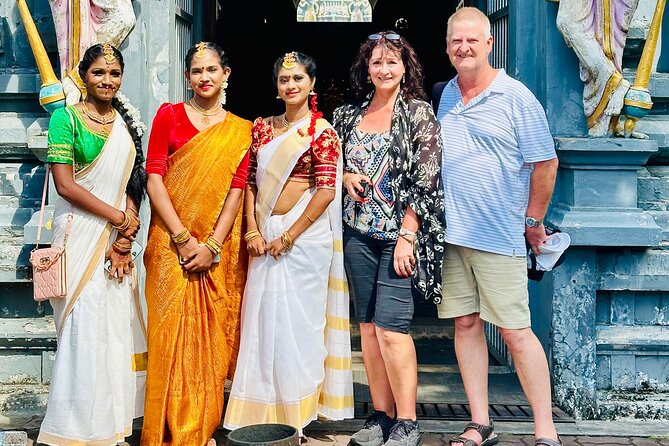
Negombo’s center is one of those places where religions share space in the real world—right next to each other, not in separate, fenced-off worlds. This tour leans into that, and the itinerary is thoughtfully spread across major sites.
Stop 1: St. Sebastian’s Church (about 20 minutes)
St. Sebastian’s Church sits on Sea Street, in the heart of town. It’s a Neo-Gothic Catholic church inspired by the Notre Dame Cathedral look, built in the early 20th century.
What I like about this stop is the contrast. You’re not just seeing a church as a building; you’re seeing it in context—right where daily life happens. The tour keeps the time short, so you’ll get the key exterior and interior impressions without turning it into a long detour.
Practical note: expect it to feel busy around peak visiting times. If you care about photos, a quick look from outside first helps you plan what you want inside.
Stop 2: Sri Singama Kali Amman Kovil (about 20 minutes)
Next comes a Hindu temple: Sri Singama Kali Amman Kovil, one of Negombo’s notable temples dedicated to goddess Kali. It’s described as a colorful Dravidian-style temple near the town center.
This stop is valuable because it adds everyday religious energy right after the Christian sites. The tour doesn’t treat it like a quick “checklist box.” You’ll be able to look closely at the details and understand the significance of the goddess without needing a long lecture.
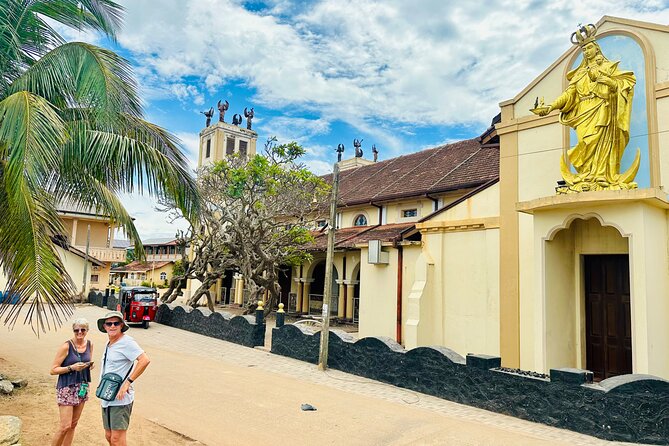
Stop 3: St. Mary’s Church (about 20 minutes)
Then you reach St. Mary’s Church, called one of the largest and most beautiful churches in Sri Lanka, located in central Negombo. It was built during the late 19th and early 20th centuries, in the Roman Catholic tradition.
Why it works in the flow: you get a lot of architecture in a short window, but you’re also learning how different communities shaped the city during different time periods.
Tip: keep your expectations realistic—20 minutes is enough for big-picture appreciation, not for reading every corner of the building. If you want more time, plan a separate return later.
Dutch Fort and Colonial Edges You Can Still Touch
If you only visit beaches or markets in Negombo, you miss a big part of the story. This tour includes colonial-era landmarks that are easier to understand once you’ve seen them in person.
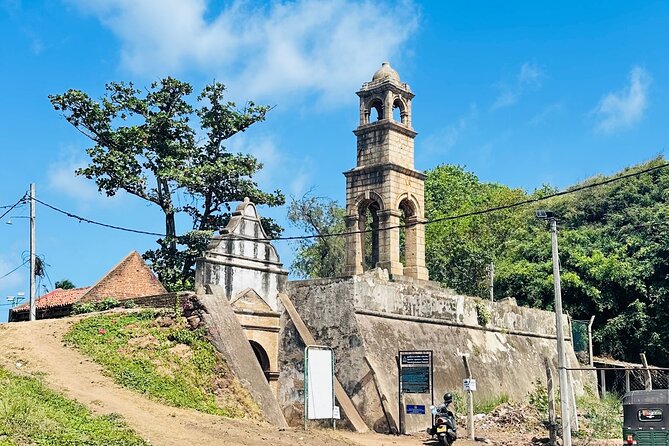
Stop 4: Dutch Fort (about 20 minutes)
The Dutch Fort is one of the clearer reminders of colonial rule. The fort’s roots go back to the Portuguese in the 17th century, and it was later expanded by the Dutch. Today, only the gate and outer walls remain.
I like this stop because it’s honest. You’re not staring at a perfectly preserved complex. You’re looking at what time left behind—and that makes it easier to connect it to the city’s coastline and port history. A local guide can also help you picture what the fort area might have been like when it was active.
Stop 5 and Stop 6: Negombo Fish Market + Dry Fish Processing (around 20 minutes each)
These two stops are the most “Negombo” parts of the route.
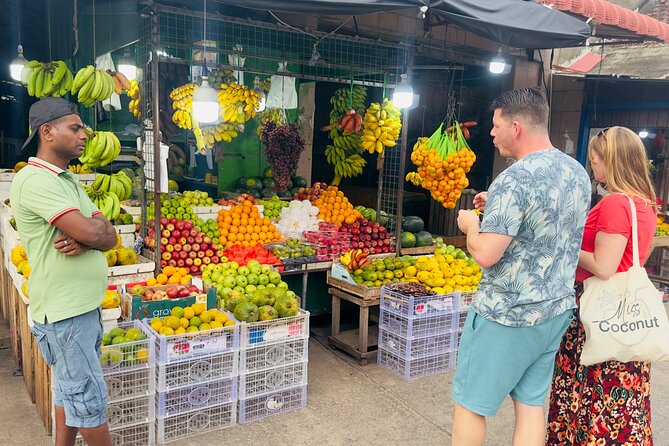
At the Negombo Fish Market, you’ll be at the edge of Sea Street in a beachside market setting. The description highlights fishermen returning from the Indian Ocean at dawn and the fresh catch being handled as part of daily life.
Right after that, the tour moves to the Negombo Dry Fish Processing Area, where freshly caught fish are cleaned and salted and prepared using traditional methods.
What makes this pairing great is how it shows a whole workflow, not just a photo spot. You’ll see the catch arriving and then the next step in how the city handles seafood.
Small consideration: this is not a tidy, staged experience. It’s working life. If you’re squeamish about strong smells or close-up activity, you’ll want to keep a little distance and focus on the overall process rather than standing too long right next to workers.
Negombo Lagoon and the Dutch Canal: Calm Waters, Optional Boat Time
After the energy of Sea Street, the lagoon area slows everything down—at least in theory. In practice, you still get a lot of sights, just with a more relaxed rhythm.
Stop 7: Negombo Lagoon (about 15 minutes)
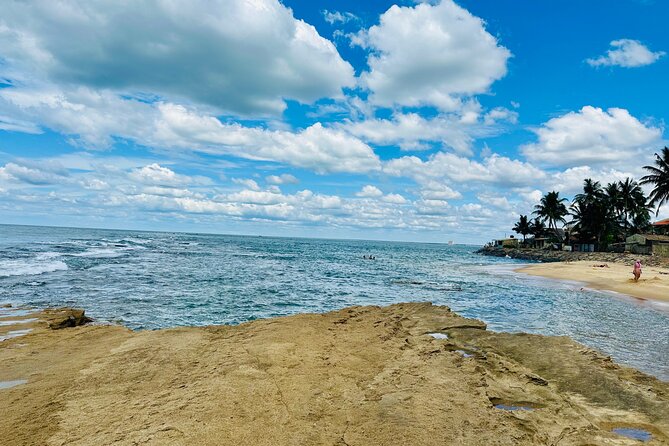
Negombo Lagoon is described as a serene coastal waterway with local life around it. It’s surrounded by mangroves and fishing villages, and it supports biodiversity—birds, fish, and even crabs.
The tour offers a chance to enjoy lagoon time and mentions boat rides as an option, but the key detail is that the extra lagoon boat tour is not included. If you want that boat component, budget $45.00 per person, and the operator notes that group discounts are available.
This is the right kind of optional add-on: you won’t feel like you missed something if you skip it, but if you’re a “water person,” you’ll likely enjoy being out on the lagoon.
Stop 8: Dutch Canal (about 10 minutes)
Next is the Dutch Canal, built by the Dutch in the 17th century to transport goods and spices. Today, the canal is described as a scenic route, with the possibility of a boat ride.
This is quick, but it adds meaning. After seeing the fort, the canal makes the colonial footprint feel more functional—less like random ruins and more like infrastructure that shaped trade and movement.
City Centre Time + Angurukaramulla Temple: Your Best Chance to Slow Down
Even with short stops, you’ll want one area where you can reset. That’s where Angurukaramulla Temple (Bodhirajaramaya) comes in.
Stop 9: Negombo City Centre (about 40 minutes)
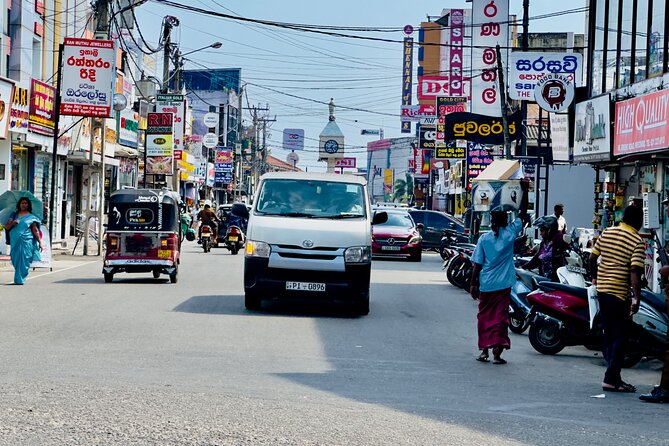
The city centre is your longer walking stretch, with shops, markets, cafes, and historic buildings side by side. This is where the tour gives you breathing room to move at your own speed for a bit.
Because it’s not limited to one “sight,” this time can be practical. If you want to grab a snack or browse small shops, this is the slot that makes sense. Keep an eye on your guide and your meeting point, since streets can get busy and you don’t want to lose the group while stopping to look.
Stop 10: Angurukaramulla Temple (Bodhirajaramaya) (about 1 hour)
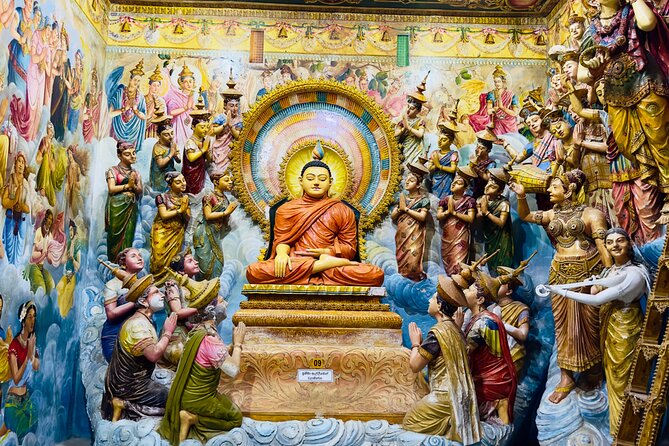
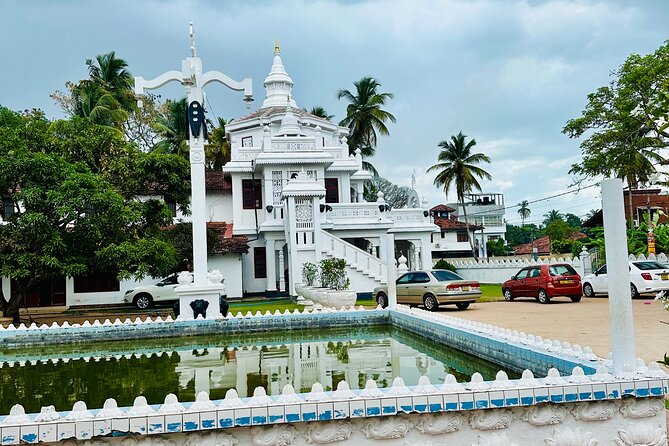
This is your longer, calmer finish: Angurukaramulla Temple, also called Bodhirajaramaya. It’s one of Negombo’s important Buddhist temples, known for a giant seated Buddha statue and intricate murals.
The tour lists it as a chance for peace and a more relaxed pace. With 1 hour here, you can do more than just glance. You can sit, look closely at artwork, and let the mental noise drop after markets and streets.
If you’re coming from a more intense travel day, this is a smart endpoint. It’s also a good time to take photos, since you’ll have time to wait for calmer moments instead of rushing.
What Your Guide Adds (Including When It’s Robin Fernando)
A big part of making this tour feel worth it is how the guide connects scenes. The itinerary itself is strong—churches, temples, colonial remnants, markets, lagoon—but without local context, it can turn into a series of stops.
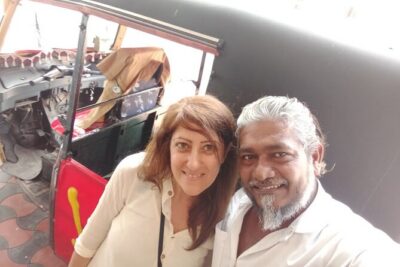
One guide name that shows up in the provided feedback is Robin Fernando. If you’re paired with him, the emphasis is on making things easy, sharing local stories, being patient with questions, and keeping the day relaxed rather than frantic.
In practice, that means you should feel comfortable asking:
- What are people doing here today?
- Why is this site important locally?
- What’s the difference between Portuguese and Dutch influence you can actually see?
Even without knowing the details beforehand, your guide can help you read the city faster.
Quick Tips to Get the Most from 3–5 Hours
You don’t need to overpack for this. Just plan to move on foot sometimes and spend short blocks indoors and outdoors.
- Wear comfortable shoes. You’ll be walking in Sea Street and the city centre.
- Bring light, modest clothing for churches and temples. Even if you’re not told explicitly, it helps you feel respectful and comfortable.
- If rain shows up, take the umbrella offered and keep moving. The tour covers multiple stops, and delays can stack quickly.
- If you want the lagoon experience, decide early whether you’ll add the boat tour. It’s extra cost, and it changes how your afternoon feels.
- Save extra energy for Angurukaramulla Temple. That hour is your best “slow down” window.
Should You Book This Negombo City Tour?
I’d book this tour if you want a real cross-section of Negombo in a short timeframe: Sea Street religions, Portuguese/Dutch remnants, the fish market workflow, then lagoon and a temple hour. The included value—especially hotel pickup, entrance fees, and transport—makes it a good fit when you don’t want to spend your time coordinating rides.
You might skip it or plan a more flexible day if you hate time limits. The stop durations are designed for coverage, not deep study. If you want to stay in one place for a long while, treat this as your first orientation visit, then return later for the sites you loved most.
Also, if the lagoon boat ride is your priority, check your budget first. The base tour is $25.90, and the optional lagoon boat tour is $45.00 per person, so it’s easy for the day’s total to rise.
FAQ
How long is the Negombo City Tour by tuk tuk?
The tour lasts 3 to 5 hours (approx.).
Is hotel pickup included?
Yes. There is free hotel pickup and drop-off within the Negombo area.
Is the tour private?
Yes. It’s listed as a private tour/activity, so only your group participates.
Do I pay for entrance fees?
No. All entrance and parking fees are included.
Is there a mobile ticket?
Yes. A mobile ticket is part of the tour.
Is the lagoon boat ride included?
No. The extra lagoon boat tour is not included and is an additional activity.
How much does the lagoon boat tour cost?
The additional lagoon boat tour is listed at $45.00 per person (group discounts may be available).
What happens if it rains?
The tour provides an umbrella for each guest in case of rain.
Can I cancel for a full refund?
Yes. You can cancel for a full refund if you cancel up to 24 hours in advance of the experience start time. If you cancel less than 24 hours before, the amount paid is not refunded.