REVIEW · ALFAMA
Lisbon with Tukxi: From East to West Private Tour by Tuk Tuk
Book on GetYourGuide →Operated by TUKXI MADEIRA - TURISMO, UNIPESSOAL LDA · Bookable on GetYourGuide
Lisbon hills, handled with style. This private tuk-tuk route takes you from the east old-town quarters to the west city center without turning your day into a stair workout, with stops in places like Alfama, Graça, Mouraria, and major viewpoints such as Nossa Senhora do Monte. I especially love how it strings together those photo-worthy overlooks with quick history stops, and how the ginja stop gives you a real taste of Portugal instead of just snapping pictures.
One thing to consider: this isn’t a slow museum crawl. You’ll have short stops and pass-by time in busier areas, so if you want to spend a long time inside every landmark, this format may feel too tight, and it’s not suitable for kids under 3 or for pregnant women.
The best part is the human touch. With native German drivers and guides fluent in multiple languages, some guides (like Thiago and Ingo in recent tours, plus Sibylle/Sybile, Sergio, Lucas, Caetano, and others) adapt the route on the fly and make time for photos, questions, and even detours when the group wants more.
In This Review
- Key highlights to notice before you book
- East-to-west tuk-tuk logic: why the route works
- Alfama, Santa Luzia, and Lisbon Cathedral: old streets with quick payoff
- Graça and Nossa Senhora do Monte: the big panorama stretch
- São Vicente to the Pantheon: quick stops that add texture
- Mouraria: fado atmosphere and street-level character
- Praça do Comércio to Chiado: the city opens up
- Pink Street and São Pedro de Alcântara: quick hits, good angles
- Belém add-on: Pasteis de Belém in an extra hour
- Price and value: what $224 gets you (and why it adds up)
- Comfort, safety, and how guides handle weather
- Who this tuk-tuk tour is best for
- Should you book Lisbon with Tukxi: East to West?
- FAQ
- How long is the Lisbon East to West private tour by tuk-tuk?
- What neighborhoods and areas does this tour cover?
- Does the tour include hotel pickup and drop-off?
- Is food included in the tour price?
- What languages are the guides/drivers available in?
- Is this tour private?
- Is it refundable if plans change?
Key highlights to notice before you book
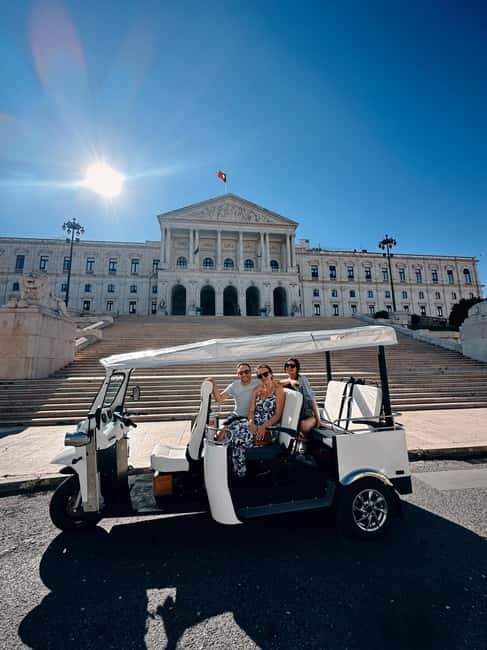
- East-to-west flow that saves energy: you move downhill through the day instead of zig-zagging hills.
- Top-city viewpoints, not just “look, a view”: you hit big panoramas like Senhora do Monte.
- Ginja (Portuguese cherry liqueur) stop: a small break that feels local.
- Private guide flexibility: guides can shift pace and focus so the tour fits your questions.
- Belém option for Pasteis de Belém: add an extra hour for a classic food payoff.
- Hotel pickup and drop-off: fewer logistics headaches means more time outside.
East-to-west tuk-tuk logic: why the route works
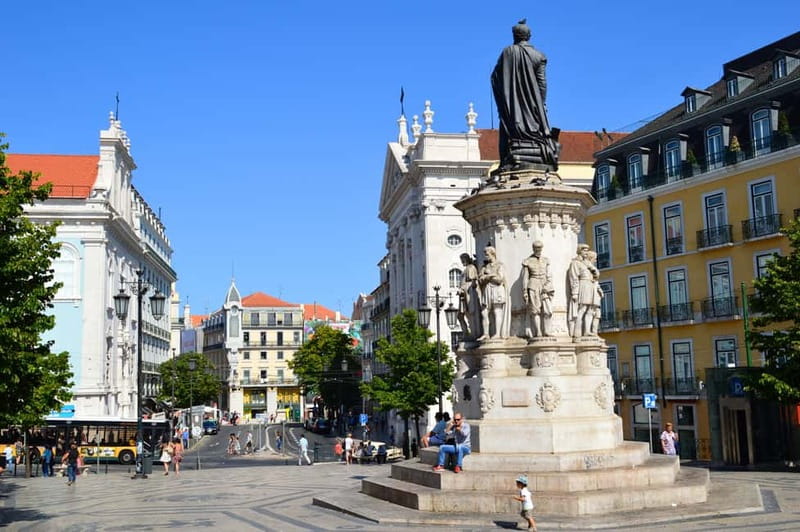
Lisbon can wear you out. The streets twist, the hills climb, and the best angles for photos usually live uphill—meaning you can spend your whole day deciding where to stop rather than actually seeing the city.
This tour’s main advantage is simple: it’s set up to move from east to west, so you’re generally traveling with the city’s natural slope. Starting in the older neighborhoods (Alfama and Graça/Mouraria) and pushing toward Baixa, Rossio, Praça do Comércio, and then Chiado gives your legs a break. The tuk-tuk also helps you cover ground quickly on narrow lanes where big vehicles struggle.
Because it’s a private group tour, you also get a more conversational experience than the typical hop-on hop-off style. Many guides you’ll encounter are very active in the tour—stopping at key corners, pointing out what to look for, and slowing down when your group wants to linger.
Alfama, Santa Luzia, and Lisbon Cathedral: old streets with quick payoff

You start with pickup in Lisbon, then get on the tuk-tuk for a short transition (15 minutes). From there the tour lands in Alfama for about 15 minutes. This is where Lisbon feels most “Lisbon”: old streets, tighter lanes, and neighborhood character that you can’t really recreate from a main road viewpoint.
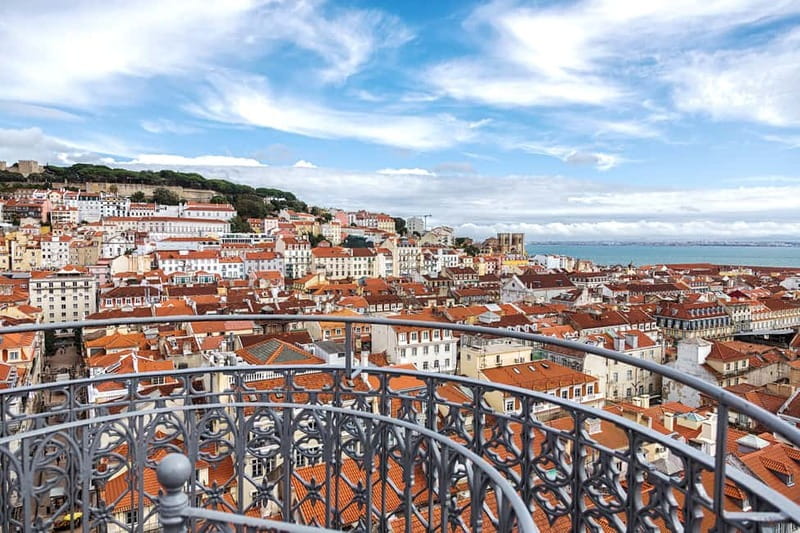
From Alfama you move to Miradouro de Santa Luzia (10 minutes). These miradouros are the kind of stops that make you understand why people plan Lisbon days around viewpoints. Instead of grinding up and down hill after hill, you get an efficient break to look out over the city and reset.
Next up is Lisbon Cathedral for about 10 minutes. It’s a short stop, so think of it as a focused sightseeing moment plus context from your guide—enough time to orient yourself and understand how this part of Lisbon fits into the larger story of the city.
Then you hit Largo Portas do Sol (5 minutes), another classic viewpoint moment. It’s short by design, so you’re not stuck in one place. The goal is to stack “wow” angles early, while you still have full energy and daylight.
Graça and Nossa Senhora do Monte: the big panorama stretch

After the cathedral-and-viewpoints sequence, you shift into Graça Historic District for about 20 minutes. This is one of those areas where the tour format helps. You can walk around, but the tuk-tuk keeps you from losing the best parts to exhaustion.
You’ll also stop at Church of Our Lady of Grace (10 minutes). Again, the time is brief, but these quick “walk a few steps, look around, learn the context” stops work well when you’re trying to get bearings fast.
Then comes the centerpiece: Miradouro da Senhora do Monte for about 10 minutes. The highlights call it one of the highest viewing points in Lisbon, and that matters. When you’re up there, you can finally understand how neighborhoods connect across the slopes. It turns your photos into a map, which makes the rest of your trip easier.
You also pass Calçada da Amália (5 minutes) and make a short stop at the Monastery of São Vicente de Fora (5 minutes). These are “grab the feel” stops—quick, visual, and useful if you like collecting impressions of a place instead of ticking boxes for hours.
São Vicente to the Pantheon: quick stops that add texture
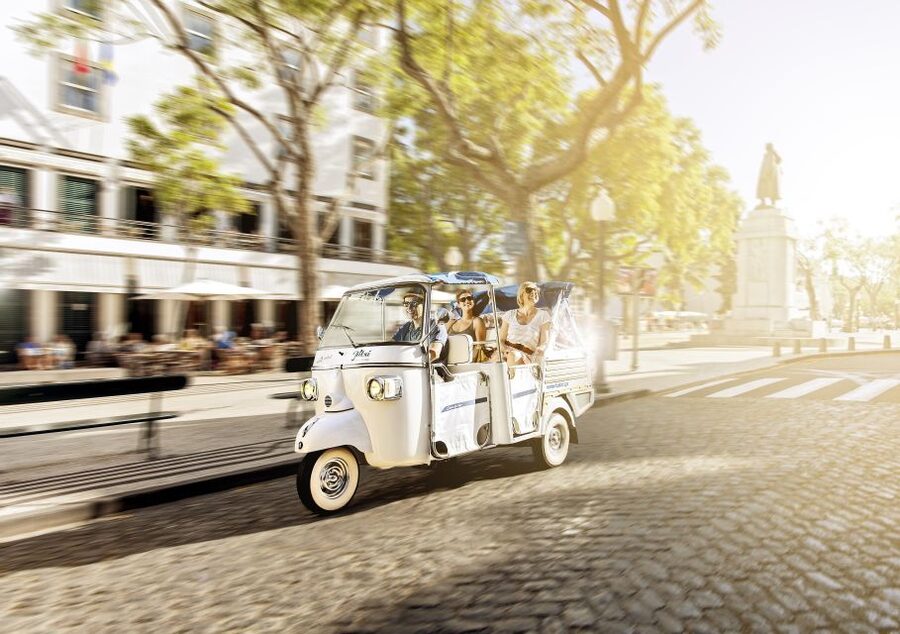
Your schedule continues with National Pantheon of Santa Engracia for about 10 minutes. This is another short sightseeing moment. The practical benefit here is that you’re not just bouncing between viewpoints. You’re also touching religious/civic landmarks so the tour feels like a full sweep of the city’s identity.
Some guides in past tours have been particularly good at weaving connections between neighborhoods—like how Lisbon’s different quarters shaped the city’s culture and daily life. The best part for you is that this isn’t a lecture that forces you to sit still. In a tuk-tuk setting, the guide can point out what you’re seeing right now and explain why it matters.
If you’re the type who likes to understand what you’re looking at before you return later on your own, this section is a strong reason to book. Even a 10-minute stop can change how you notice a building, a square, or a street corner later.
Mouraria: fado atmosphere and street-level character
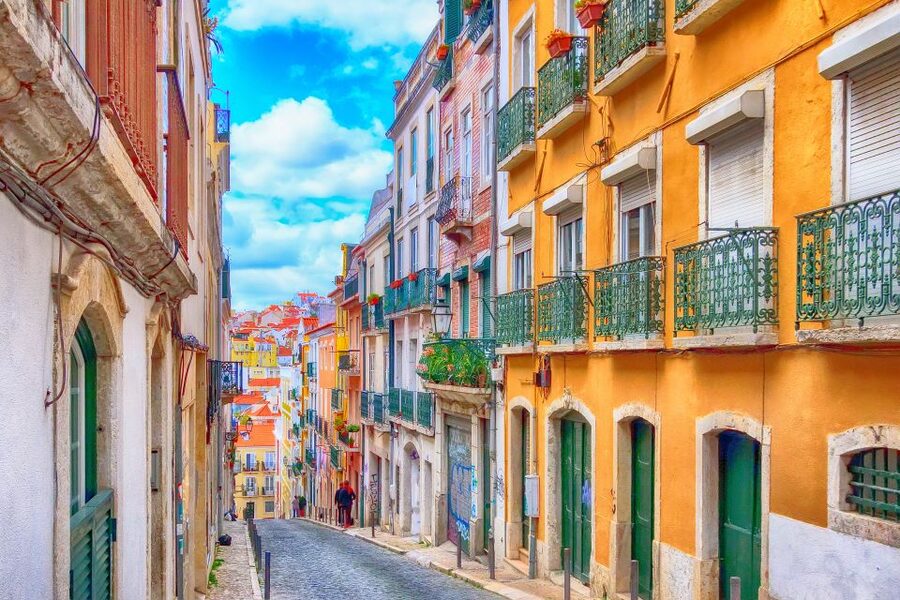
Then you move into Mouraria for about 20 minutes. This is one of the stops that feels more alive, especially because Mouraria connects to Lisbon’s music culture. In the tour experiences, guides have described Mouraria as the birthplace of Fado, and that kind of framing helps you pay attention to more than the scenery.
After that, the tuk-tuk carries you down toward the city center. You’ll pass through Baixa de Lisboa for about 20 minutes. This “pass by” portion is helpful because it lets you see the grid-like core and understand how the central streets relate to the hillside quarters you just visited.
Next you stop at Rossio Square (5 minutes). This is the type of brief stop that works in a short tour: enough time to recognize the space and get your bearings, not so much time that you lose momentum.
You’ll also see Santa Justa Lift for about 5 minutes. The value here is mostly location awareness and photo timing. Even if you don’t go up, it helps to understand where this landmark sits within the city’s flow.
Praça do Comércio to Chiado: the city opens up
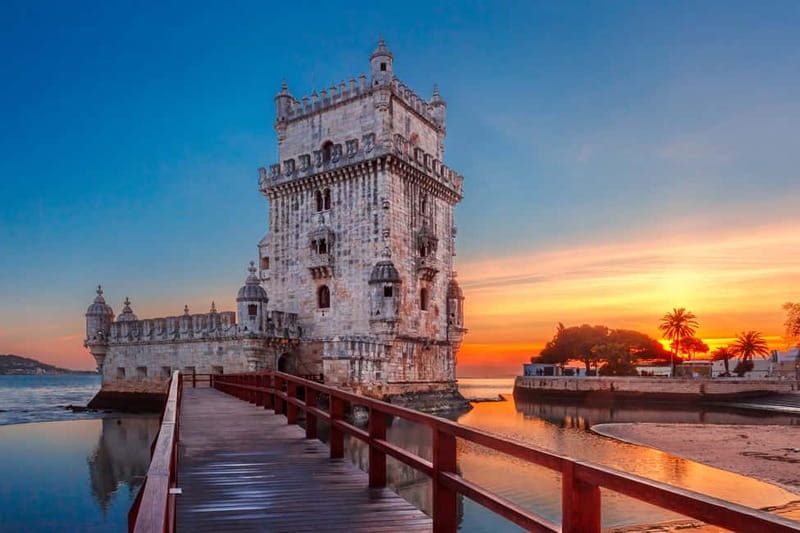
One of the most satisfying transitions in Lisbon is the move from steep, old streets into wider open spaces. That switch starts as you reach Praça do Comércio for about 10 minutes. This is a major central square, and the quick stop gives you a strong mental marker. You’ll know where you are relative to the riverfront and where the center “breathes.”
Then comes Chiado for about 30 minutes. This longer block is significant because it’s where you get time to slow down and enjoy the city’s middle layer: shops, café culture, and the kind of streets where you can wander a bit without feeling lost.
If you’re a first-time visitor, Chiado is often where you start deciding what parts of Lisbon you’ll want to revisit later. A 30-minute sightseeing window in a private tour is a smart investment: it gives your brain time to sort out what you like before your next plans.
Pink Street and São Pedro de Alcântara: quick hits, good angles
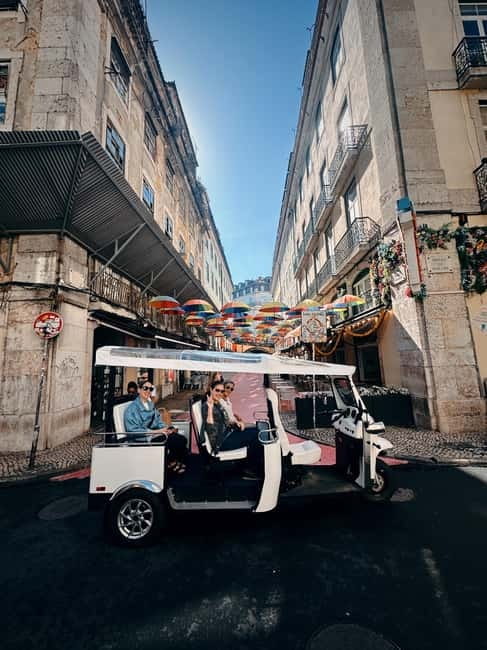
After Chiado, you stop at Pink Street for about 5 minutes. The time is short, but it’s the kind of photo-and-people-watching stop that adds fun to the day. If you want nightlife energy without committing to a long evening, this is a low-pressure way to see it.
Then you go to Miradouro de São Pedro de Alcântara for about 10 minutes. If you liked the higher viewpoint, this one gives you a different viewpoint style—another chance to compare how Lisbon layers over itself.
Finally, you end with Carmo Convent for about 10 minutes. The tour’s format keeps it practical: a quick stop to see a meaningful landmark and tie together the last chunk of your east-to-west movement.
At the end of the tour you return to Lisbon. Total time is about 3 hours for this standard option.
Belém add-on: Pasteis de Belém in an extra hour
There’s an option for an extra hour to explore Belém and try Pasteis de Belém. This is a smart add if you’re staying only a few days, because Belém can eat up time when you’re trying to coordinate transit and timing on your own.
In some of the tour experiences, the extra time has been used effectively for a classic combination: a walk or photo time around major spots in Belém plus the pastry payoff. One example mentioned in tour experiences is pairing pastry time with time near Torre de Belém. Even if your guide doesn’t use that exact pairing, the key idea holds: you’re getting a famous food stop without sacrificing your whole day.
If you love Portugal’s food culture, the ginja stop earlier and Pasteis de Belém later make this tour feel like more than sightseeing. It becomes a day with tastes, not just views.
Price and value: what $224 gets you (and why it adds up)
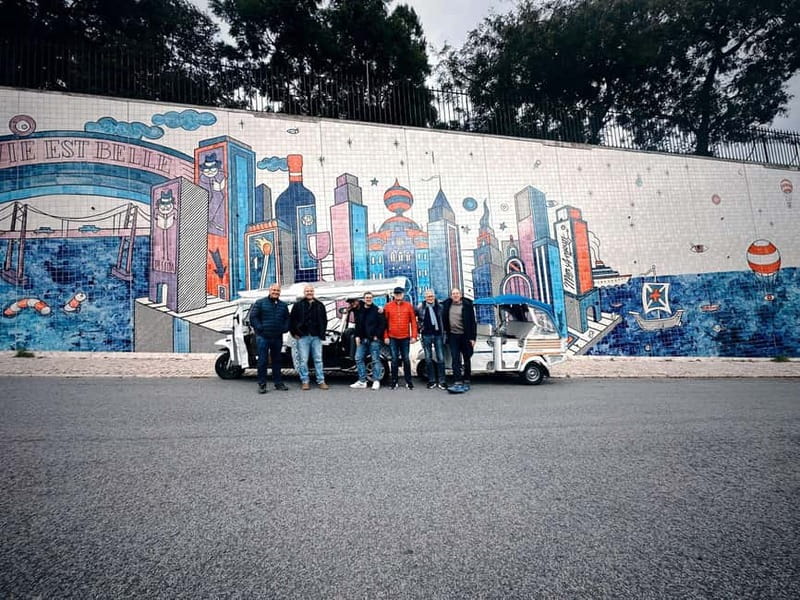
The price is $224 per group up to 4 for a 3-hour private tour, with hotel pickup and drop-off included. You’ll feel this cost most if you’re thinking in solo terms, because the real value shows when you split it across friends or family.
Here’s where the value comes from in practical terms:
- Time saved: You cover multiple neighborhoods and viewpoints without spending that time sweating uphill.
- Private pacing: The schedule includes short stops, but the guide can help you decide where to slow down.
- Multilingual guidance: Your guide is available in several languages (the tour lists German, Portuguese, English, Spanish, and French).
- Local taste: Ginja isn’t “included food” in the normal sense, but the tour does build in a tasting stop, which is more memorable than a random photo break.
- Optional add-on: If you add the extra hour, you turn this into a first-day overview plus one of Lisbon’s top food moments.
Food and drinks aren’t included, so you’ll still want to plan for your own meal. Still, the structure gives you a good rhythm: views first, then you know where to eat later.
Comfort, safety, and how guides handle weather
Tuk-tuks aren’t delicate. They’re compact, open-air enough to feel fun, and designed for narrow streets. Many tour experiences note that the ride is comfy and that guides manage the route well even when weather gets rough.
If you’re traveling in shoulder season or you just can’t trust the sky, this tour format can help. One tour experience described heavy rain and a guide steering through it without losing the flow. That matters because Lisbon rain can be intense, and a transport plan that keeps moving is better than a walking-only day.
Also, because this is a private group, your guide can adjust the pace for your comfort level and your questions. People have specifically described guides as accommodating and willing to extend time when the group wanted more.
Who this tuk-tuk tour is best for
This works best if you fall into one (or more) of these buckets:
- You want a first-day Lisbon overview so your later self-guided hours are smarter.
- You don’t want to fight uphill climbs all day.
- You like seeing many neighborhoods in a short time, but still want explanation from a person in the moment.
- You’re traveling with up to 4 people and can split the group price.
It’s also a good pick if you’re the type who enjoys learning how neighborhoods connect—especially when Mouraria’s fado atmosphere and the viewpoint sequence help you understand the city’s layout.
It’s not the best fit if you need a tour that’s long and slow, or if your group includes someone who falls under the tour’s limits (kids under 3, or pregnant women).
Should you book Lisbon with Tukxi: East to West?
If you want an efficient, fun first pass through Lisbon’s hillside neighborhoods, I think this is an easy yes. The route makes sense, the stops are timed for maximum impact, and the private guide factor changes the experience from scenic drive to actual understanding.
Book it especially if you:
- want viewpoints like Senhora do Monte without exhausting yourself,
- care about culture context as you move (not after the fact),
- and might add the Belém extra hour for Pasteis de Belém.
If you’re the kind of traveler who hates short stops and wants a deep dive into interiors for hours, you might prefer a slower walking tour plan instead. But for most visitors—particularly first timers—this is a practical way to get your bearings fast and still feel like you saw the real Lisbon, not just the easy parts.
FAQ
How long is the Lisbon East to West private tour by tuk-tuk?
It runs for about 3 hours for the standard option.
What neighborhoods and areas does this tour cover?
You’ll spend time in Alfama, Graça, and Mouraria, then head through the center including Baixa de Lisboa and Rossio Square, and on to Praça do Comércio and Chiado. You’ll also make stops at viewpoints such as Senhora do Monte and include areas like Pink Street and Carmo Convent.
Does the tour include hotel pickup and drop-off?
Yes. Hotel pickup and drop-off are included.
Is food included in the tour price?
No. Food and drinks are not included. The tour does include a stop to sample Portuguese ginja, and the optional Belém add-on is for Pasteis de Belém.
What languages are the guides/drivers available in?
The languages listed for the tour are German, Portuguese, English, Spanish, and French.
Is this tour private?
Yes. It’s a private group tour.
Is it refundable if plans change?
The tour lists free cancellation up to 24 hours in advance for a full refund.