REVIEW · KURASHIKI
Kurashiki Rickshaw Tour
Book on Viator →Operated by Ebisuya · Bookable on Viator
Kurashiki on a rickshaw feels slower, softer, and way more personal than walking. I like how you’re guided along the canal paths and preserved merchant streets at a pace that makes details easy to notice, not frantic to chase. Two things I especially love are the chance to learn what you’re seeing (from merchant-town life to specific landmarks) and the freedom to shape the route based on the time you book. The only real drawback to watch is comfort and fit: rickshaws are narrow, there’s a max of two adults per car, and larger riders may need their own rickshaw for a better ride.
You can also choose your departure time within a daily window, then decide where you finish that day. It’s a private activity, so you won’t get bounced around in a giant group, and the guides often give practical next-steps so you know where to go after your ride. One consideration: the experience time depends on the option you book (30 minutes up to about 2 hours), so if you’re trying to cover a lot of ground in one day, you’ll need to plan the rest of your itinerary around that.
In This Review
- Quick Takes Before You Ride
- Entering Kurashiki Bikan Area Without Herd-Thinking
- Price and Time: What $43 Buys (and Why Duration Is the Real Lever)
- Meeting Point, Pickup Gaps, and How to Plan Your Timing
- Comfort Rules That Actually Matter on a Human-Powered Ride
- How the 30-Minute Route Works: Fast Orientation, Willow-Canal Calm
- The 45-Minute and 1-Hour Options: Merchant Streets With More Breathing Room
- The 2-Hour Ride: Mt. Tsurugata, Old Cotton Mill, and a Proper Canal Finish
- Key Stops You May See: From Cultural Assets to Hilltop Temples
- A nationally important Ohashi merchant mansion
- A red-brick square with ivy cover
- A hilltop Buddhist temple
- Achi Shrine (20 minutes, no admission)
- Retro concrete among traditional wood
- The river-and-willow traditional district feel
- Other nearby options: an art museum
- Your Guide’s Value: Fast Facts, Better Walking Later
- Who This Tour Fits Best (and Who Might Want a Different Plan)
- Should You Book the Kurashiki Rickshaw Tour?
Quick Takes Before You Ride
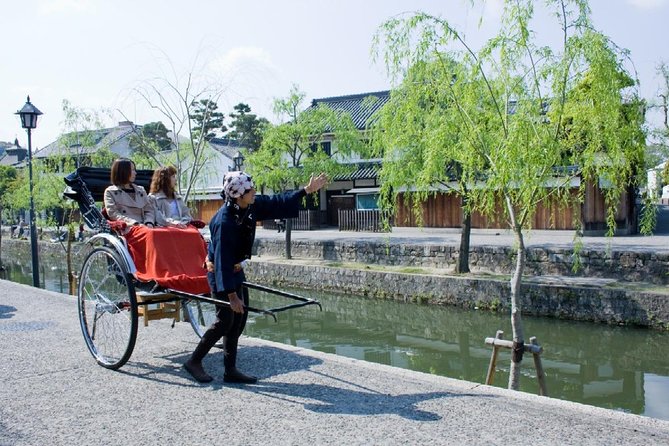
- Private tour with just your group: one rickshaw driver/guide team, focused on you.
- Flexible route and finish point: where you go and where you end can be decided on the day.
- Canal-and-warehouse views: willows, old cotton mill area, and traditional buildings in sequence.
- Guide names you might meet: I’ve seen frequent praise for guides like Sho, Kubo, Ishimatsu, Kamata, and Asai.
- Smart comfort advice matters: the rickshaw is 74 cm wide, so fit affects how enjoyable it feels.
- Great in heat or rain: you may get practical help like blankets in winter or rain protection during wet weather.
Entering Kurashiki Bikan Area Without Herd-Thinking
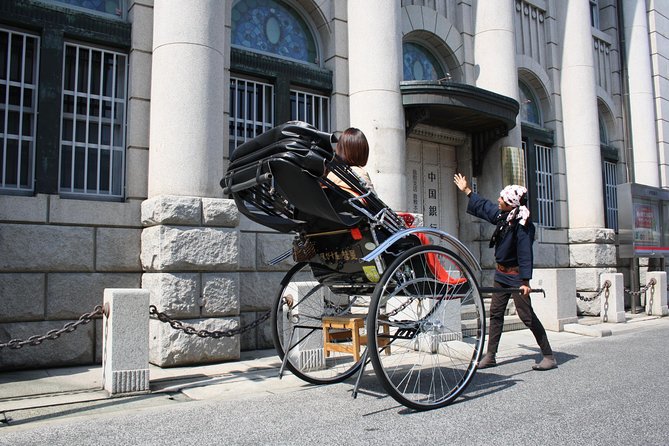
Kurashiki is one of those Japanese towns where the atmosphere is the attraction. You’ll see the kind of white-walled buildings and traditional houses you expect from older merchant districts, plus the canal setting that makes everything feel calmer. Being carried through this area on a rickshaw changes the experience fast: your eyes can stay up and forward instead of constantly scanning streets while walking.
This tour is also a solid first move if you want confidence later. Several rides get praised for guides who point out what to see afterward, so you leave knowing where your time is best spent. And because it’s private, your guide can lean more toward your interests—photo stops, shopping lanes, or straight-up history facts.
One more practical point: you meet at the Ebisuya area in Kurashiki Old Town (a specific address is provided), and the ending point can be customized. That means you’re not stuck returning exactly to where you started, which is a small thing that often makes the day feel smoother.
Price and Time: What $43 Buys (and Why Duration Is the Real Lever)
The price shown is $43.04 per person, and the ride time can be about 30 minutes to 2 hours depending on the option. That’s the key value question: you’re not only paying for a vehicle, you’re paying for the guide’s ability to translate the town as you move through it.
A short ride is ideal if you’re:
- making Kurashiki a day trip,
- planning to spend most of your time walking afterward,
- or traveling with limited energy.
A longer ride makes more sense if you want a guided orientation plus more landmark time. The 1-hour and 2-hour formats add deeper street time and extra “anchor” sights, including a hillside shrine/temple option (in the longer route) and a mountain stop (Mt. Tsurugata) plus the old cotton mill area.
If you’re debating which option to choose, I treat it like this: the rickshaw is your shortcut to understanding the district layout. Then walking becomes easier. Pick the length that gives you that understanding without stealing time from the parts you personally love.
Meeting Point, Pickup Gaps, and How to Plan Your Timing
Your meet-up is at 1-chōme-1-5 Chūō, Kurashiki, Okayama, and the rickshaw stand/typical ending is at Ebisuya Kurashiki Rickshaw. The exact finish point depends on the tour you pick, and you can also adjust it on the day with your guide.
Timing runs on a daily window of about 9:30am to 5:30pm, but your exact start time is confirmed by email within 24 hours after booking. The start time is not guaranteed automatically, so I’d treat the message as the real ticket for when you should show up.
Also note what isn’t included: hotel pickup/drop-off isn’t provided. You’ll get yourself to the meeting area using public transportation or local walking connections. Since the meeting point is “near public transportation,” you’re usually fine—just don’t assume convenience like a taxi pickup.
Comfort Rules That Actually Matter on a Human-Powered Ride
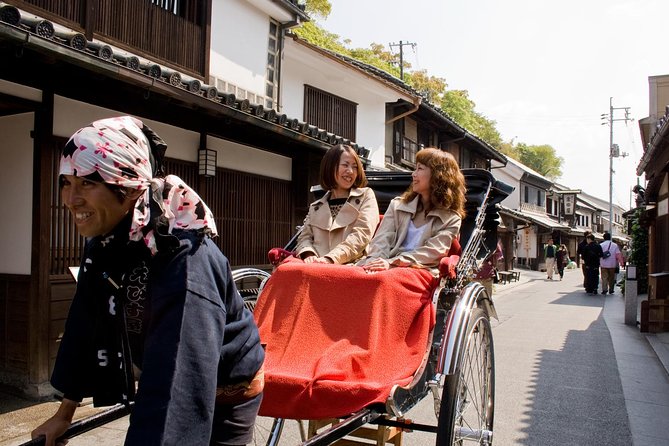
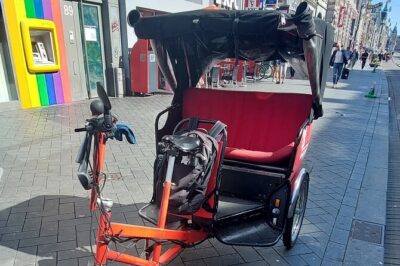
Rickshaw comfort isn’t just about vibes. The rickshaw car is about 74 cm wide, and there’s a maximum of two adults per rickshaw. If you and your travel partner don’t both fit comfortably, you may need to book separate rickshaws. If extra rickshaws aren’t purchased at booking time, there’s no guarantee availability later—especially with an English-speaking guide.
Age and seating rules are also specific:
- Adult pricing starts at age six.
- Child rates (age 5 and under) apply only if the child sits on an adult’s lap with no separate seat.
- Up to two children can ride with two adults, with the children on lap seating.
Pregnancy is handled plainly: expecting mothers in the first 16 weeks aren’t permitted to ride.
If weather changes your plans, don’t panic. From guide responses in past rides, Ebisuya has taken care of practical issues like preparing blankets in winter and rain protection when conditions get wet. That’s the kind of small operational competence that makes the ride feel cared for instead of improvised.
How the 30-Minute Route Works: Fast Orientation, Willow-Canal Calm
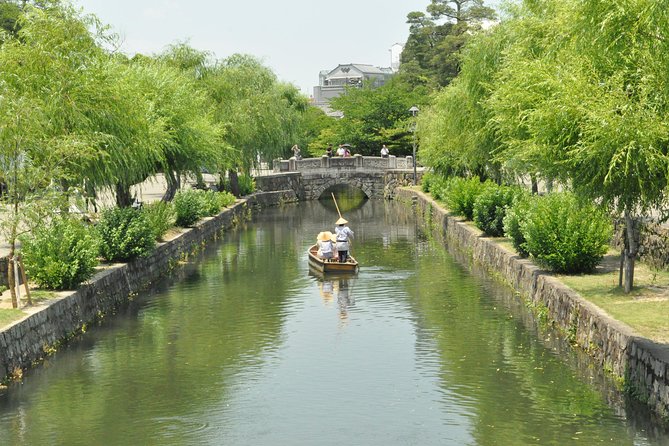
The 30-minute option is perfect when you want quick bearings and a smooth “welcome” to Kurashiki. You start around Kurashiki Old Town near the meeting area and head out past the city’s traffic into a wide canal path lined with weeping willow trees.
This route is built for photos and mental mapping. You’ll glide by backstreets with Kurashiki-style shops and warehouse buildings, so you get a sense of where the preserved district energy starts and where it fades into regular town streets. It’s short enough that you can keep your day flexible afterward.
A useful drawback to know: 30 minutes won’t feel like “everything.” If you love temples, big mansion façades, or hillside views, you’ll likely want at least 45 minutes or 1 hour so your guide can fit those landmarks in.
The 45-Minute and 1-Hour Options: Merchant Streets With More Breathing Room
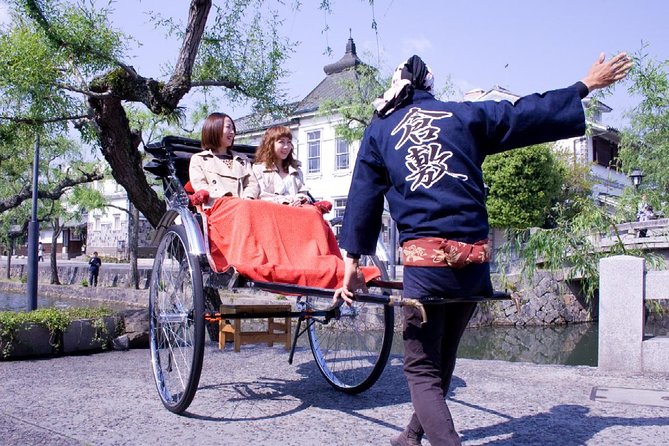
In the 45-minute plan, after the Old Town streets and willow-lined canal path, the ride continues past former wealthy merchant mansions. This is where the story of Kurashiki’s prosperity comes through in a more concrete way: you’re watching the town’s merchant-era wealth show up in building scale and street presence, not just reading about it later.
With the 1-hour option, the route is similar to the 30-minute pattern, but you spend more time exploring the Old Town streets. That extra time matters when you want to step your eyes toward small details—doorways, wall finishes, and the texture of streets that look preserved rather than staged.
If you’re the type who likes to stop and take a few extra photos without feeling rushed, this is the sweet spot. You’re still getting a guided ride, but you’re not spending your day waiting for the next stop.
The 2-Hour Ride: Mt. Tsurugata, Old Cotton Mill, and a Proper Canal Finish
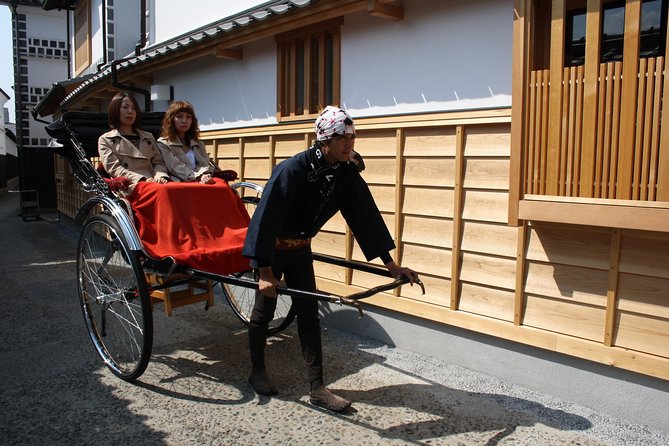
If you want the full guided “touring circuit,” the 2-hour option is the most complete sample route. You begin near the historic merchant mansions and move through the district’s streets to reach Kurashiki-style warehouses and small shops. Then the ride expands beyond the flat canal zone.
One standout added stop on this longer format is Mt. Tsurugata. That gives you a scenic shift from canals and street grids to a view-centered moment. After that, you return past the area near an old cotton mill, which adds an industrial-era layer to the merchant-town story.
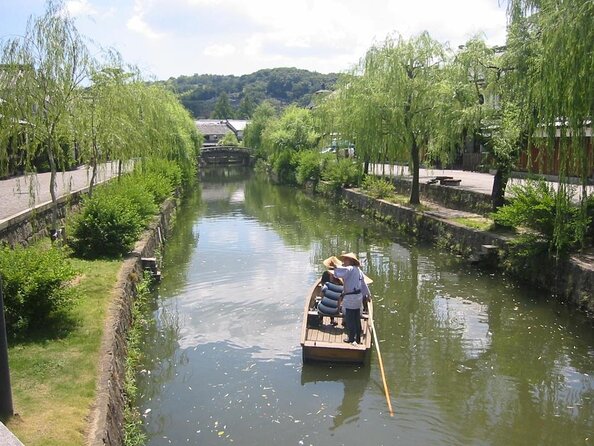
The ride finishes with another look along the canal, lined with willows. This “return to the canal” ending is smart: it gives your eyes a final calming frame after the more varied street-and-view sections.
For most people, the limitation here is energy and time. Two hours is great if you don’t have a tight schedule, but if your day has multiple ticketed stops, you might prefer the shorter options and then walk the rest at your own pace.
Key Stops You May See: From Cultural Assets to Hilltop Temples
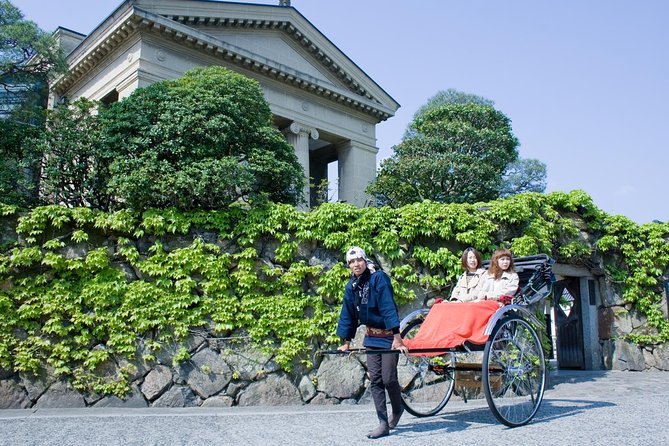
Your exact stops depend on the duration you book, but the experience has several common anchors. Some are architectural, some are spiritual, and some are simply strong photo moments.
A nationally important Ohashi merchant mansion
You may visit a mansion built for and by the Ohashi merchant family, described as a nationally important cultural asset. This is the kind of building where you understand prosperity through design decisions—scale, placement, and the feeling of “we had money and we had influence.”
A red-brick square with ivy cover
Another highlight can be a large square with red brick walls covered with ivy. This is a contrast stop: brick and plant growth give you a different mood than the wood-and-white-walled merchant lanes nearby.
A hilltop Buddhist temple
You may also see a Buddhist temple located on top of a hill. Even if you only get views from parts of the approach, hilltop locations usually mean sweeping sightlines and a different sense of distance in the town.
Achi Shrine (20 minutes, no admission)
Achi Shrine is included as a sample stop for about 20 minutes, and admission is free. The tour framing here is practical: the shrine has events and festivals throughout the year, so it’s not just a static building. It’s part of what keeps local life moving.
Retro concrete among traditional wood
You might pass a retro concrete building that contrasts with surrounding preserved wooden streets. This is a good reminder that preservation doesn’t mean “everything is ancient.” It means you’ll see layers of time sitting side by side.
The river-and-willow traditional district feel
One route note emphasizes a river flowing through the heart of the traditional district, with weeping willows lining it. If you’re traveling during the seasons when willows look their best, this is the part you’ll remember in your photos.
Other nearby options: an art museum
There’s also a mention of a stunning art museum that’s worth checking out before or after your rickshaw time. If you’re the type who likes to pair a guided orientation with a more quiet indoor stop, that pairing can work well.
Your Guide’s Value: Fast Facts, Better Walking Later
The rickshaw is powered by the driver/guide, but the real product is what happens while you’re moving. Past rides consistently highlight guides who keep conversations friendly and explanations clear. Names that came up include Sho, Kubo, and guides like Ishimatsu, Kamata, and Asai, with praise for both storytelling and helpful suggestions after the ride.
One reason this matters: Kurashiki’s preserved district can feel like a maze if you’re only using signs. A good guide gives you a mental “map in your head” that makes your walking loop later much smoother. And since the tour is private, the guide can adjust on the fly if you want more photo time or more history talk.
If you want the ride in a specific language, you can ask for a multilingual driver at the departure point. Some rides have been reported as fully English, so it’s worth making your request part of your plans instead of hoping by accident.
Who This Tour Fits Best (and Who Might Want a Different Plan)
This tour fits best if you want:
- an easy way into the Kurashiki Old Town layout,
- a guided history context without doing a full museum day,
- photo-friendly views along canals and merchant streets,
- and a low-stress pace, especially in summer heat.
It’s also a nice option when you’re arriving late in the day. Several experiences describe it as an excellent first stop, letting you walk more confidently later.
You might choose something else if:
- you want to cover lots of major sights that aren’t aligned to the sample route,
- you dislike sitting still for short periods,
- or your group needs careful seating arrangements and you haven’t planned rickshaw numbers early.
Should You Book the Kurashiki Rickshaw Tour?
Yes, if you want an efficient, human-paced introduction to Kurashiki that leaves you knowing where to go next. The value comes from the mix of flexible duration, guide-led explanations, and the canal-and-merchant district route that makes the preserved area feel real instead of just pretty.
If you’re unsure which time to pick, I’d choose based on your day:
- 30 minutes for quick orientation plus walking after.
- 45 minutes to 1 hour if you want more street time and fewer rushed corners.
- 2 hours if you want a deeper circuit with Mt. Tsurugata and the old cotton mill area.
And one last practical tip: when you book, pay attention to fit and seating needs. If comfort matters to you, plan for separate rickshaws early so the ride feels relaxed rather than tight.